
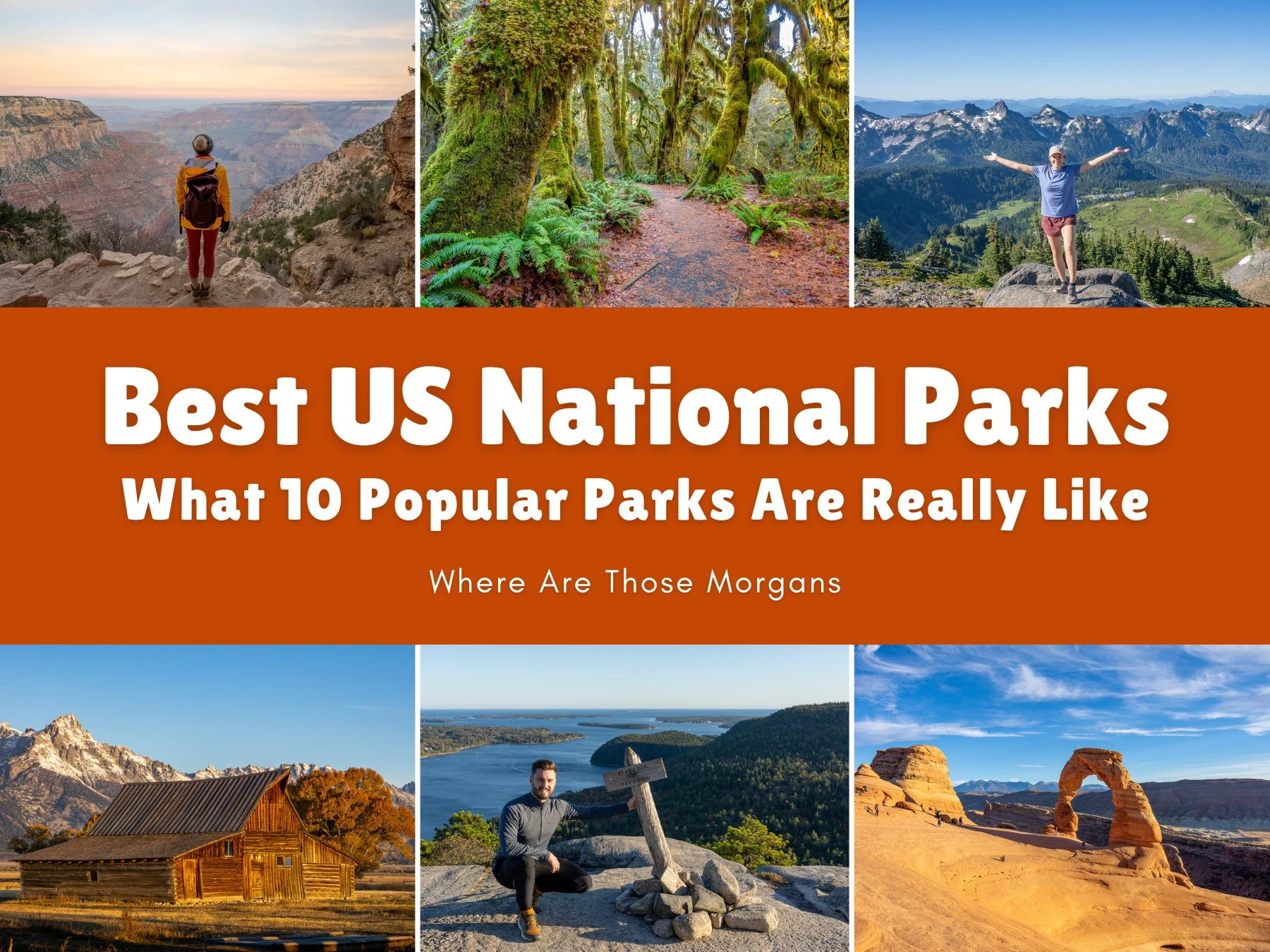
We absolutely adore America’s national parks, they’re like adventure playgrounds for people like us – hiking enthusiasts, nature lovers, and landscape photography addicts. Since 2018, we’ve visited 23 of the most popular US national parks, including multiple trips to the likes of Yellowstone, Zion and the Grand Canyon. And we can honestly say that even after exploring a lot of the world, many of our favorite travel memories are from national parks in Utah, Washington, California, Wyoming, and Maine.
But the interesting thing about America’s “best” national parks is that they’re so subjective and suited to different interests. Acadia might be your favorite, but Arches might be your neighbors favorite. And we also think a lot of people visit certain parks based purely on hype or popularity, which can easily lead to disappointment. So instead of just showing you another generic top 10, we’re going to give you our real take on what the so called best national parks are actually like to visit as a first timer – the good and the bad, to help you decide if it’s really a place you want to invest time, energy and money into visiting.
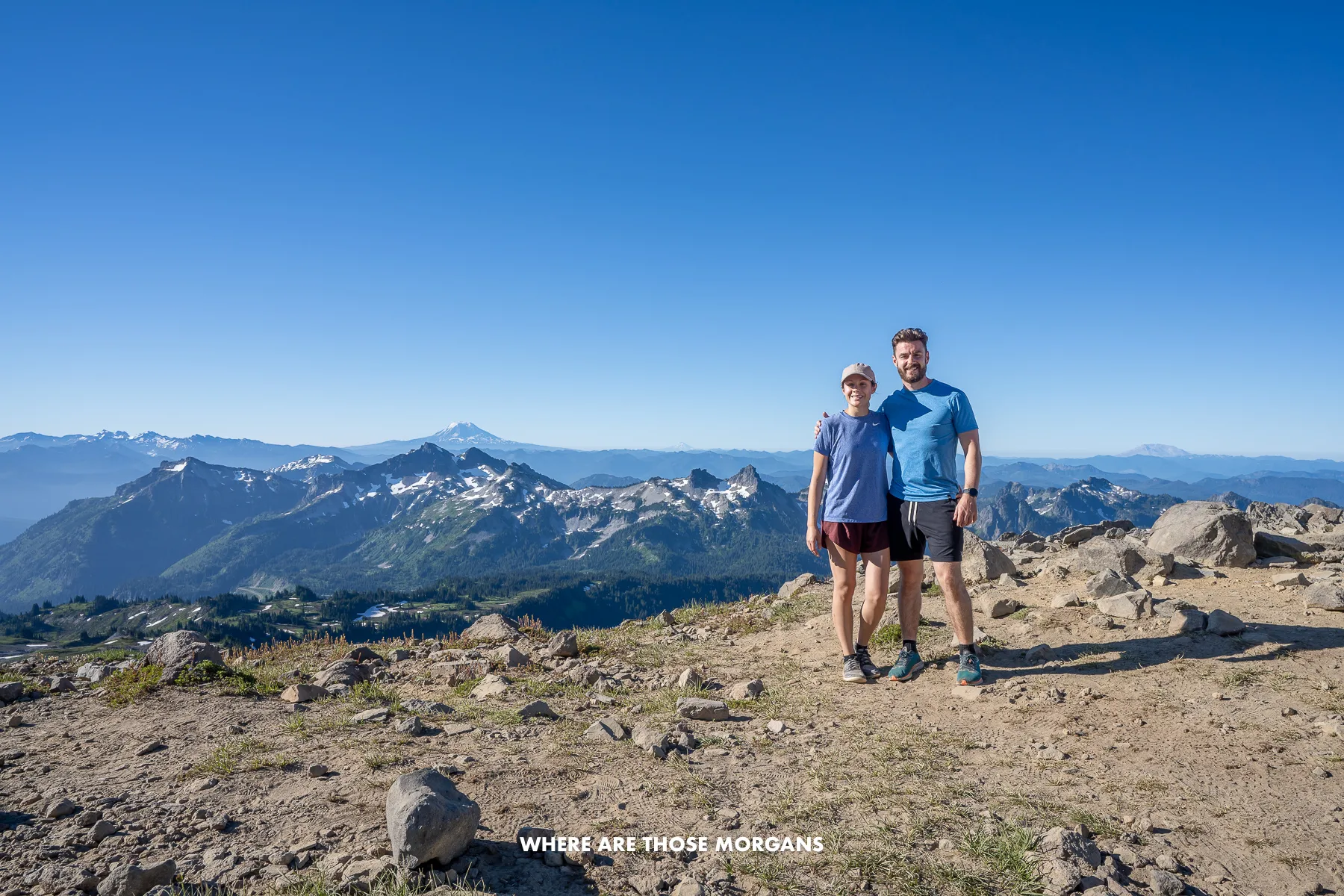
Hi, we’re Mark and Kristen Morgan. We left our scientific careers in 2018 to become travel writers and photographers, and since then our expert guides have helped millions of travel planners take better trips. Read more about us.
Why trust us with your US national parks bucket list? We’ve visited 23 of the most popular parks and figured out the best and worst of each one. As always, every photo in this guide is ours.
So far, we’d say our favorite US national parks are Zion, Yosemite, Yellowstone, Mt Rainier and Grand Canyon. The hiking and photography in those places is next level. Now, we have to be up front and let you know that we haven’t been to Rocky Mountain, Glacier or Great Smoky Mountains yet – they’re at the top of our own US national park bucket list. But even without those three, our list is still filled with incredible landscapes, and we’re going to show you what they’re really like.
In this guide, we’ll take you through our thoughts on the best national parks to visit in the US, based on our own travels and lessons learned along the way. Let’s get started.
Note: Our content is reader supported and contains affiliate links. If you make a purchase through one of these links, we may earn a small commission at no extra cost to you and it helps us keep this site running.
Need a hand planning your next national parks visit? Mark and Kristen help independent travelers plan better, stress-free trips. Schedule a video call and we’ll build you a trip that perfectly fits your style, budget and priorities. See our travel planning help.
Zion National Park
We kept reading the same two things before our first visit to Zion in October 2019. First, the hikes were going to be in a league of their own. Second, it was going to be busy. And you know what? Both were spot on. Zion’s top hikes were genuinely exceptional – Angels Landing and The Narrows more than lived up to the hype. And intense overcrowding was real in the visitor center parking lot in Springdale with cars circling like sharks, the canyon shuttle line was always long after 9:00 AM, restaurant tables in the evenings were booked up, and hotel rooms at night were expensive. We can only imagine what it would be like June through September.
The main canyon and east rim turned out to be smaller and more condensed than we expected, which was both good and bad: On the plus side it made getting around and ticking off hikes feel more achievable compared to other popular US national parks, but on the down side it meant every trail was crammed, to a point where it made our overall experience feel less enjoyable. Another negative was parking at places like Canyon Overlook Trail because there were so few parking spaces available near the tunnel and so many cars trying to take them. In a nutshell, the overcrowding issue in Zion felt worse than other US national parks.
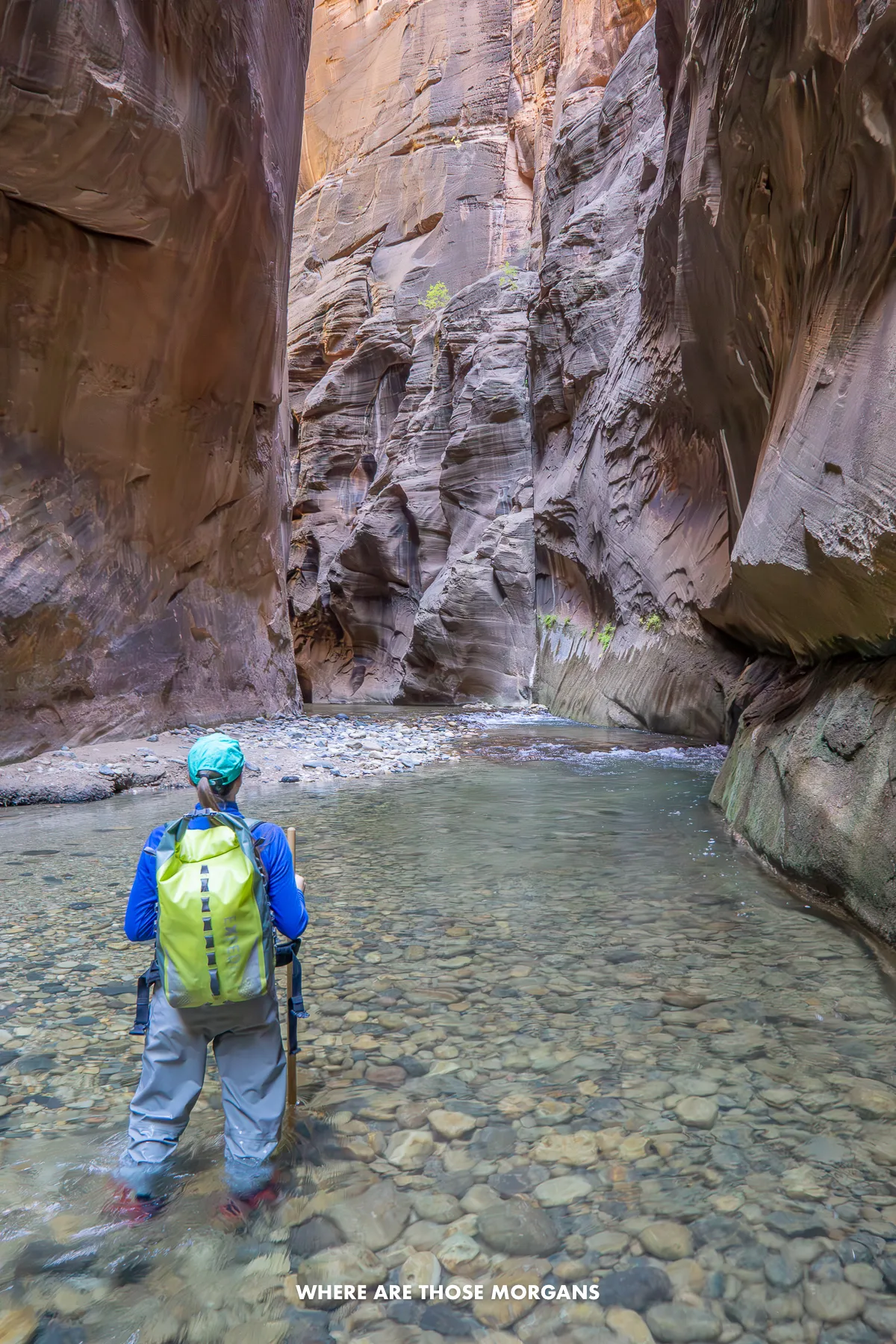
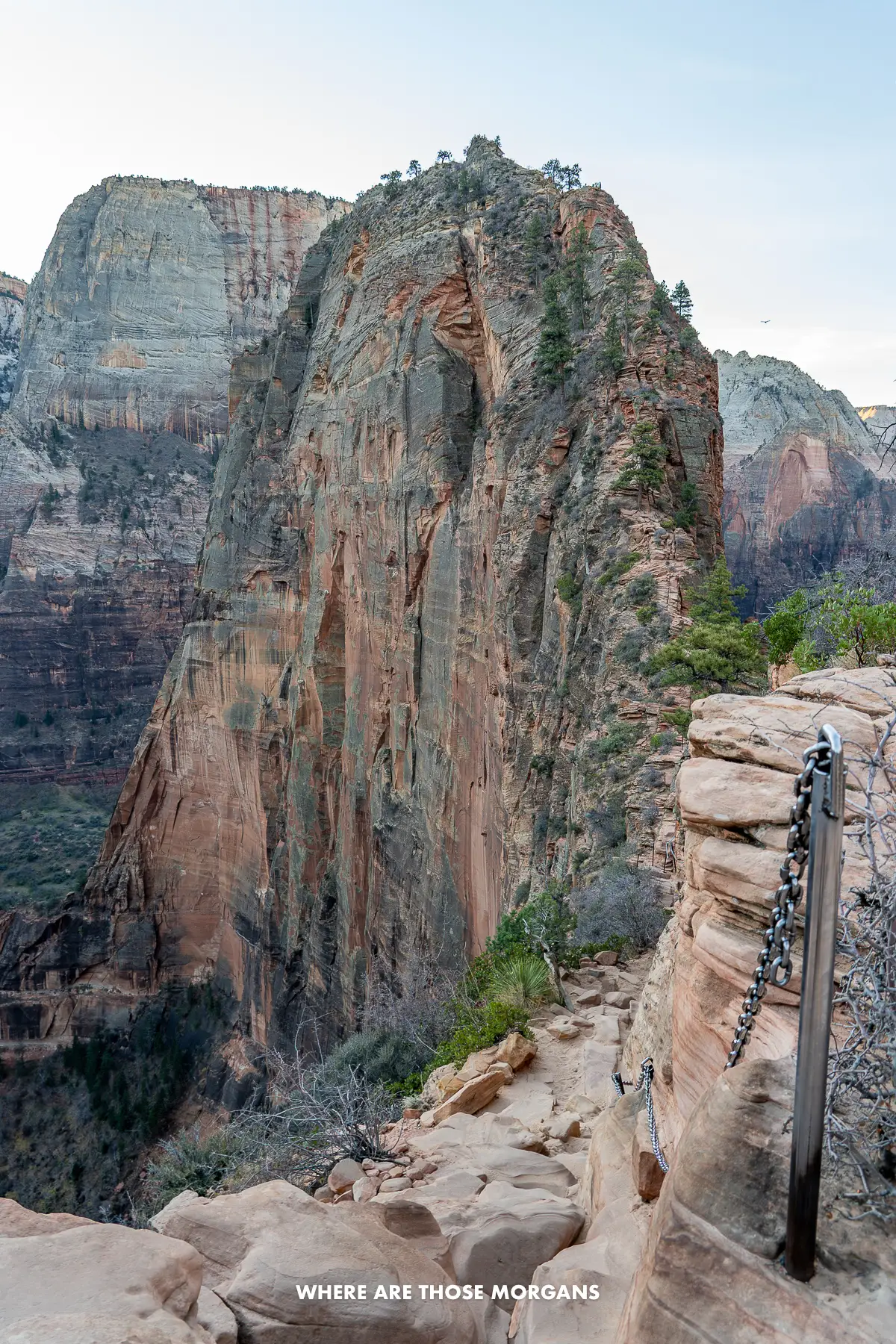
We naively hiked Angels Landing around lunch time when it was swarming with hikers, and the already scary chain sections were made so much more frightening because of the sheer volume of people on the razor-thin ledges at the same time. But it was worth it for the incredible summit view and sense of achievement. We also day hiked The Narrows bottom up all the way to Big Springs, which took us 8 hours round trip. It was immense, and we’d say it’s still top of our favorite day hikes in the US. Canyon Overlook for sunset was another standout memory.
Overall, despite the crowds, we absolutely loved Zion. So when we took a 2-month road trip from Seattle to Sedona in late 2021, we couldn’t wait to hit those rugged red rocks again. It was December by the time we arrived, the park was super quiet, and we planned a much better 3-day itinerary. Our first day, we day hiked The Subway bottom up which was amazing and we only saw 7 other hikers all day. Then we hiked to Angels Landing for sunrise and had the whole trail and summit to ourselves. It was cold, but wow, what a difference from our first time. We also hiked Emerald Pools, Watchman, Pa’rus, and Canyon Overlook again, and we spent a full day hiking in Kolob Canyon.
We’d say many of the popular US national parks are pretty inclusive for most people, but we really feel like Zion is purely a hiking national park. We wouldn’t put up with the crowds and expensive hotels in Springdale if we didn’t plan to hike. No way. There are much better places to just sightsee, like Yellowstone or the Grand Canyon. For us, the only reason to go is for adventure trails. We’ve stayed in pretty much every area around the park, so read our guide on where to stay near Zion to make sure you pick the right place. Getting it wrong can add on a lot of driving time.
Zion National Park Snapshot
Our verdict: Zion’s iconic adventure trails live up to the hype. We’re big into hiking, so we’ll definitely go back for a third visit.
Don’t miss: Angels Landing, The Narrows, The Subway, Canyon Overlook for sunset, and Kolob Canyons to escape the crowds.
Crowd factor: Relatively quiet in December but outrageously overcrowded in October, so we’re sure the summer would be brutal.
Biggest regrets: Not hiking to Observation Point, low water levels at Emerald Pools.
Ideal stay: Two full days minimum for serious hikers, but three or even four would be better to include The Subway. One day is plenty for non-hikers.
Skip it if: Not planning to hike.
Yosemite National Park
There’s just something extra special about Yosemite. We didn’t win Half Dome permits which we were gutted about, but across our 3-day Yosemite itinerary in October 2019, we still managed to see most of the park’s major highlights – and it was pure magic. The north (Tioga Pass) and the south (Glacier Point) were super quiet, and despite Yosemite Valley clearly being a busier area, we honestly couldn’t believe how beautiful it was. We remember being completely blown away by the photos we captured at Valley View and Tunnel View, and they kind of lit a fire under us in terms of how much we were developing our love for landscape photography.
Along Tioga Pass we hiked Lembert Dome, walked around Tuolumne Meadows, stopped at Tenaya Lake, saw the side profile of Half Dome from Olmsted Point, and looked up at giant sequoias in Tuolumne Grove. Then in Yosemite Valley we stopped at every possible place, hiked Mist Trail and John Muir Loop, took hundreds of photos, stood at the bottom of El Cap, and looked up at a few dry waterfalls which was our biggest disappointment from the visit. And we also drove up to Glacier Point for the awesome Half Dome view, which we’d love to do for sunset and stay to see the stars at night.
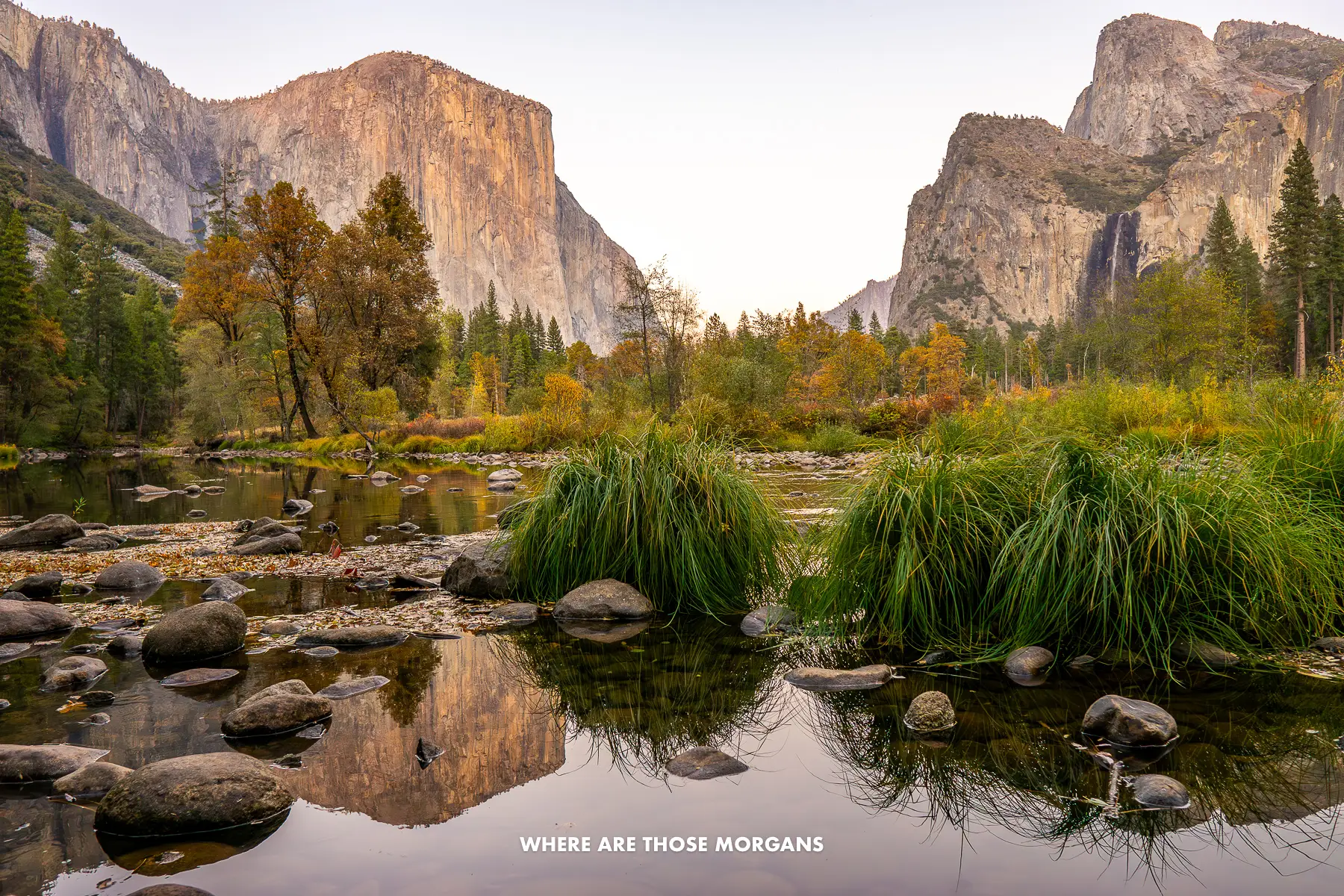
The main issue we faced was accommodation. Our budget was tight back then and we were booking last minute to keep our 3-month west coast road trip fluid. But that really backfired at Yosemite. We ended up staying in totally random places, first in Mammoth Lakes the night before entering Yosemite to the northeast, second a cold yurt in Incline, third a last minute cancellation at Upper Pines campground in the valley, and fourth in Mariposa at the end of our itinerary. It was a mess. Next time, we’d stay at Yosemite Valley Lodge inside the park or Yosemite View Lodge just 9 miles from the valley. But lodging books up way in advance at Yosemite, so we’d get organized. Here’s our guide on where to stay in Yosemite to learn more.
We loved visiting Yosemite in October for two main reasons. First, the fall colors were gorgeous. And second, we avoided Yosemite’s very serious overcrowding problem that mostly exists in summer months. We’ll definitely go back to Yosemite once our kids are a bit older, but we’d only go at a crowd-free time like mid-May to early June when the waterfalls are in full flow or mid-September to early October like we did last time for vibrant colors. The water levels were low, but we didn’t sit in traffic for hours or fight for parking spots around the valley. In summer, even starting early in the morning would only work for the first stop, then it would be rammed all day.
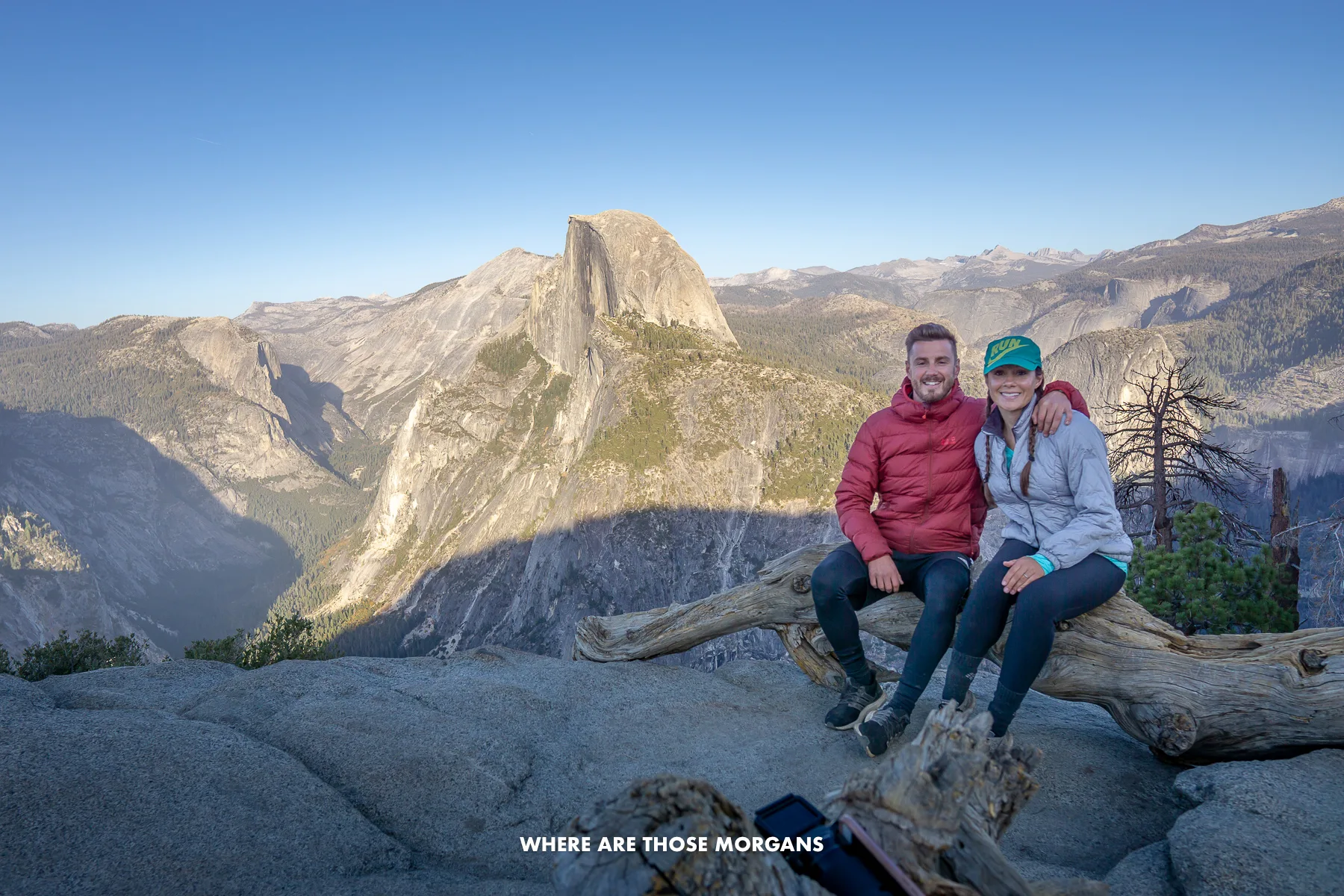
We think Yosemite is a park for everyone – hikers, photographers, sightseers, nature lovers, families with kids of all ages, couples, it doesn’t matter. We love Yosemite’s stunning photo spots, awesome hikes, and non-stop scenery, but summer crowds aren’t the only issue. The park is severely understaffed, upkeep is suffering, visitors are misbehaving, and it’s naturally getting more crowded as more lodging becomes available in the valley. Plus, in recent years they’ve trialed a number of permits and reservations that have utterly baffled visitors. Hopefully things calm down and issues get solved in the next few years, because it’s a shame for such a special place to end up like this.
Yosemite National Park Snapshot
Our verdict: Visually stunning, adventurous hikes, and incredible photo opportunities. We can’t wait to go back.
Don’t miss: Half Dome if can win a permit, Mist Trail, Yosemite Falls, El Capitan, Valley View and Tunnel View.
Crowd factor: In October, Yosemite Valley was busy but not out of control, and all other areas of the park were surprisingly quiet. Summer is a different story.
Biggest regrets: Not getting a Half Dome permit, only having three days, not hiking to the top of Yosemite Falls or El Capitan, not booking accommodation earlier to get better availability.
Ideal stay: We’d say three full days to see more than just Yosemite Valley.
Skip it if: Only able to visit in wildly overcrowded summer months.
Yellowstone National Park
We first visited Yellowstone in October back in 2019, and we clearly remember it being a planning monster because it had 5 entrances, several gateway towns, lodging inside and outside the park, and a lot of driving to reach the major highlights which were spread across every corner of the park. Should we stay in one place or move hotels each night? Where should we start and end? How many days will we need? This is the reality of planning a first trip to Yellowstone, and there’s no one-size-fits-all answer.
We ended up moving each night, starting in Cody and ending in Jackson, and spending four days in Yellowstone with two days in Grand Teton. It all worked out perfectly in the end, but we got off to a rough start with a snow dumping the night before our first day trapping us in Cody (people inside the park couldn’t get out!) and forcing us to enter via Cooke City the day after. Luckily, we do this for a living and quickly adapted our itinerary to ensure we still saw Yellowstone’s top attractions efficiently. After Cody, we spent a night at Mammoth, two nights at Canyon, and two nights in Jackson. Here’s our guide on where to stay in Yellowstone, this one is super important to get right.
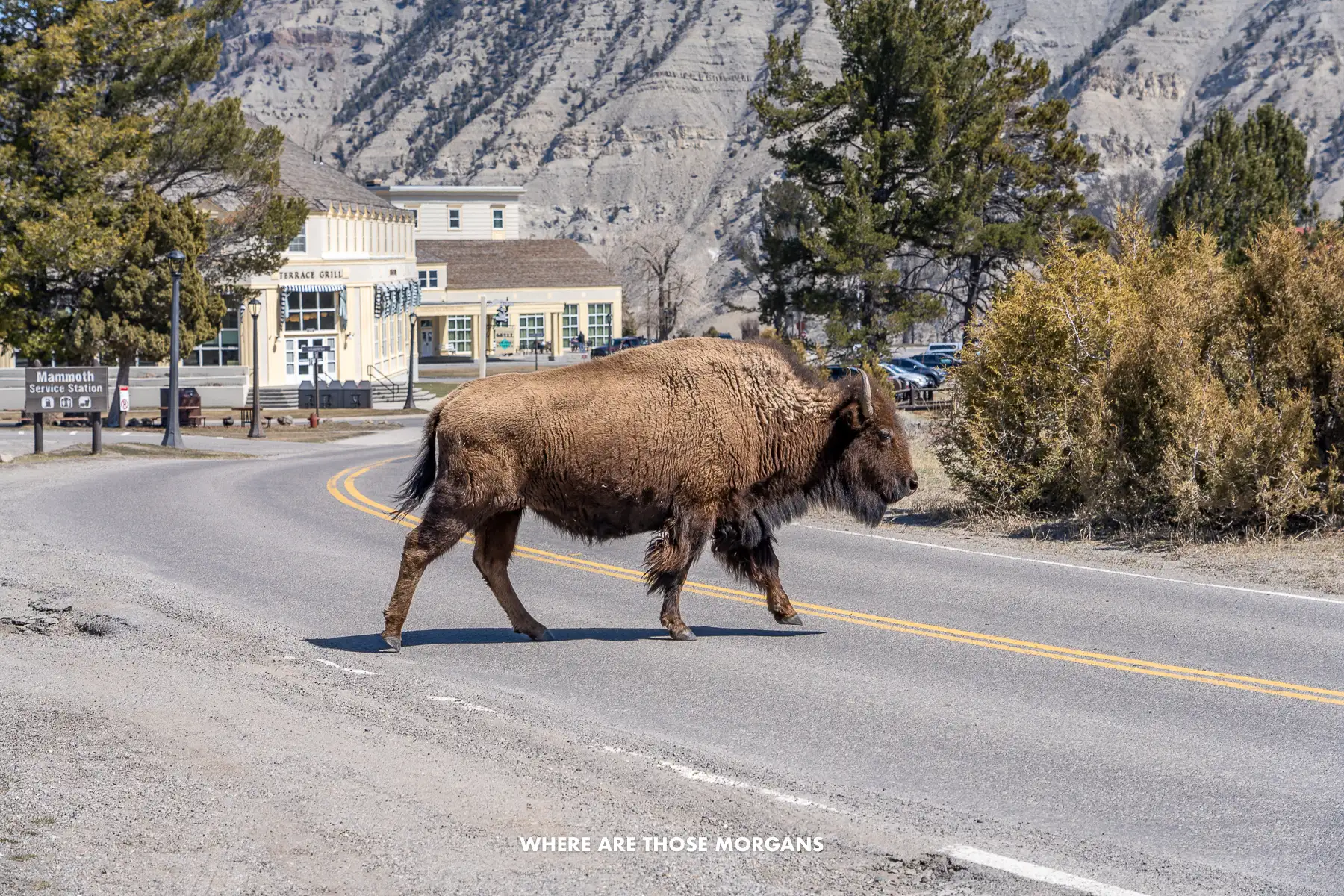
We managed to explore the whole park, with the exception of Dunraven Pass because the same snow dump that trapped us in Cody also closed the road from Canyon to Tower for the season. But that wasn’t too much of a drama, we were still able to see every geyser basin and lots of active wildlife. And we have to say Yellowstone’s geothermal features did not disappoint. In fact, we were left even more awe-struck than we expected. The vivid colors, steaming vents, and bubbling mud pots were so unique among the US national park network, and that’s before taking into account the park’s powerful waterfalls and freely roaming animals like bears, wolves, and bison. It’s a cool place to visit.
In April 2021 we drove from NYC to Seattle, and we couldn’t miss a detour to see Yellowstone again. We knew the park would be partly closed before opening up fully for the season, but we were still able to visit Lamar Valley, Grand Canyon of the Yellowstone, Mammoth, Norris, and the main geyser basins with Grand Prismatic Spring and Old Faithful. And the beauty of being in Yellowstone in April was having some of the most famous sites entirely to ourselves. Summer looks like a chore with heavy crowds and expensive lodging, but all roads and hiking trails are open, so that’s the trade-off. We’ll plan our next trip for June or September for a balance between good and bad.
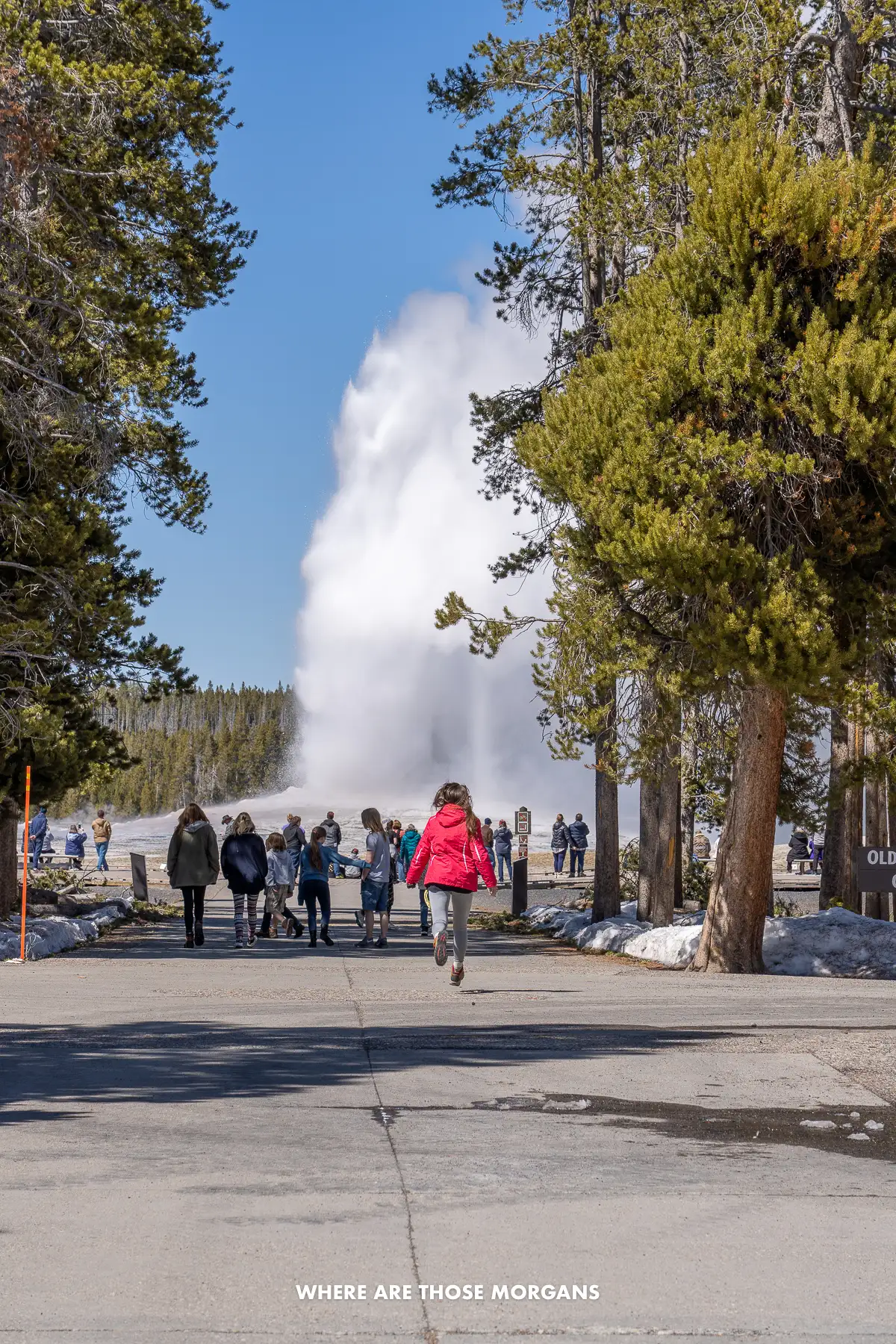
Like Yosemite, we think Yellowstone is a park for everyone. And they generally share a lot of the same issues like overcrowding in summer which leads to expensive hotels, jammed up roads, and parking issues. But there are also some differences. Yosemite has killer hikes and better overall scenery, whereas Yellowstone has more to see and better individual areas like Upper Geyser Basin. Yellowstone isn’t a place we’d go specifically to hike, it’s more of a low-key, slow-paced, sightseeing park. It’s also harder to plan because it’s so big, but the reward is definitely worth all the effort.
Yellowstone National Park Snapshot
Our verdict: Yellowstone’s unique geothermal features blew us away, and we love how much there is to see and do.
Don’t miss: Grand Prismatic Spring, Old Faithful, Morning Glory Pool, Lamar Valley, Hayden Valley, Grand Canyon of the Yellowstone.
Crowd factor: Quiet in April, and a bit busier in October. But June through September can be unbearably overcrowded, especially on the park loop road and at parking areas. Hotels book up fast for July and August.
Biggest regrets: Fairy Falls Trail to the Grand Prismatic Spring view being closed, and the road between Roosevelt and Canyon being closed.
Ideal stay: We’d say three full days minimum, but four days would be better.
Skip it if: Prefer a hiking specific trip, have any medical issues with being over 7,000 ft in altitude, don’t want to deal with intense crowds.
Mt Rainier National Park
When we lived near Seattle for 6 months in the middle part of 2021 (during a never-ending heat dome!), we spent every spare minute hiking all over the western portion of Washington. And Mt Rainier was the one place we just couldn’t stay away from. In total, we took five separate weekend trips to access each of the park’s not-so-easy to reach regions, and we honestly loved every visit – well, except for being eaten alive by bugs, but that’s par for the course in Washington during the summer.
Despite being so different topographically to Yosemite, we felt a similar kind of unique magic around Mt Rainier. Kristen would say it’s probably her favorite US national park. What made it so special? We were spending our days hiking along gorgeous meadow-and-wildflower trails encircling the foothills of a skyline dominating snow-capped stratovolcano. You don’t get to do that every day. On every hike we’d look for our next best view of Mt Rainier, whether it was up close on the busy but incredible Skyline Loop Trail, or further away with the volcano reflecting in Tipsoo Lake on the Naches Peak Loop Trail.
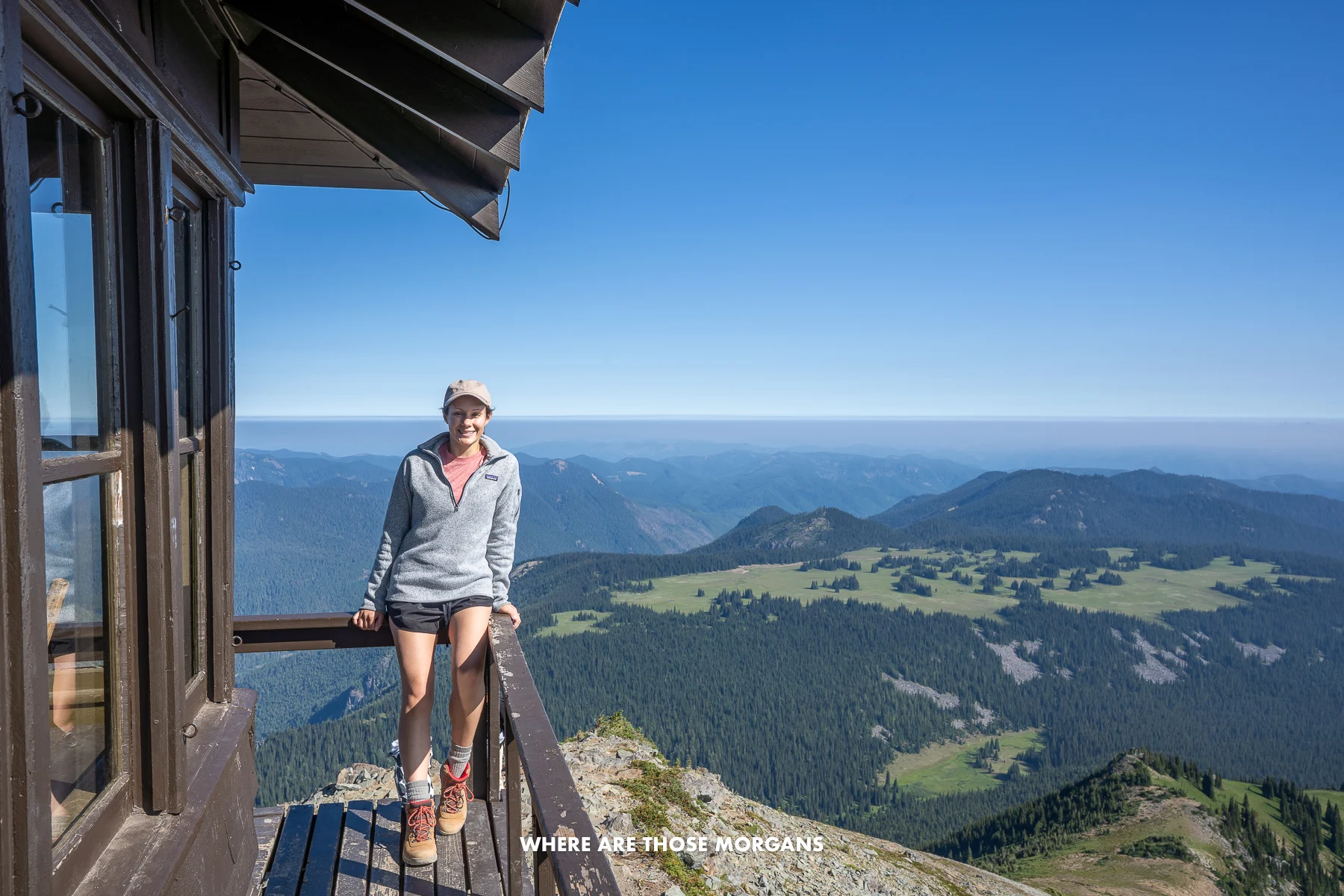
But attractive as it was, we ran into plenty of issues at Mt Rainier. First and foremost, we jumped the gun and arrived in mid-June thinking the hikes would be accessible, but Skyline Trail was covered in at least 10 ft of snow. We still hiked up a bit of it in the snow, but it really hit us how short the hiking window was going to be at Rainier. And what that meant in reality was that when it did finally open properly, it was always jam-packed. Each time, we arrived into the park first thing in the morning to avoid lines, but we saw some serious congestion at entrance stations in mid-morning, especially for the Sunrise region.
The car-jams wasn’t just at entrance gates either, a lot of the popular hikes in Mt Rainier had surprisingly limited parking available, so we always had to be on our game with planning our itineraries otherwise we simply couldn’t get parked. Even then, we still had to skip a few hikes like Summerland Trail because there was no parking. We also found getting around frustrating because Mt Rainier was so enormous. The road encircling the volcano was slow, winding, and it took a long time to get between regions. As an example, the Skyline Trail was pretty close to Tolmie Peak Trail as the crow flies, but the 100-mile drive took us 2 hours 30 minutes because of the park roads and lack of access.
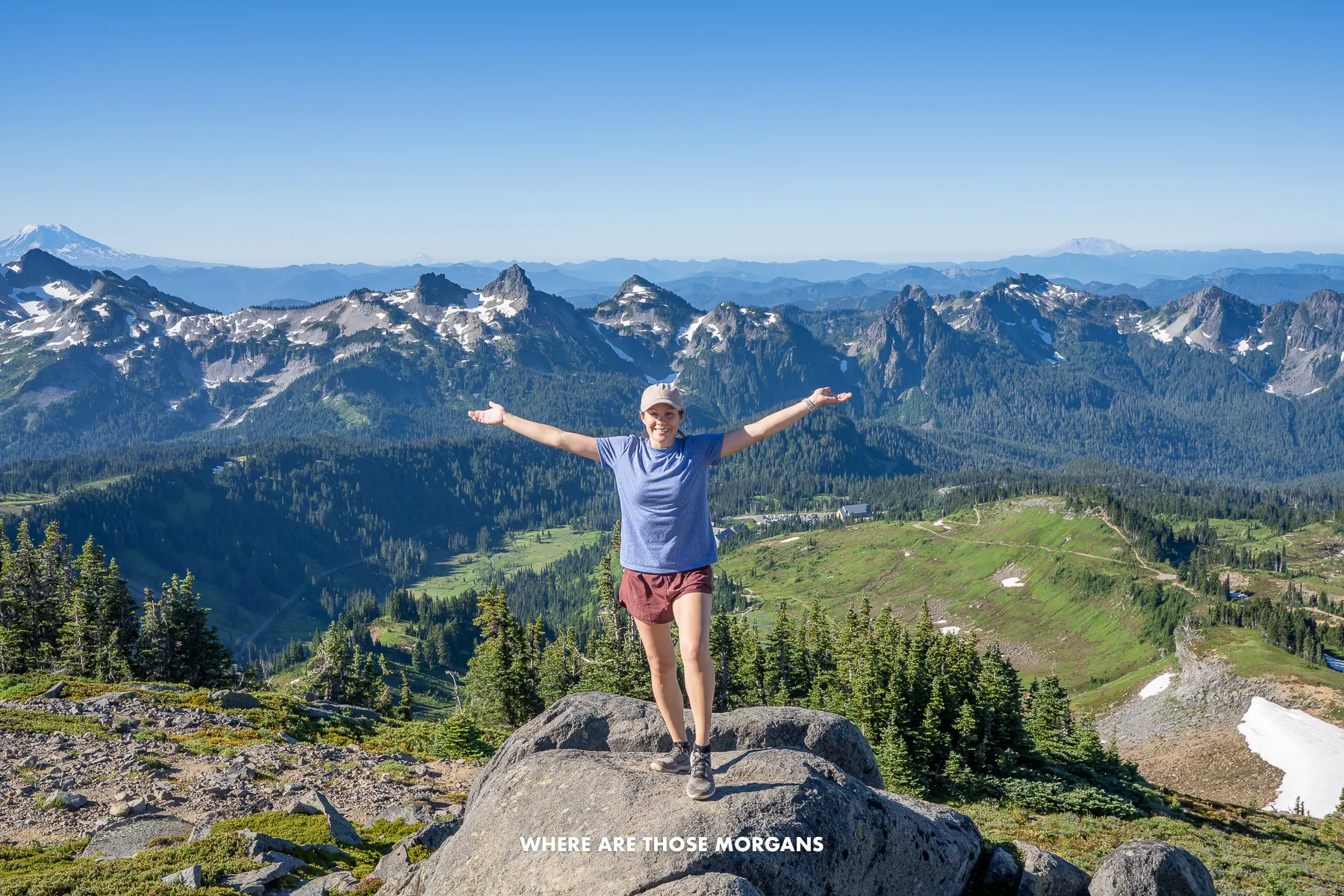
Another issue we struggled with during our trips to Rainier was a distinct lack of accommodation options. Even the small gateway towns around the perimeter had very few options overall, which surprised us. But none of these things mattered the second we stepped foot on any of the hikes, photographed waterfalls, saw a bear eating berries on the Spray Park Trail, and watched sunrise light up the volcano’s summit. Oh, and we didn’t mind ending a few hikes at fire lookout towers with immense views like Tolmie Peak and Mt Fremont Trail – they were okay too!
Mt Rainier National Park Snapshot
Our verdict: Magical.
Don’t miss: Skyline Loop, Mt Fremont, Tipsoo Lake, and Tolmie Peak.
Crowd factor: Lines for entry gates can be intense from mid-morning onward, and trailhead parking can be a real challenge.
Biggest regrets: Not hiking to Pinnacle Peak, going too early in the season (still snowy in June).
Ideal stay: Two days minimum to work through hikes in Paradise and Sunrise, three days would allow for Mowich Lake.
Skip it if: Not interested in hiking.
Grand Canyon National Park
In November 2019, we excitedly took our first steps towards the edge of South Rim with a real air of expectation and anticipation. It was a beautifully sunny and clear day, and as we approached, both of us went silent, our eyebrows raised in unison, and we looked at each other with genuine amazement written across our faces. It was one of very few true wow-moments we’ve experienced in all our travels around the world. That very first time is a game-changer, but the problem is, once you’ve seen it, you’ve seen it – and there’s not a whole lot else to do for non-hikers visiting the Grand Canyon.
Sure, we loved stopping at all the best Grand Canyon viewpoints along Hermit Road and Desert View Drive, and we were utterly blown away by the immense Grand Canyon sunrise and sunset photography spots like Mather Point, Yavapai Point, and Hopi Point – but all of this was just different vantage points looking into the same canyon, it didn’t matter that it was the most iconic canyon in the world. We didn’t hike down into the canyon on our first trip because we didn’t have enough time and it was hot, but we vowed not to make that mistake again next time.
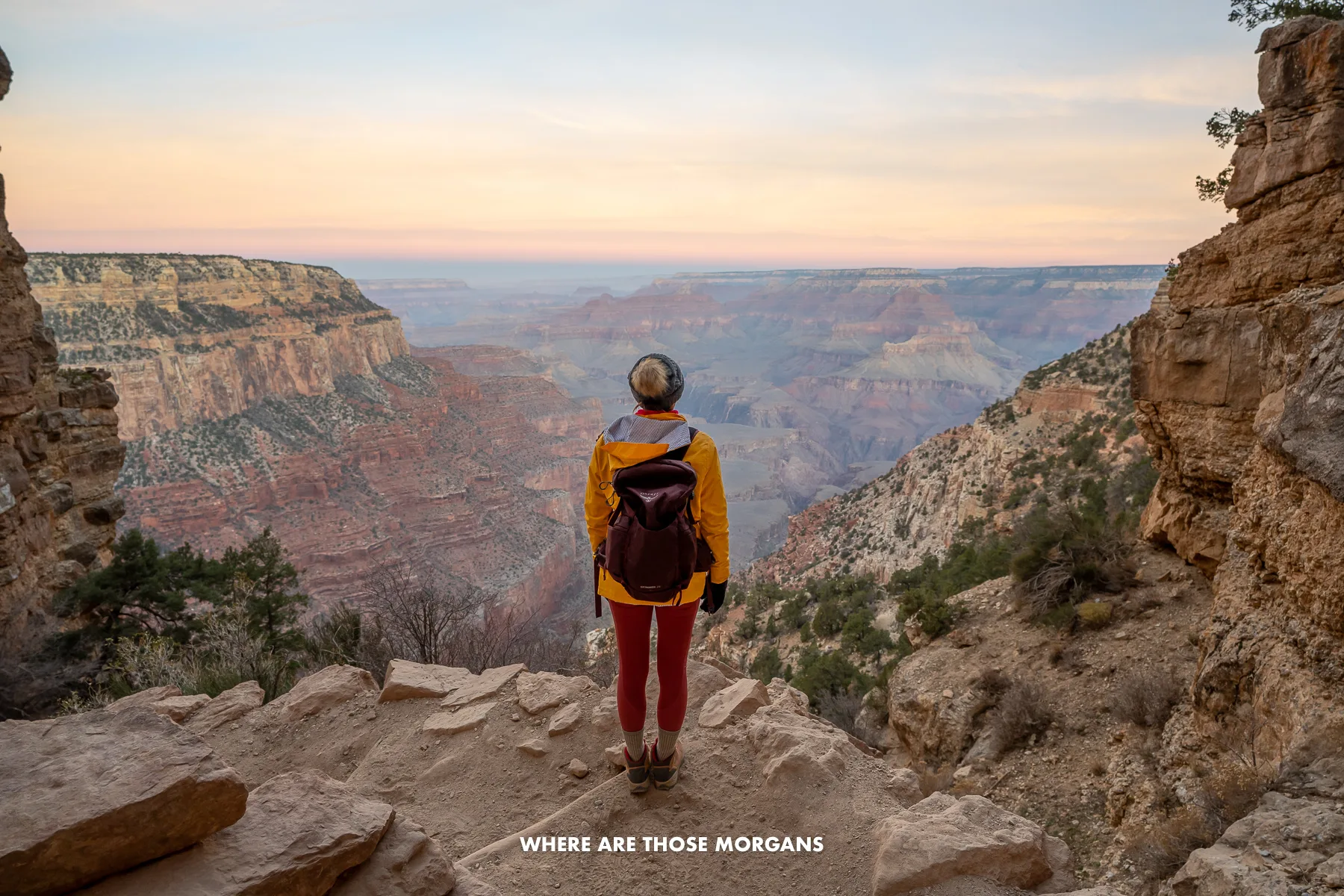
We returned to South Rim in December 2021 for two days, one to see the same viewpoints and one exclusively to hike Rim to River Trail so we could descend to Phantom Ranch on the canyon floor and climb back up in one long but awesome day. The hike turned out to be incredible, easily one of our favorite hikes of all time, but it was grueling and we only did it because we knew we’d avoid heat exhaustion issues in December. And guess what? The next day, we couldn’t even see into the canyon because it was filled completely by thick white snow clouds.
We’ve never had issues with accommodation because there’s plenty of options inside the park and in nearby small places like Tusayan, but food is one thing we’ve struggled with across both visits. We couldn’t seem to find anywhere that had decent quality grub, especially in Tusayan. It’s okay for a short one day Grand Canyon trip, but if we stayed any longer we’d probably look into vacation rentals rather than hotels so we could buy groceries and cook our own food. Here’s our guide on where to stay at Grand Canyon South Rim to learn more.
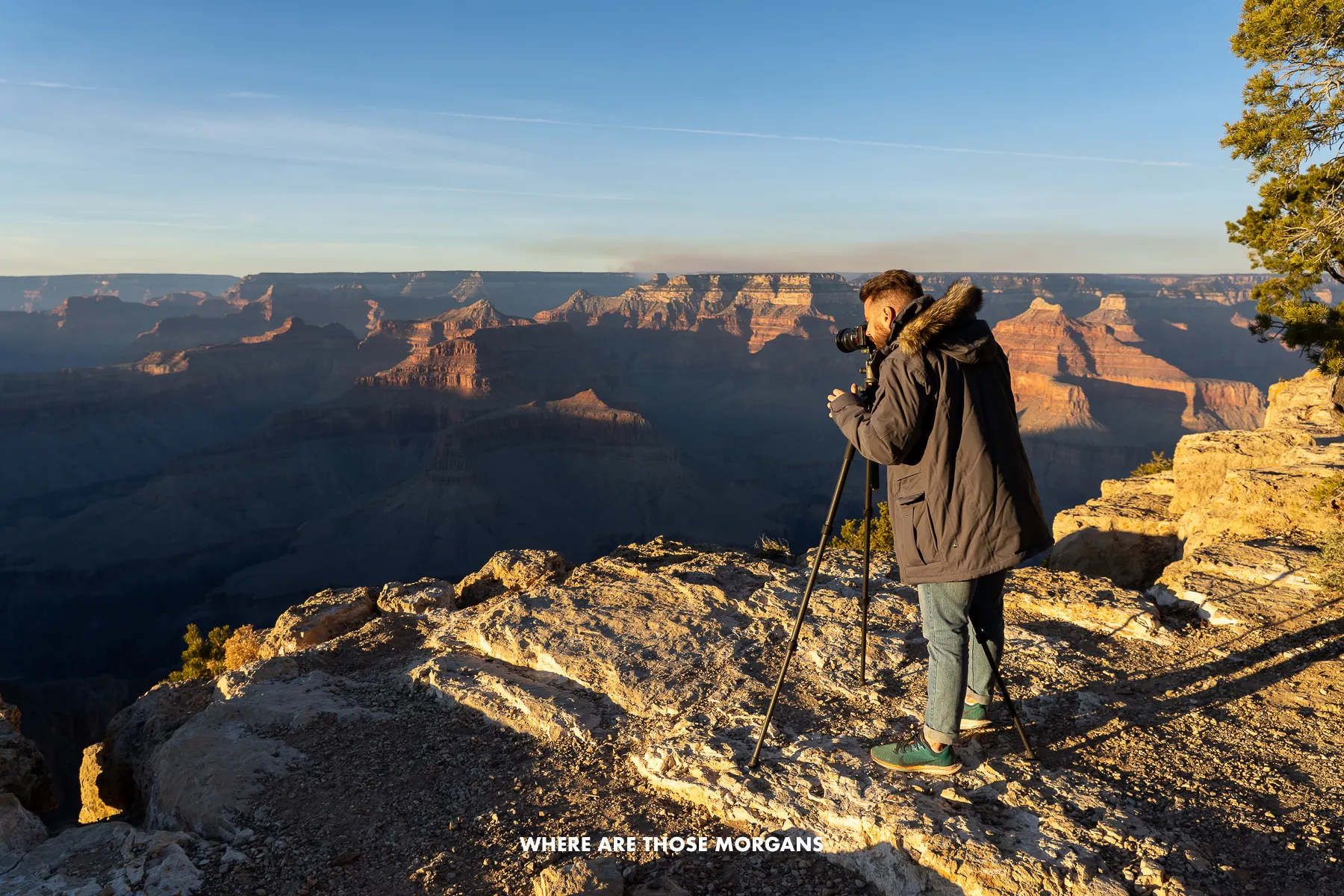
After two trips, we think the Grand Canyon’s top hikes make it worthwhile for hikers but we wouldn’t be able to say with 100% confidence that non-hikers will love South Rim. It’s obviously cool to see it, but South Rim is 4 hours 30 minutes from Las Vegas or 3 hours 30 minutes from Phoenix. So our advice would be to visit South Rim as part of a wider southern Utah and northern Arizona road trip, including places like Zion and Sedona. We haven’t been to North Rim yet (only 10% of Grand Canyon visitors actually go to the north side) but we’ll see it next time because we want to hike Rim to Rim.
Grand Canyon National Park Snapshot
Our verdict: Seeing the canyon for the first time is a genuine jaw-dropper.
Don’t miss: Stops along Hermit Road and Desert View Drive, hiking into the canyon, that first time wow-moment.
Crowd factor: Surprisingly quiet in November and December. Does get busy in spring and fall, but plenty of accommodation.
Biggest regrets: None, we’ve done the hikes and got the photos.
Ideal stay: One day is plenty without hiking, two days is enough for hikers.
Skip it if: One view isn’t enough for the journey.
Acadia National Park
For such a tiny national park, we think Acadia punches well above its weight. Half way through our first New England fall foliage road trip in October 2020, we took a detour and drove across to Bar Harbor so we could spend three days in Acadia. It was a lot of extra driving both ways, but the second we arrived, we knew it was going to be worth the effort. We didn’t hit peak fall colors in Acadia, but that was fine, we were there to hike and give ourselves a break from constantly photographing leaves.
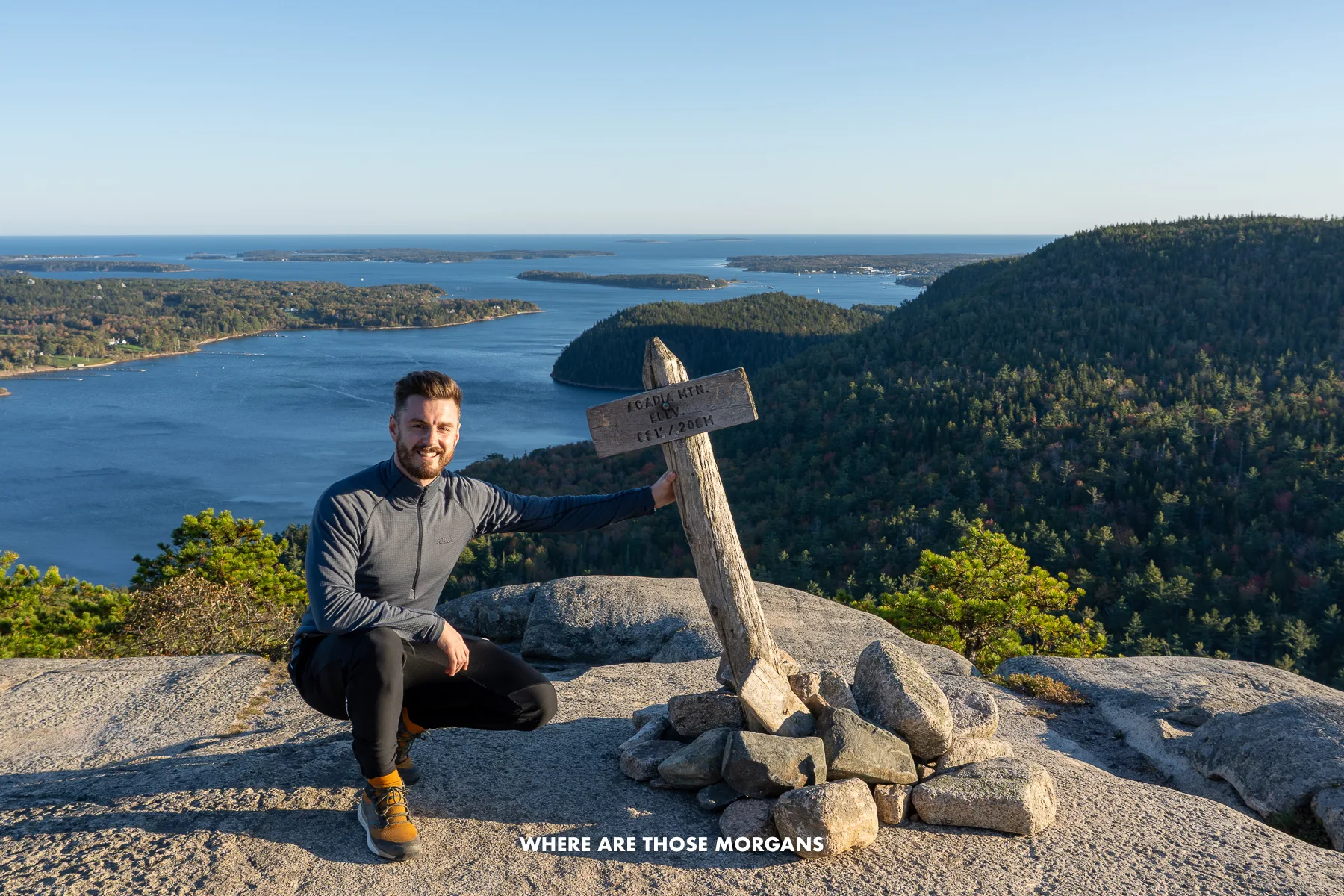
Over the next three days we hiked a host of short but steep trails that almost always led to summits with sublime views over rolling hills covered in trees, deep blue lakes, and the North Atlantic Ocean. And honestly, we thought Acadia’s best hikes were awesome. Zion’s adventure hikes were long and slow going, whereas Acadia’s adventure hikes called Precipice Trail and Beehive Trail were short and quick ladder climbs built into sheer rock faces. A totally different type of trail. Aside from the two thrill hikes, Beech Mountain, Acadia Mountain, and The Bubbles were our favorites in Acadia because they all had fantastic summit views.
Now for the reality check: Acadia is in the middle of nowhere. It’s almost 5 hours drive from Boston Logan airport. It’s perfect as the turn around point for a coastal New England road trip, and it’s doable for fall foliage New England trips lasting at least 10 days so the detour can be justified, otherwise, Acadia is really out of the way. Plus, the most popular thrill hike Precipice Trail is closed every year from March through September for falcon nesting season. It’s a real kick in the teeth for a lot of hikers every year who don’t realize it closes through most of peak travel season.
Back to positives, Bar Harbor is one of our favorite national park towns. It’s a small, ritzy, upscale town with plenty of great places to eat and stay, and it doesn’t feel like a commercialized resort town like West Yellowstone for Yellowstone or Springdale for Zion. For us, enjoying Bar Harbor was a part of the experience of visiting Acadia, and we can’t say that for many other towns near the parks. The problem? Hotels in Bar Harbor aren’t cheap and the restaurants fill up quickly in peak season, so it’s important to be organized and book ahead. Acadia Hotel Downtown is a solid option on a budget.
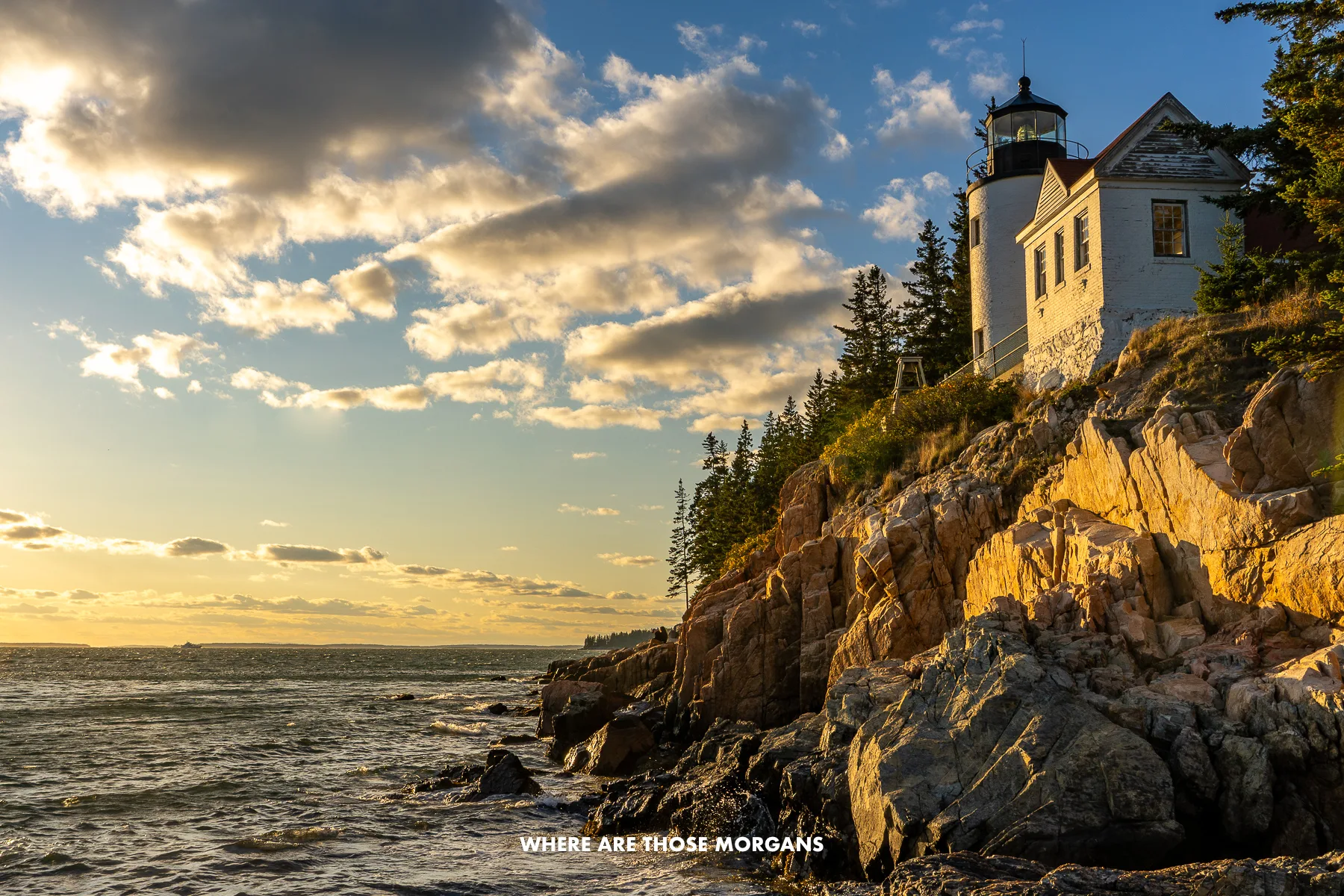
Overall we don’t think Acadia is a hiking only park but we’re not sure we’d make the effort to go all that way up there if we didn’t plan to hike at all. Sand Beach, Thunder Hole, Cadillac Mountain (for sunrise), Jordan Lake, and Bass Harbor Head are great, but they’re not worth the trip alone. We ticked off most of the top things to do in Acadia, and because it’s so far out of the way, we won’t be in a hurry to go back, despite how much we genuinely enjoyed our time there.
Acadia National Park Snapshot
Our verdict: Absolutely loved our time in Acadia. Small and achievable, short but steep hikes, stunning views.
Don’t miss: Precipice Trail, Beehive Trail, Acadia Mountain, Beech Mountain. Cadillac Mountain for sunrise if the weather looks clear.
Crowd factor: We visited in fall foliage season when the park was swarming, but it’s quieter in May, June, September, and late October.
Biggest regrets: Not doing Cadillac Mountain for sunrise (we’ll hike through the night next time).
Ideal stay: Two days for the main hikes, three days to get off the beaten path a bit, which is well worth doing.
Skip it if: Don’t want to drive almost 5 hours from Boston Logan airport. Combining Acadia with either a fall foliage road trip or a coastal road trip through New England makes it more worthwhile.
Grand Teton National Park
Yellowstone commanded all our attention, expectations, and planning efforts when we first visited northwestern Wyoming in October 2019. We’d just blasted around Yellowstone’s geothermal features for three and a half days non-stop, before leaving West Thumb Geyser Basin feeling tired but content with what we’d achieved on the one-hour drive south into Grand Teton National Park. And then boom – instant scenery wow-moment as soon as we arrived.
We looked at each other as if to say “okay, maybe we’ve underestimated how awesome this park is going to be” – and from that first moment on, it was as though the fatigue just vanished into thin air. Adrenaline kicked in, we fired our cameras back up, and we went on to spend two amazing days exploring Grand Teton. Like Acadia, we found Grand Teton to be a small park that packed a meaty punch. After conquering the enormous Yellowstone, it felt like pure relief to be in such an achievable and easy-going park.
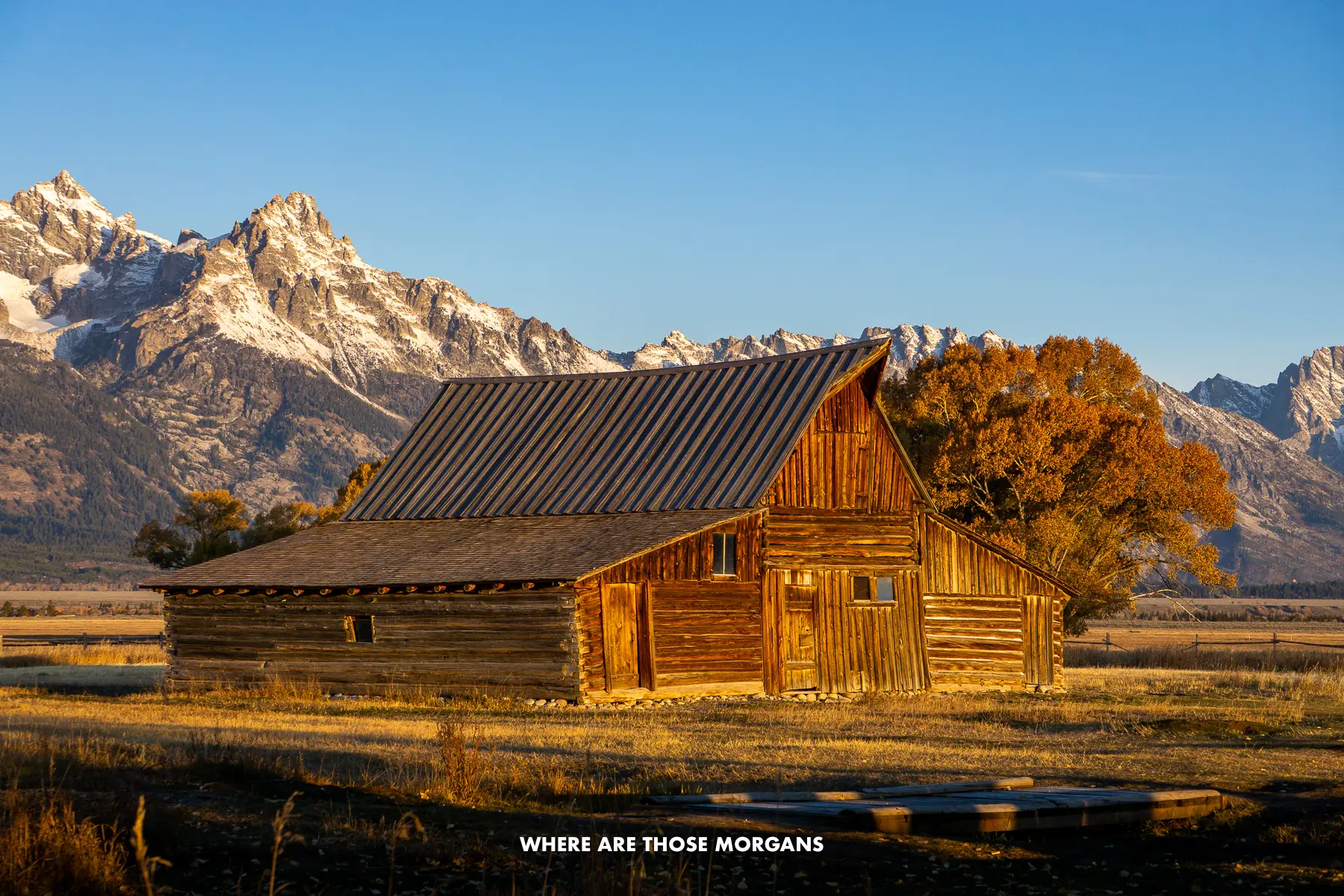
We started with a drive up to Signal Mountain summit and a hidden spur walk close to the top, both of which led to magnificent views. Then we stopped at lots of roadside turnouts with more views, Jenny Lake Overlook for a pristine mountain reflection in the lake, Chapel of the Transfiguration for the classic “mountains through church window” photo, and finally Mormon Row to see the two barns at sunset. It sounds a lot, but the beauty of Grand Teton is that most of the highlights are short, easy, and don’t require any hiking.
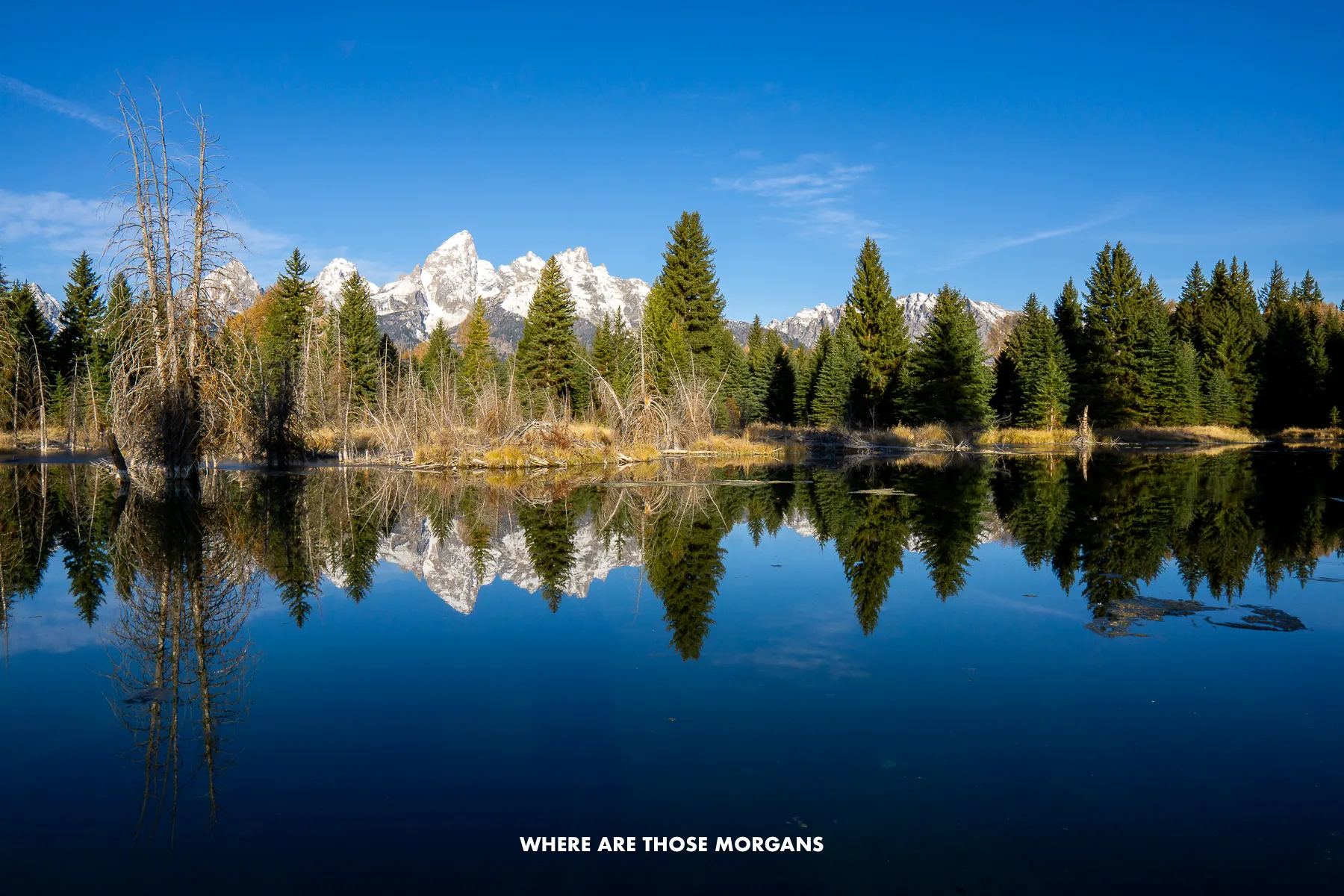
We stayed at Cowboy Village Resort in Jackson, but woke up super early because we couldn’t miss sunrise at Mormon Row (it was cold but watching the mountains glow at dawn was beautiful), then we saw our first moose at Schwabacher Landing right after the sunrise, stopped at Snake River Overlook and Oxbow Bend, and finished with a visit to Jenny Lake. We wanted to hike Cascade Canyon but the trail was closed for repairs as helicopters shuttled materials into the canyon. That was our biggest disappointment from the Tetons.
Notice the lack of negative things we have to say about Grand Teton? That’s because we didn’t really have any complaints. Finding affordable lodging in Jackson and Teton Village was a challenge, but the solution we’ll use next time is to look at vacation rentals in Moose Wilson Road, which are usually cheaper. And we visited in October when the park was quiet, but we know Jenny Lake parking can be a real problem in summer months, so we’d arrive no later than 8:00 AM to get a parking spot. After doing a bit of digging around online, it seems summer crowds (bottlenecks, people abandoning cars on the road during animal sightings, etc) are the main source of negativity.
Grand Teton National Park Snapshot
Our verdict: Majestic park, gets overshadowed by nearby Yellowstone but shouldn’t be missed.
Don’t miss: Jenny Lake, Mormon Row, Schwabacher Landing, Signal Mountain, and Cascade Canyon.
Crowd factor: Shockingly quiet during our visit in October, but it does get crowded in summer.
Biggest regrets: Cascade Canyon being closed, too cold to swim in Jenny Lake, not enough time to hike.
Ideal stay: Highlights can be seen in a day, but it would be a rush so two full days minimum is better.
Skip it if: We wouldn’t skip it if we were planning a trip to Yellowstone.
Arches National Park
After Zion, we’d say Arches was our second favorite national park in Utah. Zion’s iconic adventure hikes are hard to beat, but we absolutely loved two things in Arches: Hiking the full primitive loop around Devils Garden Trail, and hiking up to Delicate Arch for sunset (we also stayed to capture Milky Way photos). Both remain standout memories from our travels around the US, and as much as we were blown away by sunrise at Mesa Arch in Canyonlands, they’re the two reasons Arches beats out nearby Canyonlands for us.
Throw in a weird but wonderful landscape dotted with mind-boggling natural sandstone arch formations (there are lots of canyons in America, but very few places have genuinely unique formations like this), the fact that Arches is very small and easy to visit, and having the handy desert town of Moab right on the doorstep – and we’re talking about a seriously fantastic national park. We also found Arches to be effortlessly photogenic, like every time we turned a corner or saw another arch it demanded yet another photo be snapped on our cameras.
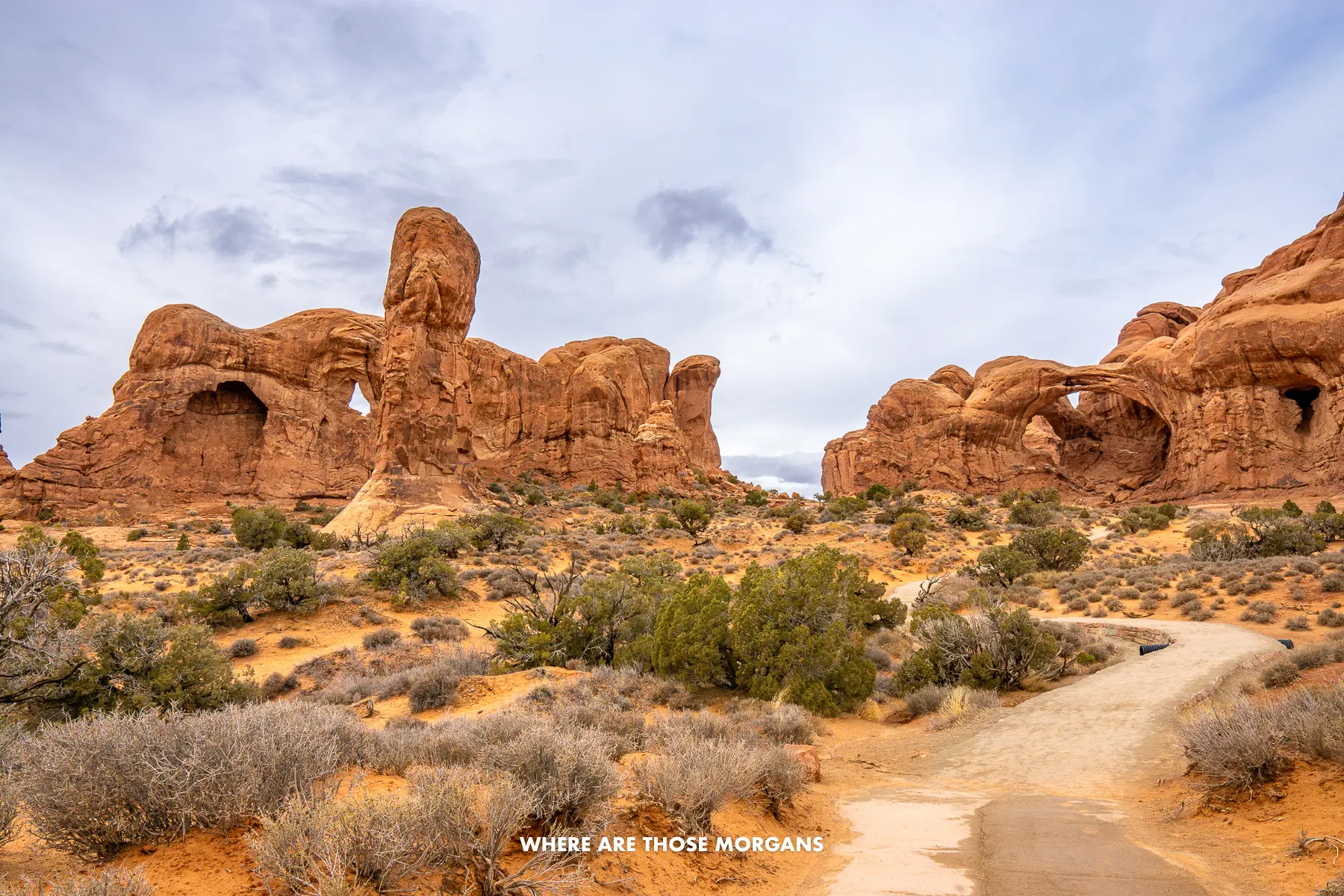
But Arches does have its issues, least of which is the fact it’s so remote and isolated in eastern Utah. Salt Lake City is well over 3 hours away, Vegas is over 6 hours away, and Denver is over 5 hours away. Even Zion (the opposite end of the Mighty 5) is 6 hours drive following the national parks route through Bryce and Capitol Reef. It makes Arches tough to add into an itinerary, it’s a massive detour like Acadia. We remember leaving Moab and it taking us 5 and a half hours to reach Grand Canyon South Rim, not ideal when short on time.
And the issues actually get more significant – Arches is tiny, and the popular parking areas at Delicate Arch and Devils Garden are severely limited for the amount of people entering the park each day, especially late spring through early fall when long lines to get into the park are common after 9:00 AM. We had no issues in November, but we’d always plan to arrive no later than 8:00 AM. Delicate Arch is super popular around sunset so getting parked at Wolfe Ranch can be near-impossible. And finally, both Devils Garden and Delicate Arch are totally exposed, which can be dangerous on hot days in peak season. So there’s a lot to consider.
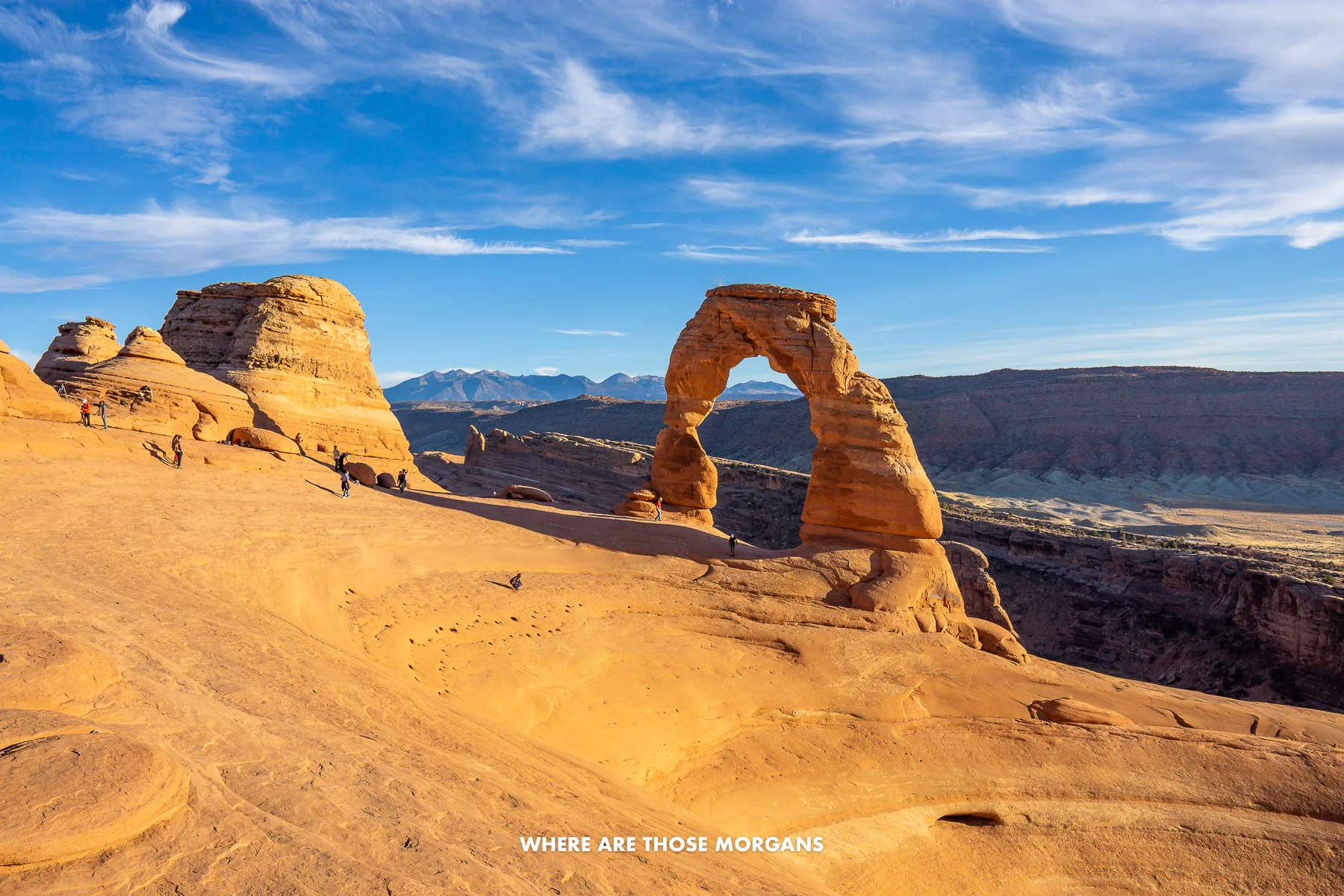
It was actually Mark’s birthday in November 2019 when we ticked off the major highlights of Arches and Canyonlands in one day, starting with the legendary sunrise at Mesa Arch, ticking a few more bits off in Canyonlands, then seeing The Windows, hiking the full Devils Garden Trail, and watching sunset at Delicate Arch. There are a few days from our national park adventures that really stand out, and this was one of them. But we’d never ever plan a trip to Arches in summer when it’s hot, overcrowded and more expensive to stay in Moab. We enjoyed our stay at Expedition Lodge and would book it again next time.
Arches National Park Snapshot
Our verdict: Tiny park packing a big punch with unique arch formations, fun hikes, and serene sunsets.
Don’t miss: Devils Garden full primitive loop for adventure, Delicate Arch at sunset for photos.
Crowd factor: Surprisingly quiet in November, but gets busy in late spring and early fall.
Biggest regrets: Not hiking Fiery Furnace.
Ideal stay: One full day is enough, but two days would be better to slow down.
Skip it if: Moab (Arches and Canyonlands) is too far of a detour.
Olympic National Park
Our first trip to Olympic was a disaster. We decided to give it a try over Memorial Day weekend, even though we knew holiday weekends were busy periods at national parks, just to see what it would be like. And no prizes for guessing it was nothing short of ridiculous. What should have been a 2.5-hour drive to Lake Crescent ended up taking closer to 5 hours. The traffic was awful, and it put us off visiting any national park during a holiday weekend for life.
Once we actually arrived at Fairholme Campground where we spent 2 nights, every spot was taken, and we knew parking was limited at the trailhead for Marymere Falls and Mt Storm King so we had to get an early start the next morning. The trails were busy, and Storm King summit was awesome but pretty jam-packed. The next day we drove up Hurricane Ridge Road (passing by a black bear on the roadside) and hiked a small portion of Hurricane Hill, which was covered in snow. So overall it was an underwhelming trip.
We didn’t bother going back until we actually left the Seattle area and began our 2-month road trip to Sedona by circling around the Olympic Peninsula. It was late October, and this time we planned a much better itinerary. We began at Staircase Rapids, which wasn’t a great hike but the river cutting through old growth forest was a stunning scene (buy our print). Then we spent a night at The Palace Hotel in Port Townsend, before hiking Sol Duc Falls and Ancient Groves, and spending that night at Woodlands Inns in Forks.
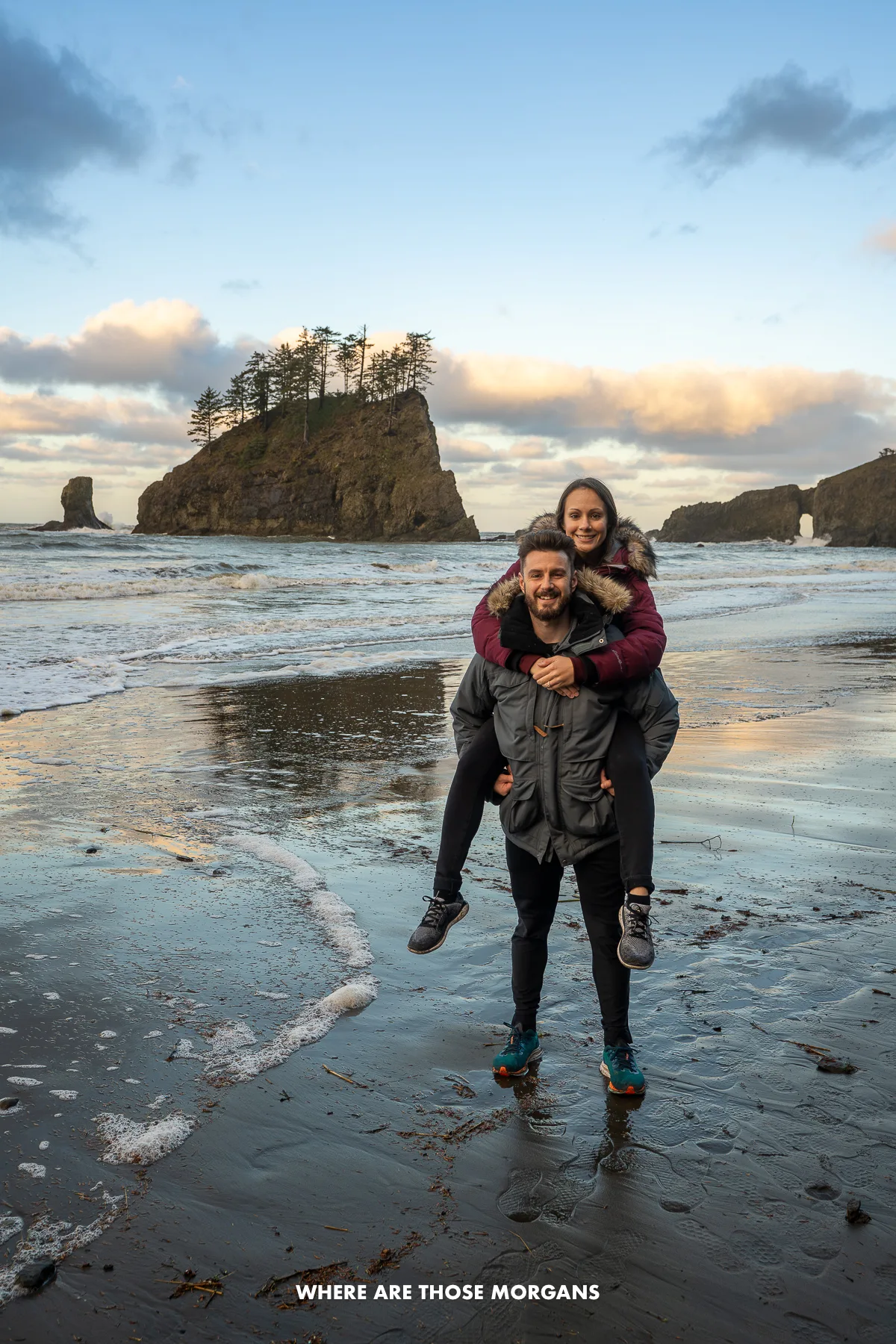
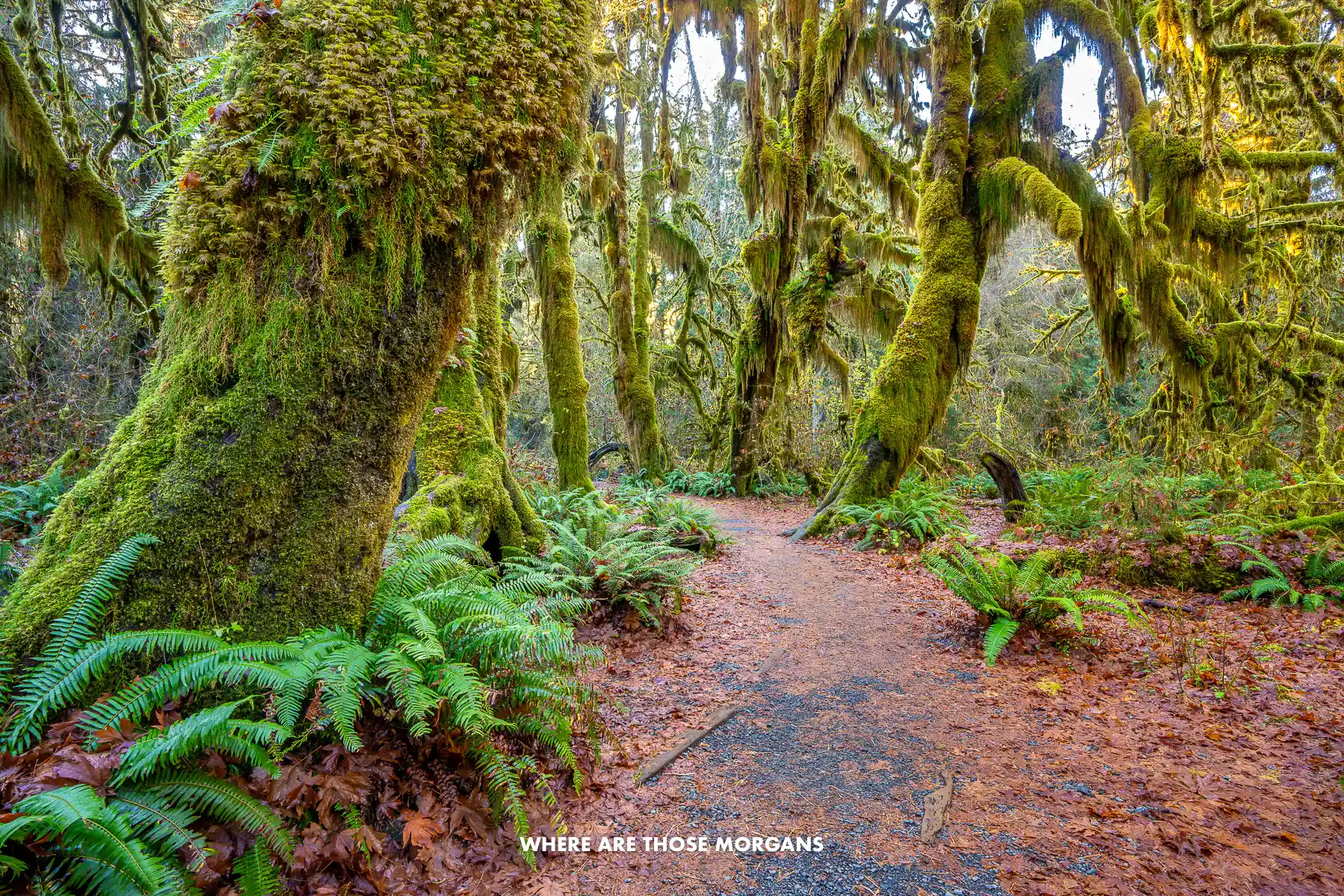
The next morning we hiked to Second Beach for sunrise, and even though we got unlucky with a pretty flat sunrise, it was still awesome having it to ourselves. Next up was a drive inland to walk through the incredible temperate old growth Hoh Rainforest with its mossy branches. That was a real eye-opener. Then we stopped at Ruby Beach to watch a striking sunset, before getting an early night in the rustic Lake Quinault Lodge. Early the following morning we looped Lake Quinault, saw the world’s tallest sitka spruce, and headed south to Cannon Beach.
Now, onto the realities of visiting Olympic. First, the massive loop road was a slog and the park’s major highlights were spread right around it. The interior roads did not connect, so driving distances were a bit of a shock to the system. We think the only way do Olympic properly is to have four full days to drive the loop in one shot, or take several shorter trips targeting different sections of the park. And it was fine for us in late October, but we’ve read that lines to get into Hurricane Ridge and Hoh Rainforest can be 1-2 hours from late spring through early fall.
Olympic National Park Snapshot
Our verdict: Amazing diversity, lots to do, but a pain to see it all.
Don’t miss: Hoh Rainforest, Staircase Rapids, Mt Storm King, Second Beach, Ruby Beach.
Crowd factor: Busy in peak months, much quieter in October.
Biggest regrets: None.
Ideal stay: Four days for the full loop.
Skip it if: Prefer hiking exclusive trips, don’t want to deal with long drives between highlights.
Bryce Canyon National Park
We visited Bryce Canyon straight after Zion back in October 2019, and honestly the small size, lack of “big ticket” things to do, and overall ease of visit at Bryce was a welcome relief. We thought it felt a bit like the Grand Canyon, just on a significantly smaller scale – the only way to spend time were to enjoy awesome views from the rim, drive a scenic road for different perspectives, and hike down into the canyon for a more immersive experience. Just like the Grand Canyon.
We arrived early evening and went straight to Sunset Point to watch a relaxing sunset over the amphitheater. The sun was behind us so the shadow came towards us, and we knew the sunrise would be much better. So after spending a night at Bryce Canyon Grand Hotel, we woke up early to watch the sun rising to the east from Sunrise Point. It was freezing cold up at 8,100 feet, but the sunrise was staggeringly beautiful as the amphitheater glowed a deep crimson red like a ball of dark flames slowly falling down into the hoodoos.
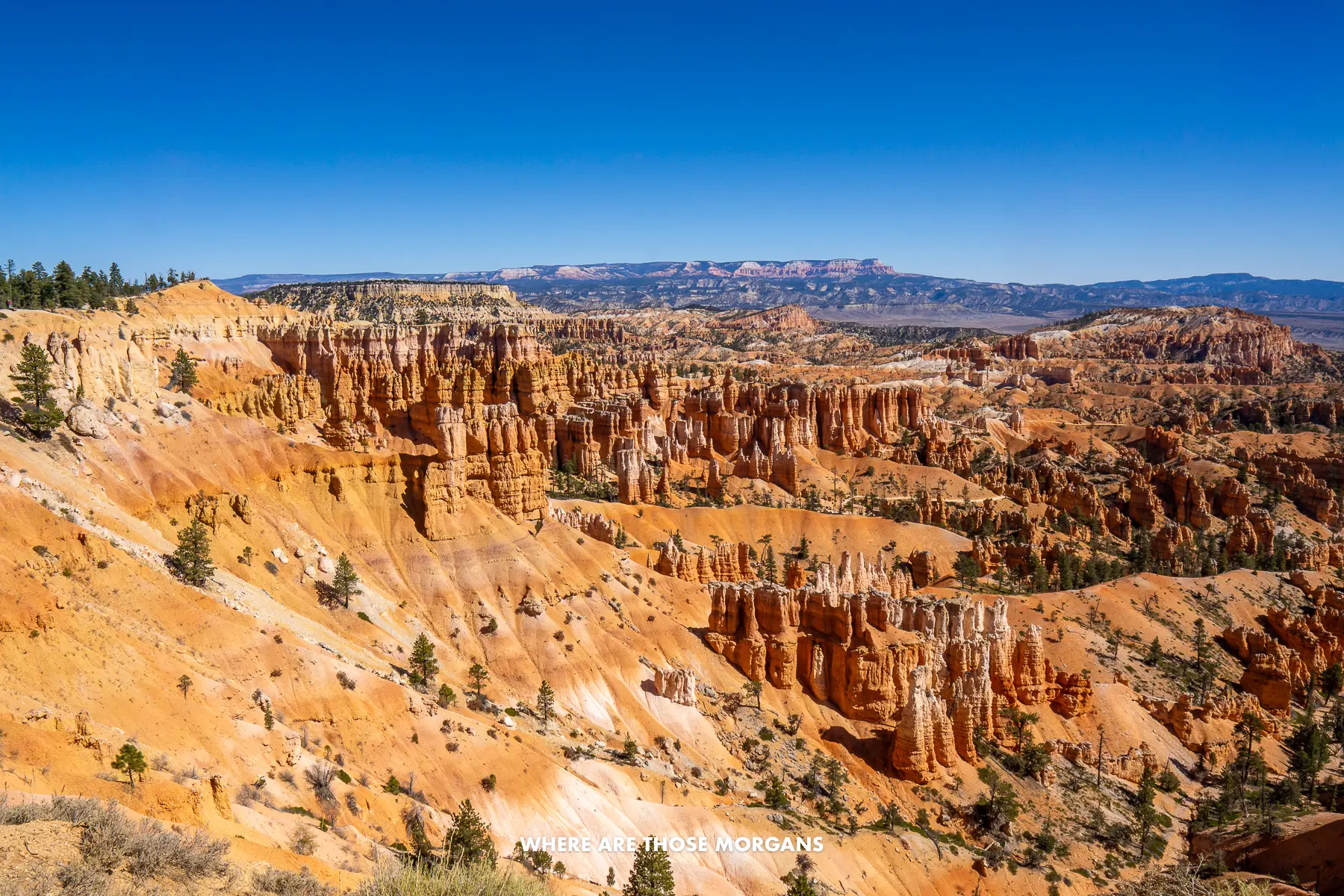
Once the sun was up, we immediately hiked the only unmissable trail in the park called Queens Garden Navajo Loop, which got us right among the sandstone hoodoos. It was a totally unique hike that we’d tell every single person visiting Bryce to do. After climbing steep sandstone switchbacks back to the rim, we hopped in our car and drove to the end of the scenic road, then stopped at every viewpoint on the way back, and we finished with another sunset. It was great.
Downsides? Well, honestly, Bryce was a pretty low-drama national park. One thing we don’t understand is why the food and lodging options nearby are so poor. Maybe it’s because most people only go for a day or two at the most, which isn’t long enough for it to become a real problem. Another problem is limited parking near the main viewpoints on the rim fill early in peak visiting months, but there’s a free Bryce shuttle to combat congestion. And the only other thing we make people aware of is altitude (potential medical issues) and how the elevation impacts weather like wind and cold – our overnight in October was brutally chilly.
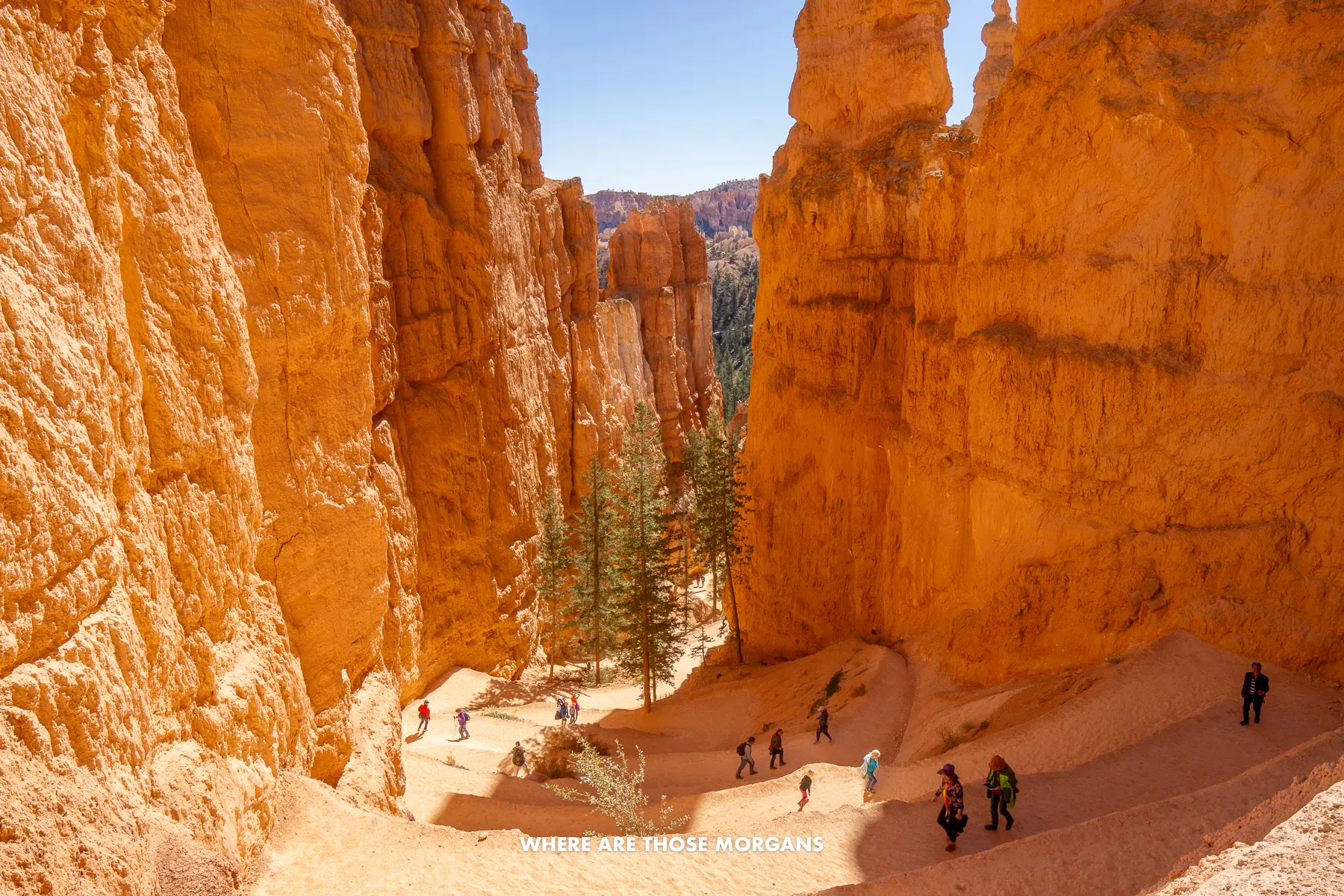
All things considered, we think Bryce Canyon is a fantastic national park. It’s easy to see in a day, there’s only one must-do hiking trail so it doesn’t feel overwhelming, the sunrise and sunset photo spots are just steps from the parking areas, and it’s not a park that’s only worth doing for hikers like many others in our guide. But we do have to caveat all of this by saying, as much as we liked Bryce and don’t have too many complaints, at the same time it didn’t blow our socks off. We’re not in a massive rush to go back.
Bryce Canyon National Park Snapshot
Our verdict: Unique amphitheater, stunning sunrise, great hike into the hoodoos – but not desperate to go back.
Don’t miss: Queens Garden Navajo Loop, Inspiration Point, sunrise at Sunrise Point.
Crowd factor: Fairly quiet in October, but gets much busier in late spring and early fall.
Biggest regrets: We wouldn’t have minded having another day to hike Fairyland Loop, but not exactly a regret.
Ideal stay: One full day is easily enough to see the major highlights.
Skip it if: Short on time, nearby Zion is better for hiking.
Next Steps
We hope our guide helps you figure out which US national parks to visit.
If you’d like more personalized help, we offer expert travel planning consultations where we answer any questions you have, help you decide where to go, and plan out your entire itinerary step by step. See our packages and reviews.
Still researching for the USA?
- Here are the best scenic road trips in the US.
- These are our top vacation spots in the US.
- Here are the best photo spots in the US.
- These are our top hiking trails in the US.
Finally, if you’re planning a first trip to America, read our USA travel guide for more helpful tips and advice.
Happy Travels,
Mark and Kristen
Enjoy this guide? Pin it for later!

All Rights Reserved © Where Are Those Morgans, LLC. Republishing this article and/or any of its contents (text, photography, maps, graphics, etc.) in whole or in part is strictly prohibited.
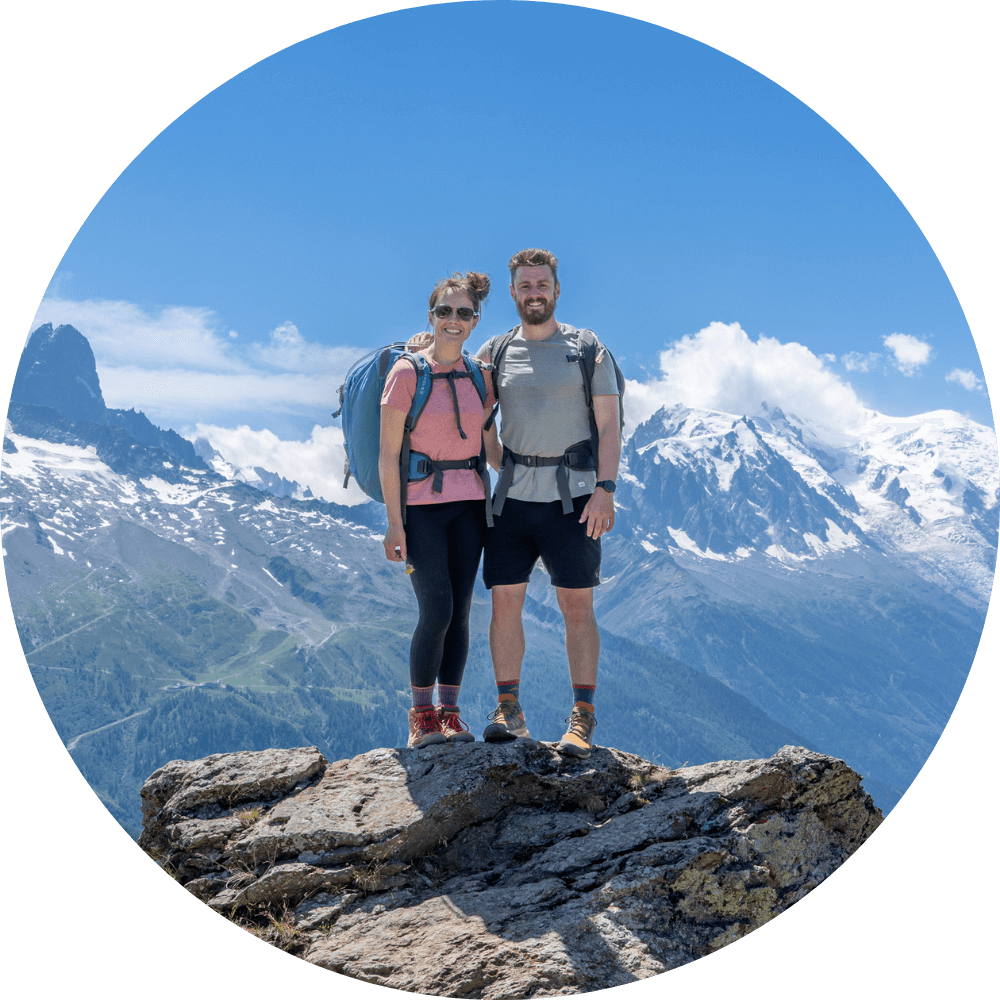
Mark and Kristen spent 5.5 years traveling the world full time, visiting over 40 countries across 4 continents and more than 30 US states. They created Where Are Those Morgans in 2018 to help others plan the best possible vacations by writing authentic travel and hiking guides based on their real experiences.
Since the arrival of baby Maya in late 2024 and Kai in 2026, Mark and Kristen’s extensive travels have slowed down, but they still take plenty of trips each year. Where Are Those Morgans now helps millions of travelers each year to visit new places and hike new trails through information-packed blog posts, expert travel guidebooks, 1-on-1 trip planning consultations, and deep-dive YouTube videos. Read more about Mark and Kristen.