
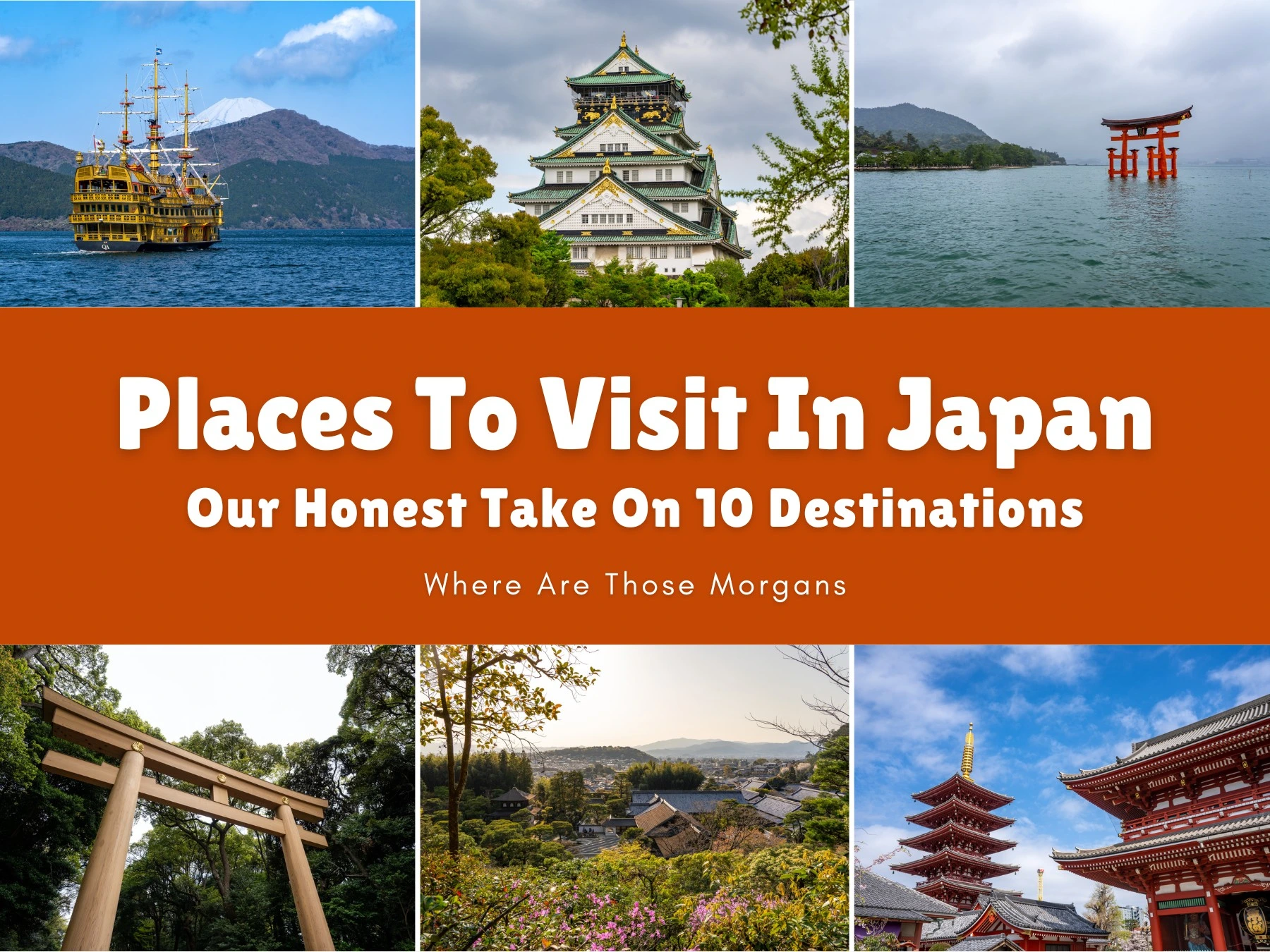
Across four unforgettable weeks, we’ve devoured steaming bowls of ramen in tiny hole-in-the-wall eateries in Osaka, wandered through neon-lit Tokyo streets that pulse late into the night, and found peace among Kyoto’s many ancient Zen temples. We’ve seen Mt. Fuji from Hakone, fed sika deer in Nara, and hiked in the Japanese Alps. What we love most about visiting Japan is watching old and new worlds collide, feeling tradition meet innovation, and embracing the idea that food is king.
After finishing our 2018-19 trip around the world, everyone kept asking us the same question: “What was the best place you visited?” And despite traveling on a shoestring budget, our two-week trip to Japan during the fall easily ranked among our favorite experiences. So when we finally had the chance to return for another two weeks in 2023 – this time to chase cherry blossoms and with a healthier budget – we couldn’t book those flights fast enough.
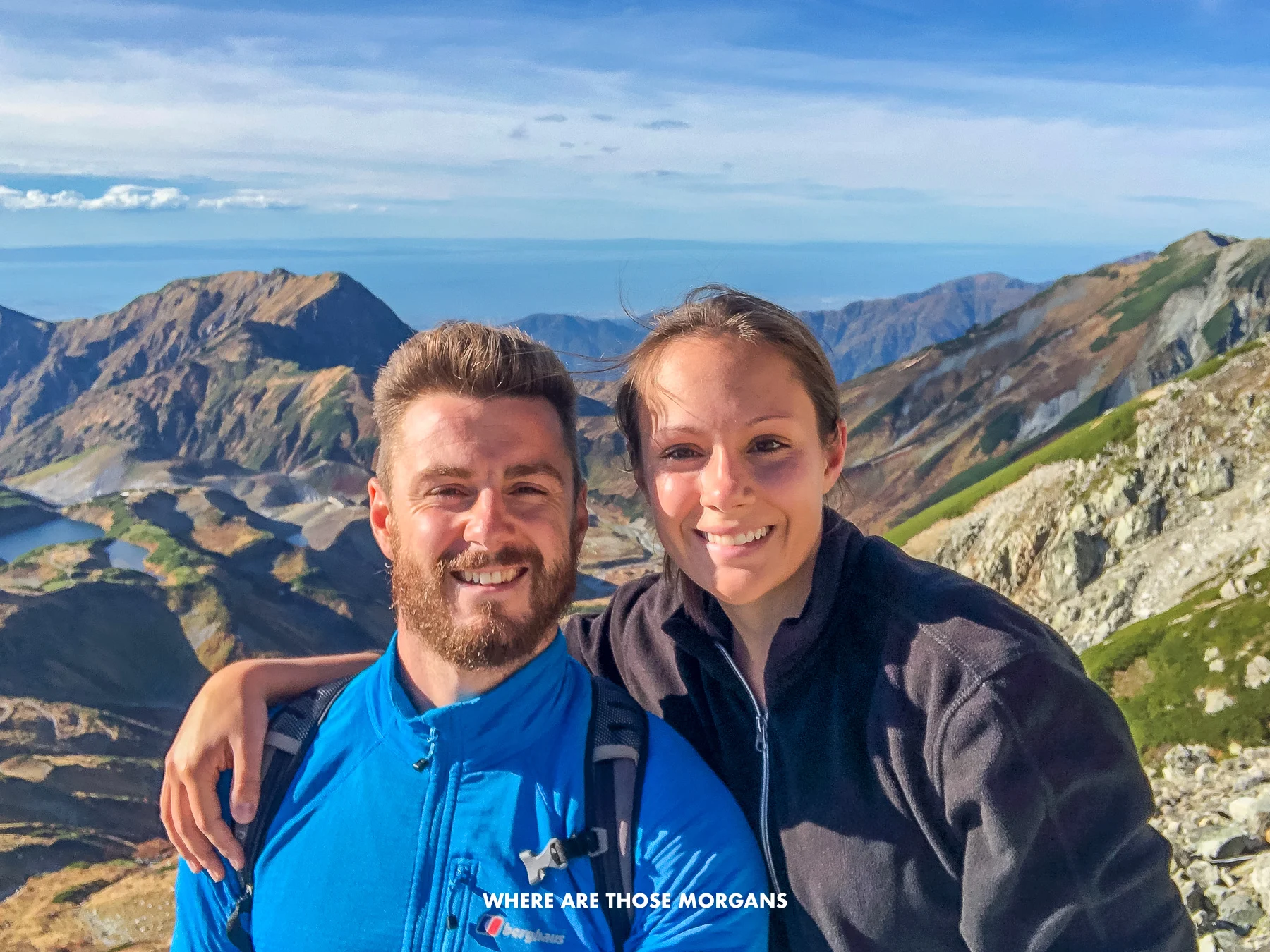
Hi, we’re Mark and Kristen Morgan. We left our scientific careers in 2018 to become travel writers and photographers, and since then our expert guides have helped millions of travel planners take better trips. Read more about us.
Why trust us with your Japan bucket list? We’ve visited more than 10 places across two trips to Japan. We know what’s worth seeing and what to skip. As always, every photo in this guide is ours.
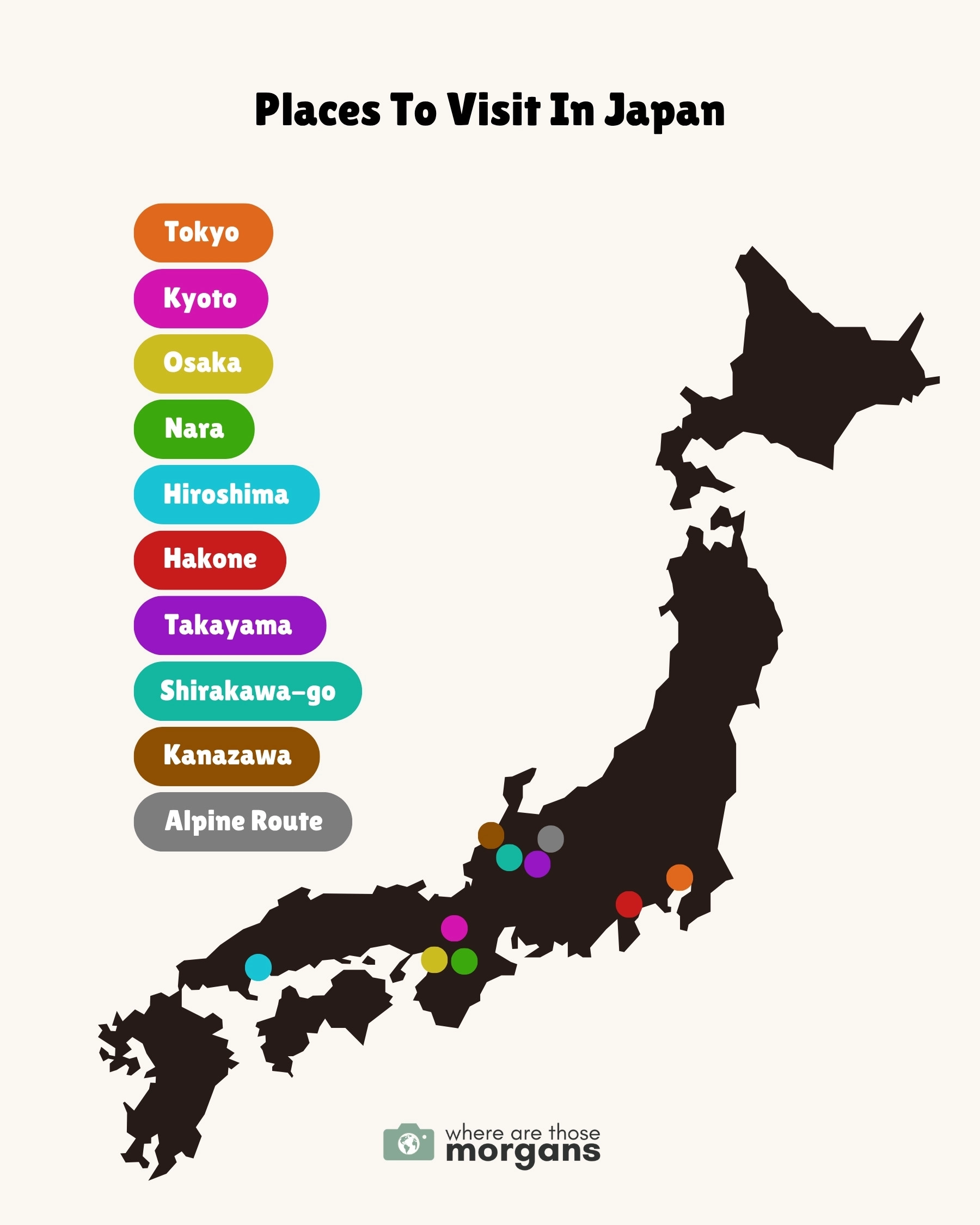
Our favorite places to visit in Japan are Tokyo, Kyoto and Osaka – the classic trio. If we were planning our first Japan itinerary all over again with limited time, these famous cities are exactly where we’d start. It might sound cliche, but there’s a reason they top every first-timer’s wishlist. We’d rather be honest about what truly stands out than recommend something just to sound original.
Beyond the “big three”, we loved our 2018 loop through Takayama, Shirakawa-go, Kanazawa and the Japanese Alps – it showed us a quieter, more traditional side of Japan that few first-timers see. In 2023, we also visited Hiroshima, which we genuinely enjoyed, but with limited time we found the long detour there less rewarding compared to how much ground we could cover elsewhere.
In this guide, we’ll take you through our thoughts on the best places to visit on a first trip to Japan, based on our own travels and lessons learned along the way. Let’s get started.
Note: Our content is reader supported and contains affiliate links. If you make a purchase through one of these links, we may earn a small commission at no extra cost to you and it helps us keep this site running.
Need a hand planning your Japan trip? We help independent travelers plan better, stress-free trips. Schedule a video call and we’ll build a Japan itinerary that fits your style, budget and priorities. See our travel planning help.
Tokyo
We expected full-blown sensory overload and culture-shock the first time we visited Tokyo, but that never really happened. Instead, we seamlessly integrated into the chaos and found ourselves wanting more. The city was massive, which we found to be both positive and negative: On the plus side there was so much to explore, but on the down side it meant we had to take tons of subways and trains to get around from our hotel. Here’s our guide on where to stay in Tokyo to see which areas are best to stay.
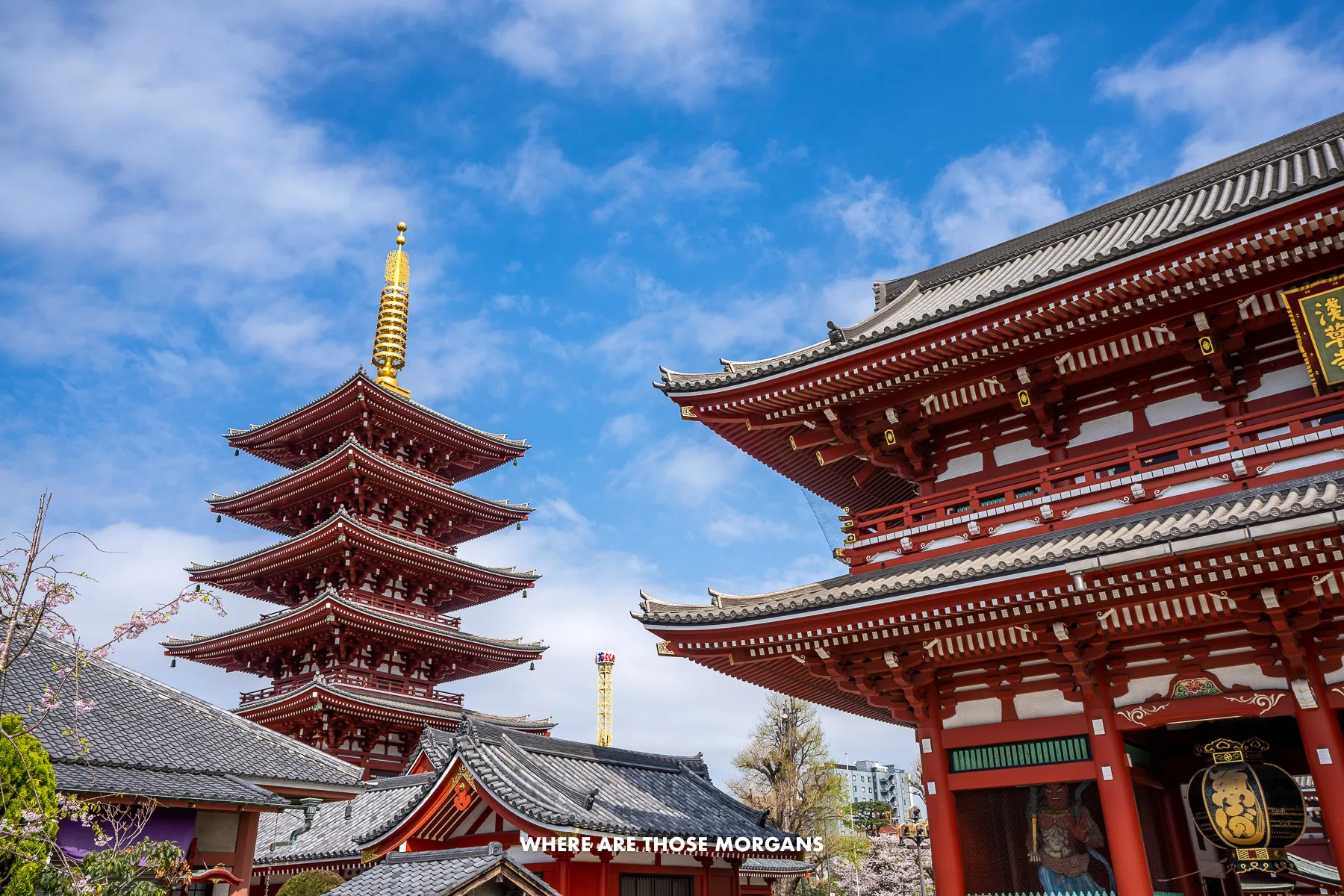
In 2018, we didn’t have much money to spend so we booked a cheap hotel in Kanda, which wasn’t an ideal location. But we quickly realized that attractions in Japan were way cheaper than in the US or Europe, so we weren’t forced to miss out on anything major. Even food was easy because we just ate at tons of convenience stores (7-Eleven, Lawson and FamilyMart are amazing!) or local ramen joints. We visited Senso-ji Temple, and basically spent our whole trip walking around Tokyo’s totally different neighborhoods like neon-lit Akihabara, old-world Asakusa, upscale Ginza, trendy Shibuya and chaotic Shinjuku.
When we went back to Tokyo in 2023 with more cash to burn, we went up all four observation decks (Tokyo Skytree, Tokyo Tower, Roppongi Hills and our favorite Shibuya Sky), but other than those paid attractions, we spent most of our time walking again. This time we stayed at the popular mid-range Sunroute Plaza Hotel in Shinjuku which was all about location, we ate at excellent restaurants, explored stunning gardens like Shinjuku Gyoen and Hamarikyu Gardens, wandered to the forested Meiji Jingu, visited Tokyo National Museum, and got seriously overwhelmed walking through the insanely busy Takeshita Street. We also visited Tokyo Imperial Palace and didn’t think it was worth it.
What we took from both trips is that we think most of Tokyo’s top experiences come from simply walking around the city, eating and drinking, with the occasional paid attraction thrown in for good measure. That said, if we were short on time in Tokyo and didn’t want to walk miles or figure out trains, we’d just take this popular bus tour that hits most major sights in one day. Something we’d definitely prioritize next time is trying unique Japanese experiences like this sumo show in Shinjuku, this sushi making class in old-world Asakusa, and this go-karting tour in Tokyo Bay. They are the sort of things we wouldn’t be able to do anywhere else.
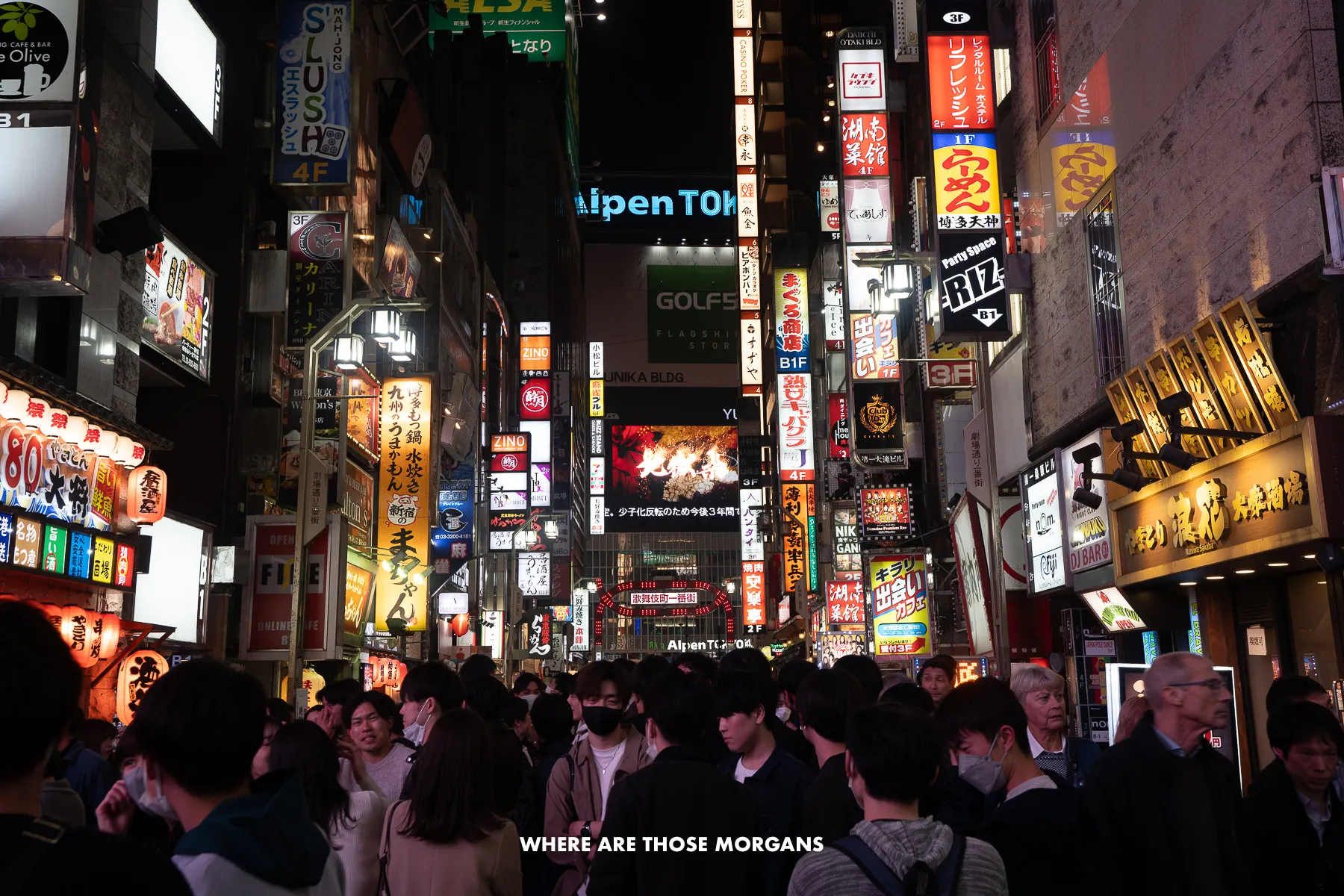
Most international travelers visiting Japan fly into and out from Tokyo, which is exactly what we did in 2023. We split our time in the city by doing 3 days at the beginning and 2 days at the end of our trip. Overall, we’d say 4 days is enough to see the highlights, but 5 days in Tokyo allows time for an easy day trip to hike Mt. Takao, a longer full-day Hakone day trip from Shinjuku by Romancecar, time to relax, a day just for eating and drinking, or time to see something different like TeamLab Borderless – which was closed during our trip and is firmly on our radar for next time.
Tokyo Snapshot
Our verdict: We liked Tokyo the first time, but loved it the second time. Knowing the neighborhoods made a massive difference.
Don’t miss: Shibuya Sky observation deck, a slow morning in Asakusa, and at least one full evening eating and drinking in Shinjuku.
Crowd factor: Everywhere was busy, but Takeshita Street was genuinely overwhelming. We’d skip it next time.
Biggest regrets: Missing proper Japanese experiences like a tea ceremony or sushi making class. Wasting time at the Tokyo Skytree.
Ideal stay: We’d say four days minimum, five if we wanted to slow down or take a day trip.
Skip it if: We wouldn’t – it’s a non-negotiable for any first-timer.
Kyoto
We love the neon-lights and action in Tokyo, but as we get older (and hopefully wiser!) we’ve come to prefer the relaxing, serene, Zen temple-heavy style of visit that Kyoto offers. Now, Kyoto was extremely touristy in the fall but it was almost unbearable during cherry blossom season, the “old-world” area was smaller than we expected, and it wasn’t as easy to get around by train as Tokyo or Osaka. But ticking off Kyoto’s top attractions felt more achievable because it was compact, less intense, and most of the central “downtown” core was walkable.
Our favorite parts of Kyoto are the historic postcard-perfect Gion and Kiyomizu areas within southern Higashiyama. That’s where the ancient, lantern-lit, narrow streets flanked by wooden buildings with temples, shrines and pagodas at every turn are found. But in terms of where to stay in Kyoto, we think Downtown near Nishiki Market is more convenient for first-timers because it has better transit links. We stayed at Hotel Forza in 2023 and it worked perfectly.
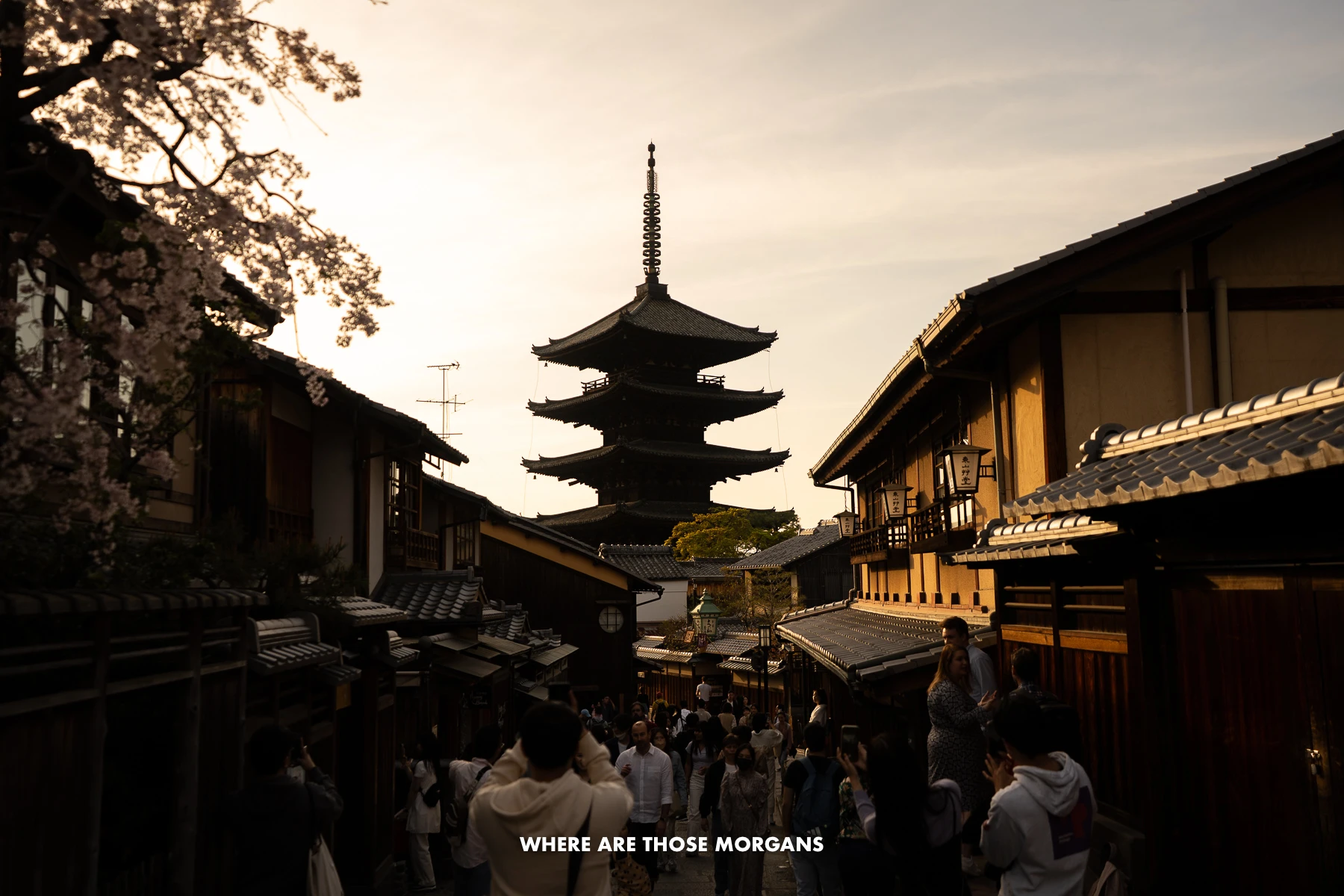
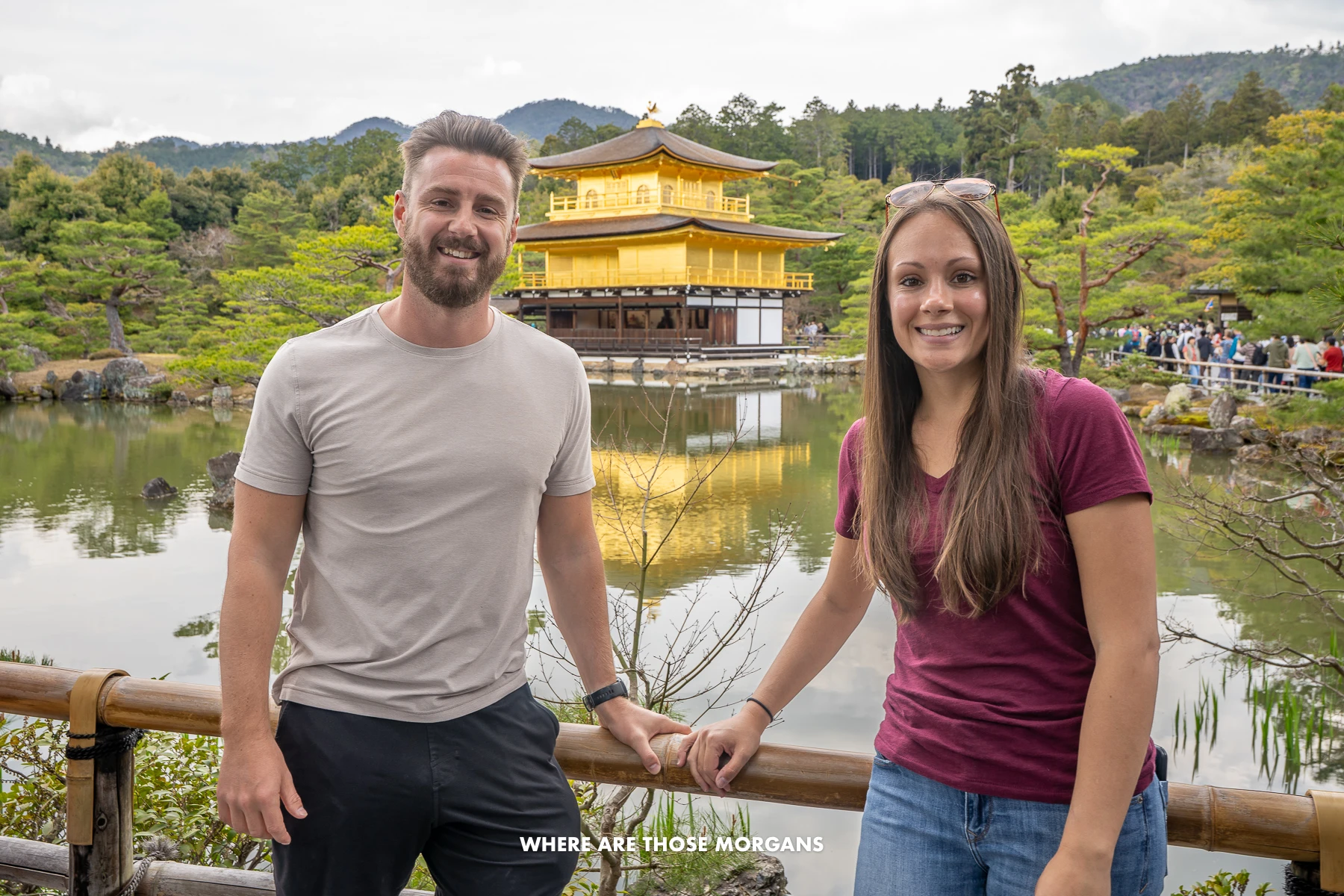
On both our trips, we spent 3 days in Kyoto and honestly we wouldn’t do it any other way. It’s the ideal timeframe to squeeze in the major highlights at a steady pace. If anything we’d add a day, rather than cutting one. Of the Instagram-famous sites that we visited in 2018, we loved the thousand red torii gates of Fushimi Inari (we climbed to the top and had “tunnels” to ourselves), Kinkaku-ji (the Golden Pavilion) was stunning but a pain to reach, and we thought Arashiyama Bamboo Grove was massively overrated.
In 2023, we skipped the time consuming and overcrowded Fushimi Inari and Arashiyama, instead spending all that travel time walking around stunning temples like Kennin-ji, Kodai-ji (which has a hidden gem bamboo grove), Kiyomizu-dera, Nanzen-ji and Gingaku-ji (the Silver Pavilion). We also visited Heian Shrine (which had lovely gardens), Nijo Castle, Kyoto Imperial Palace (we had to book an advanced time slot for Sento Palace), and a special cherry blossom night event at To-ji Temple which was awesome.
We have a few unique Japanese experiences on our Kyoto list for next time, like this samurai training experience near Nijo Castle, this ramen making class near Kyoto Gyoen, and this geisha show in Gion. They all look fantastic. And similarly to Tokyo, if we were short on time in Kyoto and didn’t want to figure out trains, we’d book this popular bus tour that hits most major sights in one day.
One thing we struggled with in Kyoto both times was food – everywhere was either booked up, had long lines or felt too upscale. We ended eating more in Downtown Kyoto, around Nishiki Market and the side streets nearby because they were quieter and less intense. What we should have done was reserved restaurants in Gion and Pontocho Alley. That would have taken the stress out of finding a place to eat each evening.
Kyoto Snapshot
Our verdict: Kyoto hits the “what we imagined from old-world Japan” nail on the head. We can’t wait to go back.
Don’t miss: The hidden bamboo grove in Kodai-ji Temple, the Philosopher’s Path, and climbing higher at Fushimi Inari.
Crowd factor: Intense in southern Higashiyama, Fushimi Inari, Arashiyama and Kinkaku-ji. Overcrowding is a real problem in Kyoto.
Biggest regrets: Not booking restaurants in Gion and Pontocho Alley in advance. Wasting an early morning trip to Arashiyama. Adding too many things to our itinerary and having very little downtime.
Ideal stay: We’ve done three days both times and it’s perfect. Two days isn’t enough.
Skip it if: Don’t skip it. We think Tokyo and Kyoto are the two truly unmissable places to see in Japan.
Osaka
We had bad luck across our two trips to Osaka. In 2018, we took a red-eye from Hong Kong, landed at 3:00 AM, then felt like zombies for our 2 days in the city. We still managed to tick off some of the popular sites like the imposing Osaka Castle and relaxing Shitennoji Temple, but we didn’t make the most of what makes Osaka so special – its foodie scene and neon-lit nightlife around Dotonbori. Then in 2023, we hit all of Osaka’s top attractions and ate delicious food, but our big Dotonbori evening was washed out by ridiculously heavy rain.
We’ll be honest, after our first trip we didn’t love Osaka. But despite the rain on our second trip, we realized how cool it is and what makes it unmissable for every first timer – the atmosphere, the food and the authenticity. We found Osaka to feel way less touristy than Tokyo or Kyoto. The street food was amazing (Kuromon Market is touristy but still worth it for Kobe beef and seafood), drinking beers at izakayas felt more down to earth, and everyone was there for the same thing – to soak up the fun vibe and have a good time.
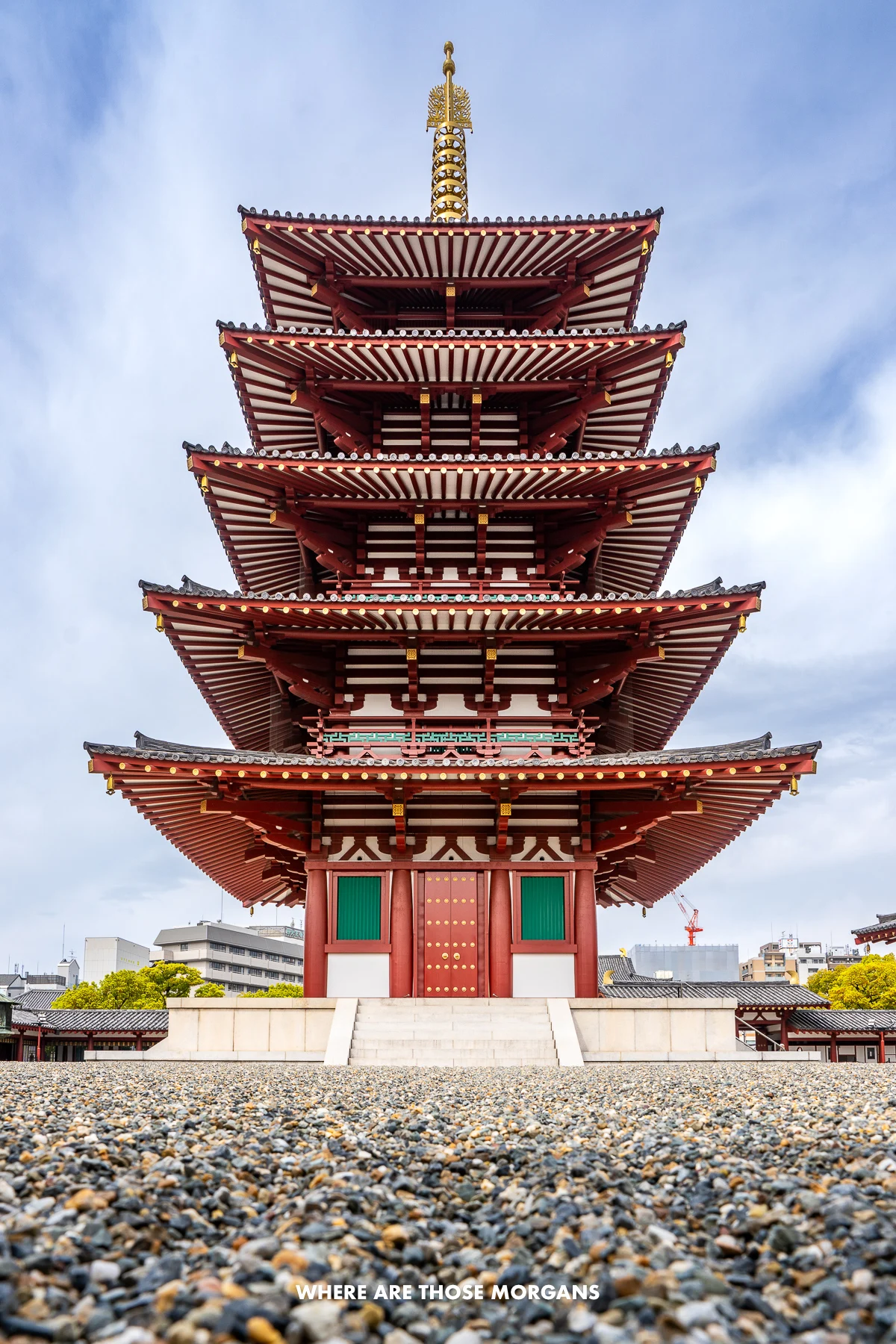
Both times we spent 2 days in Osaka, but the second time we planned a more efficient itinerary. We worked our way in order through Namba, Shinsekai, Shitennoji and Abeno Harukas observatory on day one – followed by Osaka Castle, Tenmangu Shrine, Nakanoshima, Umeda, and the Umeda Sky Building observatory on day two. It was a fantastic route that allowed us to see the highlights with no time wasted. We didn’t do Universal Studios, but we’d definitely consider it if we visited with our kids.
After two trips, we’d say Osaka Castle and Shitennoji are the two must-see tourist spots for every first-timer. Anyone who travels like us (have to see everything) will enjoy the other spots too, but some travelers might prefer to skip the rest and spend the time hanging out in Namba and Dotonbori instead. Next time we’re in Osaka, we’d love to try this street food tour through Shinsekai and this sumo show with audience challenge. Or if we only had a day and wanted to see as much as possible, we’d consider booking this one day highlights tour that ticks off most key neighborhoods.
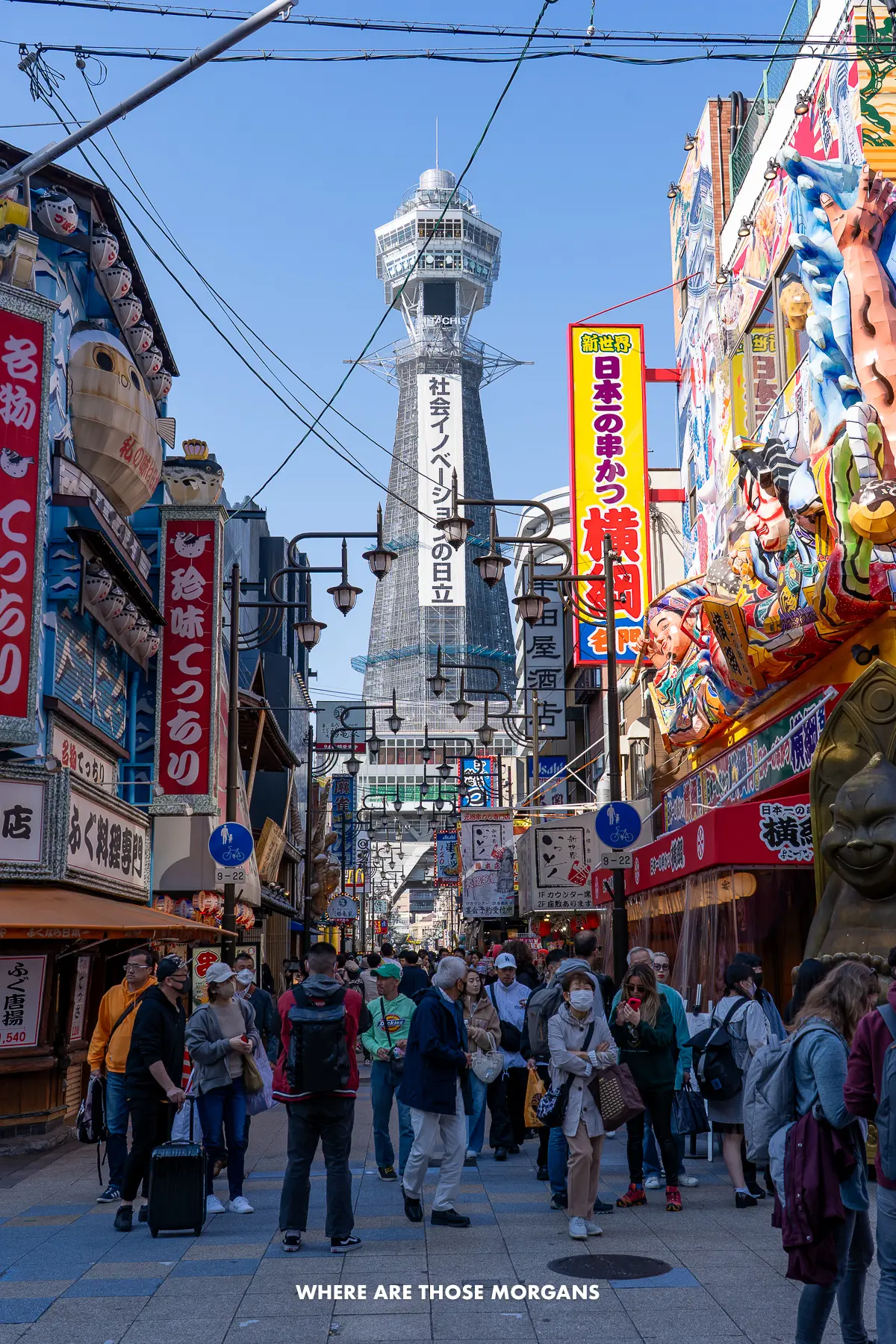
Namba was our favorite neighborhood first time around, so we stayed at Citadines Namba on the outer edge of the lively area for our second trip (the beds were some of the comfiest we’ve ever had). We think Namba the best area to stay in Osaka for most first timers, but Dotonbori might work better for groups of friends or anyone who wants to be right there in the thick of it, and Umeda might be the better option for a more polished area for families. The great thing about Osaka is that it’s much smaller than Tokyo and the train network is superb, so it’s very easy to get around.
Osaka Snapshot
Our verdict: Awesome for foodies and nightlife-lovers, not a place to tick off a massive bucket list. Osaka grew on us massively the second time, and we’re looking forward to going back.
Don’t miss: Street food in Namba and nightlife in Dotonbori.
Crowd factor: Dotonbori is crowded but in a good way for atmosphere, it’s the whole point. Otherwise Osaka isn’t overly touristy.
Biggest regrets: Being rained out, especially for our Dotonbori evening. Not taking a food tour.
Ideal stay: Two full days minimum, three would be better for more opportunities to eat and drink.
Skip it if: Less than a week in Japan, Tokyo and Kyoto have to come first for most visitors. Younger groups might want to do Tokyo and Osaka instead, with a day trip to Kyoto.
Nara
From research, we learned that Nara was the most popular day trip in Japan because it was so easy to reach in under an hour from either Kyoto or Osaka, but we decided to go a step further and spend a night there in 2018. And you know what? It turned out to be one of our favorite nights of the trip. We stayed at Onyado Nono Nara, a traditional Japanese onsen ryokan that we felt was geared towards tourists – in the best possible way. It was our first experience trying an onsen (gender separated public bath with no swimsuits), and it turned out to be less intimidating and weird than expected.
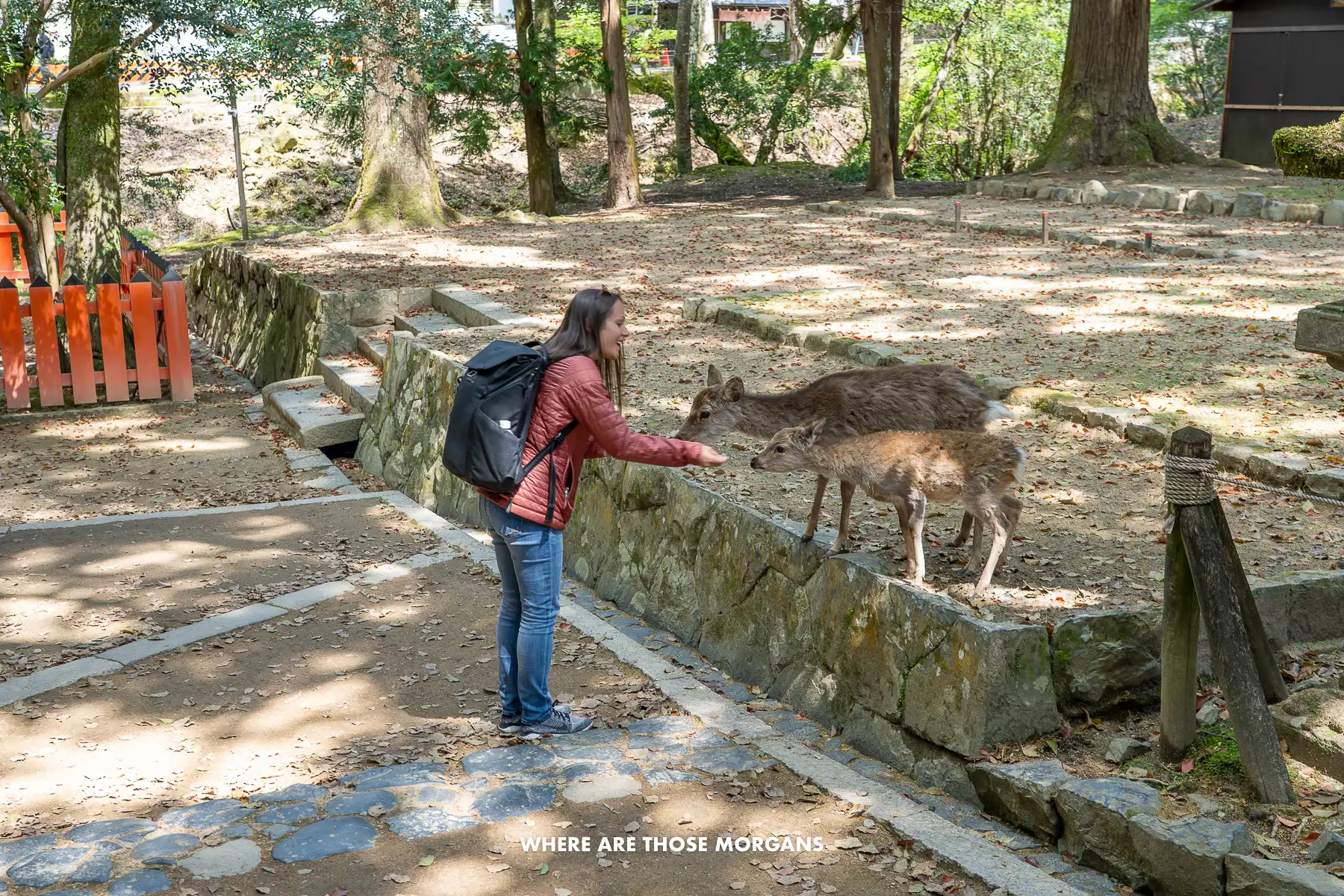
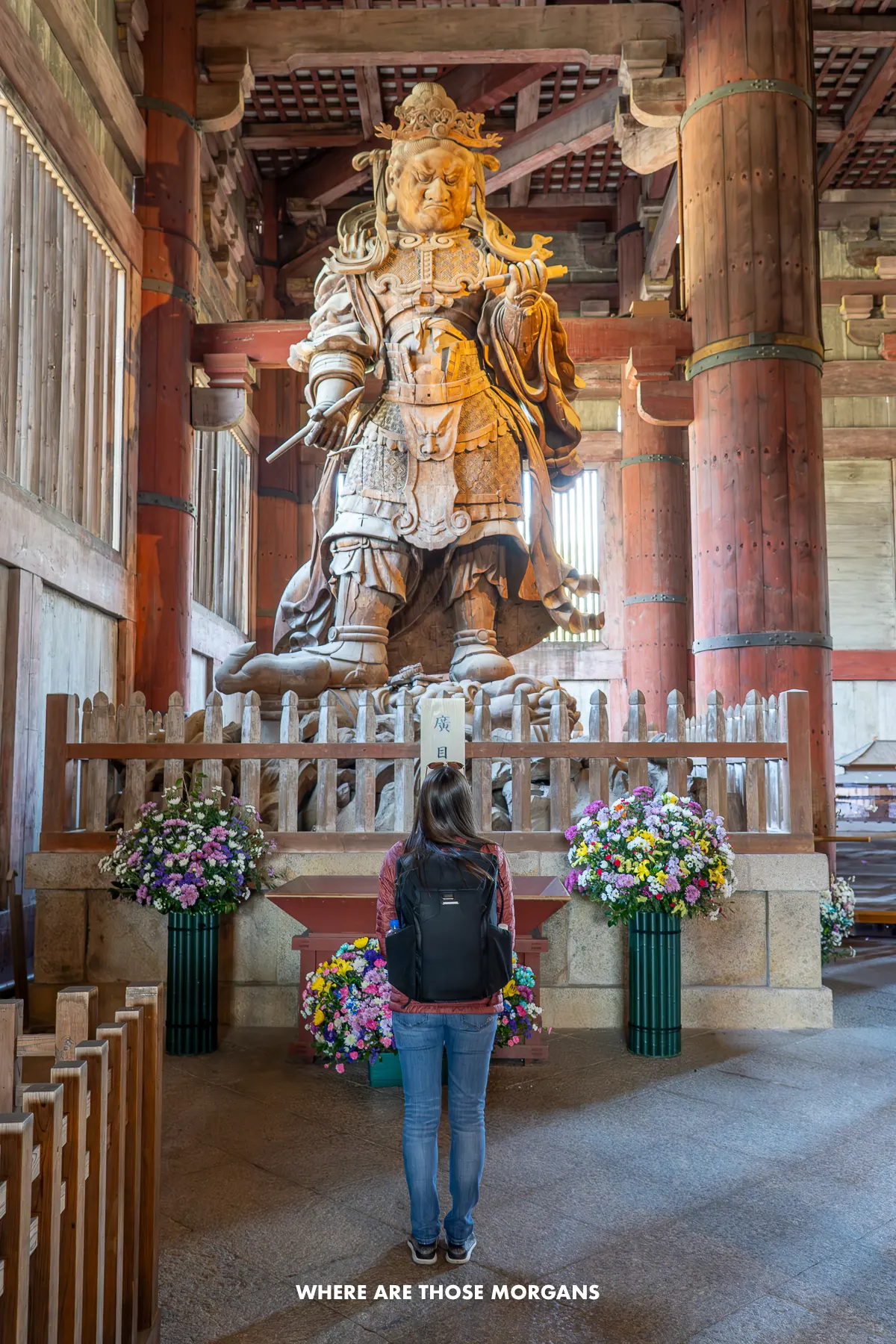
During our one night stay in Nara we fed special crackers to sika deer in Nara Park (Kristen was so excited but ended up being bitten by a deer), visited the enormous Todai-ji Temple, took photos of the attractive Kofuku-ji Temple, and slowly wandered along Higashimuki shopping street. It was so quiet and relaxing at night after the day trippers left, so we just chilled out, ate dinner, and enjoyed our onsen. But even though we had a great time, we actually missed quite a lot of Nara’s top attractions – and we only realized that when planning our second trip.
So when we took our day trip to Nara from Osaka in 2023, we made sure to have an efficient walking route fully mapped out to hit the highlights and some hidden gems. In this exact order, we visited Kofukuji, fed the sika deer (without being bitten!), walked around Yoshikien Garden, went inside the huge Todai-ji Temple again, climbed up to Nigatsu-do Temple for views, ascended a ton of steps to reach Mount Wakakusa viewpoint, explored Kasugataisha Shrine, walked out to Ukimido Pavilion, tasted sake at Harushika Brewery, and saw the Lattice House. It was a long day with lots of steps, but it worked perfectly.
We easily visited Nara in a day from Osaka, but we also really enjoyed staying over for a night. So when we help travelers plan trips to Japan through our travel planning consultations, we always say spending a night in Nara is worth it if they can meet two conditions – they have enough time, and they are actively looking for a more peaceful evening away from the tourist crowds in Osaka or Kyoto. But whether staying over or not, Nara is still a place we’d definitely recommend for every first-timer heading to Japan. If we wanted to visit Nara without dealing with trains or figuring out where to go, we’d book this early morning half day tour from either Osaka or Kyoto.
Nara Snapshot
Our verdict: We really like Nara’s ancient temples, deer park, and quaint low-key vibe in the evenings. It’s a luxury addition to a Japan itinerary, but it’s one we’d definitely add with enough time.
Don’t miss: Todai-ji, Kasugataisha Shrine, and feeding the sika deer.
Crowd factor: Very busy around 9:00 AM when the day trippers arrive. Everyone starts at Todai-ji. Crowds thin throughout the day.
Biggest regrets: Being overexcited about feeding the deer first time and being bitten. Not planning a strong enough walking route the first time, although we made up for it the next time.
Ideal stay: Our day trip worked just fine, but staying over a night was better. We’d book a one night stay next time.
Skip it if: With just two days for Osaka and three days for Kyoto, we’d consider skipping Nara (unless we really wanted to see it). Any more time in either place we’d add it in for sure.
Hiroshima
With just 2 weeks available during our 2018 Japan trip, we decided to skip Hiroshima and instead focus on the northern loop. It felt like an either/or crossroads because Tokyo, Osaka and Kyoto take up a lot of time, and we wouldn’t have enough days to fit both detours in. Now, Hiroshima is only 1 hour 20 minutes on the fastest bullet train from Osaka (Nozomi or Mizuho Shinkansen), or 1 hour 30 on the Sakura train which is covered by the JR Pass. So it’s not exactly “out of the way”, but it kind of is because there’s nothing else that far west on a typical first-timer’s wishlist.
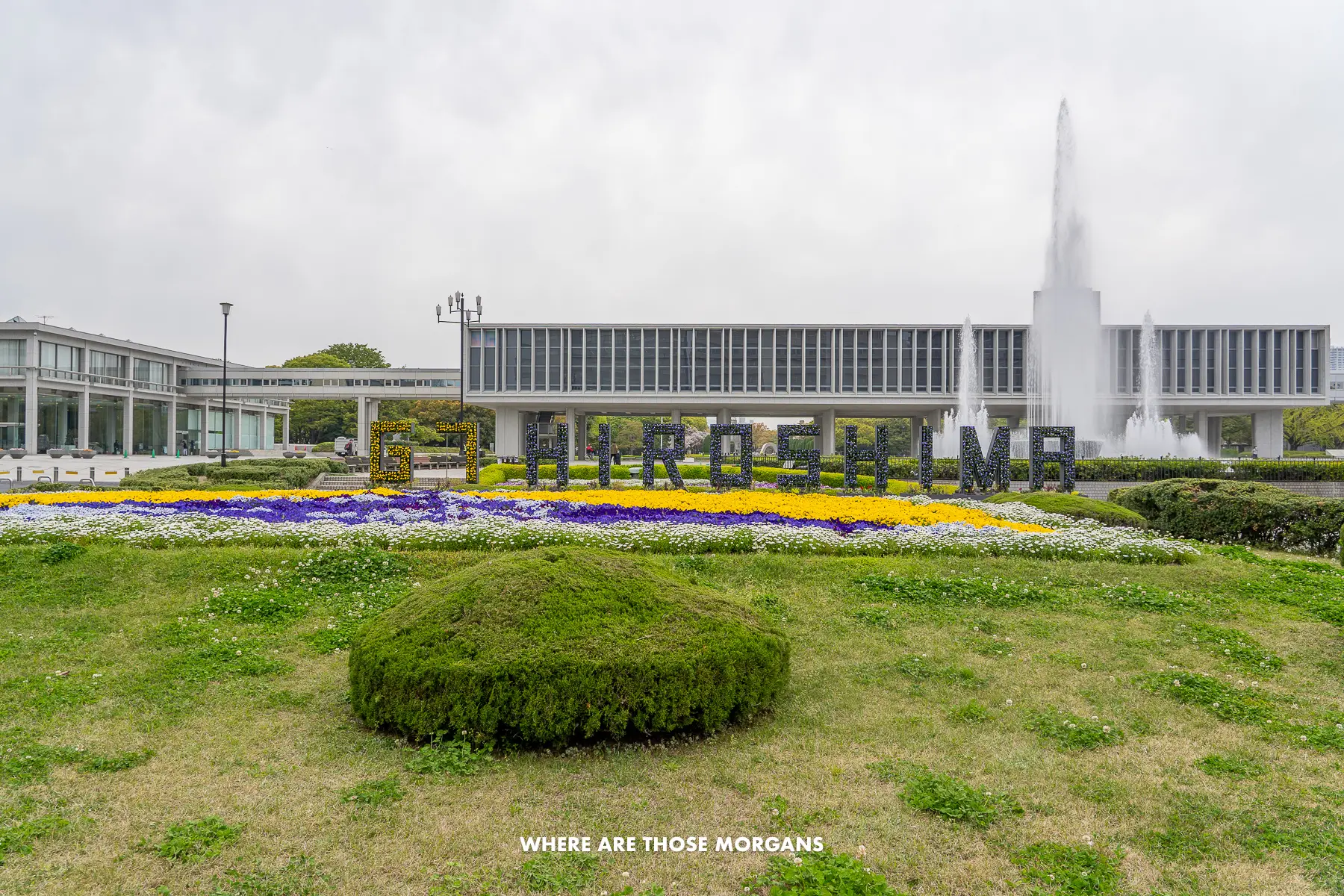
That said, we didn’t want to miss Hiroshima again, so in 2023 we arrived with an action-packed two-day itinerary and stayed at Candeo Hotels Hatchobori. The first morning we visited the Hiroshima Peace Memorial Museum and Atomic Bomb Dome, which were of course harrowing and somber, but well worth seeing. Then we went to the top of Hiroshima Castle but it started raining heavily so we skipped Shukkeien Garden. Instead, we just went into the covered shopping arcades in Hondori (downtown) to eat and drink for the rest of the day. We ate ramen at the touristy but still excellent national chain called Ichiran for lunch, followed by superb steaks at the intimate Momonoki for dinner.
For our second day, we visited Miyajima Island – and it didn’t stop raining. We took the train to Hiroden-Miyajimaguchi, followed by a ferry to the island (the trains and ferries were included with our JR Pass). Next, we walked along Miyajima Omotesando Shopping Street, stopping for snacks and to browse souvenir shops, and Mark bought a tea mug that he still uses at home! Then we arrived at the famous Itsukushima Jinja, the seaside Shinto shrine with a massive single red torii gate in the water – and it was absolutely swarming with tourists. The line just to get a clear front-on photo from a pier was massive, so we skipped it and walked west along the coastline to get clearer views of the shrine with nobody else around.
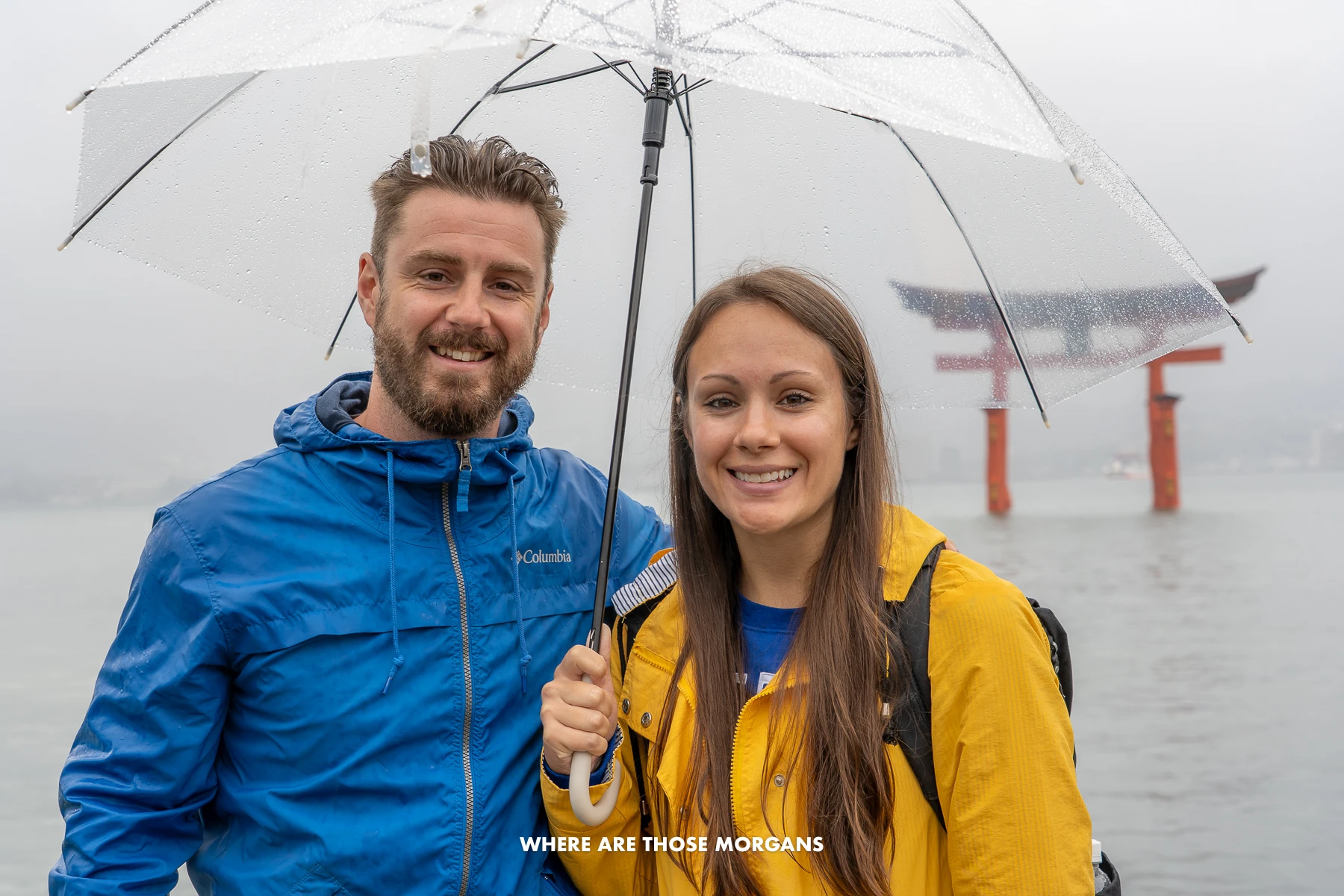
Next, we visited Daishoin and Momijidani Park, which we preferred because there were no crowds at all. The plan was to take the ropeway to Shishiiwa Observatory next, but it was shrouded in clouds and closed for the day. Rained out, we gave up and returned to the city. We tried to take a last minute guided tour of the Mazda Museum but unfortunately it was fully booked. On the bullet train back to Osaka, our overall sentiment was feeling glad we visited Hiroshima, but that we probably wouldn’t go again. We got unlucky with the weather which didn’t help, but it felt less worthwhile than the “big three”.
Hiroshima Snapshot
Our verdict: Glad we visited once, but we wouldn’t go back in a hurry.
Don’t miss: Peace Memorial Museum and Atomic Bomb Dome, and Miyajima Island.
Crowd factor: Completely crowd-free, even during cherry blossom season.
Biggest regrets: Being rained out the whole time, especially on Miyajima Island. Not pre-booking the Mazda Museum tour.
Ideal stay: Two days, one for the city and one for Miyajima Island. If we only had a day and it was our first time, we’d book this popular bus tour that goes to the museum, dome and island in one day.
Skip it if: The Peace Memorial Museum is what most people go to see in Hiroshima. If we weren’t massively interested, we’d skip Hiroshima to spend more time in Tokyo, Kyoto and Osaka – or add on the northern loop instead.
Hakone
We’ve always wanted to hike up Mt. Fuji, but the climbing season only runs from early July through early September, and our trips were in October 2018 and April 2023. The next best thing after climbing the volcano is seeing it, right? And while we could have taken a bus to 5th Station to get as close as safe in the off season, we decided instead to visit a place that had more going on but also had those Mount Fuji views we so dearly wanted – Hakone.
Now, we knew Hakone was a popular day trip option from Tokyo (via the famous “Romancecar” train from Shinjuku) but we wanted to stay over for a night to experience an onsen ryokan on the shores of Lake Ashi. So we took a bullet train from Osaka to Odawara, a local train to Hakone-Yumoto, a scenic mountain train to Gora (with a quick stop to see the Hakone Open-Air Museum), a cable car to Sounzan, and a ropeway which crossed a steaming volcano before descending to Lake Ashi at Togendai Station. We paid 6,000 yen each for the Hakone Free Pass, which covered every transport section along the fun route.
Luckily, after that absolute mission of a day to get to Lake Ashi (which is known as the Hakone Round Course or Hakone Loop – and is the whole point of visiting), we could easily walk from Togendai to our lodging called Hakone Lake Hotel. It was a peaceful mid-range traditional hotel with awesome public baths and half board meals for breakfast and dinner, which we ate in the provided yukata (light cotton robes). Unfortunately, it’s closed since our visit. But there are plenty more highly rated onsens around Lake Ashi that look even better than where we stayed – we’d love to book either Odakyu Hotel de Yama or Hakone Ashinoko Hanaori next time.
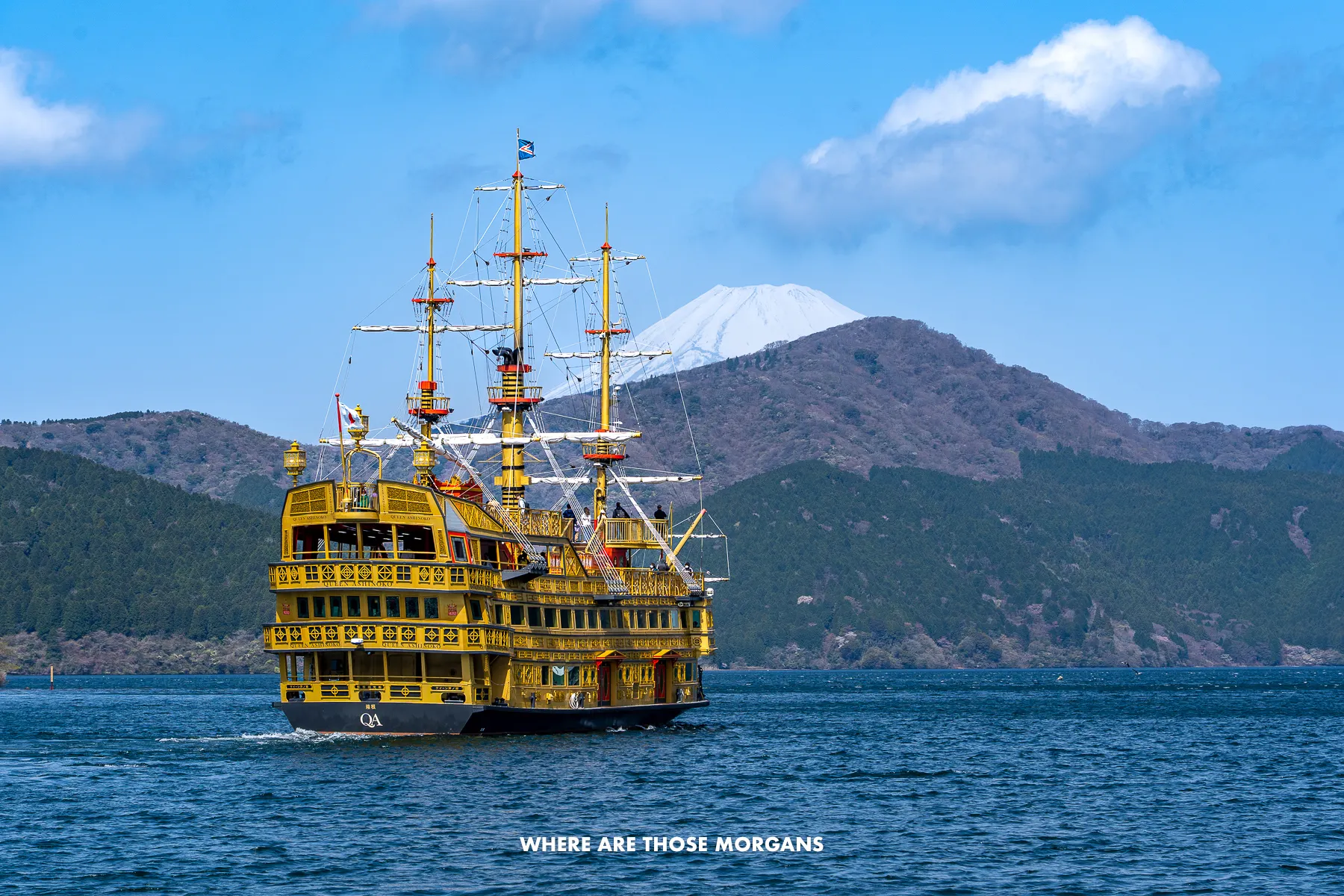
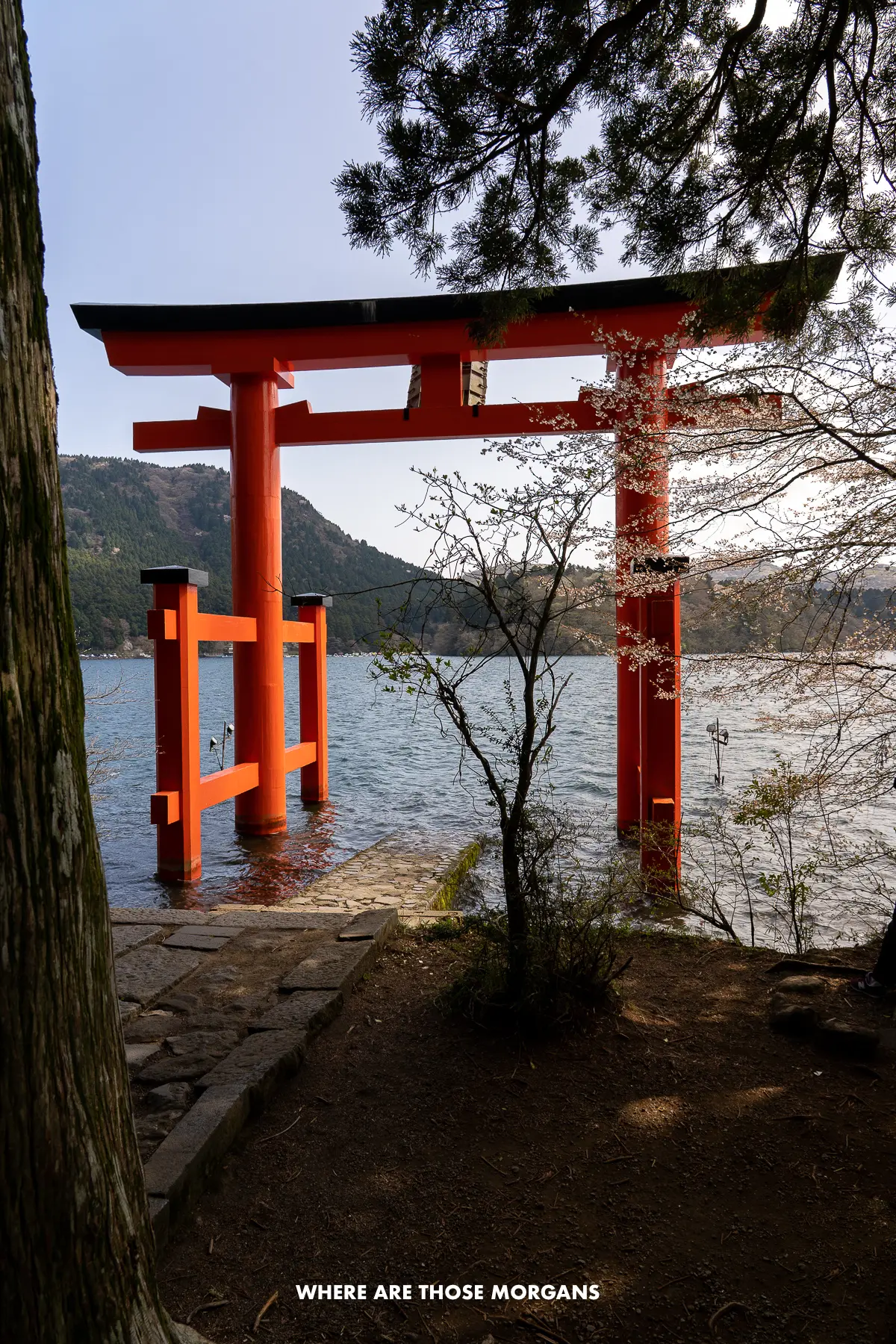
We hiked along the northeastern shoreline to see Kuzuryu Shrine Hongu and its torii gate over water (a bit like the one in Hiroshima), but they wouldn’t let us in because we arrived 30 minutes before it closed, which was disappointing. The next day we took the Pirate Ship from Togendai to Hakone on the south side of Lake Ashi, walked north through Hakone Park, ate lunch outside Bakery & Table, and explored Hakone Shrine. Then we rode the Pirate Ship back to Togendai and spent our evening relaxing in the onsen. The next morning after breakfast and one last dip in the outdoor onsen, we hopped on a nice and easy direct bus back to Tokyo from Togendai Station.
What about those Mt. Fuji views? Well, we got them in two different spots. Our first glimpse was on the Hakone Ropeway after passing over the steaming volcano when the mighty snow-capped Fuji suddenly appeared dead ahead. That was a cool experience, but it didn’t last long. The next time was after taking the Pirate Ship to the south side of Lake Ashi and walking up to Hakone Park to be greeted by a panorama of forest, lake and hills with Fuji rising behind it all.
It was beautiful, but we must admit we hoped to see a bit more of Mount Fuji. The ropeway section went too quickly, and the volcano was mostly blocked from the lake elevation. It was also a bit further away from Lake Ashi than we thought – without our telephoto camera lens, we wouldn’t have been able to take home the “close up” looking photos we were able to capture. Next time, if we didn’t visit during hiking season, we’d consider booking this private tour to Mt. Fuji and Hakone from Tokyo which looks to have tons of hidden gem stops with amazing views.
Hakone Snapshot
Our verdict: It was a lot of effort and logistics, but the onsen was great and the peaceful mountain vibe was a welcome change.
Don’t miss: Each of the Hakone Round Course transport segments, the Pirate Ship, and Mt. Fuji views from Hakone Park.
Crowd factor: Surprisingly quiet during peak cherry blossom season, it was like a ghost town. We think it might be slightly busier in summer, but overall a great place to escape the crowds.
Biggest regrets: Not being able to afford a ritzier onsen ryokan at the time. Being turned away from the shrine for being too late.
Ideal stay: Two nights, one full day is enough time. We’d only go longer if we had plenty of time and wanted a retreat.
Skip it if: Not looking for a quiet mountain stay, or not interested in trying out an onsen. If taking a day trip from Tokyo, we’d choose the day with clearest weather so we could actually see Mt. Fuji.
Takayama
Getting to Takayama felt like a mini adventure in itself. We took the Shinkansen from Kyoto to Nagoya, then switched to the Hida limited express – a slower, winding train that cut through the Japanese Alps and delivered us into a totally different version of Japan. The mountains were closing in around us and the air felt cooler as we pulled into Takayama. There were very few tourists on the train, and we knew it was going to be so much more peaceful than anything we’d experienced in the big cities.
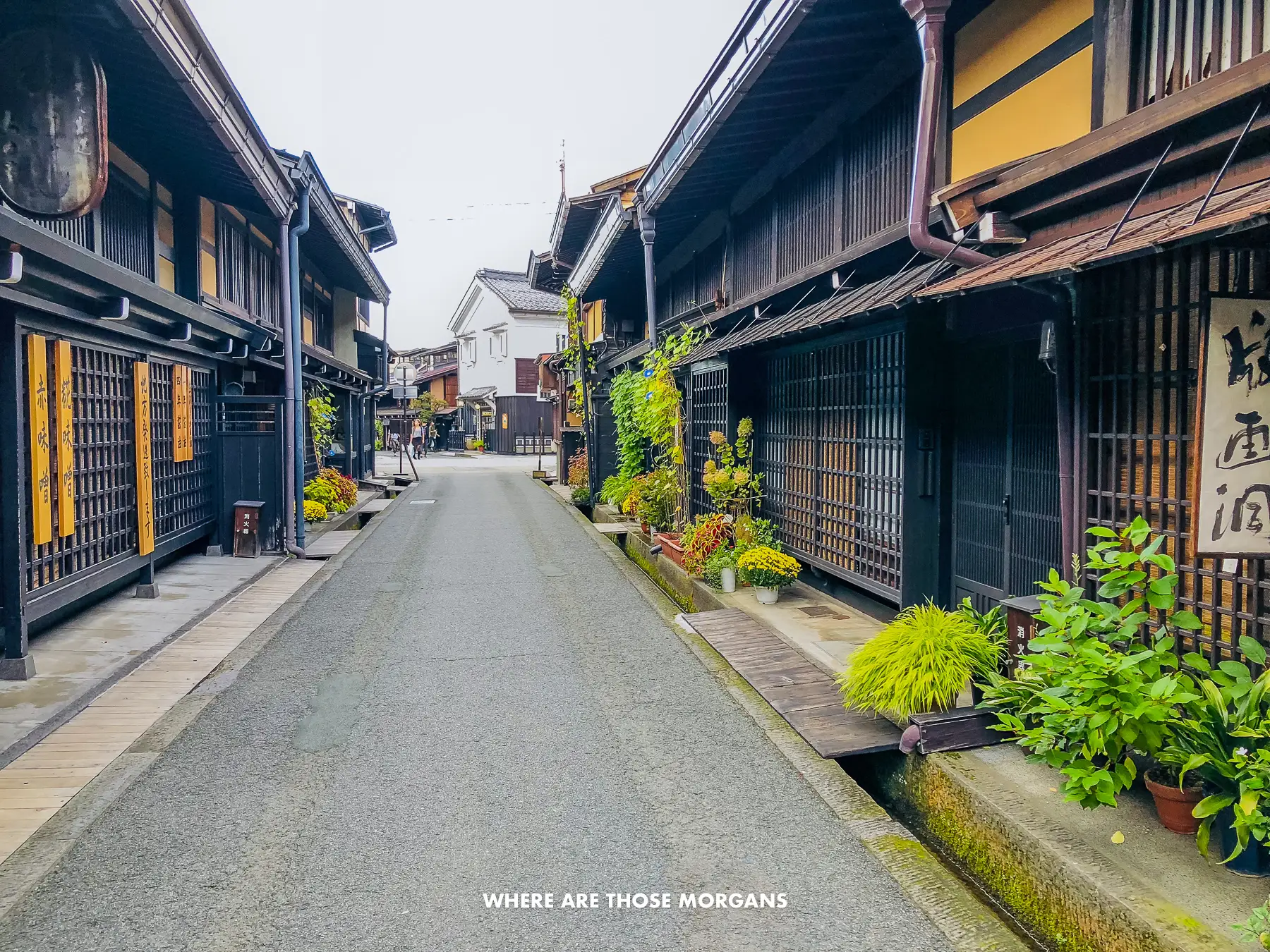
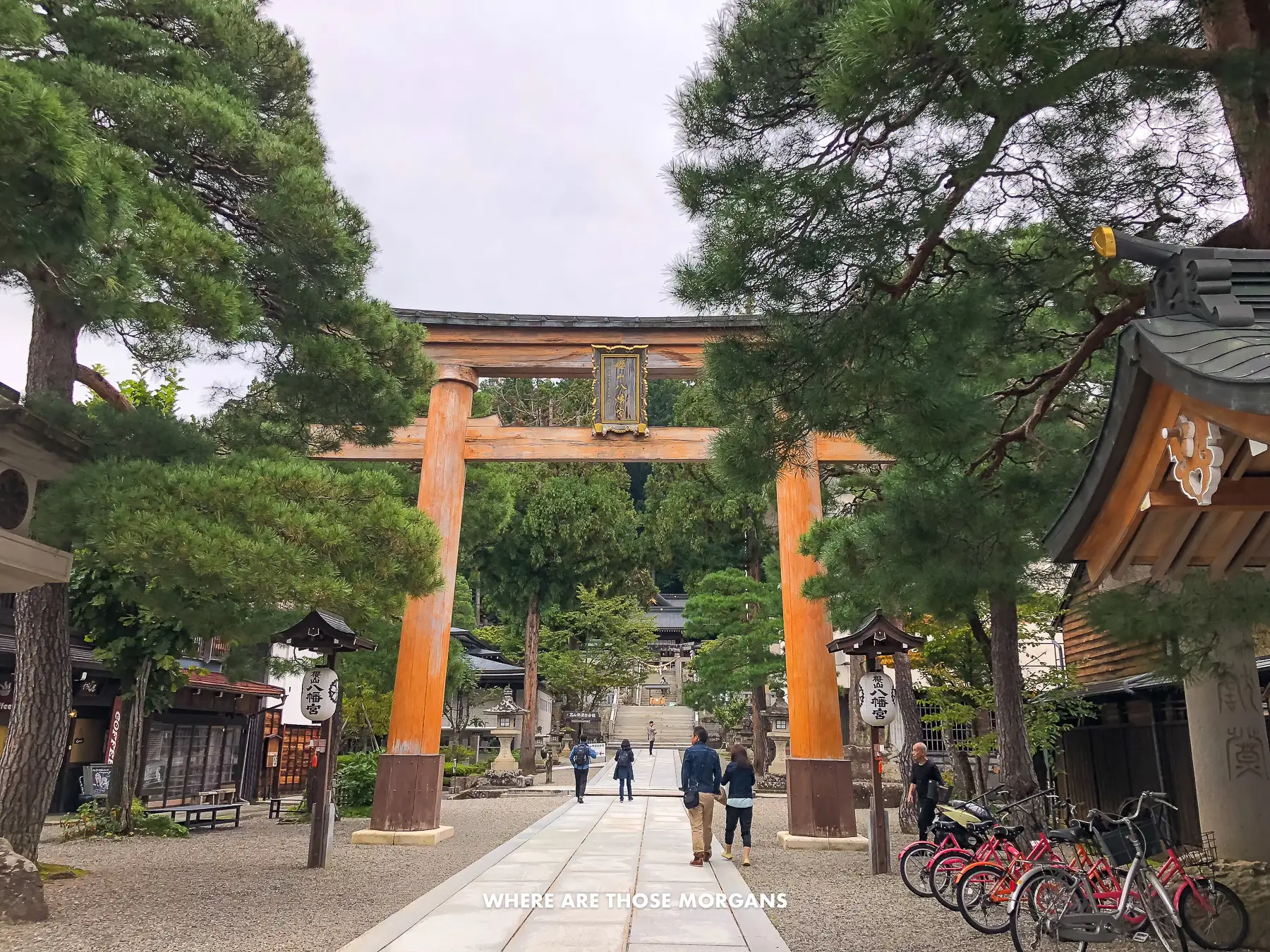
We dropped our luggage off at the cheapest ryokan we could find – which was super authentic but very basic – and spent the afternoon slowly wandering Sanmachi Suji, Takayama’s beautifully preserved historic district. The narrow streets lined with dark wooden sake breweries and craft shops were exactly what we pictured when we imagined old Japan. It was nothing at all like the modern sprawl of Tokyo or Osaka, and we each picked out a pair of engraved chopsticks (with our names in Japanese – Mark’s only has one symbol!) which we still use for ramen at home today.
We also made it to the forested Sakurayama Hachimangu Shrine which was lovely, Takayama Jinya (a unique old government building) and Takayama Showa-kan Museum which held a nostalgic collection of everyday Japanese life from the Showa era (1926 – 1989), before grabbing a cheap ramen and a few beers in a local izakaya. The next morning we browsed the market stalls along the Miyagawa River before checking out of our ryokan and hopping on a bus to Shirakawa-go. We found accommodation to be surprisingly expensive in Takayama, we think it’s because there are lots of traditional onsen ryokans. We’d love to stay in a nicer place like Hotel Wood or Oyado Koto No Yume.
If we’re being honest, we could have been more efficient with our limited time. And looking back we probably should have booked this private tour of Takayama with a 1:00 PM start time immediately after we arrived, which would have included all the major highlights in just 4 hours (including Hida Folk Village which we ended up missing). That said, we actually regret not adding a second night, which would have given us a full day in Takayama. We enjoyed the tranquil and easy going pace more than we expected, and our short stay felt too rushed.
Takayama Snapshot
Our verdict: It’s a must-visit if doing a northern loop, but we wouldn’t add it as a standalone along with Tokyo, Osaka and Kyoto.
Don’t miss: Sanmachi Suji historic district.
Crowd factor: None at all. Very quiet.
Biggest regrets: Not having a second night so we could really slow down.
Ideal stay: One full day, two nights. We short changed ourselves.
Skip it if: Already done Kyoto and short on time.
Shirakawa-Go
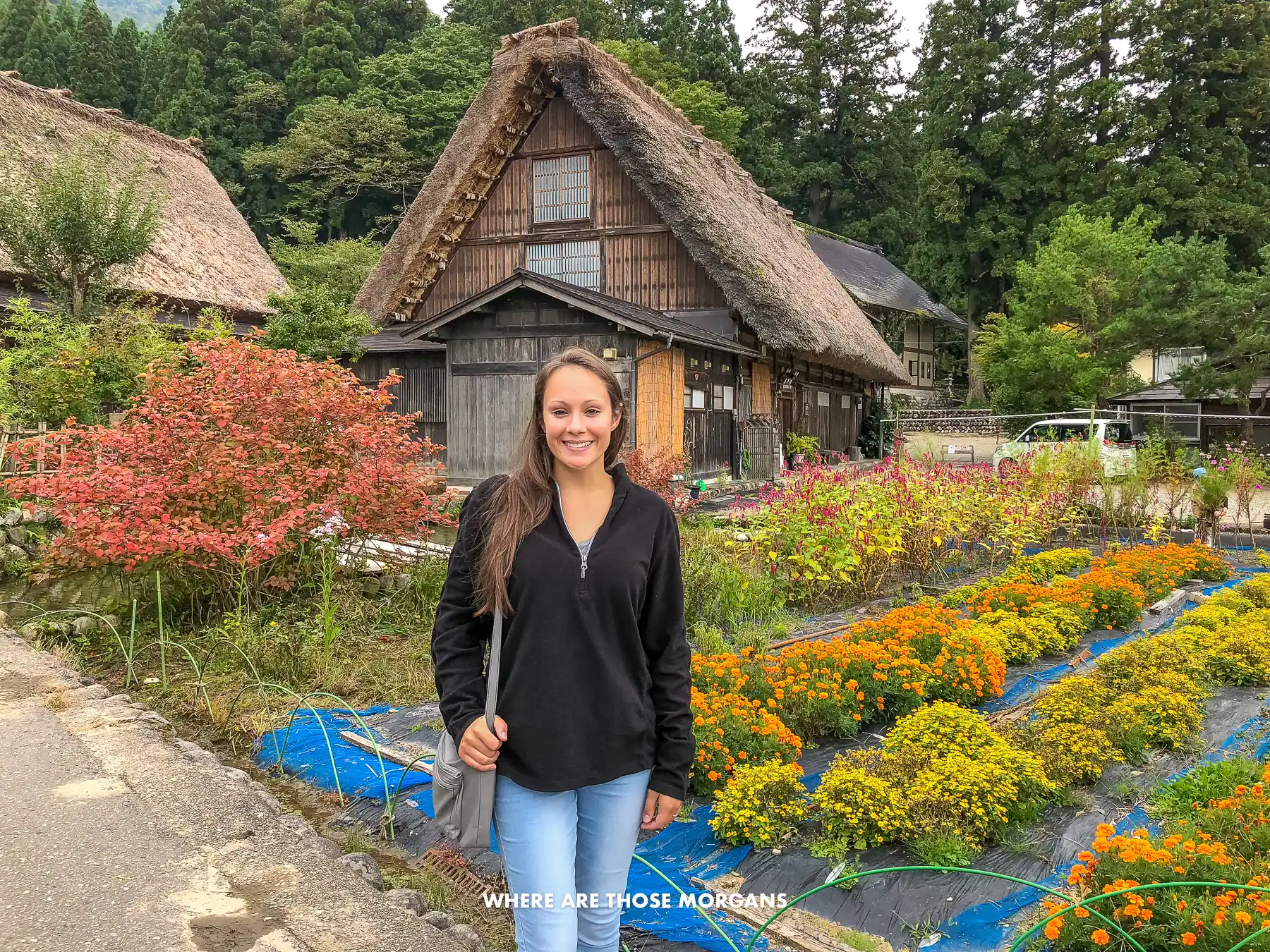
Our bus ride from Takayama to Shirakawa-go didn’t even take an hour, and every mile felt like we were traveling through a time portal further back into history. After arriving at the UNESCO World Heritage Site, we quickly set off exploring the cluster of enormous thatched-roof farmhouses called gassho-zukuri, which means hands in prayer. We really enjoyed having no plan, just wandering loosely around the farmhouses and colorful gardens, and going in the Myozenji Museum to see how they maintained the thatched roof.
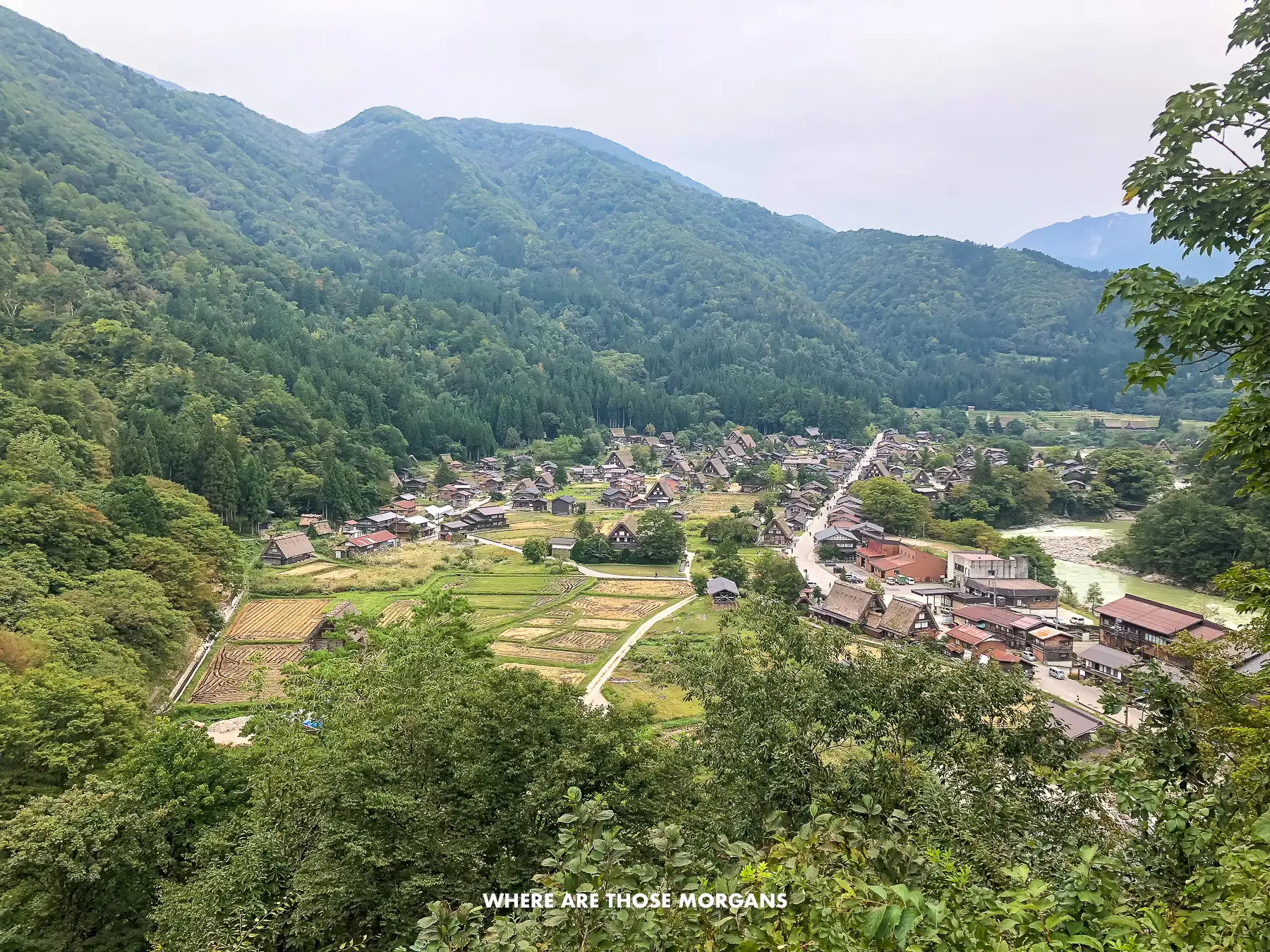
Eventually we worked up an appetite so we paid 500 yen for yet more delicious Wagyu beef skewers. Then we went inside Wada House (one of the largest farmhouses) to explore a small attic museum which displayed old tools and explained how families lived through harsh winters. Afterwards, we climbed up to Shiroyama Viewpoint for a postcard-perfect panoramic view over the whole village. Looking back we wish we had the camera equipment and photography skills we now possess to better capture the stunning scene.
Honestly, we thought Shirakawa-go worked perfectly as a half day stop between Takayama and Kanazawa. We wouldn’t stay over if we did it again. There’s really nothing else to do in the small village, and we’d have ended up twiddling our thumbs a bit if we had spent the night. After maybe four hours exploring, we were ready for the one hour and fifteen minutes bus ride to Kanazawa. But we did think Shirakawa-go was a beautiful and seriously photogenic spot, so we’d definitely still add it to a first-timer’s Japanese highlights itinerary with at least 2 weeks available.
We used local buses to travel between Takayama, Shirakawa-go and Kanazawa, and we self toured the UNESCO World Heritage Site. It worked because we were traveling on a super tight budget back in 2018, but there are other ways to do it. Instead of beginning in Takayama like we did, this popular one day tour begins in Kanazawa, visits Shirakawa-go in the morning, then includes the major highlights in Kanazawa in the afternoon.
Shirakawa-go Snapshot
Our verdict: Absolutely worth the half day stop when traveling between Takayama and Kanazawa.
Don’t miss: Shiroyama Viewpoint, and actually going inside the thatched-roof houses.
Crowd factor: Very low, we barely saw anyone else there.
Biggest regrets: Not doing the scenery justice with our old camera gear and beginner skills.
Ideal stay: Our day trip was ample time, we would only stay if we had loads of time and wanted a peaceful escape.
Skip it if: Not interested in rural areas (it is just some houses with a unique roof style after all) and would rather spend time in built up areas like Takayama and Kanazawa.
Kanazawa
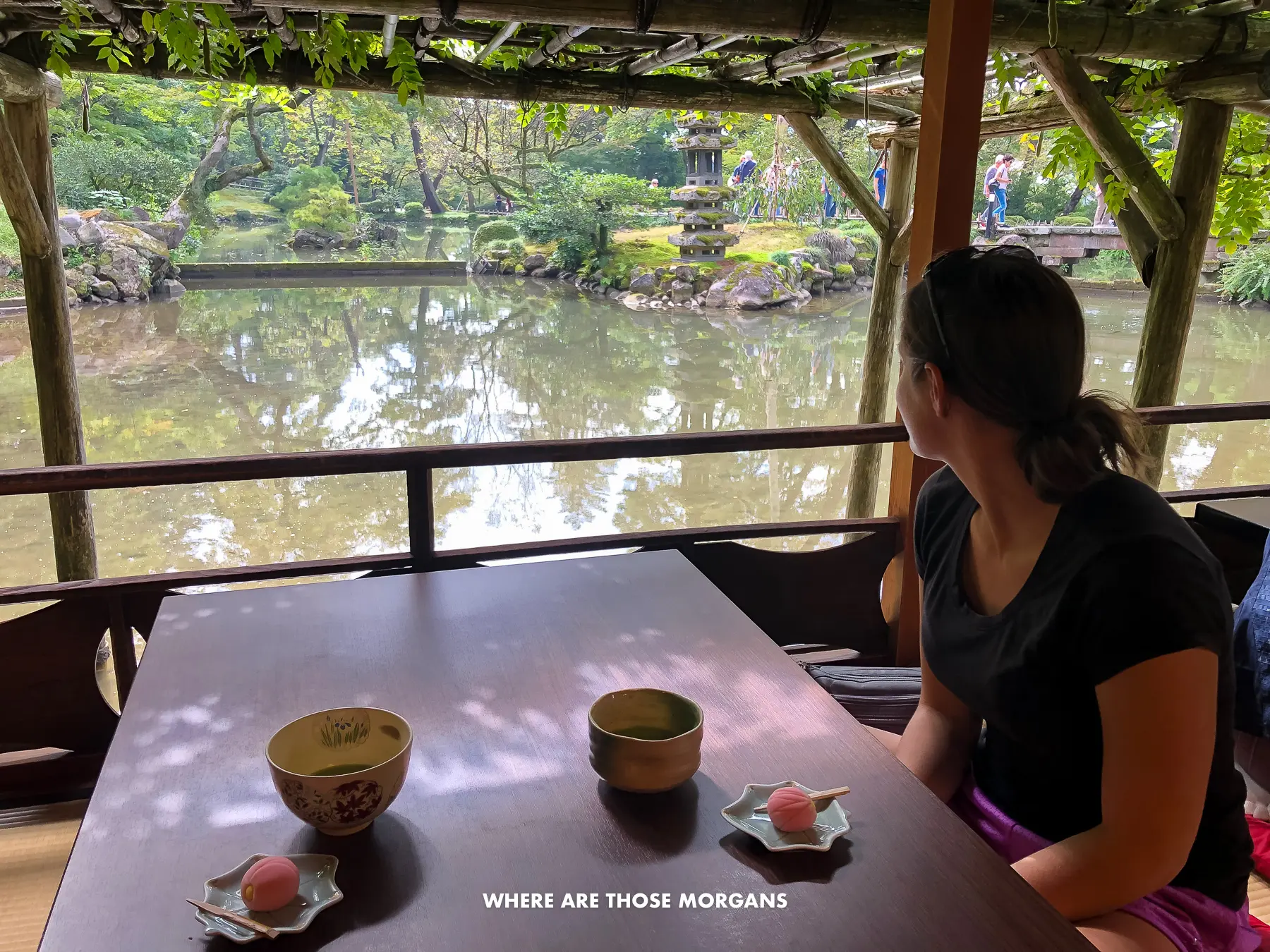
The main reason we wanted to visit Kanazawa was to see Kenroku-en, which we’d learned was ranked among Japan’s three greatest landscaped gardens. And it didn’t disappoint. We visited in the morning before the crowds built up and spent a good few hours slowly ambling around its gorgeous maze of paths, passing by stone lanterns, sculpted trees and beautiful ponds that reflected everything around them. Our favorite part was drinking matcha in a tiny wooden coffee shop overhanging one of the small ponds.
We arrived into Kanazawa late in the day after a long stop in Shirakawa-go. And we left early in the morning for the Alpine Route two days later. But although we only had one full day to see Kanazawa, we still managed to fit a lot in. After the gardens we walked through the grounds of Kanazawa 21st Century Museum which had a fun photo spot with 16 mirror-like spheres, before looping around to the nearby Kanazawa Castle grounds to see the restored fortifications and interior halls which had carpentry displays, turret window views and some samurai-era artifacts. Nothing to write home about compared to other castles we saw in Japan, but still worth the visit.
Later in the afternoon we walked through the Higashi Chaya district which reminded us of Gion and Kiyomizu in Kyoto because of its wooden buildings and preserved geisha teahouses. But you know what it didn’t have? The crowds. Most restaurants were expensive but we eventually found a cheaper soba noodle shop, before heading back to our fantastic hotel called UAN Kanazawa for an early-ish night. There were lots more excellent looking traditional ryokans like Kurumiya but we couldn’t afford them at the time.
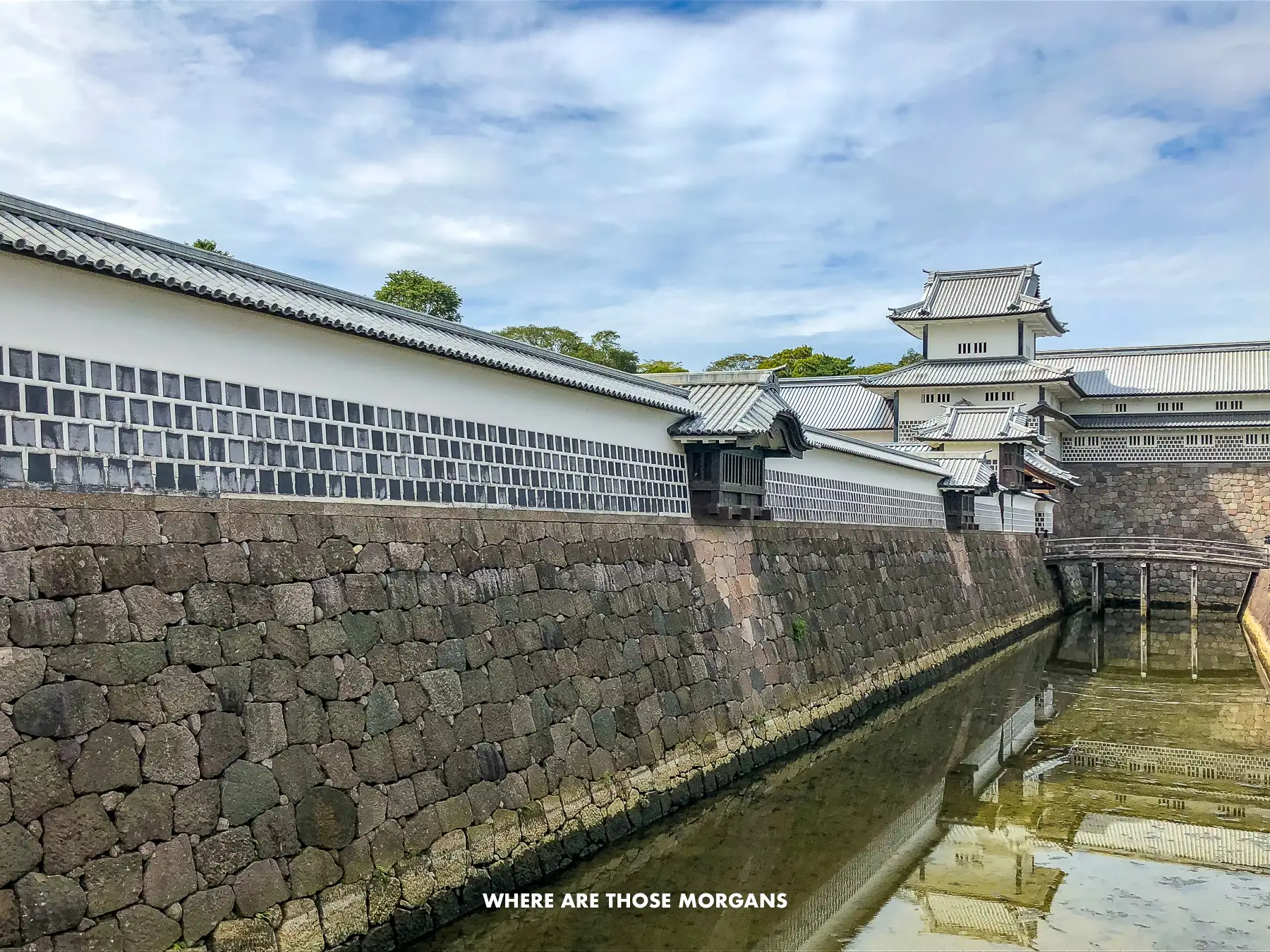
We liked Kanazawa and we think one full day with two nights was just about enough time to see it all. The mistakes we made were not spending our first evening in the soulful Higashi Chaya area, and not planning ahead with dinner reservations at places we’d picked out ahead of time. One thing we’d definitely consider next time is this night tour with local Japanese meal in the geisha district.
Kanazawa Snapshot
Our verdict: We liked Kanazawa more than expected and felt like we could have maybe squeezed another half day out of it. The gardens were beautiful.
Don’t miss: Kenroku-en Gardens, and Higashi Chaya.
Crowd factor: Very low, barely noticeable.
Biggest regrets: Not booking restaurants for each of our nights ahead of time in Higashi Chaya.
Ideal stay: Minimum two nights and one full day. We’d only add another full day if we had plenty of time.
Skip it if: Considering visiting as a standalone side trip from Kyoto, Osaka or Tokyo. It’s only worth it when combined with the other northern areas.
Tateyama Kurobe Alpine Route
The Tateyama Kurobe Alpine Route was our most logistically adventurous day of either Japan trip. We took the Chitetsu railway from Toyama up to Tateyama, and arranged for our luggage to be forwarded ahead to meet us at Ogisawa which cost us around 2,600 yen. From Tateyama, the route unfolded across a wonderful sequence of transport including cable car, bus across the Murodo plateau, trolleybus through a tunnel underneath a mountain, ropeway over a dramatic gorge, and another trolleybus on the far side.
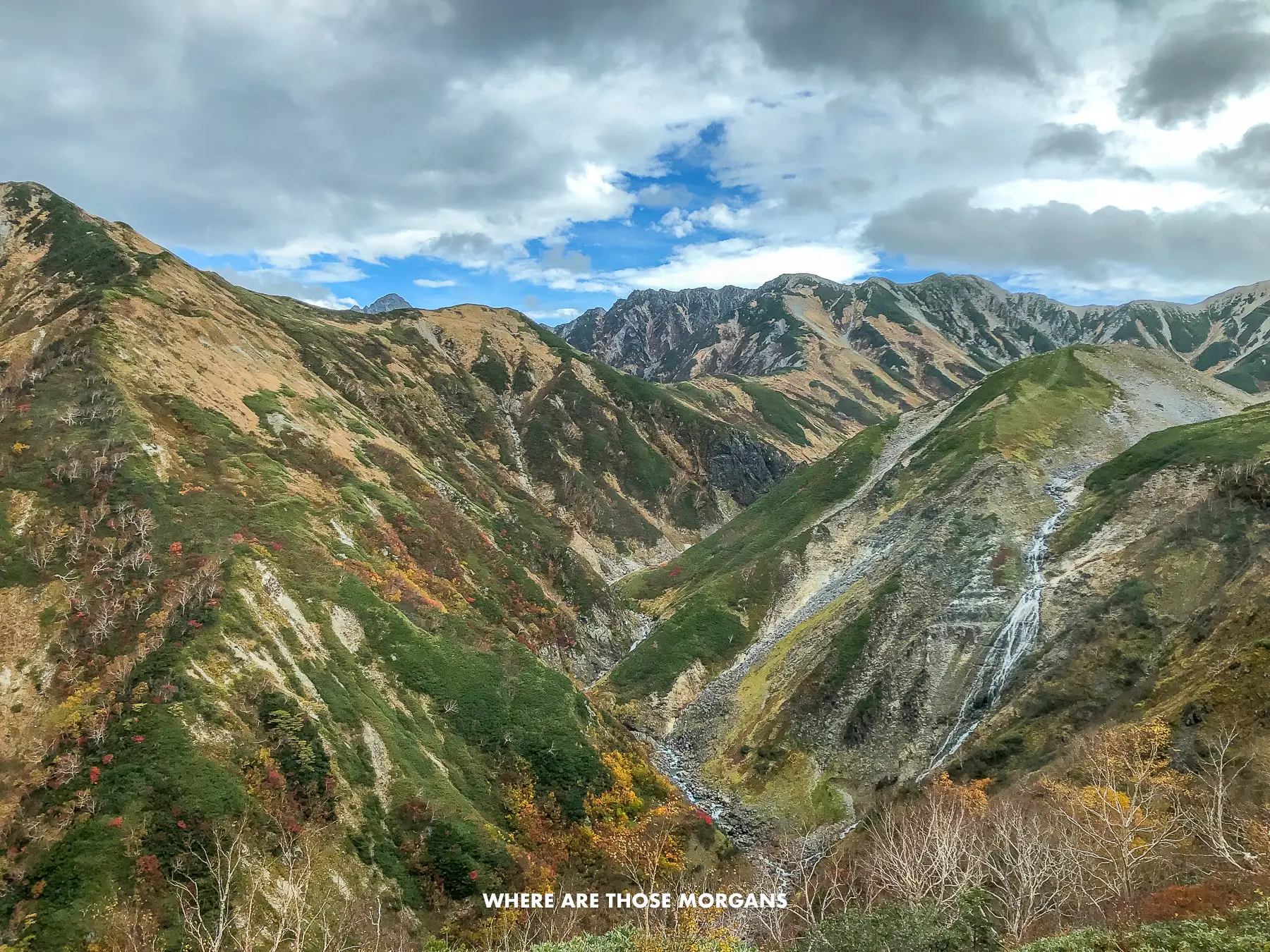
We had quite a few unforgettable memories from the full day crossing. First, when we stopped at Murodo (the route’s highest point at around 2,500 meters or 8,200 feet) and quickly dashed up a steep stone path to the summit of Mt. Oyama. We were the only two people up there and it was magic. The next was descending on the ropeway across a gorge blanketed in vibrant fall foliage. And finally, our walk across Kurobe Dam, which was a cool experience.
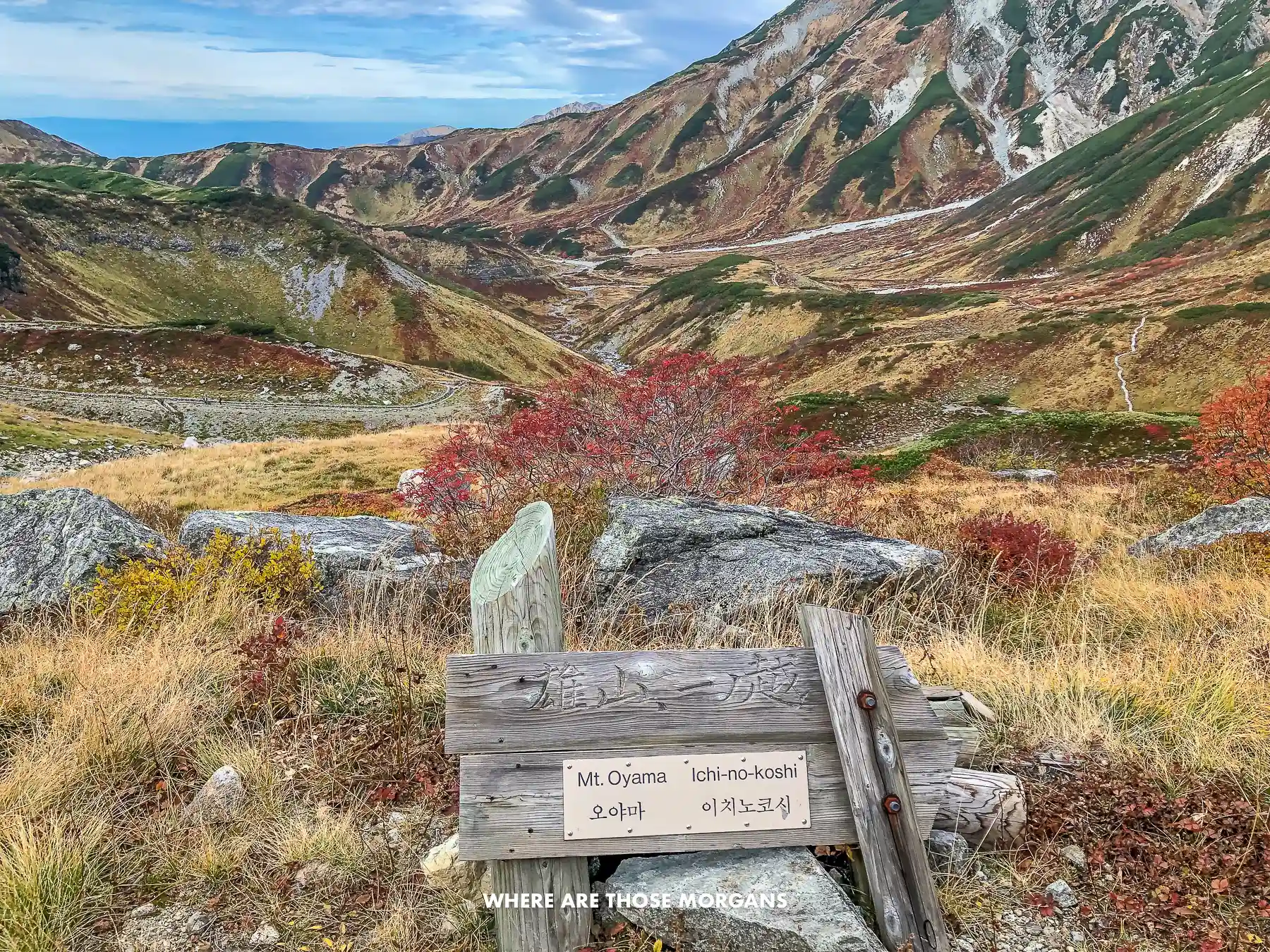
The route cost us almost 20,000 yen (and this was back in 2018) which was our one big activity splurge for Japan. And it was honestly so worth the money. We’d do it again in a heartbeat, and despite it requiring a full day and being super organized with advanced planning, we always recommend it to friends and family as an “adventurous alternative” when they visit Japan for the first time. At the end of the route, we took a bus to Omachi and spent the night in a guest house. Finally, on the way back to Tokyo the next morning, we stopped to see the magnificent Matsumoto Castle, which is one of Japan’s best preserved original feudal castles, and it was well worth the quick pit stop.
Japanese Alps Snapshot
Our verdict: Our favorite day in Japan outside of Tokyo and Kyoto. It felt like a mini adventure through the mountains that very few first-timers get.
Don’t miss: Hiking up to Mt. Oyama from the Murodo plateau. Do it in fall for the best colors, it was like New England level for us.
Crowd factor: The cluster of restaurants at Hotel Tateyama at the end of the bus ride to Murodo plateau was busy because everyone congregated there, but otherwise every transport section was surprisingly quiet.
Biggest regrets: Not taking enough photos – but we were trying to be present rather than spend the whole day documenting it for work!
Ideal stay: The day trip was immense, and honestly we probably wouldn’t stay at one of the hotels along the route despite the fact that would allow us to slow down.
Skip it if: Not interested in visiting the mountains and would rather spend time in the cities. It’s a fantastic day but it’s a lot of effort.
Next Steps
We he hope our guide helps you figure out where to visit in Japan.
If you’d like more personalized help, we offer expert travel planning consultations where we answer any questions you have, help you avoid tourist traps and plan out your entire itinerary step by step. See our packages and reviews.
Still researching for your trip?
- Follow our first-timers 2-week Japan itinerary.
- Don’t miss these top Tokyo attractions.
- Follow our 5 days in Tokyo itinerary.
- These are the best areas to stay in Tokyo.
- Here are our favorite things to do in Kyoto.
- This is how to spend 3 days in Kyoto.
- Here’s where to book a hotel in Kyoto.
- Here’s what to do first time in Osaka.
- This is how to spend 2 days in Osaka.
- These are the top areas to stay in Osaka.
- Here are the top Nara experiences.
Finally, we recommend reading our Japan travel guide for first-timers to get helpful tips and advice, top attractions to see, itinerary ideas and more.
Happy travels,
Mark and Kristen
Find our guide helpful? Pin it for later!

All Rights Reserved © Where Are Those Morgans, LLC. Republishing this article and/or any of its contents (text, photography, maps, graphics, etc.) in whole or in part is strictly prohibited.

Mark and Kristen spent 5.5 years traveling the world full time, visiting over 40 countries across 4 continents and more than 30 US states. They created Where Are Those Morgans in 2018 to help others plan the best possible vacations by writing authentic travel and hiking guides based on their real experiences.
Since the arrival of baby Maya in late 2024 and Kai in 2026, Mark and Kristen’s extensive travels have slowed down, but they still take plenty of trips each year. Where Are Those Morgans now helps millions of travelers each year to visit new places and hike new trails through information-packed blog posts, expert travel guidebooks, 1-on-1 trip planning consultations, and deep-dive YouTube videos. Read more about Mark and Kristen.
We are a couple (from the UK) both in our early 50’s and right now we are planning our trip to Japan next year (June ’27). We have been through the usual AI itinerary suggestions but really we just need a real persons perspective on what’s the best way see japan on a 3 week trip. Your guide is great but with the knowledge you have what would you suggest as a first (maybe once in a lifetime) visit.
Hi Joanne, thanks for reading. Agree that AI itineraries don’t cut it. 3 weeks in Japan for a first visit really comes down to your specific goals, pacing, style, interests, budget, etc. It’s not something I can properly lay out in a comment thread here. Broadly speaking, with that time frame, you can afford to spend more time than usual in the big three – Osaka, Kyoto, Tokyo – and really get to know them. You can also easily fit in the northern loop (Takayama, Shirakawa-go, Kanazawa, Alpine Route), Hakone/Fuji for a few days, and Hiroshima. And you’d also have time to visit off the beaten places with authentic castles, fewer tourists, etc. Beyond that, working through specifics properly is what our 1-on-1 planning sessions are for. We’re not taking new bookings until December, but that would be perfect timing for a June trip if you want it mapped out properly.
We will be touring Japan next April after a 2 week tour of China. We would be interested in the cost of your helping with itenerary and booking hotels. Nice hotels but not upmarket. We are both active and 84.
Thanks for reaching out, Bill. Sounds like it’s going to be a fantastic trip. I’d be more than happy to help with your Japan itinerary – here’s our travel planning page. If you’d like to move forward, pick one of our packages, complete the intake form to let me know more about your preferences, and I’ll be in touch with more details. – Mark.