

Artificial Intelligence (AI) is transforming industries, processes and job roles across the globe. It’s clear that AI is bringing valuable improvements to healthcare, finance and countless other sectors. But as travel content creators, we’re watching the technology evolve and carefully considering how it fits into our goal of helping people explore the world better.
Now don’t get us wrong, we’re equal parts fascinated, excited and terrified by AI. How will the world look in 10 or 20 years as a result of these monumental shifts to society? We use AI ourselves every day for behind the scenes research, workflow optimization, data analysis and tons of personal things like cooking or wellness. But we’ve made a deliberate choice to keep our travel content creation process distinctly human.
In this guide based entirely on our own experiences, we’re going to walk you through the 5 major reasons we maintain a human-first approach for all content across our travel business, including our blog posts, expert guidebooks and every photograph you’ll find on our site.
Note: Our content is reader supported and contains affiliate links. If you make a purchase through one of these links, we may earn a small commission at no extra cost to you and it helps us keep this site running.
1. Authentic Experiences Can’t Be Replicated By Machines

When you search for travel advice or ask an AI tool to plan your itinerary, the information you receive is derived from existing content across the web. This can provide a useful starting point, but it lacks nuanced and personal insights that come from actually going somewhere.
Our readers come to us for authentic guidance on travel, hiking and photography because they know we’ve visited that place, hiked that trail or taken that photograph. AI can’t do any of those things, and you can’t emotionally connect to the generalized information it gives out as answers.
We’ve always written 100% original content based on our real experiences. Not only does this guarantee we avoid any level of plagiarism, but it also means we provide unique value that algorithms and machines simply cannot replicate. When we write a guide about how to plan a 2 day Paris itinerary, every recommendation comes from places we’ve visited, mistakes we’ve learned from and discovered we’ve made.
This approach ensures our content maintains a consistent voice and perspective that our readers have come to trust. Sure, AI can synthesize existing information, but it can’t create the kind of genuine experience-based insights that help travelers make informed decisions about spending their precious time and money.
We could quite easily switch to an AI-first content approach, have tools create outlines for us, perform competitor research, fill in content gaps to rank higher on search engines, and save an enormous amount of time. But we would lose the very thing that sets us apart in this new online world – our originality. We would be writing for machines, not for people.
2. Real Travel Requires Real Travelers
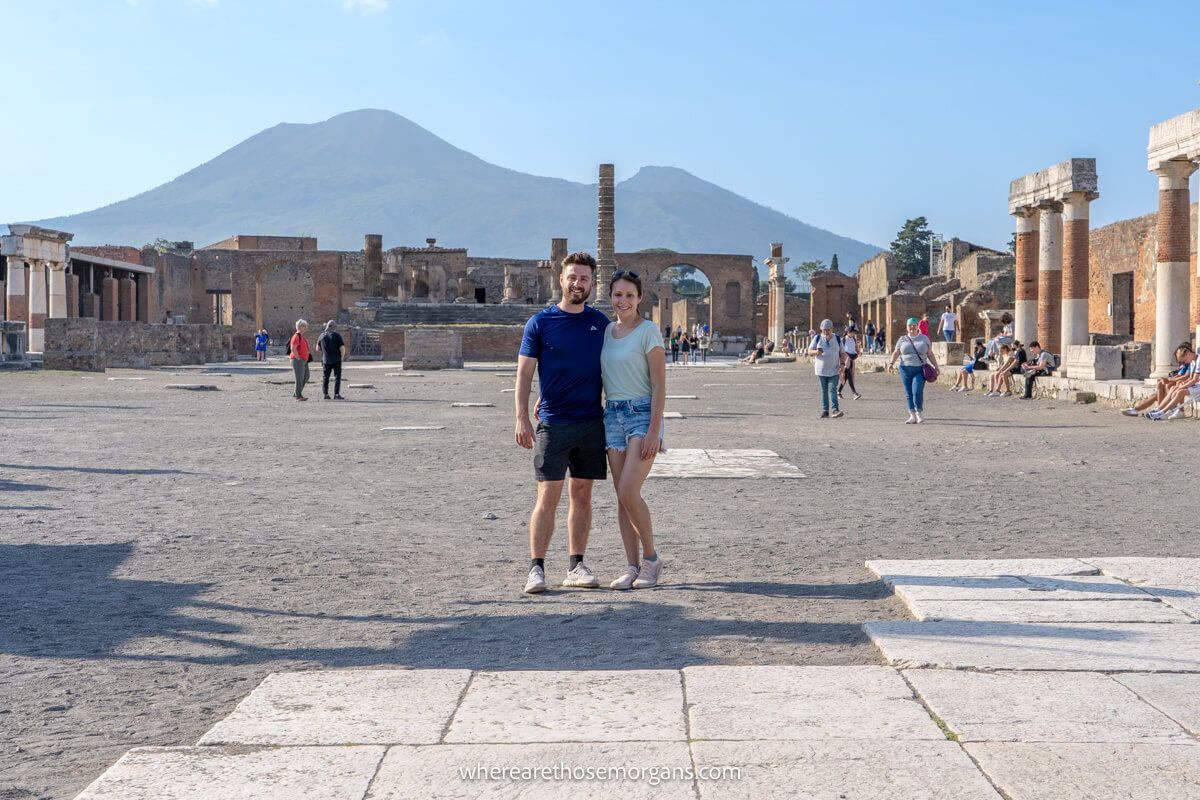
Our passion and business objective has always been simple: To help people travel better. This goal requires more than just publishing information, it demands real-world experience and genuine expertise. Any travel creator could use AI to churn out a totally impersonal 4 day Rome itinerary if they haven’t been, but how are they helping people travel better if they’re offering nothing more than regurgitated information?
The reason we started our travel blog after our 18 month trip around the world in 2018 and 2019 was because we found immense value in reading content from people who had actually been to the places we wanted to visit. We knew these writers had figured out the logistics, experienced the culture and found the hidden gems. The potential to do that ourselves and directly help other travelers who followed in our footsteps was why we quit our careers as scientists.
AI hasn’t hiked the W Trek in Patagonia, taken a 10-day trip to the Amalfi Coast or been up every observation deck in New York City. It can’t tell you that the lighting is perfect for photos at a specific viewpoint 30 minutes before sunrise, or share a valuable lesson learned from trying something that didn’t work out.
Here’s how we create authentic travel content:
- We invest our own time, money and energy exploring destinations
- We visit attractions, restaurants and hotels to gather firsthand insights
- We document real experiences through our own photography and videography
- We spend considerable time crafting guides filled with tested, practical information
This human first approach allows us to offer something AI cannot: The ability to have real conversations with our readers, adjust recommendations based on individual needs, and provide the kind of personalized advice that comes from genuine expertise. If you book a call with us to discuss your travel plans, we will help you by using the experiences we had ourselves.
Technology can organize information and streamline processes (we use AI tools every day to help us complete a wide range of tasks) but the core value we provide – authentic travel expertise – must remain fundamentally human.
3. Current AI Technology Has Significant Limitations

The rate of advancement with AI and agents is astonishing, and we’re genuinely intrigued to see how we can advance with it in the future. But even leading AI researchers acknowledge that current technology has significant limitations and potential risks. When experts in the field express caution, we believe it’s wise to approach AI implementation thoughtfully and responsibly, rather than going all-in on something we don’t fully understand.
The current state of AI-generated information often produces confusing or contradictory results. For example, we recently searched for information about visiting Versailles and received this AI overview:
“The Palace of Versailles is busiest on weekends, especially Tuesdays, and is closed on Mondays. Weekends are about twice as busy as weekdays, and 3-day weekends are three times busy. Sundays are busier than Saturdays. Fridays and Saturdays are also equally busy, along with national holidays.”
This type of contradictory information isn’t helpful for travelers trying to make informed decisions. We also had an instance where AI results showed a local trail as 33 miles long when it was actually 0.3 miles, the kind of error that could significantly impact someone’s hiking plans.
So blindly accepting AI answers as they currently are could ultimately be a recipe for disaster. When we reply to AI answers with corrections, it says something like “You’re absolutely right…”. That’s not us having a difference of opinion with another human, that’s a clear factual error. And right now, a lot of people take what they read from AI answers as the truth because they don’t realize how much it hallucinates.
4. Finding Quality Travel Information Has Become More Challenging

Recent changes in how search engines rank and display content have significantly impacted how people discover quality travel information. Algorithm updates focused on AI-generated summaries and automated ranking systems have altered the relationship between content creators, search engines and travelers.
Many industry experts and regular internet users have noted that search results quality has declined, making it harder to find reliable, expert-created content. We’ve experienced this firsthand with our own recent trips, it’s become increasingly difficult to surface travel information from sources that have actually visited the destinations they’re writing about.
This shift represents a fundamental change from the previous ecosystem where expert content creators had a more balanced relationship with search engines. That system wasn’t perfect either, but it generally connected travelers with information from people who had genuine expertise and firsthand experience.
As content creators who have spent years building expertise through actual travel, we can do little more than sit and watch as our experience-based information becomes harder for readers to find in search results that are dominated by aggregated or AI-generated content.
But at the same time, our commitment to human-first content creation is only heightened in response to this information quality challenge. We want to ensure travelers can still access reliable, expert-created guidance. It’s the least they deserve.
5. We Love To Write Travel Guides

Let’s end with the most close-to-our-hearts reason we will always stick to human-first content creation: We love to write travel guides! We became travel writers because we’re obsessed with exploring the world and sharing those experiences through our own words and perspectives.
We spent 5 and half years traveling the world full time specifically so we could write about our experiences in our own voice. This investment of time, energy and resources is what allows us to provide unique value to our readers. The personality, insights and perspective that comes through in our writing cannot be replicated by automated systems.
Our readers choose our content because they trust our recommendations. When we suggest a hotel, hiking trail or attraction, they know it’s because we’ve been there ourselves and can vouch for the experience.
We recognize that AI will continue to evolve and become priceless to many industries, and we hope to play our own small role in helping to shape how it is best used. But we also believe certain aspects of creative work (particularly those requiring personal experience and authentic perspective) are best handled by humans with emotional intelligence.
This technology will continue to evolve rapidly, but we remain committed to stand by what makes our content so valuable – authenticity, originality and genuine expertise that can only come from real travel and real human perspective.
Our Balanced Approach To Technology
We want to be clear that our human-first content approach doesn’t mean we’re technology averse. On the contrary, we strategically use various tools to improve our efficiency, organize our workflow and enhance our business operations behind the scenes. What we don’t do is use AI to generate the core content that our readers rely on for travel planning.
This balanced approach allows us to maintain the reliability and trust that our audience values while still leveraging technology where it makes sense for the growth and success of our business.
We believe our careful and responsible use of technology combined with a cast-iron commitment to human-created content positions us to continue providing the kind of helpful and trustworthy information that travelers need.
Our AI approach: We never use AI to write our travel guides or guidebooks, and every photo and video is our own. We sometimes use AI tools to brainstorm ideas and improve workflows, but we never publish AI-generated text, photos or videos. Every word on this site is written by us.
Next Steps
We hope our perspective on human-first travel content creation resonates with you! We recognize that different creators will make different choices about technology integration, and we respect that various approaches can work for different types of content and audiences.
Our approach reflects our values and commitment to providing the kind of experience-based travel information we wish we’d had access to during our own travels. Remember, these are our perspectives based on our experiences and what we believe serves our readers best. We’d love to hear your thoughts or questions in the comments below.
Here are more of our personal blog posts to read next:
- What we love about having an online business
- What we don’t like about having an online business
- What we love about long term travel
- What we don’t like about long term travel
Want to learn more about us? Head over to our about Where Are Those Morgans page to meet Mark and Kristen.
Happy travels,
Mark and Kristen
Enjoy this guide? Pin it for later!
All Rights Reserved © Where Are Those Morgans, LLC. Republishing this article and/or any of its contents (text, photography, maps, graphics, etc.) in whole or in part is strictly prohibited.

Mark and Kristen spent 5.5 years traveling the world full time, visiting over 40 countries across 4 continents and more than 30 US states. They created Where Are Those Morgans in 2018 to help others plan the best possible vacations by writing authentic travel and hiking guides based on their real experiences.
Since the arrival of baby Maya in late 2024 and Kai in 2026, Mark and Kristen’s extensive travels have slowed down, but they still take plenty of trips each year. Where Are Those Morgans now helps millions of travelers each year to visit new places and hike new trails through information-packed blog posts, expert travel guidebooks, 1-on-1 trip planning consultations, and deep-dive YouTube videos. Read more about Mark and Kristen.