
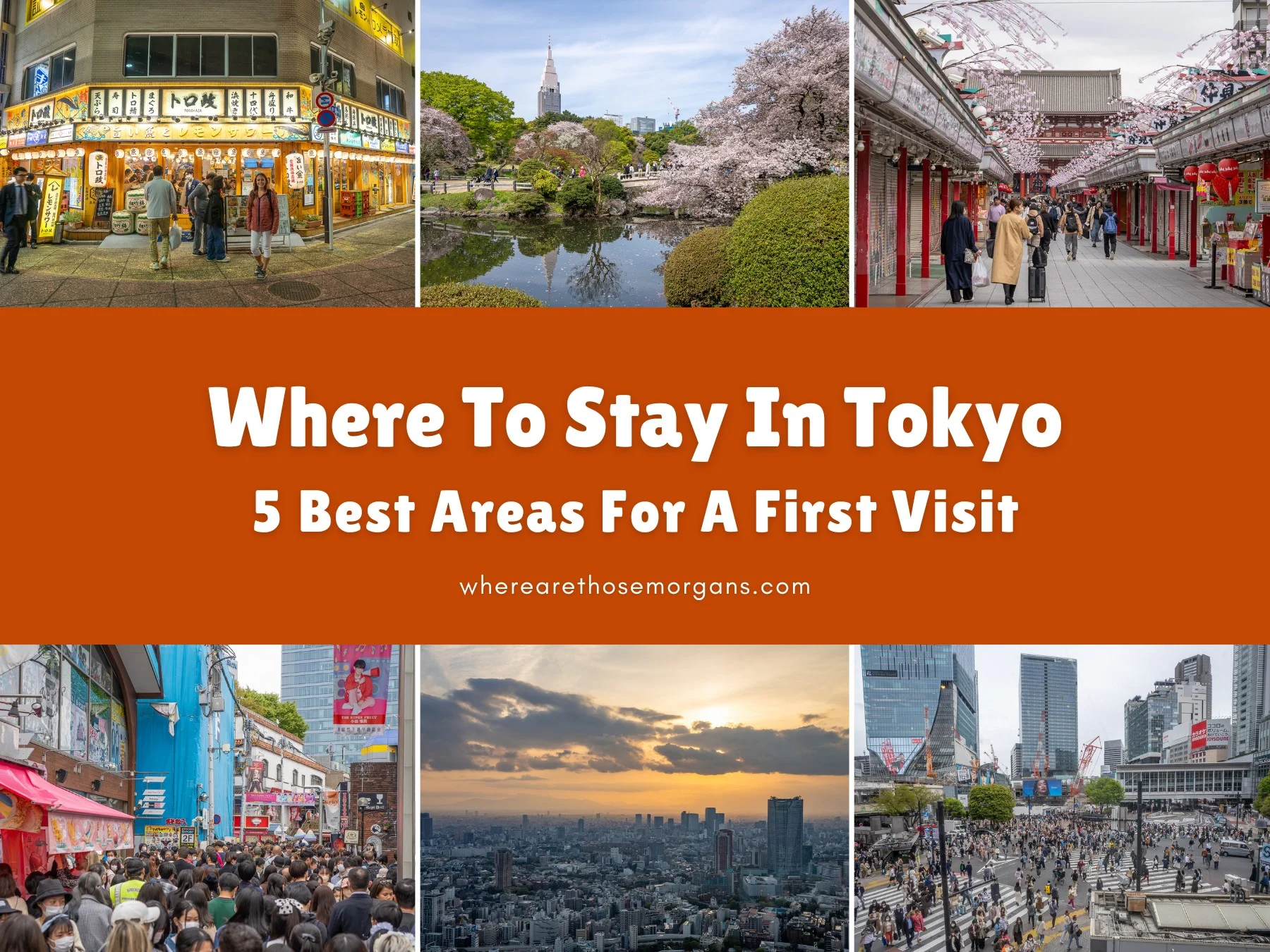
We were so overwhelmed trying to figure out where to stay the first time we visited Tokyo in October 2018. It was our first time in Japan, we knew Tokyo was an enormous and densely populated city, the popular neighborhoods seemed so far apart, and we had a super tight budget because we were traveling the whole world for 18 months. After doing tons of research, we settled on a cheap hotel between Kanda and Akihabara. The area worked well enough for our 5 days in Tokyo, but we quickly learned which parts of the city we liked more.
Then in 2023, after leaving Seoul, we flew to Tokyo for a 3-week trip around Japan during the cherry blossom season. This time we booked a relatively affordable hotel for 3 nights in Tokyo’s most popular tourist neighborhood for first-timers called Shinjuku. It was chaotic and commercialized, but we did really like the area. At the end of the trip we flew back to the US from Tokyo, so we spent another night at a cheap hotel between Ginza and Tokyo Station (the area is called Maronouchi), which lacked authenticity but was super convenient.
Hi, we’re Mark and Kristen Morgan. We left our scientific careers in 2018 to become travel writers and photographers, and since then our expert guides have helped millions of travelers take better trips. Read more about us.
Why trust us with your Tokyo lodging? We travel the world and book hotels for a living, and we’ve stayed in three different parts of Tokyo so we know the city well. As always, every photo in this guide is ours.
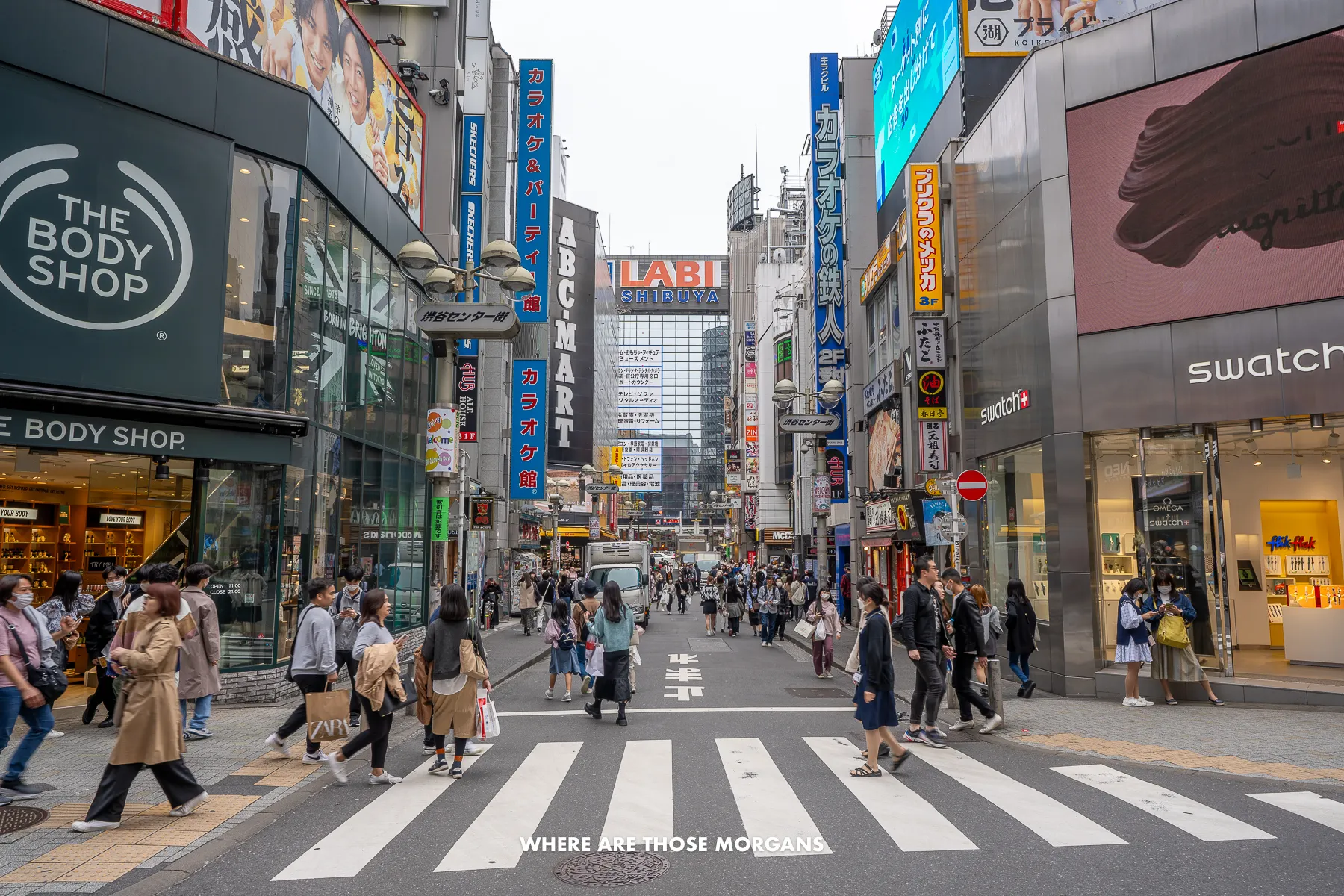
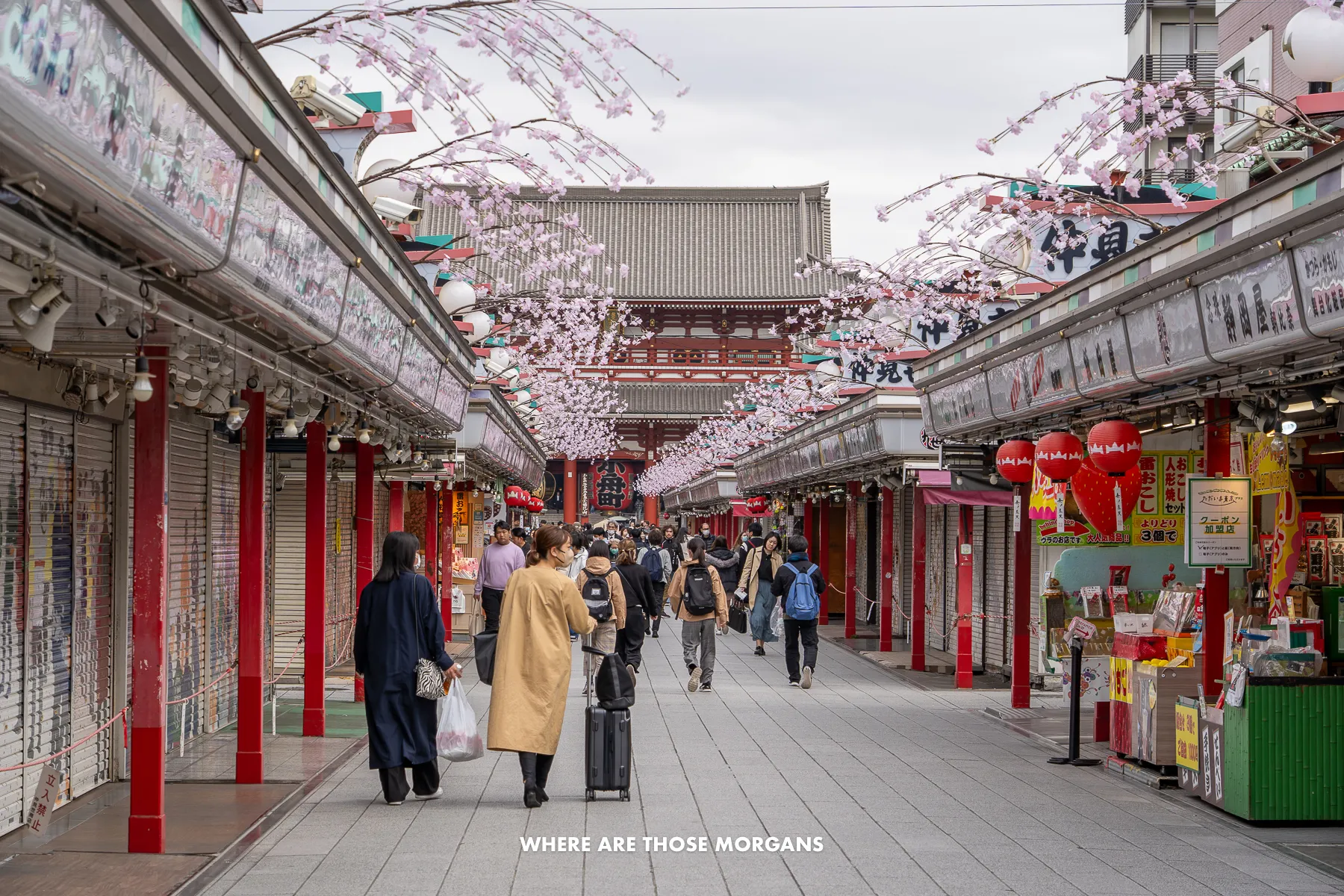
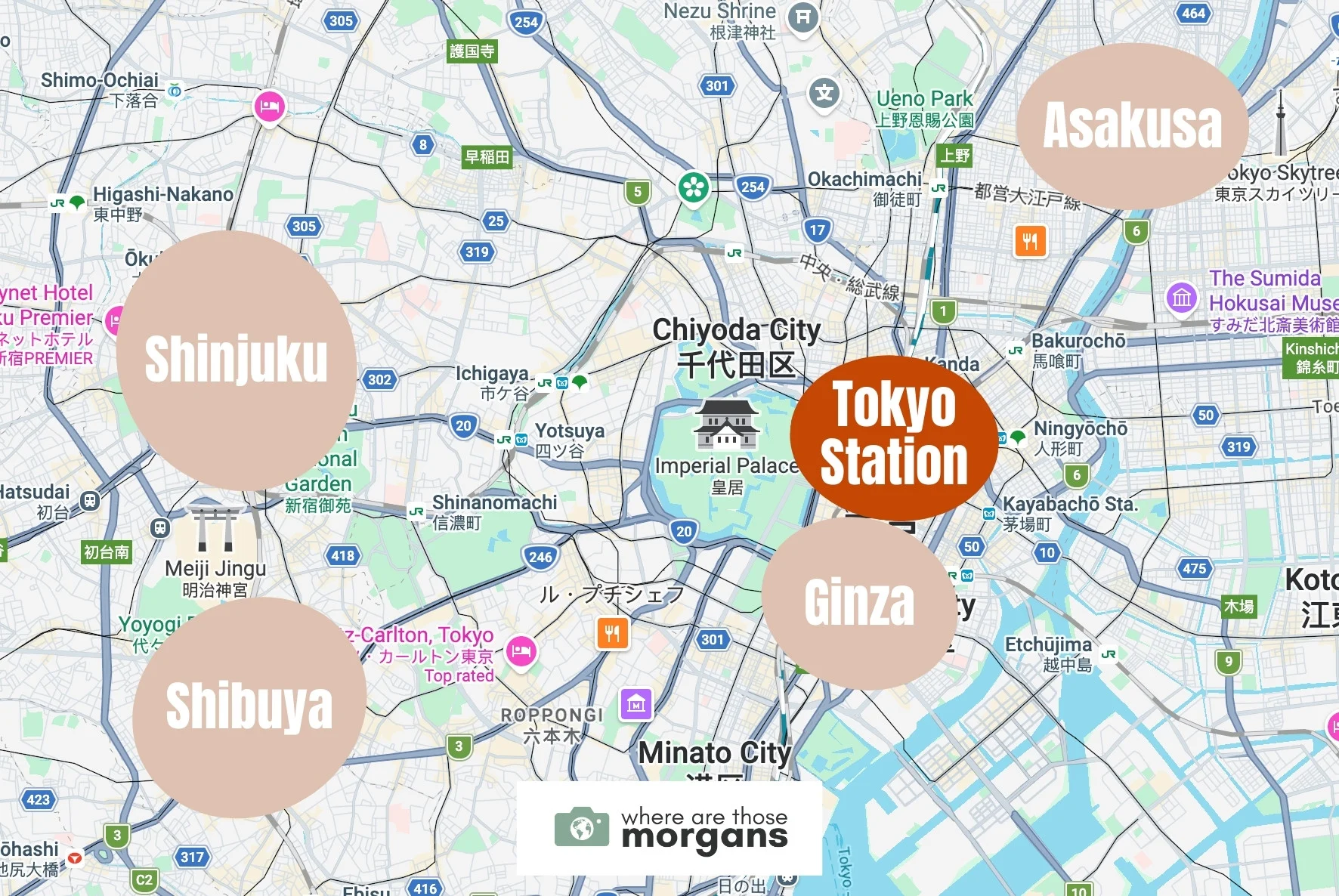
Throughout our different trips to Tokyo we spent long days exploring the city’s famous neighborhoods – figuring out what we liked and what we didn’t, but more importantly understanding what makes each area a good place to stay. We liked Shinjuku and would stay there again, but we’d also like to stay in Shibuya for a more chilled vibe or Asakusa for a more traditional and authentic experience. Ginza has a lot of positives and it will suit certain travelers more than the other areas, and Tokyo Station works best for short stays, bullet train access and luxury hotels.
In this guide we cut right to the chase and show you the 5 areas we’d consider staying in Tokyo, with pros and cons for each area based on our experiences, and a helpful map at the end. Let’s dive in!
Note: Our content is reader supported and contains affiliate links. If you make a purchase through one of these links, we may earn a small commission at no extra cost to you and it helps us keep this site running.
Our Favorite Hotels
If you’re in a hurry or don’t want to read this full guide, here are our top hotel recommendations for first time visitors to Tokyo based on a perfect blend of location, quality, value for money, previous guest reviews and our own experiences. They’re all affordable hotels (relatively speaking for Tokyo) that we’d happily book ourselves:
🏨 JR Kyushu Hotel Blossom Shinjuku: Between cheap and mid-range, this low-key hotel has a superb location just steps from Shinjuku JR Station along with excellent guest ratings. There are more luxurious hotels in Tokyo’s most popular neighborhood, but this hotel strikes the right balance between cost, location and quality.
🏨 Shibuya Stream Hotel: Our top pick in Tokyo’s trendiest neighborhood has fantastic guest ratings, a convenient location on the quieter south entrance to Shibuya JR Station, and solid nightly rates for such a desirable location.
🏨 MUJI Hotel Ginza: We’re not usually ones to jump on gimmicks or trends, but the MUJI hotel above the MUJI store in Ginza looks so cool. If you like the brand, you’ll love the hotel. It sits right in the mid-range price bracket for Ginza, but this hotel has a superior location in the heart of the action near famous department stores, all while being closer to the main Tokyo JR Station for transit links.
🏨 Onyado Nono Asakusa: There are plenty of excellent hotels in Tokyo’s traditional “Edo” neighborhood, but this is one of the best affordable authentic onsen ryokans in Tokyo so it’s our top pick for first timers who want Japanese-style accommodations. We stayed at the Onyado Nono in Nara to try out the onsen, and we really enjoyed the unique experience.
🏨 The Tokyo Station Hotel: The area around Tokyo Station (Marunouchi) has most of Tokyo’s high-end luxury hotels, but they’re also among the city’s most expensive. That’s why the affordable luxury at The Tokyo Station Hotel is one of our top picks. There are much cheaper hotels near the JR Station, but this one offers glitz and glamour at reasonable nightly prices.
Our favorite hotels in Tokyo are all excellent options with sky-high guest ratings, but we hope you love to research and learn about a place before you visit like we do. Keep reading to see what makes each of Tokyo’s popular neighborhoods a good or bad area to stay for your trip. Within each area we’ll show you the top rated cheap, mid-range and luxury hotels along with any highly rated traditional Japanese ryokans.
Here’s a summary of what we’re going to show you:
| Area | Price | Vibe | Why? |
|---|---|---|---|
| Shinjuku | $ – $$$ | Electric / chaotic | Center of everything |
| Shibuya | $$ – $$$ | Trendy / youthful | Street culture |
| Ginza | $$$ – $$$$ | Polished / upscale | High-end lifestyle |
| Asakusa | $ – $$ | Historic / atmospheric | Old Tokyo |
| Tokyo Station | $$ – $$$$ | Grand / businesslike | Bullet train access |
Shinjuku (Neon Lights & Nightlife)
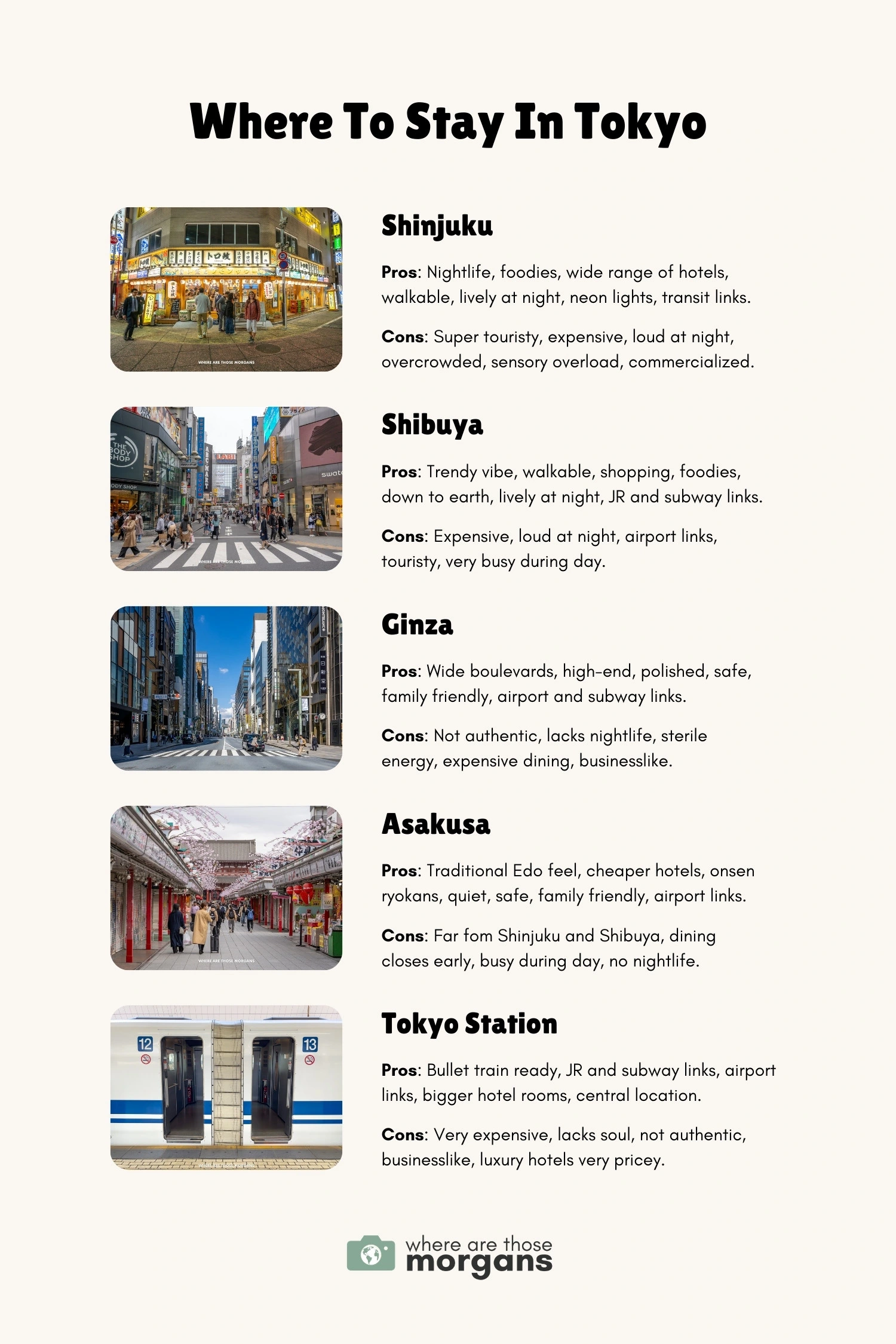
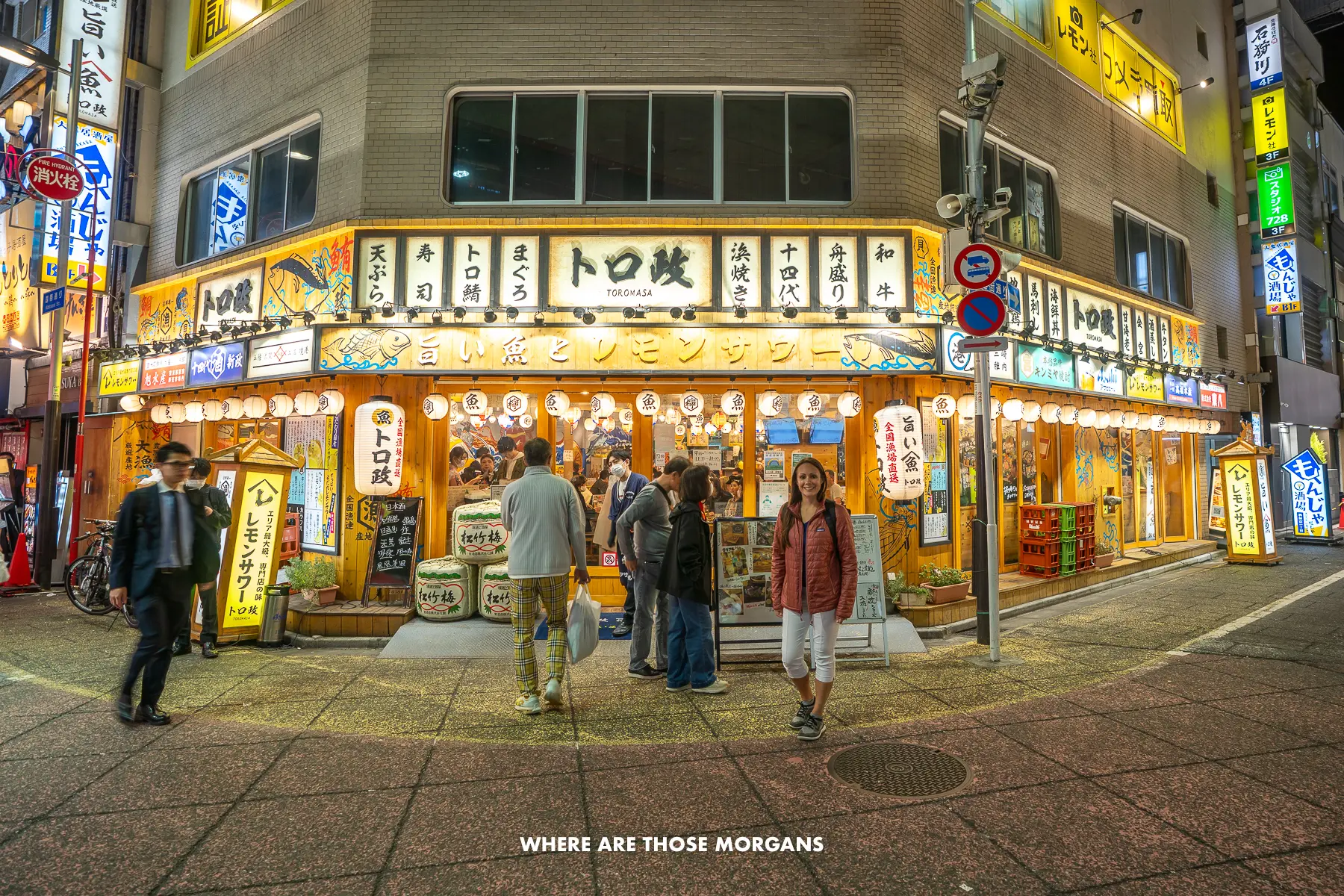
Okay let’s start with the most popular place to stay in Tokyo for a first time visitor – Shinjuku. You might know it as “the busiest transport hub in the world”, but we found Shinjuku to be an interesting blend of energy, noise and chaos (in a good way) mixed with commercialized over-tourism. It had more of a business-meets-tourist vibe than a local feel, but we actually didn’t mind that.
There was an abundance of excellent food options (we loved Gyopao Gyoza), the nightlife was amazing, there were so many cool hidden spots to unearth like Golden Gai and Memory Lane, and honestly we could have filled a few days worth of activities without ever leaving Shinjuku. Kabukicho (the red light district) wasn’t as bad as we expected and we always felt safe walking around the whole neighborhood by day or night.
Staying in Shinjuku gave us superb transit connectivity for getting around the city, and Shinjuku JR Station would work perfectly if you’re planning a day trip to Hakone for Mt. Fuji views (we did Hakone on the way back to Tokyo – it’s a cool spot). But transport to Narita and Haneda airports takes longer than staying near Tokyo JR Station, which is also where the bullet trains for Kyoto and Osaka leave from, so it’s less convenient for onward travel through Japan. We took the JR Chuo line from Shinjuku to Tokyo Station for our train to Kyoto.
For our trip in 2023, we wanted a hotel as close to Shinjuku Station as possible because we planned to do a lot of exploring throughout Tokyo and we didn’t want a 20-minute walk or connecting subway to the station every morning and evening. Hotel prices were inflated and rooms were booked up because it was cherry blossom season, so we didn’t have many solid options. We ended up booking 3 nights at Sunroute Plaza because it was cheap-ish, had more reviews than any other hotel, and it was a stone’s throw from the station.
The hotel was fine – we didn’t love the tiny rooms, but it gave us a bed and a shower in the exact location we wanted on Shinjuku’s quieter south side near the train station. There are much better hotels in Shinjuku, so if we stayed there again we’d book further in advance and not go during cherry blossoms when the city is crawling with tourists.
💰 Cheap: If we were doing Shinjuku on a shoestring budget, we’d compare prices at The Knot or Daiwa Roynet Hotel for a quieter stay, Hotel Gracery or Sotetsu Fresa Inn Higashi to be in the lively Kabukicho area, and our personal top picks JR Kyushu Hotel Blossom or WPU Hotel for a bit more quality and to be closer to Shinjuku Station.
💰💰 Mid-range: With a mid-range budget we’d look at Hotel Groove Shinjuku in Kabukicho, Mimaru Shinjuku West or Keio Plaza Hotel on the quieter west side, and Hotel Century Southern Tower just south of the main train station near the beautiful Shinjuku Gyoen National Garden.
💰💰💰 Luxury: Or if we wanted to stay in Shinjuku with a bigger budget to spend, we’d choose between the famous Park Hyatt and the adults only Bellustar Pan Pacific which has impeccable guest ratings.
♨️ Traditional: Shinjuku is not the place to stay in Tokyo if you want a traditional Japanese accommodation. The only one we’d consider in this neighborhood is called Onsen Ryokan Yuen Shinjuku.
Our verdict: We enjoyed staying in Shinjuku and we do think it’s ideal for first-timers to get a real taste of Tokyo’s neon lights. It’s a great spot for a first timer who wants good connectivity, loads of places to eat and a vibrant nightlife. We did think it was touristy, but that didn’t bother us as much as it might in a place like Paris or Rome. We’d say this area works best for groups, families with older kids, outgoing people or couples who want a lively atmosphere. JR Kyushu Hotel Blossom is great on a budget, but Bellustar Pan Pacific looks immense.
Pros
✅ Nightlife and foodies
✅ Huge range of hotels
✅ Quintessential neon lights
✅ City subway links
Cons
❌ Far from bullet train
❌ Tourist prices food/hotels
❌ Sensory overload
❌ Tourist-trappy
Shibuya (Culture & Shopping)
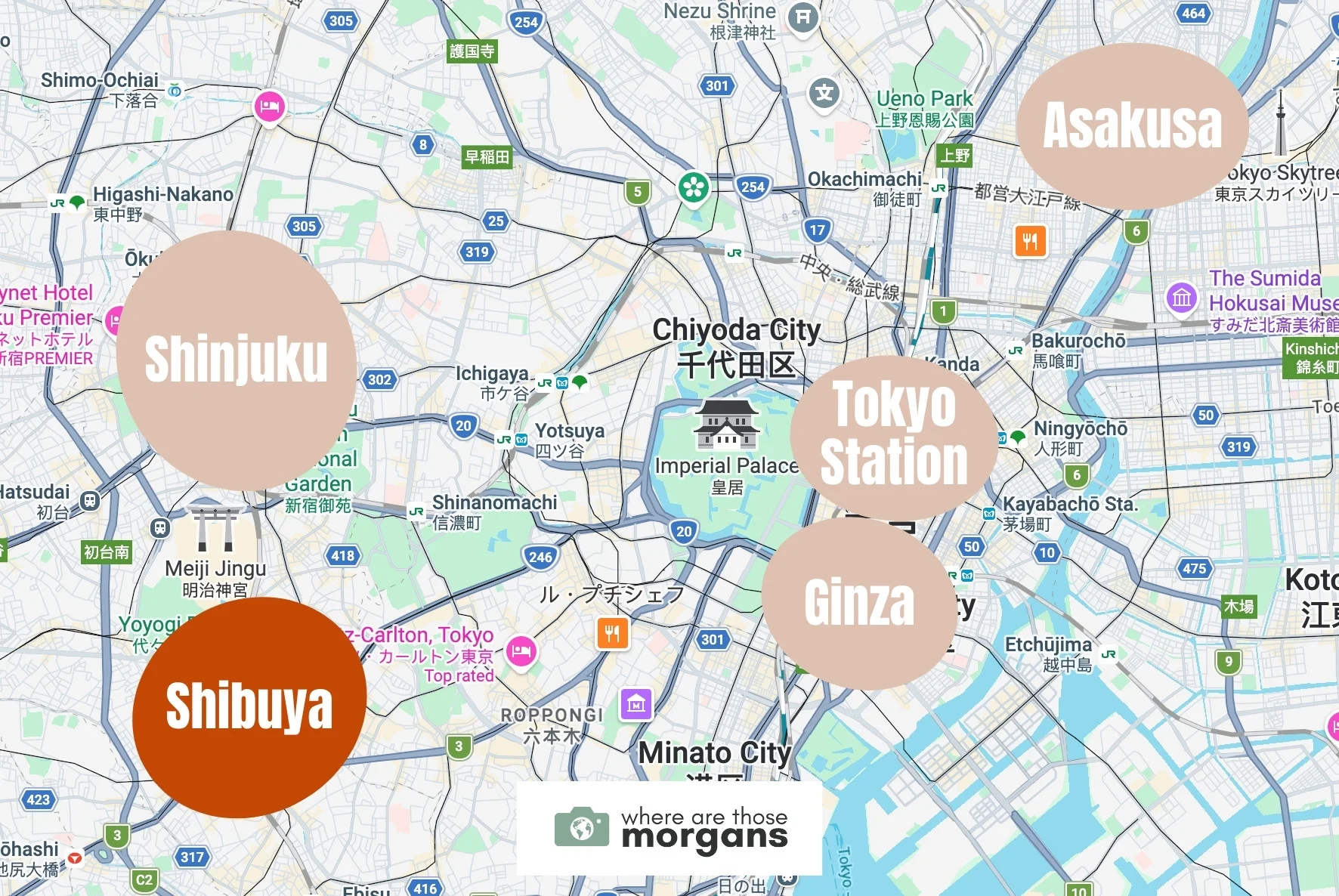
Heading south from the commercialized touristy chaos of Shinjuku to a more youthful and trendy chaos – Shibuya has become one of our favorite parts of Tokyo. It was still super touristy, but we felt it had more of a fun and friendly vibe, there were a million shops to explore and we really liked the massive amount of low-key dining options. We didn’t go out late at night, but Shibuya also has a busy nightlife scene with more down to earth bars. Basically, it was more chilled out than Shinjuku.
We ate delicious ramen at Ichiran in Shibuya (sat in a tiny individual cubicle and got served through a wooden window) and next time we’re there we want to eat Kobe beef at Hakushu Teppanyaki. Both times we went to Tokyo we watched and took part in the famous Shibuya Crossing, and we also went up Shibuya Sky observation deck in 2023 (the rooftop was closed due to bad weather but it was still cool). It’s also close to Meiji Jingu Shrine and the ultra-popular Takeshita Street, so there’s plenty on the doorstep.
We haven’t stayed in Shibuya yet, but we’d definitely consider it next time. The reason we didn’t book there on either of our first two trips is because it’s isolated in the far southwest of the city, which would have meant long train rides every day to get pretty much anywhere else in Tokyo. Shinjuku was the same, but it had more transit lines with direct-to-attraction trains. Plus, in terms of airports and bullet train access, Shibuya is slightly less convenient. So in a nutshell, we love Shibuya but it’s not the best for connectivity.
💰 Cheap: If we wanted to stay in this popular area on the cheap, we’d book lyf Shibuya – it looks fantastic. Our backup here would be Shibuya Tokyu REI. We wouldn’t stay in a capsule pod hotel now at our age, but if you’re a solo traveler or group trying to keep accommodation costs to a minimum, The Millennials Shibuya has top ratings.
💰💰 Mid-range: In the mid-range budget category, the highly rated Shibuya Stream Hotel would be our top pick (this one looks superb) and Shibuya Excel Hotel Tokyu would be our backup option.
💰💰💰 Luxury: There’s a lot of great options we’d consider splurging on in Shibuya. Both Cerulean Tower Tokyu and Hotel Indigo look fantastic, or there’s the Hyatt House which is brand new and rooms come with a washer/dryer, and finally a bit of a wildcard is TRUNK Yoyogi Park which is in a secluded area to the northwest of Shibuya with sky-high guest ratings, and it looks immense.
♨️ Traditional: Similarly to Shinjuku, there aren’t many highly rated ryokans or onsen ryokans in Shibuya. The two to consider are Hotel Fukudaya and to a lesser extent Dormy Inn Premium Shibuya.
Our verdict: If you’re specifically looking for a fun area to stay and you intend to spend most of your time actually in that area (rather than spending most of your time exploring Tokyo), Shibuya is our top pick for you. For us, Shibuya is more of a third or fourth time place to stay – now that we’ve ticked off Tokyo’s top attractions over two trips, we’d be more than happy to book Shibuya Stream Hotel and spend a lot of time exploring the immediate area. But for a first-timer who wants to see a lot of the city, we think Shinjuku, Ginza or Tokyo Station work better.
Pros
✅ Walkability
✅ Endless shopping
✅ Excellent food
✅ Busy nightlife
Cons
❌ Tourist prices
❌ Loud and busy
❌ Isolated
❌ Airport links
Ginza (Luxury & Style)
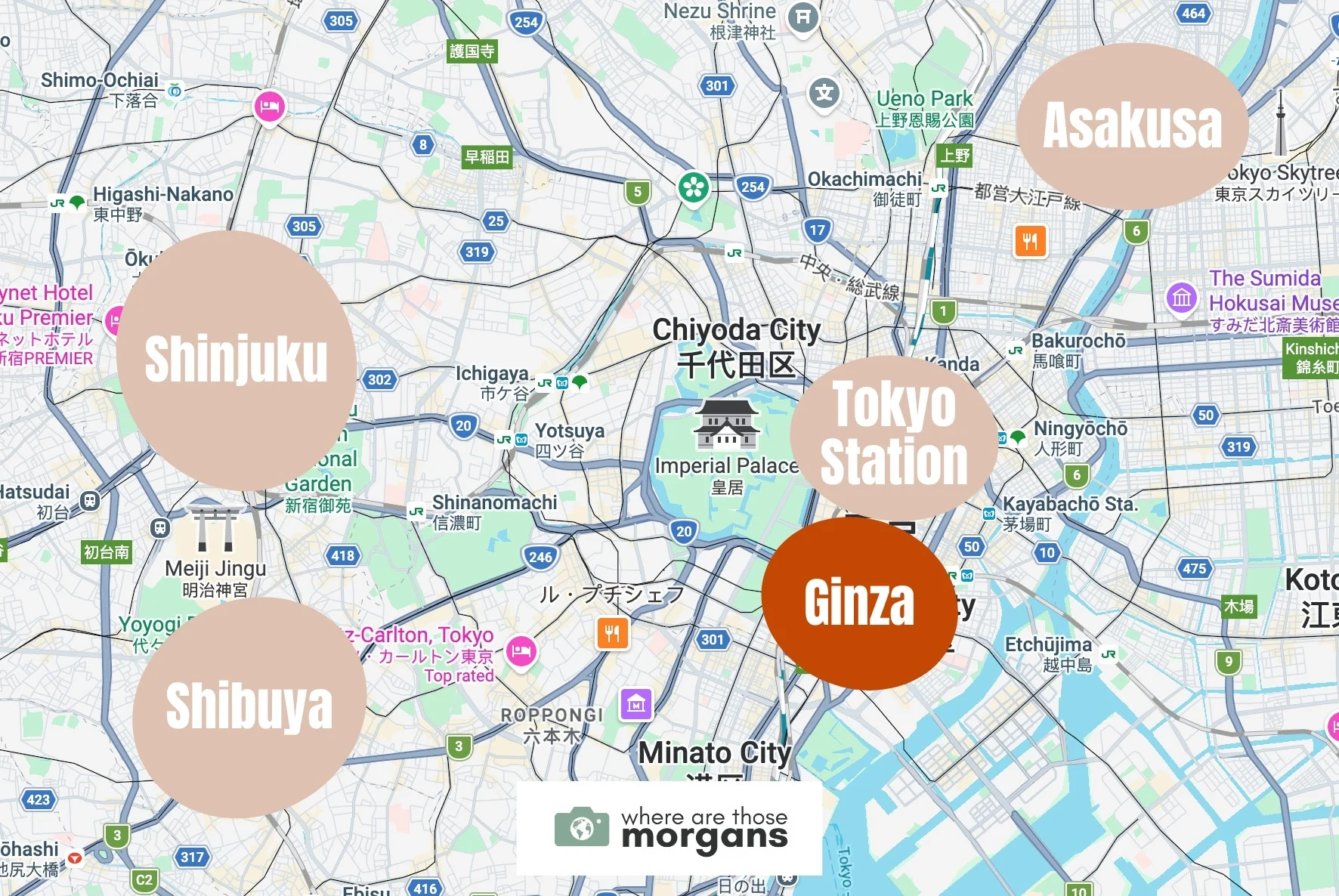
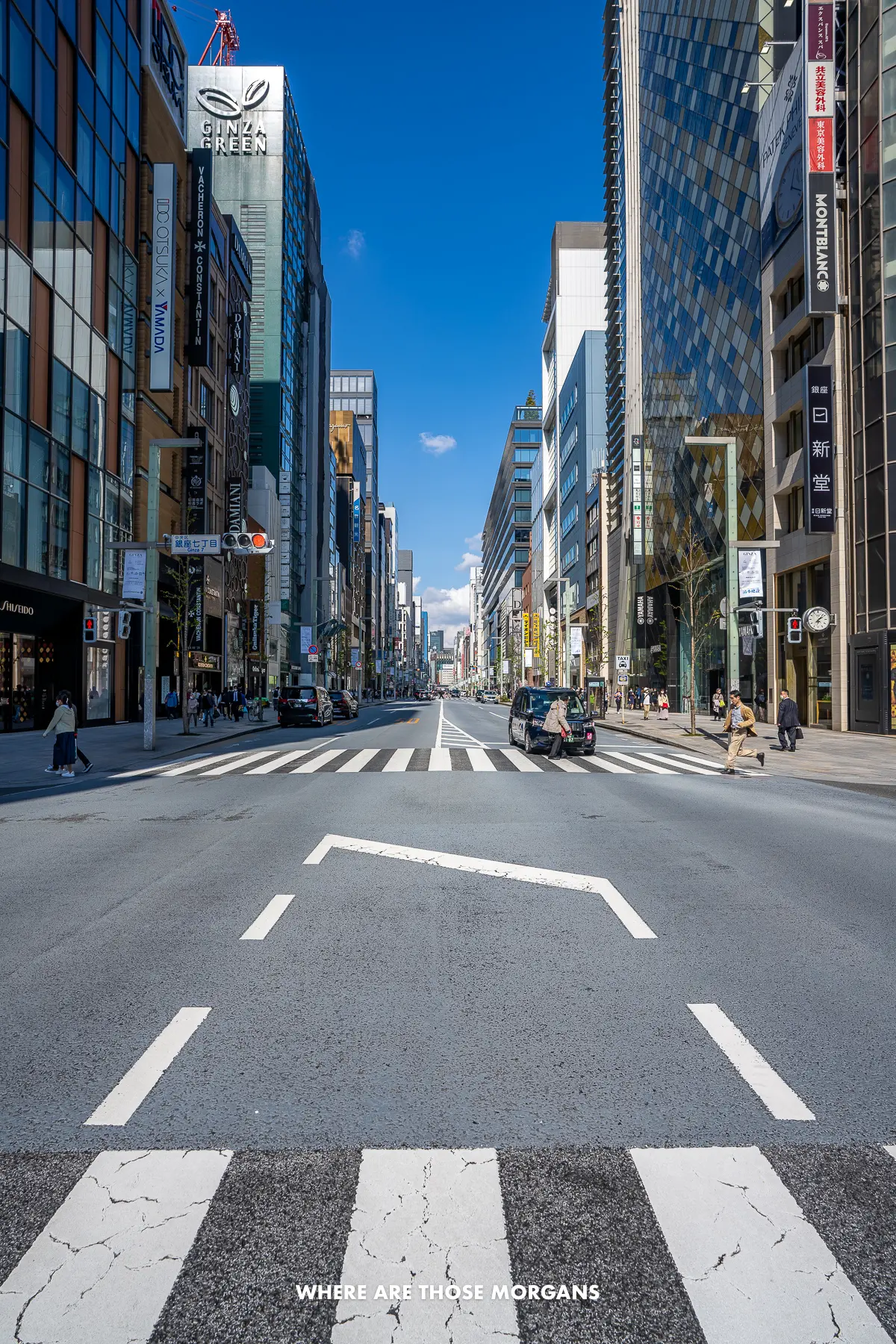
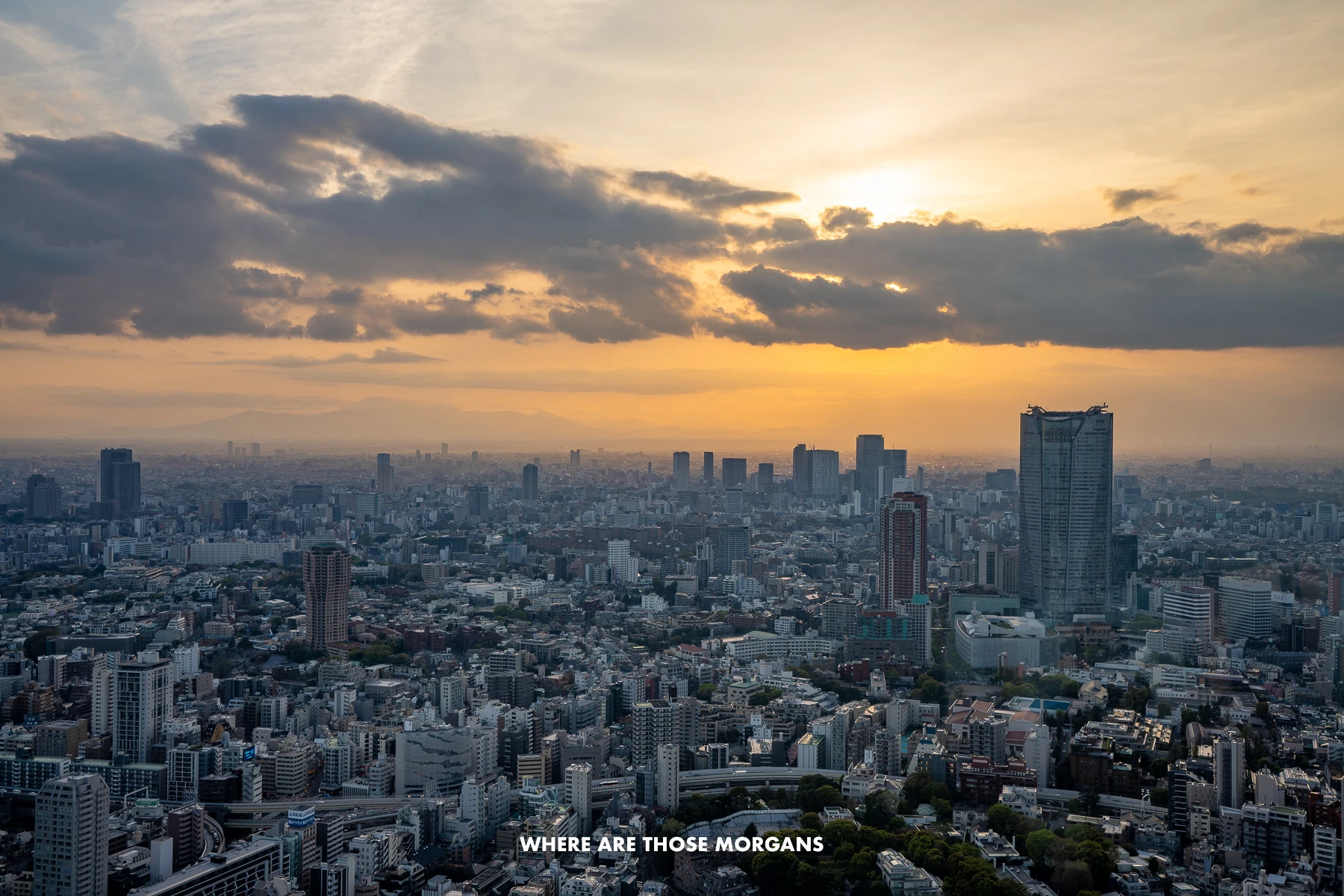
With the two big-hitter neighborhoods on the west side out of the way, let’s switch focus to a more upscale area that we think might just be the smartest place to stay in Tokyo – Ginza. We spent a few hours walking through Ginza during both our trips to Tokyo, and honestly we really enjoyed the Western-feeling shopping and business district. It has much better airport and bullet train access than Shinjuku or Shibuya.
The grid-style, skyscraper-heavy boulevards with wide sidewalks (think Fifth Ave in NYC) and high-end designer stores always felt super safe, polished and clean. To compare, we thought Shinjuku and Shibuya had a more frantic energy with twisting alleyways, neon lights and rowdy crowds – whereas Ginza felt sophisticated and more grown up, so we think it would be perfect for families with younger kids (those wider paths are ideal for strollers).
The downside? We’re talking about where to stay in Tokyo, not London or NYC. If you want that quintessential neon lights and temples version of Tokyo, Ginza is not the place to book a hotel. But if you’d rather stay in a luxurious area and day trip to places like Shinjuku and Shibuya, Ginza works amazingly well because it also has superb metro access and it’s just a short walk from Tokyo JR Station for onward travel to Kyoto.
Our favorite place in Ginza is Nissan Crossing, we saw incredible Nissan concept cars spinning on revolving platforms in 2018 and 2023 – you have to check it out if you’re into cars. We also bought some clothes at the flagship Uniqlo store, had a look around Mitsukoshi (Tokyo’s best depachika – a department store food hall), and ate delicious food in one of the many basement food courts. But one thing we missed that you should do is visit Tsukiji fish market.
💰 Cheap: On a tight budget we’d consider booking remm plus Ginza near the beautiful Hamarikyu Gardens or the highly rated Tsuki Tokyo not far from the fish market.
💰💰 Mid-range: The mid-range is where Ginza really shines over other parts of Tokyo. We’d happily book The Gate Hotel by Hulic, Hotel GrandBach or MUJI Hotel (same brand as the popular store) – they all look great. We’d also consider Mimaru Ginza East if we had young kids with us because they offer better family rooms.
💰💰💰 Luxury: If we had cash to splash in Ginza we’d struggle to choose between The Tokyo EDITION Ginza which only opened in 2024, and The Peninsula. Or for something slightly more affordable we’d look at The Blossom Hibiya or the Imperial Hotel.
♨️ Traditional: Like both Shinjuku and Shibuya, there are very few ryokans in Ginza. That said, Dormy Inn Premium Ginza is a legit option with high ratings, traditional rooms (sliding doors and tatami floor mats) and a proper natural hot spring (onsen).
Our verdict: Ginza wasn’t our top pick the first time we went to Tokyo because we wanted the big crowds, neon lights and culture shock. But now that we’ve got those things out of our system, we think it would be a fantastic place to book a nice hotel like MUJI Hotel for a high-end feel and convenient access to both airports and the Shinkansen (bullet train). Put it this way, if you’re not sure about deep-diving into Shinjuku, Ginza is the perfect soft landing to combat the culture shock on a first visit to Japan.
Pros
✅ Wide boulevards
✅ Luxurious
✅ Michelin-star restaurants
✅ Transport logistics
Cons
❌ Lacks nightlife
❌ Sterile energy
❌ Expensive dining
❌ Not authentic
Asakusa (Tradition & Authenticity)
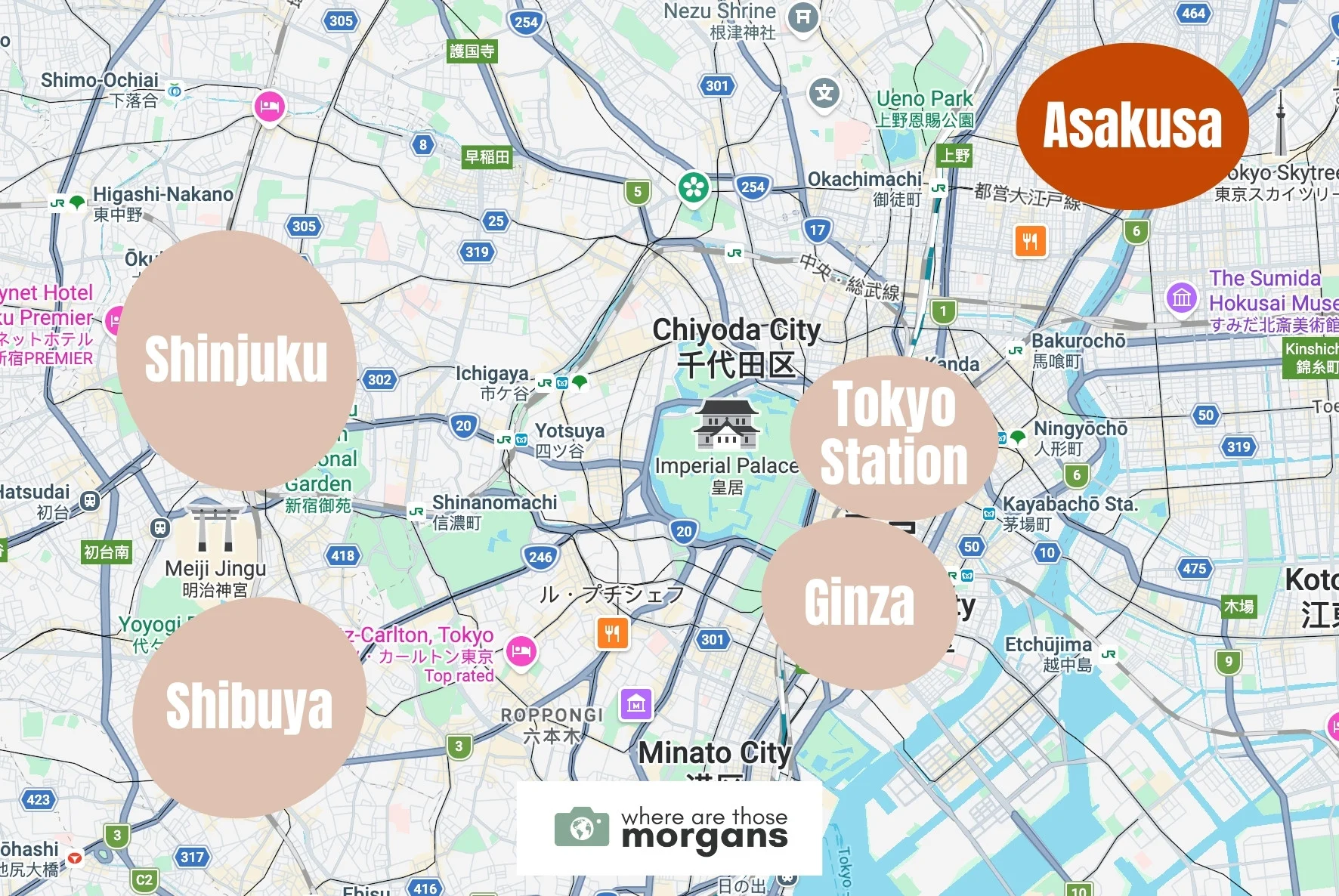
Next, let’s talk about the “real” Tokyo – Asakusa. Have you been picturing Tokyo accommodation as serene, old-world rooms with sliding doors, tatami mats and public hot spring baths? If so, Asakusa is the place you need to stay. It’s the only part of the city with a selection of highly rated onsen ryokans. But it’s also a hub for cheaper standard hotels with larger rooms and better value for money because it’s not close to Shinjuku or Shibuya, so don’t discount it if you’d prefer a Western-style hotel.
And it’s not just hotels. Asakusa is the only place you can hop in a rickshaw or rent a kimono for the day, and we love that the culturally immersive old downtown has preserved some of its Edo-era vibe. The standout landmark in Asakusa is Senso-ji Temple, but we actually preferred surrounding parts of the neighborhood like Hoppy Street more because they were so low-key and less touristy.
One massive bonus we learned that pretty much nobody knows or talks about is how Asakusa has direct train links to both Narita (Keisei sky access limited express) and Haneda (Keikyu airport line). Unfortunately, there’s no direct train from Asakusa to Tokyo JR Station for onward travel to Kyoto or Osaka, but you can do Asakusa to Nihombashi by subway and it’s just a few minutes walk to access the main train station.
We haven’t stayed in Asakusa yet, but we absolutely would book a hotel there if we wanted that “ancient Japan” atmosphere. Both times we’ve been in the area it was swamped with tourists because Senso-ji Temple is one of the most popular attractions in the city, but we know it gets really quiet in the evenings so it would be a tranquil place to stay in the most populous city on Earth. The one thing we’d definitely do is book our hotel in the southern part of the neighborhood, ideally between Senso-ji and Asakusa Station. Staying too far north would mean long walks every day.
💰 Cheap: With a lower budget for Asakusa we’d happily stay at Tobu Hotel, it’s got sky-high ratings and it’s located next to Asakusa Station. And our backups for this area are all very good options: Hotel Gracery, Asakusa Kokono Club Hotel, B:Conte Asakusa or Hotel Monday Asakusa. Any of them would work.
💰💰 Mid-range: On a mid-range budget we really like the look of Mimaru Suites Asakusa (near Sumida Park on the river with Tokyo Skytree views) and Mimaru Asakusa Station (next to the train station) – they’re apartment style accommodations that would be perfect for families.
💰💰💰 Luxury: If we had a bit more money in the travel budget we’d take a closer look at Asakusa View Hotel Annex Rokku which has some really cool-looking concept rooms and The Gate Hotel Kaminarimon which has big rooms and a rooftop terrace with views.
♨️ Traditional: Now, this is where things get more interesting in Asakusa. Don’t be afraid to have a look at the following traditional stays: Onyado Nono (this one has an onsen – we stayed at this same chain in Nara and it was amazing), Kaminarimon Ryokan or Ryokan Asakusa Shigetsu.
Our verdict: We love Asakusa’s old world charm and it actually feels like being in ancient Japan, rather than a futuristic sci-fi city. It’s got a kind of mini-Kyoto thing going on, and it’s better connected than most people realize. Would we recommend it to every first timer going to Tokyo? No way. Most people are going to want Shinjuku, but we do think Asakusa is a superb option for families or couples who want a romantic, peaceful escape. And it’s also super close to the city’s best museums. Onyado Nono is a perfect introduction to a traditional Japanese stay, or the standard hotels here are excellent and affordable (relative to the rest of Tokyo).
Pros
✅ Traditional “Edo” feel
✅ Cheaper hotels
✅ Authentic ryokans
✅ Very quiet at night
Cons
❌ Far from Shinjuku/Shibuya
❌ Not as well connected
❌ Dining closes early
❌ Daytime tourist density
Tokyo Station (Logistics & Transport)
The last area we think makes for an excellent place to stay in Tokyo is near the main JR train station in a neighborhood called Marunouchi. In most popular European cities we’d advise you to stay clear of train stations because they can be gritty and seedy, especially at night. But in Tokyo it’s the complete opposite – the area surrounding Tokyo Station is immaculate, safe, and filled with the city’s most luxurious 5 star hotels.
There’s not a great deal to do in the immediate area. It feels very businesslike and corporate, with lots of skyscrapers. And to be honest we thought the Imperial Palace was massively overrated when we walked through it. But the train station is like a multi-level city with tons of coffee shops and places to eat (like Ramen Street), so it makes for a good food base when staying near the station.
In 2018 we stayed a short way to the north between Kanda and Akihabara and we remember it being easy for the bullet train. So at the end of our trip in 2023, we spent our last night in Japan even closer to the station at the affordable Karaksa Hotel Colors and it was super convenient for our Haneda-bound train.
There’s a huge range of hotel options spanning the budget range near Tokyo Station because the area caters to tourists and business workers. That means some hotels might even have cheaper rates on weekends vs weekdays, which is rare for a place like Tokyo. Marunouchi is also home to the city’s most luxurious and elegant hotel options, so if you’re visiting Tokyo with a bigger budget and want the best money can buy, this is where you should book.
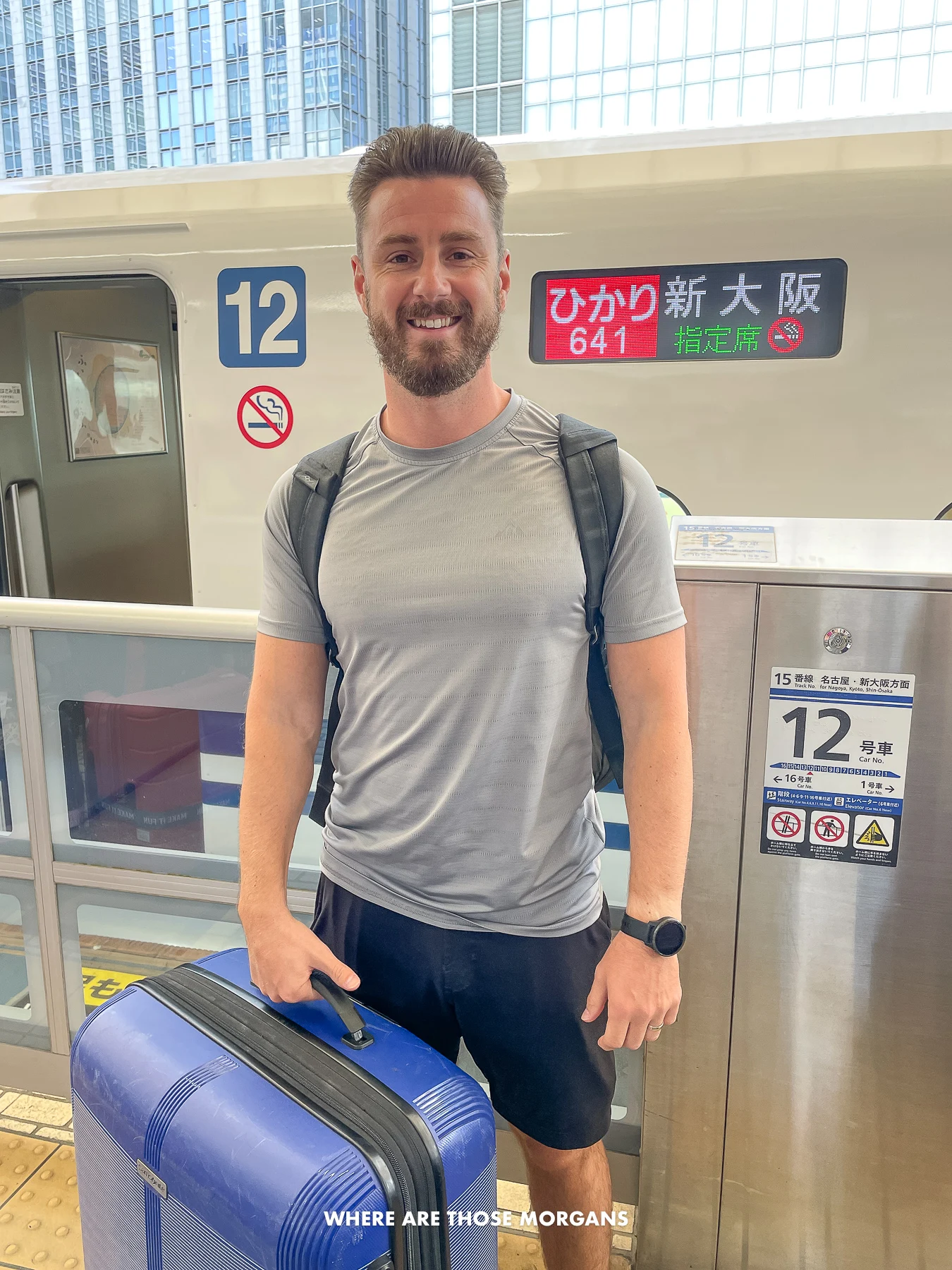
💰 Cheap: If we were looking for a cheap and cheerful place to stay near the station we’d look at lyf Ginza (they wanted the trendy name Ginza but it’s actually close to the station), Karaksa Hotel and Hotel Monte Hermana. Or we’d be more than happy to book Karaksa Hotel Colors again, it was great for what we paid. These place work well for a night before traveling the next day.
💰💰 Mid-range: If we were planning to spend 3+ nights in Tokyo and wanted to stay near the station, we’d want a bit more comfort at Marunouchi Hotel, Hotel Ryumeikan or Hotel Metropolitan which are all similar quality and price points. Our other option would be Mimaru Hatchobori because it has apartments so it might work better for families or longer stays.
💰💰💰 Luxury: Now this is where the Tokyo Station and Marunouchi neighborhood really shines. When Mark does travel planning consultations for anyone visiting Tokyo with a healthier budget, this is the area he recommends because it has the highest quality hotel options. The classic 5-star hotels are all here like Four Seasons, Mandarin Oriental and Shangri-La. There’s also the hugely popular Tokyo Station Hotel which is more affordable luxury, and finally the one we’d probably choose because the glowing reviews make it sound incredible is the ultra-luxe Bvlgari Hotel.
♨️ Traditional: There’s only one traditional onsen ryokan we’d consider in Marunouchi and it’s called Hoshinoya Tokyo. It looks like pure luxury, relaxation and romance – so it could work for a honeymoon or special treat. The reviews are mostly “this is the best place I’ve ever stayed”, but there are a few unusual complaints so make sure it’s the sort of place that would suit your style of travel before booking.
Our verdict: Tokyo Station is by far the most convenient place to stay for airport transfers and bullet train connections to Kyoto or Osaka, which is exactly why we stayed in two different places nearby. It definitely didn’t feel like a true immersive Japanese experience like Shinjuku or Asakusa, but we do think this area would work perfectly for anyone who wants a soft landing rather than a full-blown culture shock. It’s also got the best luxury hotels in the city, along with a more Western feel, which might suit certain travelers. We’d love to stay at Bvlgari Hotel or Hoshinoya Tokyo, but they are both very expensive.
Pros
✅ Bullet train ready
✅ Grand architecture
✅ Bigger hotel rooms
✅ Central location
Cons
❌ Soul-less on weekends
❌ Expensive luxury hotels
❌ Lacks fun vibe
❌ Not authentic
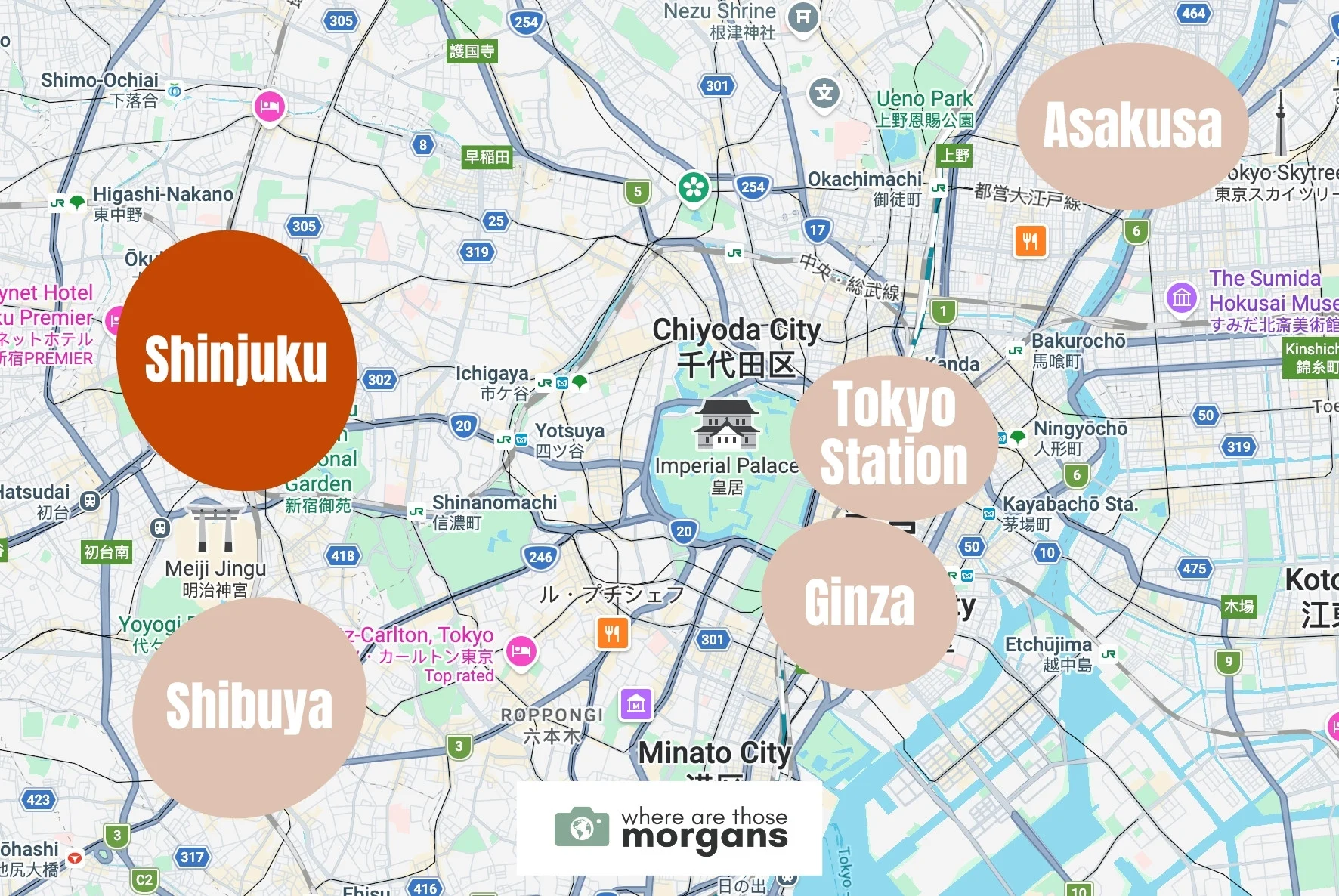
Tokyo Neighborhoods Map
Map key:
- Green – Cheap hotels
- Red – Mid range hotels
- Blue – Luxury hotels
- Orange – Ryokans
How to use this map: Click the map above to activate, then tap any hotel icon to see more information. See a list of all hotels and neighborhoods by clicking the arrow icon in the top left, or see a full version of the map by clicking the “view larger map” icon in the top right.
How to save this map: Click the small star next to the map title – this will add the map to your Google account. Open your Google Maps app, tap “saved”, then tap “maps” and open this map.
Where To Avoid Staying
Roppongi: We didn’t dislike Roppongi, but we definitely don’t think it’s a good place to stay as a first time tourist visiting Tokyo. It’s the most non-Japanese neighborhood in the city, with expats and global chains galore. The nightlife is rowdy and hectic (which might work for groups of friends in their twenties) which we found to be totally unlike the rest of Tokyo. Plus, it’s poorly connected with no JR trains. We’d stay in Shibuya instead for nightlife with a better vibe.
Akihabara: We absolutely loved walking around Akihabara, we bought our first camera from the LAOX there, and we lost a few hours playing arcades in one of the many 5-story gaming buildings. But, unless you’re super into anime or electronics, we think the vibe gets old quickly – it’s a bit of a one trick pony. Plus, it’s quiet at night and it lacks the energy of Shinjuku or tradition of Asakusa.
Outer Areas: Honestly, we wouldn’t consider anywhere further out of the city from the “ring” of places we’ve discussed. Places like Shinagawa or Ikebukuro wouldn’t even make it onto our shortlist for further investigation. And we’d only stay at a hotel near Disney if we actually planned to spend a few days in the parks, otherwise we’d just book near Tokyo Station and take the Keiyo line for a Disney day trip.
Vibe: For us, the key to picking the right place to stay in Tokyo is to think about the vibe of each area. Want the full experience? Go for Shinjuku. Want a busy but more down to earth place? Stay in Shibuya. Want a proper traditional Japanese stay? Book in Asakusa. Want central, connected and polished? Stay in Ginza or near Tokyo Station.
Our Top Tips
JR trains: If you plan to spend a lot of time exploring Tokyo, we highly recommend booking a hotel within a 10-minute walk of a JR Station that the JR Yamanote Line (green loop) runs through. This line will take you to most popular areas of the city. Here’s a JR map and here’s a subway map. Oh, and if you plan to travel extensively through Japan, make sure you buy a JR Pass – we saved a small fortune on our 2023 trip with our passes.
Room sizes: Tokyo’s hotel rooms are efficient but very small. We expected tiny rooms but they were even smaller than we imagined. If you’re traveling with big suitcases, you’re going to struggle in a tiny room, so look at the square footage before booking and book a bigger room if possible.
Beds: First, a double bed in Tokyo is what we would call a small double or “full” bed. They’re very small, so either book a king room or skip the double and book a twin room. Trust us, we had much better nights sleep when we stayed in twin beds than postage-stamp doubles. And bear in mind if you book a traditional ryokan, the mattresses and pillows are often very firm.
Smoking vs non-smoking floors: Unlike most US and EU cities where smoking indoors is banned, Japan still has smoking rooms so double check the reservation details before hitting book to make sure you book a non-smoking room.
Early check-in: Most hotels won’t let you check-in before the typical 3:00 PM time. But more and more hotels are offering “early check-in” as a paid add-on during booking, usually at a cost of around 1,000 – 2,000 yen per hour – and it might be worth paying this if you have an early arrival into Narita or Haneda.
Comparison: If you’re still not sure about where to stay in Tokyo, here’s how we would compare the areas to other popular cities: Shinjuku is like Times Square in NYC but with more local life woven in, Shibuya is like SoHo in NYC or Shoreditch in London, Ginza is like 5th Ave in NYC or Bond Street in London, Asakusa is like Montmartre in Paris or a quieter version of Trastevere in Rome, and Tokyo Station is like The City of London or Midtown East in NYC.
And finally, we travel for a living so take a look at our guide on what we do to book cheaper hotels and grab yourself a cheaper stay in Tokyo.
Next Steps
We hope our neighborhoods guide helps you figure out where to stay in Tokyo.
If you’d like more personalized help, we offer expert travel planning consultations where we answer any questions you have, help you avoid tourist traps and find you the perfect hotel. Book a 1-on-1 call.
Still researching for your trip?
- Don’t miss these top Tokyo attractions.
- Here’s our first-timers 5 day Tokyo itinerary.
- Here are the top things to do in Kyoto.
- This is what to see and do in Nara.
Happy travels,
Mark and Kristen
Find our guide helpful? Pin it for later!
All Rights Reserved © Where Are Those Morgans, LLC. Republishing this article and/or any of its contents (text, photography, maps, graphics, etc.) in whole or in part is strictly prohibited.

Mark and Kristen spent 6 years traveling the world, visiting over 40 countries across 4 continents and more than 30 US states. They created Where Are Those Morgans in 2018 to help others plan the best possible vacations by writing authentic travel and hiking guides based on their real experiences.
Since the arrival of baby Maya in late 2024, Mark and Kristen’s extensive travels have slowed down but they still take plenty of trips. Where Are Those Morgans now helps millions of travelers each year to visit new places and hike new trails through information-packed blog posts and expert travel guidebooks. Read more about Mark and Kristen.