
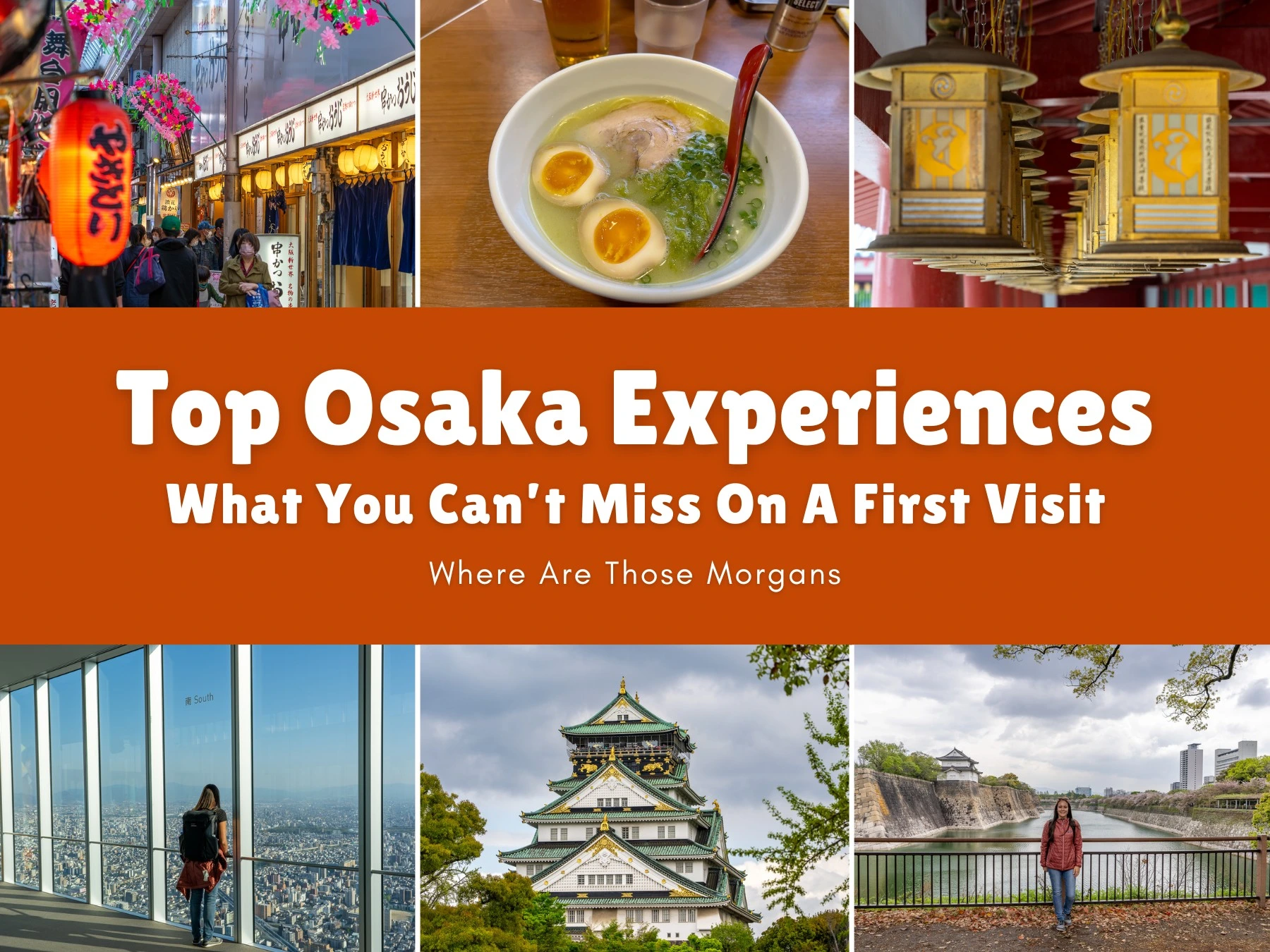
Osaka was the very first stop on our 16-day Japan trip back in September 2018. Our flight from Hong Kong to Osaka landed at an awful hour of the early morning, we took a bus into town and stayed at a super-cheap capsule hotel in an inconvenient area near Shin-Imamiya Station for 2 nights because we were traveling on a ridiculously tight budget. We ate at a lot of 7-Eleven’s, and stuck to free or inexpensive attractions. And you know what? We still had an amazing time.
Fast forward to early April 2023 and we were back in Japan for another 2 weeks during the famous cherry blossom season. This time we had a much healthier budget, and for our 2 days in Osaka we stayed in the popular Namba neighborhood. We filled our itinerary with great food and fun activities – and despite being totally rained out for a day, we had another fantastic experience. Honestly, we think Osaka is totally underrated. Everyone does Tokyo and Kyoto, but Osaka is more authentic, less touristy and has a superb foodie scene.
Hi, we’re Mark and Kristen Morgan. We left our scientific careers in 2018 to become travel writers and photographers, and since then our expert guides have helped millions of travel planners take better trips. Read more about us.
Why trust us with your Osaka bucket list? After two trips to Osaka with different budgets and itinerary goals, we know what’s worth doing and what to skip on a first visit. As always, every photo in this guide is ours.
Our favorite Osaka experiences so far include visiting temples and shrines, soaking up views from observation decks, climbing Osaka Castle, eating delicious food, and simply exploring the city’s very different neighborhoods by foot. For us, Osaka is less about ticking off a traditional “things to do” bucket list, and more about embracing its vibrant foodie culture.
In terms of cherry blossoms, we wouldn’t say Osaka felt unmissable. Some spots were nice, just not on the level of Kyoto or Tokyo. But we actually preferred the fall foliage colors from our October trip, and the crowds were seriously out of control in April. Anyway, based on our two totally different trips, we’re going to walk you through the experiences we consider unmissable on a first vacation to Osaka. Let’s dive in!
Note: Our content is reader supported and contains affiliate links. If you make a purchase through one of these links, we may earn a small commission at no extra cost to you and it helps us keep this site running.
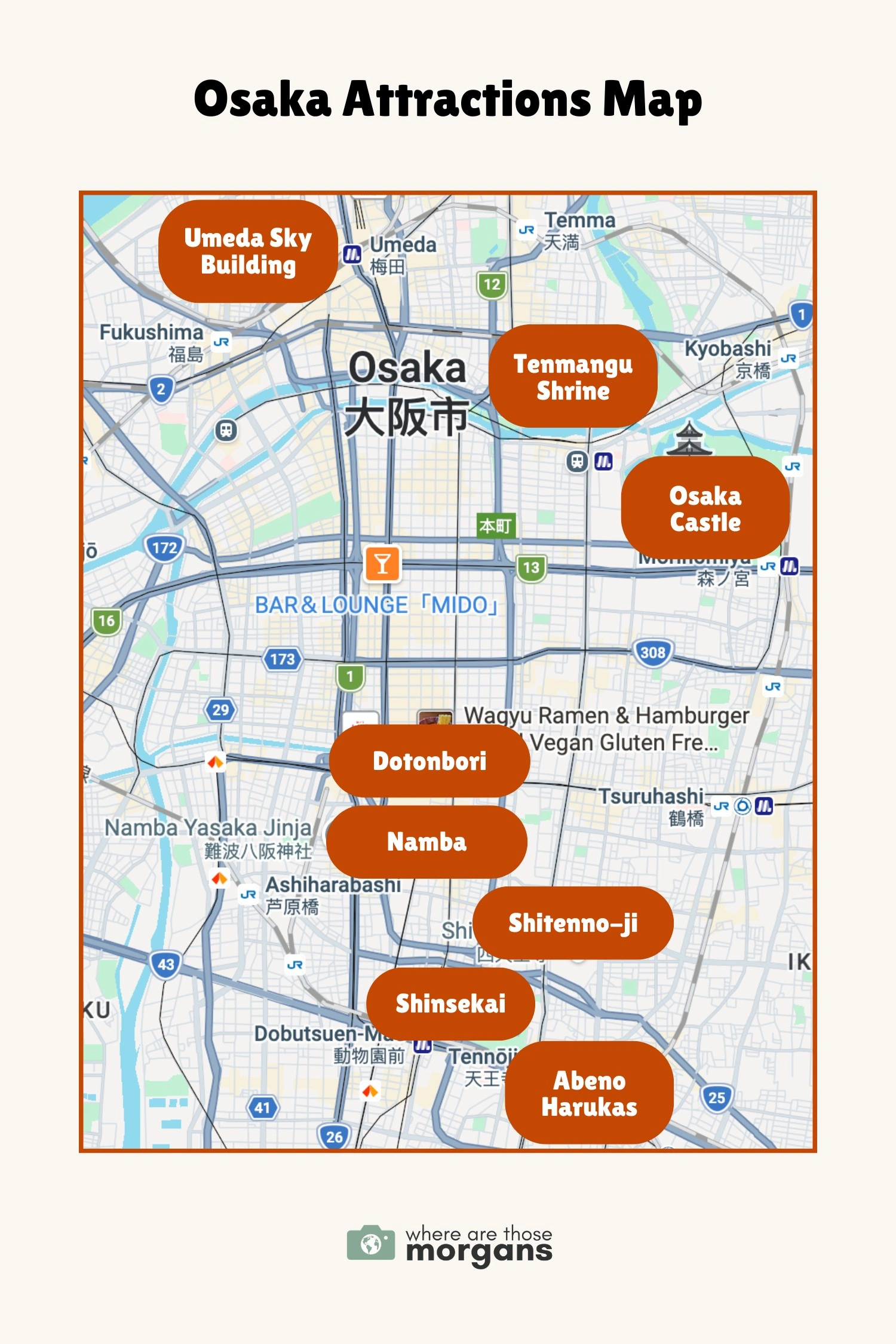
Wandering Around Dotonbori & Namba
We spent the majority of both our 2-day trips to Osaka exploring as many areas and attractions as we could squeeze in, but the truth is, our favorite way to experience the city properly was to simply wander around the high-energy neighborhoods of Dotonbori and Namba. These two connecting neighborhoods are the over-the-top life and soul of Osaka, filled with restaurants, shopping, neon lights, and bustling crowds. If we only had one day in Osaka, this is where we’d spend it.
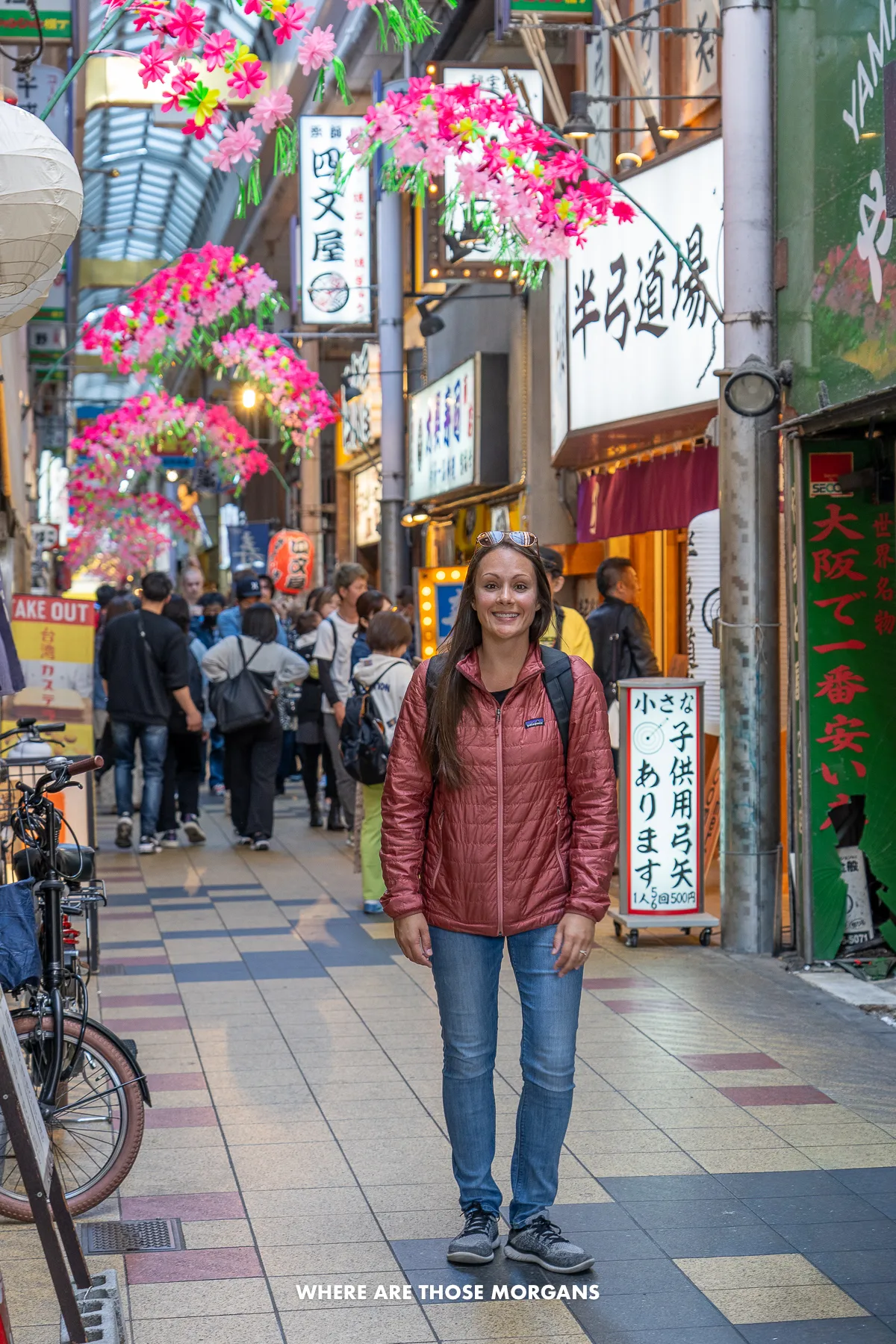
During our 2018 trip, we’d always find ourselves gravitating back to Namba before or after attraction-hunting, which is why we decided to stay at the excellent Citadines Namba on our second trip. We wanted a slightly quieter location just steps from the heart of the action and Kuromon Market (which we cover next), and it worked out perfectly.
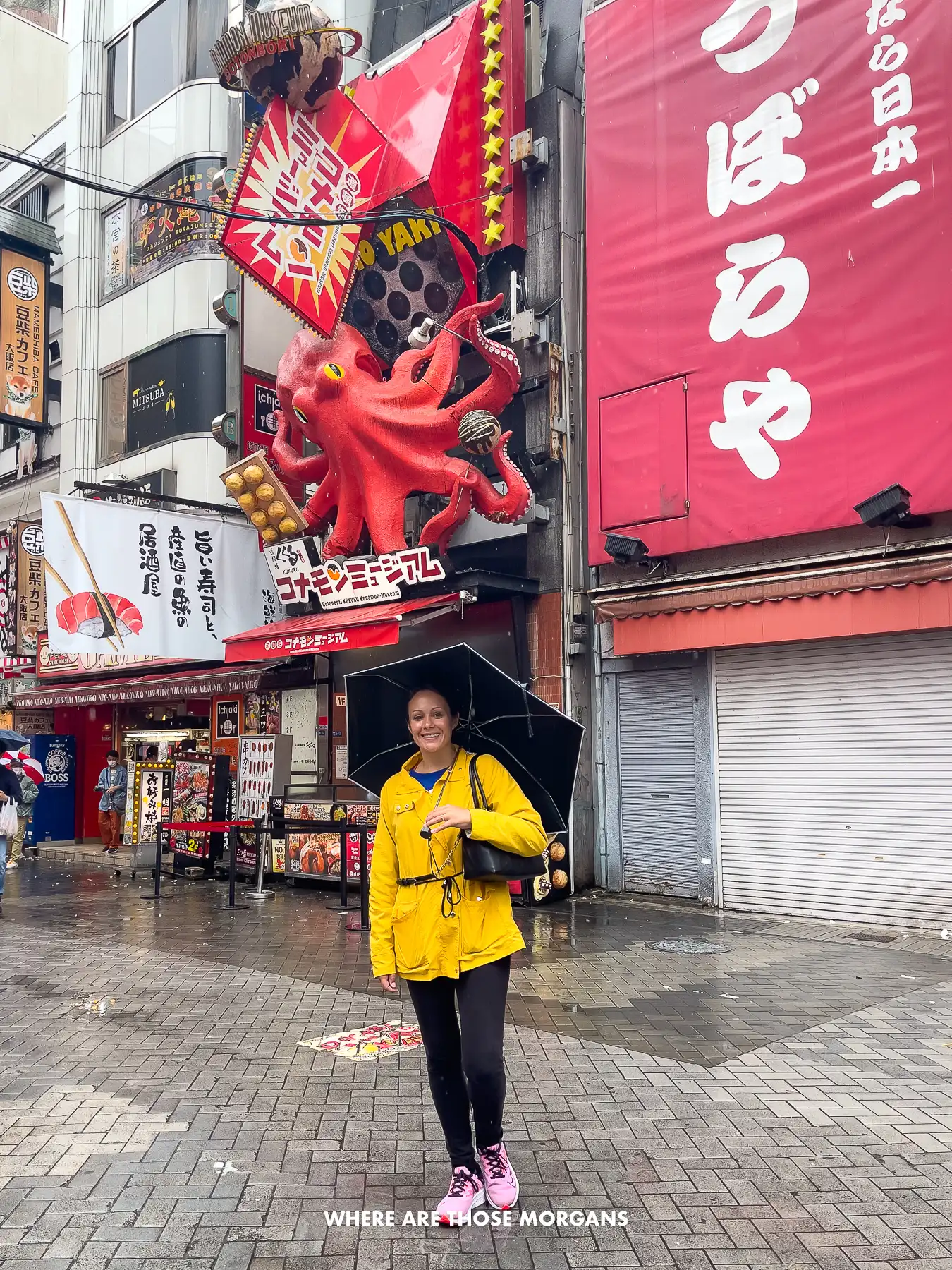
Now, it took us a few tries, but we eventually figured out the most efficient walking route to make the most of these areas was to begin at Shinsaibashi Station, head south through the long covered shopping arcade into Dotonbori, see the canal-side lights and famous restaurants with facades including a mechanical crab and sushi chef among many others, walk through a narrow lantern-lit alley to see the tiny Hozen-ji Temple, loop south to see the unique lion head at Namba Yasaka Jinja, and then finish at Osaka’s electronics and anime strip called Nipponbashi Denden Town, before heading back into Dotonbori in the evening.
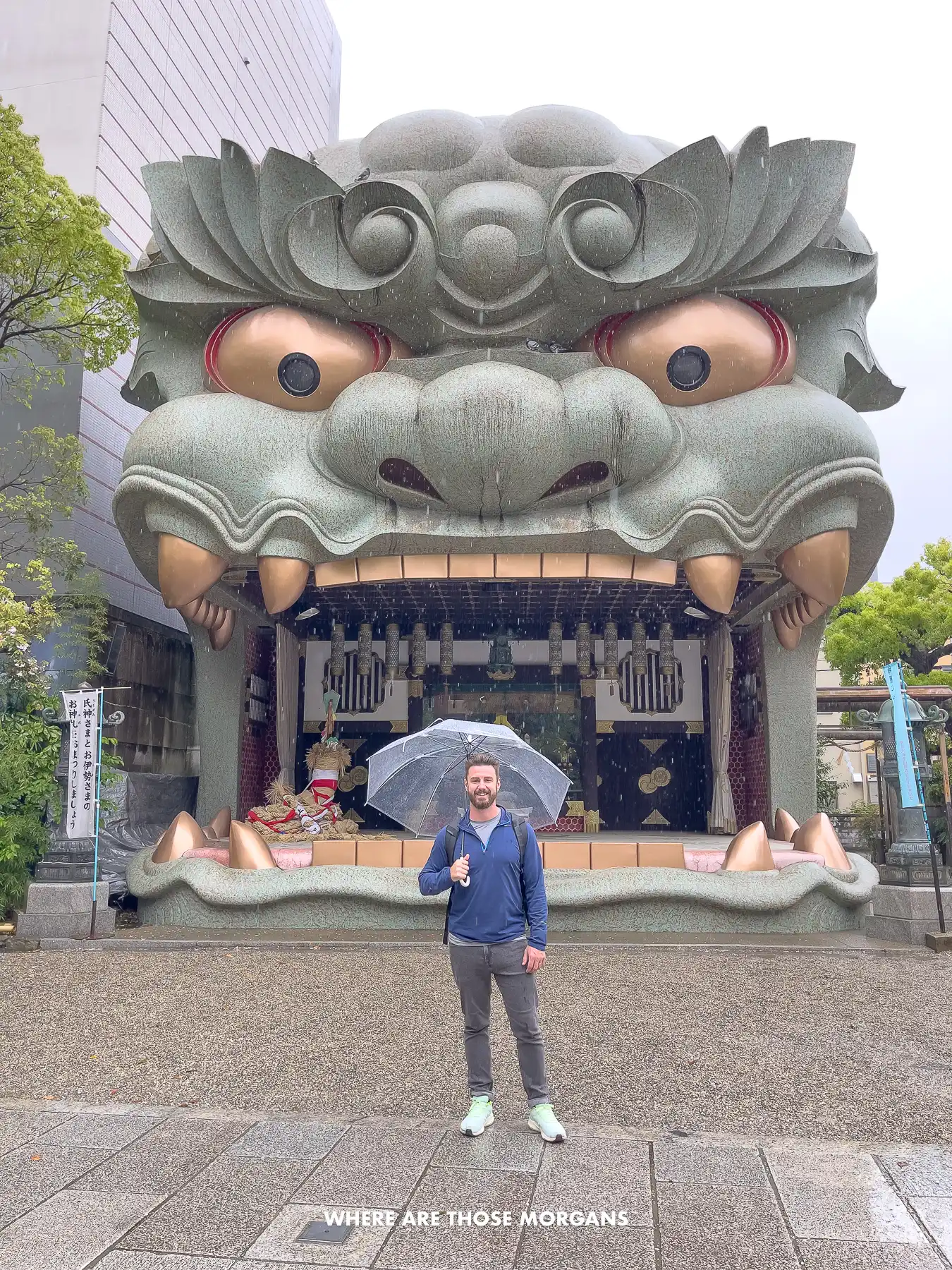
We had bad luck with weather during our April 2023 trip – it rained all day and night when we pencilled in our Namba and Dotonbori evening. After giving it a go with umbrellas, the atmosphere just wasn’t there and we were soaked, so we gave up. But our big regret from two trips is not seeing Dotonbori lit up at night. The lantern-lit canal, Ebisu Bridge and Glico Sign are iconic night photo spots that are top of our list for next time. We’d also put this affordable tea ceremony on our must-do list for a hands-on matcha making class in Dotonbori.
Sampling Local Food At Kuromon Market
We missed Kuromon Market in 2018, but we made sure to give it a try in 2023 because it’s Osaka’s most famous fish market and we love street food. Our hotel in Namba was only a few minutes walk from the south entrance to the T-shaped market, so we arrived a little after 9:00 AM just as the last few stalls were opening for the day.
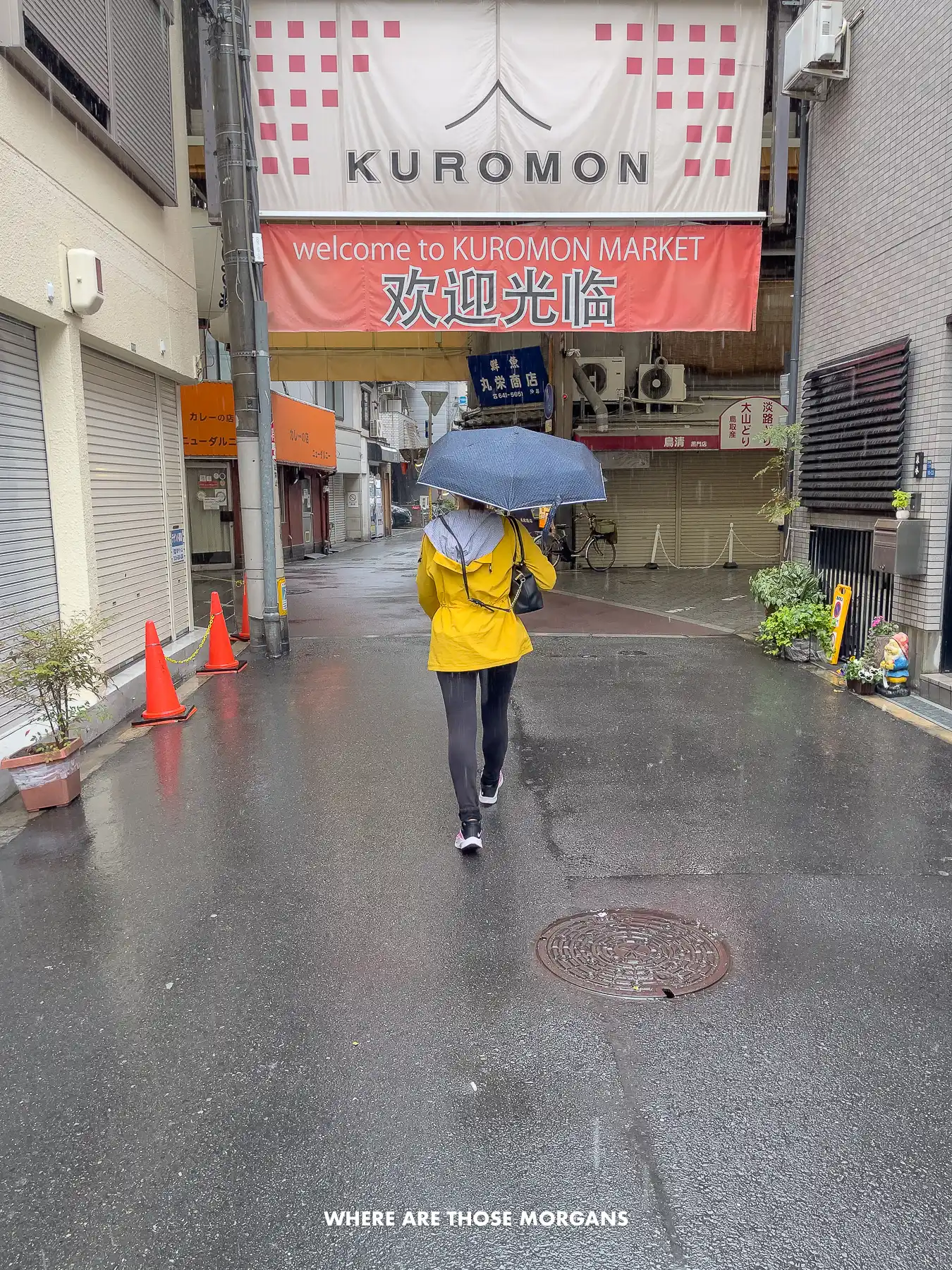
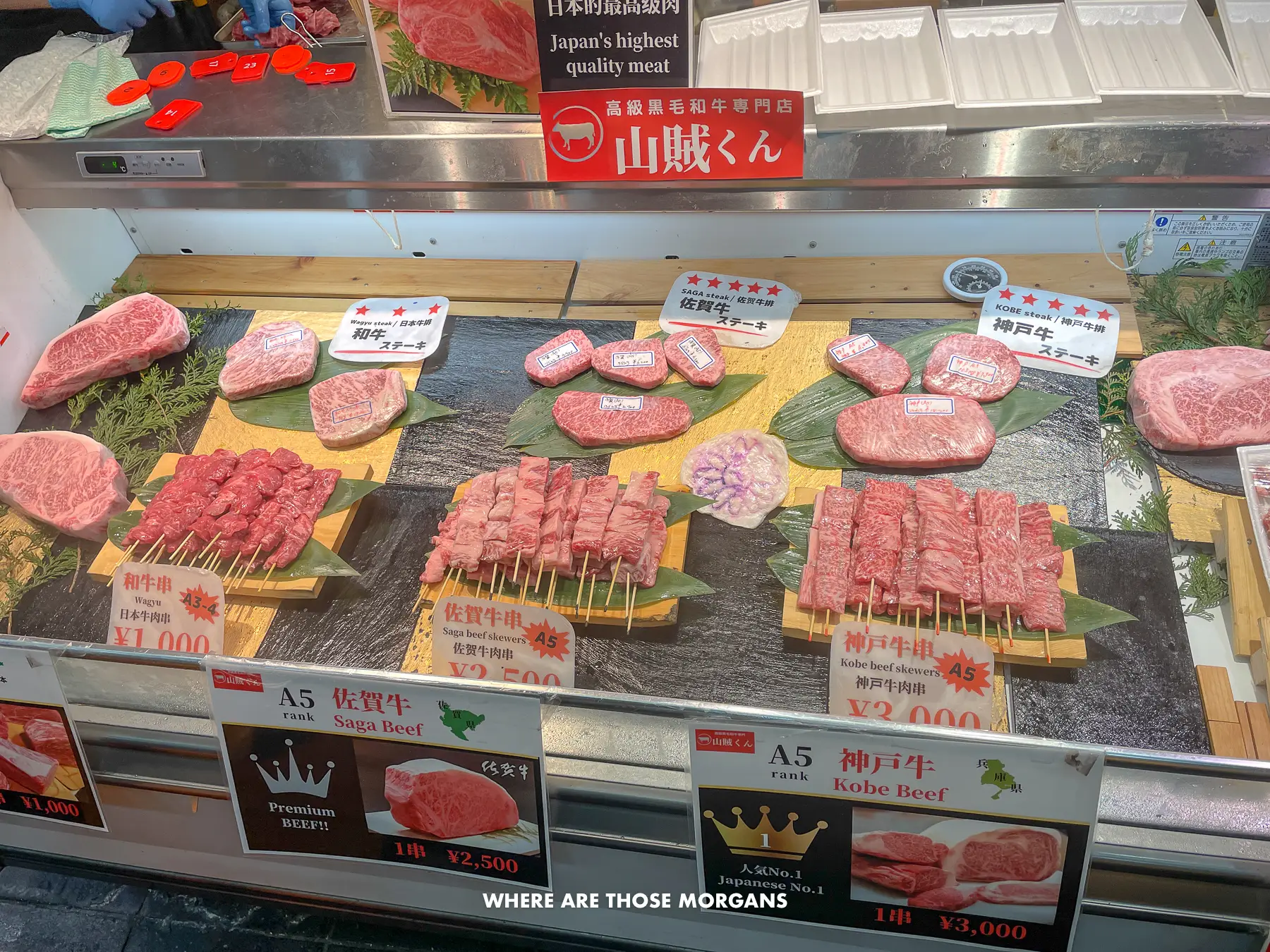
We’d read that Kuromon Market, which is known as “Osaka’s Kitchen”, was a tourist trap and locals no longer ate there because the prices were higher than other local spots. And we found that to be true, the prices were definitely inflated. But at the same time, we didn’t mind paying a little bit extra for a Wagyu beef skewer because the energetic atmosphere and fun experience were worth an extra few dollars.
We basically walked north up the narrow central alley, then walked along the top of the T to see all the stalls before making a decision on what to buy. There were so many options, including fresh oysters, scallops, sea urchin, prawns and loads more we can’t remember. But despite knowing we were in a fish market, we just couldn’t help eating yet more Wagyu beef. It’s so good! That said, we had no real idea which places were good or not, so we made a best-guess. Next time, we’d book this top rated foodie tour with 3 stops in Dotonbori and 3 stops in Kuromon Market to skip the tourist traps and learn about the food more.
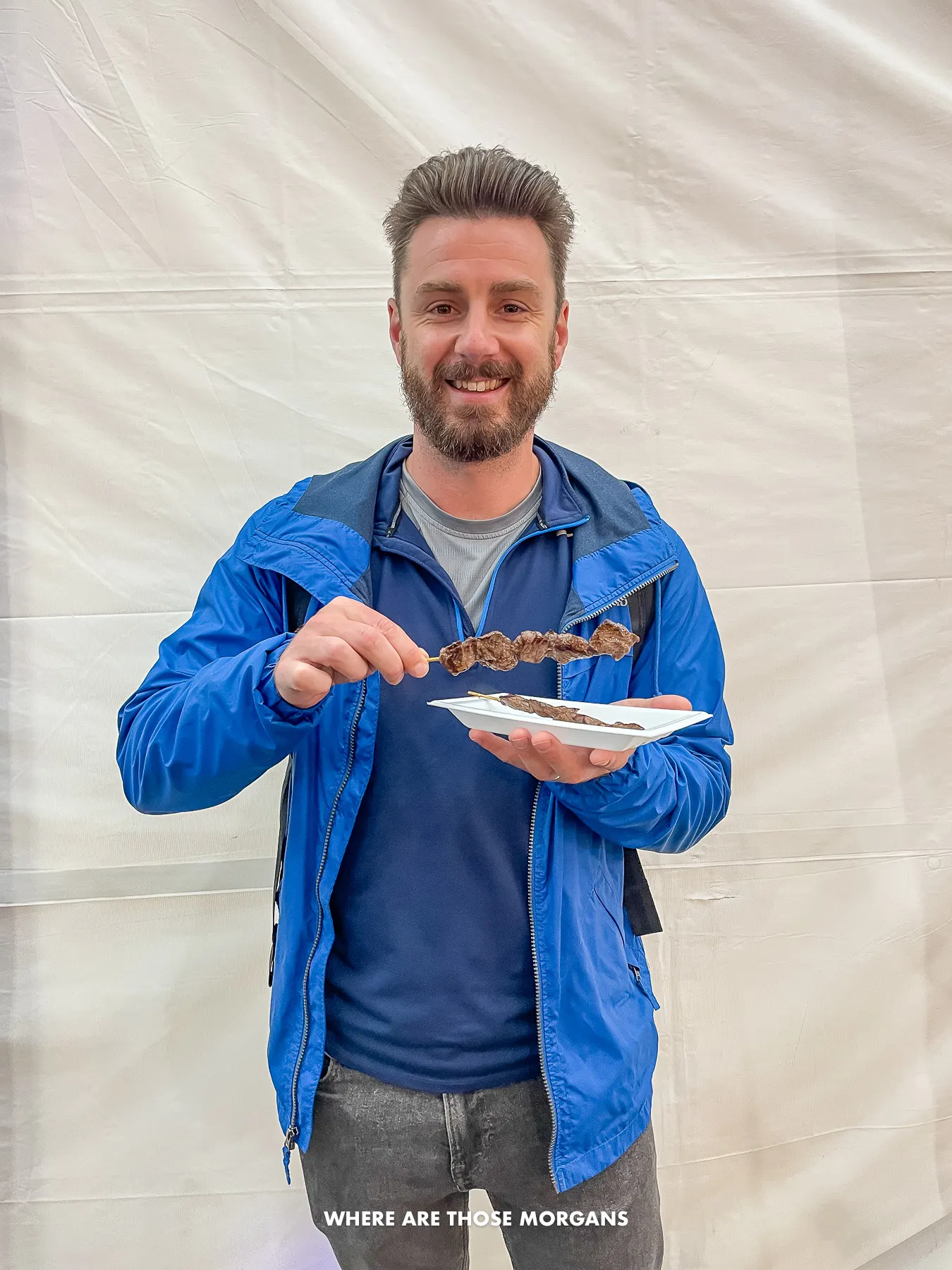
It wasn’t too intensely crowded when we visited first thing in the morning on a weekday, but it was beginning to fill up by the time we left an hour later. That said, we always found the narrower Nishiki Market strip in Kyoto to be swarming, so Kuromon Market was easy going for us. Overall, we’d say it’s well worth a quick visit to sample a small amount of high quality fish or beef in a popular market environment, but we’d save the sit-down meals for cheaper eats elsewhere.
Climbing Osaka Castle
Japan is home to several must-see castles, including the likes of Himeji Castle, Kumanoto Castle and the one we visited in 2018 called Matsumoto Castle. But the problem is, they’re not on the typical Japanese tourist trail of Tokyo, Kyoto and Osaka. That’s why we think Osaka Castle is even more important to add to every first-timer’s itinerary – it might be the only proper castle you’ll see.
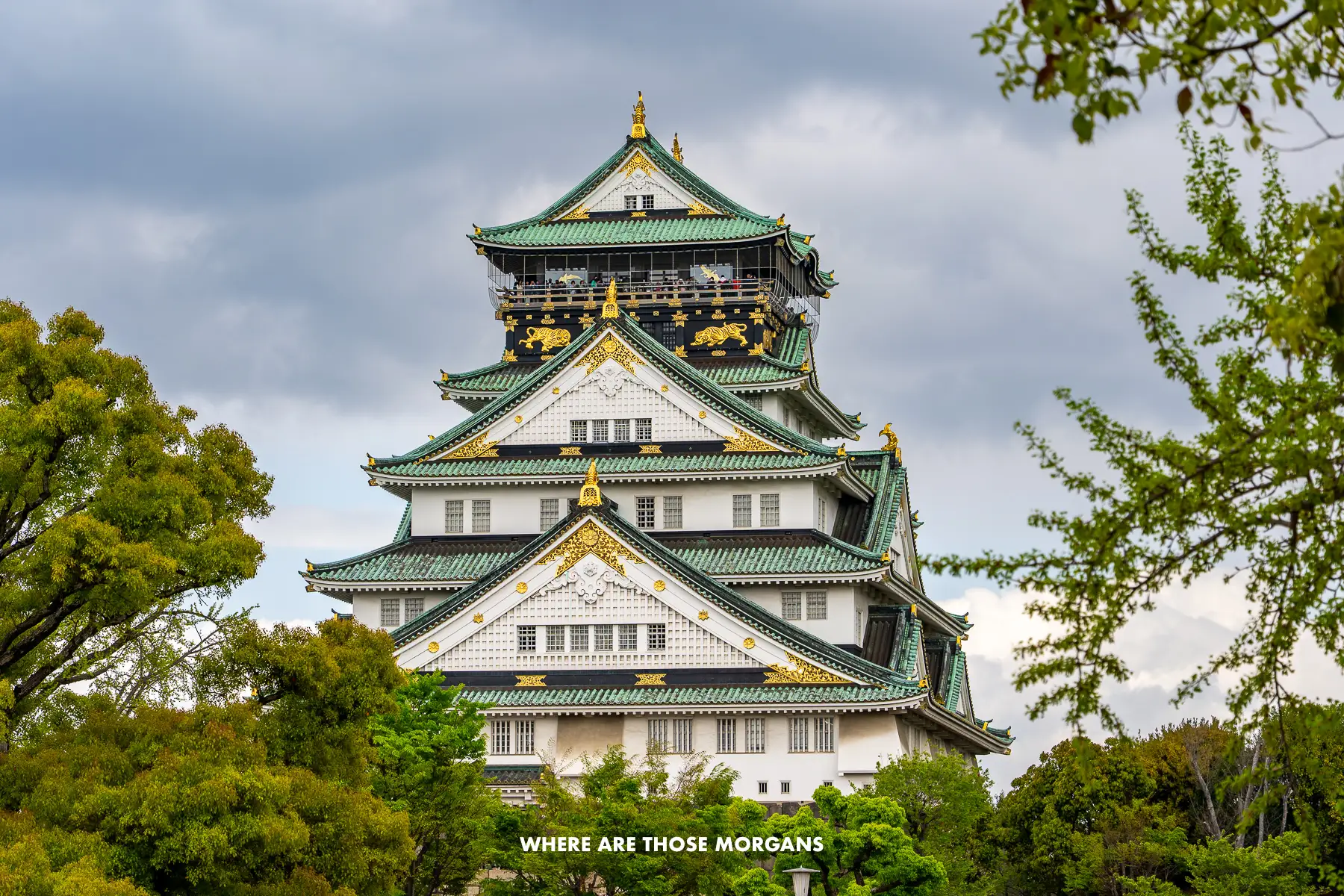
We visited Nijo Castle in Kyoto and enjoyed the history, the “chirping” floors, and the gardens, but it was nowhere near the scale and grandeur of a major castle experience in Japan. Hiroshima Castle was attractive, but Osaka Castle was much bigger, had far greater views from the top, and we enjoyed a more compelling timeline as we learned about Toyotomi Hideyoshi building the castle and his son’s defeat to Tokugawa Ieyasu at the Siege of Osaka. The 2024 tv show Shogun tells the lead-up to the events that make Osaka Castle famous.
To visit, we actually walked all the way up from Shitenno-ji Temple (which we cover later) so we could see more of Osaka’s quieter neighborhoods. But there are several subway and JR stations surrounding the castle grounds if you’d rather save time. Tickets cost 1,200 yen per person, but the lines can be long to get in. We waited in line for 30 minutes, then realized we could book tickets online through Klook for a slightly cheaper price and then skip the line. If we visited again, we’d 100% book tickets through Klook in advance.
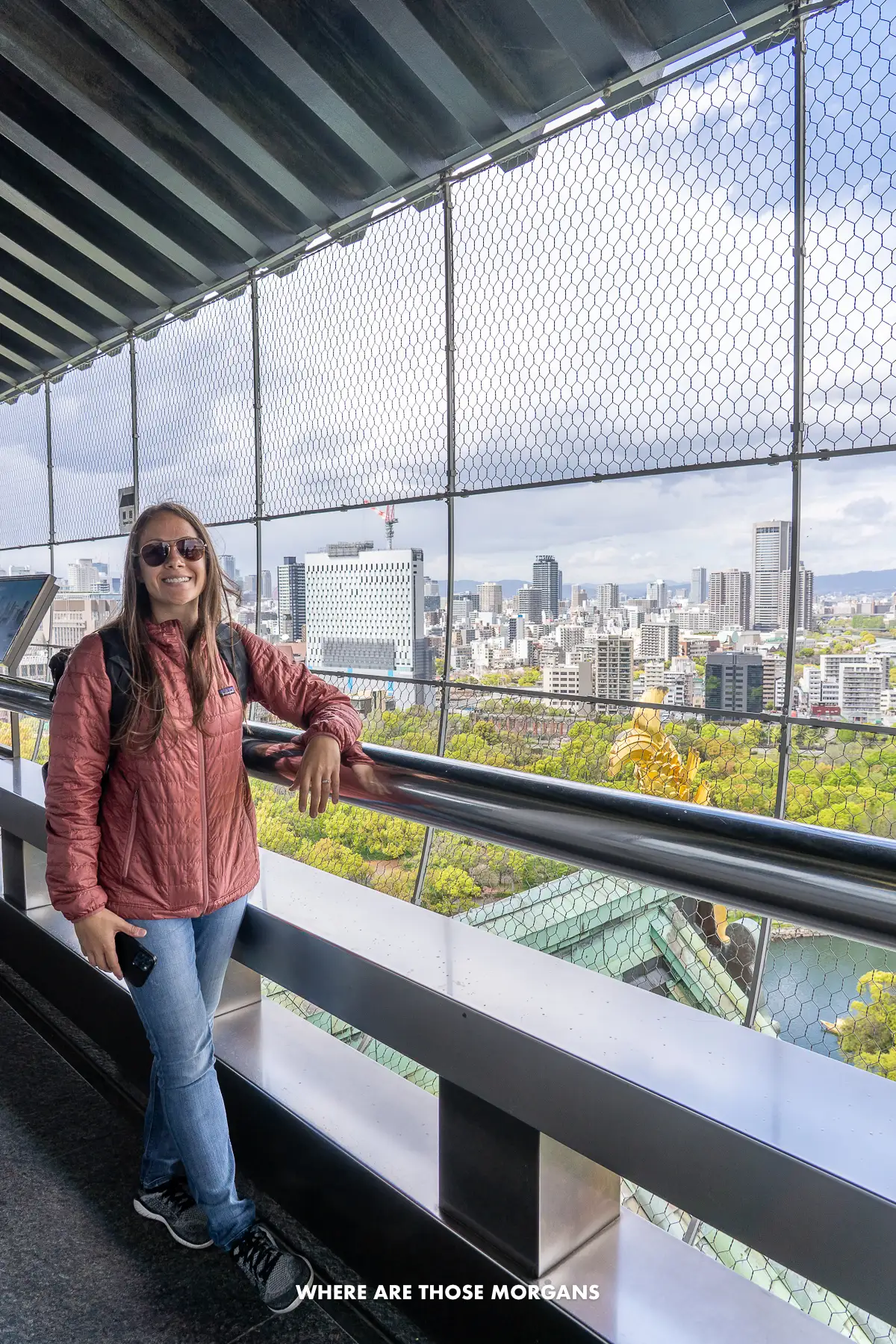
We thought the grounds were stunning (especially during cherry blossom season, this is one of the best places in Osaka to see cherry trees), the moat was impressive, the intimidating architecture was photogenic, the eight-story interior was interesting to explore, and the 360-degree top-level views were awesome. Yes, it’s been renovated and isn’t as authentic as other castles in the country, but for the average first-timer visiting Japan, we’d say Osaka Castle is unmissable.
Kristen’s top tour options: We’d definitely book this affordable guided tour of Osaka Castle if we wanted a deeper understanding of the history. It includes skip the line tickets and has start times throughout the day. And to keep the samurai theme going, we’d absolutely love to try this samurai training experience with impeccable ratings next time we’re in Osaka.
Visiting Osaka Tenmangu Shrine
We had no idea what to expect at Tenmangu Shrine because it’s not on the typical list of “must-see” attractions in Osaka. And you know what? It turned out to be a fantastic place to visit, not just the beautiful shrine, but also the surrounding areas. We learned that Osaka Tenmangu is one of Japan’s most important Shinto shrines, and it’s dedicated to the deity of learning and scholarship, which is why students go to pray for success in exams.
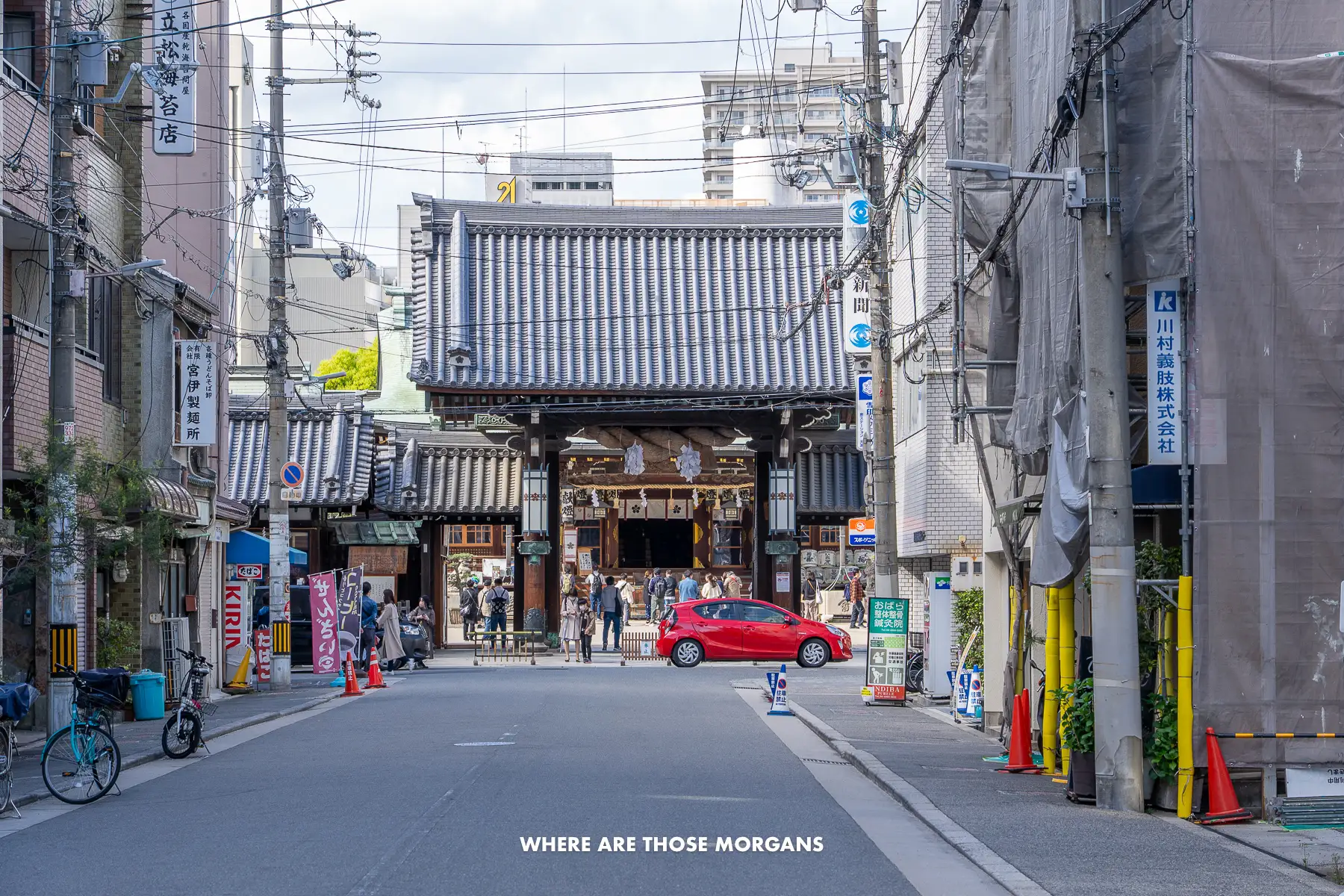
We pretty much had the entire shrine area to ourselves which was a complete contrast to other parts of Osaka during the busy cherry blossom season, and also the polar opposite to temples and shrines in Kyoto, Nara or Tokyo. It also hosts one of Japan’s three great festivals called the Tenjin Matsuri in July, so we’d definitely add that to our itinerary if our visit coincided.
The shrine was surrounded entirely by streets and buildings with a purely local feel, and we also enjoyed walking through a small section of the 2.8km long Tenjinbashi-suji covered shopping arcade (Japan’s longest shopping street), which was like Shinsaibashi but without the tourists. We actually walked from Osaka Castle to Minamitenma Park, which had a stunning display of riverside cherry blossoms. We walked north alongside the Okawa river hoping to go inside the Japan Mint for a free guided tour, but it was closed for the duration of cherry blossom season, which was disappointing.
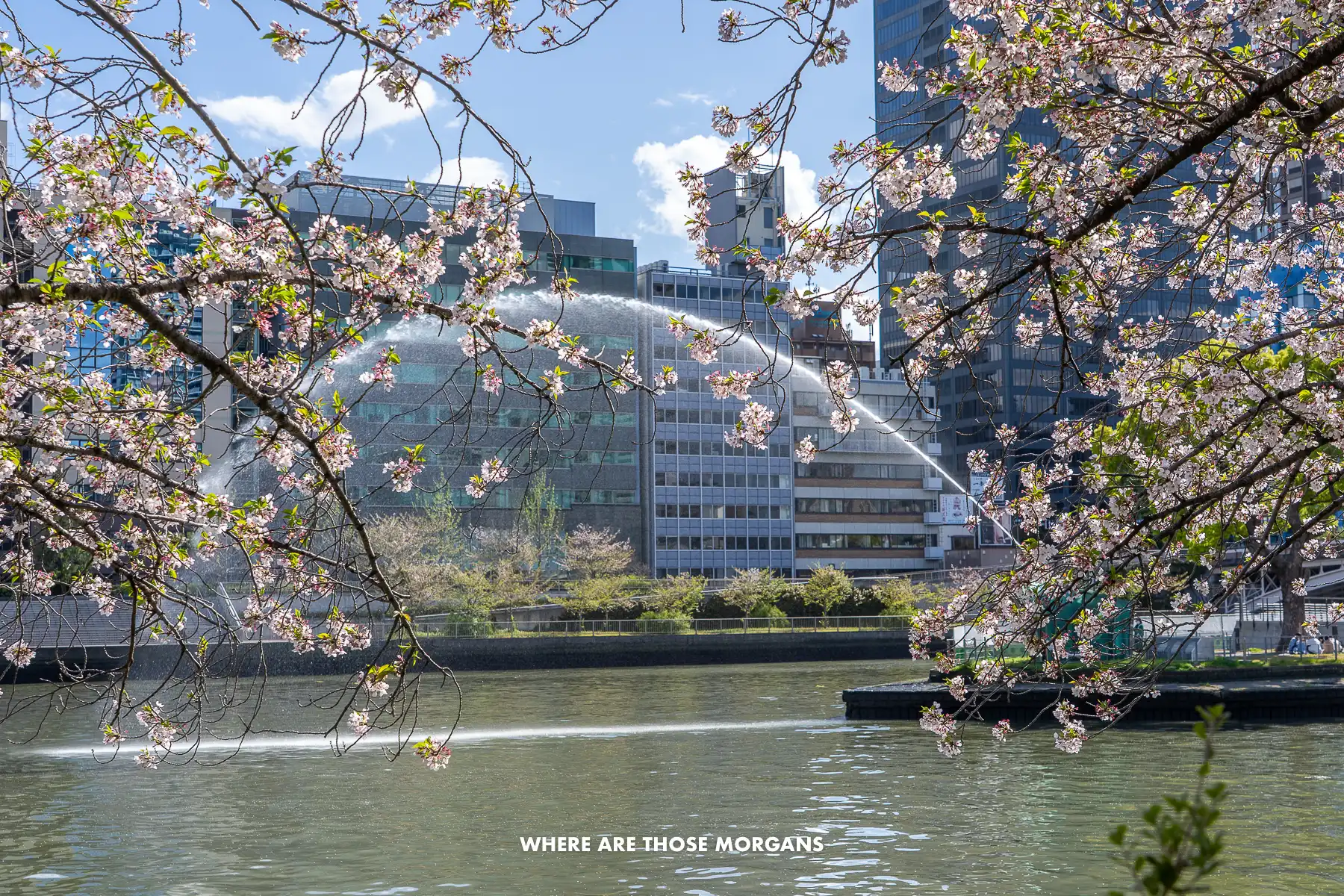
From the Mint, we visited the shrine and shopping street, before looping back down to Nakanoshima Park to see The Central Public Hall, which is a photogenic red brick Meiji-era building, and a rose garden. Walking along the river was a nice relaxing break from the chaotic, neon-lit areas of Namba and Dotonbori, so we’d do this again if we had enough time and needed a breather.
Soaking Up City Views From Umeda Sky Building Or Abeno Harukas
Taking elevator rides high up to observations decks in new cities is always one of our favorite things to do. We love skyline views, sunsets and urban photography, so elevated viewpoints are naturally a winner for our itineraries. In Osaka, we couldn’t choose between the two classic options – Umeda Sky Building and Abeno Harukas – so we just did both of them.
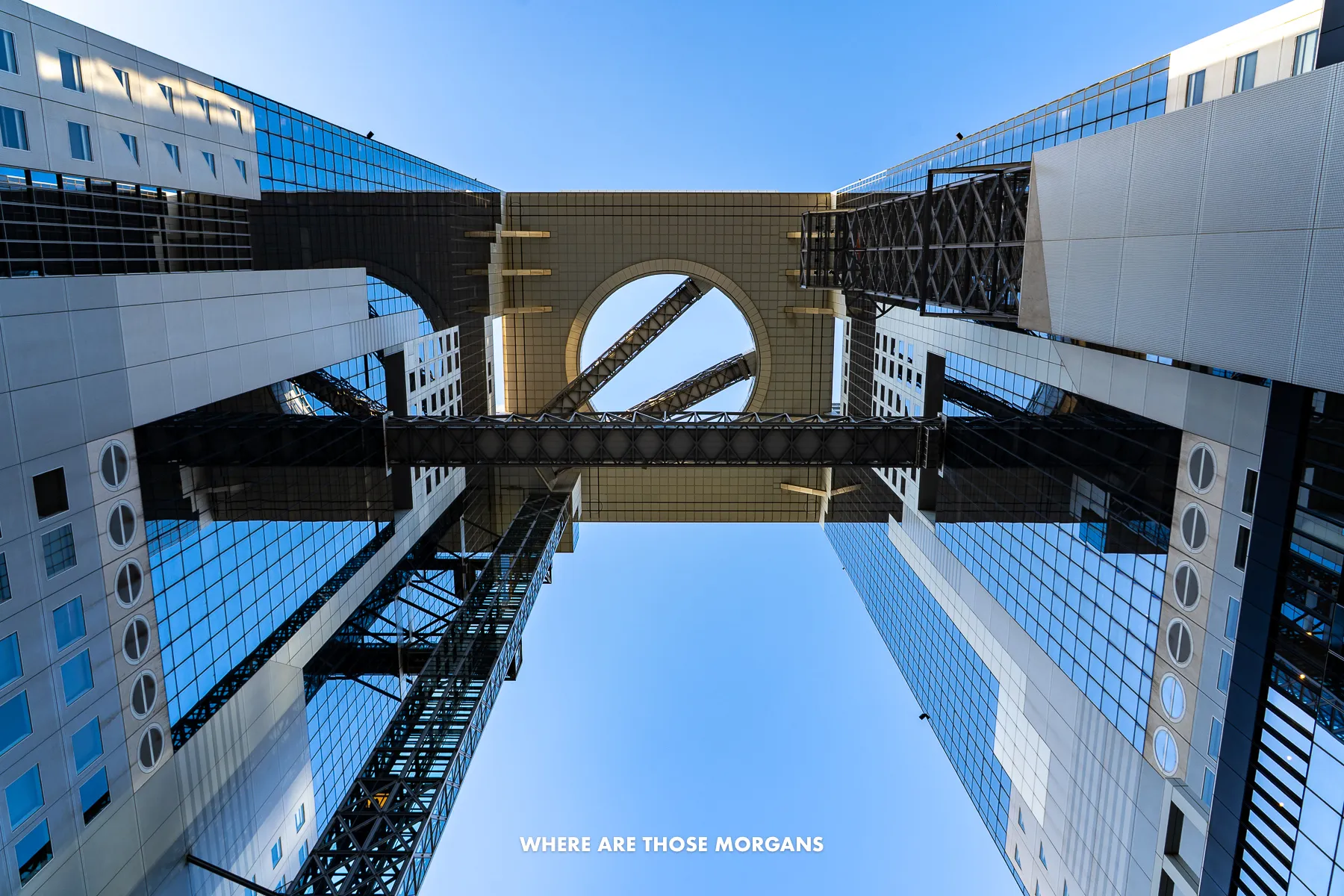
Let’s start with Umeda Sky Building and its Kuchu Teien Observatory. Firstly, we really enjoyed walking through the Umeda neighborhood. It was a polished, modern, commercial and business-like area with skyscrapers and department stores, massive crowds (mostly locals), and high-end places to eat. It took us around 15 minutes to walk from the station to the Sky Building, but we walked through a mall and grabbed food on the way. We bought our tickets in advance through Klook for a little under 2,000 yen (US $12.55) each, and it was well worth it.
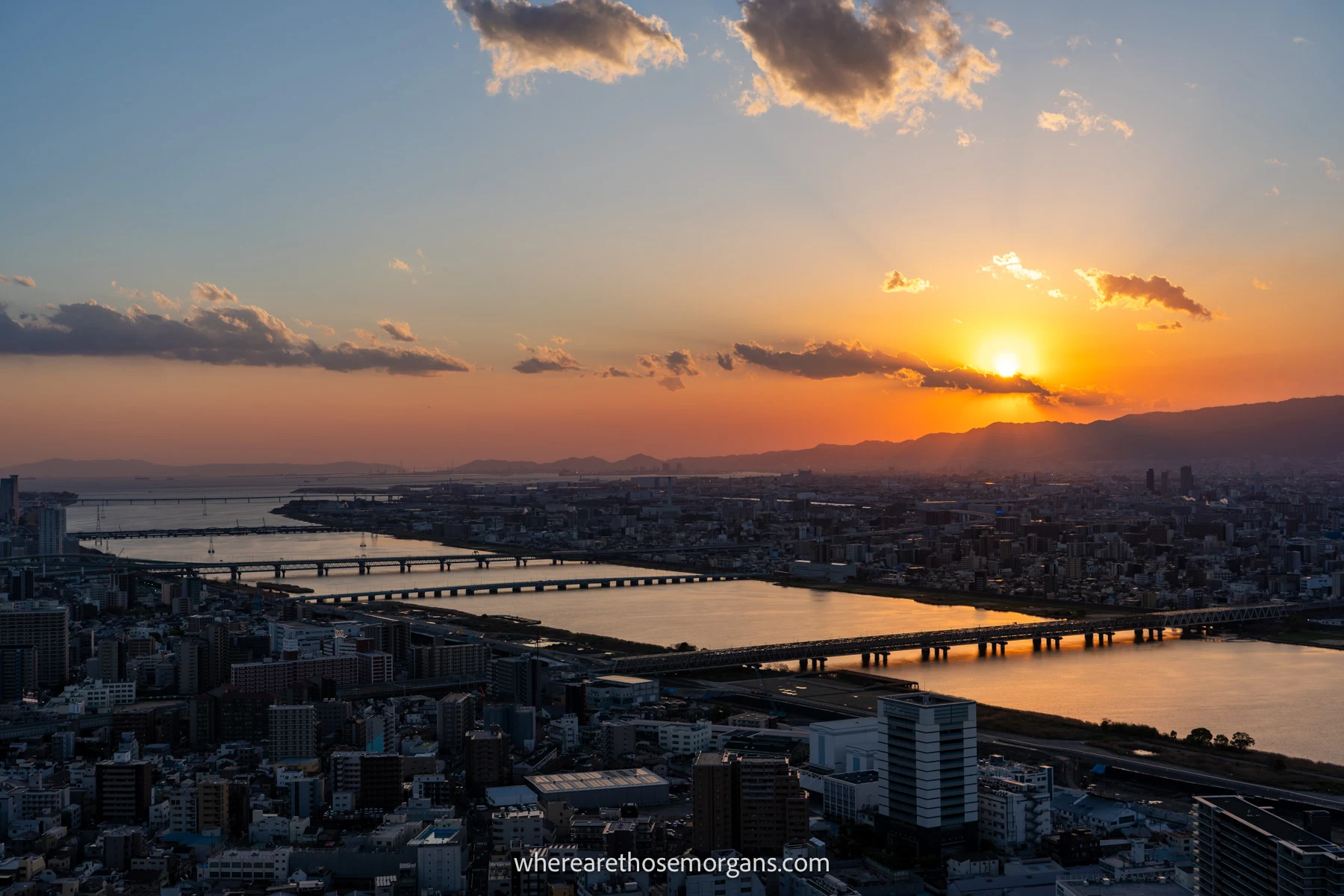
The whole experience was enjoyable from start to finish. Standing underneath and looking up at the two towers connected by a floating circular garden observatory, and escalators crossing through the open-air between the towers was so cool. The escalator tunnels were super photogenic, and then we arrived at the top and it got even better. The observation deck had 360-degree views in the open-air, so no windows and no photos with glare. We watched a stunning sunset, with silhouetted mountains in the distance and the city lighting up behind.
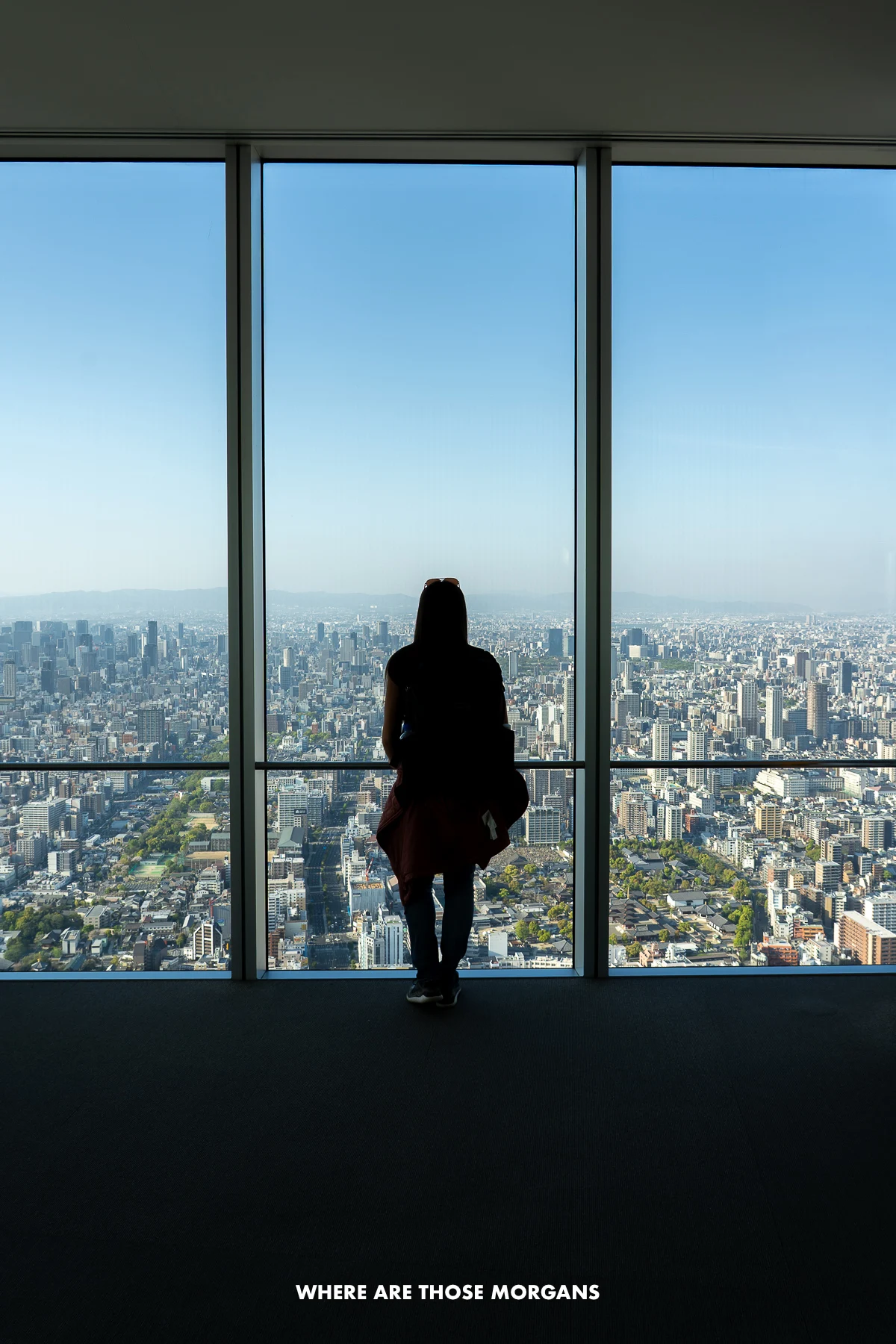
Now let’s move onto Abeno Harukas and its Harukas 300 observatory. This one was totally different because it was much taller and more about the scale of the view, rather than the architecture. The elevator took us up to the top three floors of the building and we instantly felt way higher up than Umeda. The view was expansive in all directions, but it was enclosed fully by glass windows so there was tons of glare. That said, if it was windy or raining, it wouldn’t have affected our visit.
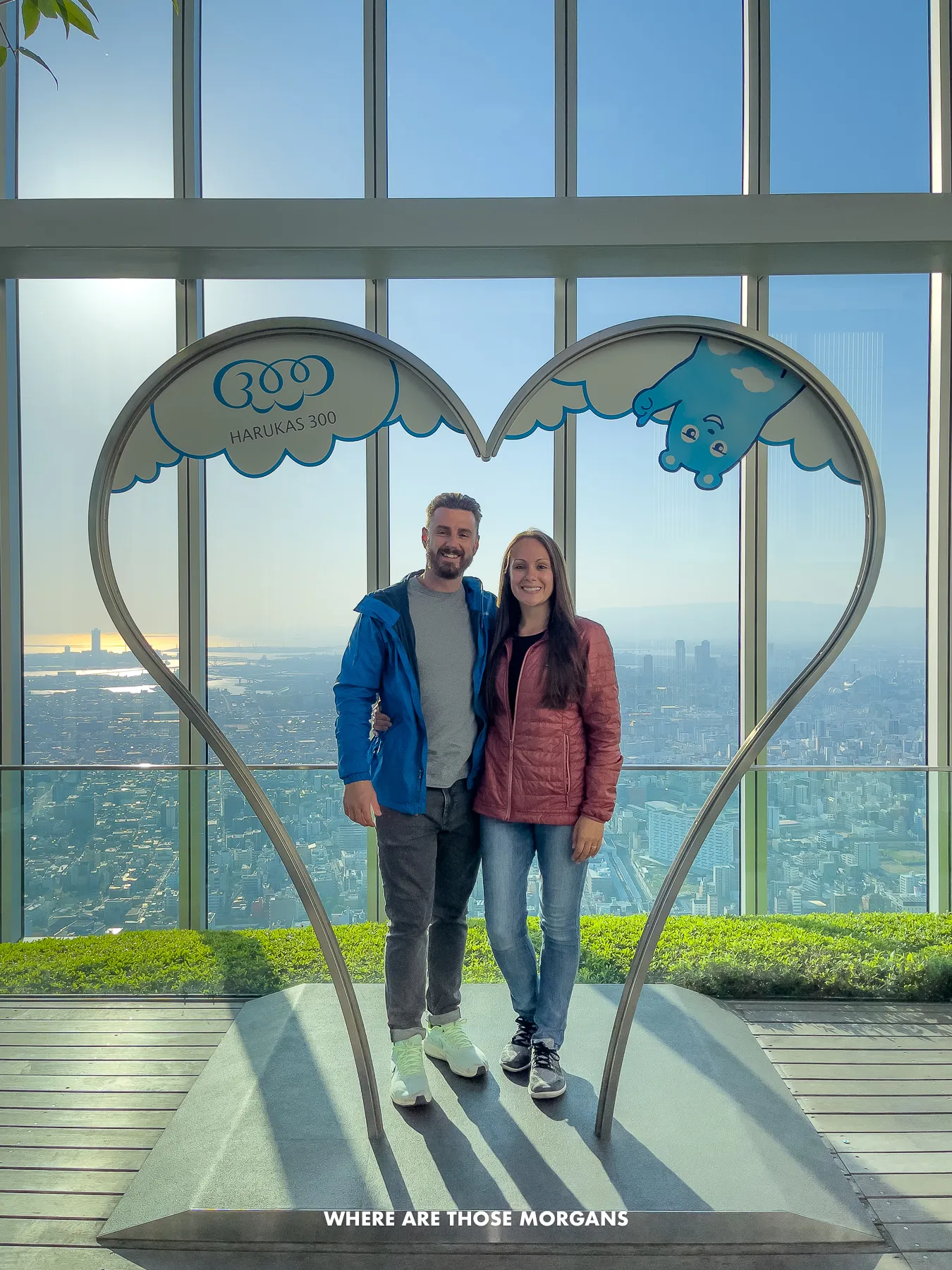
We spent a good hour just soaking up the mid-afternoon views on a cloudy day. It would have been better to do it at sunset, but that was the evening we had planned for Dotonbori when it ended up belting down with rain. Our tickets cost the exact same, a little under 2,000 yen (US $12.55) each, which we booked in advance through Klook. We thought both were great, but if we had to choose one we’d probably go for Umeda Sky Building because we love urban photography and it’s the more architecturally striking of the two.
Visiting Shitennoji Temple
Shitennoji is one of Japan’s oldest Buddhist temples (founded in 593 AD), and we think it’s a must see for every first timer going to Osaka because it predates pretty much anything we’ve seen in Kyoto or Nara. It’s a much bigger complex than we expected, with a five-story pagoda (which we climbed to the top of), a main hall, a cemetery, and even a turtle pond.
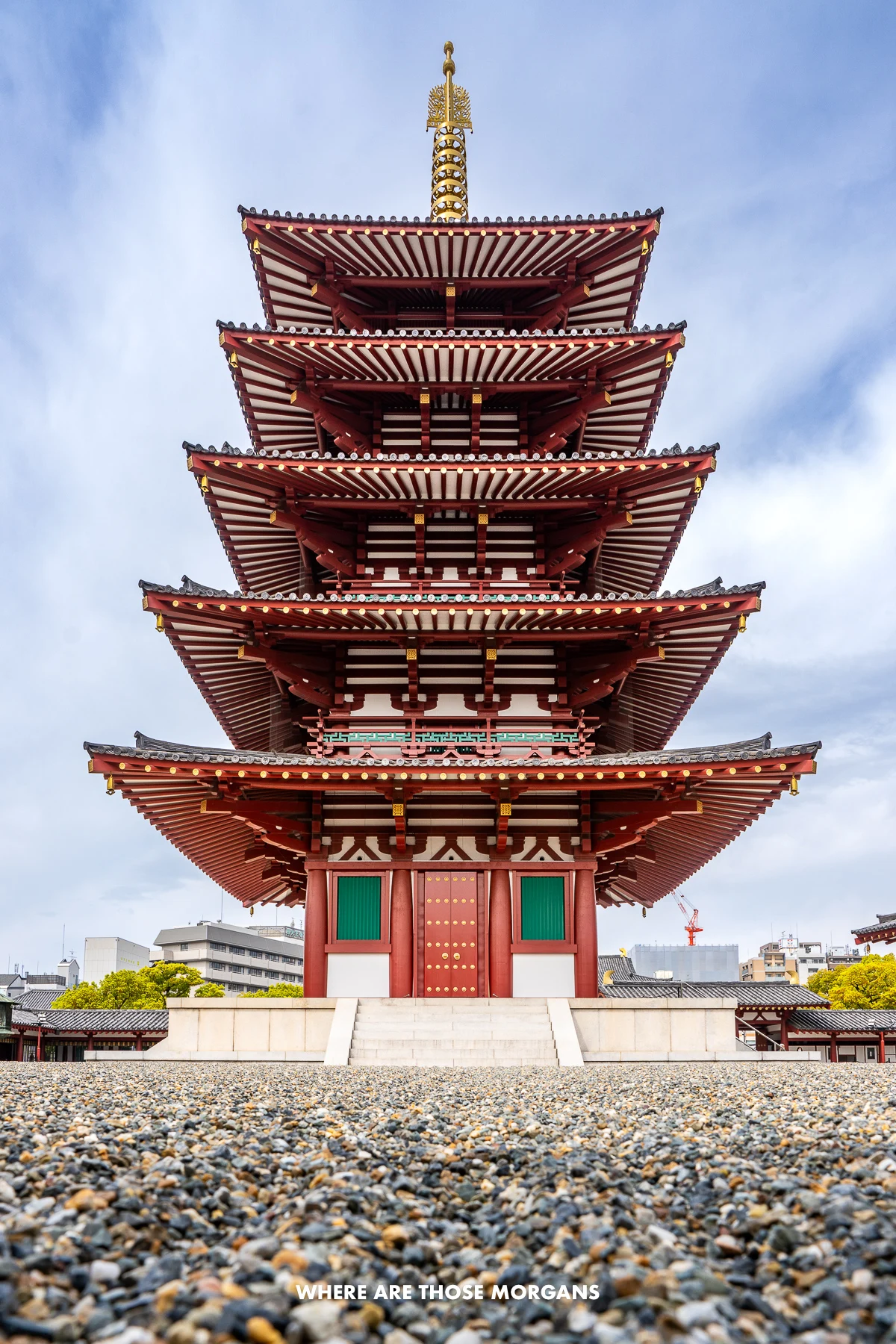
We decided to arrive as it opened at 8:30 AM to beat the crowds – Mark really wanted to get a people-free photo of the five-story pagoda because we’d seen how photogenic it looked. Our plan worked perfectly, there was nobody else around. We snapped our photos of the attractive buildings, saw the turtles in the pond, and then climbed up to the top of the tall pagoda.
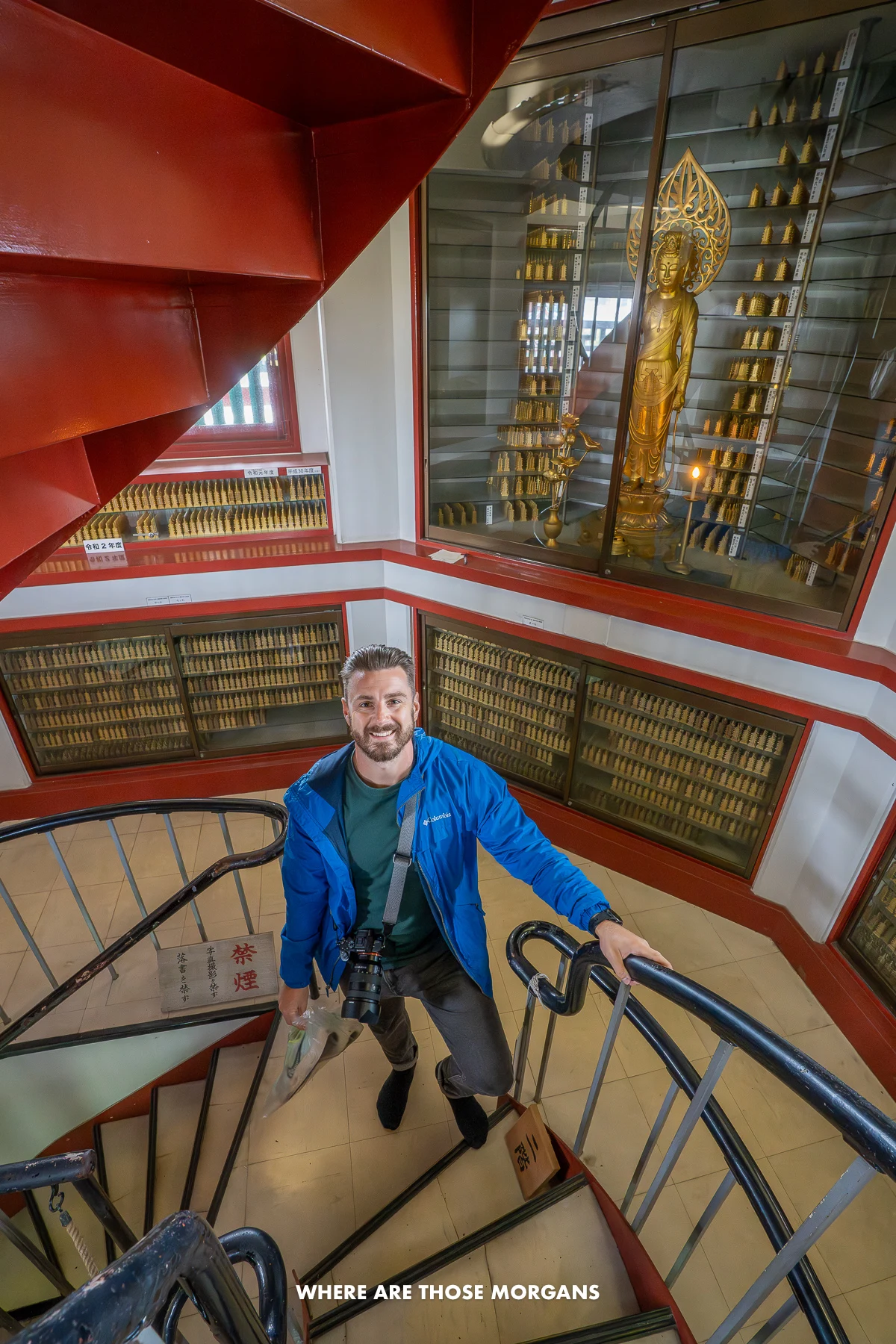
Entry was free both times we visited Osaka, but recently a 500 yen per adult entry fee has been introduced. That’s only US $3, and it’s worth paying. The biggest issue with visiting Shitennoji is its location on the southeast side of the city, but it can easily be tied in with Shinsekai (which we cover next) and Abeno Harukas.
Mark’s fun attraction alternatives: We know temples aren’t for everyone. If you’d rather spend your time doing fun activities, take a look at this Go Kart tour with character dress-up or this sumo experience with live show and audience challenge. We’d look at these if we visited Osaka with friends or extended family.
Going Retro In Shinsekai
We didn’t have time to explore the weird but wonderful Shinsekai area in 2018, but we couldn’t miss it for a second time in 2023. We’d seen photos but the old-school neighborhood still surprised us in a good way. It was built in 1912 as a futuristic entertainment district, half modeled on Paris and half on Cony Island in New York. Then it fell into decline for a long time before slowly getting a second lease of life in the late 2000’s and early 2010’s.
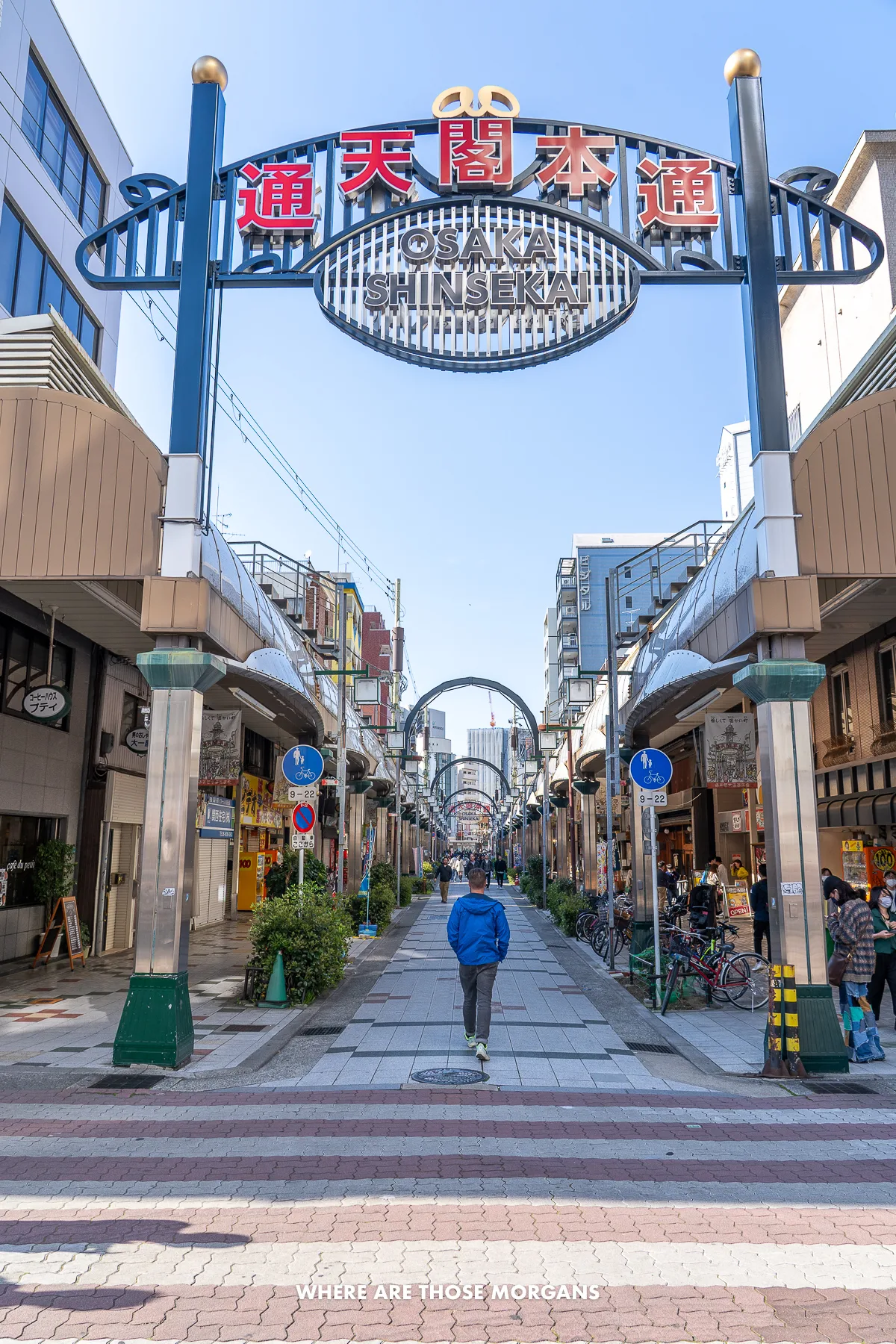
We actually really enjoyed the gritty, unpolished, over-elaborate retro tourism. It made a change from most other areas we’ve visited in Japan, and we also enjoyed some delicious breaded deep-fried meat skewers called kushikatsu which originated right there in Shinsekai. The whole place was small, easily walkable, and built around the Tsutenkaku Tower which had an observation deck but it was so low down that we didn’t bother.
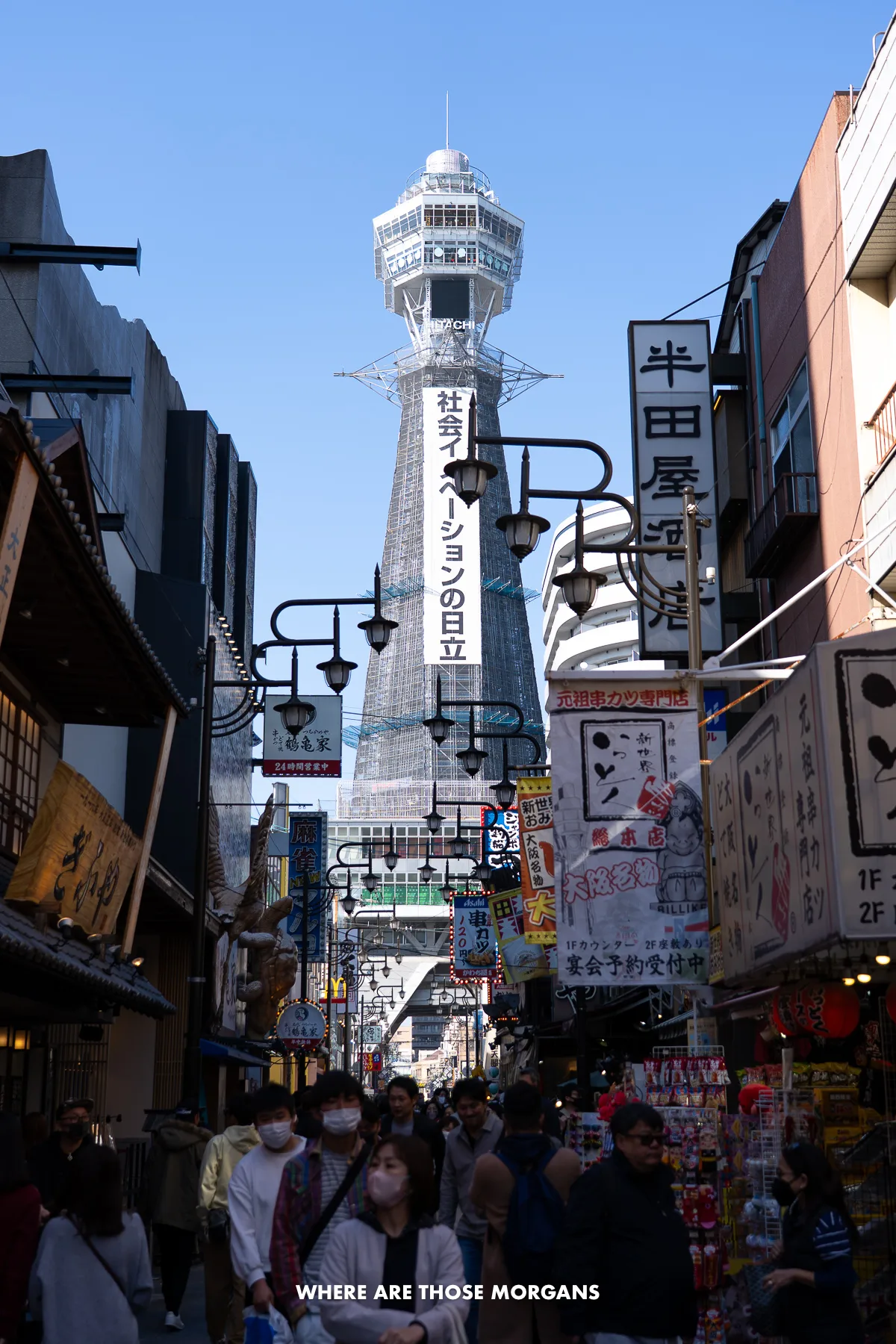
Honestly, we thought the best thing to do here was just wander around the narrow pedestrian streets, soak up the loud and colorful facades, snap some cool retro photos, eat snacks, and enjoy the people watching. It was busier than we expected. We also went into the Mega Don Quijote which had endless floors of everything imaginable, but we quickly became overwhelmed by the chaos and left. If we had kids and plenty of spare time, we’d consider spending an hour or two in Tennoji Zoo, which is just next door.
Kristen’s top foodie tour: Next time we’re in Osaka we’ll definitely book this popular Shinsekai food tour with 15 tastings. It’s got lunch time and evening start times, with near perfect ratings from other travelers.
Taking A Day Trip To Nara
We think 2 days in Osaka is the perfect amount of time to see and do everything without feeling too rushed. If we had 3 or more days, we’d definitely consider taking a day trip. Now, we’d already plan to spend 3 days in Kyoto because it’s lovely (especially for temples) and deserves at least two nights. That leaves a day trip to Nara as the best and most popular option from Osaka.
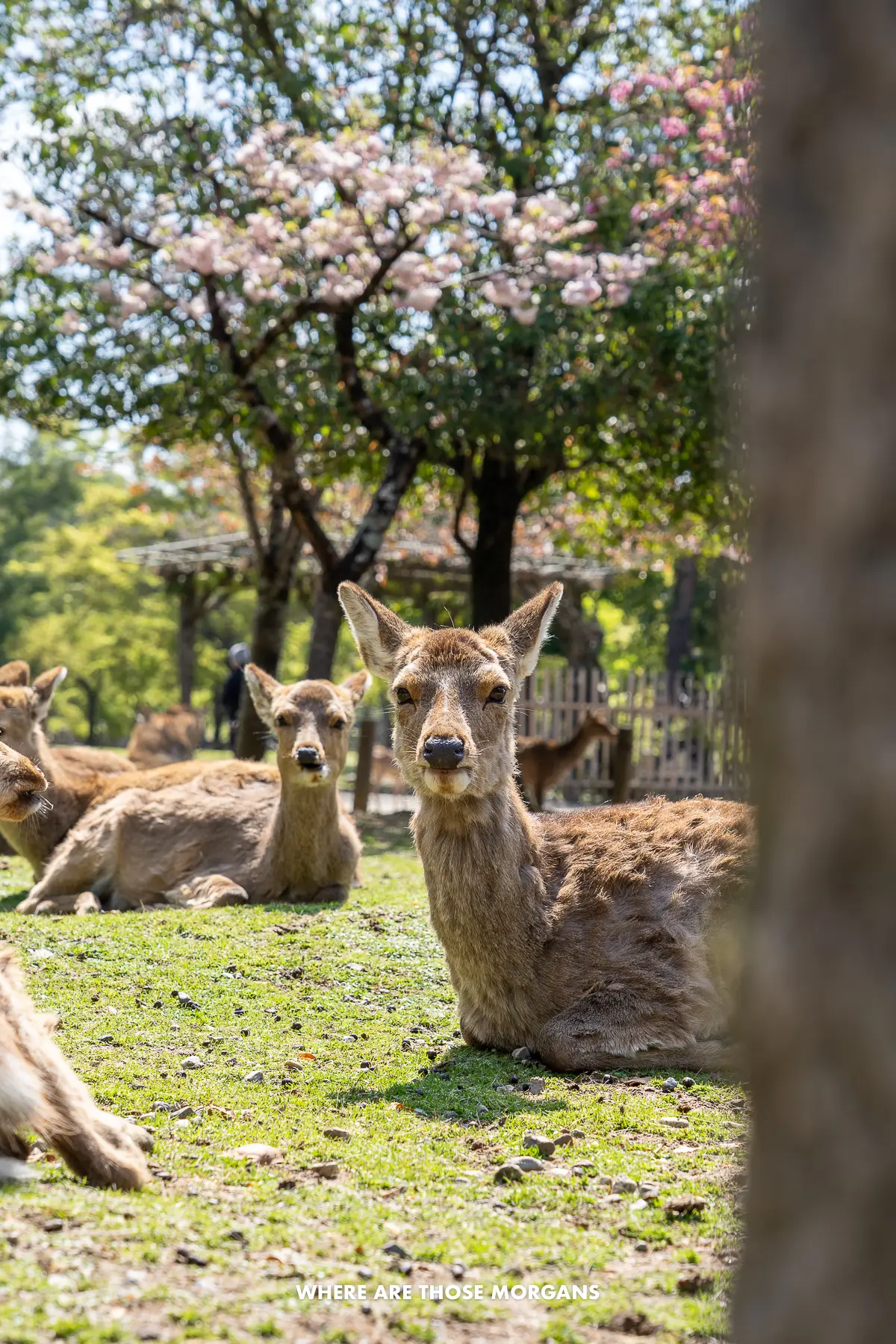
If we bought a JR Pass for our trip to Japan, we’d take the JR Yamatoji Rapid which leaves from JR Osaka Station and arrives at JR Nara Station. It takes around 50 minutes and it’s free with the JR Pass, but it arrives to the further out station in Nara. Without a JR Pass, we’d take the Kintetsu Nara Line (Rapid Express or Express) from Osaka-Namba Station to Kintetsu Nara Station, which takes around 35-40 minutes and costs about 570 yen. This station is much closer to the deer park and temples.
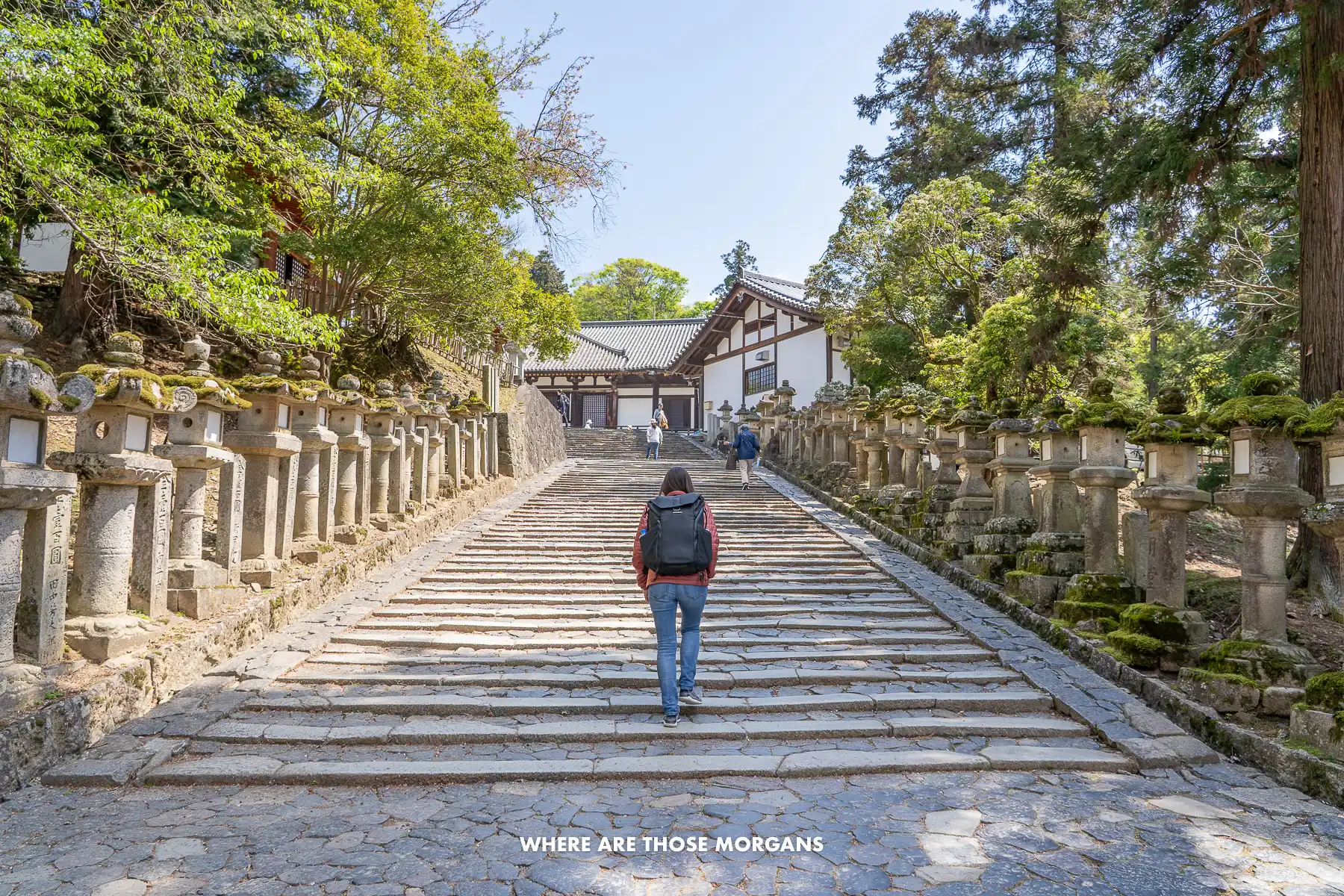
Either way, after arriving we’d see Kofuku-ji Temple, feed the deer in Nara Park, look around Nara National Museum, explore gardens, visit Todai-ji Temple, explore serene shrines, taste sake and so much more. Here’s our guide on Nara’s top attractions to learn more about how to spend your day if you go from Osaka.
Mark’s top stress-free tour: If you want to see Nara but don’t want to deal with transport and figuring out where to go, take a look at this popular guided tour of Nara’s top sites with an early start from Osaka.
Experiencing The Iconic Osaka Foodie Scene
The first time we went to Japan, we had no idea what to expect from any of the places we were about to visit. Our major take home from Osaka? The whole culture was centered around food, and we mean that in the best possible way. From quality street food to affordable hole-in-the-wall ramen spots, we simply could not stop eating. So we couldn’t wait to fill our boots when we returned for two more days in 2023.
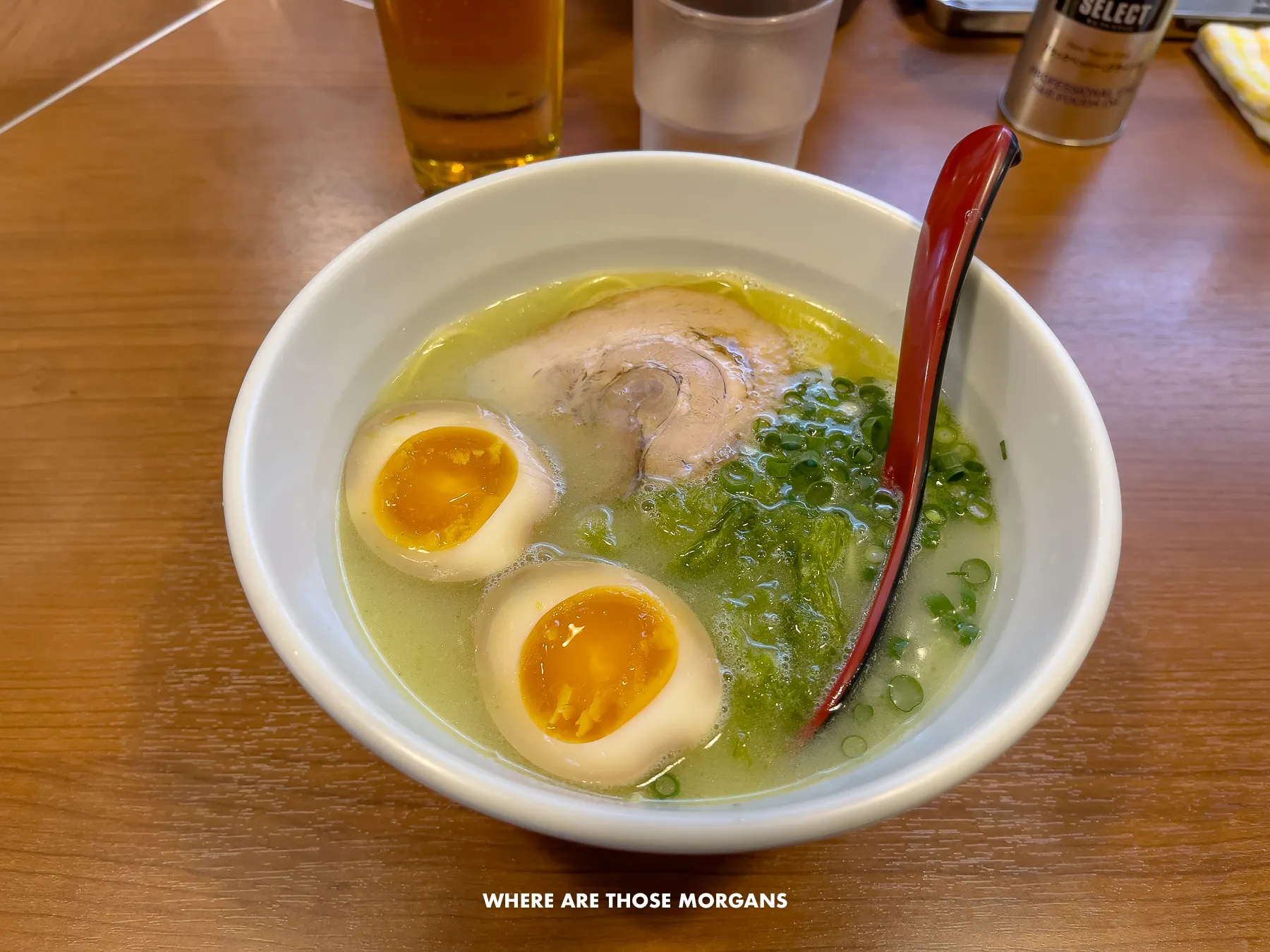
Now, we’re not food-first travelers, but we’re happy to take advantage of great grub when we’re in the right places. In Osaka, we ate some seriously delicious okonomiyaki at the intimate Okonomiyaki Izakaya Gen, incredibly fresh sushi with beers at Sushi Takao, and the most amazing ramen at Kyushu Ramen Kio. You know what the common theme was among them? They were all tiny with very little seating and only one or two people running the whole show, and the owners were always super friendly.
If you’ve ever wanted to try a maid cafe, Maidreamin Nippombashi in the anime neighborhood looks fun. Kuromon Market had quality street food, albeit at touristy prices. And we never made it, but Bar Nayuta looks like a cool speakeasy-style cocktail bar in America-mura to the west of Dotonbori and Shinsaibashi. One thing we did do was avoid the famous-sign restaurants in Dotonbori (like the crab, blowfish and chef) because they’re tourist traps with better design than food.
But something we never did and regret missing was adapting a more local way of eating, which is a kind of izakaya crawl moving between small places and only ordering a few things at each. We’d get carried away, eat a massive bowl of ramen and leave completely full! We also saw a lot of locals standing up to eat, which we thought was odd at first, but then we realized it’s just how they do it. So we’d try that next time too. We’d also love to try this sushi making class near Dotonbori with near perfect ratings and start times throughout the day.
And finally, we have to finish our food section with the worst kept secret in Japan – convenience stores are the absolute best for breakfast and lunch snacks. Across the 5 weeks we’ve spent in Japan, we must have eaten at 7-Eleven, Lawson or FamilyMart at least 25 times. Our favorites include egg sandwiches, tinned coffee, potato croquettes, American corndogs, and fried chicken. Trust us, convenience stores are the first thing you’ll tell your friends about when you get home from Japan.
What To Skip
We know a lot of people only allow for one or two days in Osaka when visiting Japan for the first time. With 2 days, we’d work through our list above and skip everything in our list below. With 3 days we’d add a day trip to Nara (if we didn’t already have it pencilled in for a day trip from Kyoto) and still skip the below. But with 4 days or more, we’d consider adding some of the places below.
Osaka Aquarium Kaiyukan: This is actually one of the world’s great aquariums and it would be well worth the visit, but we’d only do it if we had time. It has a vast centerpiece tank with whale sharks, manta rays and Pacific sea life, and it’s often combined with the Tempozan Ferris Wheel – but they’re located 30 minutes from Namba via 2 trains, and they’d eat up a big chunk of time. Tickets for the aquarium cost 2,700+ yen for adults going direct or 2,500 yen through Klook.
Universal Studios Japan: This is one of Asia’s most popular theme parks, and to be fair it has Nintendo World and Harry Potter areas which sound pretty cool. But it’s another time-sucking day out with trains, lines for rides, and massive areas to explore. If we had plenty of time and the kids desperately wanted to go, we’d buy tickets through Klook and pick the exact package bundle we wanted.
Traditional museums: Osaka has a reasonable selection of traditional museums like the Osaka Museum of History near the castle, and both the National Museum of Art and the Osaka Science Museum on Nakanoshima among the most visited – and none of them are bad. But we don’t think they’re the best use of time for a first-timer because there’s so many other unique things to see and do in Osaka. We think the magic of this city is on its streets and in its restaurants, not inside museums.
teamLab Botanical Garden: TeamLab’s immersive digital art installations have become a major draw across Japan, but the Osaka edition has two problems in our eyes – first it’s a long way south of Namba, and second it has way lower ratings than its counterparts in Tokyo and Kyoto. Osaka’s edition is set at night in a garden with light projections and it does look fun, but we wouldn’t go out of our way to visit. If you have to try it out, tickets cost around 2,000 yen through Klook.
Sumiyoshi Taisha: This is one of Japan’s oldest and most significant Shinto shrines, and it’s way less crowded than equivalent shrines in Kyoto or Nara. It even has free entry. So what’s the problem? Logistically, it’s nowhere near as convenient. It takes 30 minutes to reach Sumiyoshi Taisha from Namba, but it can’t be paired with anything else at all. So we’d say do it if you’re especially interested in Japanese history or need a break from the crowds, otherwise skip it.
Asahi Beer Museum: The Suita brewery in northern Osaka is one of Asahi’s flagship sites and offers free factory tours showing the full brewing process, ending with a tasting session. Sounds awesome, right? We love a beer, and it’s free. The problem again is that it’s a 40 minute train ride from Namba. Now, if Mark went to Osaka with friends, this would definitely be on the itinerary. But would we go out of our way as a couple or a family? Probably not.
Minoh Falls: This 2.8km (1.7 miles) forest walk passes through a nature park and leads to a 100-ft tall waterfall. It’s a proper escape from the city into fresh air, trees and scenic nature. But the path leading to Minoh Falls is a 30 minute train ride from Umeda (and you’d have to get to Umeda first). We’d consider it if we visited in autumn when the fall foliage colors illuminate and we didn’t also plan to visit other nature areas in Nara or Kyoto. Otherwise, it’s a lot of effort for a short nature walk when there’s loads more to see in downtown Osaka.
Next Steps
We hope our guide on the top things to do in Osaka helps with planning your trip.
If you’d like more personalized help, we offer expert travel planning consultations where we answer any questions you have, help you avoid tourist traps and plan out your entire itinerary step by step. See our packages and reviews.
Still researching for your trip?
- These are the top things to do in Tokyo.
- This is our Tokyo itinerary for first timers.
- Here’s where to stay in Tokyo.
- Don’t miss Kyoto’s top experiences.
- Use our 3 day itinerary for Kyoto.
- Here are the top areas to stay in Kyoto.
- Here are our favorite things to do in Nara.
Finally, we recommend reading our Japan travel guide for first-timers to get helpful tips and advice, top attractions to see, itinerary ideas and more.
Happy travels,
Mark and Kristen
Find our guide helpful? Pin it for later!
All Rights Reserved © Where Are Those Morgans, LLC. Republishing this article and/or any of its contents (text, photography, maps, graphics, etc.) in whole or in part is strictly prohibited.

Mark and Kristen spent 6 years traveling the world, visiting over 40 countries across 4 continents and more than 30 US states. They created Where Are Those Morgans in 2018 to help others plan the best possible vacations by writing authentic travel and hiking guides based on their real experiences.
Since the arrival of baby Maya in late 2024, Mark and Kristen’s extensive travels have slowed down but they still take plenty of trips. Where Are Those Morgans now helps millions of travelers each year to visit new places and hike new trails through information-packed blog posts and expert travel guidebooks. Read more about Mark and Kristen.