
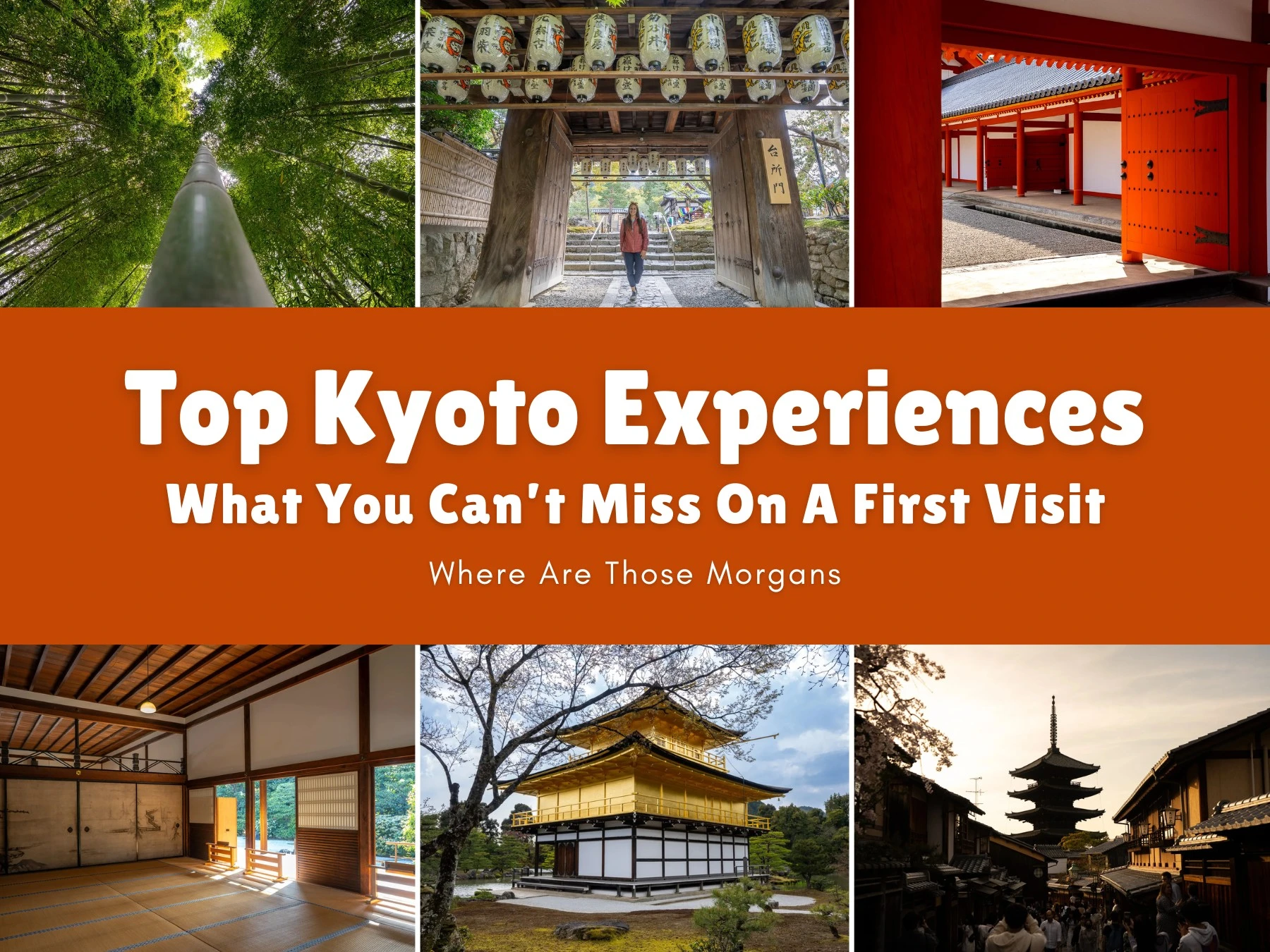
Kyoto is our favorite place in Japan. We love the neon lights in Tokyo, the food in Osaka, and the scenery around the Alps – but Kyoto has a unique old-world charm that we honestly can’t get enough of. During our 3-day trip in the fall of 2018 we ticked off Kyoto’s major attractions like Fushimi Inari, Arashiyama Bamboo Forest, Kinkaku-ji, and all the temples around Gion and Higashiyama. Our budget was tight and we lost a whole day due to a typhoon passing through, but we still had a fantastic first visit.
Then we returned for another 3-day Kyoto trip in the spring of 2023 for cherry blossom season with a bigger budget – and luckily, no extreme weather dramas. This time we skipped Fushimi Inari and Arashiyama, instead using our time to visit less touristy places like Heian Shrine, To-ji Temple, the Imperial Palace, Nijo Castle and the Philosopher’s Path. It was an amazing trip, but while the cherry blossoms were beautiful, we’d never visit in spring again because the crowds were out of control, especially around Higashiyama (our favorite part of Kyoto).
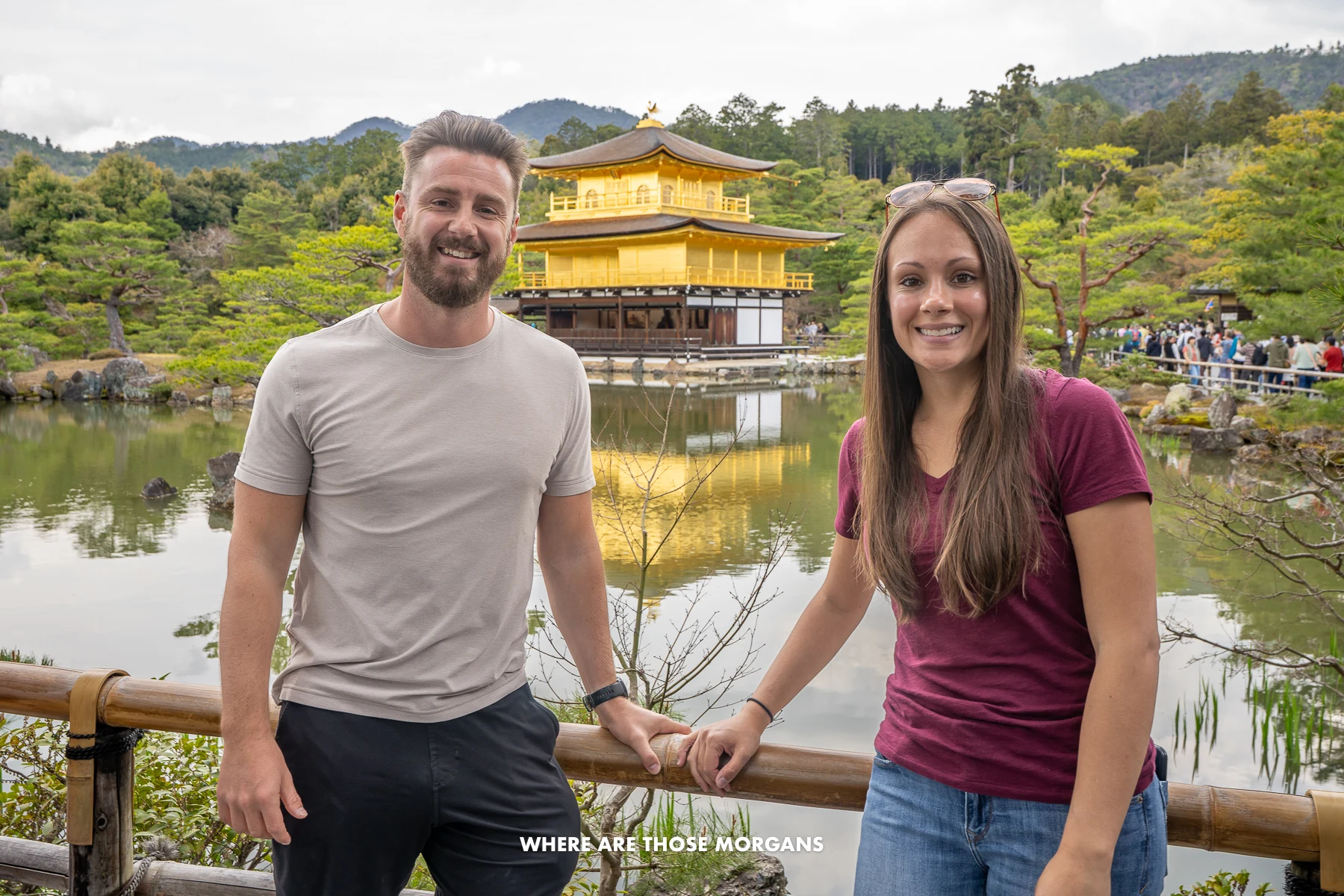
Hi, we’re Mark and Kristen Morgan. We left our scientific careers in 2018 to become travel writers and photographers, and since then our expert guides have helped millions of travel planners take better trips. Read more about us.
Why trust us with your Kyoto bucket list? After two trips to Kyoto with different budgets and itinerary goals, we know what’s worth doing and what to skip on a first visit. As always, every photo in this guide is ours.
We really liked Kyoto’s serene and uplifting atmosphere, the massive amount of unique things to see, and the small city’s ancient architecture. But it wasn’t as easy to get around as Tokyo or Osaka (a lot of top attractions in Kyoto were a pain to reach), eating out was surprisingly challenging, and it wasn’t a place to go for nightlife. Young couples or groups of friends looking for fun might not love Kyoto, but families with younger kids or couples seeking a romantic escape certainly will.
Oh, and we have to warn you: Temple burnout in Kyoto is real (just like museum burnout in Rome or Paris). Don’t try to visit every single temple – we’ll show you which ones to focus on. Based on our two totally different trips, we’re going to walk you through the experiences we consider unmissable for a first-timer visiting Kyoto. Let’s dive in!
Note: Our content is reader supported and contains affiliate links. If you make a purchase through one of these links, we may earn a small commission at no extra cost to you and it helps us keep this site running.
Photographing The Torii Gates At Fushimi Inari Taisha
Let’s kick things off with the one thing we think every single first-timer should do in Kyoto – snap way too many photos of the “Senbon Torii” (thousand torii) tunnel of vermilion-red gates at Fushimi Inari Taisha. We took the Keihan Main Line from Gion-Shijo to Fushimi-Inari in October 2018, arriving early in the morning and hoping to beat the crowds, but it was already swarming.
After walking through the major cluster of shrines and buildings not long after the train station, we eventually reached the first torii gates forming a tunnel that we’d seen in all the photos. There were so many photo shoots taking place so we quickly hustled through and started climbing up to Mount Inari.
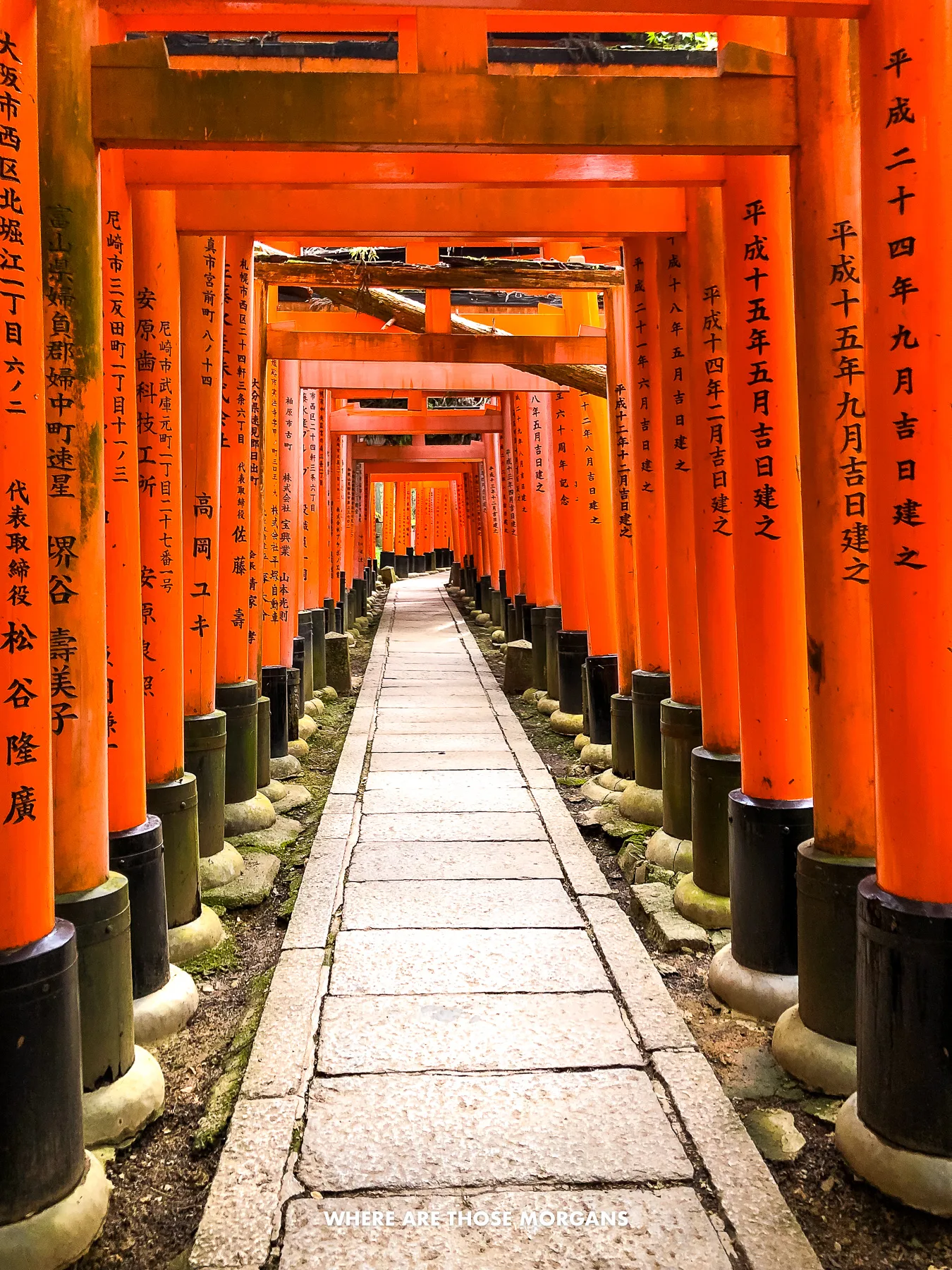
The more steps we climbed, the quieter it got. And before long we had full “tunnels” of torii gates entirely to ourselves. It was so cool to take fun perspective photos of us and the picturesque gates as they curved up the mountainside. We thought it was well worth climbing all the way to the top, looping the summit and then going back down via a different route. That way we got to see a lot more than most who just want to get a photo near the bottom.
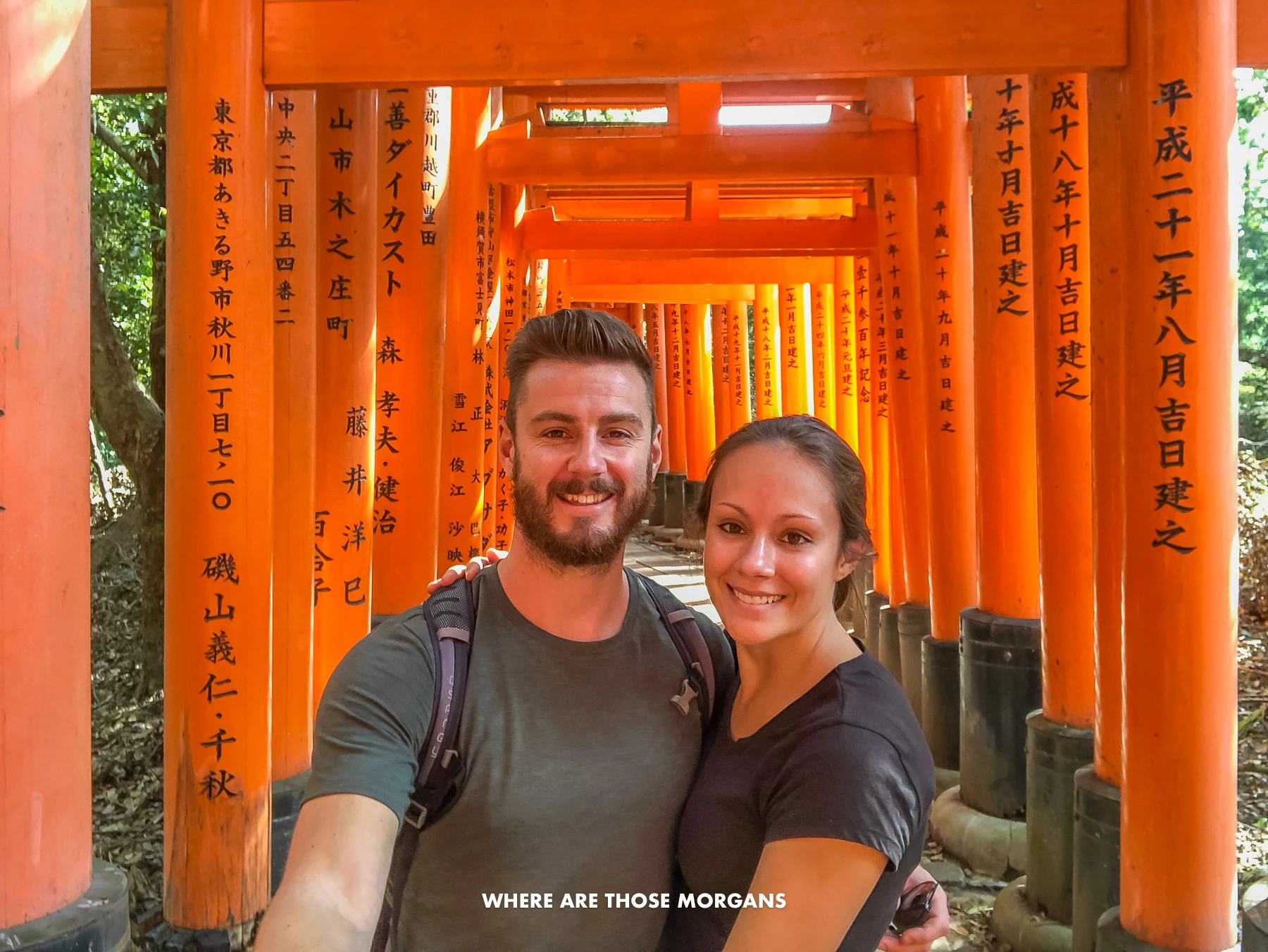
The best advice we can give you is to arrive early in the morning or late in the evening – not only is it quieter, but the light is also softer for better quality photos. This is even more important if you visit during cherry blossoms like we did in 2023. Fushimi Inari is the most popular attraction in Kyoto, and the rest of town was teeming with tourists so we can only imagine what it would have been like at the famous torii gate tunnels.
Kristen’s tour tip: Not sure about doing it yourself? This popular guided tour is great way to combine an early visit to Fushimi Inari Shrine with seeing the bamboo forest and golden temple. Or this top rated guided tour visits 10 top Kyoto sites in one day with a late afternoon visit to Fushimi Inari. They’re both excellent options we’d consider if we didn’t want to deal with transport.
Walking Through Arashiyama Bamboo Forest
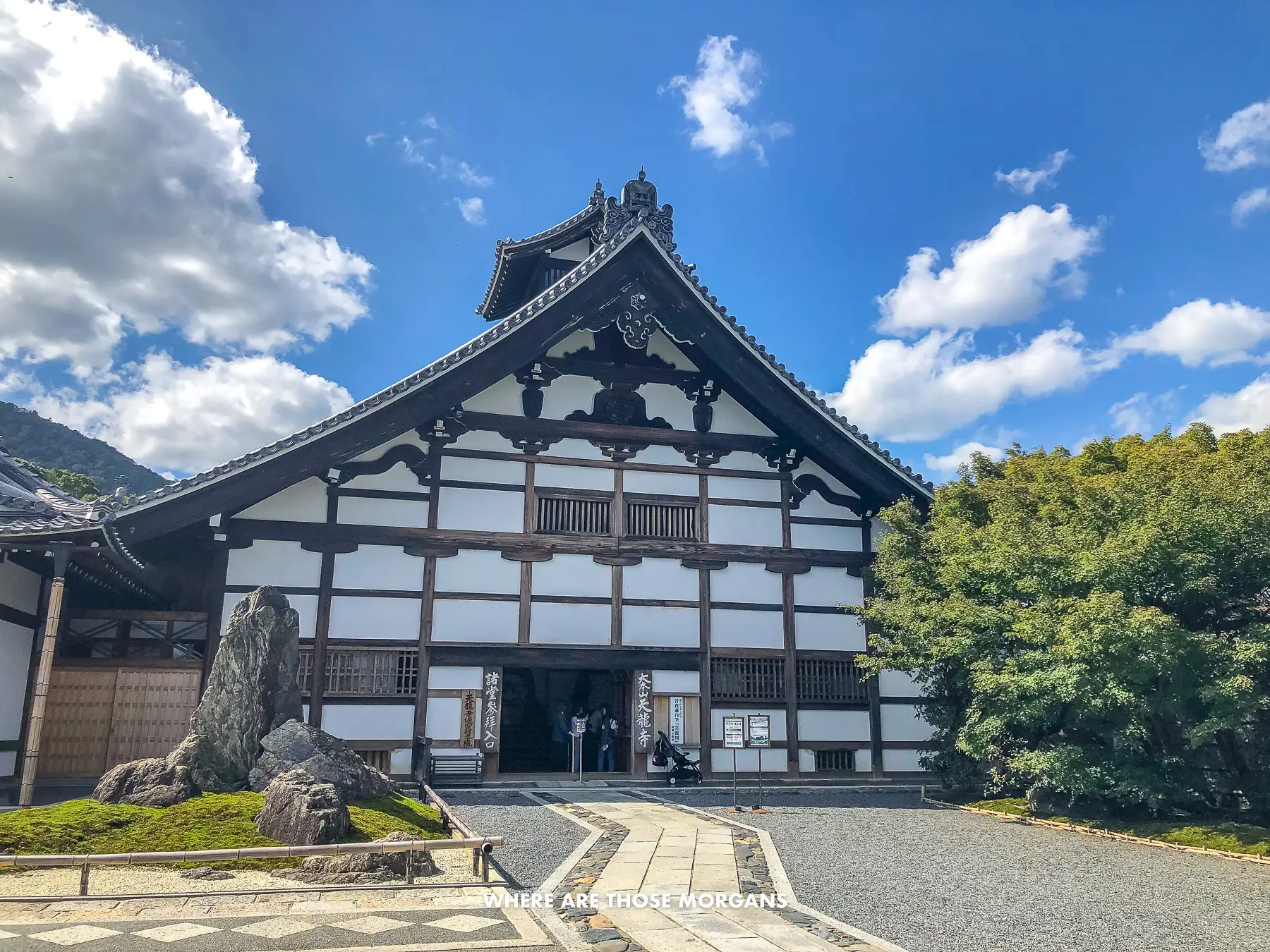
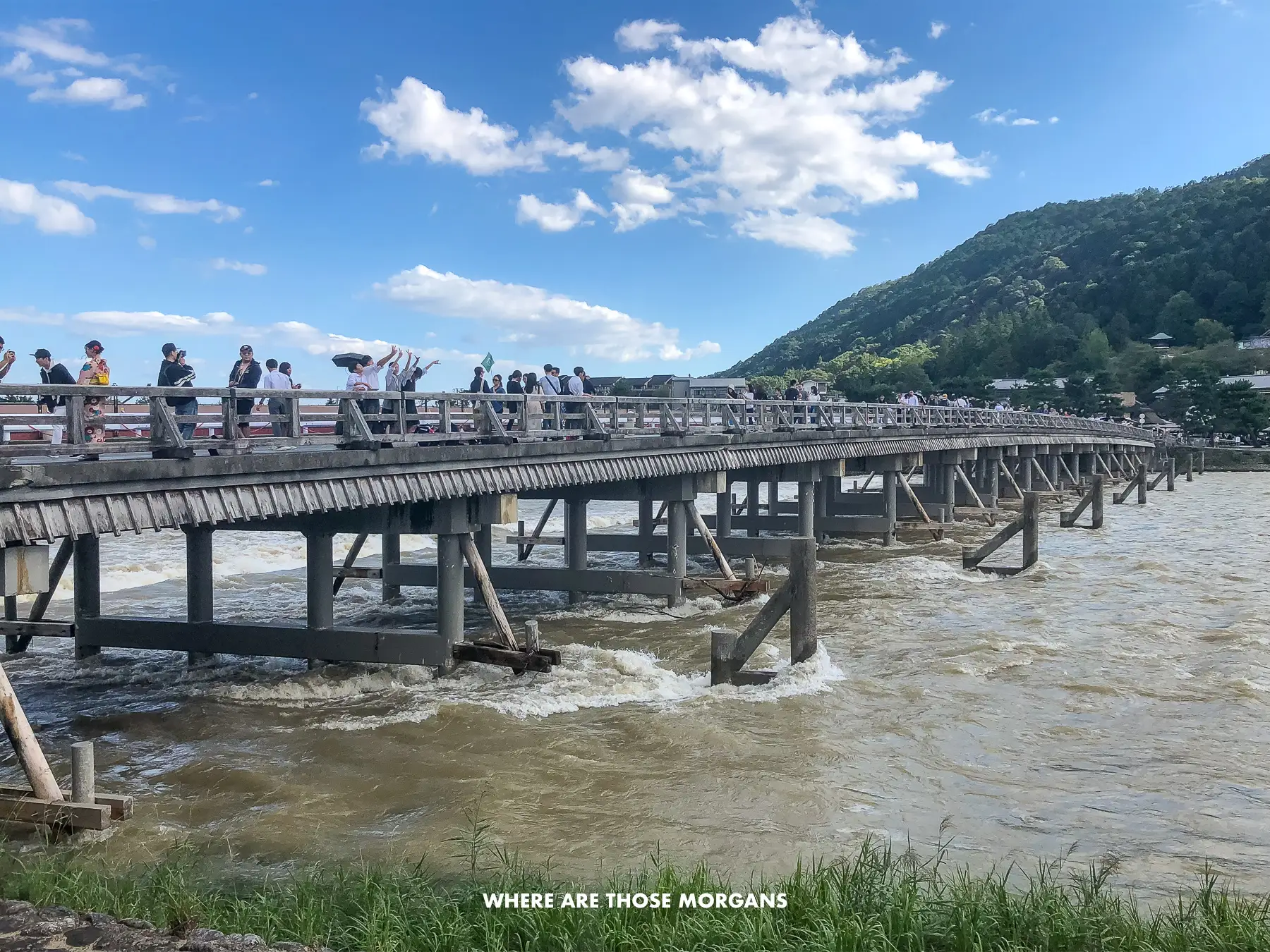
We had mixed feelings from our visit to Arashiyama Bamboo Forest in 2018. On one hand we thought the forest itself was massively overrated, but on the other hand we really enjoyed seeing the surrounding areas like Togetsukyo Bridge and the Monkey Park Iwatayama with wild macaques. Frustratingly, we didn’t have enough time to visit Tenryu-ji Temple which has a stunning garden that we should have paid 500 yen to see.
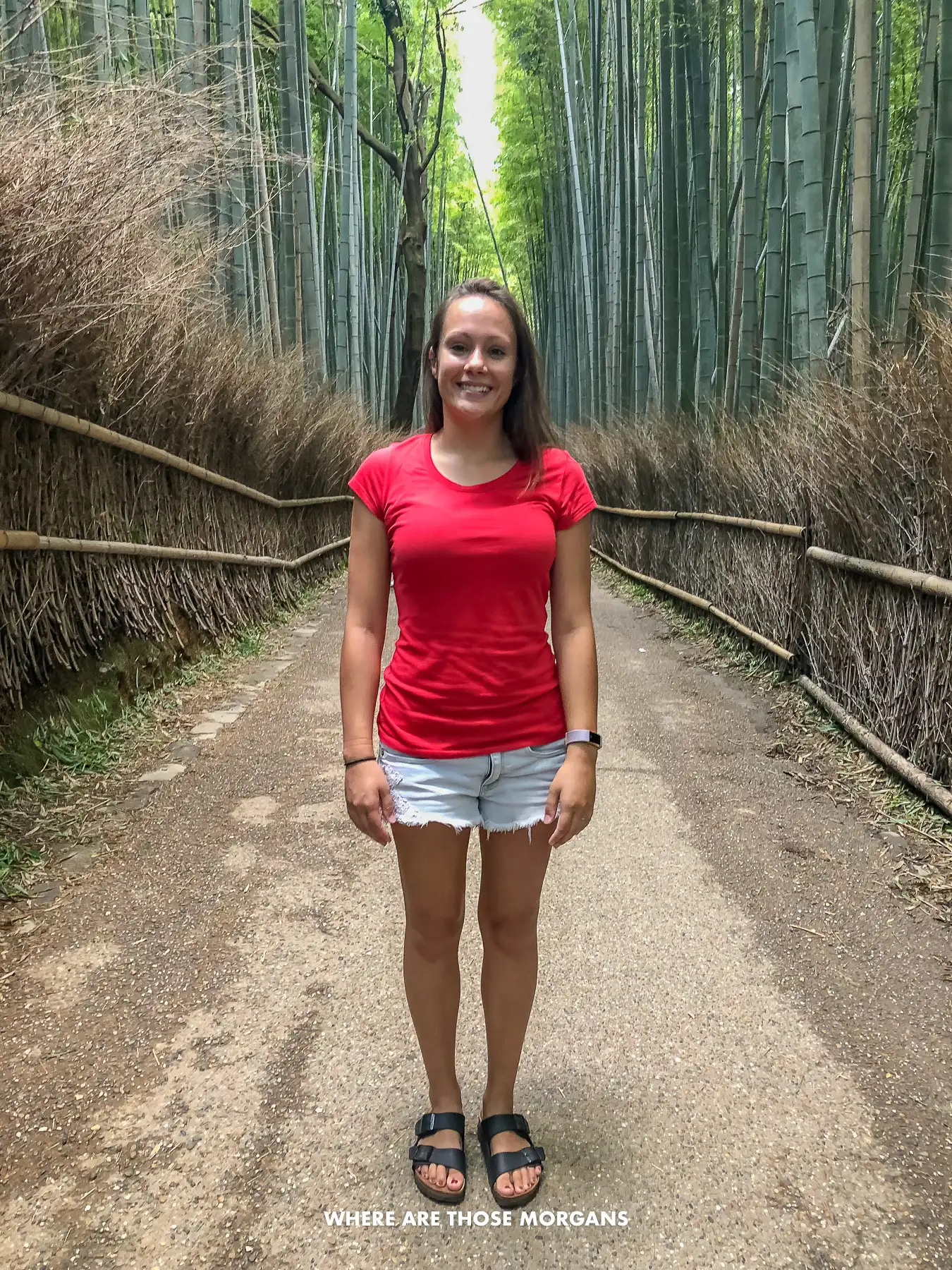
Why was the forest underwhelming? Because the actual stretch of photogenic bamboo trees was tiny – maybe 300 meters long – and the crowds were already crammed in with selfie sticks and tripods galore, despite us arriving super early in the morning. We made the mistake of prioritizing the forest and not allowing enough time to visit other places like Okochi Sanso Garden, Tenryu-ji Temple, Gio-ji Temple and the Kimono Forest. The monkey park was okay, but we’d do the two gardens instead next time.
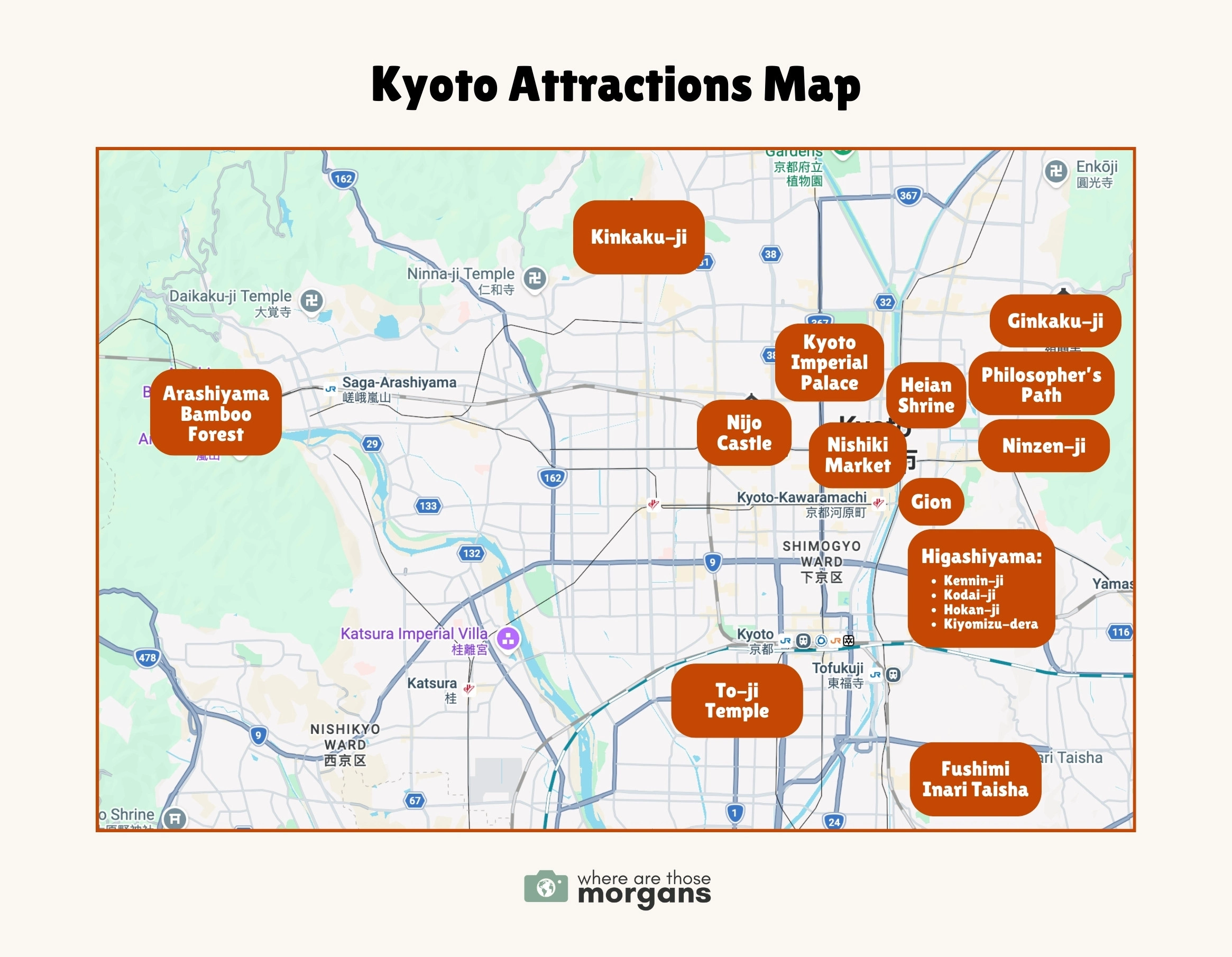
To get there we took the Tozai Subway Line from Gion-shijo to Nijo Station, then transfered to the JR Sagano Line to Saga-Arashiyama. Then on the way back to Kyoto we took the purple Randem Tram (vintage streetcar) to Kitano Hakubai-Cho, so we could visit the Golden Pavilion next. See how Arashiyama was a bit of a logistical nightmare? It’s a long way to the west of Kyoto’s other top attractions, but at least it has train lines going all the way to the forest and no buses are required.
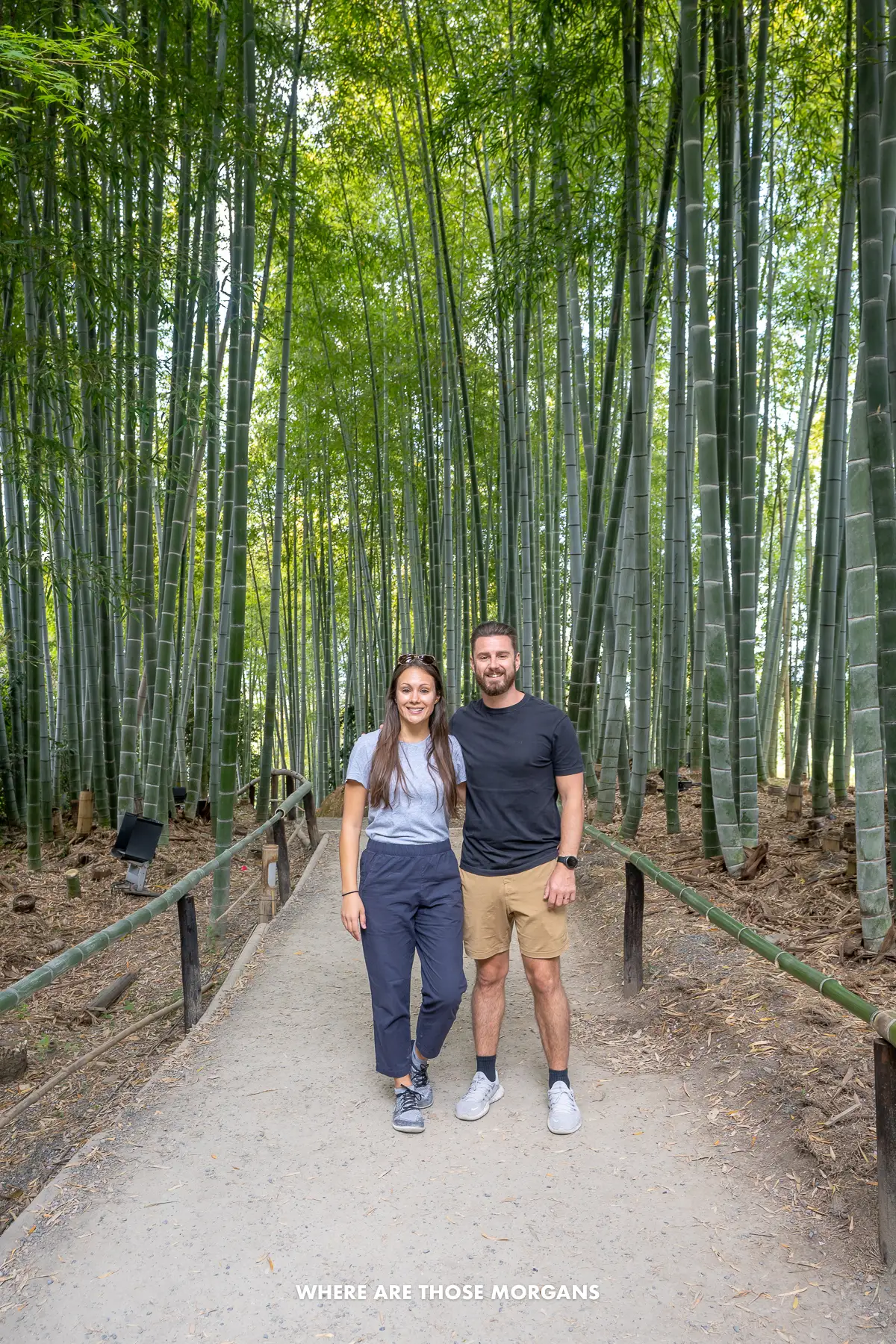
We didn’t bother revisiting Arashiyama when we went back to Kyoto in 2023, but we know a lot of first-timers won’t want to miss such a popular photo spot. If you can’t miss it, our advice is to arrive pretty much by first light because an hour after sunrise it’ll already be swamped. If you’re on the fence about visiting, we’d say skip it to save a ton of time and effort. Plus, we found a hidden gem mini-bamboo forest in the gardens of Kodai-ji Temple in Higashiyama (which we cover next) that gave us similar photos without the crowds or logistics.
Mark’s top bamboo forest tip: If you’re not a social media star who needs to get “that” photo and you’d rather just see the best of Arashiyama, take a look at this top rated guided tour which hits the major and hidden spots in 5 hours. It’s how you make the most of this area.
Exploring Buddhist Temples In Southern Higashiyama
Southern Higashiyama is the “postcard Kyoto” you imagine with temples and narrow hillside streets at every turn. It’s the place we’re always drawn into like a gravitational force because it’s so attractive and has an addictively enchanting energy. But like almost every other visitor, Higashiyama is our favorite part of the city – which means it often becomes overwhelmingly crowded.
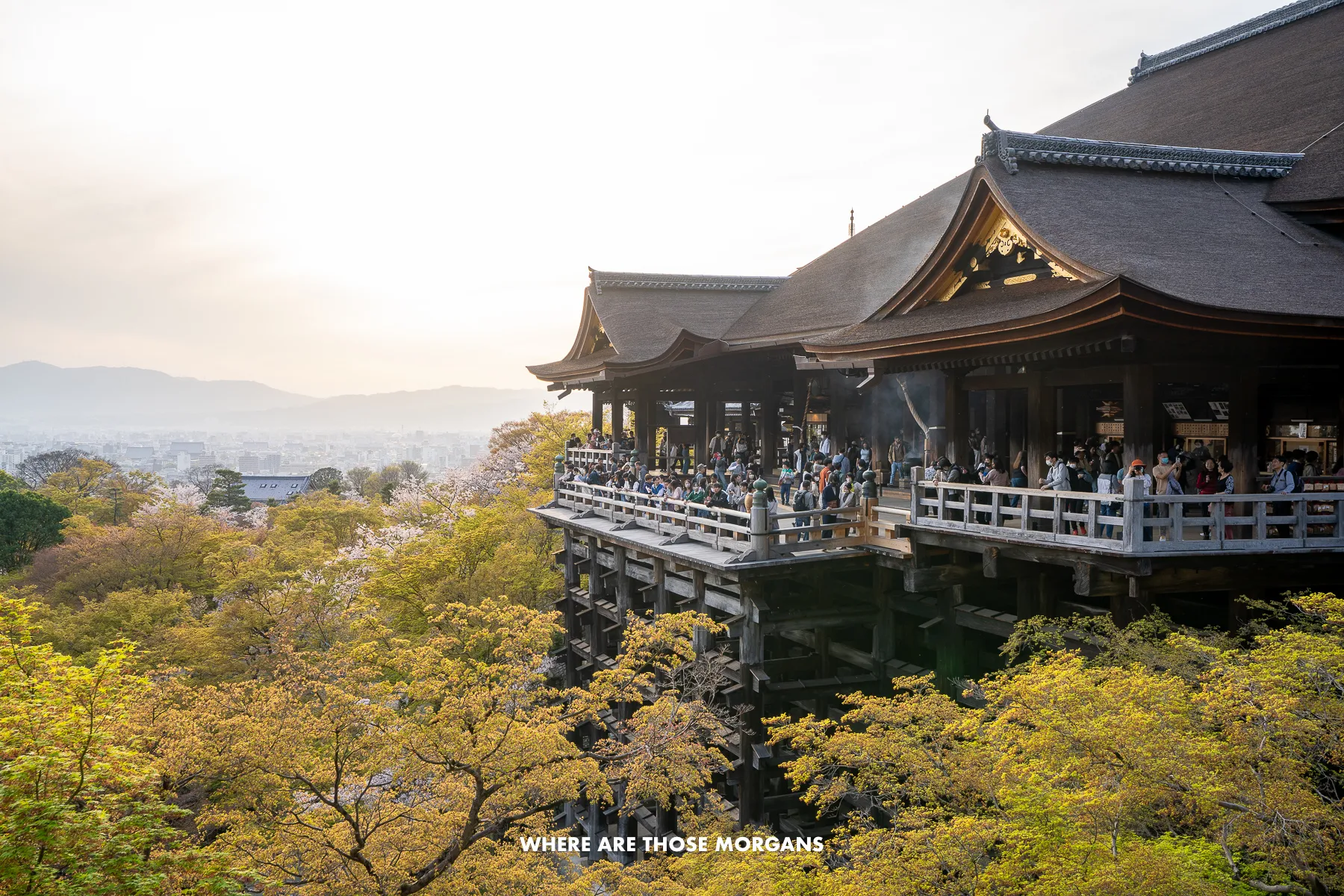
In 2018 we took an early morning run up through Gion to the very top of Higashiyama’s pedestrian streets at the iconic Kiyomizu-dera, and we barely saw another soul. Whereas in 2023 (during cherry blossom season), we walked up to the top in late afternoon to watch sunset and we were shoulder-to-shoulder the whole time. It was a stark contrast.
If you don’t like crowds, our advice is to head up to Kiyomizu-dera for sunrise and slowly work downhill through the stone-paved pedestrian streets like Sannenzaka and Ninenzaka, before ending at Yasaka Shrine in Gion. But if you’re actively looking for that lively atmosphere, do what we did and slowly make your way up to Kiyomizu-dera in time for sunset – it’s a fantastic experience.
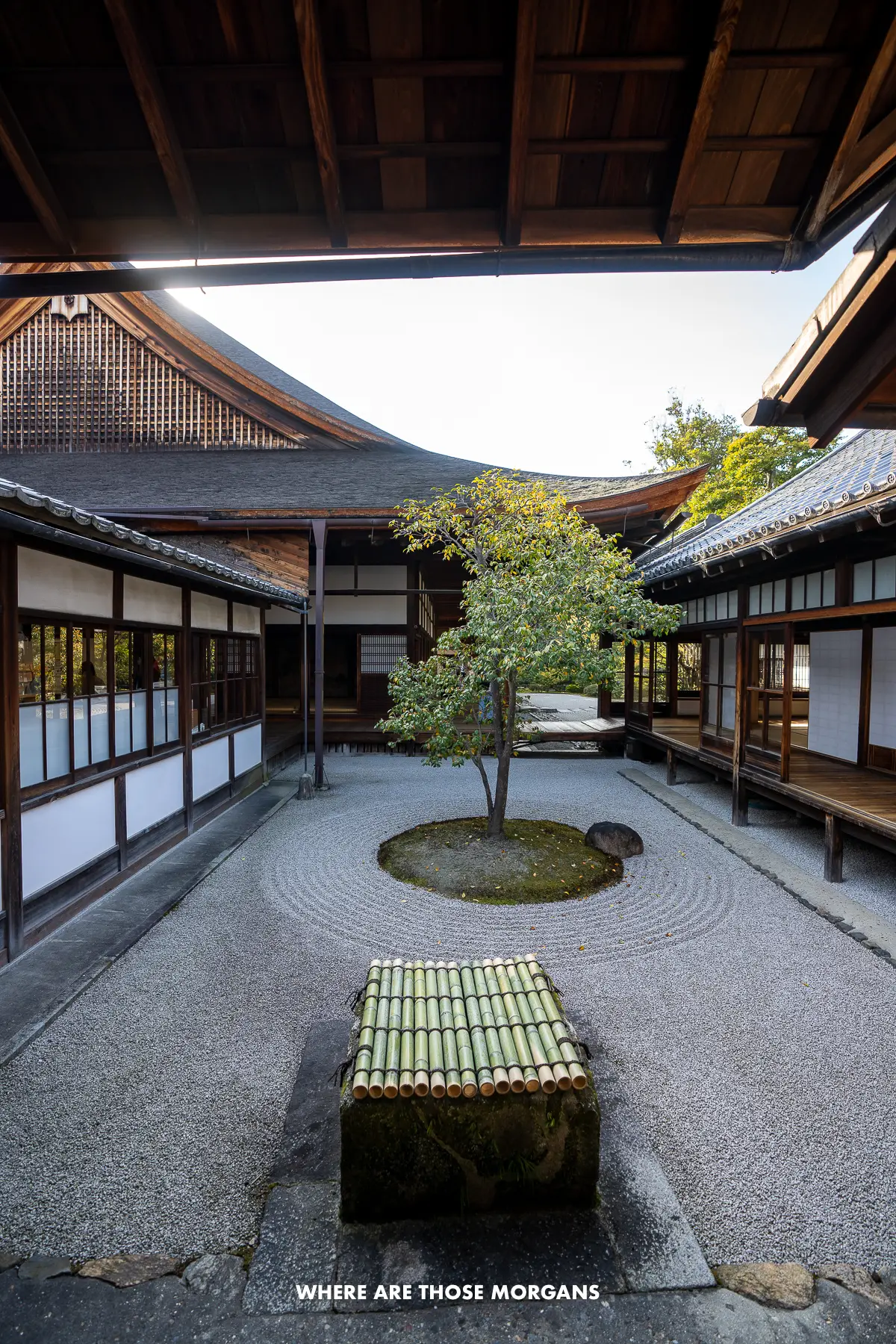
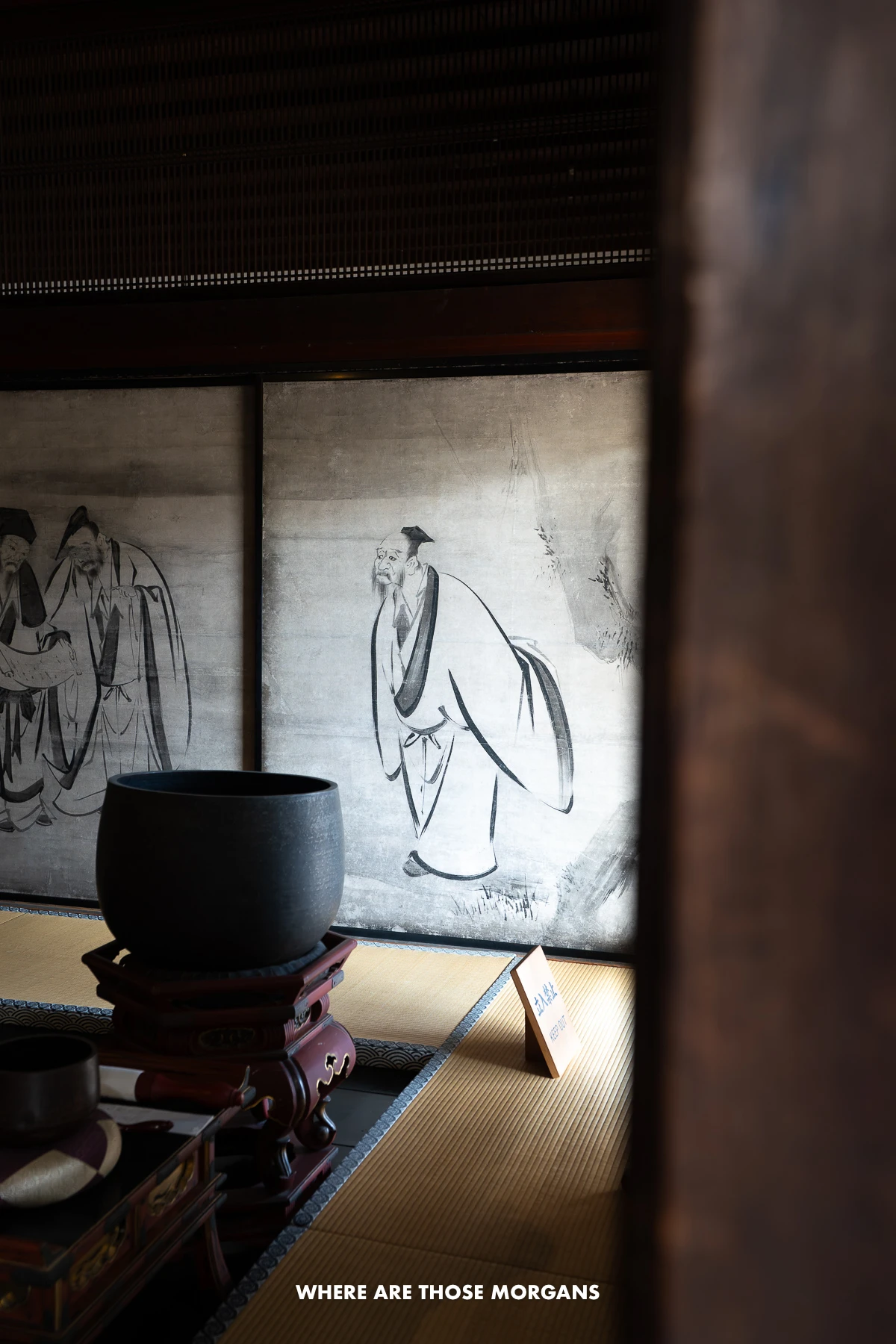
Remember earlier when we said temple fatigue is real in Kyoto? Higashiyama is that place, so choose carefully and don’t try to see too many at once. Our favorites are Kennin-ji for its zen garden and twin dragon painting, Kodai-ji for its tea houses and secret bamboo path, Hokan-ji for iconic photos of a five-story pagoda, and Kiyomizu-dera for its massive wooden buildings and striking views. Oh, and both Entoku-in Temple and Ryozen Kannon Temple were definite hidden gems if you want something off the beaten path.
Experiencing Traditional Kyoto In Gion
We had Gion all wrong before our first visit in 2018. All we’d read or seen online was Gion is where you go “geisha spotting”. It was our first time in Japan so we had no idea what to expect, but the minute we arrived it just felt awkward watching flocks of tourists constantly taking photos of geiko (geishas) and maiko (apprentices) as they walked down these beautiful old-world streets. They’re not footballers or movie stars, they’re just normal people going to work.
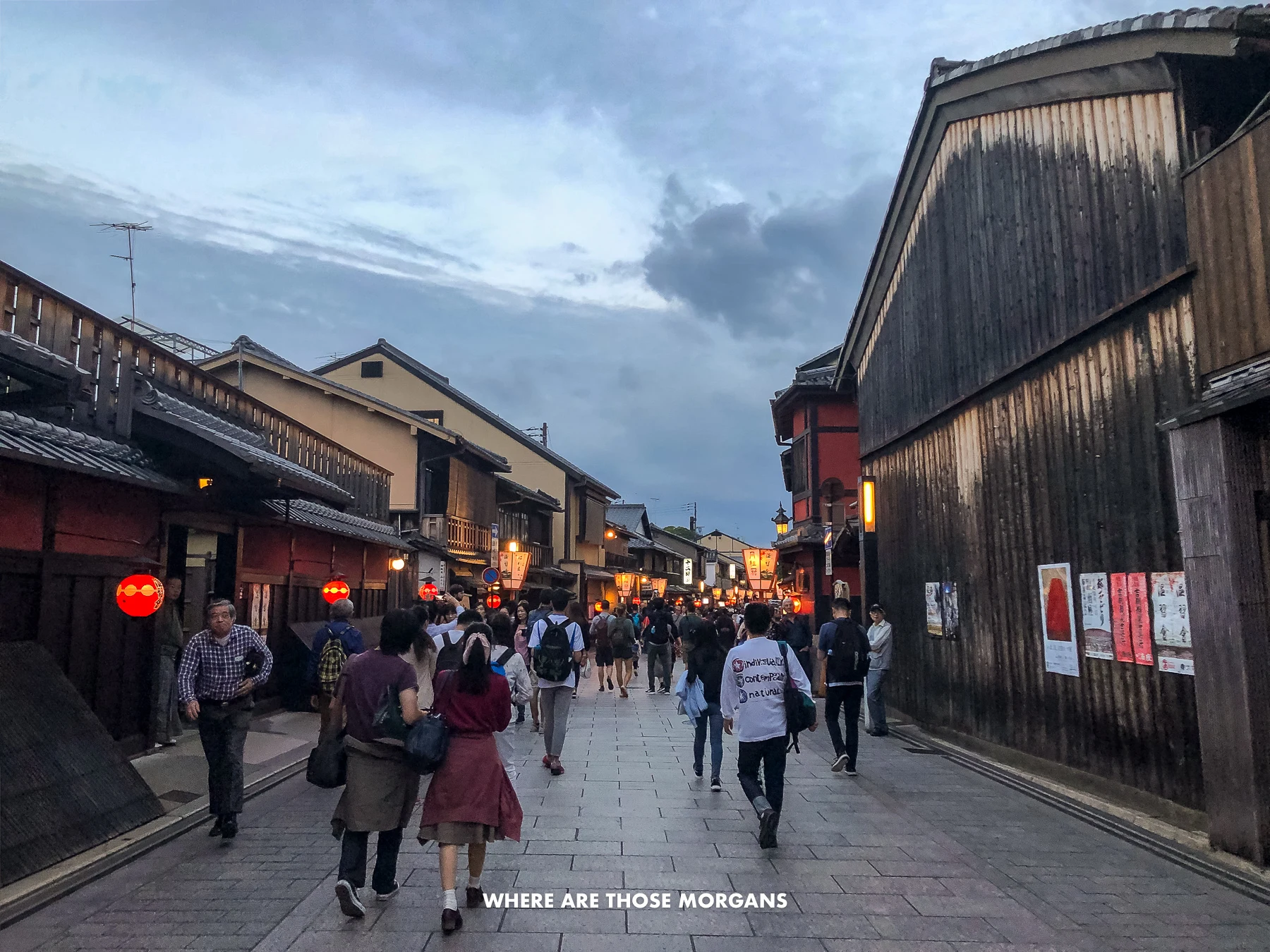
Since then (and we noticed this during our 2023 visit to Gion), strict new rules have been put in place to protect the privacy of the residents and geishas – tourists are banned from entering or photographing private side alleys, with 10,000 yen fines on the spot. We didn’t fully understand the “rules” surrounding photos during our most recent visit so we just didn’t bother taking any at all to be safe. If you want to take “safe” photos of geishas, book this one-hour geisha show or this Gion cultural walk and geisha show.
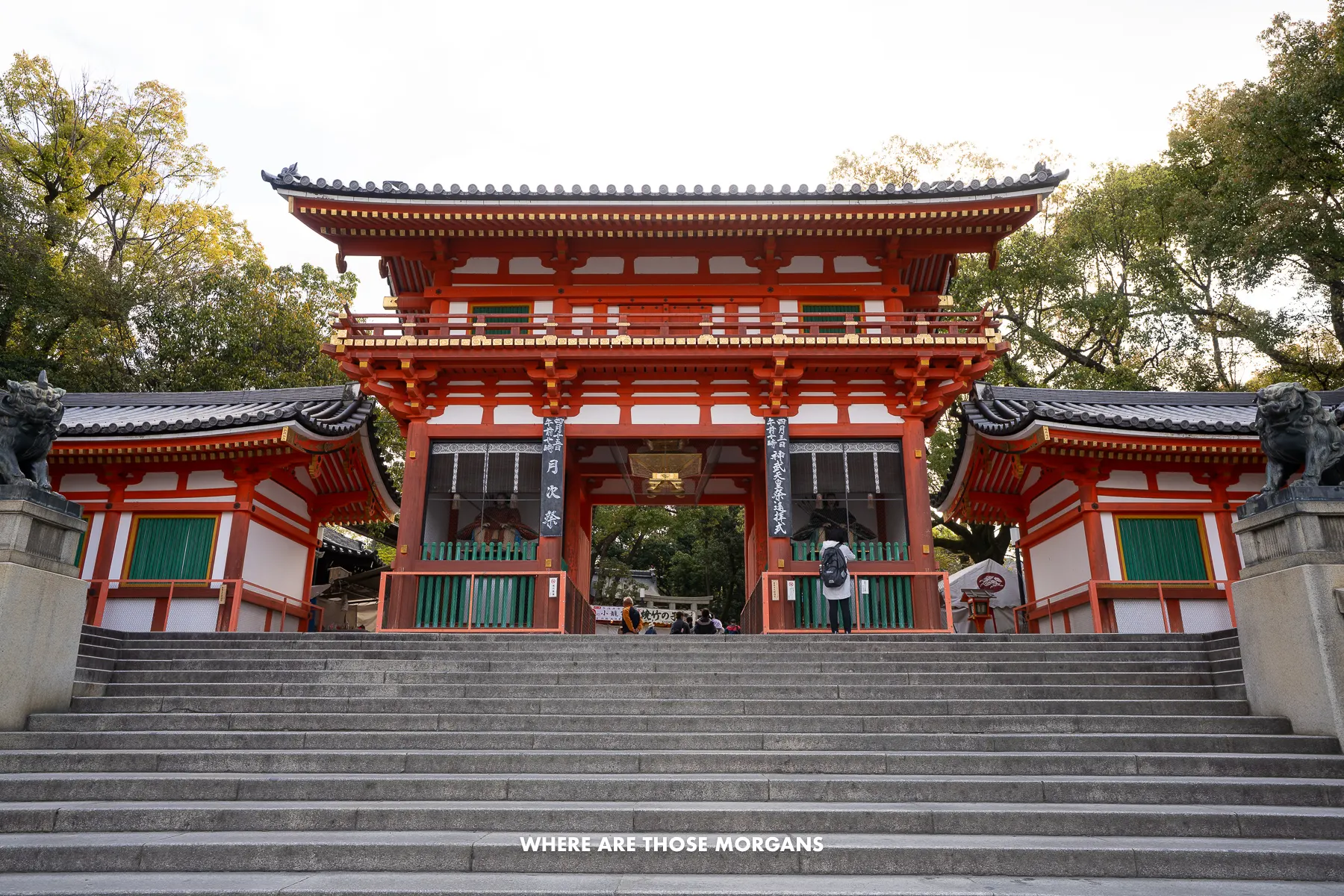
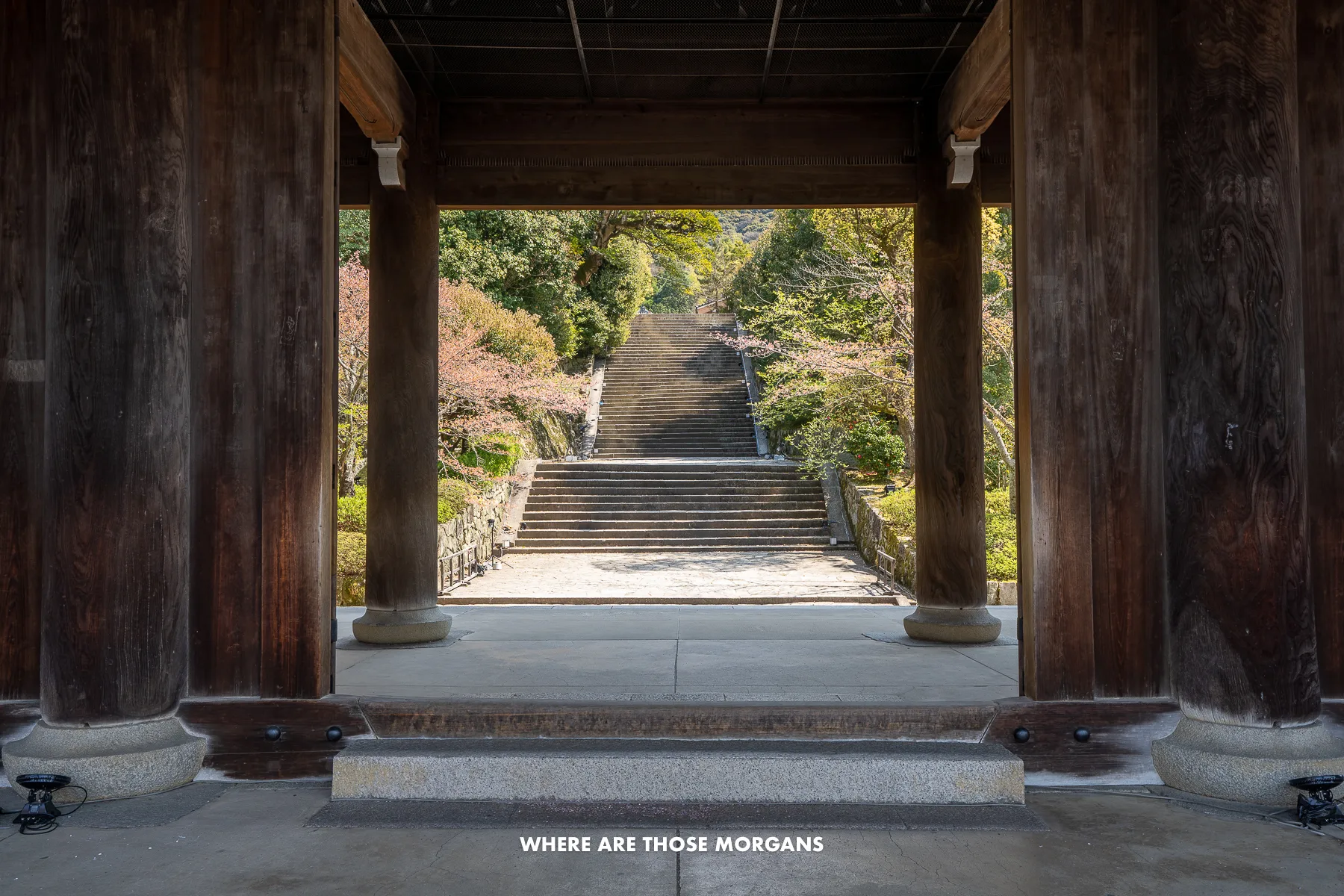
It’s a shame that poor tourist behavior has overshadowed the more important aspect of Gion being the beating heart of traditional Kyoto with narrow, lantern-lit streets and preserved wooden townhouses that look like an 18th century film set. Fortunately, even with the new restrictions, most of the district’s scenery was still accessible – including the main street of Hanamikoji, Shirakawa Canal, the massive Yasaka Shrine, and Chion-in Temple which we accessed by climbing what felt like a never-ending staircase.
The whole Gion area is quiet during the day, but it gets lively and especially photogenic after dusk once dim lanterns glow and contrast against the dark night sky. We tried to eat at Teppan Tavern Tenamonya but they were full (book this place in advance, it looks great). Next time we’d definitely book this Gion food tour with 13 dishes, or for something a bit more hands-on we’d book this chopsticks making workshop with name engravings. We bought our chopsticks in Takayama, but making them ourselves would be fun.
Seeing The Golden Pavilion At Kinkaku-ji
Kyoto’s Golden Pavilion at Kinkaku-ji is a truly unique and stunning photo op, but if we’re being honest we don’t think every first-timer would say it was worth the effort. On the plus side, we love the beautiful scene of a golden-colored temple reflecting in a pond that’s backed by trees and surrounded by landscaped gardens. It is a gorgeous complex, we’re not arguing against that – but its beauty is only half of the picture.
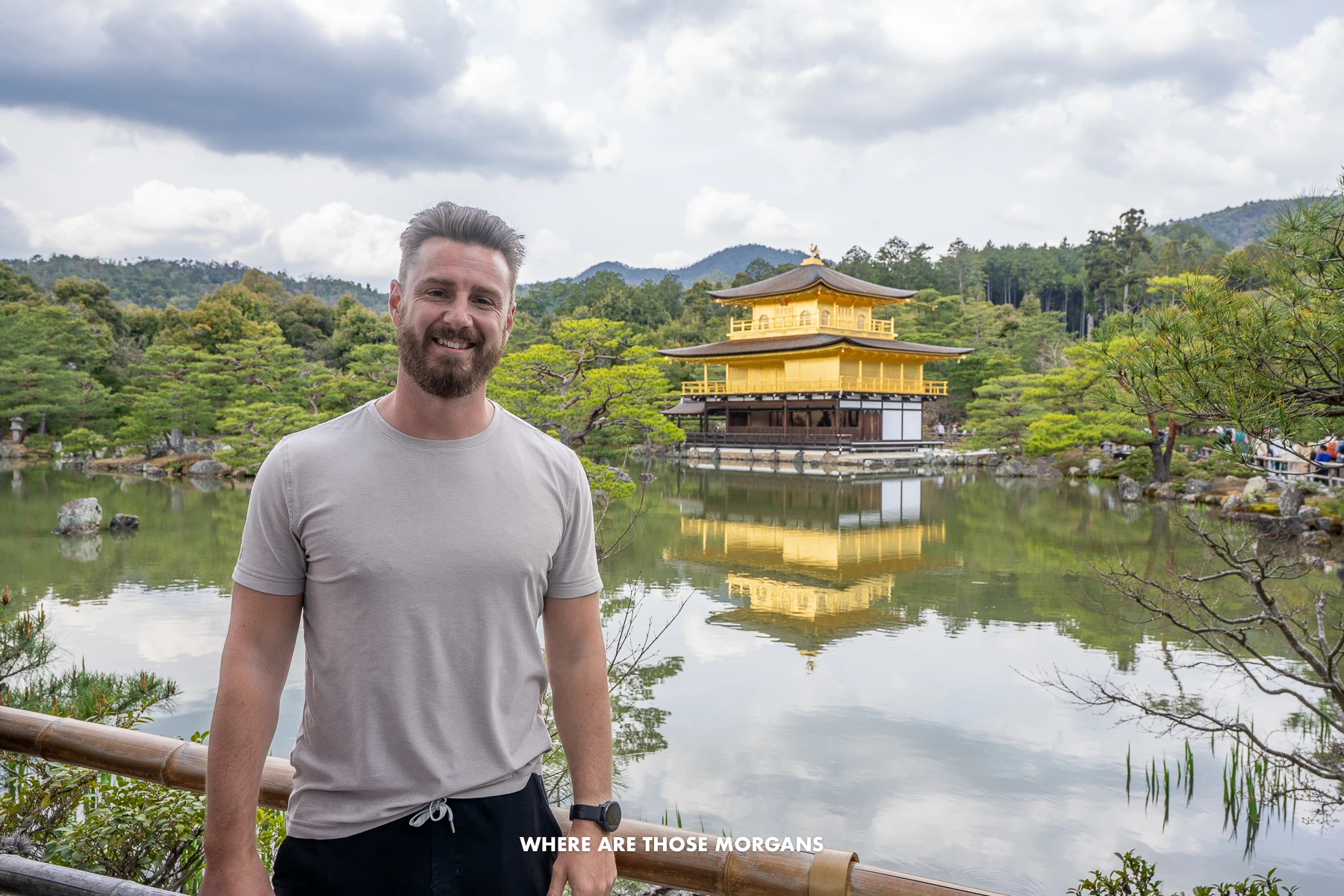
What most people don’t know is the only really iconic view is immediately after entering the one-way route, and if the pond isn’t still (which is common and happened on both our visits), then the photo isn’t actually that life-changing. It’s only open 9:00 AM to 5:00 PM so we couldn’t do sunrise or sunset photography, which we definitely would have done if possible. Plus, it’s located in the far northwest of Kyoto and has no direct train lines. Oh, and it gets tons of bus tours every day so it’s always jam-packed with tourists.
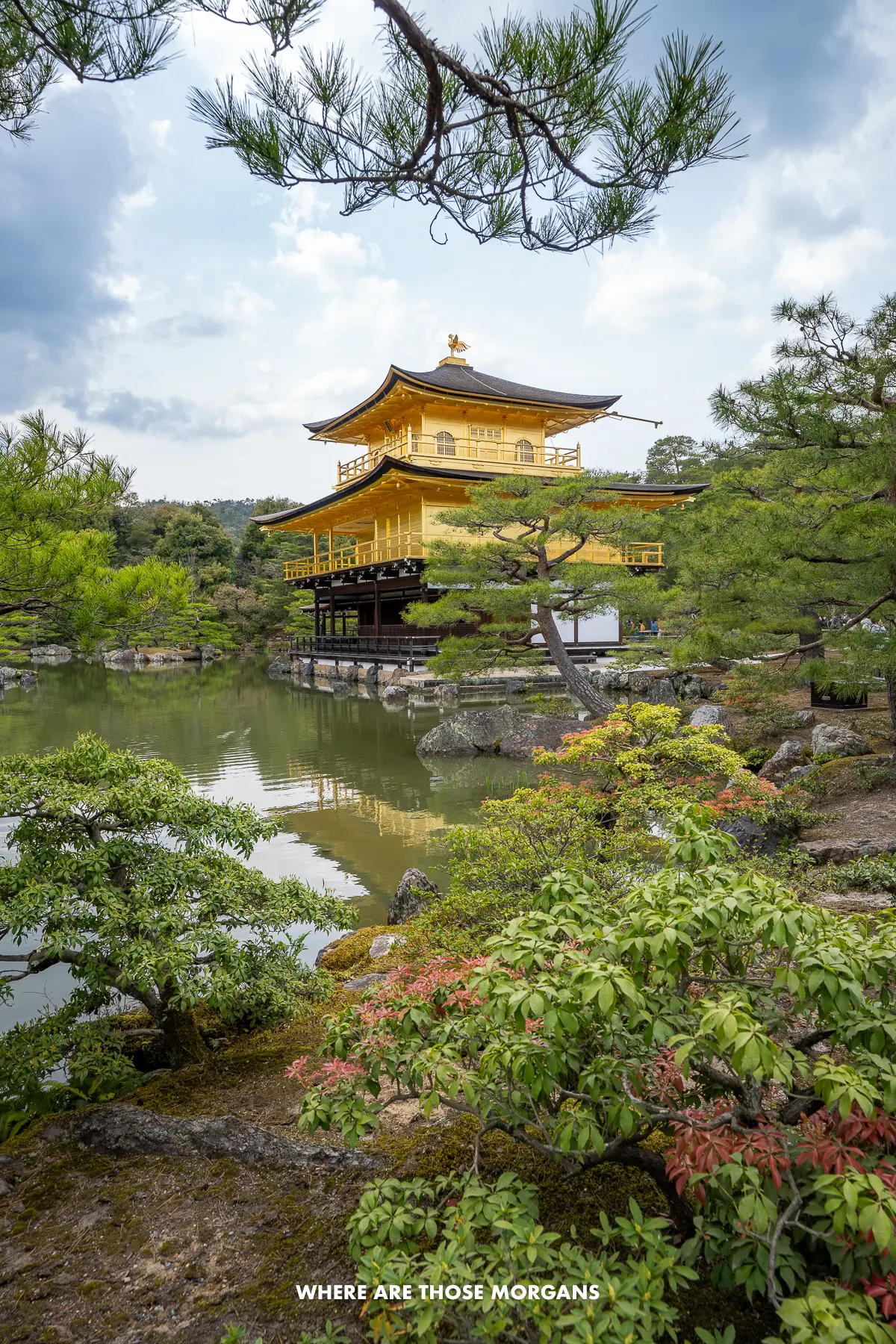
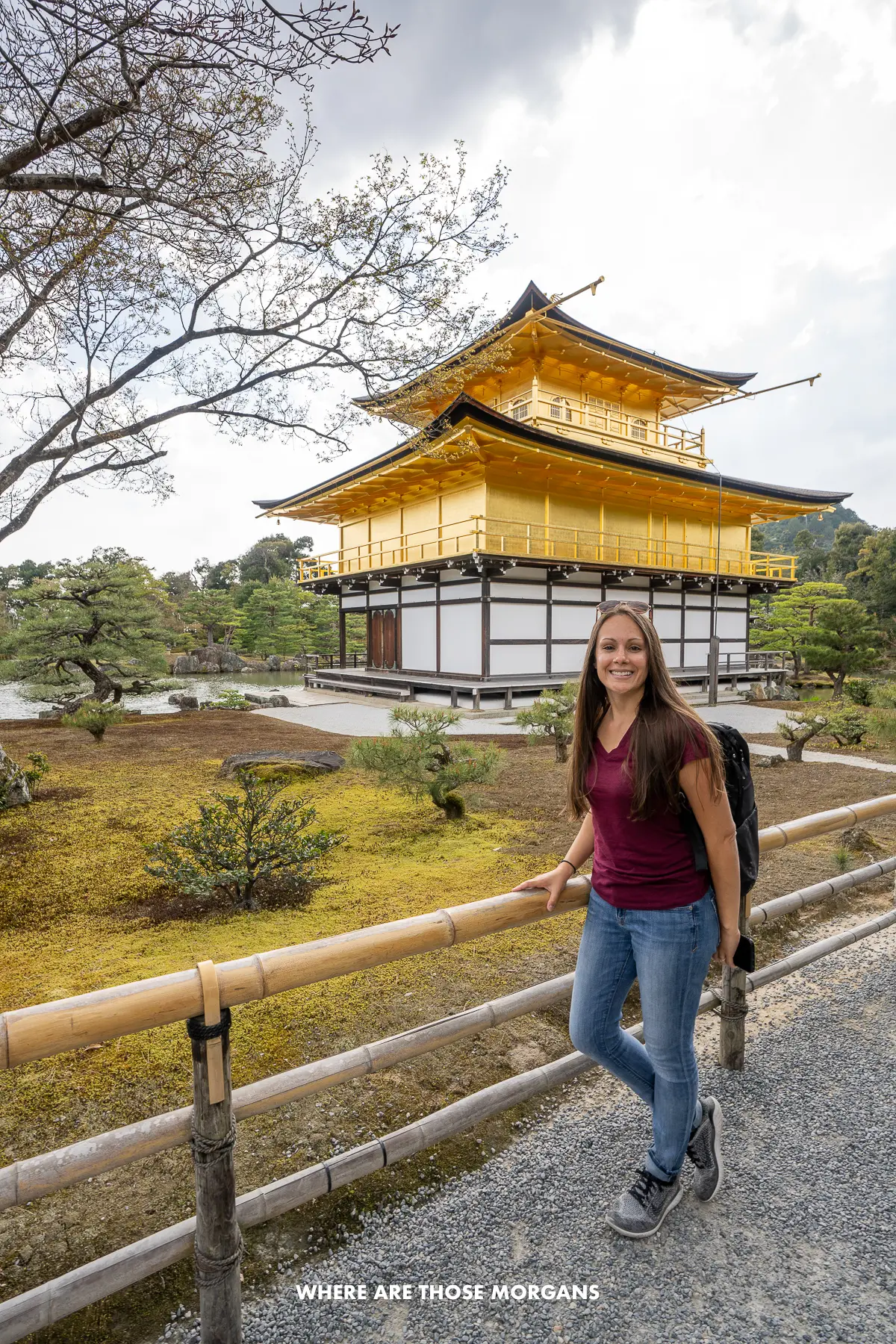
In 2018 we took a train from the bamboo forest in Arashiyama to Kitano Kakubai-Cho, and then hopped on a local bus up to Kinkaku-ji. But with a healthier budget in 2023, we took a taxi there from Nijo Castle (which we cover later) and another taxi back to where we stayed at Hotel Forza near Nishiki Market (which we also cover later). The point is, both times we lost a lot of time from our day just getting to and from Kinkaku-ji. Read our guide on where to stay in Kyoto to learn more about the popular neighborhoods.
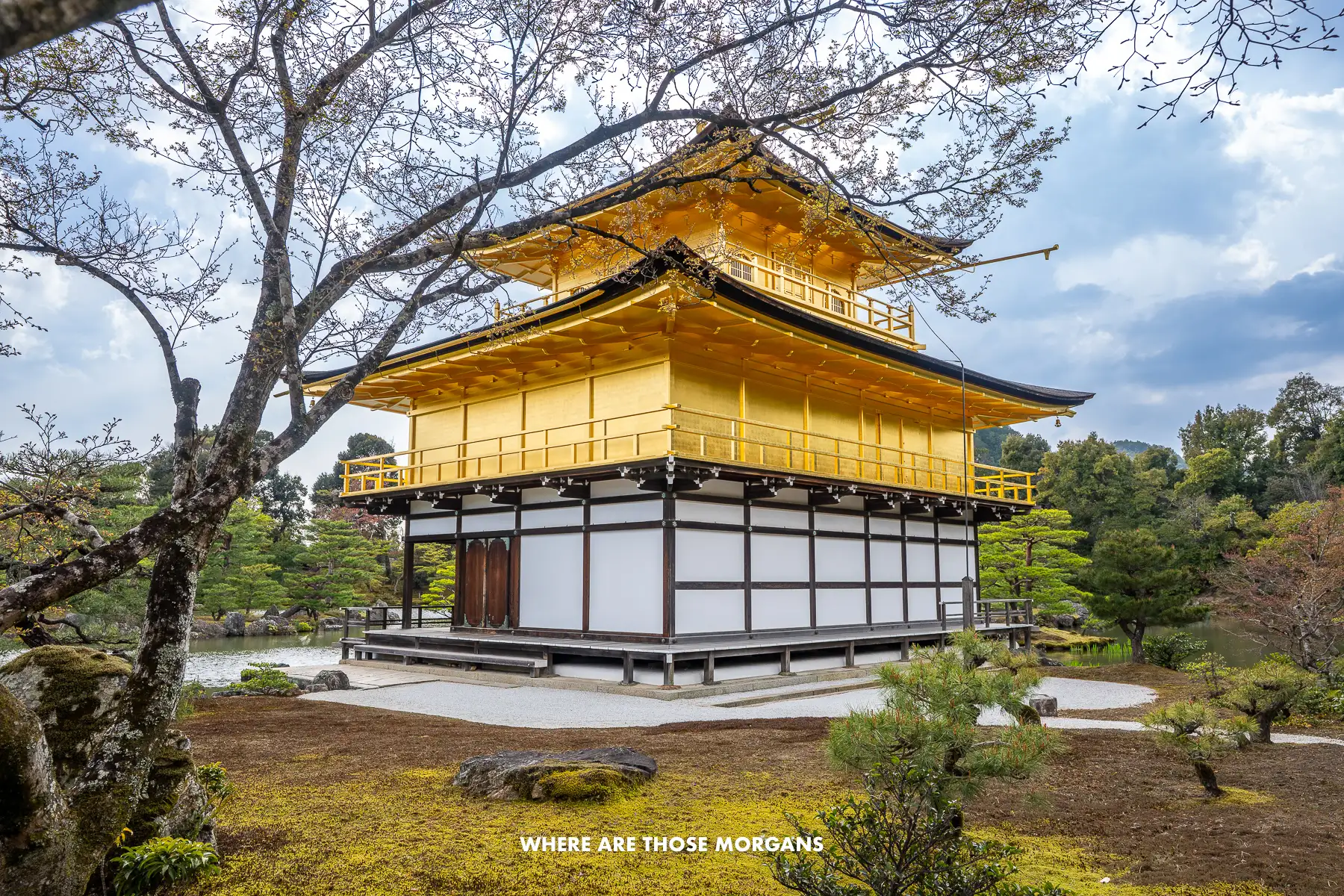
But the biggest mistake we made was not tying in other nearby areas to make it worth the trip out. We should have added visits to Ryoan-ji which has a famous zen rock garden, and Ninna-ji which has picturesque gardens and a 5-story pagoda. Or we should have taken this popular guided e-bike tour to other off the beaten path temples in the nearby area. In essence, what we’re saying is we only think Kinkaku-ji is worth it if it’s visited with other temples, but not as a standalone “one hit wonder”.
Kristen’s hidden gem tour tip: Want to try something unique in Kyoto? After visiting Kinkaku-ji, you could join this top rated tea ceremony with kimono nearby. It has a 10:30 AM start time which would work perfectly after visiting the Golden Pavilion at 9:00 AM sharp. We’ll do this one next time.
Walking The Philosopher’s Path From Nanzen-ji To Ginkaku-ji
Let’s switch focus from the loud and commercialized 15-minute wow-moment at the Golden Pavilion to a scenic walk leading from the actually-zen Nanzen-ji to the ultra-serene Ginkaku-ji (Silver Pavilion) on the northeast side of Kyoto. Walking the Philosopher’s Path from south to north was easily one of our favorite afternoons from the 2023 trip we took.
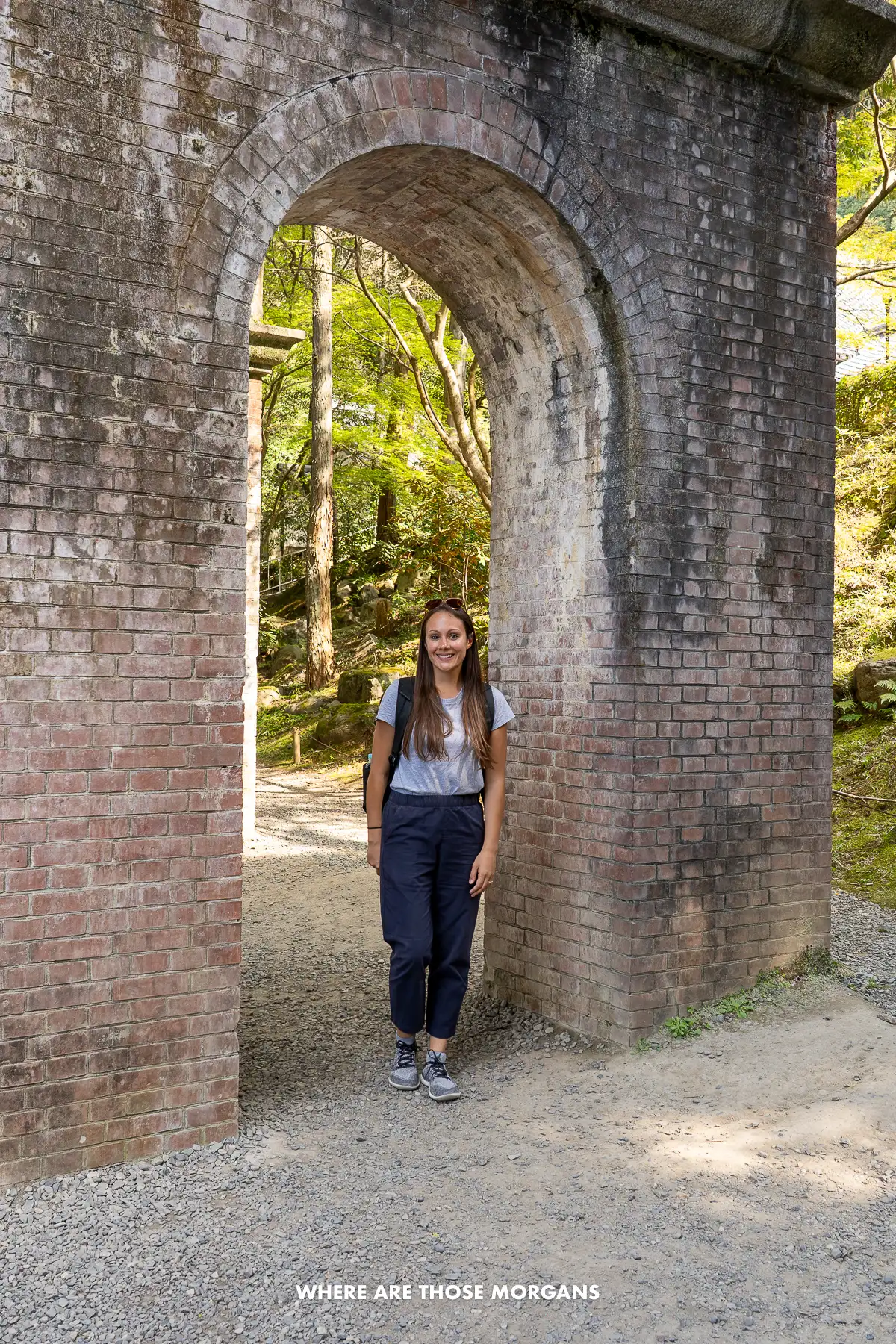
Starting at Nanzen-ji, we snapped fun photos from below the Suirokaku Aqueduct (which looked like it belonged in ancient Rome), before walking along the top of it for a few minutes. Then we really should have done The Hojo, the “secret garden” Tenjuan, and the Sanmon Gate within the Nanzen-ji complex but we were running out of daylight and needed to get on with our walk. Next time, we’d spend more time at Nanzen-ji.
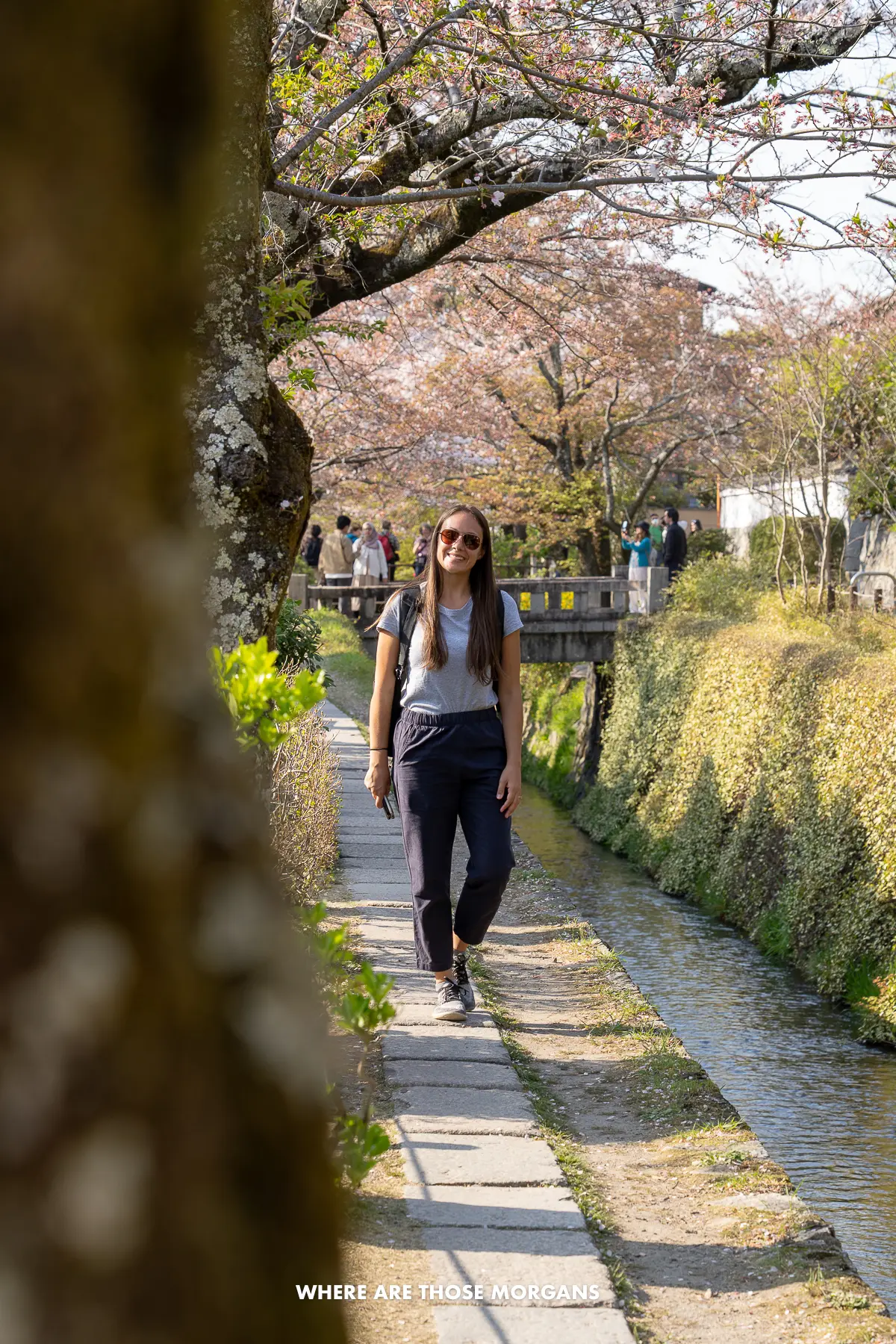
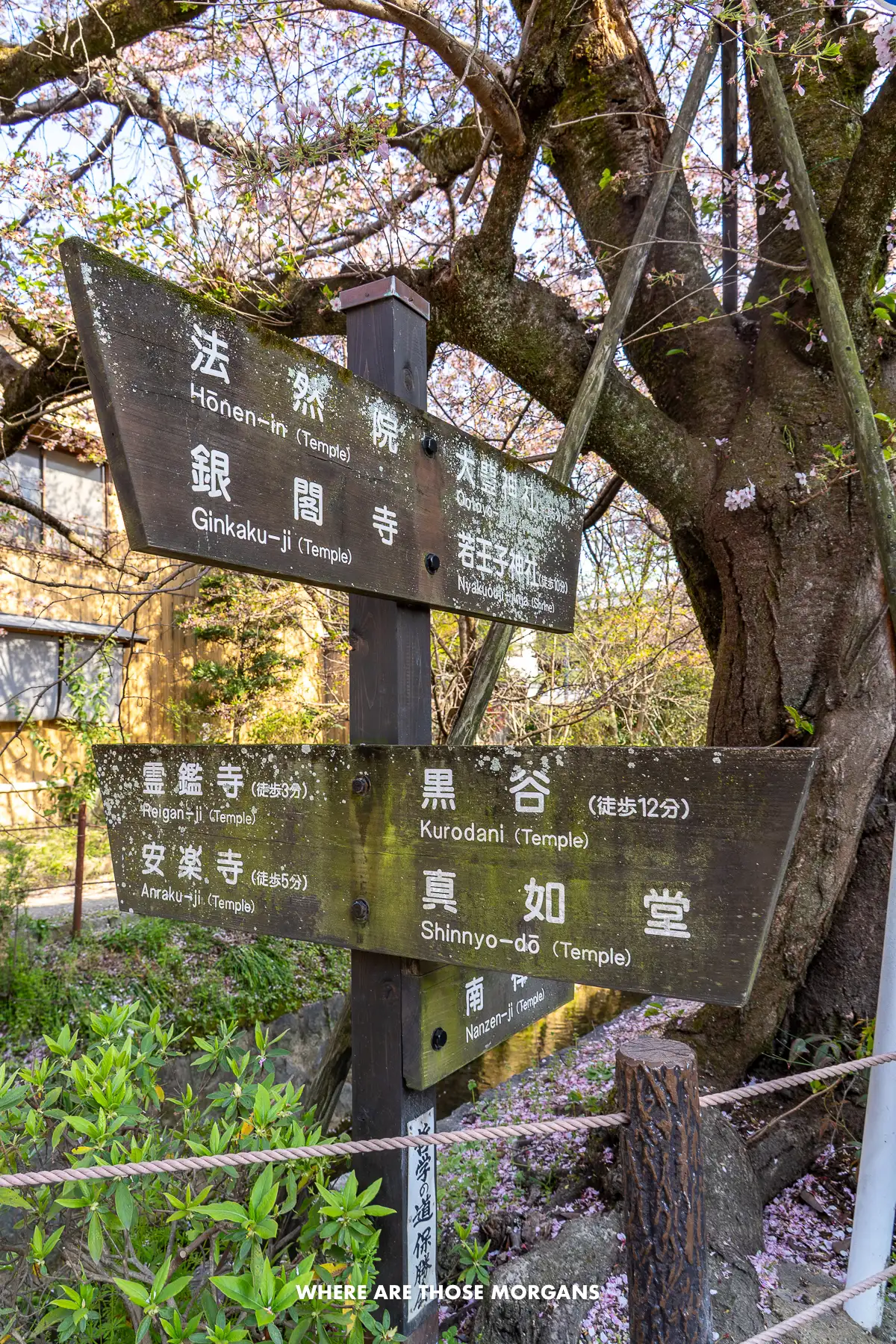
Next, we quickly popped inside Eikan-do Temple to see the bridge reflection (we’d prioritize Eikan-do if we visited during peak fall foliage colors) before entering the south side of the Philosopher’s Path. It was peak cherry blossom season and the canal was lined with vibrant sakura trees from bottom to top, which added brilliant color to an already tranquil walk. The best part? It wasn’t as busy as we’d expected.
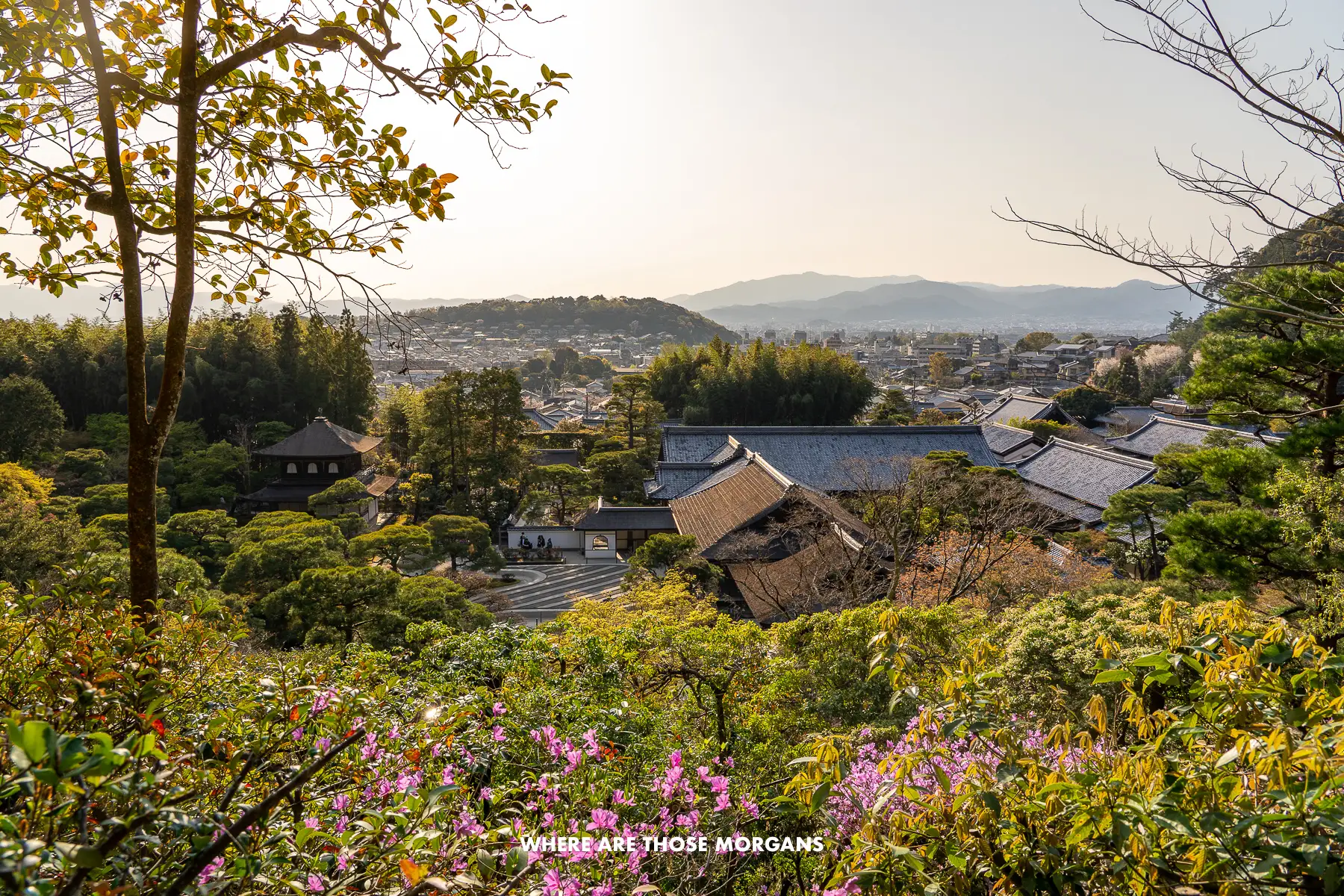
We followed the narrow canal footpath for just under a mile (1.5 km), before walking up a gradually inclining path leading to Ginkaku-ji. We paid 500 yen each to get in, saw the moss garden and zen sand garden with a cone known as the “moon viewing platform” (sand shaped like Mt. Fuji), walked around a looping path, and enjoyed excellent views. Overall, we preferred the Silver Pavilion to the Golden Pavilion.
Visiting More Temples In Central & South Kyoto
At the risk of giving you temple burnout before even arriving to Kyoto, we’re going to condense other temples we thought were worth it with temples we missed but should have done into this one section. Otherwise, it just becomes too overwhelming.
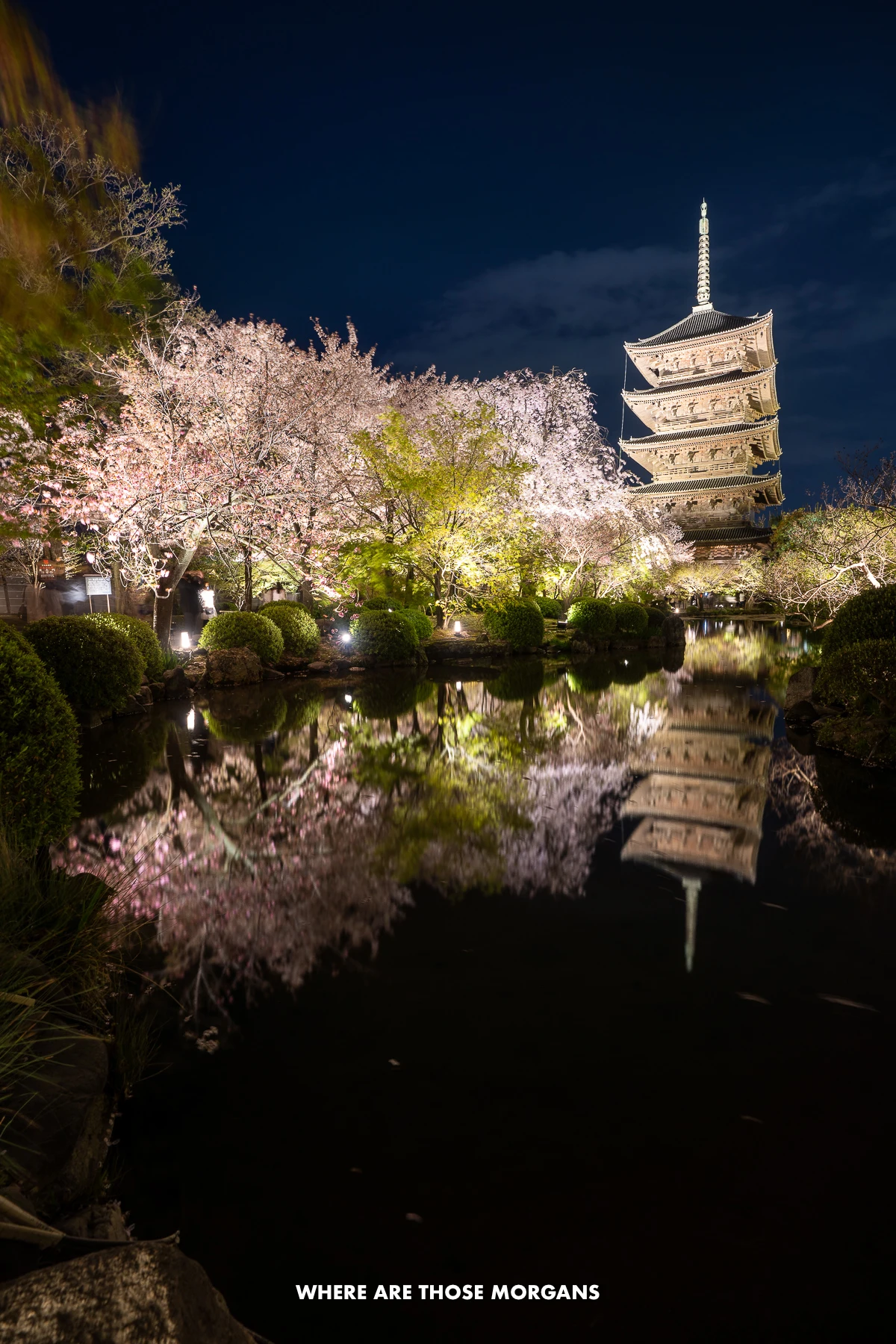
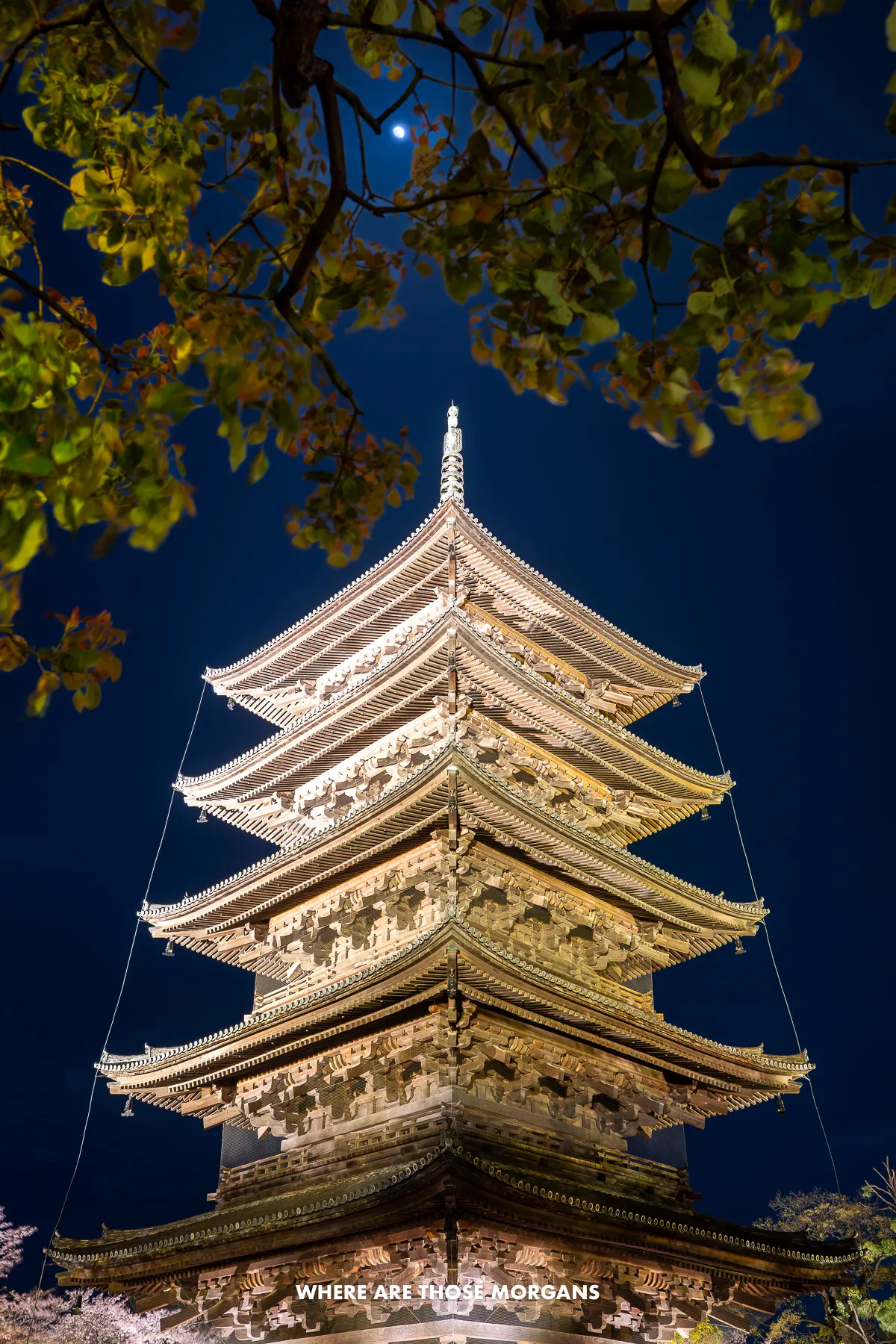
To-ji Temple: We visited To-ji Temple during its special nighttime cherry blossom illumination and loved it. We saw a giant weeping cherry tree backed by a five-story pagoda (Japan’s tallest wooden tower) and 21 statues in the lecture hall. It wasn’t too busy during the event, but we expect it would be even quieter during the day and outside of spring. The night event cost us 600 yen each, but it’s 500 yen usually.
Sanjusangendo Temple: We missed this one both times because it’s located awkwardly between Higashiyama and Kyoto JR Station, but it looks fascinating with 1,001 life-sized golden-leafed statues of Kannon, the Goddess of Mercy. It’s on our list for next time.
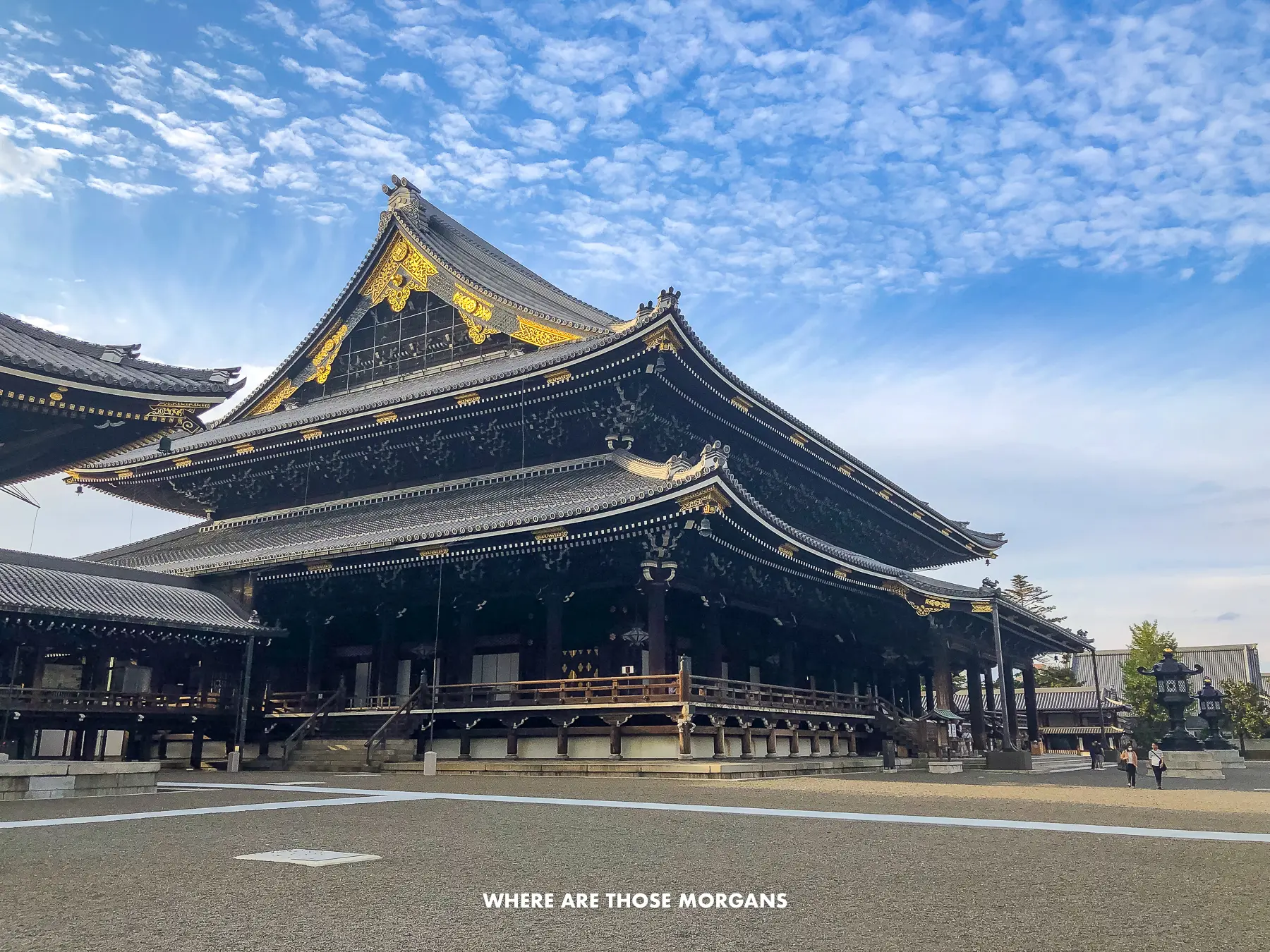
Higashi Hongan-ji Temple: We wanted to see one of the largest wooden structures in the world, so we took a side walk to make sure we visited the Founder’s Hall at Higashi Hongan-ji not far from Kyoto JR Station. It was free to visit, and we saw something unique – a “hair rope” (like a thick cable) made from female devotee’s hair that was used to haul the massive timber beams during construction.
Tofuku-ji Temple: Just one stop north from Fushimi-Inari, most people (including us) either skip or don’t know about Tofuku-ji Temple. It’s a much quieter escape and it’s best visited for lush greens in the summer or radiant fall foliage colors in the autumn.
Exploring Heian Shrine
Okay, we’ve talked about a lot of Buddhist temples, so let’s switch religion and talk about Kyoto’s main Shinto shrine called Heian-jingu. For Kyoto’s standards, the shrine is actually pretty new – it was built in 1895 and designed to be a replica of the original Imperial Palace from 794. We decided to walk up from the Gion area before heading over to Nanzen-ji and the Philosopher’s Path, and we’re glad we did.
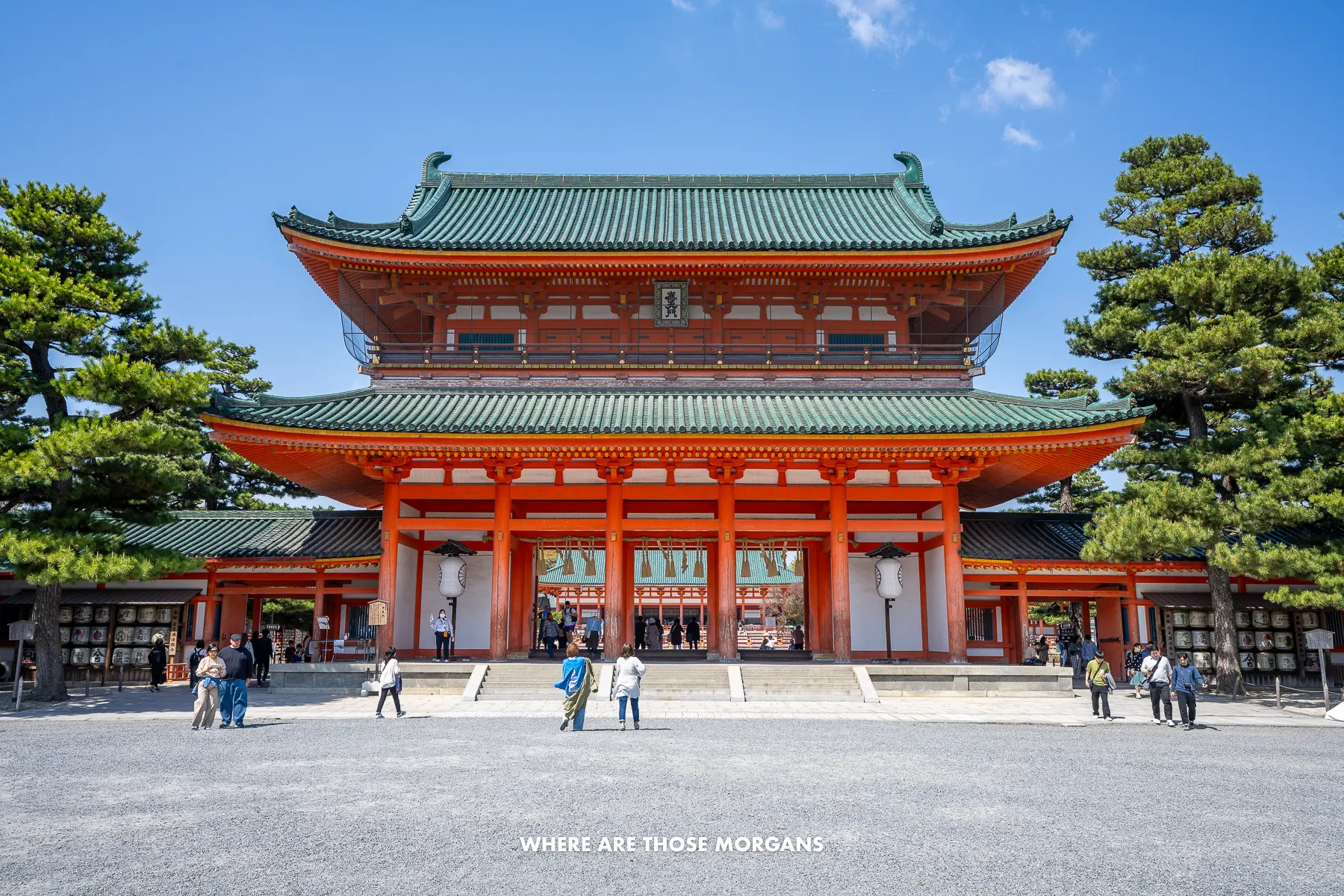
We walked underneath a giant torii, skipped The National Museum of Modern Art to our left side and Kyoto City Museum of Art to our right side, continued through Okazaki Park, and finally arrived at the colorful entrance to Heian Shrine. It was free to enter the grounds, and we didn’t expect the white-gravel courtyard to be so vast.
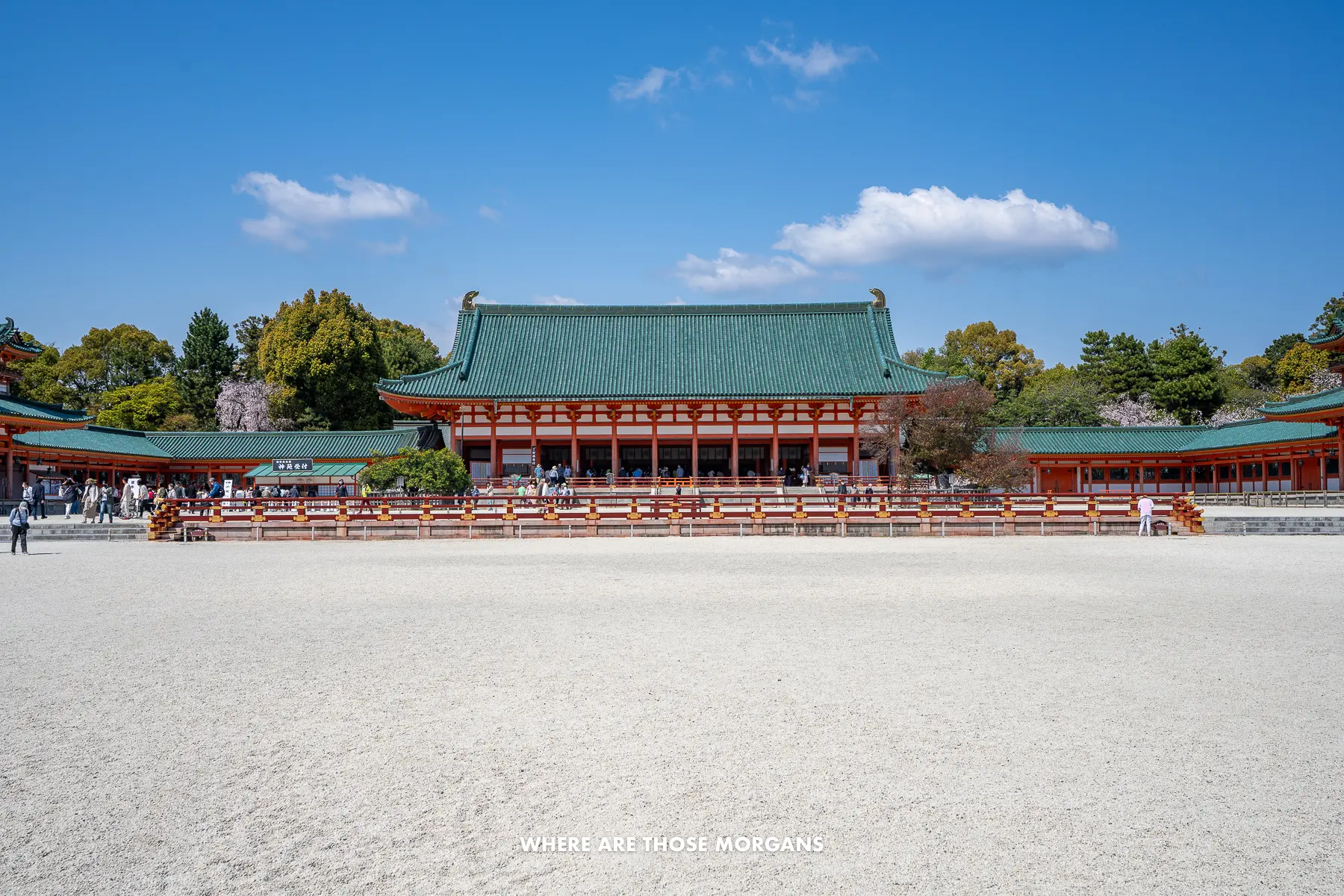
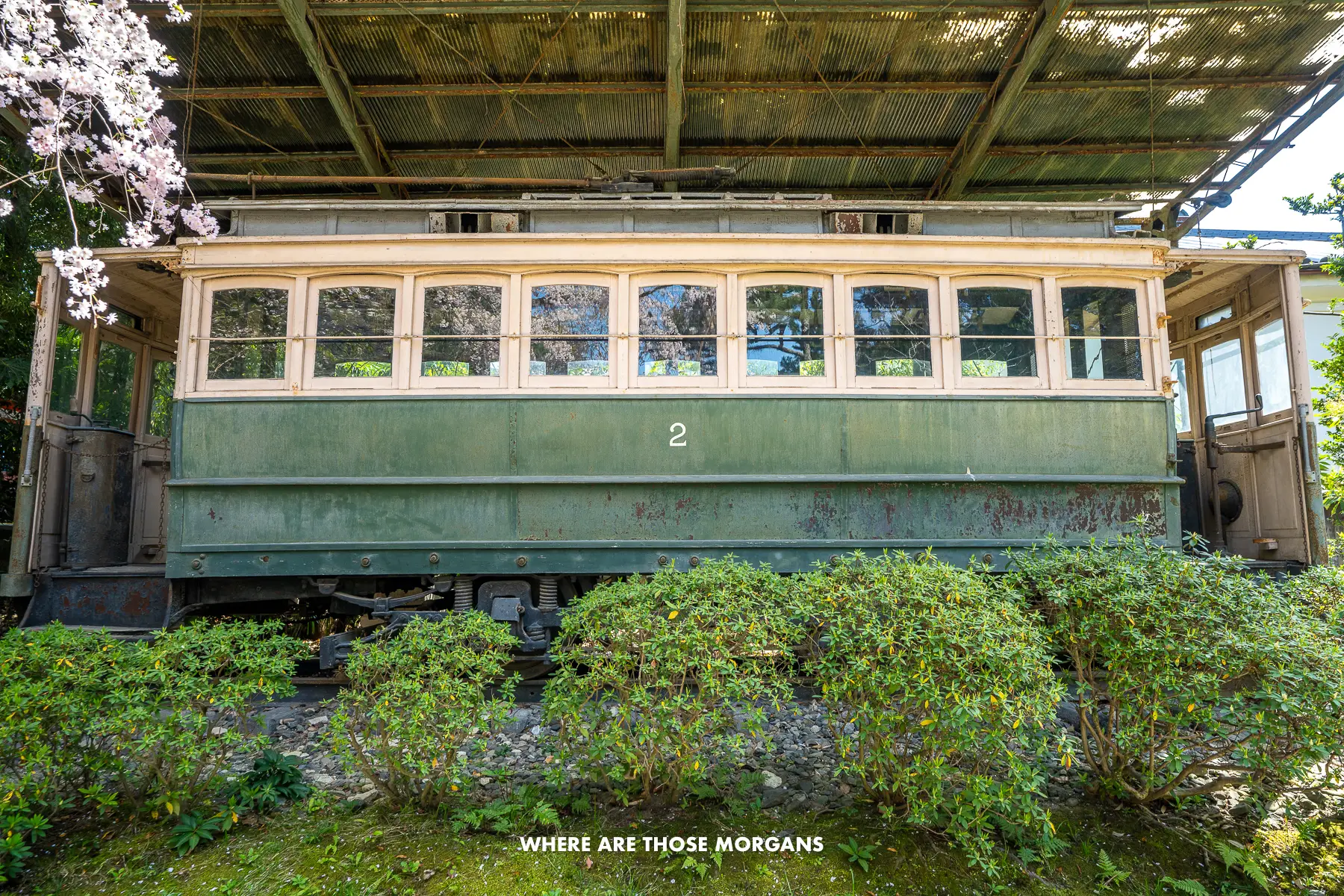
But we weren’t there for the courtyard. It was cherry blossom season, so we made our way to the far side and paid 600 yen to enter Shin-en Garden. The Meiji-era garden turned out to be one of the best hidden gem things we paid for on our 2023 trip to Kyoto. There were very few people inside and we took heaps of amazing photos, including a wooden bridge called Taiheikaku that looked like it was floating and an old Kyoto city electric streetcar (the streetcar began operation the same year Heian Shrine was opened).
Now, if you’re not planning to do the gardens or any of the nearby art museums, we don’t actually think the shrine is essential for your first time in Kyoto. That said, if you’re already going to walk the Philosopher’s Path, it makes sense to start at the shrine before walking over to Nanzen-ji like we did. It was a very efficient way for us to squeeze more attractions into our afternoon.
Eating & Drinking In Nishiki Market
We’ll admit, Kyoto isn’t the place we think of first when we look back on food in Japan – that honor goes to Osaka and Tokyo, with their cheap, hole-in-the-wall spots and massive range of eateries. Kyoto’s foodie scene always felt more refined to us, and we often struggled to get in places for dinner around popular areas like Gion without reservations or knowing someone.
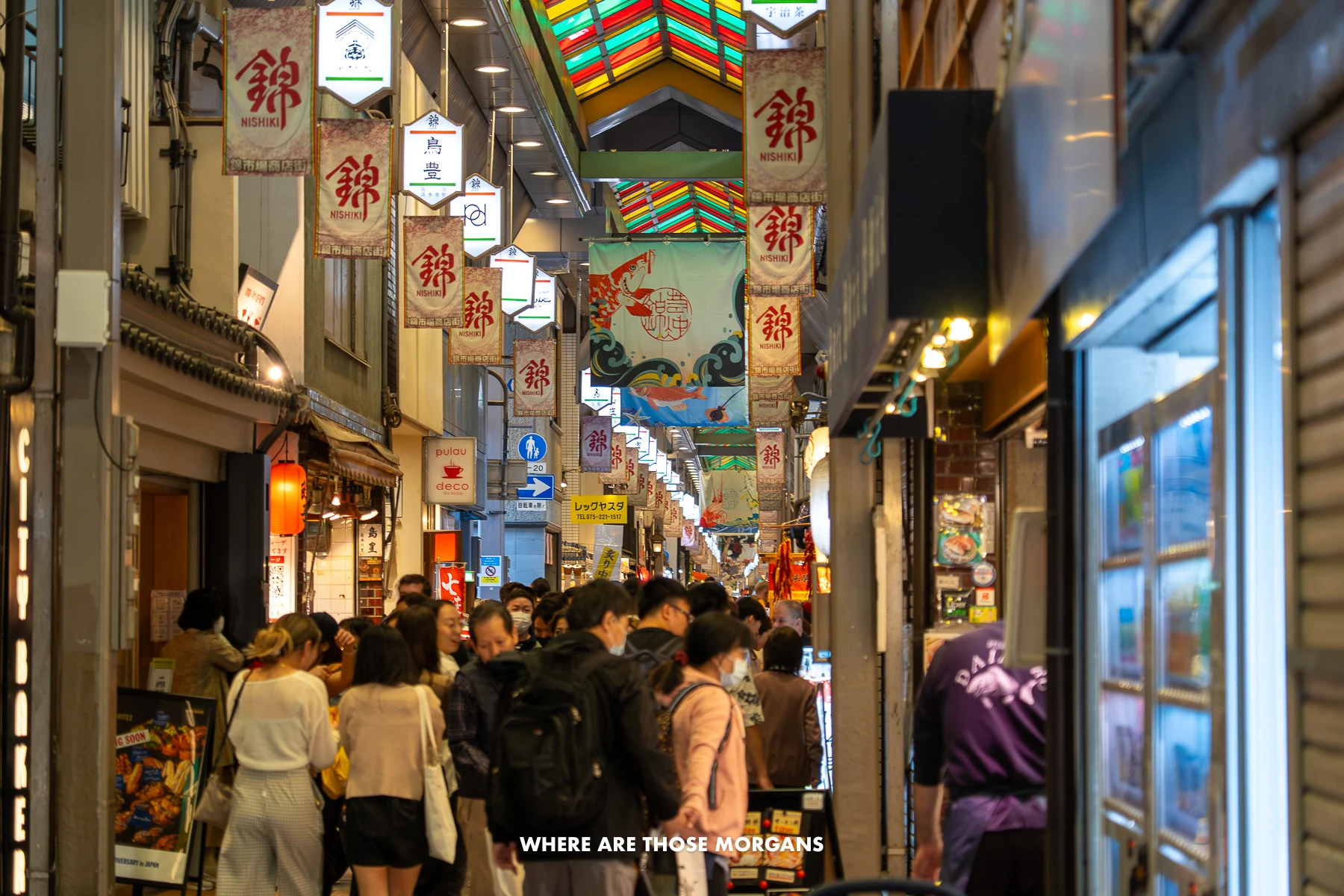
That said, we absolutely loved walking up and down Nishiki Market, which felt a bit more down to earth. It was high-energy, but low-key. We ate Kobe beef skewers (so expensive but delicious), sashimi skewers, pickles, soy milk donuts, and a few other things we don’t know the names of. Then we’d wash it all down with a flight of sake each. We did not try the famous “tako tamago” because we couldn’t put the tiny octopus with a quail egg stuffed inside its head into our mouths.
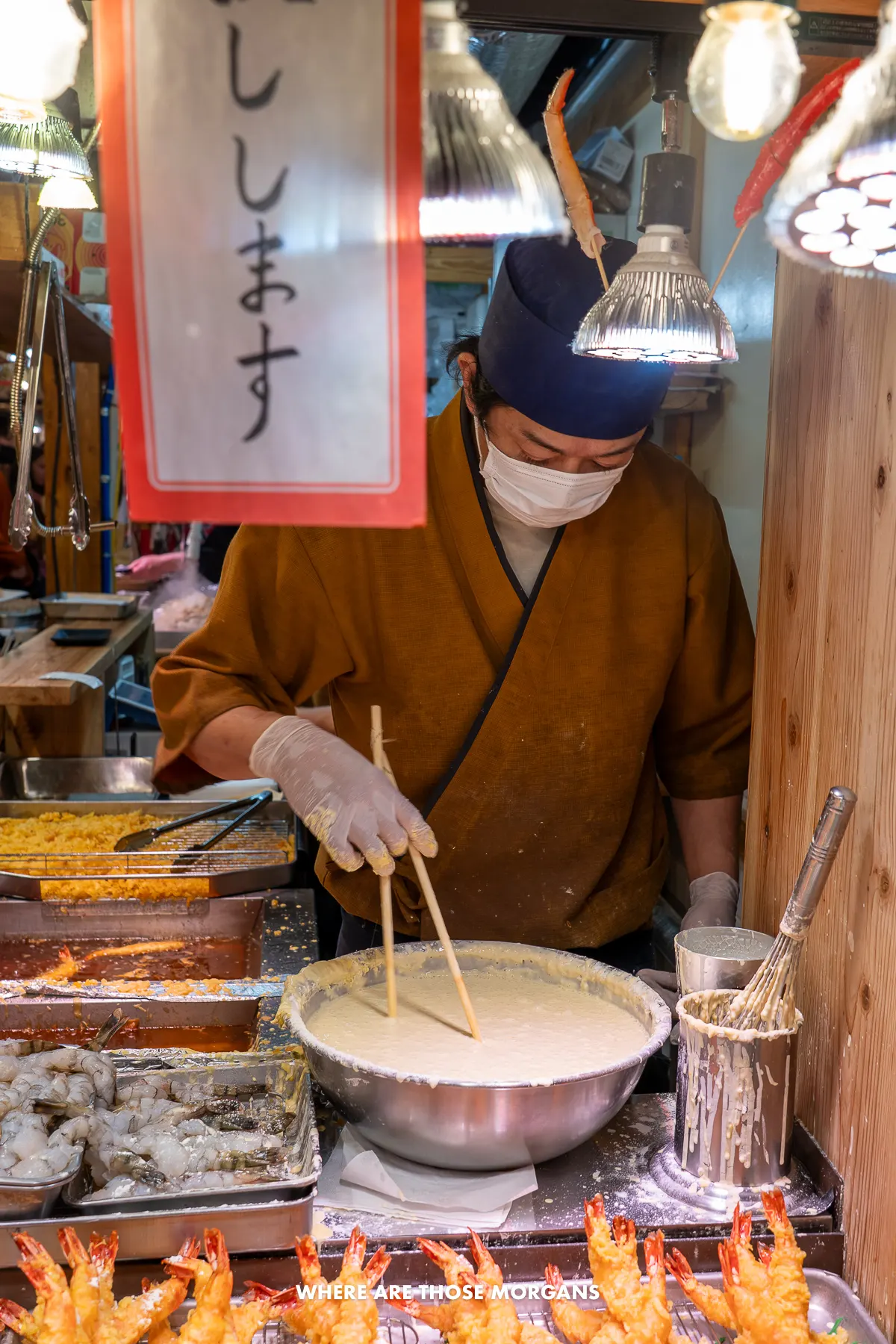
Here’s the way we see it: If you’re a massive foodie, have a good look around a map of Kyoto and try to reserve restaurants in advance. Or if you’re a traveler like us who enjoys food but it isn’t the main focus of your trip, we think you’ll like walking through Nishiki Market, sampling some of the local delights and soaking up the bustling atmosphere. It gets tight along the narrow walkway, so keep a firm grip on your food and sake after paying for them.
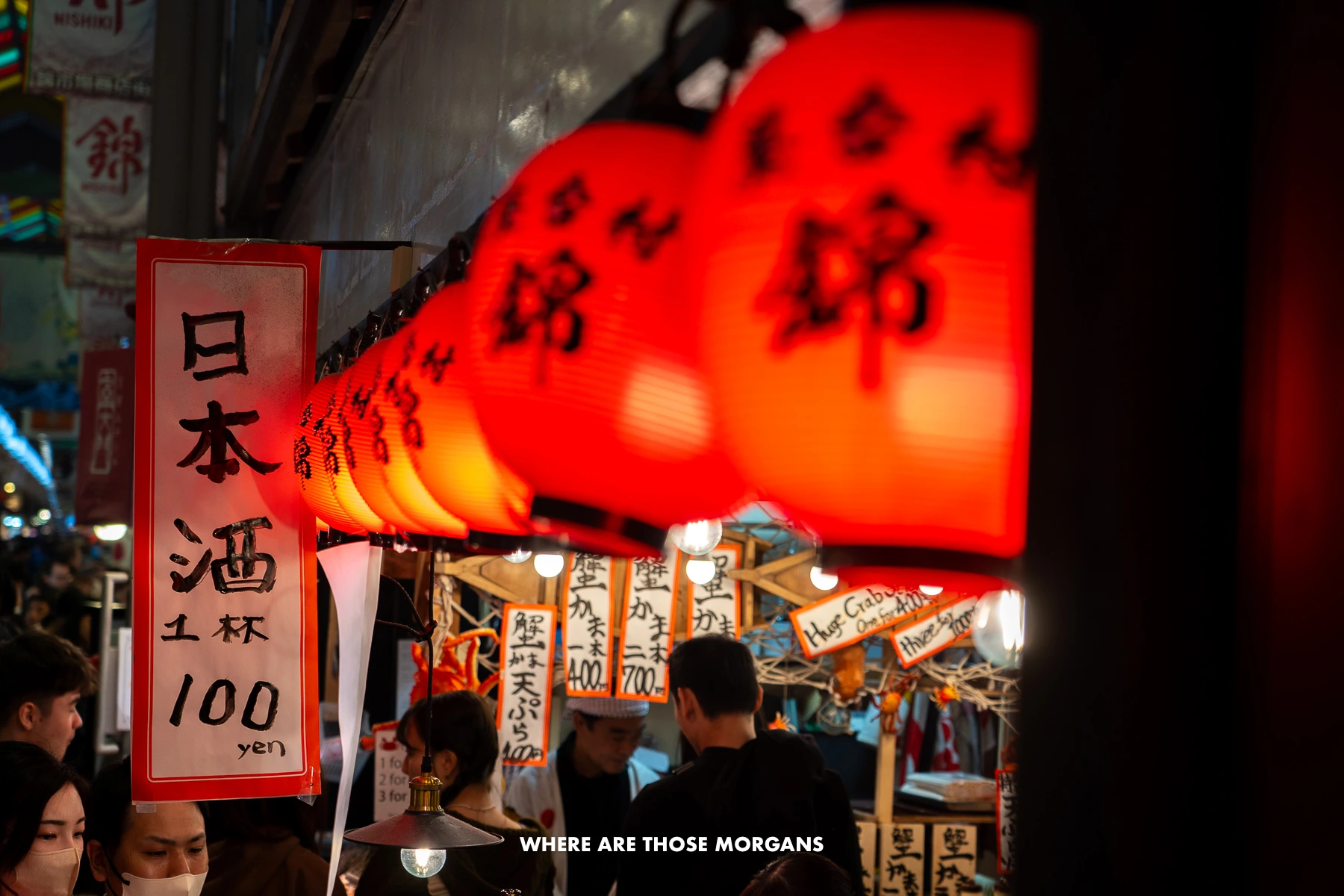
Now, the market closes at 5:00 PM every day – so it’s more of a place to go for brunch, lunch or afternoon snacks before dinner. If you like the sound of tasting local food but have no idea where to start, take a look at this popular guided brunch tour of Nishiki Market. Next time we visit Kyoto we actually want to try immersing ourselves more into food and drinks, so we’ll consider booking either this Ramen cooking class or this Sushi making class along with this Sake brewery tour. They all look fantastic.
Taking A Free Tour Of Kyoto Imperial Palace
During our 2023 Japan trip, we used up one of our mornings in Tokyo exploring the modern capital city’s Imperial Palace – and honestly, it was a massive disappointment. We regretted losing that time. So when we arrived into the ancient capital, we were skeptical about visiting Kyoto Imperial Palace, but we’re glad we stuck with it because this one turned out to be so much better.
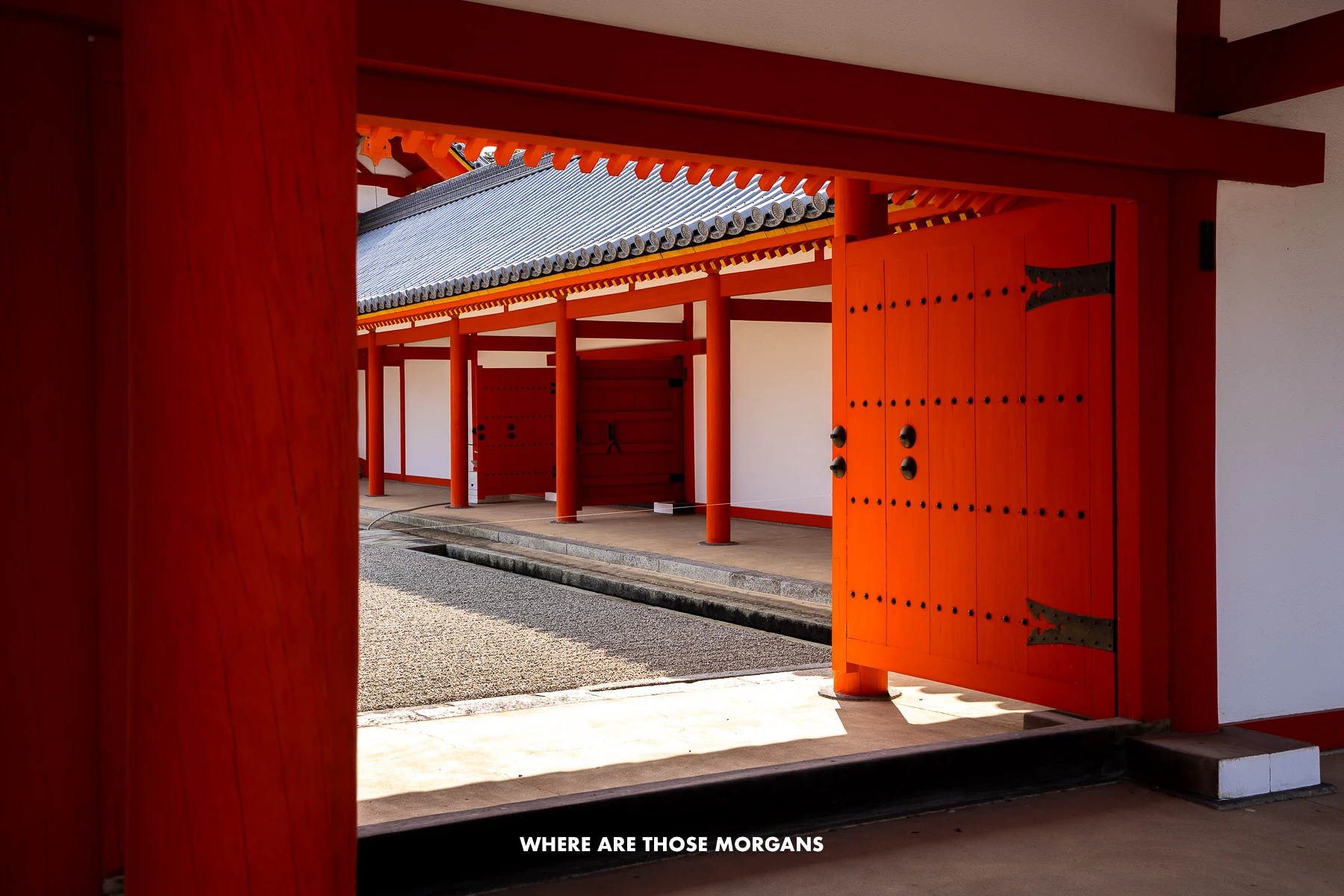
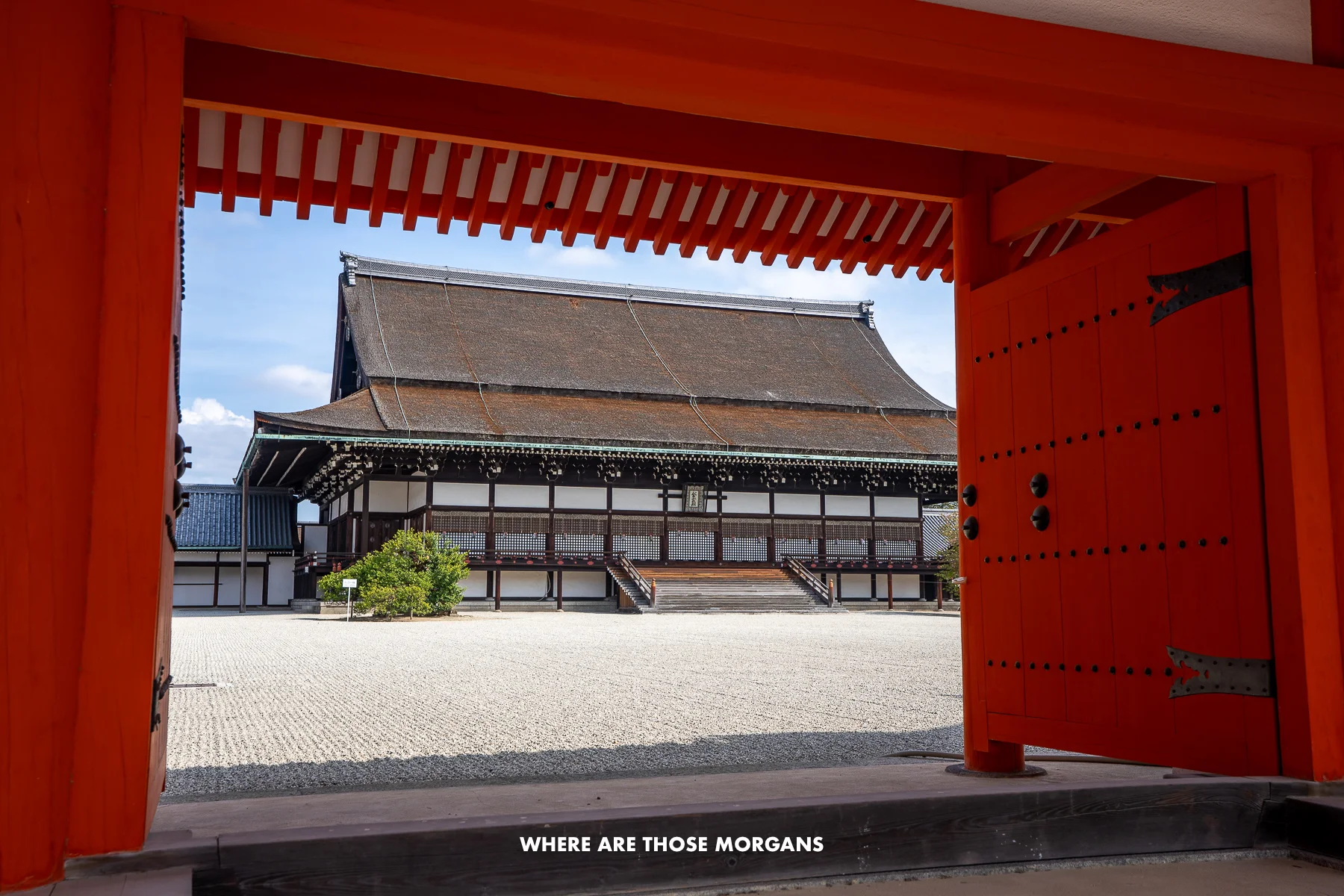
We took the Karasuma Line train two stops from Shijo to Marutamachi and walked through the lovely Kyoto Gyoen National Garden, which had some of the most attractive cherry blossoms we saw and barely any of the crowds. Next, we walked north to the small but intimate Kyoto Imperial Palace. It was free to enter, there were barely any people inside, and we were able to get close to the main ceremonial hall. Mark took some of our favorite photos from Japan right there in the peaceful grounds.
Afterwards, we walked a few minutes east through the park to the Sento Imperial Palace entrance. We’d already reserved a time slot in advance for the free but compulsory guided tour of the beautiful gardens, and it was fantastic. Overall, we thought doing both sites made it well worth the effort and time. The palace was like the Emperor’s workplace and Sento was like the Emperor’s retirement home.
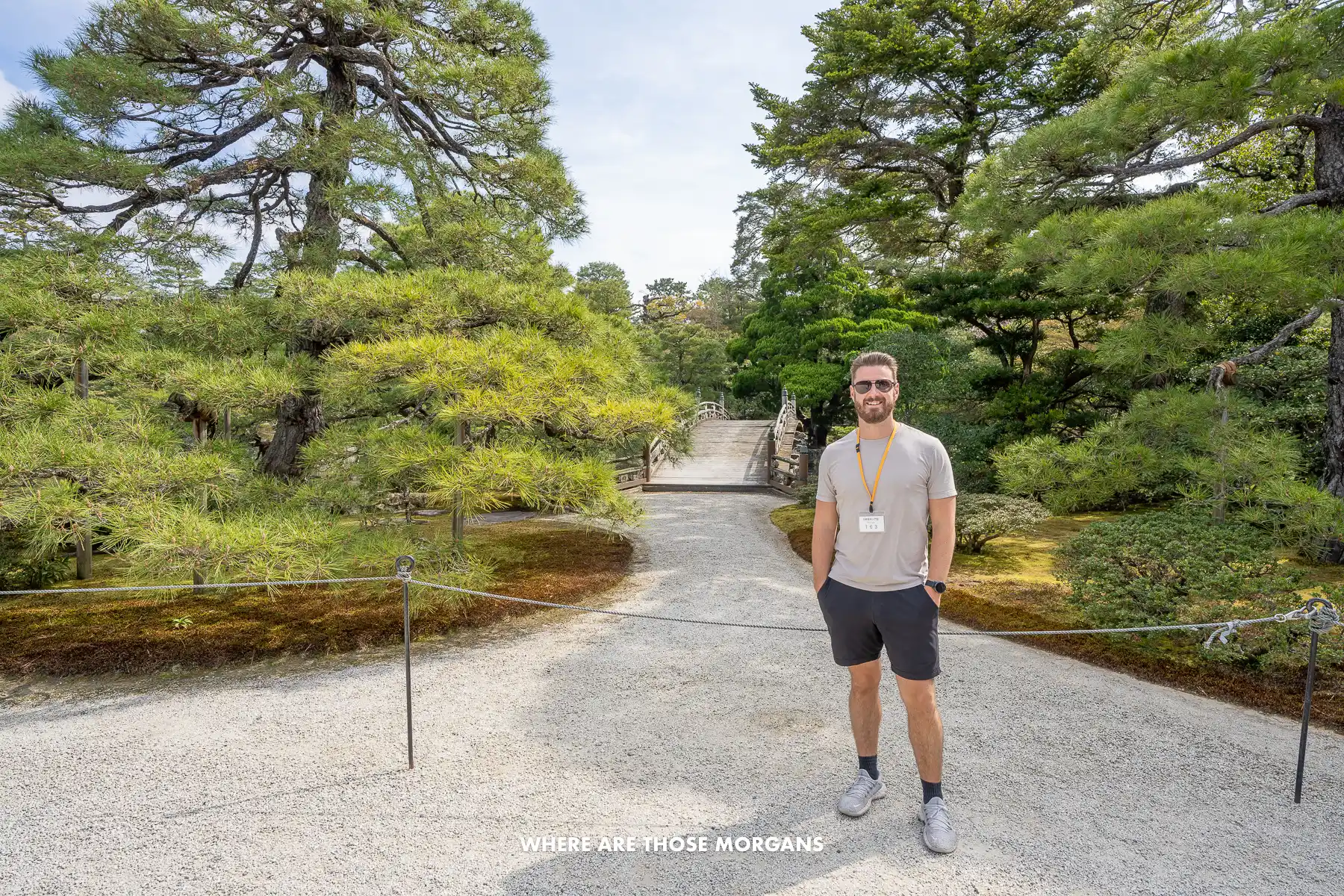
We learned a few important things you should know: Booking in advance for Sento saved us having to gamble on “walk-in” availability which we knew from research was very limited, we had to show our passports and go through security to enter, Sento was adults only (no under 18’s were allowed in), and the main palace was open to all but Sento was guided tour only.
Walking Around Nijo Castle
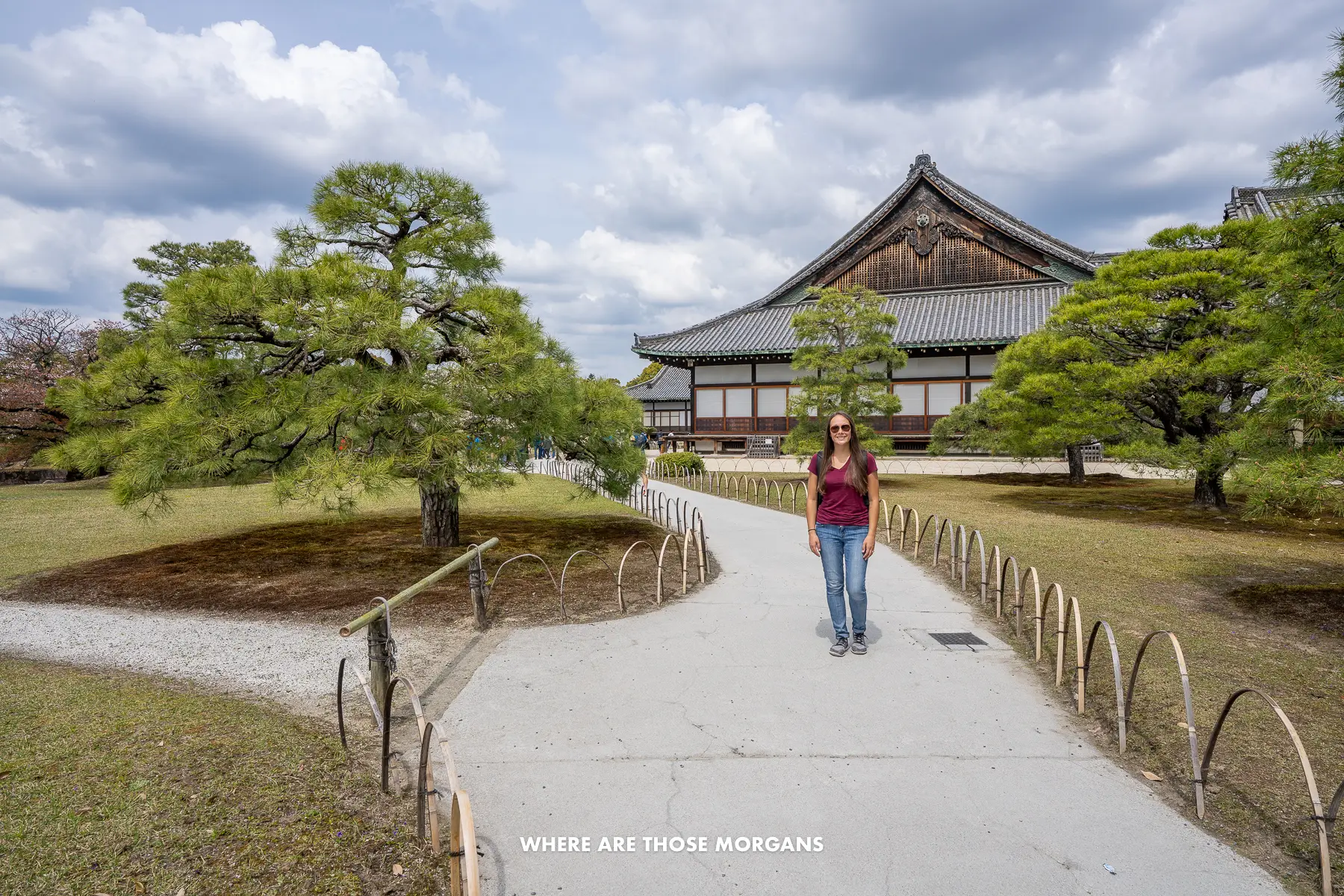
The Imperial Palace felt minimalist and spiritual, whereas we found Nijo Castle to be flashy and intimidating. This was the home of the Tokugawa Shogunate, and it’s the site where the last Shogun officially handed power back to the Emperor in 1867. We liked doing one straight after the other because it gave us instant perspective on the two seats of power that once divided Japan.
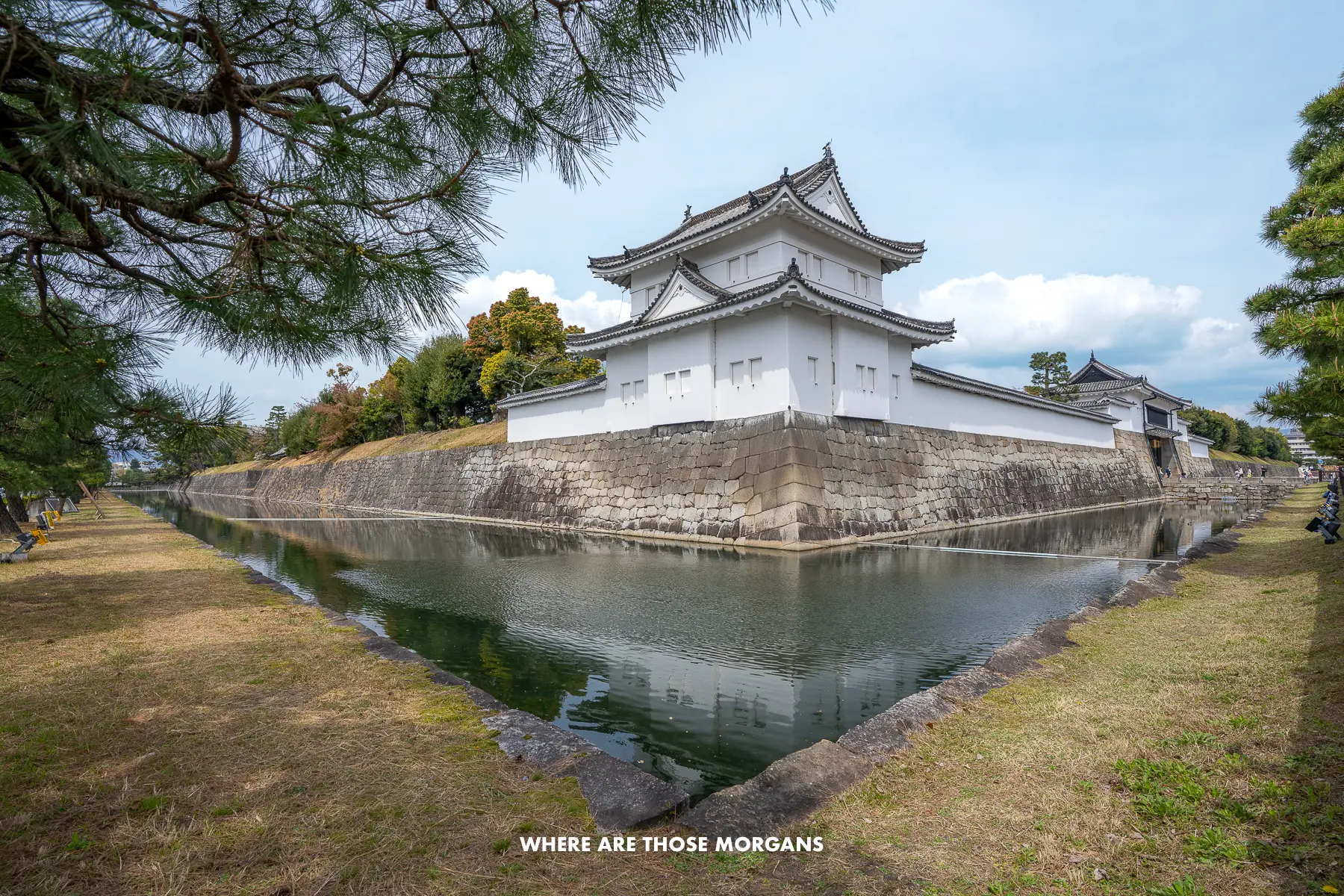
We paid 1,300 yen each to enter the castle and Ninomaru-goten Palace, and we thought it was definitely worth paying for. Sure, it wasn’t as “wow-factor” as Osaka Castle, but we loved learning about the nightingale floors which chirped when we walked on them – this was to prevent assassins sneaking up on the Shogun – and the well-preserved interior rooms. The gold-leafed Kara-mon gate was also stunning.
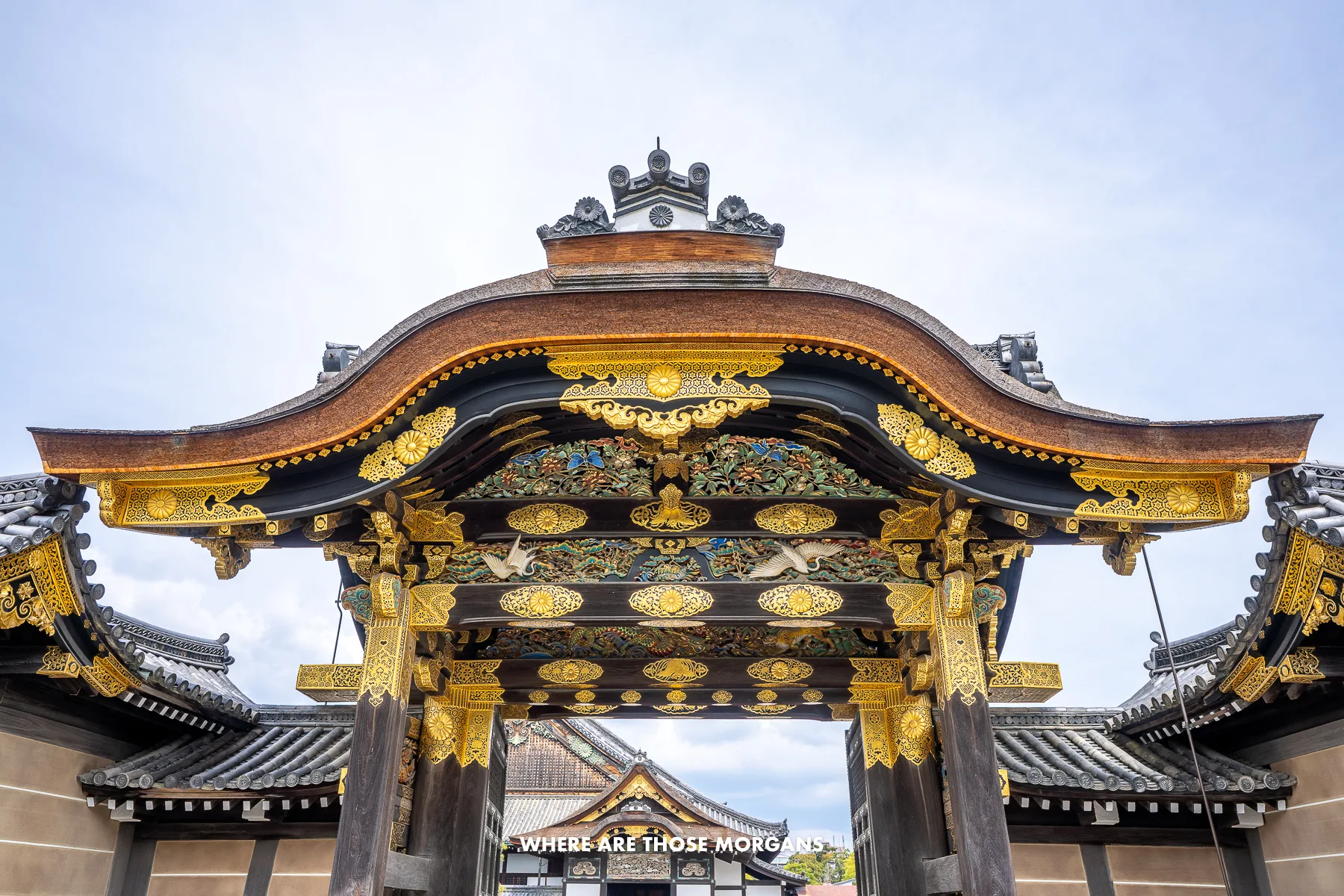
Unfortunately for us, Honmaru-goten Palace was closed during our visit (it was closed from 2007 – 2024). But good news for you, it’s reopen. For an extra 1,000 yen each, we’d absolutely pay for it next time. Tickets for Honmaru Palace must be booked in advance, you can’t buy them in person on the day.
Something else we would 100% do next time is continue the samurai theme by booking either this samurai experience just 15 minutes walk from Nijo Castle, or this samurai training not far from Nishiki Market and Gion. Both look awesome – you get to actually handle a katana, learn about samurai in a dojo, and watch a master’s performance.
Day Tripping To Nara
We think 3 days in Kyoto is the perfect amount of time to see and do everything without feeling too rushed. If we had 4 or more days, we’d definitely consider taking a day trip. Now, we’d already plan to spend 2 days in Osaka because it’s awesome (especially for foodies) and deserves at least one night. That leaves a day trip to Nara as the best and most popular option from Kyoto.
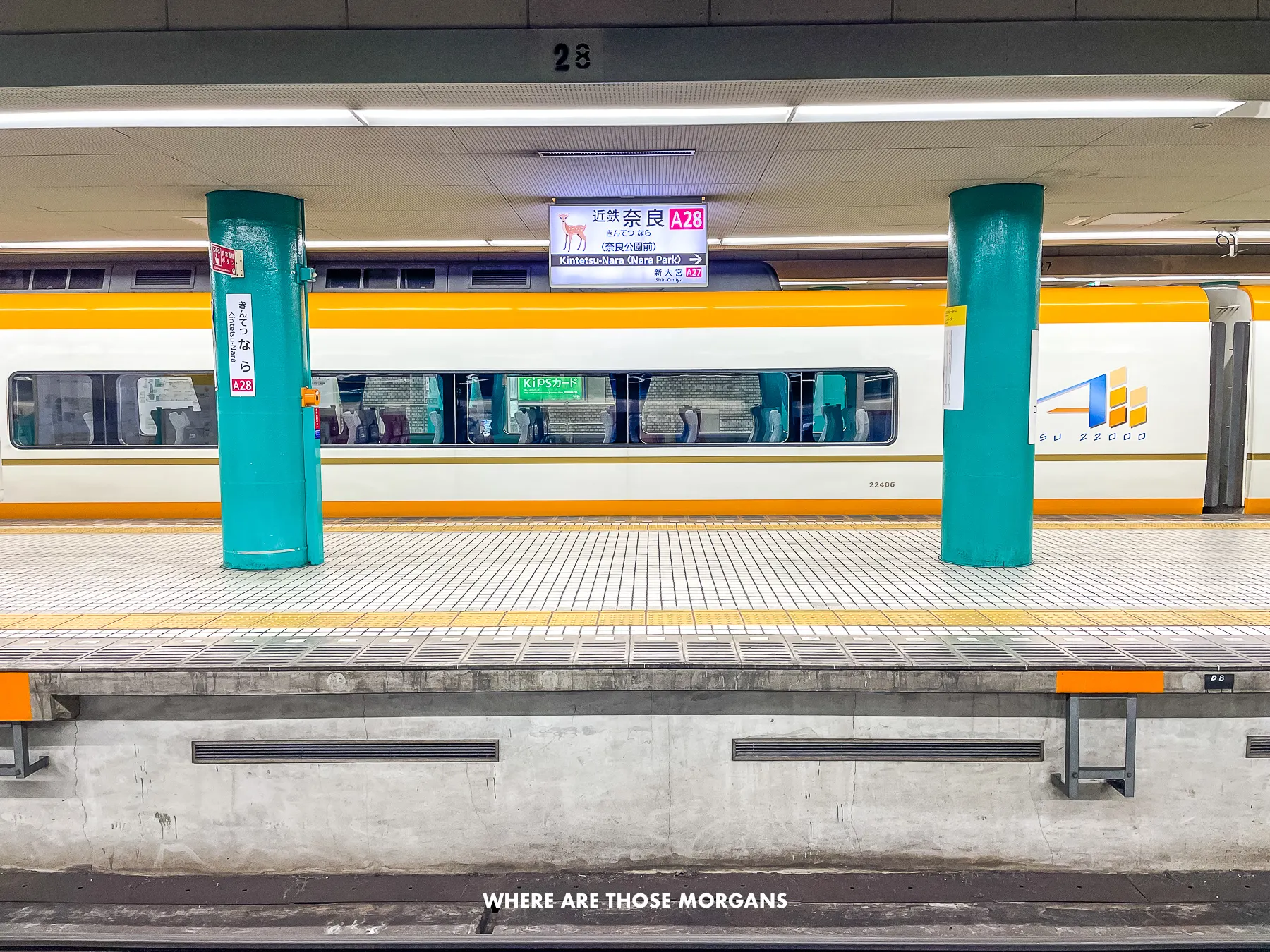
If we bought a JR Pass for our trip to Japan, we’d take the JR Miyakoji Rapid which leaves from the main JR Kyoto Station and arrives at JR Nara Station. It takes around 45 minutes and it’s free with the JR Pass, but it arrives to the further out station in Nara. Without a JR Pass, we’d take either the Kintetsu Limited Express (1,280 yen, 35 minutes) or the Kintetsu Express (760 yen, 45 minutes) from Kintetsu Kyoto Station to Kintetsu Nara Station, which is much closer to the deer park and temples.
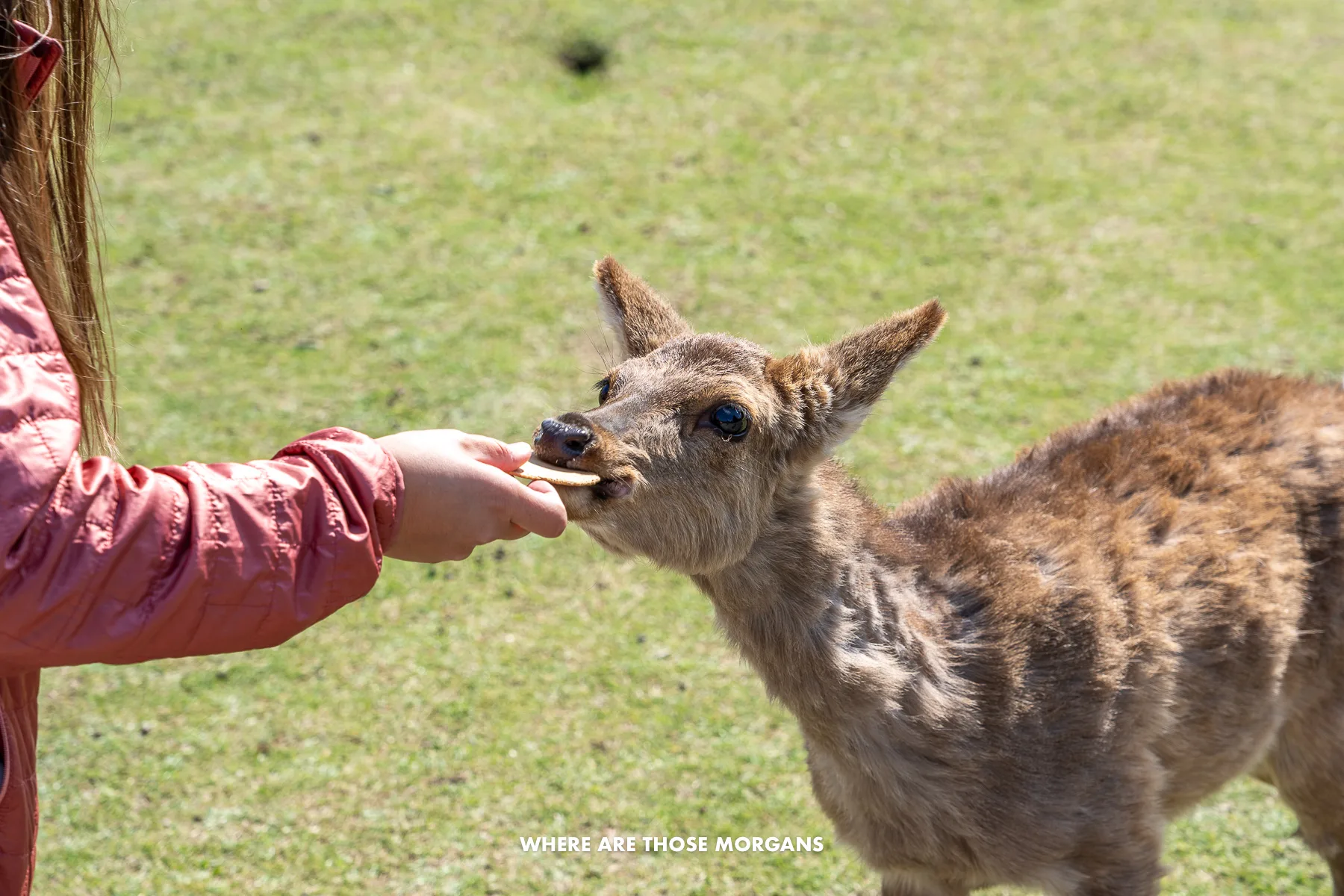
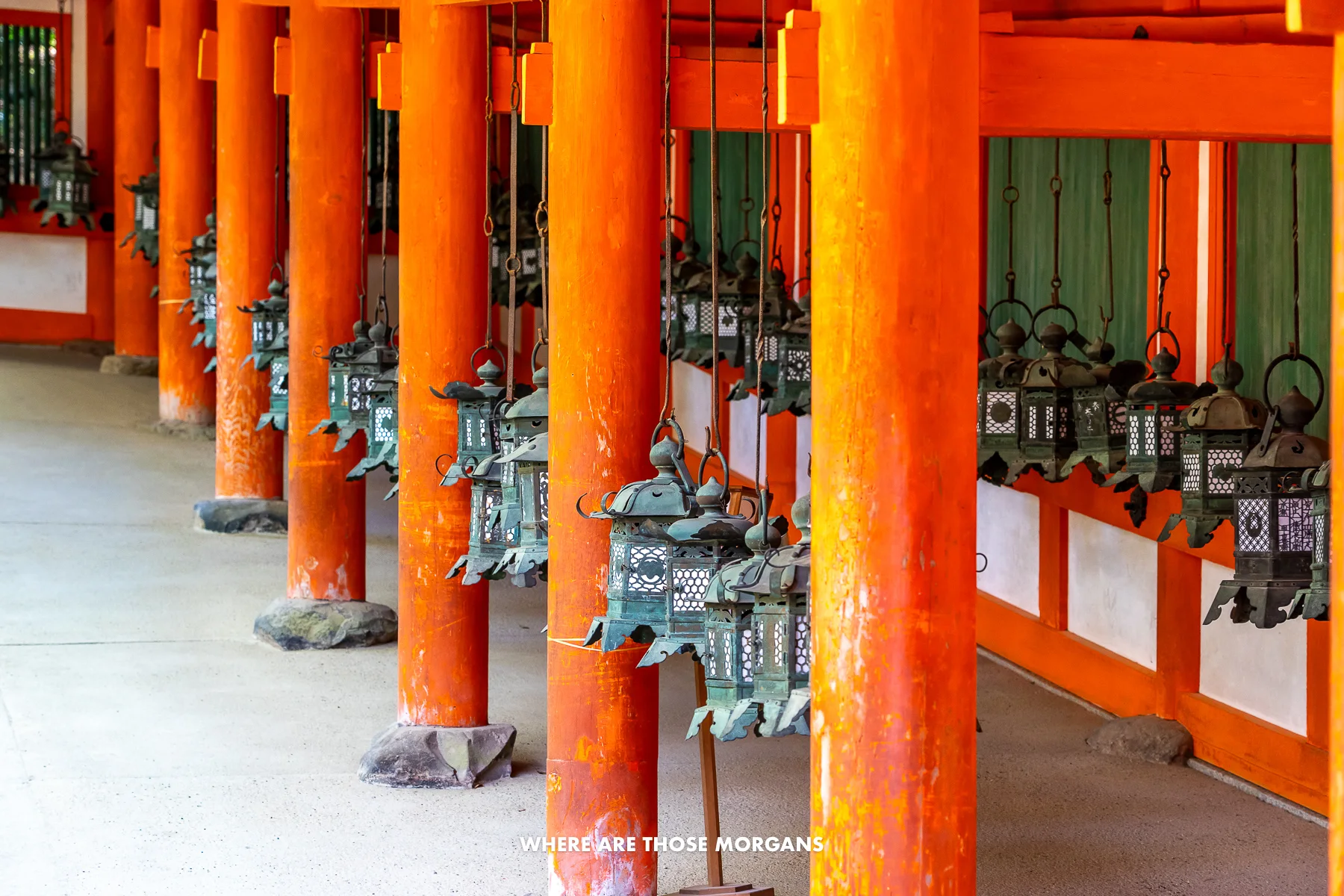
Either way, after arriving we’d see Kofuku-ji Temple, feed the deer in Nara Park, look around Nara National Museum, explore gardens, visit Todai-ji-Temple, explore serene shrines, taste sake and so much more. Here’s our guide on Nara’s top attractions to learn more about how to spend your day if you go from Kyoto.
If you want to see Nara but don’t want to deal with transport and figuring out where to go, take a look at this popular guided tour of Nara’s top sites with an early start from Kyoto. Or for something far more immersive, this full day guided coach tour includes Nara’s highlights and a matcha making experience in Uji to the south of Kyoto. Both have excellent ratings and save organizing Nara yourself.
What To Skip
Did we do anything in Kyoto that underwhelmed us, frustrated us, or left us feeling like we’d wasted time? Yes and no.
In some major cities, we straight up think some popular attractions are overrated. Even in Tokyo the observation decks underwhelmed us. Now, Kyoto is our favorite place in Japan and we don’t think the best attractions are a waste of time, but we do think it’s important to manage expectations about exactly what you’re going to get from your trip.
Let’s start with what we skipped (and think you should skip), before getting into what to expect:
Art galleries and museums: We didn’t even consider adding the Kyoto National Museum, The National Museum of Modern Art or Kyoto City Museum of Art to our itinerary either time. We’re sure they’d be great, but there are far too many unique temples and attractions to lose time at traditional museums. The only one we’d book next time is a new high-tech art installation called teamLab Biovortex that opened in 2025 and looks amazing, especially for families.
Nidec Kyoto Tower: We almost did go up the Kyoto Tower but decided against it because what is there to look at really? There’s no sprawling city skyline like Hong Kong or NYC. It only costs 900 yen, but we’d say go to Kiyomizu-dera and Ginkaku-ji for views instead.
Inari Fushimi: Kyoto’s most famous attraction is unmissable, but be aware that it’s going to be full-on Instagram shoots galore. If this sounds like your worst nightmare, we recommend blowing straight through the beginning and walking 15-20 minutes up the mountain until the crowds thin.
Bamboo Forest: The actual forest path you’ve seen is very short and rarely quiet. If you’ve got a dreamy photo in mind, get there before first light otherwise you’ll have a lot of people-removing to do in Photoshop. We honestly don’t think the Bamboo Forest alone is worth the trip out, but Arashiyama as a whole is worth spending a few hours exploring.
Nishiki Market: If you don’t like crowds, you might not like the bustling and narrow “strip” inside Nishiki Market. We loved it, got stuck into food and drinks, and didn’t mind the intensity. But it can be shoulder-to-shoulder at peak times. Go around 10:00 AM as the final few stalls are opening, before the worst of the crowds turn up.
Gion: We’re not saying skip Gion. We’re saying manage your expectations. You’re not going to see geisha walking up and down the street posing for your photos.
Kinkaku-ji: The Golden Pavilion is lovely, but we’re not sure it’s worth the trip out there and the overwhelming crowds when visited as a standalone attraction. To make it more worthwhile, combine Kinkaku-ji with Ryoan-ji and Ninna-Ji, or Kitano Tenmangu Shrine. We messed this up and would do it differently.
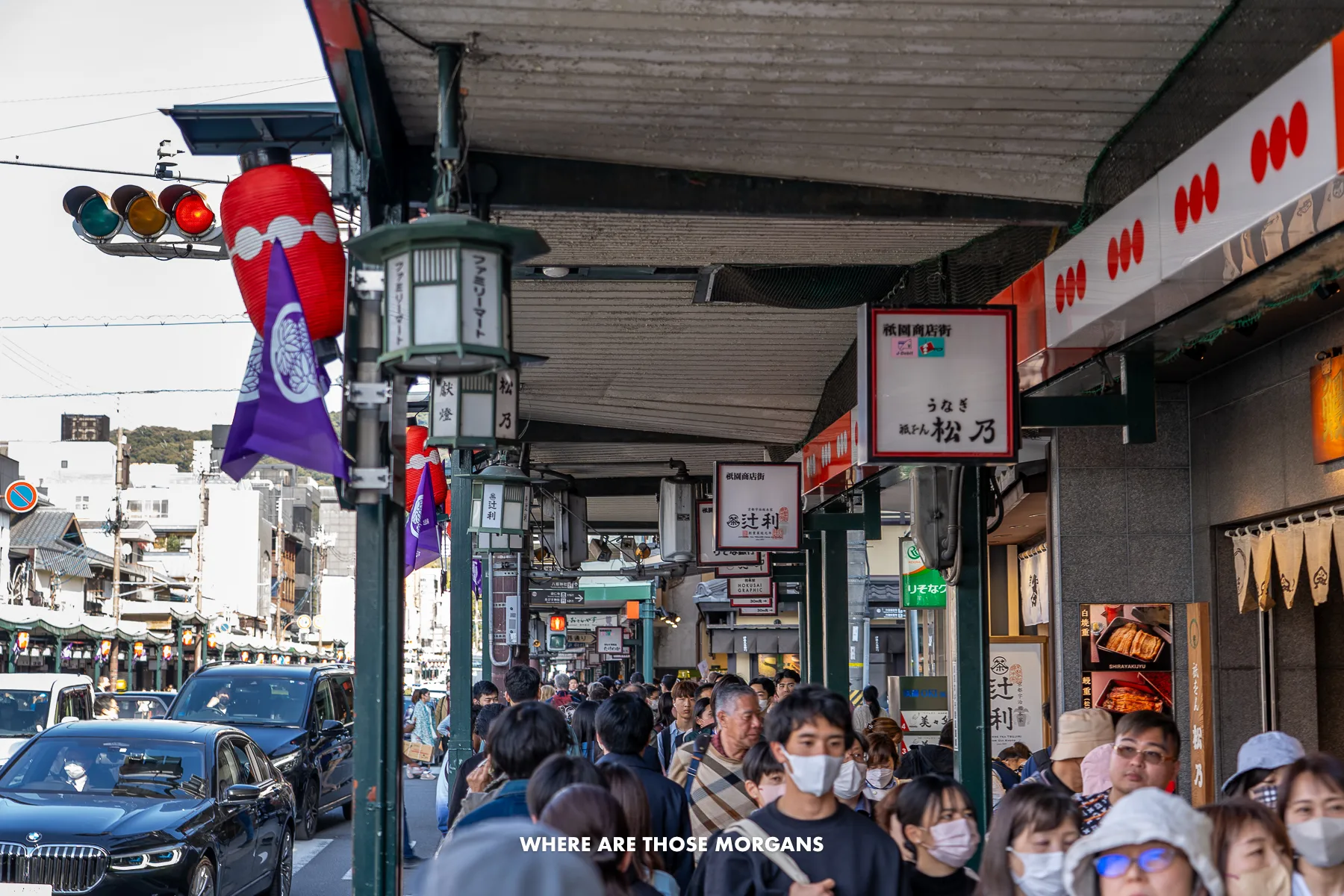
Buildings: Don’t expect all of Kyoto to be one great big version of Gion with wooden houses and cobblestones. Most of the city is modern with concrete buildings and power lines.
Crowds: Expect massive overcrowding at headline spots like Fushimi Inari, Kiyomizu-dera, Kinkaku-ji and Arashiyama. We couldn’t believe how jam-packed Higashiyama was when we walked from Gion to Kiyomizu-dera during cherry blossom season. It was wild!
Getting around: One of our biggest frustrations with Kyoto is getting around. The train lines are good but not amazing like Tokyo, and many places require walking, taxis, or buses. We did our fair share of walking, but we don’t love splashing out on taxis and the buses were either too busy or too slow with long lines.
Eating out: We found eating to be hard in Kyoto compared to Tokyo and Osaka. A lot of places closed early, were fully booked or had long lines to get in. It didn’t feel like there were enough places to eat for the sheer amount of tourists in the city at the same time we were.
Cherry blossoms: Don’t get us wrong, the cherry blossoms in Kyoto were beautiful. But boy was it busy. We’re glad we saw them, but we’d never visit again in spring. If you’re not absolutely desperate to see cherry blossoms, visit any other time of year to avoid extreme overcrowding. We loved our fall trip to Japan and would plan our next trip around autumnal foliage instead.
Next Steps
We hope our guide on the top things to do in Kyoto helps with planning your trip.
If you’d like more personalized help, we offer expert travel planning consultations where we answer any questions you have, help you avoid tourist traps and plan out your entire itinerary step by step. See our packages and reviews.
Still researching for your trip?
- Follow our first-timer’s Kyoto itinerary.
- These are the best areas to stay in Kyoto.
- Here are the top things to do in Osaka.
- Here’s what to see and do in Tokyo.
- This is where to stay in Tokyo.
- Follow our 5-day Tokyo itinerary.
Finally, we recommend reading our Japan travel guide for first-timers to get helpful tips and advice, top attractions to see, itinerary ideas and more.
Happy travels,
Mark and Kristen
Find our guide helpful? Pin it for later!
All Rights Reserved © Where Are Those Morgans, LLC. Republishing this article and/or any of its contents (text, photography, maps, graphics, etc.) in whole or in part is strictly prohibited.

Mark and Kristen spent 6 years traveling the world, visiting over 40 countries across 4 continents and more than 30 US states. They created Where Are Those Morgans in 2018 to help others plan the best possible vacations by writing authentic travel and hiking guides based on their real experiences.
Since the arrival of baby Maya in late 2024, Mark and Kristen’s extensive travels have slowed down but they still take plenty of trips. Where Are Those Morgans now helps millions of travelers each year to visit new places and hike new trails through information-packed blog posts and expert travel guidebooks. Read more about Mark and Kristen.