
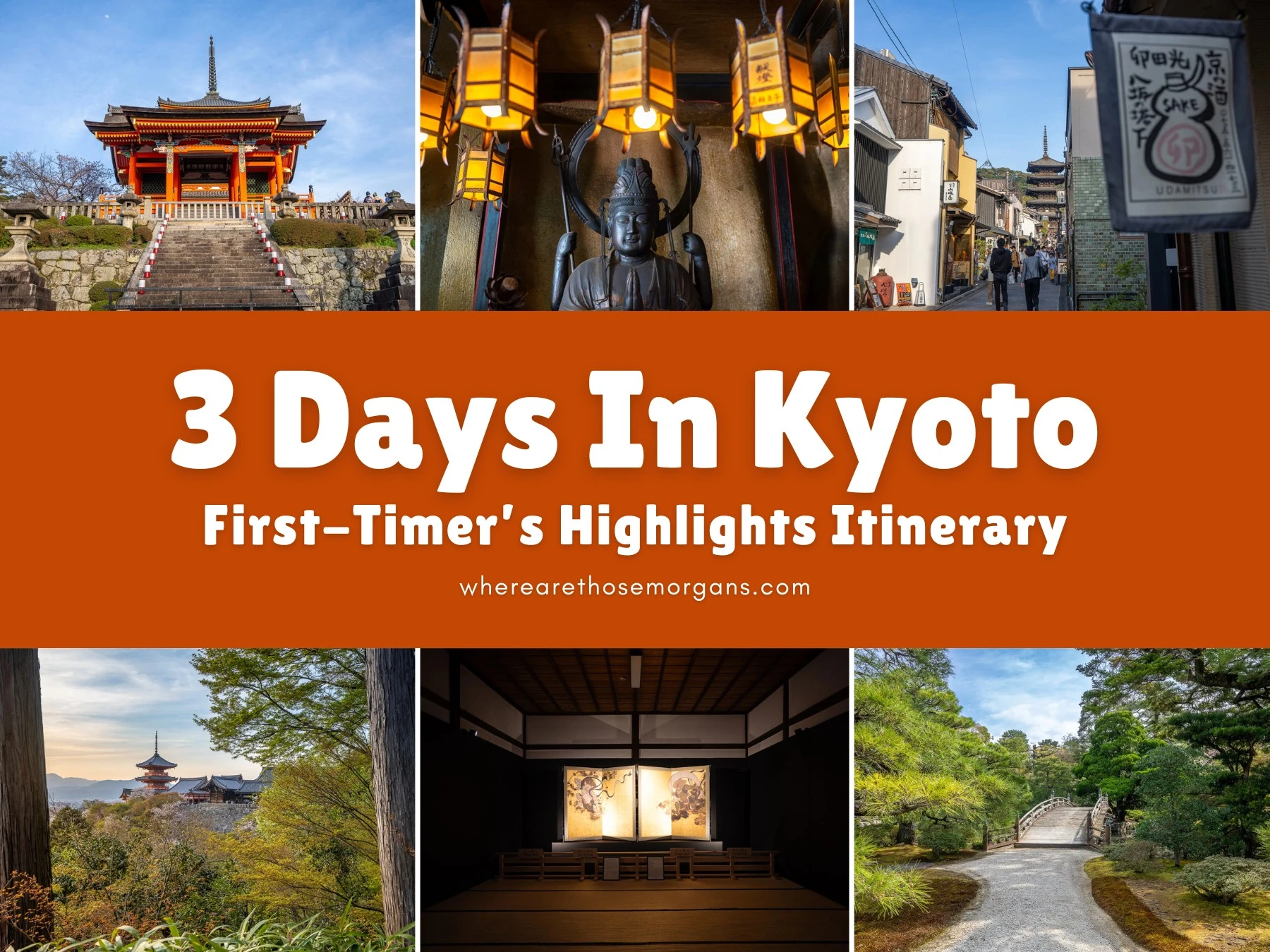
Our first 3-day trip to Kyoto was back in October 2018, during our 18-month honeymoon around the world. We’d already stayed in Osaka and Nara, and we couldn’t wait to get started with old-world Kyoto. Our budget was super tight so we built an itinerary around free and cheap activities (which was easy in Kyoto), we stayed at a low-budget ryokan in an inconvenient location (which was a mistake), and we ate at a lot of 7-Eleven’s.
Japan turned out to be a firm favorite stop from our global adventure. So we booked another 2-week trip to see the cherry blossoms in 2023, and we spent yet another 3 days exploring Kyoto. This time we had a healthier budget so we stayed in the heart of Downtown near transit links (10 minutes walk from Gion), we skipped Inari Fushimi and Arashiyama so we had more time for lesser-known temples, and we walked a lot!
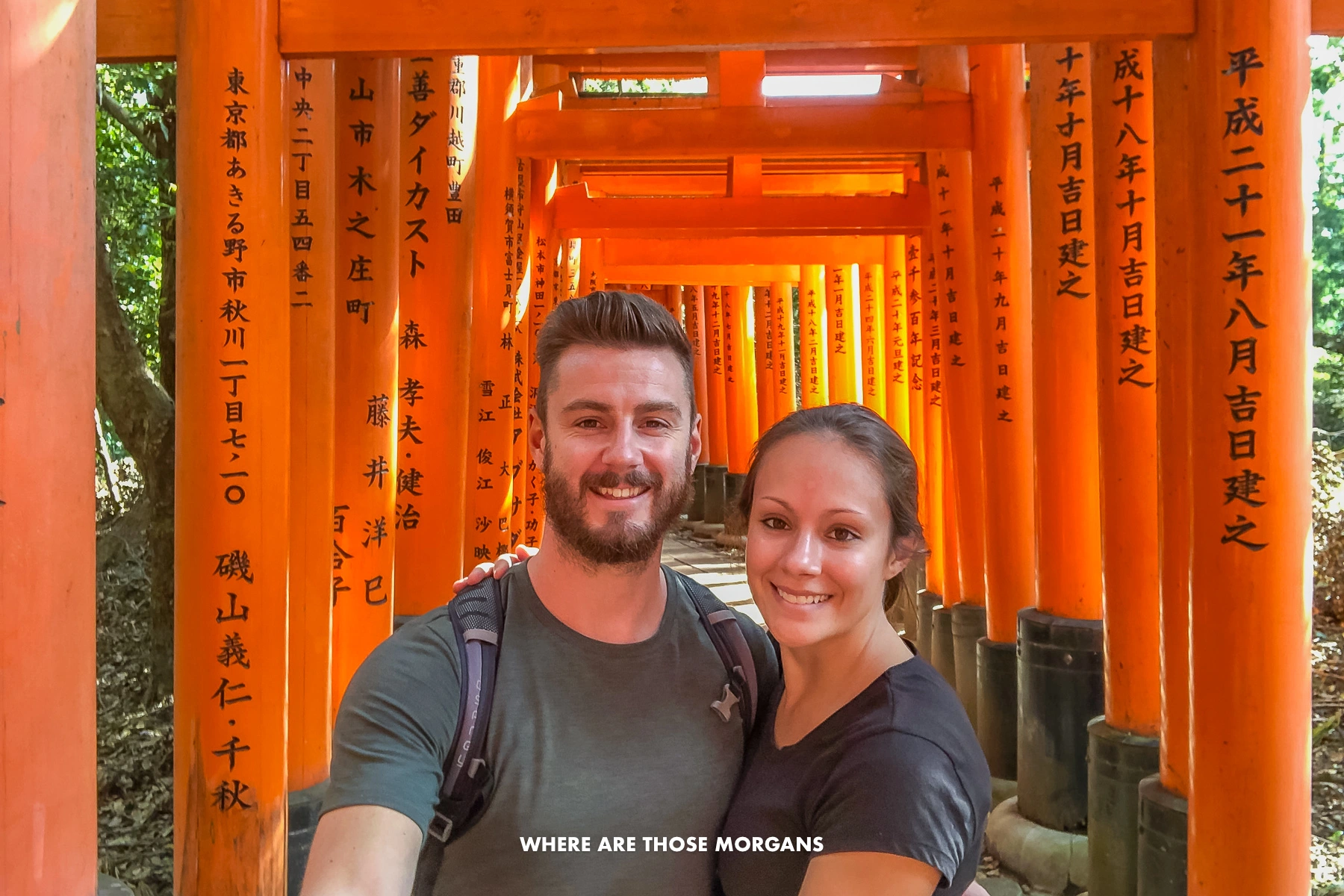
Hi, we’re Mark and Kristen Morgan. We left our scientific careers in 2018 to become travel writers and photographers, and since then our expert guides have helped millions of travel planners take better trips. Read more about us.
Why trust us with your Kyoto itinerary? Across two trips we’ve figured out what’s worth doing, what we’d skip, and how we’d do 3 days in Kyoto if it was our first time again. As always, every photo in this guide is ours.
In this guide we walk you step-by-step through our 3-day highlights itinerary – exactly how we’d do Kyoto if it was our first time again. This comprehensive plan is based on our two very different 3 day trips, but adapted to be more efficient based on what worked for us, and more importantly what didn’t. It’s fast-paced and filled with Kyoto’s top attractions – but at the end of each day we explain how we’d slow it down or change it up.
The major issue we had (and you will have) in Kyoto was temple burnout. Trust us, it’s as real as museum burnout in Rome or Paris. But temples are what makes this place unique, so it’s important to stick with them. At the end of the guide you’ll find our itinerary map, 3-day expense report, and advice on the most important things you need to know. Let’s dive in!
Note: Our content is reader supported and contains affiliate links. If you make a purchase through one of these links, we may earn a small commission at no extra cost to you and it helps us keep this site running.
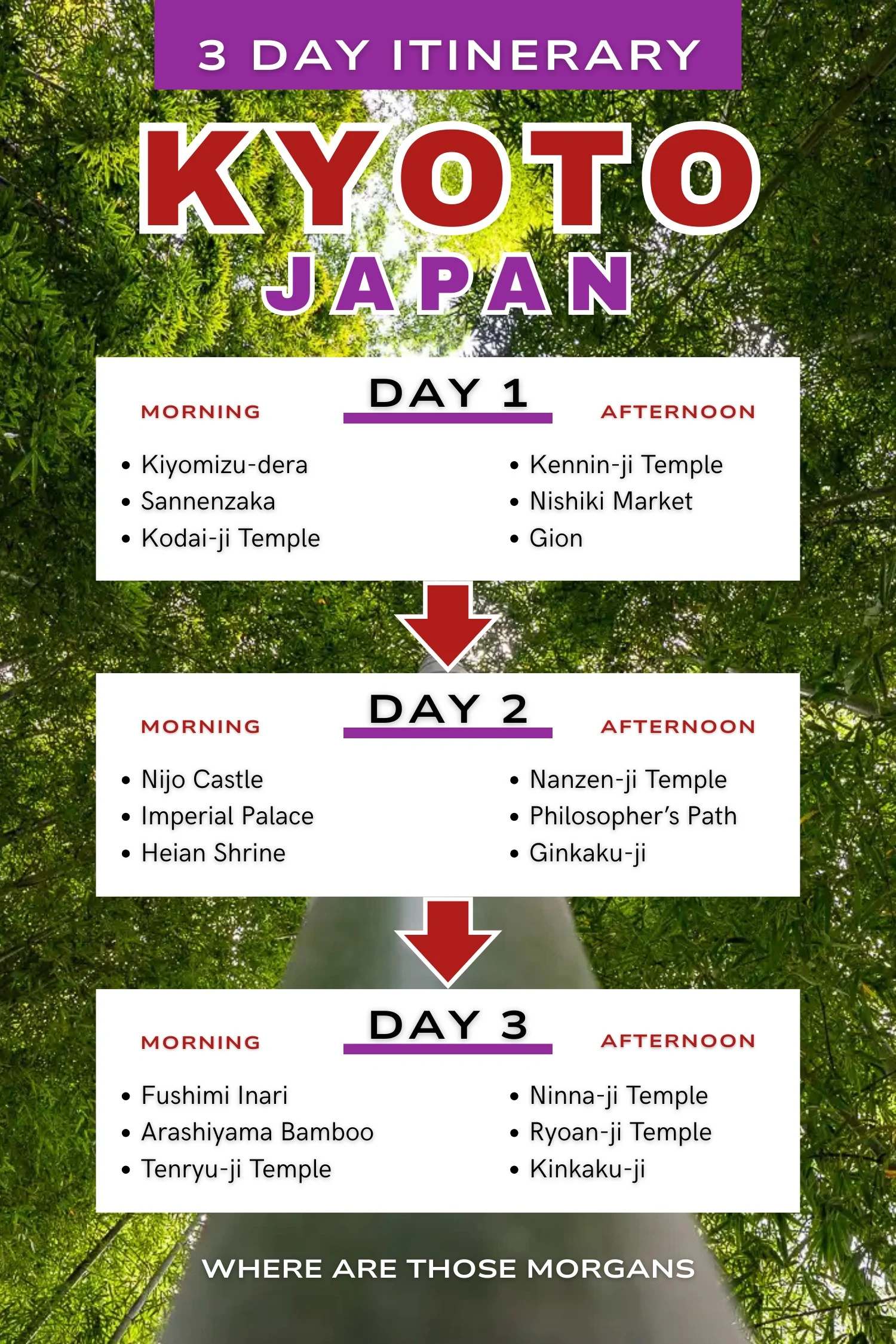
Day 1: Southern Higashiyama Temples & Streets
The focus of our first day is traditional architecture, atmospheric streets and zen temples. No public transport is needed, and this day has the least amount of walking. We think it’s the perfect introduction to the historic “old-world” heart of Kyoto.
Itinerary base: If it was our first time again, we’d book our hotel in Downtown or Gion (here’s our guide on where to stay in Kyoto for a breakdown of the neighborhoods) to have a central location and easy transit access. Our itinerary is based on staying within easy walking distance of Gion-Shijo and Kyoto-Kawaramachi stations.
Watch Sunrise Over Kiyomizu-dera’s Wooden Stage (7:00 AM)
The first time we visited Kyoto, we jogged up the picture-perfect narrow streets of southern Higashiyama planning to watch sunrise at Kiyomizu-dera Temple. But annoyingly, we were too late and missed it.
The second time (during cherry blossoms) we went up for sunset instead and that was a big mistake. While we did enjoy the serenity and soft light, we hated how crowded it was. We don’t just mean it was busy, we mean it was shoulder-to-shoulder.
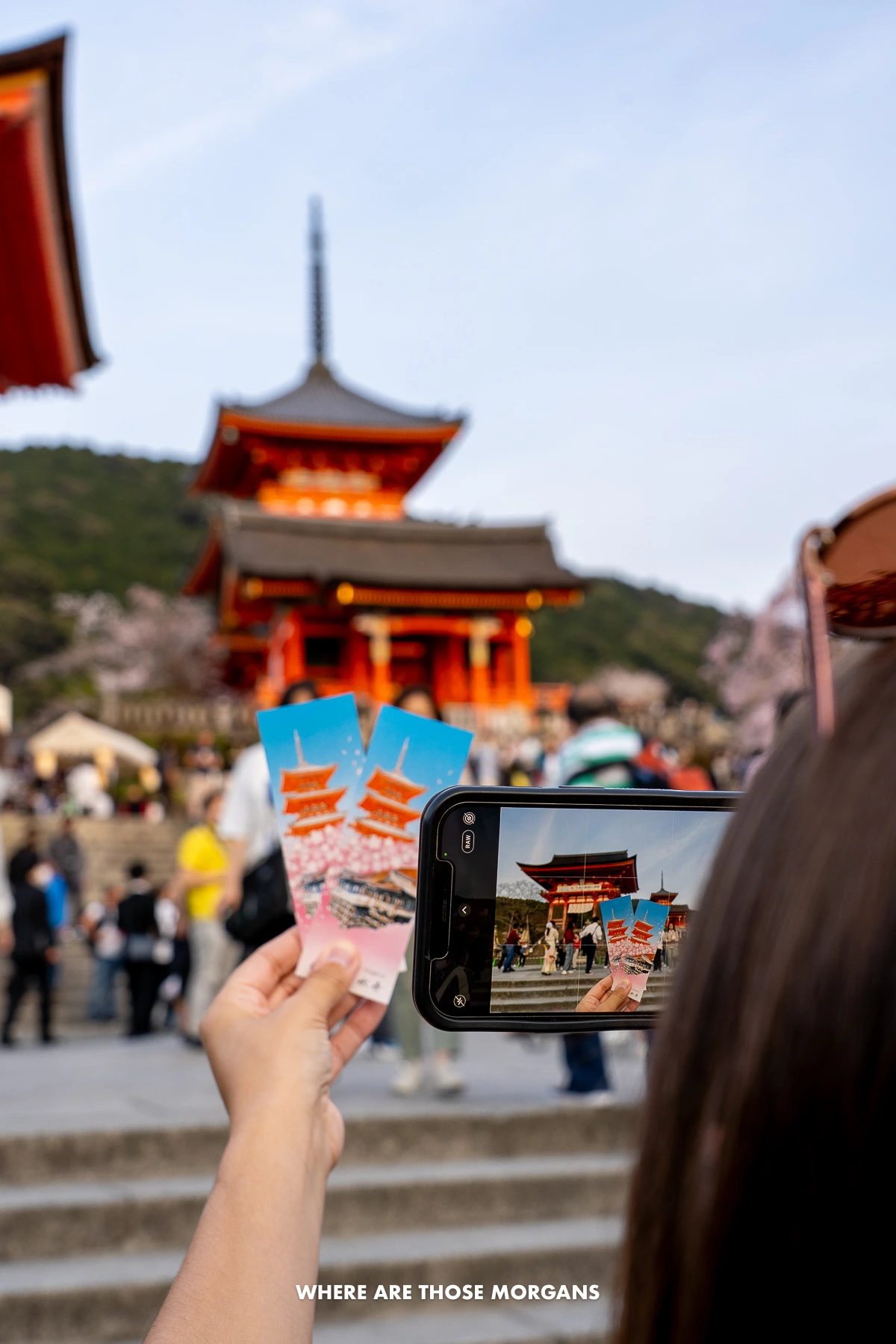
If it was our first time again, we’d get a really early start from our hotel, grab coffees and snacks from a 7-Eleven or FamilyMart, walk straight up the steep pedestrian paths (which would be totally empty before the shops open), and arrive at the enormous Buddhist temple right as the morning sun hit the three-story pagoda and wooden stage. No later otherwise we’d miss the best light.
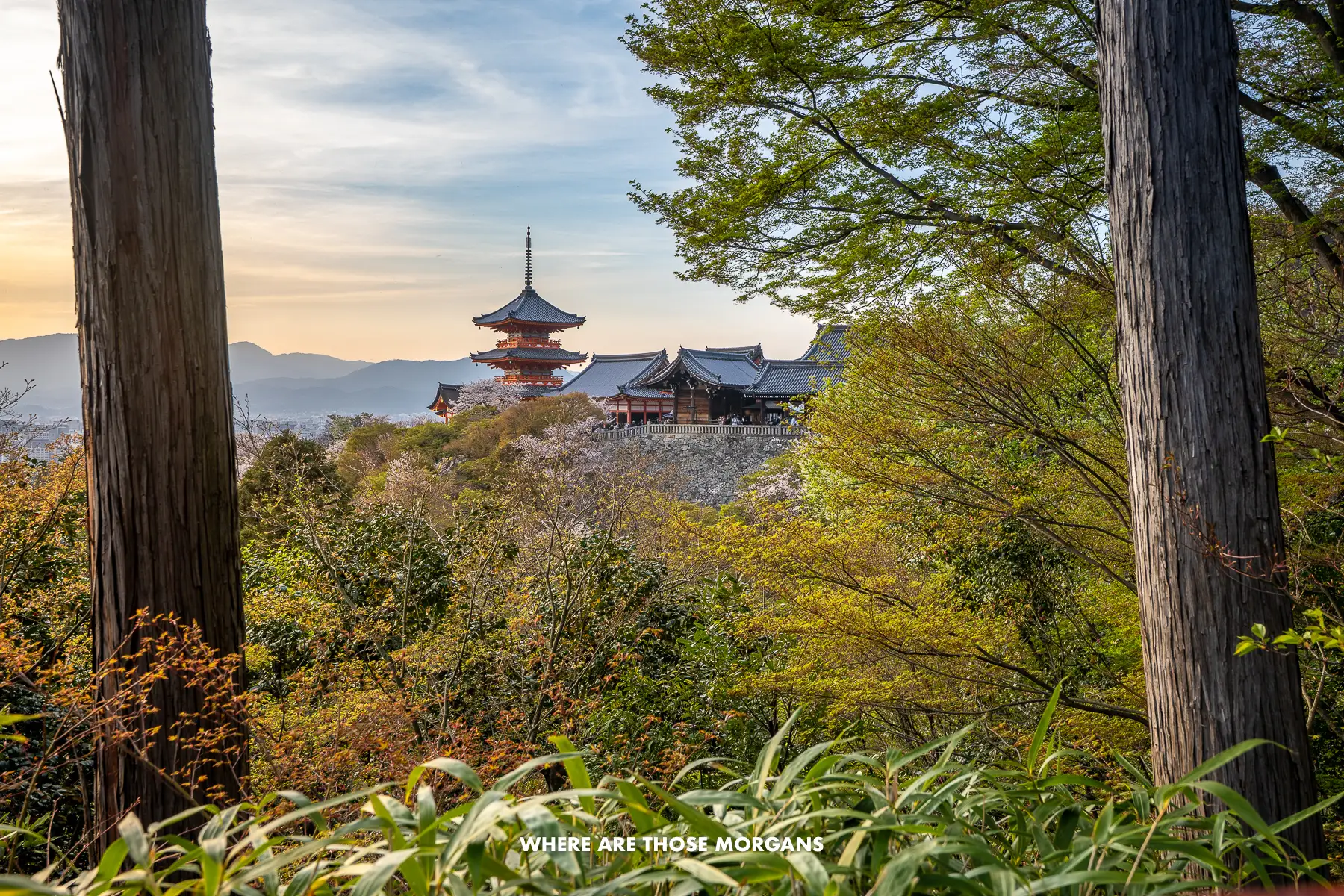
After paying 500 yen each to walk through the main hall, we’d continue walking around the loop to see panoramic views over the temple, pagoda and city of Kyoto. On a clear morning with cotton-wool clouds glowing pink and purple, this would be a stunning sunrise photo spot. We’ll definitely do it at dawn next time. It’s a big complex, so we’d expect to spend a good 30 minutes walking around and taking photos.
Walk Through Sannenzaka & Ninenzaka’s Preserved Streets (8:30 AM)
From the temple, we’d slowly make our way back down the hilly pedestrian streets and photogenic staircases like Sannenzaka and Ninenzaka. Now, barely anything at all would be open except a few Western-style cafes – we know that means there’d be a lack of atmosphere, but it also means we could capture people-free photos of the famous streets lined with wooden buildings.
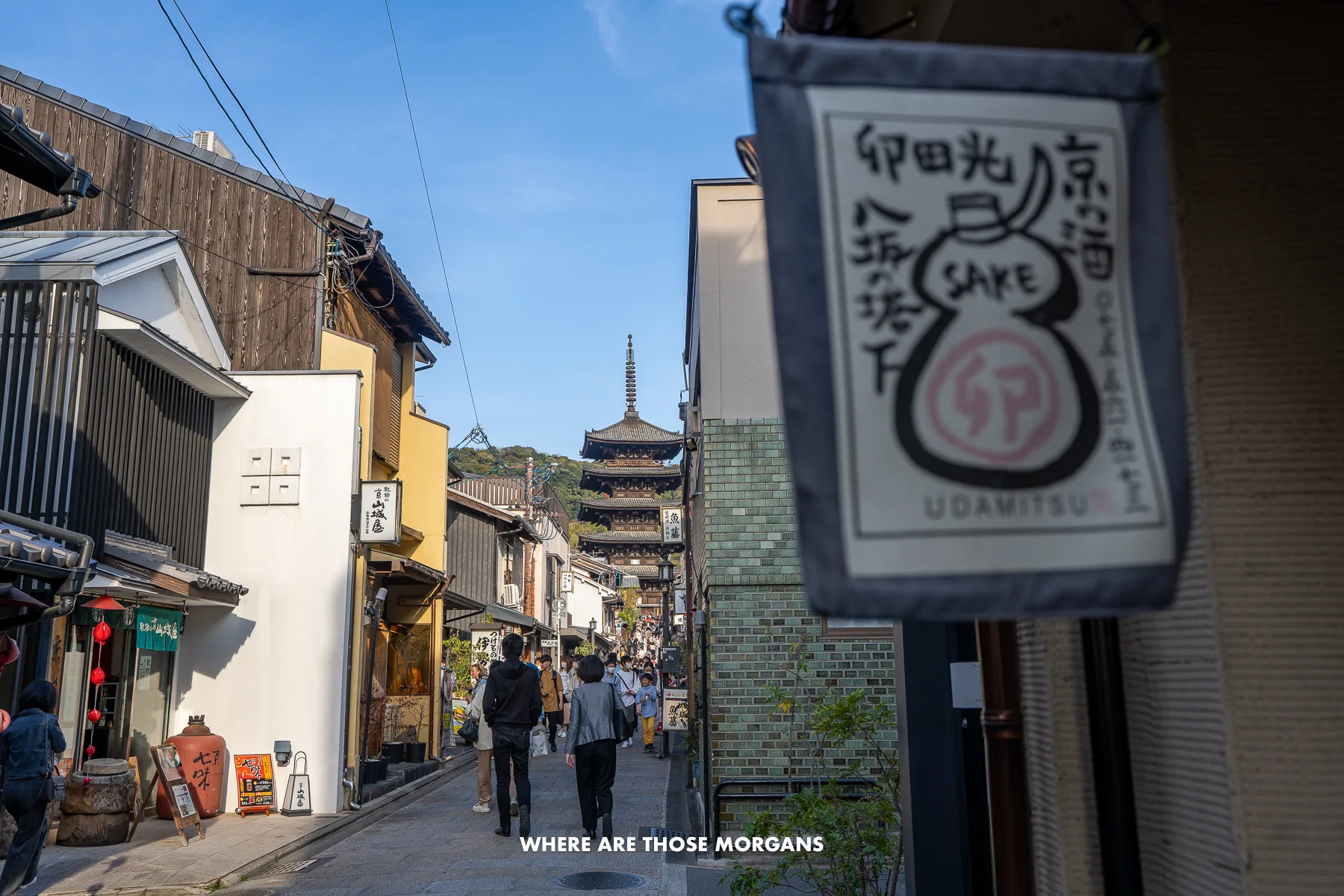
This whole area around southern Higashiyama turns into a circus after 10:00 AM every day. Not just people staying in Kyoto, but day-trippers arriving too. Plus, starting at the top and working down doesn’t just work for avoiding crowds, it’s also the most efficient way to maximize time on day 1.
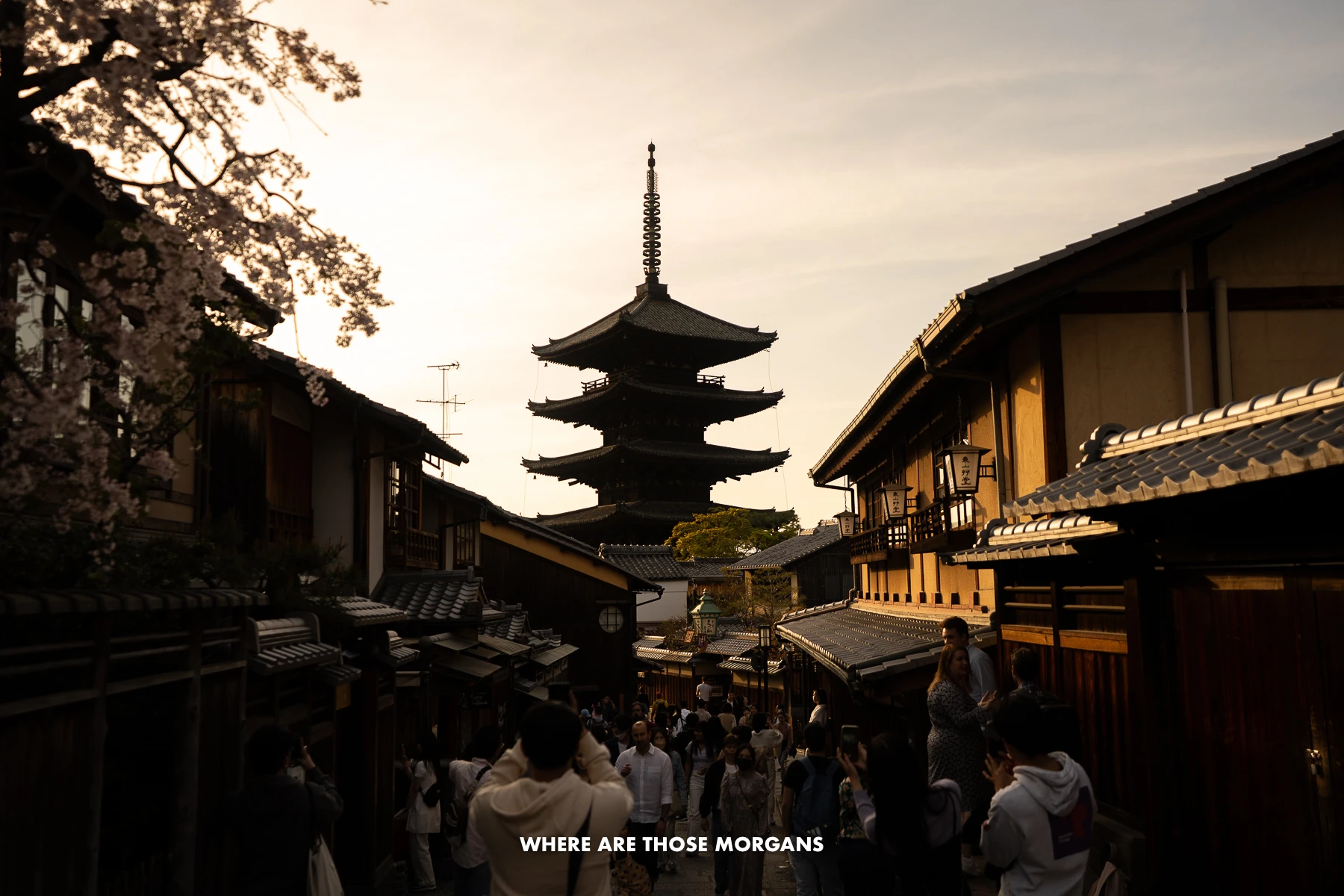
We’d stop in at Liberte for a French-style coffee and pastry, walk down Sannenzaka as far as the spectacular view of Hokan-ji Temple (the five-story pagoda you’ll see on every Kyoto postcard – and in our photo above), turn around, and walk down Ninenzaka which is arguably even more picturesque. At the bottom, we’d start with a hidden gem temple that we found on our second visit called Ryozen Kannon Temple, which opens earlier at 8:40 AM.
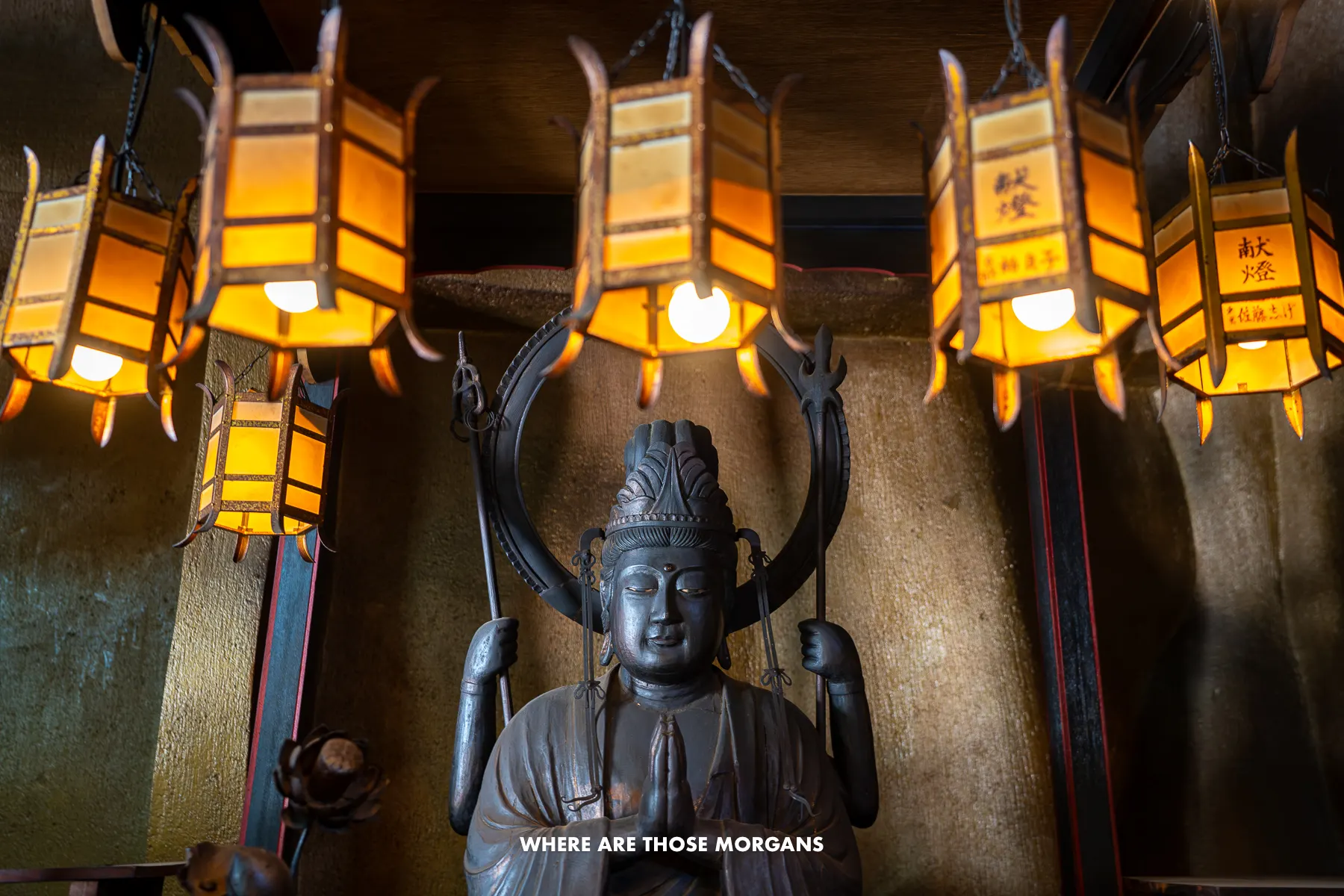
At Ryozen Kannon Temple, we’d put an incense stick in a burner in front of the giant Bodhisattva, then walk around the back and climb stairs into a dimly lit area with statues and lanterns. We stumbled on this one by accident and it was great, there were no crowds at all. But there’s tons more to do today, so we wouldn’t stick around too long.
Visit Kodai-ji Temple’s Zen Gardens (10:00 AM)
We’d exit on the north side of Ryozen Kannon Temple which leads straight to the entrance of Kodai-ji Temple, one of our personal favorites in Kyoto. Kodai-ji is a small but beautiful Zen temple with a main hall, richly decorated sub-halls, a mausoleum, and a super photogenic raked rock garden.
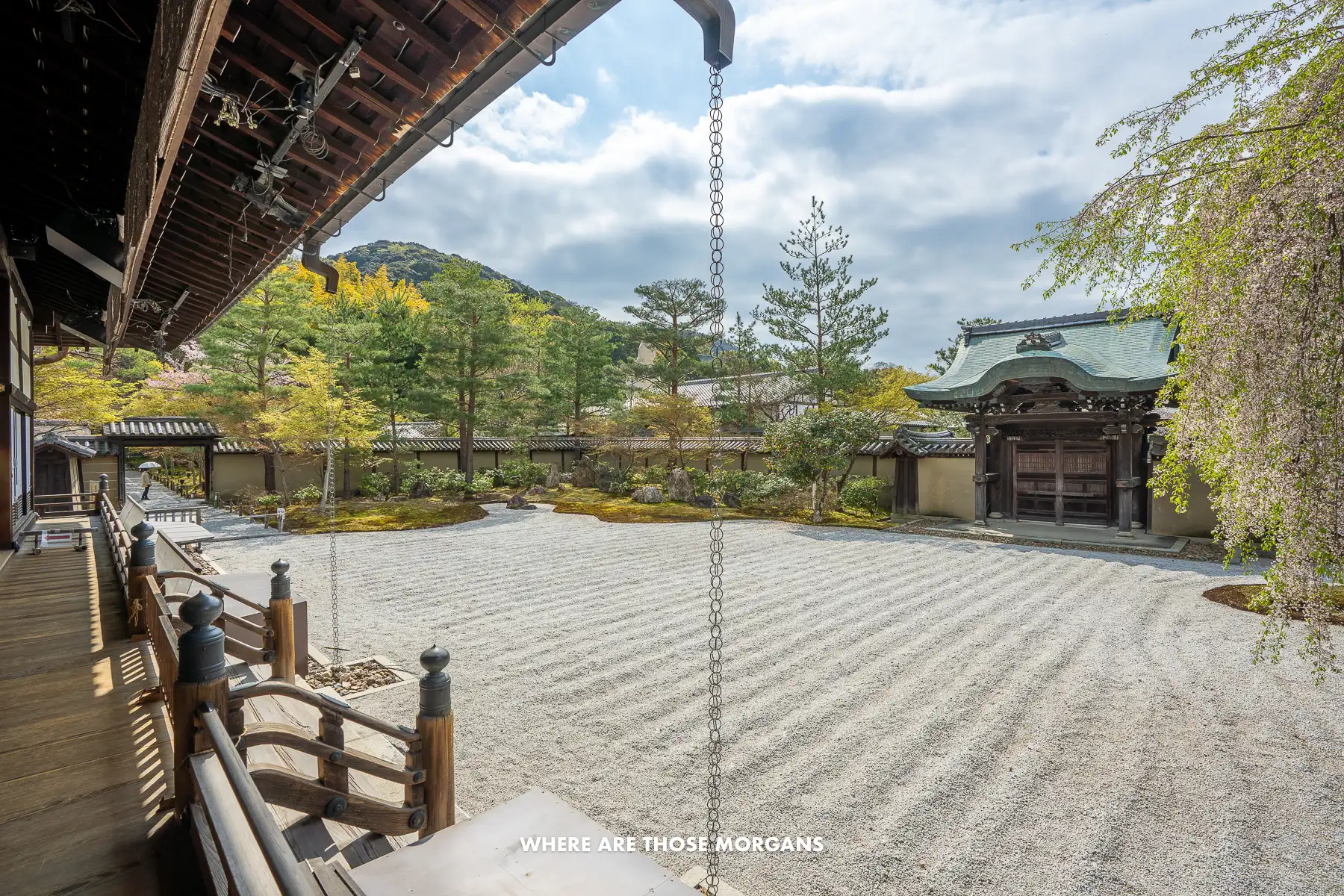
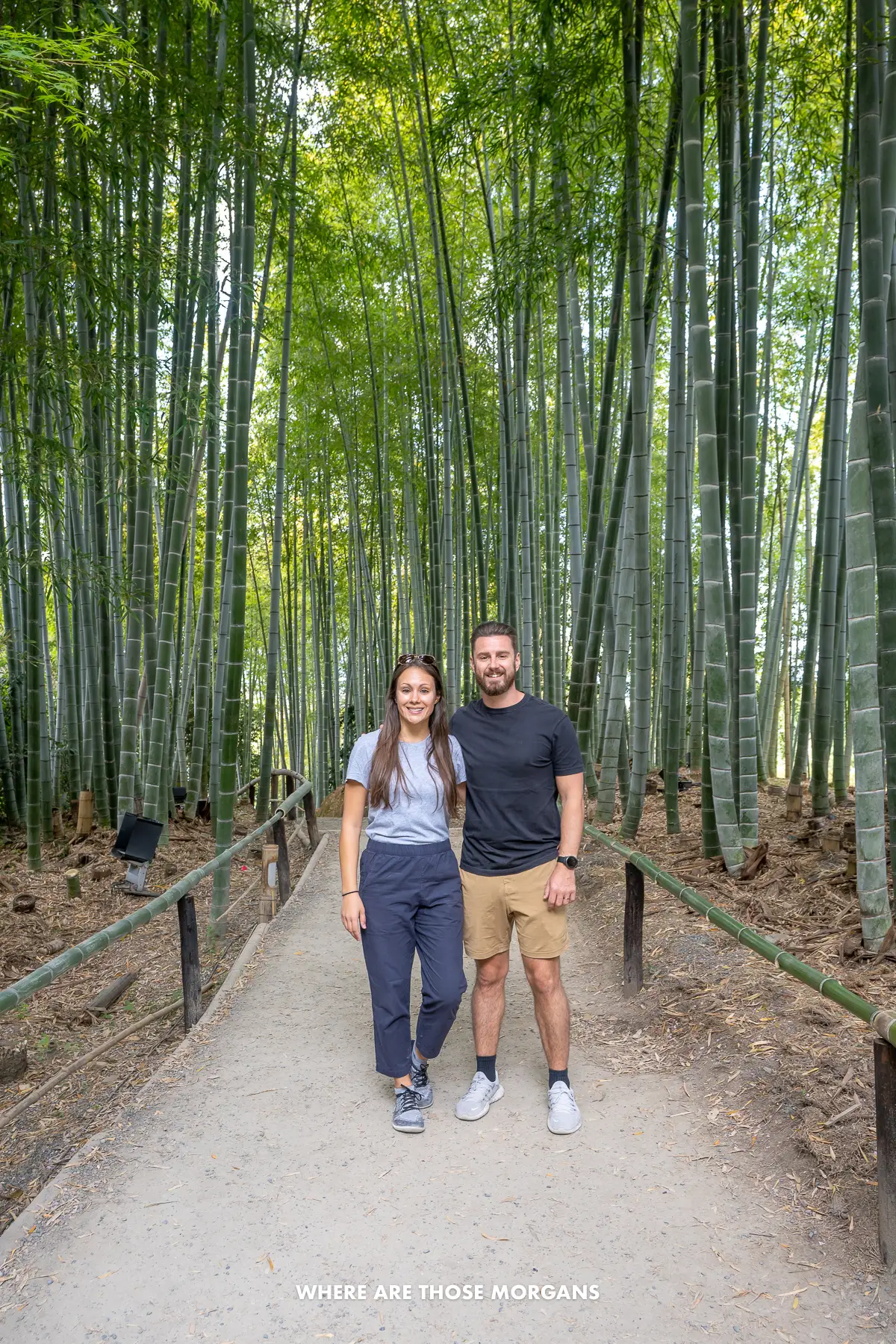
But the best is still to come. After exploring the interior, we’d step outside into the grounds and follow a loop through beautiful gardens and a hidden gem bamboo forest that we honestly thought rivaled the famous Arashiyama Bamboo Grove. It only cost us 600 yen each to enter Kodai-ji, and we thought it was well worth the small fee.
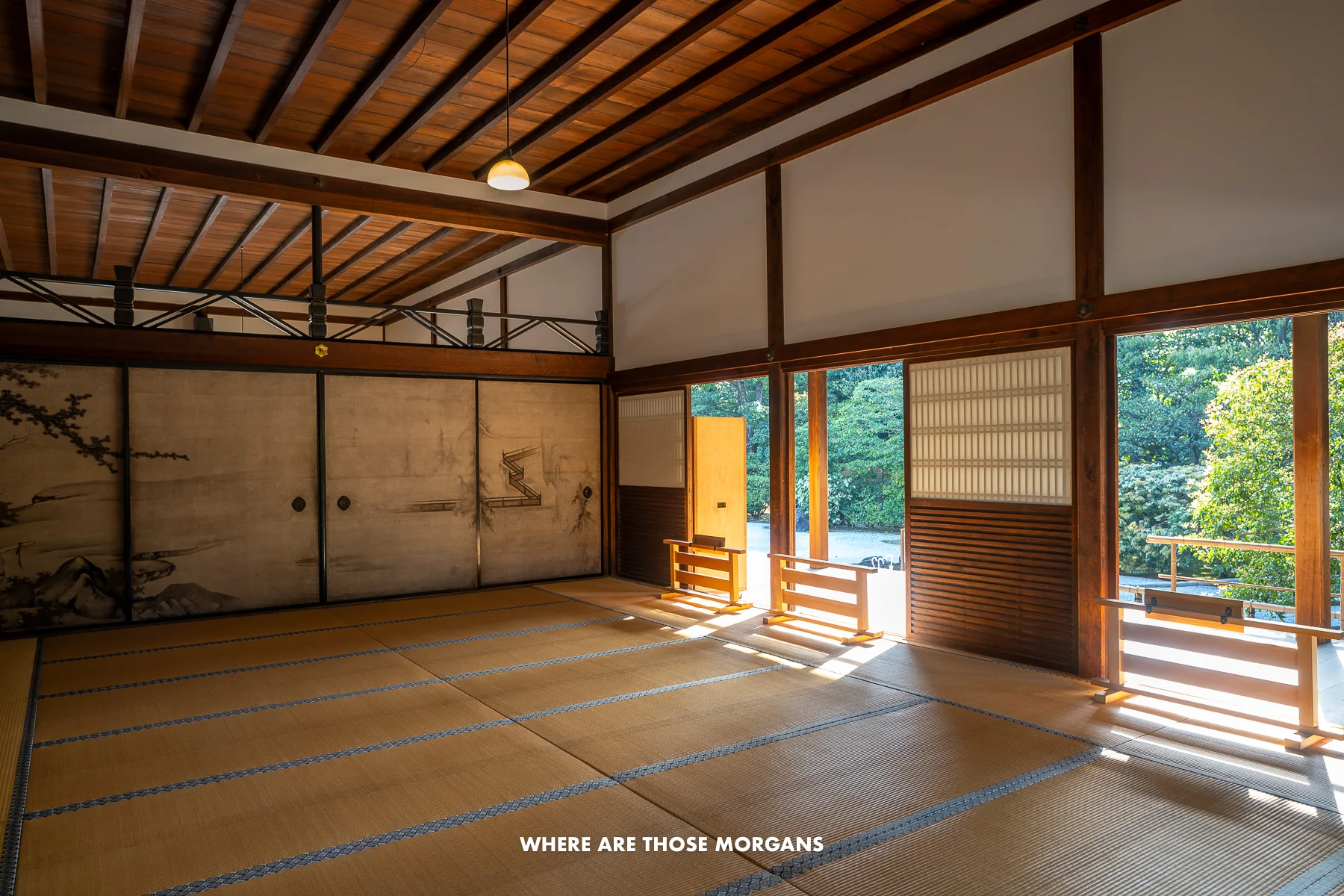
We’d leave through Kodai-ji’s main west entrance down long gradual steps, turn right and immediately left into one of Kodai-ji’s sub-temples called Entoku-in Temple. We had this one entirely to ourselves, and we really enjoyed our quick but peaceful walk through tatami rooms with garden views, so we’d include this little gem if it was our first time again.
See Kennin-ji’s Twin Dragon Ceiling Painting (11:30 AM)
From Entoku-in, we’d walk 10 minutes to Kennin-ji Temple, Kyoto’s oldest Zen temple. Kennin-ji was another of our favorites because it was much quieter and calmer than Kiyomizu-dera and the shopping streets, so we felt like we could actually relax and reflect – which is the whole point.
At Kennin-ji Temple we’d slowly explore the various halls and corridors, see the intricate rock gardens and inner courtyards, and look up to see the impressive “Twin Dragons” ceiling painting in the Dharma Hall.
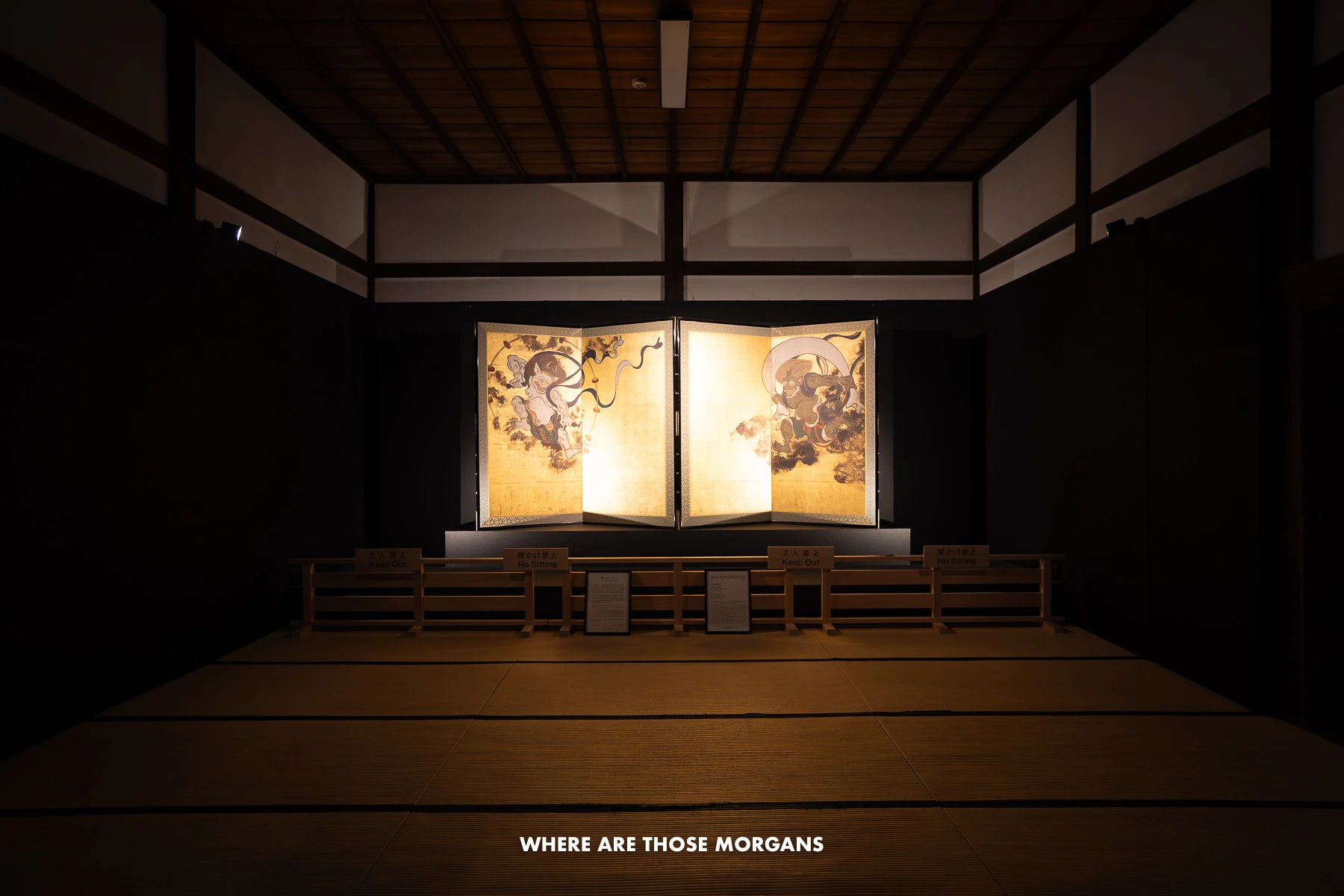
We found Kodai-ji and Kennin-ji to be among the most attractive temples from our trips – the ones that really made us say “okay, this is exactly what we expected to find in Kyoto” – so we’d make sure to capture as many photos as possible.
Sample Street Food Through Nishiki Market (1:00 PM)
After hustling through 5 temples this morning, we’d be more than ready to eat lunch and have a more relaxing afternoon. We’d leave Kennin-ji’s north entrance and walk 15 minutes to Downtown Kyoto’s Nishiki Market to sample local street food and delicacies.
Alternatively, if we were desperate for food or wanted a proper sit-down lunch, we’d stop at Menkui Kinya for udon noodles and tempura, not far from Kennin-ji. But we’d only get small meals, so we still had enough room to enjoy snacks in the market.
We’d avoid the temptation to stop at all the shops and animal themed cafes in the modern Downtown area (which is a complete contrast to the old-world architecture we just left in Gion and Kiyomizu). Instead we’d head straight over to the far west side of Nishiki Market, so we could walk the full length of the “strip” to see every single food stall inside.
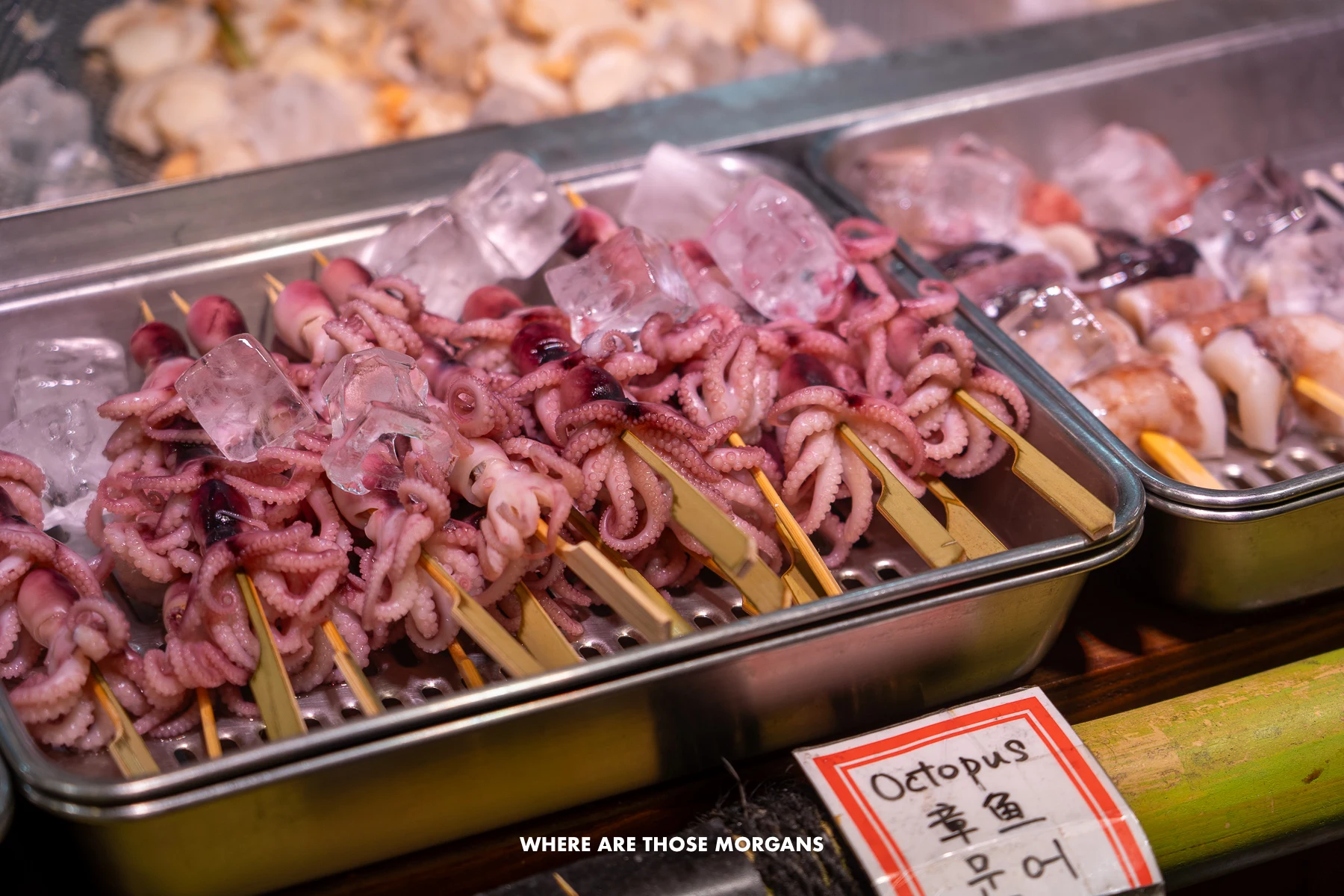
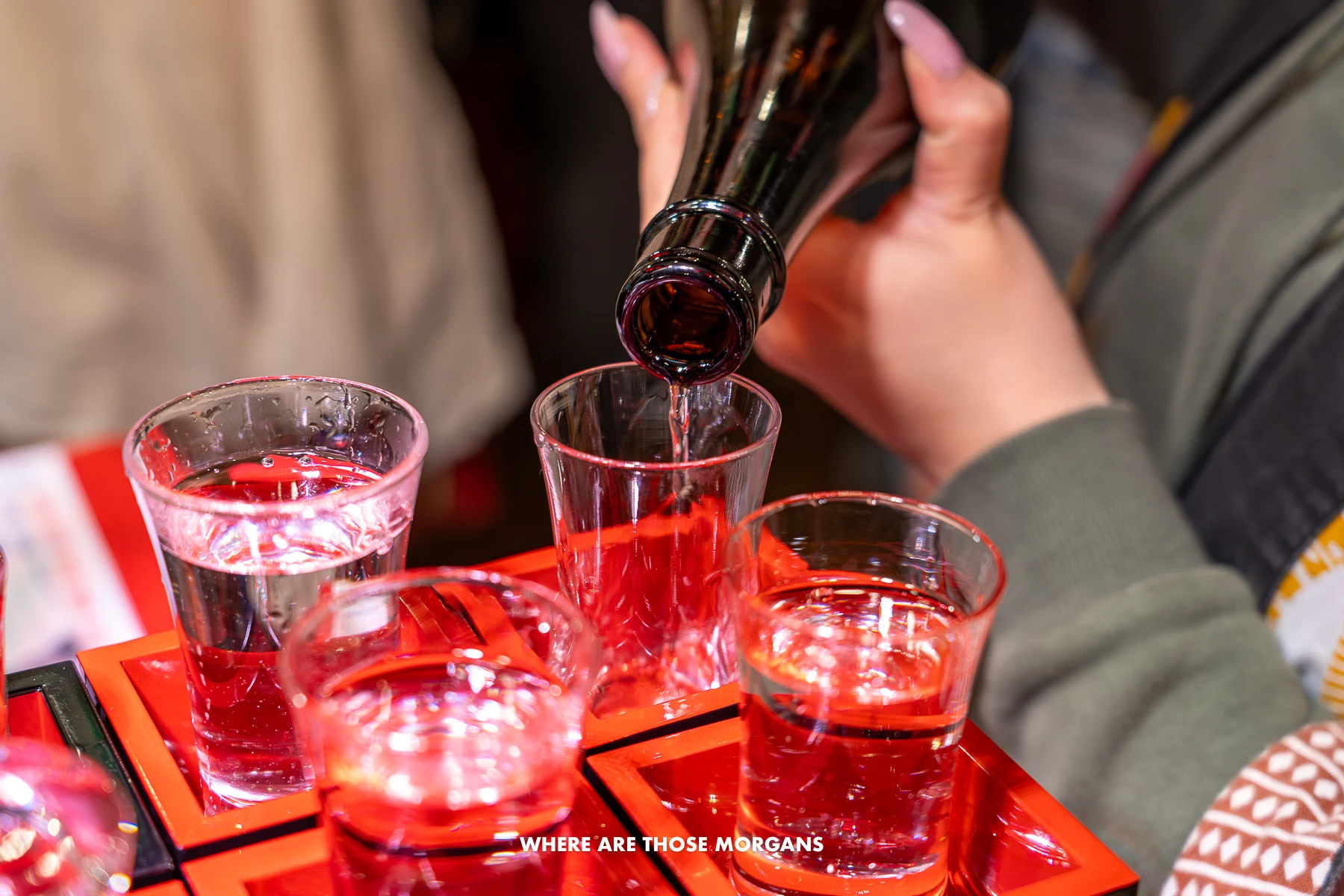
We found Nishiki Market to be so much fun on both trips. It was high-energy, chaotic, touristy and we’re sure prices were inflated, but it was always a cool experience so we’d 100% do it again. Across our visits we tried Kobe beef, sashimi, pickles, soy milk donuts, and flights of sake. The Kobe beef was ludicrously expensive but so worth it. We did not try Tako-tamago because we couldn’t eat baby octopus, but it’s the big thing to try.
Mark’s foodie tip: If the crowded market turns out to be too much of a sensory overload, grab lunch at nearby Ichiran Karasuma instead. Ichiran is a ramen chain with tiny individual booths and bowls served through small wooden windows. We ate ramen at Ichiran in Tokyo and Hiroshima, and both were fantastic.
Wander The Shopping Streets Around Kawaramachi (3:00 PM)
Two hours would be more than enough time to slowly walk through Nishiki Market, try a bunch of food and wash it all down with sake. After exiting through the east end of the market, we’d walk through Nishiki Tenmangu Shrine and Yanagikoji Street which has tons more eateries, just in case we were still hungry. Both are also great for photos.
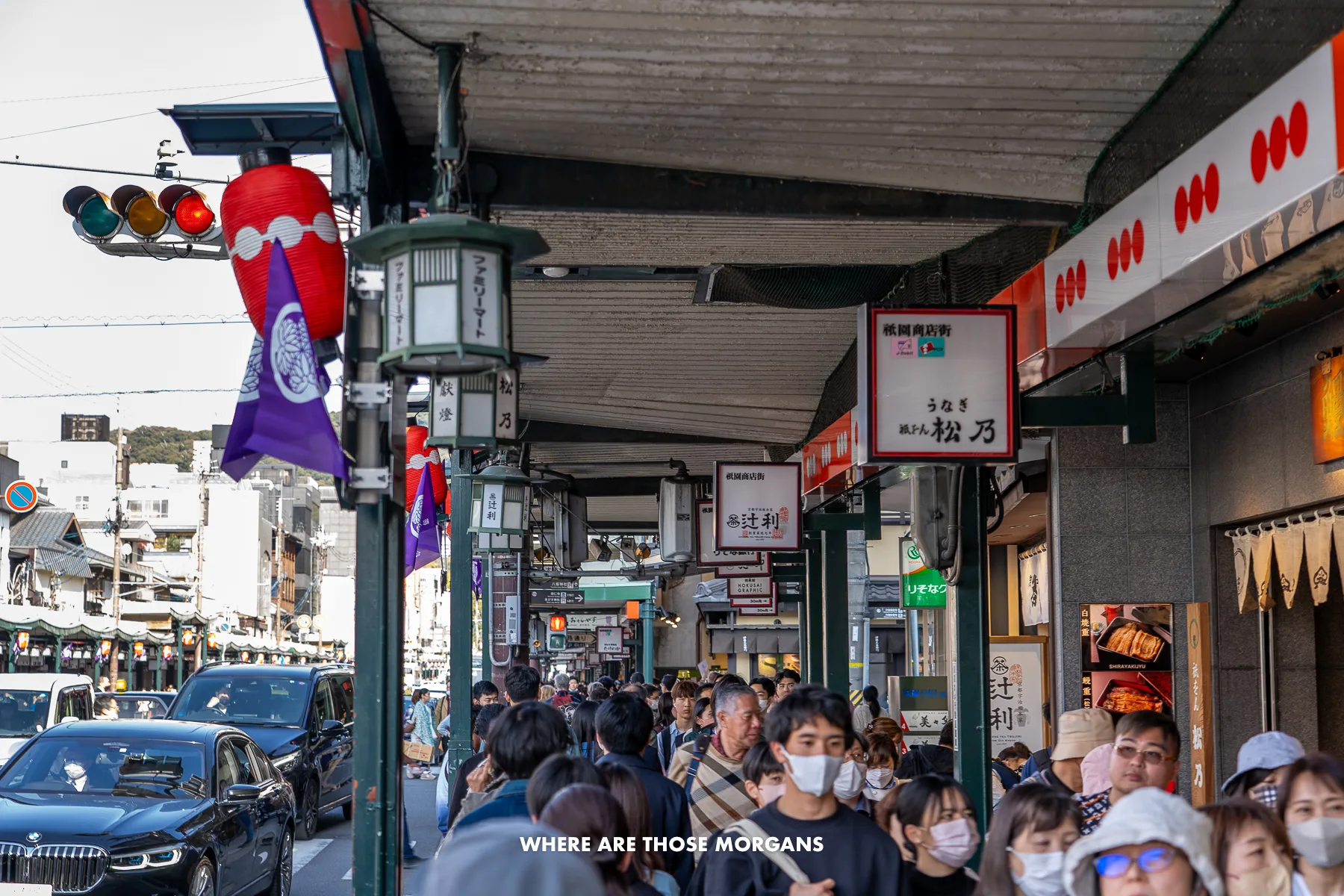
Then we’d give ourselves a few hours to explore the Kawaramachi area of Downtown Kyoto. We found Teramachi and Shinkyogoku’s covered arcades to be perfect for browsing local stores, people watching, and losing track of time – so we’d maybe drift around stationary shops, vintage kimono boutiques and grab some matcha soft serve for desert.
Or we’d fill this time with more specific places like Tsujikura umbrella shop which looks fantastic, this 1-hour ninja lesson which looks like so much fun for the family, or maybe even walk all the way back up to Kiyomizu-dera to see it at its most crowded and to join this matcha making tea ceremony. Whatever we ended up doing, we’d head into Gion around sunset.
Kristen’s Gion reality tip: It’s important to manage your expectations with Gion. You’re not going to get empty streets with geiko (geisha) and maiko (apprentices) modeling for your photos. It’s a real working area and you must be respectful. There are actually new rules preventing visitors from entering narrow alleys with 10,000 yen fines, as a result of poor tourist behavior.
Walk Gion’s Lantern-Lit Streets At Dusk & Watch A Geisha Performance (6:00 PM)
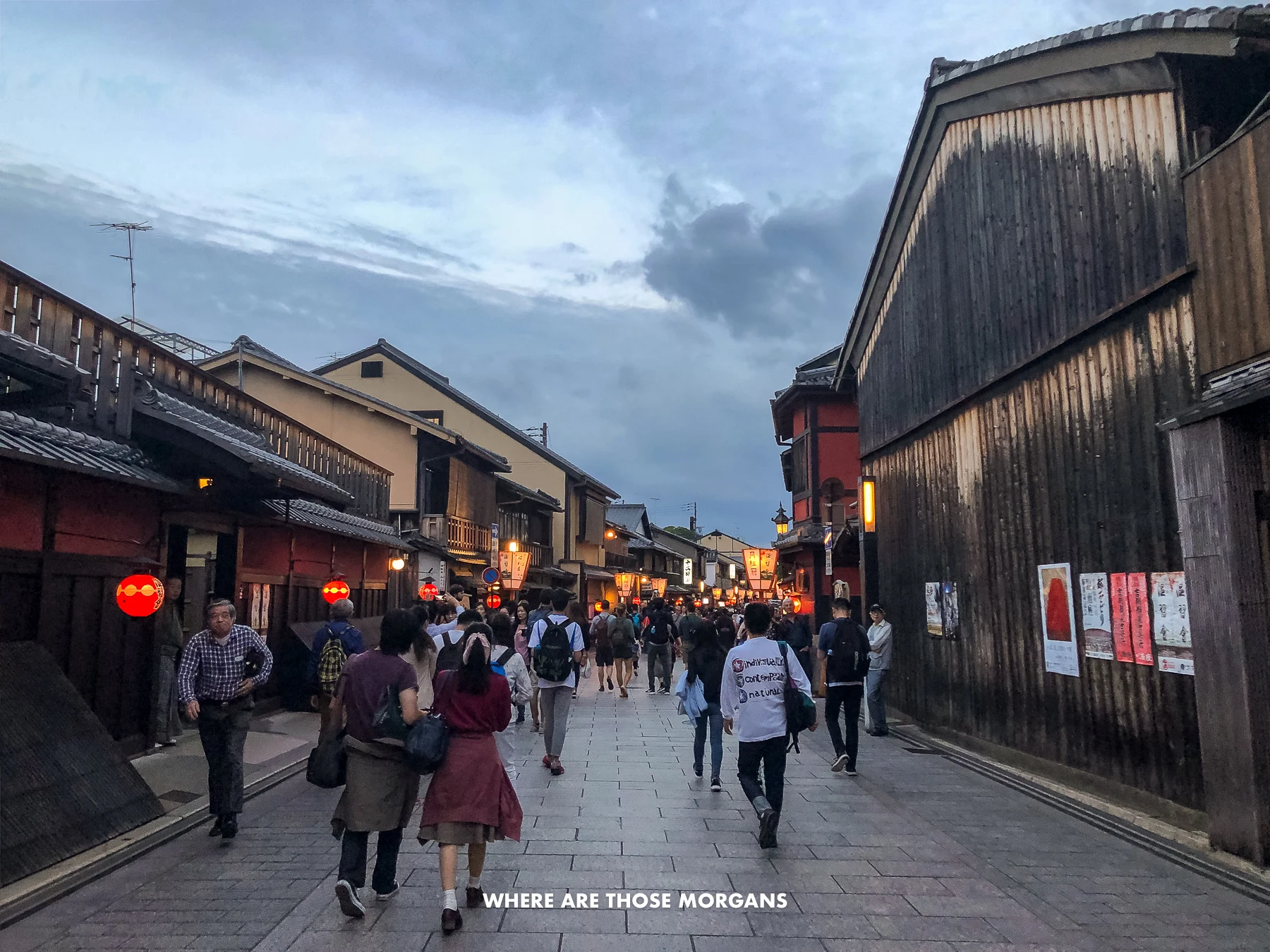
Once we made it to Gion, we’d walk along the Shirawaka Canal and loop around to the brightly painted Yasaka Shrine to see it lit up. Then we’d take a left down Gion’s famous main street called Hanamikoji-dori, slowly strolling along the beautiful street with wooden buildings and lanterns glowing. It’s one of the most picturesque parts of Kyoto.
There’s dozens of fantastic places to eat dinner, but we did find Gion to be a bit more exclusive and high-end on average than other parts of Kyoto. Our advice is book ahead for a place you like the look of. We wanted to eat at Teppan Tavern Tenamonya because it looked amazing, but they were full. It felt like a lot of places in Gion were either reserved, had long lines or you needed to know someone to even get in.
But the biggest mistake we made was not booking a Geisha show like this 1-hour show or this show with dinner. Both are highly rated and provide the only responsible and respectful way to take photos of geisha in Kyoto, so we would definitely do it next time. Or for something totally different, we’d love to try this Gion food tour with 13 dishes starting at 6:00 PM to sample local foods at night.
How to slow it down: If the first day sounds like too much, we’d cut Ryozen Kannon Temple and Entoku-in Temple to reduce from 5 to 3 temples. The rest of the day is slow enough, and everywhere else is well worth visiting.
Day 2: Imperial Kyoto & The Philosopher’s Path
The focus of our second day is imperial history and a scenic nature walk between some of the most peaceful Zen temples in Kyoto. Public transport is required to keep the route efficient, and there’s a lot more walking involved – but this is a superb day of attraction-hunting.
Walk On Nijo Castle’s Nightingale Floors (8:45 AM)
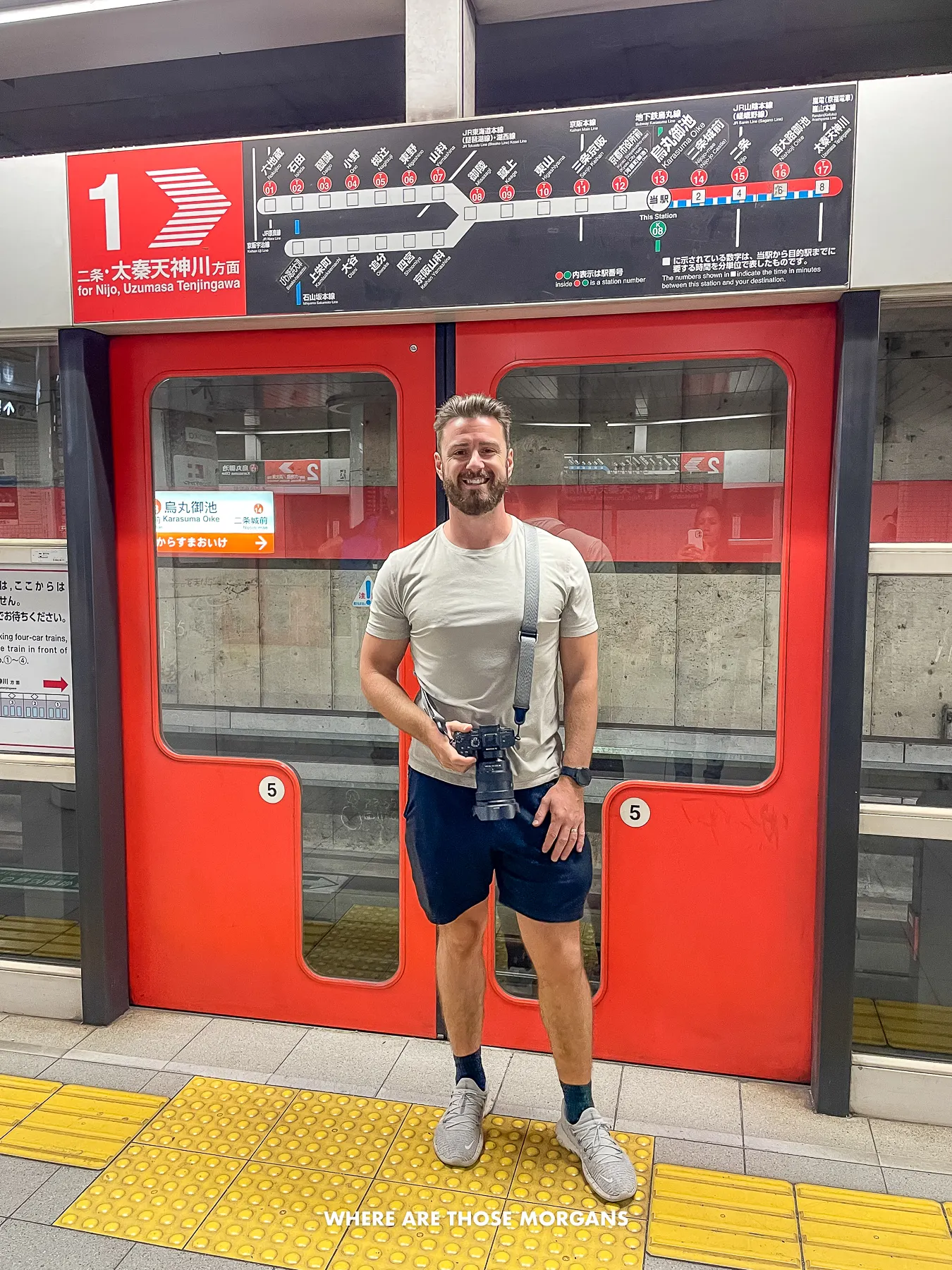
We’d get an early start, grab a big breakfast, and make our way to Nijojo-mae Station on the Tozai Subway Line (here’s a subway map) with the goal of arriving at Nijo Castle right as it opened at 8:45 AM. This way we’d beat the crowds and have a more relaxing experience at the UNESCO World Heritage Site built by Tokugawa Ieyasu in 1603.
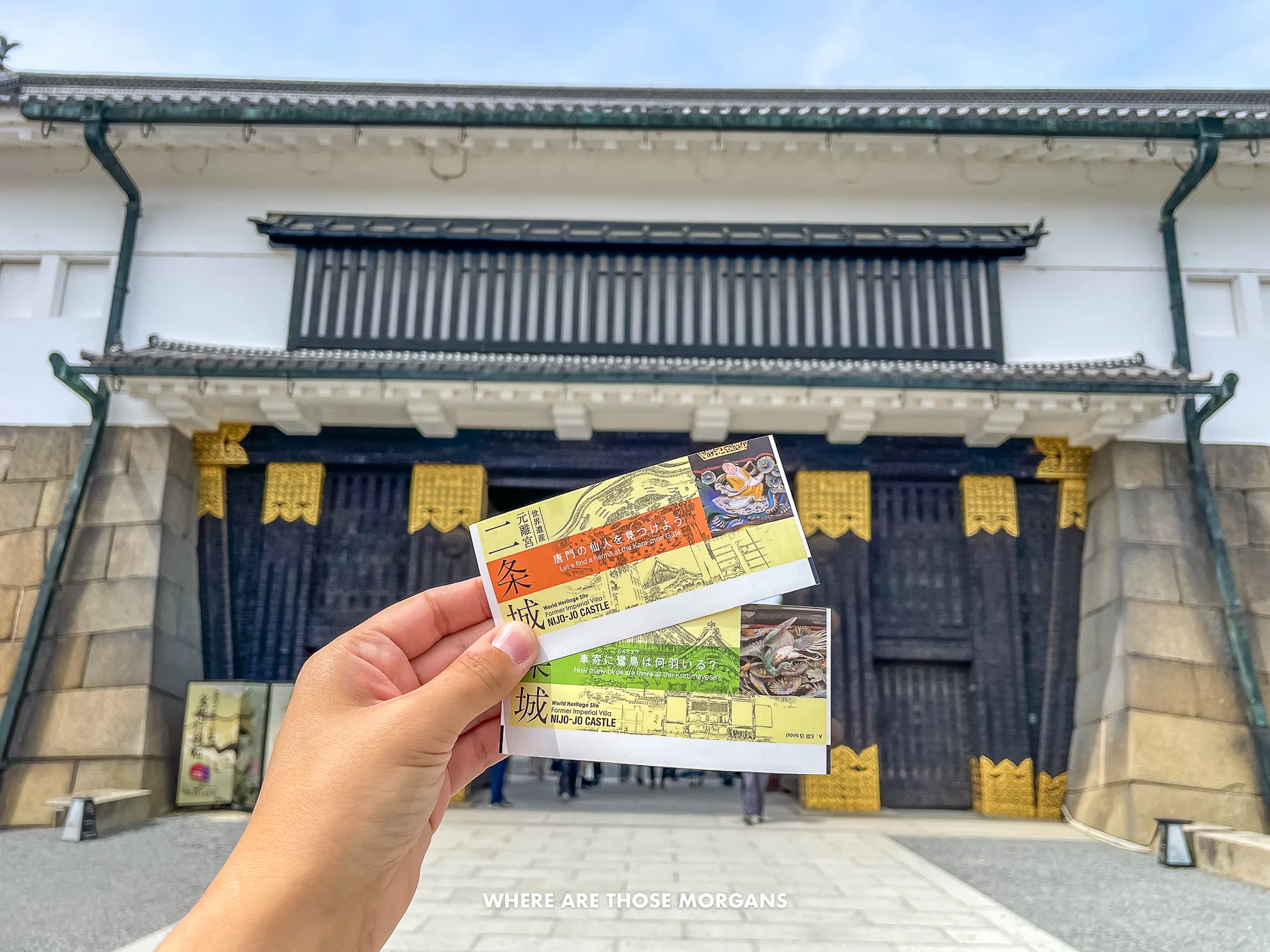
We paid 1,300 yen each to see the grounds and Ninomaru Palace during our visit in 2023. Since then, Honmaru Palace has reopened to the public (it was closed from 2007 – 2024), but it can only be visited by booking online in advance for an extra 1,000 yen. If it was our first time, we’d pay 2,300 yen in advance to see all areas of the castle.
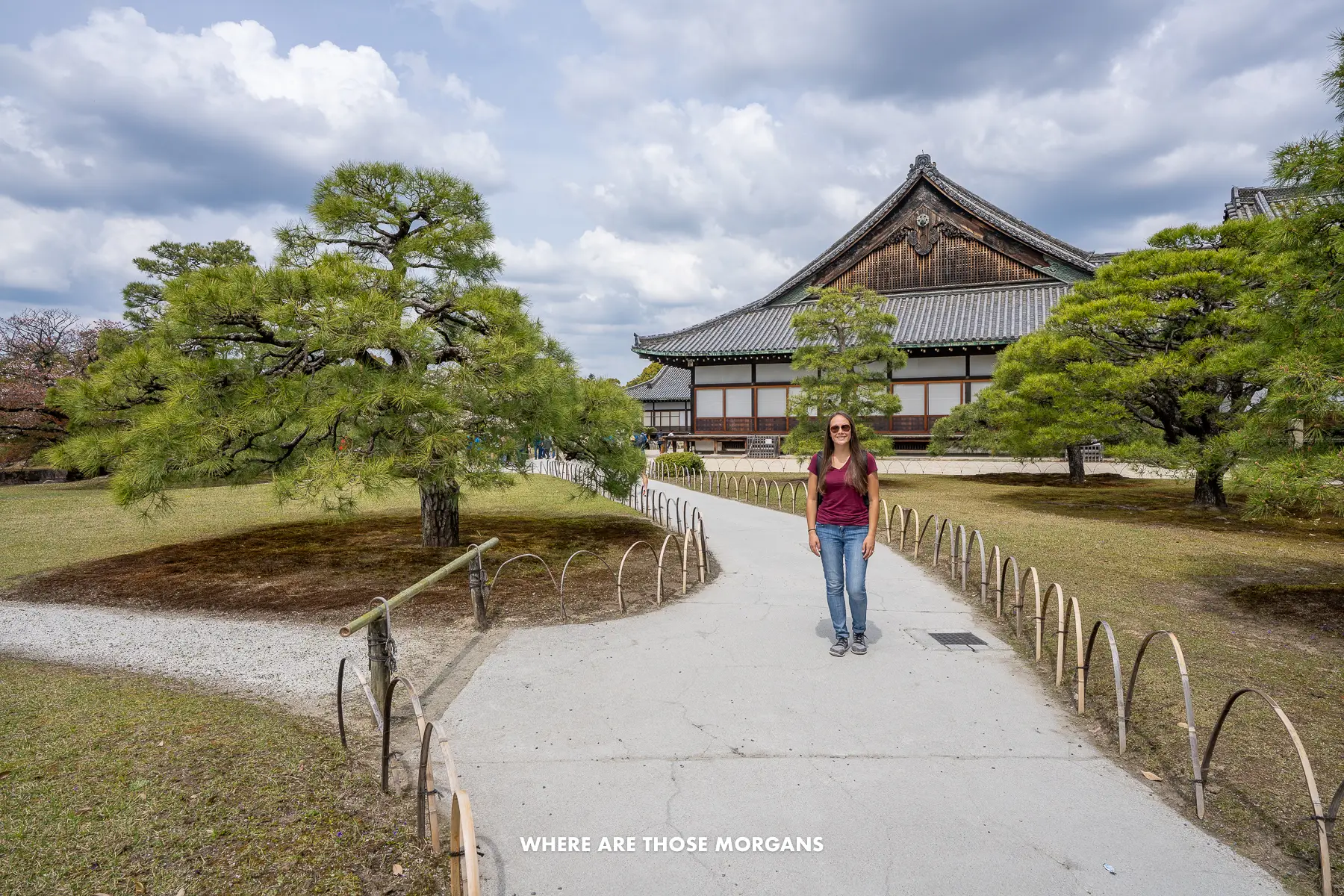
After entering through the stunning gold-leafed Kara-mon Gate, we’d start by walking the Ninomaru Palace corridors to hear the famous nightingale floors “chirping” – a deterrent to stop assassination attempts on the shogun. Then we’d explore the newly reopened Honmaru Palace along with the small garden areas and castle ruins, making sure we left by 10:30 AM at the latest.
Tour Kyoto Imperial Palace & Sento Gardens (11:00 AM)
From the intimidating samurai stronghold, we’d walk 20 minutes northeast through the quiet and residential Central Kyoto or take two subways from Nijojo-mae to Marutamachi. Either way, we’d reach the southwest side of Kyoto Gyoen National Garden, which had some of the most vibrant cherry blossoms from our spring visit.
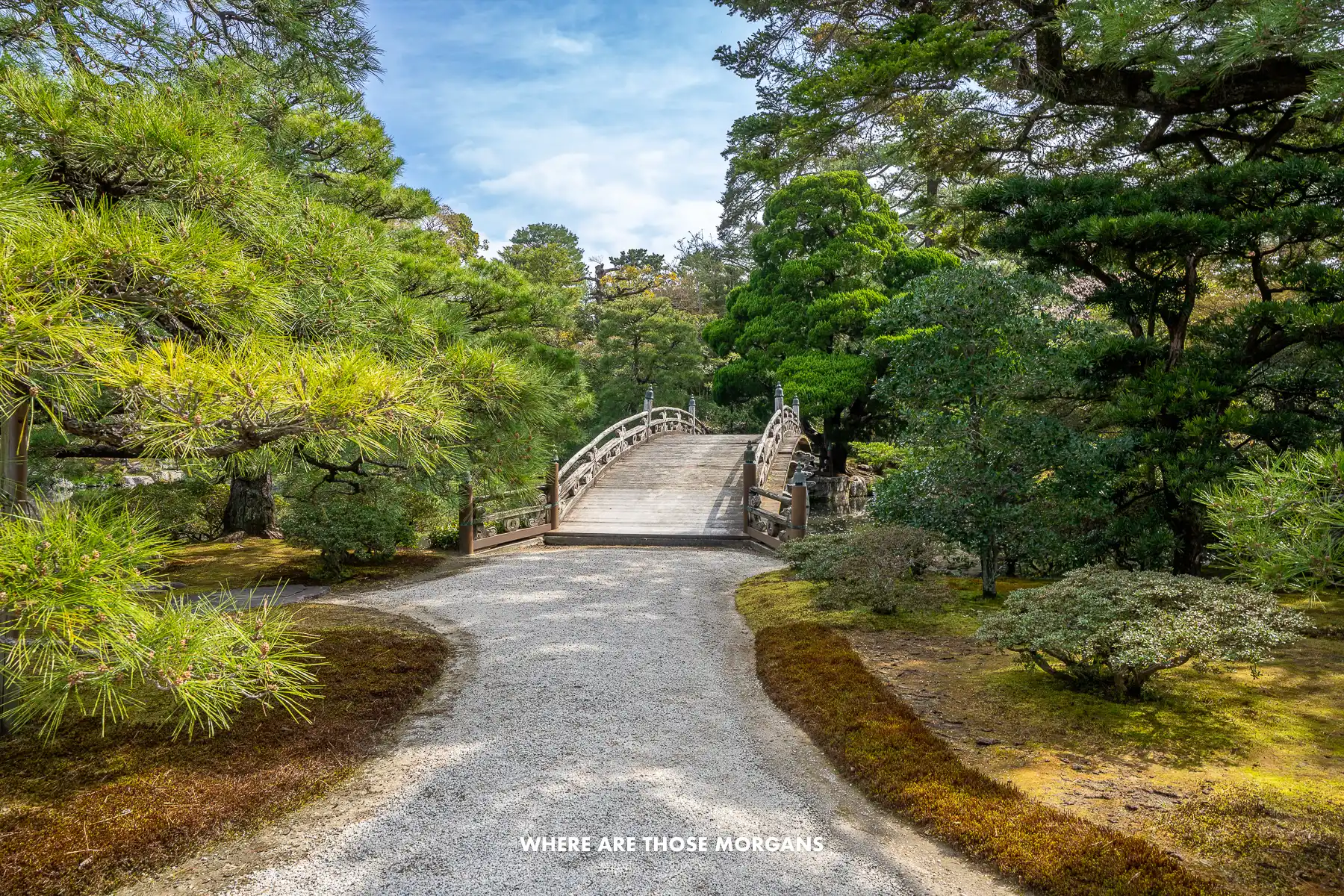
Then we’d quickly walk northeast through the gardens to Kyoto Sento Imperial Palace, arriving for the 11:00 AM time slot we’d pre-booked online. It’s free but it must be booked well in advance, otherwise you won’t be able to do it. We really enjoyed walking around the beautiful gardens as part of a compulsory guided tour, it’s well worth adding to a first timer’s itinerary.
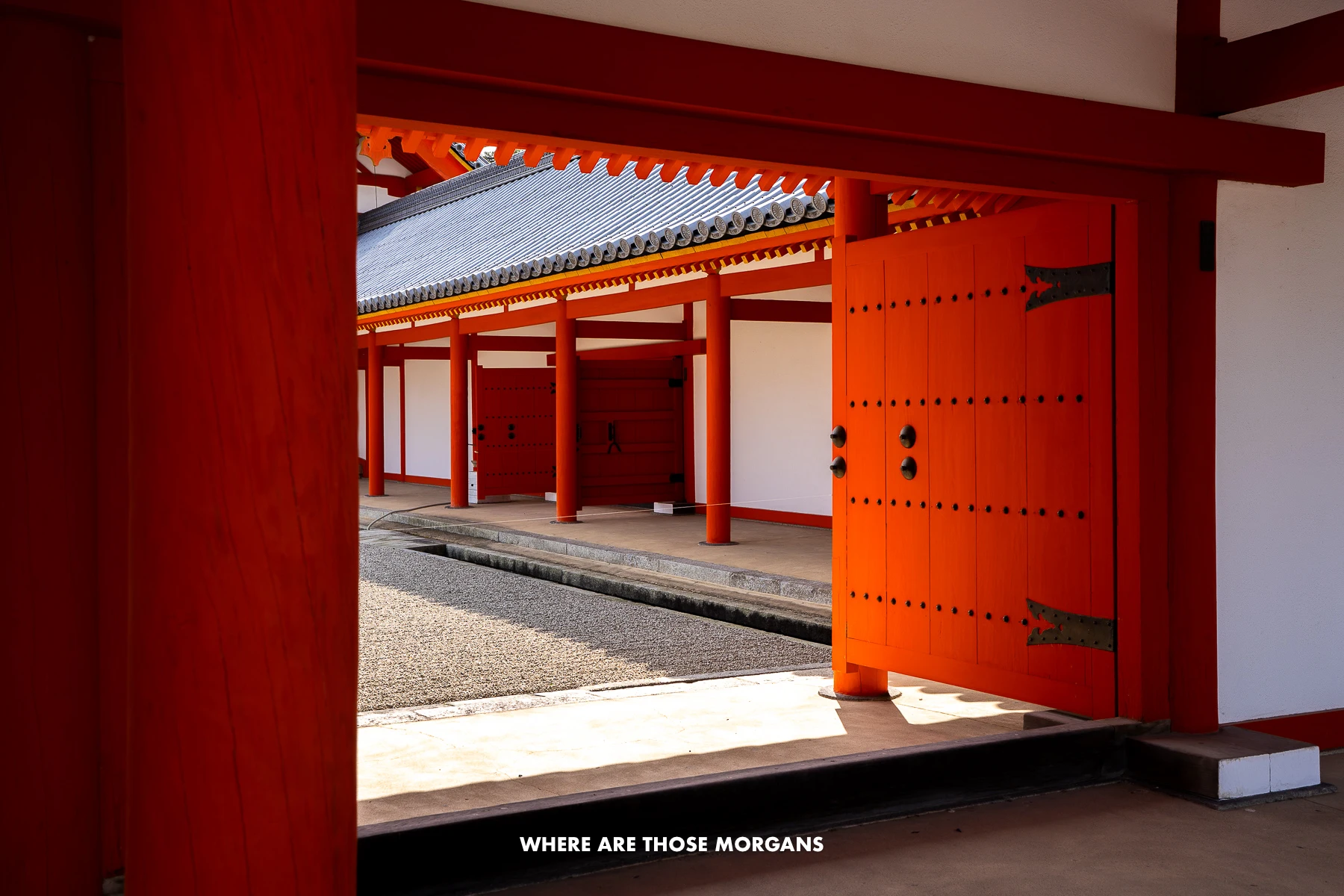
Following the tour, we’d walk to the main entrance to Kyoto Imperial Palace which is free and open to the public without a time slot. But we had to show our passports to enter, so don’t forget your passport. Sento was all about the gardens, but the main palace was all about the buildings, courtyards and vermilion-red doors. We took some of our favorite Kyoto photos here.
Grab Konbini Lunch At Marutamachi Station (1:00 PM)
After the castle and palaces, we’d be more than ready to refuel. But we wouldn’t hang around too long with a full sit down meal because we’d want to get across to Nanzen-ji Temple in good time. So instead, we’d make our way back to Marutamachi Station, and grab a bag full of snacks like rice balls, bento boxes, fried chicken and egg sandwiches from 7-Eleven or FamilyMart. This is called “konbini lunch”.
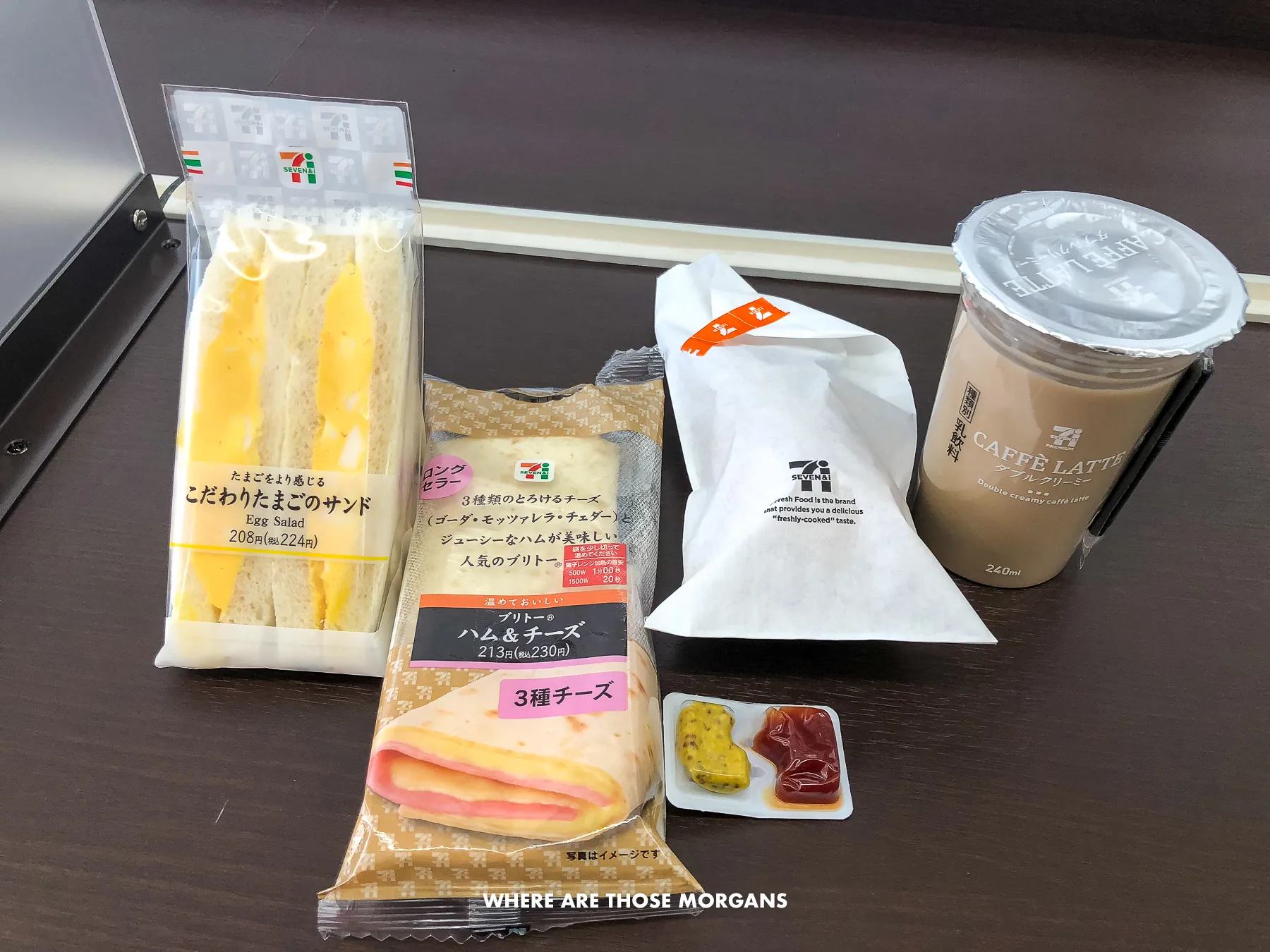
During both our long trips to Japan we honestly ate so many konbini lunches (and breakfasts!) at 7-Eleven, FamilyMart and Lawson’s. They’re the best for easy, time-saving and delicious snacks. On a daily basis you’d find us rifling through egg sandwiches, ham and cheese wraps, potato croquettes, fried chicken, corndogs, tinned coffee, soft drinks and water from convenience stores.
After eating our 7-Eleven lunch, we’d hop on the Karasuma Line southbound one stop and transfer onto the Tozai Line at Karasuma Oike eastbound heading for Keage Station.
Visit Nanzen-ji Temple’s Brick Aqueduct (2:00 PM)
From Keage Station it’s an easy 5 minute walk to Nanzen-ji Temple, Kyoto’s grandest Zen temple complex that was founded in 1291. We messed Nanzen-ji up during our 2023 visit because we didn’t allow ourselves enough time to fully explore the various highlights, which is why we’d skip the sit down lunch and get there by 2:00 PM.
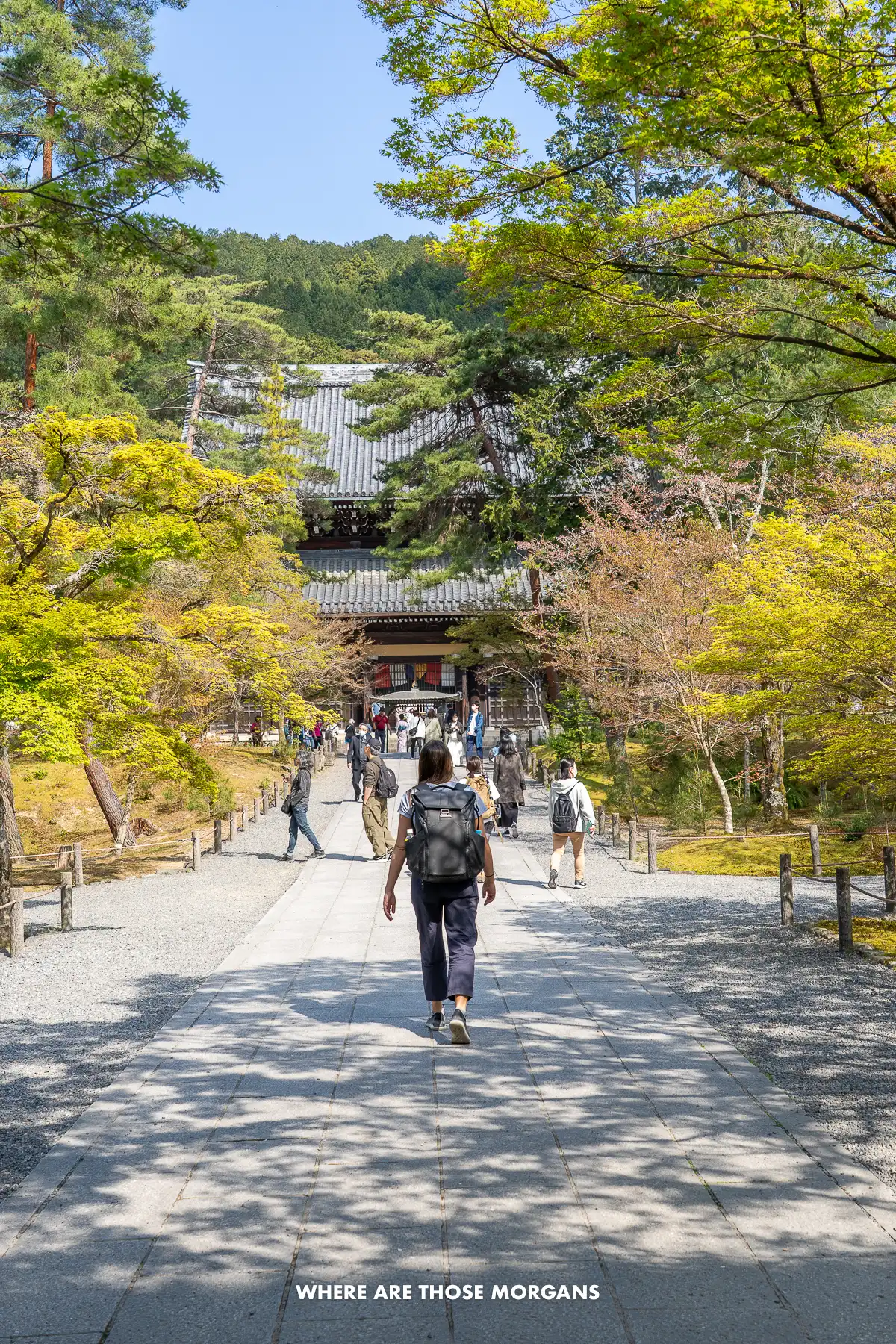
We loved walking underneath and on top of the Suirokaku brick aqueduct, it was a brilliant photo spot that looked like it belonged in Rome. But that’s all we had time for, so we didn’t get to climb the massive Sanmon Gate, explore the abbot’s quarters or see the rock gardens which was a real shame.
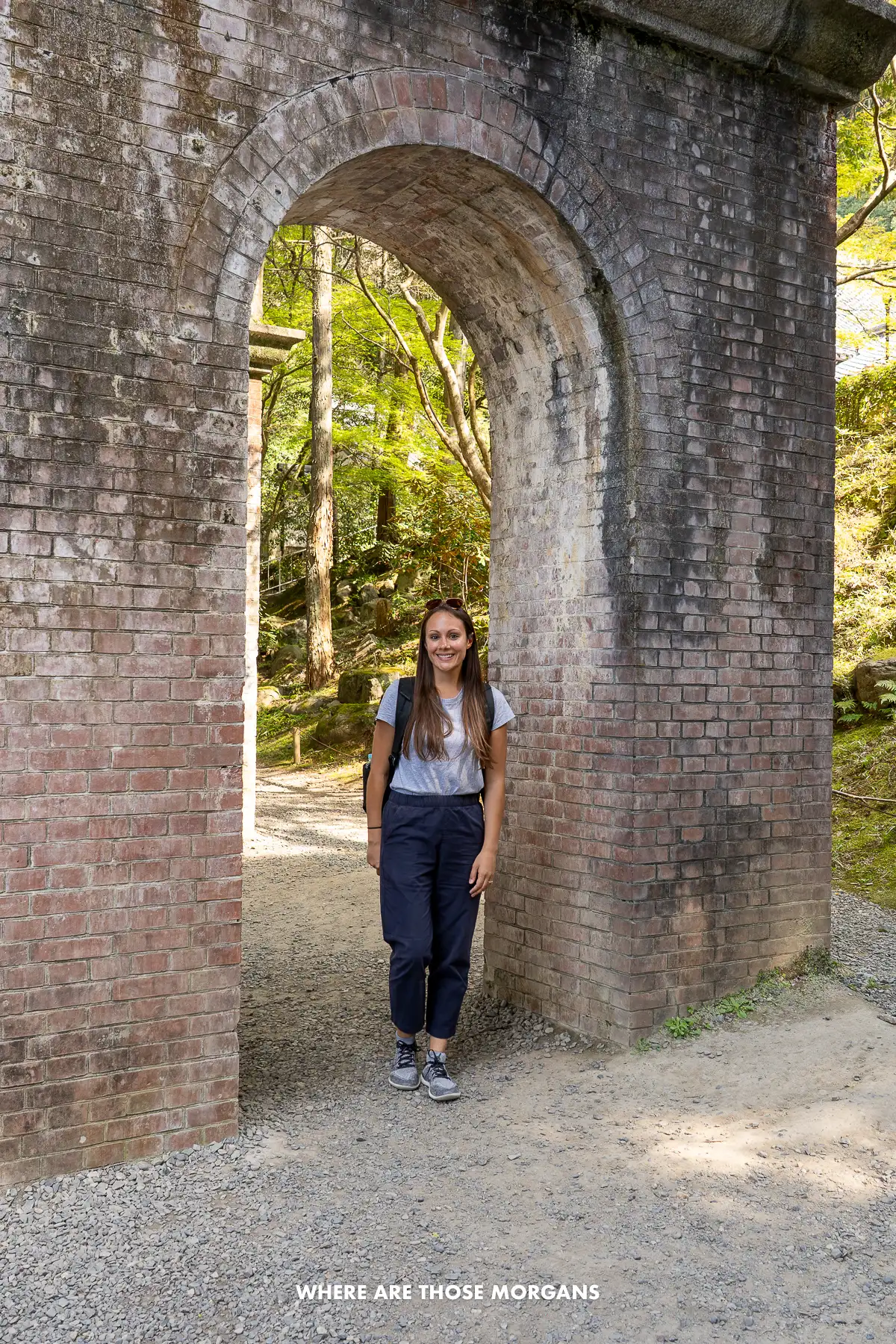
We underestimated Nanzen-ji, and we think most others do too. It was so much quieter than the likes of Kinkaku-ji and Kiyomizu-dera. so if we were planning a first time Kyoto itinerary for family, friends or our travel planning consultations, we’d say allow a full hour for Nanzen-ji Temple. It’s free to enter the grounds, but it costs 600 yen to climb Sanmon Gate and 600 yen to enter the main hall.
Walk The Philosopher’s Path To Ginkakuji (3:00 PM)
From Nanzen-ji, we’d turn right and walk north on Shishigadani Dori until reaching Eikan-do Temple. If we were doing well for time, we’d pay 600 yen each to spend 30 minutes exploring Eikan-do (especially in autumn when the fall foliage colors are peaking), otherwise we’d turn right after the temple and join the south entrance to Kyoto’s most scenic walk called the Philosopher’s Path.
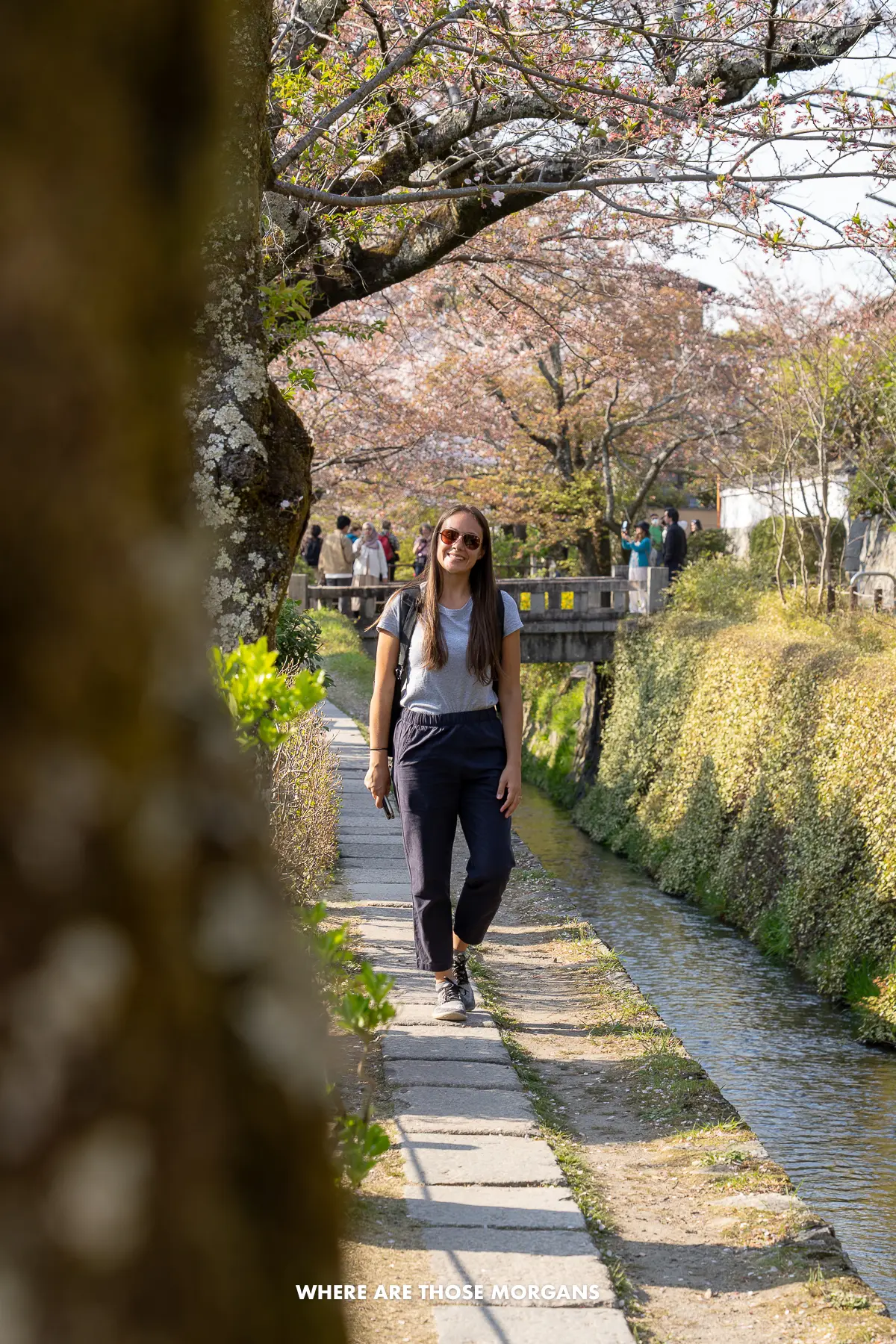
We absolutely loved our 2 km canal-side walk under radiant pink and white cherry blossoms. It’s flat, easy, and beautiful so we’d take our time and make sure to snap plenty of photos along the route. There are small shrines and cafes along the walk, but we’d only consider stopping if we would still arrive at Ginkaku-ji by 4:00 PM – which is located at the end of the Philosopher’s Path.
Visit Ginkaku-ji’s Silver Pavilion & Raked Garden (4:00 PM)
A relaxing slow-paced hour later, we’d turn right and walk the gradually inclining road leading to the entrance of Ginkaku-ji, also known as the Silver Pavilion. But unlike Kinkaku-ji’s actual gold color, Ginkaku-ji is not actually silver. That didn’t matter one bit – we found Ginkaku-ji to be calm, serene and incredibly photogenic.
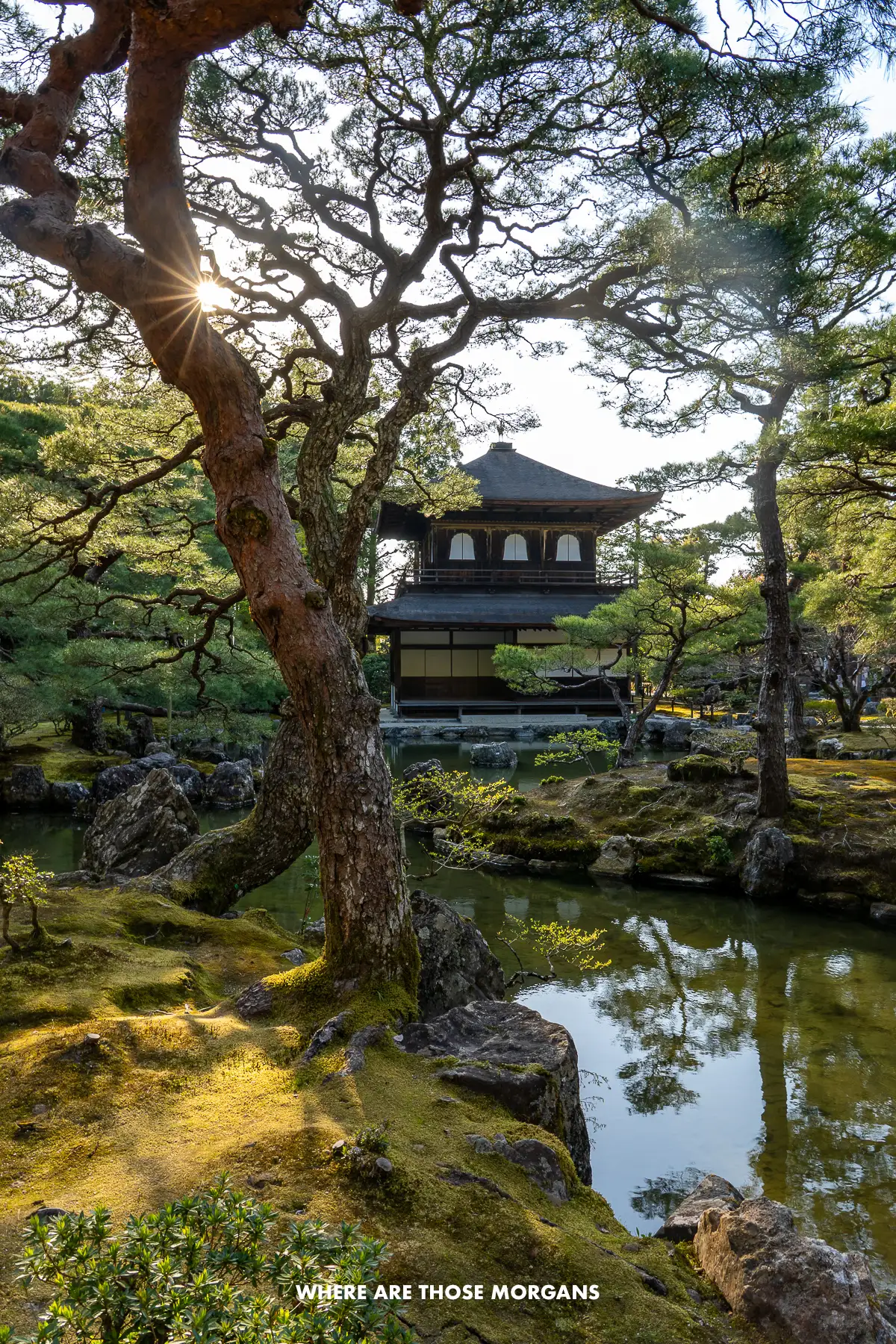
After paying 500 yen each to get in, we’d take photos of the Silver Pavilion from the stone path, then we’d walk over to see the raked white gravel garden called the “Sea of Silver Sand” with a Mt. Fuji shaped cone, which is known as “Moon Viewing Platform”. Next, we’d pass by the main hall and shogun’s tatami study, before walking through the lower moss garden with ponds, bridges and streams.
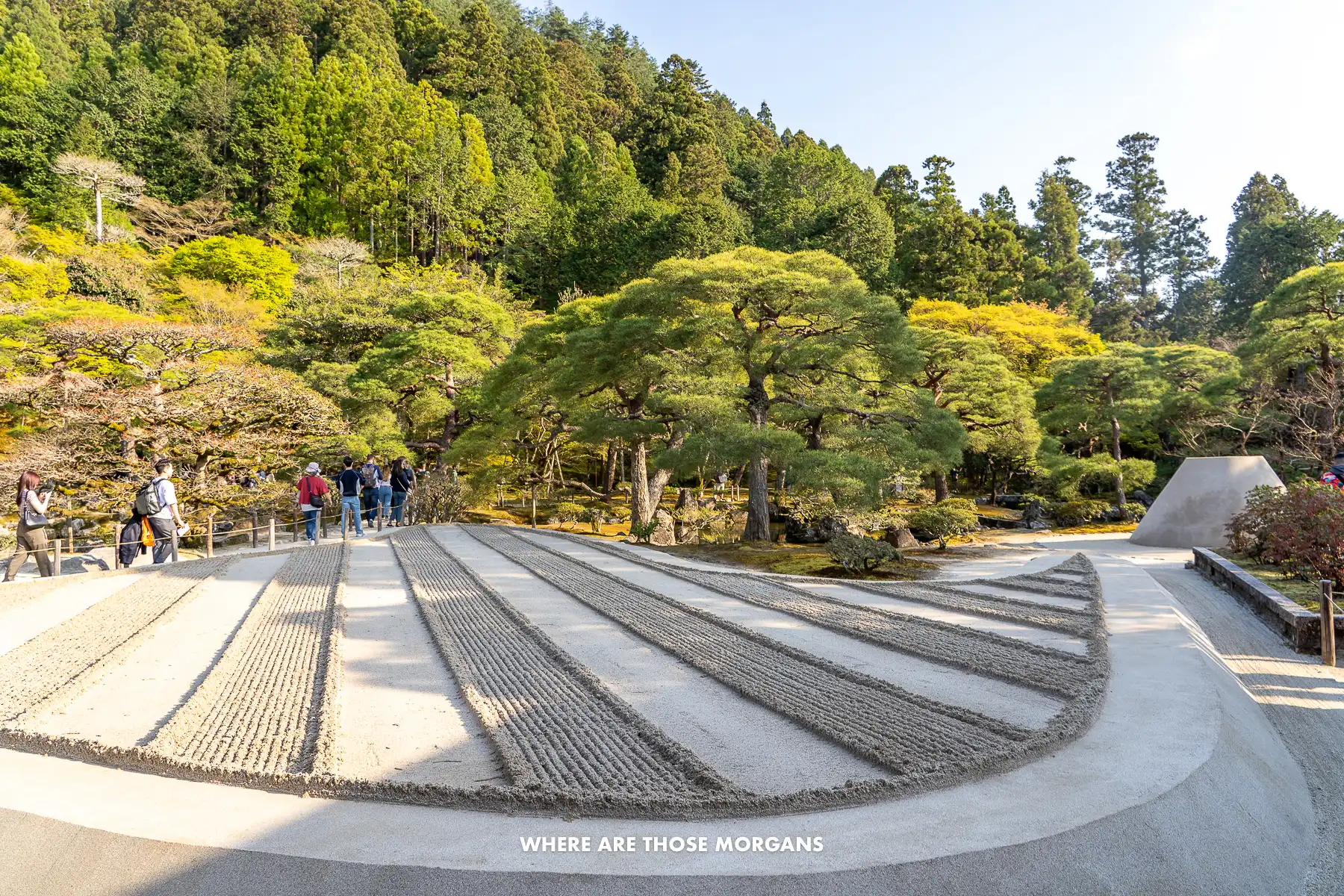
Finally, just before leaving we’d walk the upper garden loop which has a spectacular view over Ginkaku-ji and northern Kyoto, especially around 5:00 PM when the weather is clear. The sun had almost set by the end of our visit and we enjoyed soft golden yellows gently lighting up the temple grounds.
Explore Pontocho Alley & Grab Dinner (6:00 PM)
The main issue with Ginkaku-ji is a total lack of subway or train routes. Taking the bus from Ginkakuji-michi is the cheap option, but the lines might be a problem so we’d just suck it up and get a taxi back to our hotel in Downtown or Gion. We took a taxi during our visit, it took less than 10 minutes and didn’t cost us too much.
We’d skip Gion and the rest of Downtown for dinner and drinks on day 2, and instead we’d walk the full length of Pontocho Alley. Another mistake we made was visiting too many places during the day and being too tired to enjoy Kyoto’s foodie atmosphere in the evenings. We ended up skipping Pontocho Alley when it’s best from 6:00 PM to 9:00 PM, which we regret.
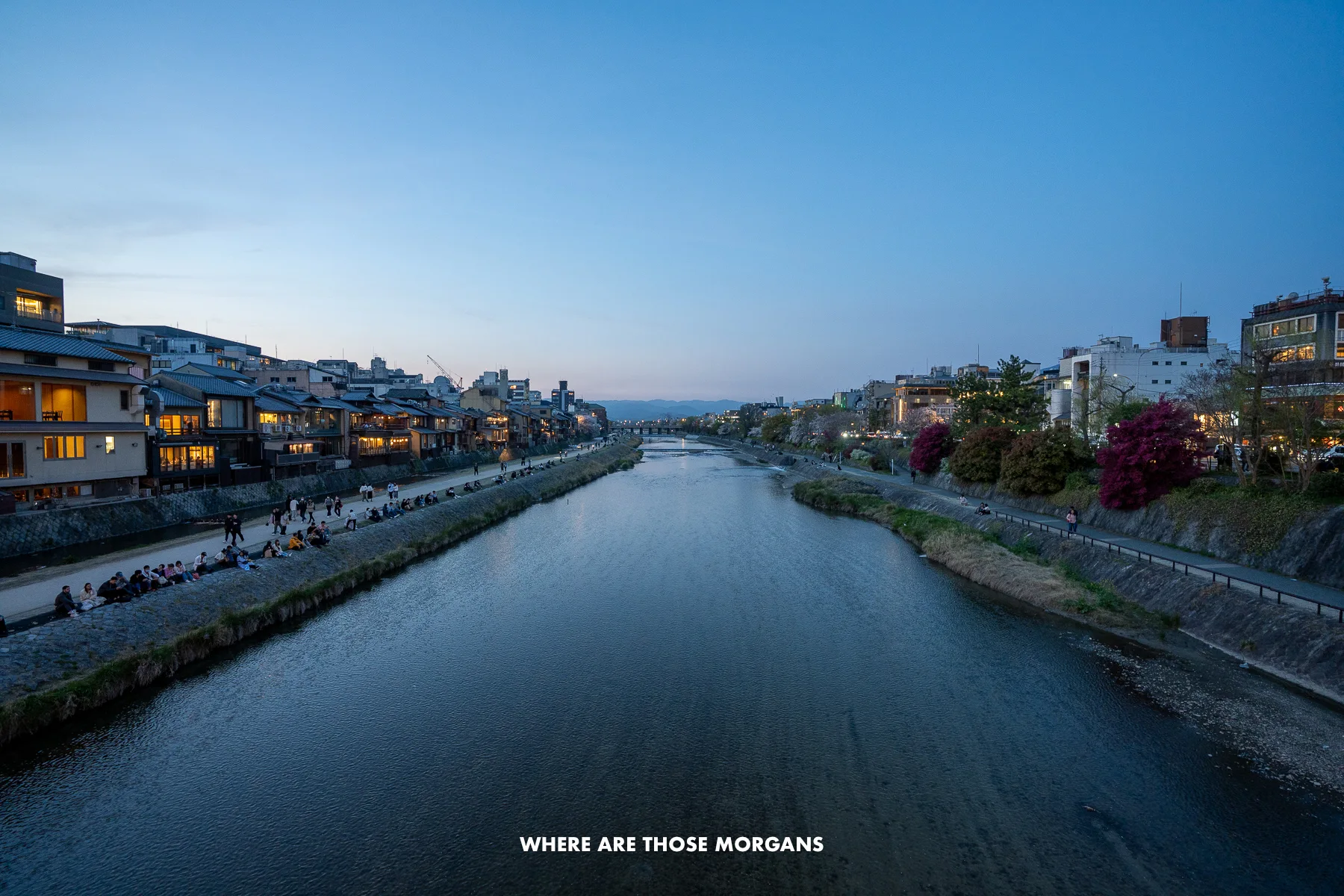
The narrow street would be filled with people enjoying delicious food and glowing lanterns, and many of the restaurants build temporary platforms over the Kamo River for diners to enjoy during peak months. Our advice is to make reservations in advance and choose a place that lets you dine in the open air above the river. There’s almost too many options, so have a good look at what’s available.
How to change it up: We actually added a visit to Heian Shrine between the Imperial Palace and Ninzen-ji during our visit. This is why we ran out of time at Nanzen-ji and were too exhausted to go out for dinner in Pontocho Alley. Heian Shrine had stunning gardens, so if you’re more interested in gardens, you might want to switch it for Nijo Castle, the Imperial Palace or Nanzen-ji.
Day 3: Fushimi Inari, Arashiyama & The Golden Pavilion Route
The focus of our third day is red gates, bamboo and a golden temple. This is our “big hitter” final day in Kyoto. It requires a few trains, a little bit of walking and a taxi at the end of the day – but this is the most effective way to finish off the major highlights.
Hike Through Fushimi Inari’s Torii Gate Tunnels (7:00 AM)
To kick our final day off in style we’d set a super early alarm, grab coffees from a 24-hour FamilyMart or 7-Eleven, and make our way to Gion-Shijo Station to take the Keihan Line train 5 stops south to Fushimi-Inari Station and the most famous attraction in Kyoto – Fushimi Inari Taisha. You’ve no doubt seen the thousand torii gate “tunnels” in photos, and in our opinion it should be a must-visit on every first-timer’s itinerary.
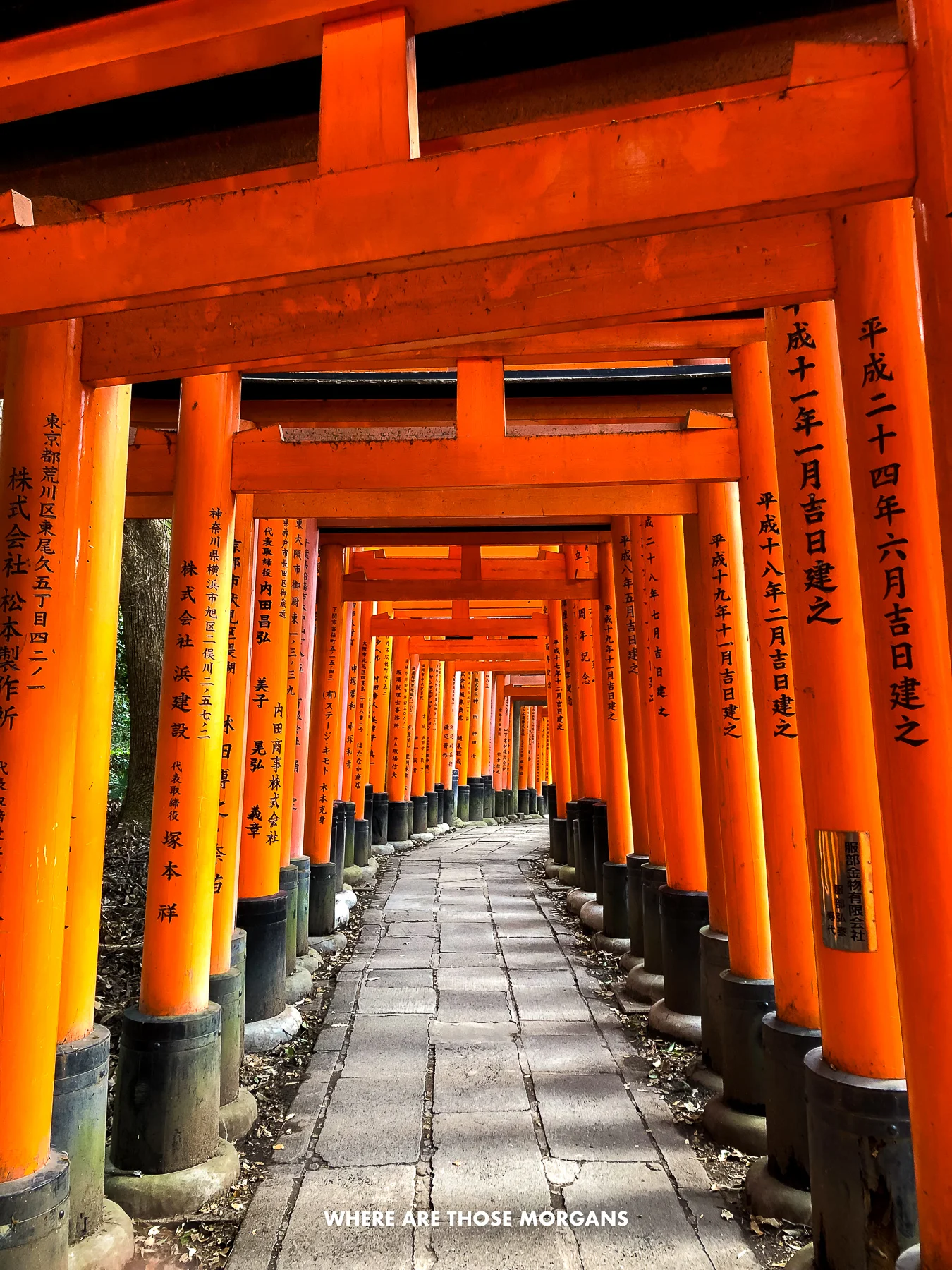
In 2018, we arrived at the massive shrine complex early in the morning but the bottom section (the first time we saw torii gates) was already swarming with people, selfie sticks and full-blown video shoots. Luckily, we expected this and visited in hiking gear so we could climb all the steps leading up Mount Inari. And a few minutes after beginning the climb, we had long sections of torii gate tunnels entirely to ourselves.
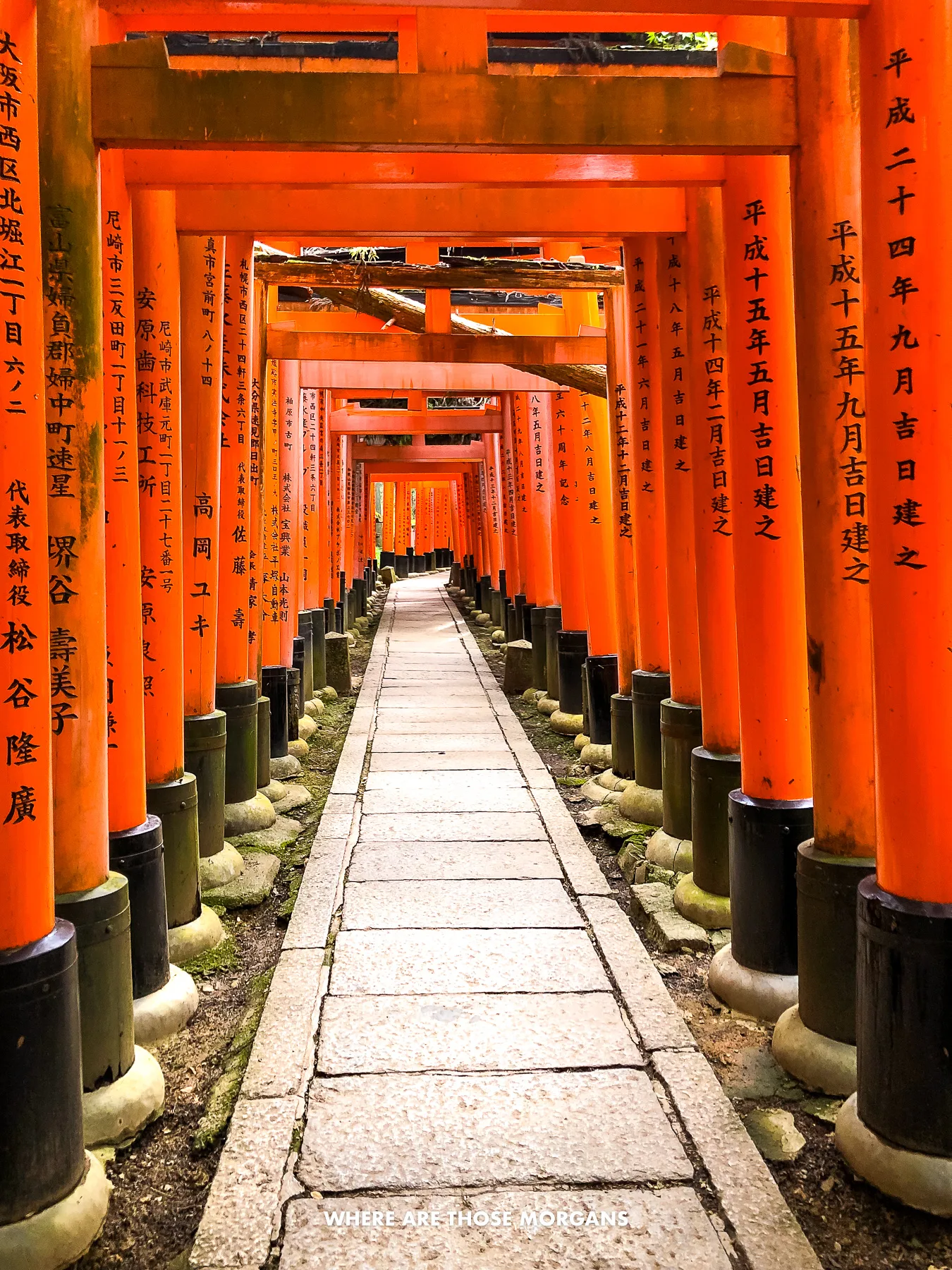
We thought it was well worth going all the way up, so for this itinerary we suggest arriving early and climbing to the top. It’s not a hard climb, and it passes by tons of small shrines in a loop. If you want people-free photos, you won’t get them near the bottom so plan to walk up at least some of the steps.
Walk Arashiyama Bamboo Grove & Okochi Sanso Garden (9:30 AM)
At around 8:30 AM we’d take the JR Nara Line from Inari to Kyoto Station, then transfer onto the JR Sagano Line to Saga-Arashiyama, arriving by 9:15 AM. Straight off the train we’d hot-foot it to the Instagram-famous bamboo forest, just to get it out of the way before every tour bus in Japan arrived.
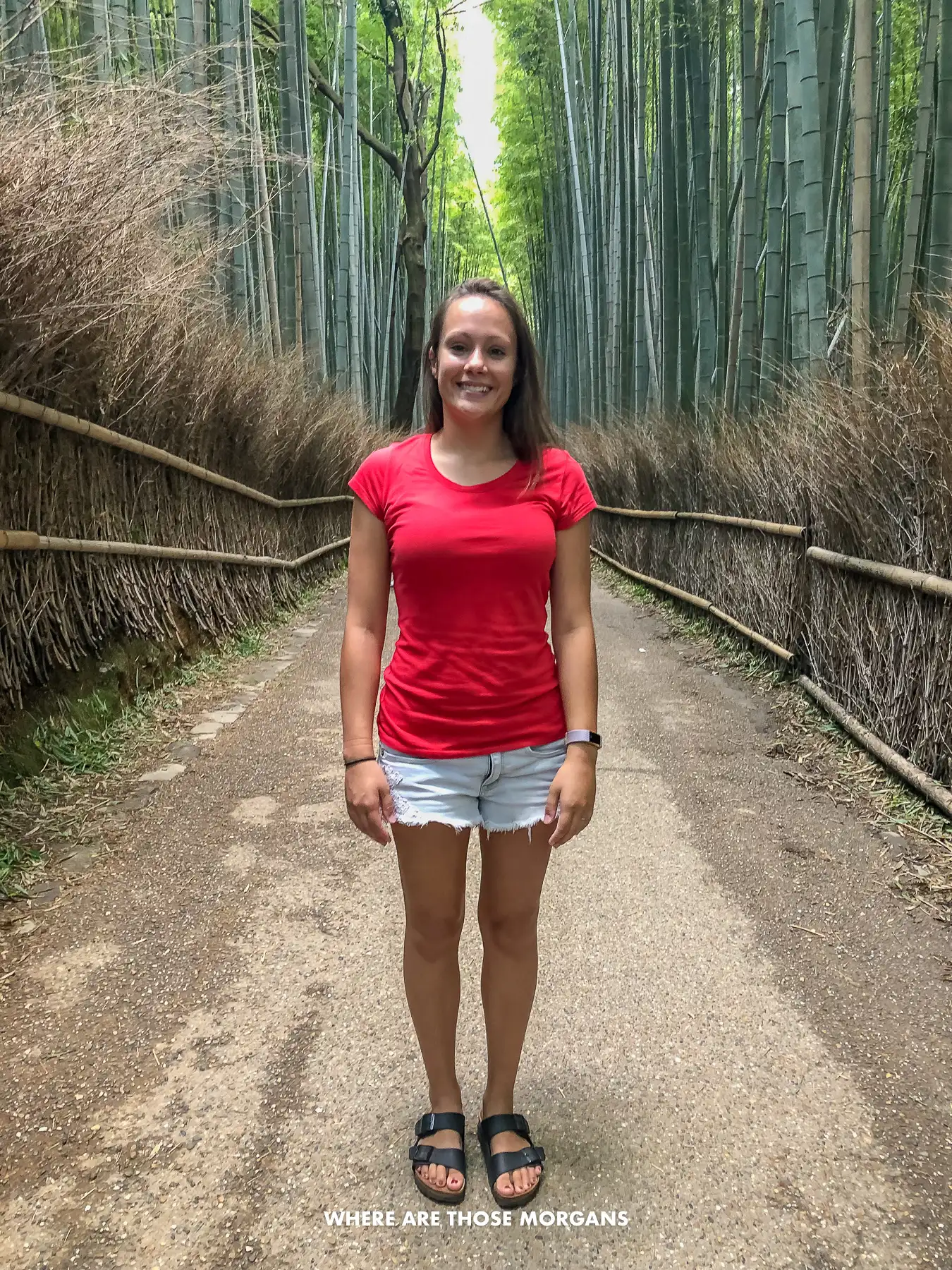
Now, it’s important to know that Arashiyama Bamboo Grove will already be busy by 9:30 AM. But here’s the thing – we did it super early in 2018 and thought it was massively overrated. For us, it’s the most overhyped attraction in Kyoto. Yes, it’s cool. But it’s also a long way from Downtown or Gion, the actual “strip” of forest is tiny, and you’d have to strike it so lucky to have it to yourself anyway.
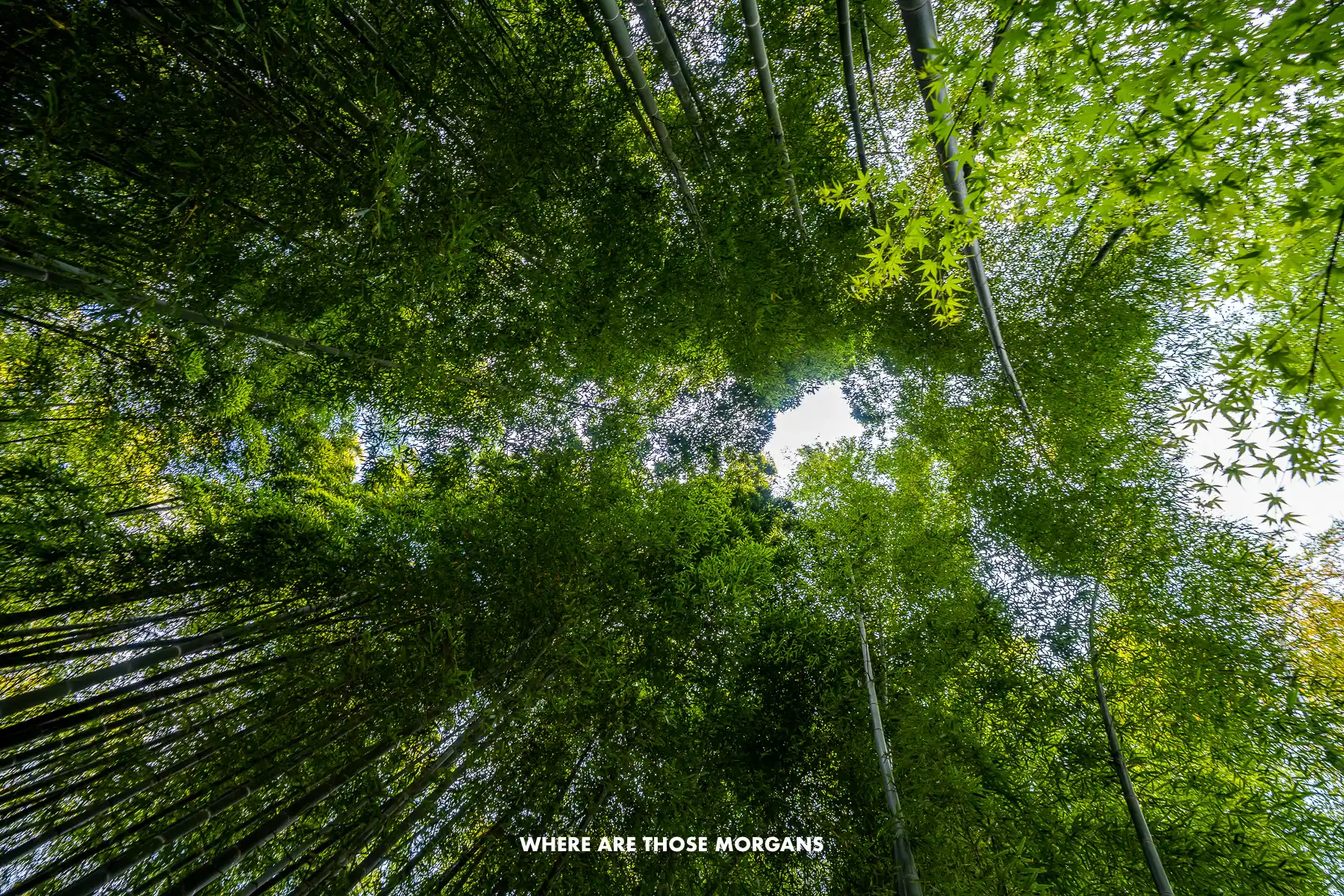
Personally, we preferred the bamboo grove in Kodai-ji Temple on day 1. It was effectively the same thing but without the crowds or anxiety-inducing Instagram-buzz. Anyway, back to this itinerary – we’d walk through the grove for 15 minutes, take a few photos (looking up was our favorite), and then pay 1,000 yen each for a serene half hour walk around Okochi Sanso Garden, which includes a cup of matcha tea and a snack.
Explore Tenryu-ji’s Zen Gardens (10:30 AM)
After Okochi Sanso Garden, we’d cut back through the bamboo grove on the way to Tenryu-ji Temple, arriving by 10:30 AM. We made a mistake during our 2018 visit to Arashiyama – with limited time we did the bamboo grove, but skipped Tenryu-ji in favor of going up to the Monkey Park Iwatayama. The monkey park was okay, but it was a bit of a trek to get there and we wished we’d done the Zen gardens instead.
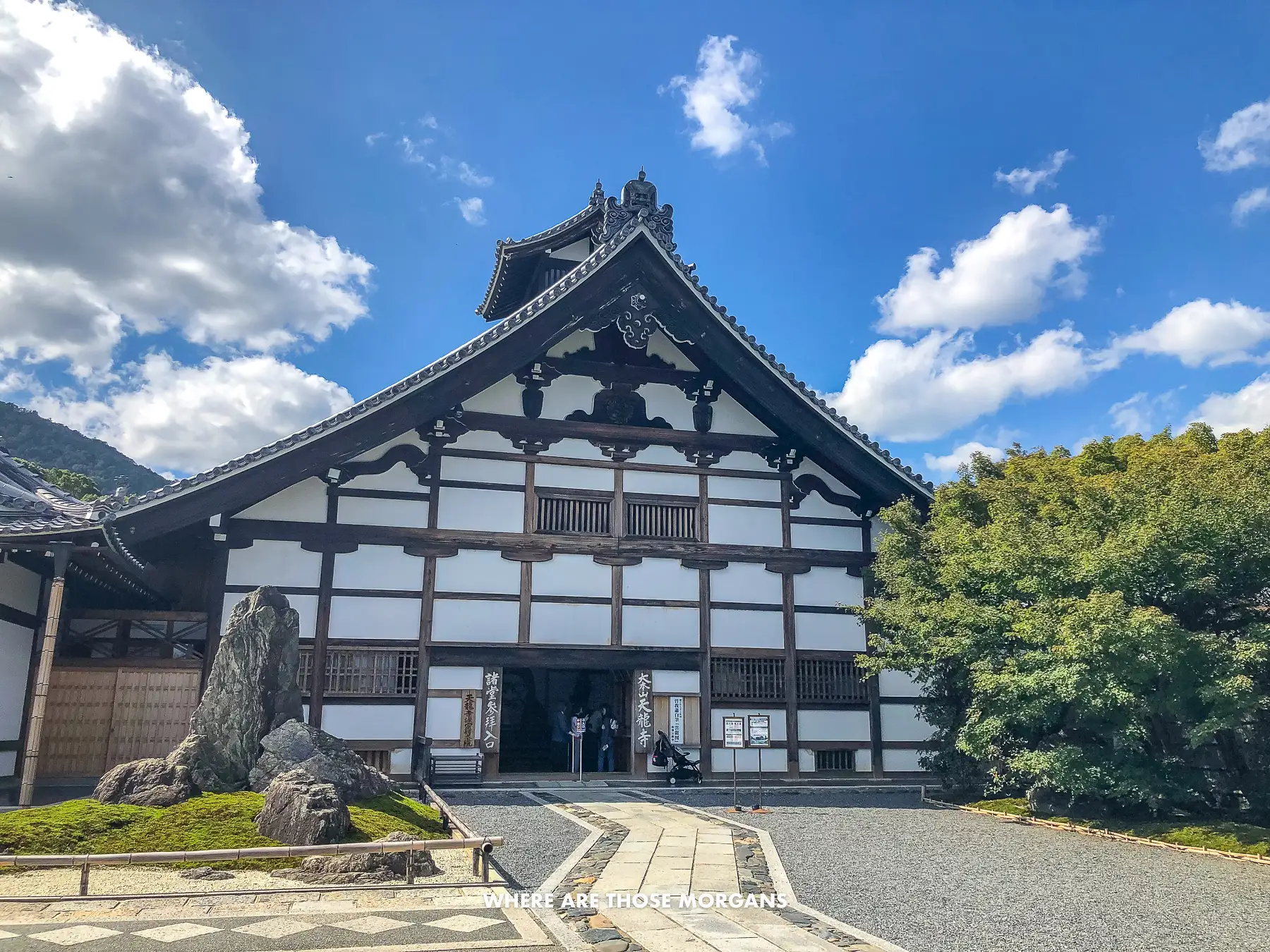
If it was our first time in Kyoto again, we’d pay 500 yen each to go inside Tenryu-ji Gardens (it’s important to note the garden has a separate payment to the actual temple itself). We’d prioritize the gardens because we later learned the 700-year old Sogen Pond Garden is a “must-see” with mountain views and barely any crowds.
After the Zen garden, we’d either pay another 300 yen each for a quick look around inside Tenryu-ji Temple if we had spare time, or we’d leave the complex on its eastern side before walking through the most built up area in Arashiyama heading for the Togetsukyo Bridge.
See Togetsukyo Bridge & Lunch In Arashiyama Village (11:30 AM)
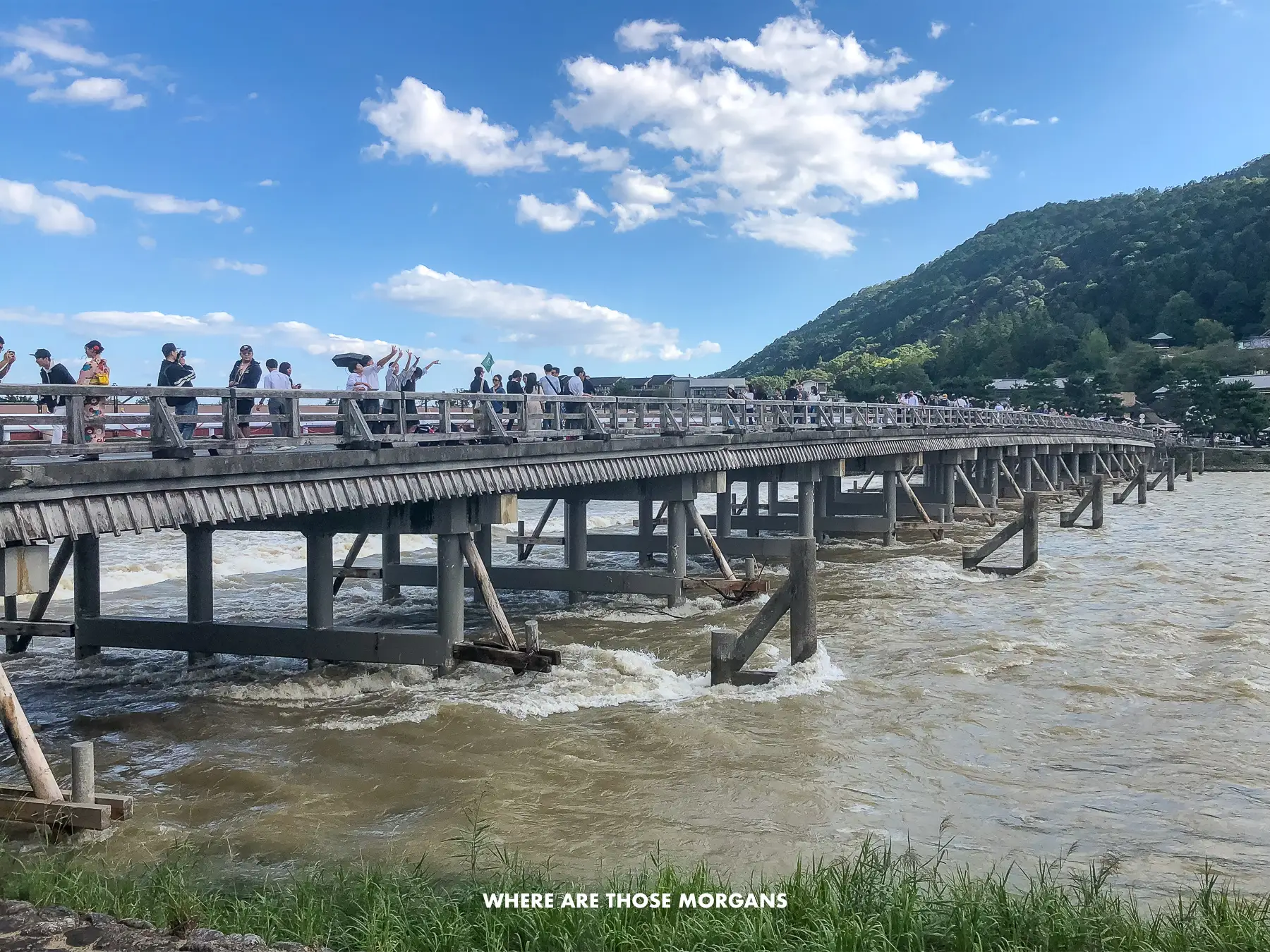
The long wooden Togetsukyo Bridge spans the Katsura River and it’s a great photo op, but we wouldn’t cross to the other side. Instead of crossing (and heading to the monkey park), we’d turn straight back around and find a place to eat lunch between the bridge and Arashiyama Station. This area gets jam-packed with day trippers, so lunch is the main meal of the day for restaurant owners here.
We’d be spoiled for choice with tons of great options including Sushi Naritaya for sushi, Yoshimura for soba noodles, Ittaikan for Japanese curry, eXcafe is we just wanted matcha tea and dango (fried rice balls on skewers), and Gion Duck Noodles for ramen or duck and noodles – this one looks fantastic.
Kristen’s top tour option: If Arashiyama is a place you’d really like to see properly, this top rated guided tour hits all the highlights and hidden gems. It has start times between 9:00 AM and 10:00 AM, so you could still do Fushimi Inari first, then skip Ninna-ji and Ryoan-ji, before going to Kinkaku-ji after this tour.
Visit Ninna-ji Temple’s Five-Story Pagoda (1:00 PM)
After lunch we’d get on the Randen Tram departing Arashiyama Station around 12:30 PM. We’d transfer to the Kitano Line at Katabiranotsuji Station, then get off at Omuro-Ninnaji Station. From there it’s a 2 minute walk north to Ninna-ji Temple’s main entrance. Visiting Ninna-ji, Ryoan-ji and Kinkaku-ji from Arashiyama is the most efficient way to squeeze the west and northwest attractions into one day.
During both our visits to Kyoto we prioritized other areas and attractions that didn’t work out as well as we’d hoped. As a result, we never made it to either Ninna-ji or Ryoan-ji (which we’ll get to next) – and this was a mistake. Next time we’ll definitely do both, and we’d include them in a first time itinerary based on what we’ve learned from researching since.
After arriving to Ninna-ji we’d focus on the Goten (palace), which was built in imperial palace style and features a traditional garden. Then we’d see the Kondo (main hall), and look for photo spots from inside the buildings overlooking Ninna-ji’s striking five-story pagoda. It costs 800 yen to see the palace buildings, but the grounds are free (except during cherry blossoms).
See Ryoan-ji Temple’s Famous Zen Rock Garden (2:30 PM)
From Ninna-ji we’d walk 15 minutes up Kinukake-no-Michi to Ryoan-ji Temple (if you don’t want to walk, take bus #59 which runs between all three temples). After paying 600 yen each to enter, we’d start with a relaxing stroll around Kyoyochi Pond and then we’d see the Tsukubai (stone water basin).
But the main reason we’d include Ryoan-ji is because it’s home to the most famous rock garden in Japan. There are 15 carefully placed rocks in a raked white gravel garden, but at least one rock is always hidden from view no matter where you’re standing. It was created sometime around 1500, and the whole point is to sit on the veranda, unplug from the world and contemplate.
End At Kinkaku-ji’s Golden Pavilion (4:00 PM)
Once we were done at Ryoan-ji, we’d get back on Kinukake-no-Michi and walk 20 minutes (or take another bus) to Kinkaku-ji – Kyoto’s famous Golden Pavilion. Now, we did Kinkaku-ji both times we visited Kyoto and while we’re happy to admit it is a stunning scene, we also have to say we think it’s a bit overrated. That said, we know it’s one of Kyoto’s most popular sites, so we’d still include it.
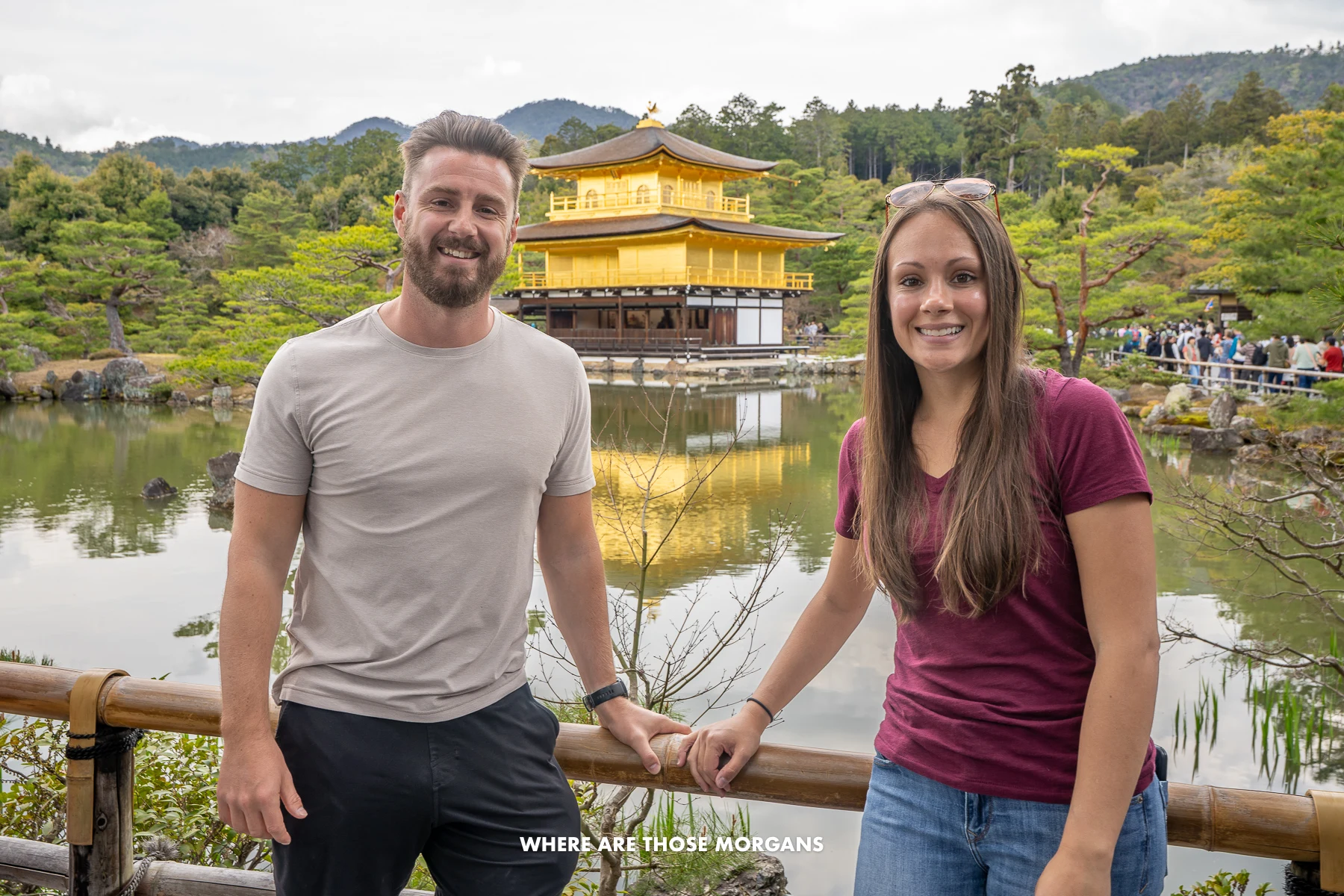
Look, the pavilion is spectacular – not just the gold color but more so the three different architectural styles used. And if you strike it lucky on a calm day so it reflects in the Mirror Pond, you’ll get a magical photo. But it’s a long way out from other attractions in Kyoto, it’s hard to reach, and the crowds can get out of control. This is where you’ll see the tourist coaches turning up.
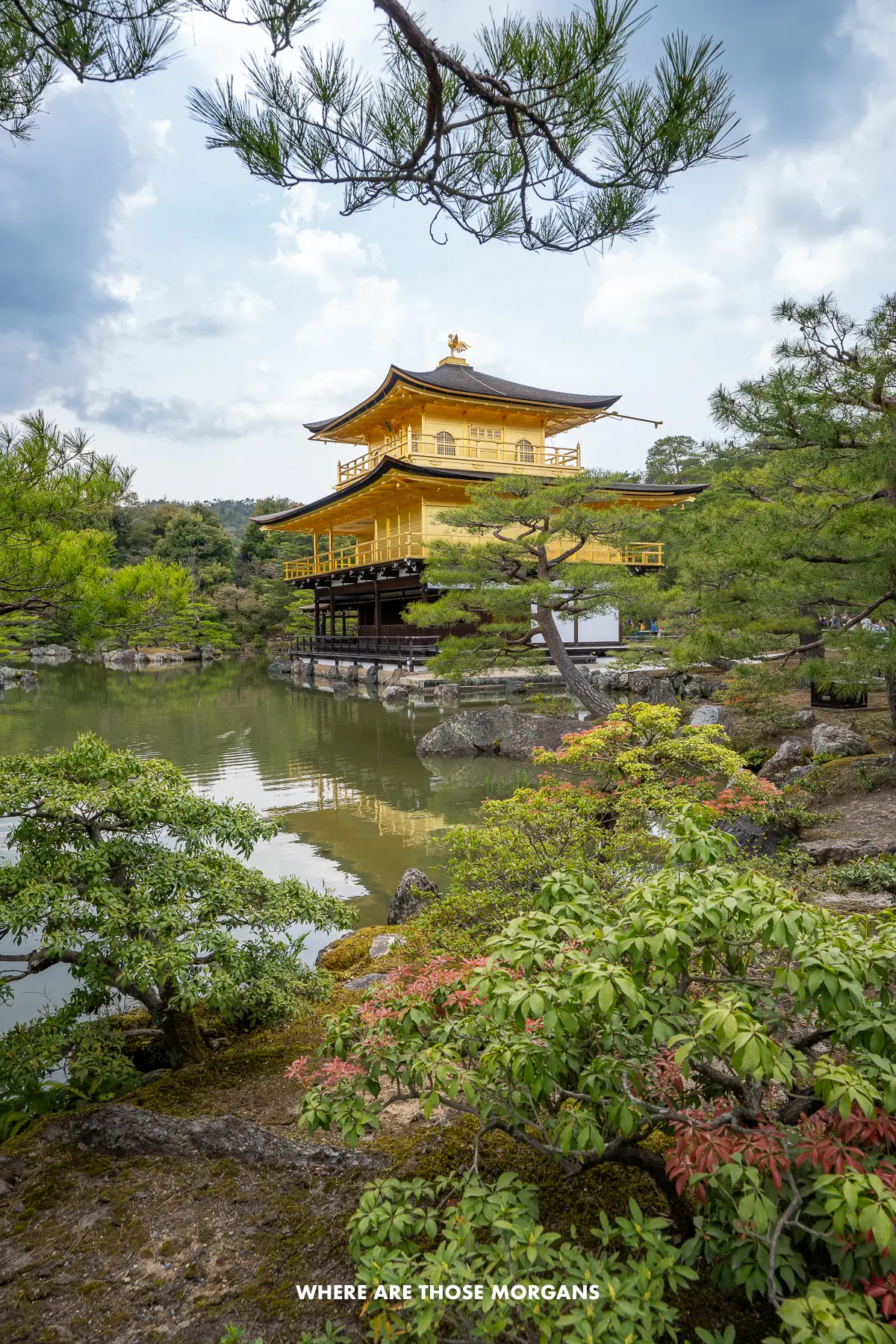
Anyway, we’d pay 500 yen each to enter, then we’d stop right after getting inside to take our photos because that’s the best vantage point and it’s a one-way walking route. Hopefully in the late afternoon we’d enjoy soft light illuminating the golden pavilion. Once we had our reflection photos (we didn’t have calm either morning we visited), we’d walk through the garden and complete the short loop.
Eat Dinner In Favorite Neighborhood From The Trip (6:00 PM)
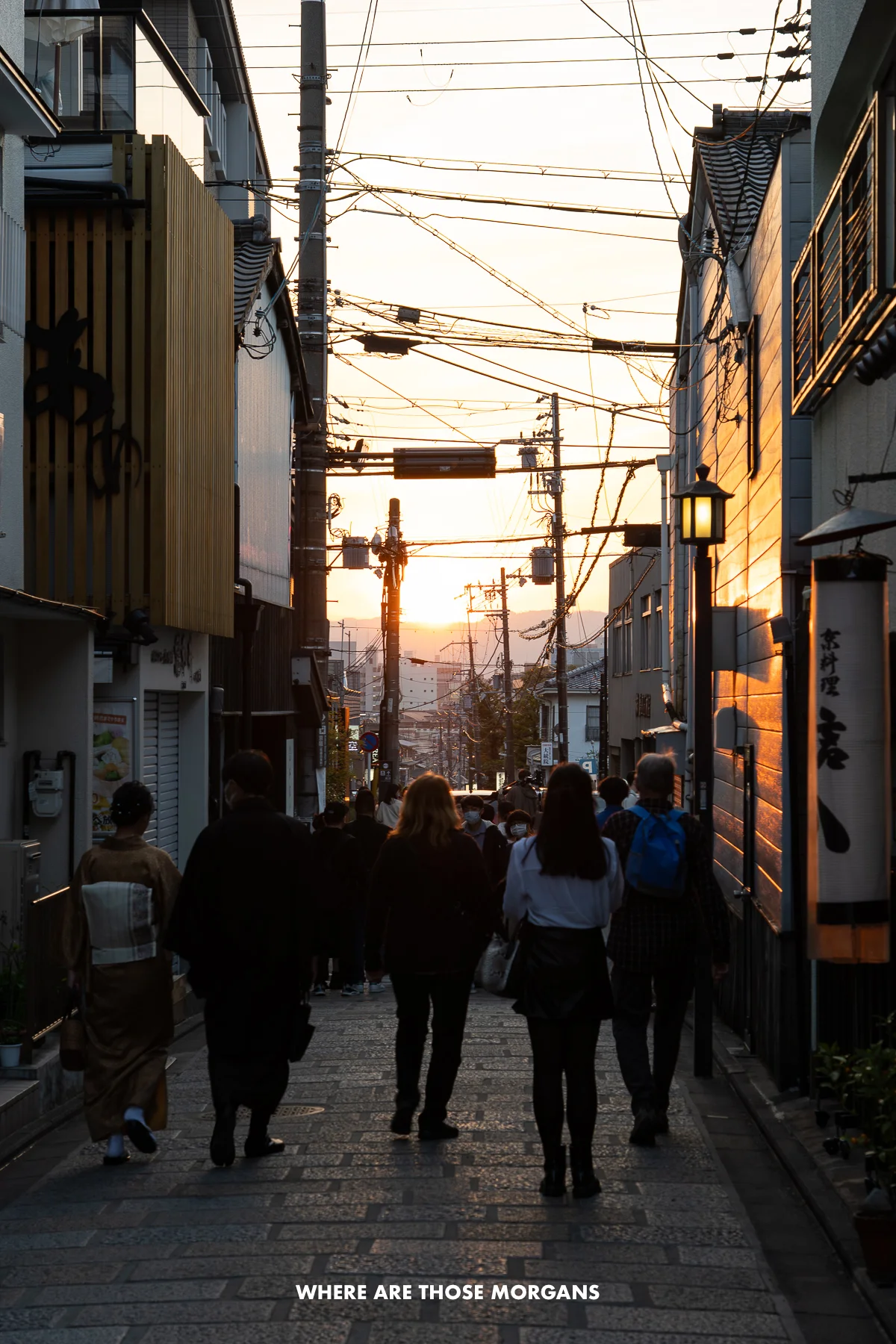
After Kinkaku-ji, we’d take the hit and pay extra for a taxi back to our hotel in Downtown or Gion. It would be worth it to avoid long lines and crowded buses with changes, or a bus to the closest train which would still take ages. And for our final evening in Kyoto we’d grab dinner in whichever place we liked the most from days one and two.
That could be in the heart of southern Higashiyama near the two pedestrian streets Ninenzaka and Sannenzaka, Gion, Nishiki Market area or Pontocho Alley. A few of our Kawaramachi recommendations include Kamehameha for okonomiyaki, Chao Chao Gyoza for dumplings and Goichi Pizza for Neapolitan style pizza – yes, we know this is Japan and not Italy, but on longer trips you’ll need a break, trust us!
If you’re not big on doing sit down dinners or you’d rather tick off more attractions in the evenings, take a look at teamLab Biovortex for an immersive art and technology experience (we’ll definitely do this next time), and the cherry blossom illumination at To-ji Temple if you’re visiting in spring (we did this and it was so cool).
Or take a cooking class instead – this ramen cooking class and this sushi making class both have 7:00 PM start times, which would fit into any evening of our itinerary.
How to change it up: If you absolutely must get a people-free early morning photo in Arashiyama Bamboo Grove, go there first and move Inari Fushimi to the end of the day instead. The shrine will be busy but further up the mountain you should still be able to get some photos of torii gate tunnels with no people.
Kyoto Itinerary Map
Map key:
- Red – Day 1
- Blue – Day 2
- Green – Day 3
How to use this map: Click the map above to activate, zoom in and out, and tap any icon to see more information. See a list of all attractions by clicking the arrow icon in the top left, or see a full version of the map by clicking the “view larger map” icon in the top right. When you’re in Kyoto you can open the map, tap the next place you want to visit and get directions. Stops for each day on the map are listed in order, so you can easily follow the route.
How to save this map: Click the small star next to the map title – this will add the map to your Google account. Open your Google Maps app, tap “saved”, then tap “maps” and open this map.
Planning For 3 Days In Kyoto
From our extensive time spent in Kyoto, we learned about budgeting and key tips you should know before your trip. These are the things we would love to have known before we visited:
3-Day Budget Breakdown
We found Kyoto to be surprisingly affordable on both trips, especially compared to the likes of Tokyo and Hakone. The biggest expense is usually hotels, but there’s actually heaps of fairly priced mid-range hotel options in the Downtown and Gion areas that are perfect for the average couple or family following our itinerary.
We tried to eat at a blend of convenience stores, hole-in-the-wall ramen spots, and the odd sit-down restaurant to keep our food and drink expenses reasonable. Getting around was cheap enough, but we did have to pay for more taxis than we did in Tokyo because the train network isn’t as extensive in Kyoto. In terms of attractions, it’s mostly temples that have 500 yen entry fees (that’s just US $3).
Now, it’s impossible for us to say “here’s exactly how much you’ll spend on this trip” because of the massive variation in every person’s style, taste and budget. But roughly speaking, here’s how much a couple might spend by following our itinerary (3 days and 3 nights):
- Hotel: 80,000 yen (US $520)
- Food & Dining: 45,000 yen (US $280)
- Attractions: 15,000 yen (US $100)
- Transport: 15,000 yen (US $100)
- Total: 155,000 yen (US $1,000)
Now, you absolutely could do it cheaper or you could easily spend 3-4 times that much. It all depends on how you prefer to travel. But as mid-range travelers, this is a best-guess estimate of how much we’d spend if it was our first time in Kyoto following this itinerary.
What You Need To Know
Getting around: Kyoto’s public transport is limited. The subway only has two lines, so we did also have to use JR lines to get around (remember, all JR trains are free if you buy a JR pass for your trip to Japan). Buses are slow and crowded, so we recommend taxis from Ginkaku-ji to Downtown and Kinkaku-ji to Downtown on days 2 and 3. We always use Google Maps for navigation in Japan.
Physical demands: On average, we walked just as much Kyoto as we did in Tokyo, typically clocking up around 20,000 steps per day (more on days 2 and 3). Day 1 has less distance to cover but it’s all uphill to Kiyomizu-dera. And on day 3, Fushimi Inari’s quieter areas higher up the mountain require an easy to moderate climb.
Accommodation tax: Kyoto implemented a dramatic accommodation tax increase in March 2026. Under the new tiered system, you pay more per person per night depending on the nightly room cost. For instance, if your hotel costs 15,000 yen per night, you’ll pay 400 yen per person per night in tax – but if your hotel costs 60,000 yen per night, you’ll pay 4,000 yen per person per night in tax.
Temple closing times: Most temples close at 5:00 PM and some stop letting in shortly after 4:00 PM. That’s why our itinerary gets you to Ginkaku-ji and Kinkaku-ji by 4:00 PM on days 2 and 3. Also, Kyoto’s Imperial Palace is closed on Monday and Tuesday.
Dining: Kyoto’s restaurant culture is small venues, minimal reservations at casual spots, and long lines at popular places. We ended up skipping high-end restaurants because we didn’t want to wait in lines or be too structured with reservations, but if food is important to you, we strongly recommend making reservations in advance so you don’t miss out. Eating out of peak hours is a great way to avoid lines, and remember, convenience stores are the absolute best for affordable snacks and drinks.
Tours: Another fantastic way to do Kyoto is to book this top rated one day highlights tour that ticks off Fushimi Inari, Arashiyama, Kinkaku-ji, and Kiyomizu-dera in one day with a guide. That’s all the hard to reach places covered, so you’d have 2 full days to slowly explore the attractions closer to Downtown and Gion at a much slower pace.
Next Steps
We hope our 3-day itinerary helps you figure out how to spend your days in Kyoto.
If you’d like more personalized help, we offer expert travel planning consultations where we answer any questions you have, help you avoid tourist traps and plan out your entire itinerary step by step. See our packages and reviews.
Still researching for your trip?
- Here are our favorite things to do in Kyoto.
- Here’s where to book a hotel in Kyoto.
- Here’s what to do first time in Osaka.
- This is how to plan a 2 day trip to Osaka.
- These are the top areas to stay in Osaka.
- Don’t miss these top Tokyo attractions.
- Follow our 5 days in Tokyo itinerary.
- These are the best areas to stay in Tokyo.
- Here are the top Nara experiences.
Finally, we recommend reading our Japan travel guide for first-timers to get helpful tips and advice, top attractions to see, itinerary ideas and more.
Happy travels,
Mark and Kristen
Was this post helpful? Pin it for your visit!
All Rights Reserved © Where Are Those Morgans, LLC. Republishing this article and/or any of its contents (text, photography, maps, graphics, etc.) in whole or in part is strictly prohibited.

Mark and Kristen spent 6 years traveling the world, visiting over 40 countries across 4 continents and more than 30 US states. They created Where Are Those Morgans in 2018 to help others plan the best possible vacations by writing authentic travel and hiking guides based on their real experiences.
Since the arrival of baby Maya in late 2024, Mark and Kristen’s extensive travels have slowed down but they still take plenty of trips. Where Are Those Morgans now helps millions of travelers each year to visit new places and hike new trails through information-packed blog posts and expert travel guidebooks. Read more about Mark and Kristen.