
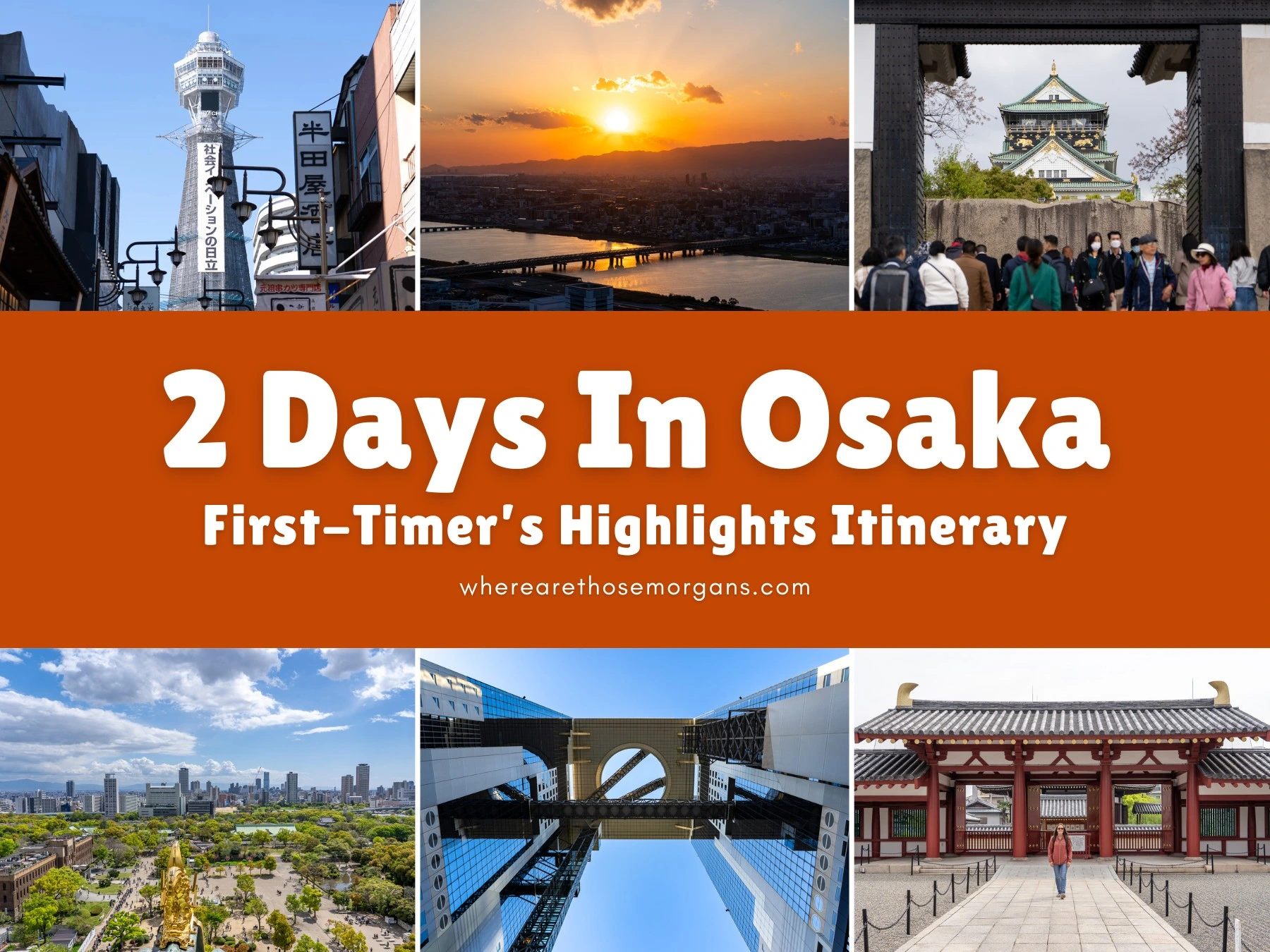
We first spent 2 days in Osaka at the very end of September in 2018. Our budget was super tight so we booked an awful red eye flight from Hong Kong, landed at Kansai airport at 2:00 AM, and took a bus to a budget hotel in an inconvenient area of south Osaka. But we were still able to map out a fun itinerary with lots of free and cheap activities like Osaka Castle and Shitennoji Temple, and we ate at a lot of 7-Eleven’s. It was a fantastic experience, but we definitely missed a lot of key spots.
Then in spring 2023, we returned to Osaka for another 2-day trip during cherry blossom season. This time we had a much healthier budget, so we stayed in our favorite neighborhood called Namba and planned out an action packed itinerary with lots of foodie stops and attractions. We still didn’t get our timing quite right on some things, and we had bad luck with weather one day – it rained so heavily that even the always-bouncing Dotonbori was like a ghost town. But overall, we used our time far more wisely.
Hi, we’re Mark and Kristen Morgan. We left our scientific careers in 2018 to become travel writers and photographers, and since then our expert guides have helped millions of travel planners take better trips. Read more about us.
Why trust us with your Osaka itinerary? Across two trips we’ve figured out what’s worth doing, what we’d skip, and how we’d do 2 days in Osaka if it was our first time again. As always, every photo in this guide is ours.
This 2-day Osaka itinerary walks you through exactly how we’d spend a first visit now, knowing what we know after a couple of trips. We’ve reworked our experiences – both hits and misses – into a smoother, more efficient and easier plan that balances sightseeing with plenty of time to soak up the city’s energy.
We quickly realized that a visit to Osaka is about eating and drinking, rather than ticking off a long bucket list. Our advice is to save the temple-hunting for Kyoto, and make the most of Osaka’s vibrant atmosphere. At the end of the guide you’ll find our itinerary map, 2-day expense report, and advice on the most important things you need to know. Let’s dive in!
Note: Our content is reader supported and contains affiliate links. If you make a purchase through one of these links, we may earn a small commission at no extra cost to you and it helps us keep this site running.
Need a hand planning your Japan trip? We help independent travelers plan better, stress-free trips. Schedule a video call and we’ll build a Japan itinerary that fits your style, budget and priorities. See our travel planning help.
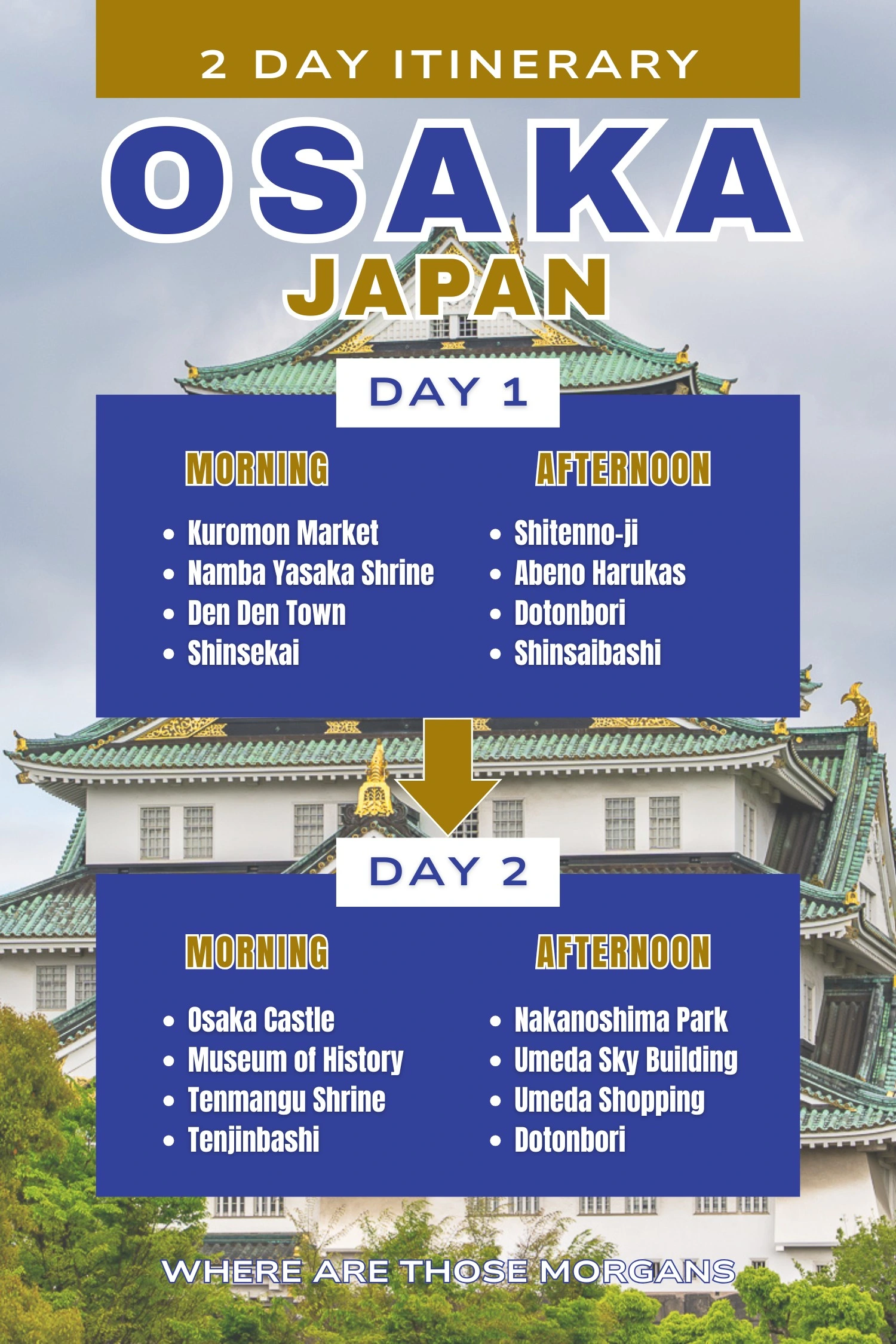
Day 1: Namba, Shinsekai, Tennoji & Dotonbori
The focus of our first day is Osaka’s street food culture, neon-lit districts, and high-energy neighborhoods. Everything is grouped into one continuous route through the city’s southern districts, minimizing transport and keeping the day easy to navigate. It builds from local markets and quieter streets into the chaotic, iconic atmosphere Osaka is known for, making it the perfect introduction to the city.
Itinerary base: If it was our first time again, we’d book our hotel in Namba or Dotonbori (here’s our guide on where to stay in Osaka for a breakdown of the neighborhoods) to have a central location and a lively atmosphere. Our itinerary is based on staying within easy walking distance of Namba station.
Eat Street Food In Kuromon Ichiba Market (9:00 AM)
One of our favorite things about Osaka is there’s no need to set ridiculously early alarms to be at famous attractions before they get swamped, which is what we had to do in Kyoto. Instead, we’d have a slow and easy morning, grab a coffee at our hotel or a nearby cafe (or at 7-Eleven if we wanted to keep costs to a minimum), and then have a relaxing stroll over to Kuromon Market right as it opened at 9:00 AM.
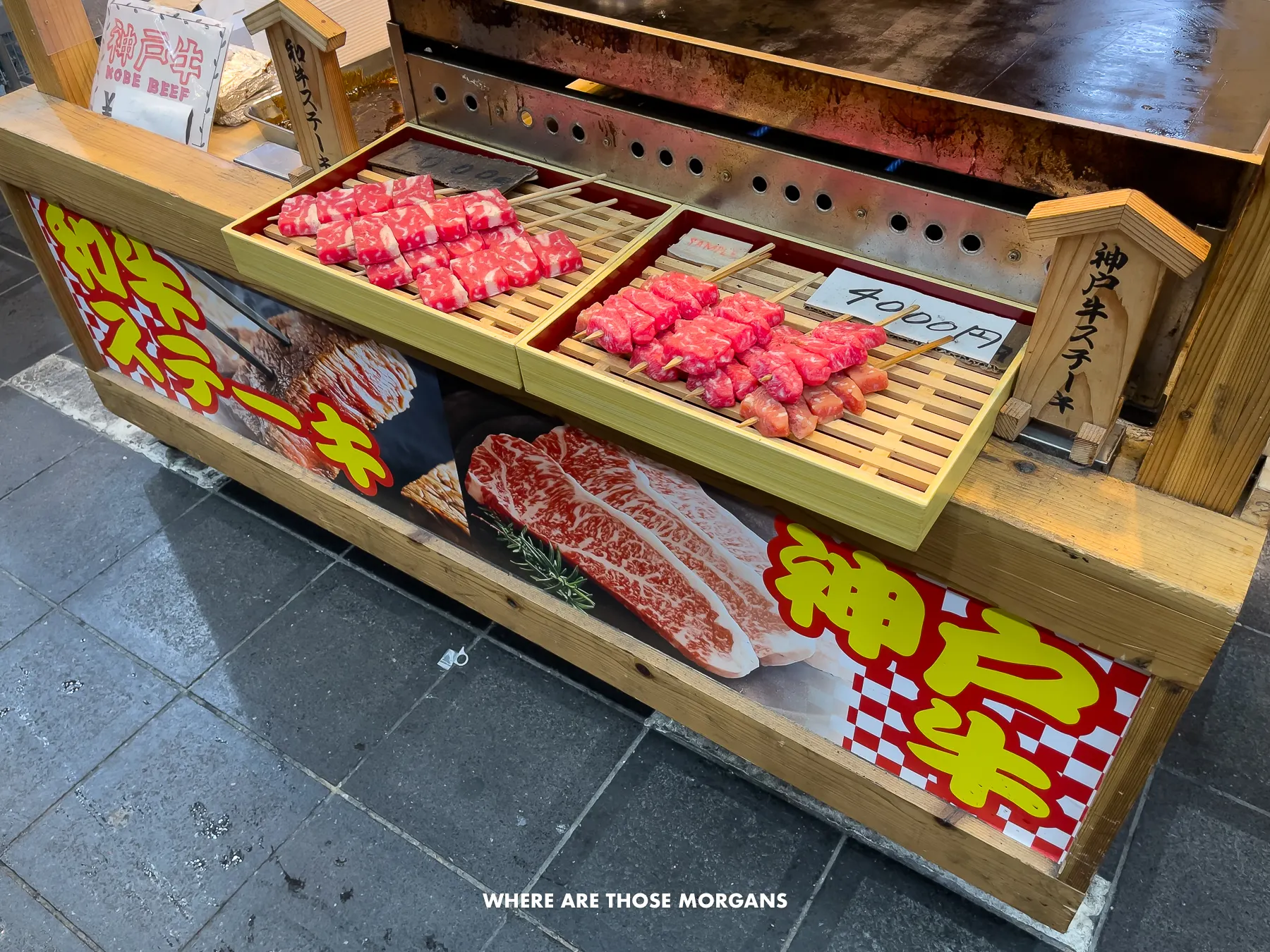
Kuromon Ichiba is Osaka’s most famous food market, so it does get busy, but not like Nishiki Market in Kyoto. By arriving as it opened, we’d get ahead of the crowds and get first pick on the freshest seafood and street snacks. It rained heavily the day we visited in 2023, but we didn’t let that stop us devouring yet more expensive but delicious Wagyu beef skewers, and the atmosphere was still lively enough.
Mark’s market tip: We walked all the way through the T-shaped market checking out each stall before settling on a place to buy our Wagyu beef based on the long line that had formed. The prices were higher than other more local spots in Osaka, but we didn’t mind paying a little bit extra for the atmosphere and experience.
Walk Through Namba (10:00 AM)
After filling up on tasty snacks at the market, we’d either try this popular tea ceremony experience just a little to the north or simply spend an hour exploring Namba. We’d have no real plan except to generally head west. On the way we’d soak up the busy streets, shopping arcades and transport hubs to get a real feel for Osaka’s urban energy during the day. There’s nothing “to do” except take it all in, window shop, and take plenty of photos.
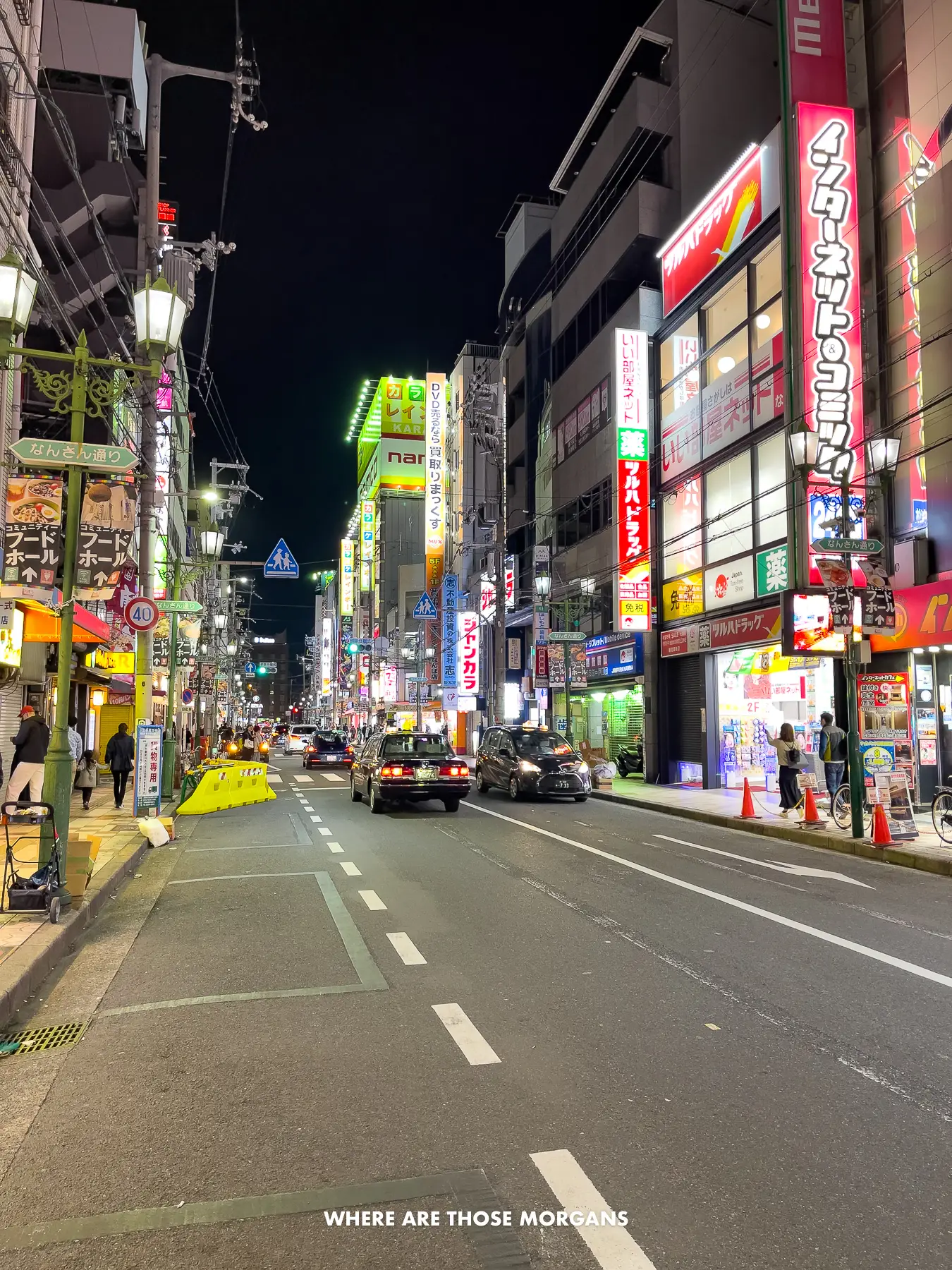
Honestly, we much prefer Namba when it’s lit up at night, but we were glad to walk through the neighborhood during the day to see its fast-pace and chaotic vibe. If we didn’t fill up too much at the market, we’d stop in at a convenience store (7-Eleven, FamilyMart or Lawson) for hot snacks and tinned coffees. Trust us, you’ll be in and out of convenience stores like a yo-yo in Japan.
Visit Namba Yasaka Shrine (11:00 AM)
We had no idea what to expect at Namba Yasaka Jinja, but it actually turned out to be an interesting surprise. Rather than being similar to what we’d seen at countless other Shinto shrines in Japan, this one had a massive lion’s mouth facade with the mouth wide open. We learned the lion is meant to swallow evil spirits, and bring protection and success.
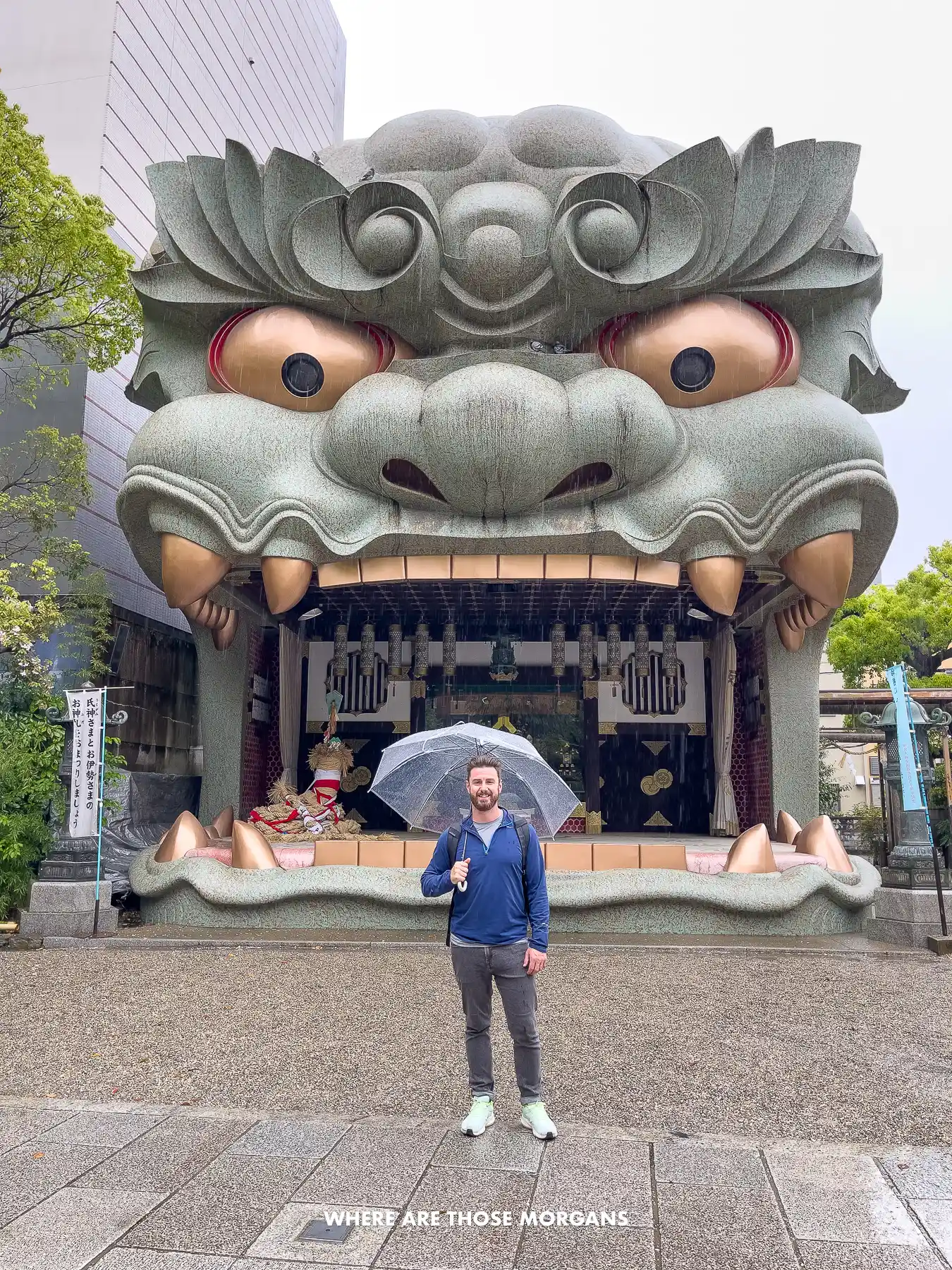
The rain was pouring down by the time we arrived during our trip, but we bought umbrellas from 7-Eleven and ended up having the shrine to ourselves. We’d have a quick look inside the lion’s mouth to see the shrine building and stage, then step back to take a few fun photos, before heading east through Namba again.
Mark’s route tip: We know it makes more sense to walk straight from Kuromon Market to Den Den Town, but this zig-zagging route through the north and south of Namba would allow us to better experience two different parts of our favorite neighborhood in Osaka.
Get A Quick Anime Fix In Den Den Town (11:45 AM)
We stayed at Citadines Namba in 2023 (it was fantastic), and the hotel was just a few steps from Nipponbashi Denden Town. In truth, we didn’t really know much about Den Den Town until our second trip when we had a quick walk around the enormous Animate comic book store, which we can only say had an overwhelming and overstimulating amount of anime, manga, figurines and trading cards.
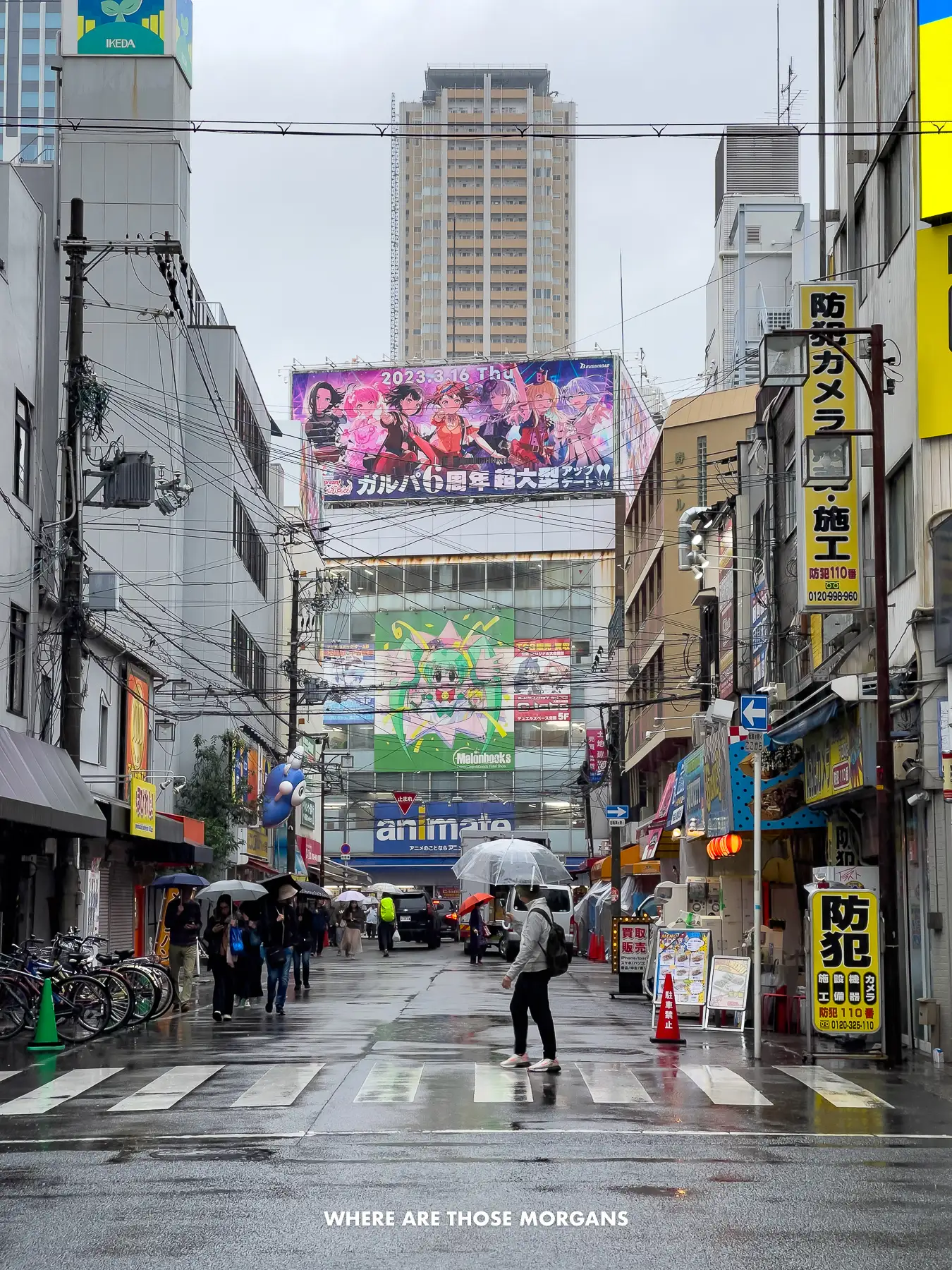
We wouldn’t even know where to start with this genre, but we know it’s popular and it’s also very Japanese so it was well worth checking out. Den Den Town felt a bit like Osaka’s version of Tokyo’s Akihabara, but on a much smaller scale. This is also the place to try a maid cafe, if that’s your thing – there’s a popular spot near Animate called Maidreamin that has top ratings.
Grab Lunch In The Retro Shinsekai Neighborhood (12:30 PM)
Next, we’d take a 10 minute walk south and enter the old-school retro neighborhood that’s making a massive comeback called Shinsekai. We actually really enjoyed walking around the less-polished, slightly gritty streets filled with shops and eateries. It was built in 1912 (based on Cony Island and Paris), then it fell into disrepair, and now the nostalgic vibe is making it trendy once more.
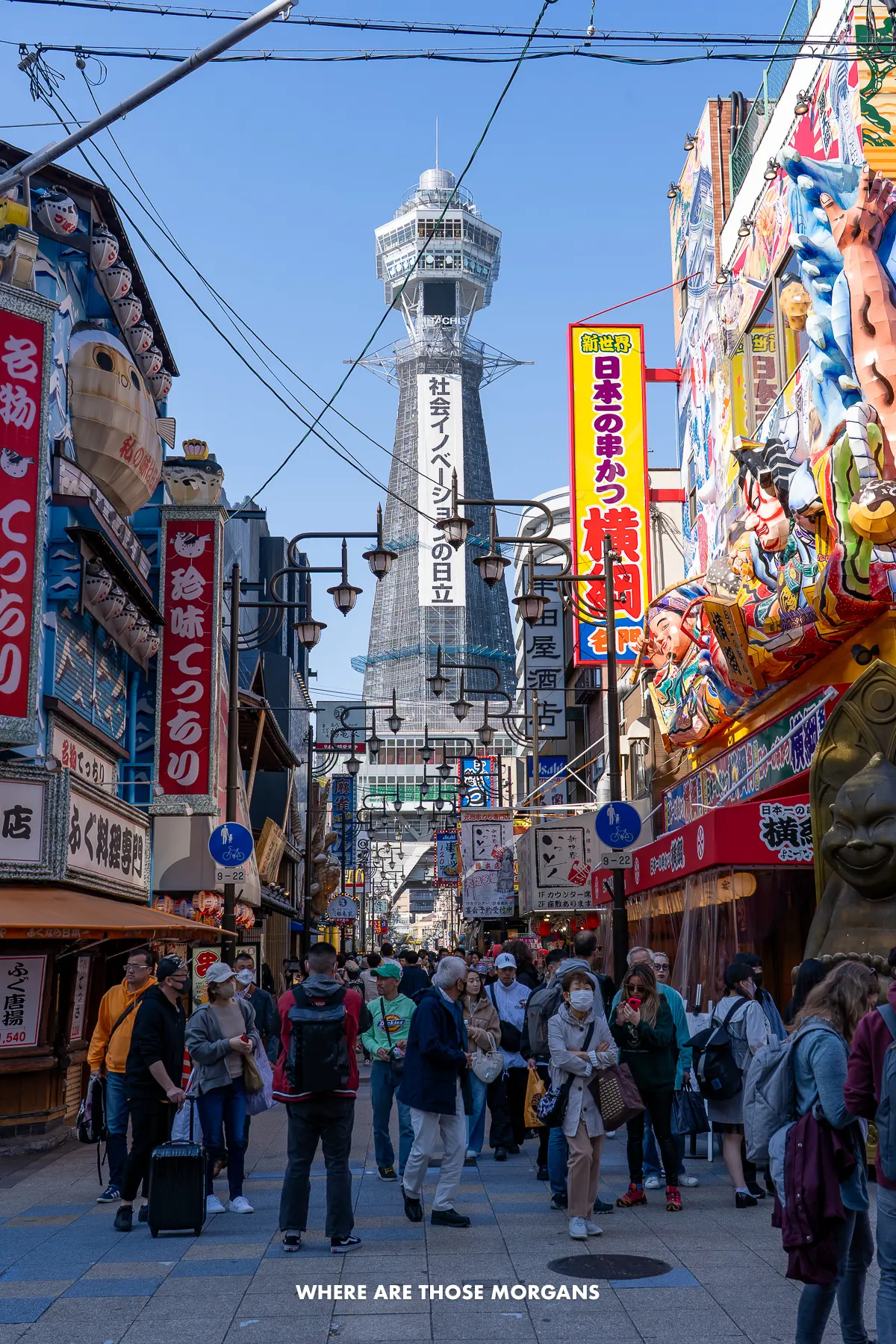
Shinsekai has a tower you can go up in the center called Tsutenkaku (we didn’t go up but it’s cheap and easy). It’s also where kushikatsu originated – deep fried, battered and skewered meats, vegetables and seafood. This specialty is the focal point of many of Osaka’s top rated foodie tours like this street food tour with 17 dishes beginning at 11:30 AM and this street food tour with 15 tastings beginning at 12:00 PM. If we booked a food tour, we’d cut Den Den Town and head straight to Shinsekai from Namba Yasaka Jinja.
Kristen’s foodie tip: If we didn’t book a midday foodie tour, we’d eat lunch with a beer at the top rated izakaya called Chao Chao Gyoza. There’s tons of great options but this spot has excellent ratings.
Visit Shitenno-ji Temple (2:30 PM)
If we were doing well for time, we’d take a slow 30-minute walk through Tennoji Park to Shitenno-ji Temple. Or if we were cutting it close, we’d take a quick 15-minute walk on paths along the main roads. Shitenno-ji is one of the oldest Buddhist temples in Japan and it’s the only one we think is unmissable when visiting Osaka.
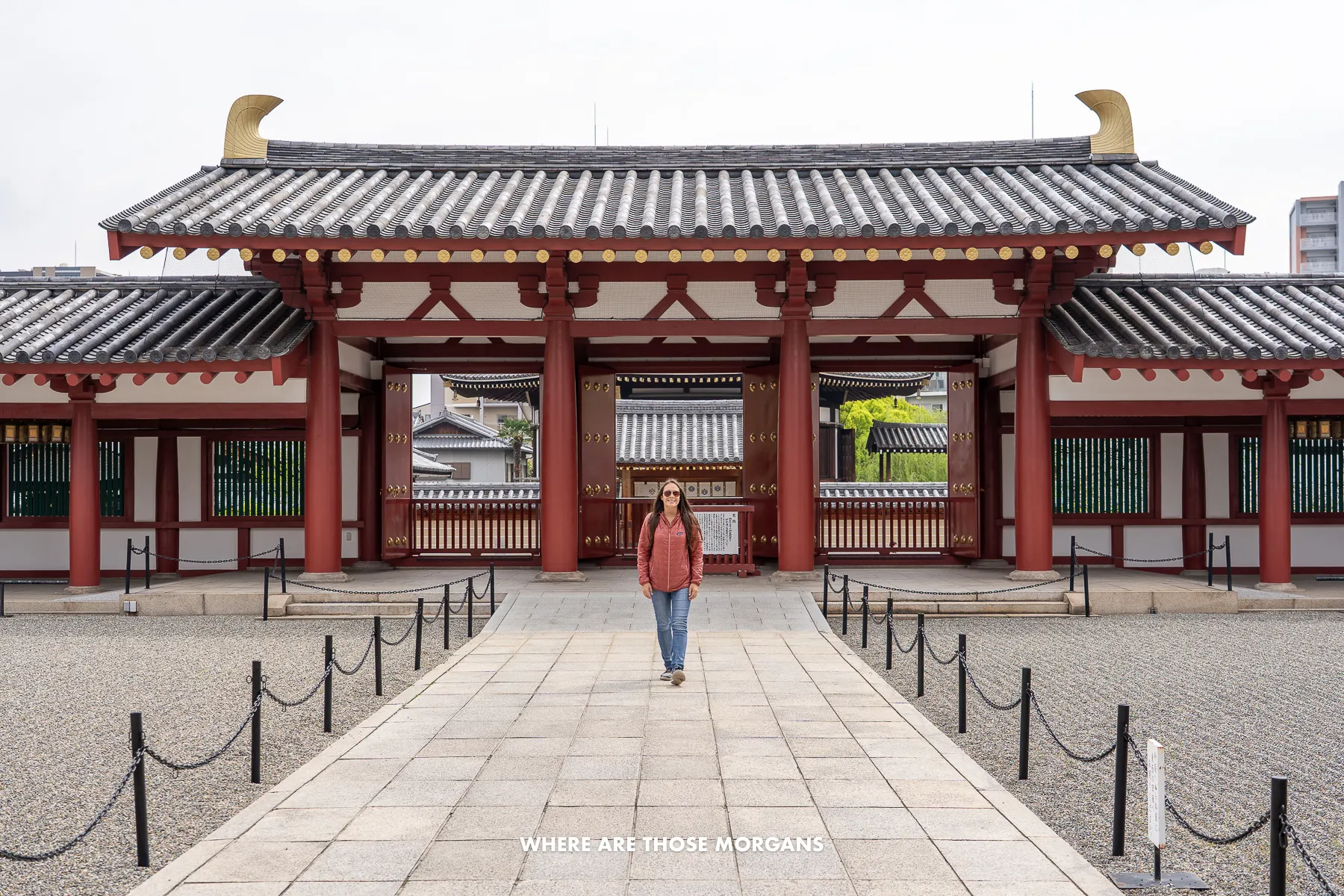
The grounds were bigger than we expected during our 2023 trip, so we’d allow for a good hour inside. After taking photos of the stunning five-story pagoda and main hall surrounded by gravel, we’d pay the small fee to climb up the pagoda, see the turtle pond, visit the old bell tower and pay respects at the cemetery. Then we’d loop all the way back to where we entered on the south side of the complex.
Enjoy Sunset From Abeno Harukas 300 (4:00 PM)
Next, we’d walk 15 minutes south to the sprawling and chaotic Tennoji transit hub. There’s tons of shops and eateries here for a bit of retail therapy or a quick refuel. But we’d skip the shops and head straight to Abeno Harukas, the tallest building in Osaka. We’d have pre-booked tickets to the observatory called Harukas 300 through Klook (tickets are usually cheaper and it’s easier to save QR codes on the Klook app).
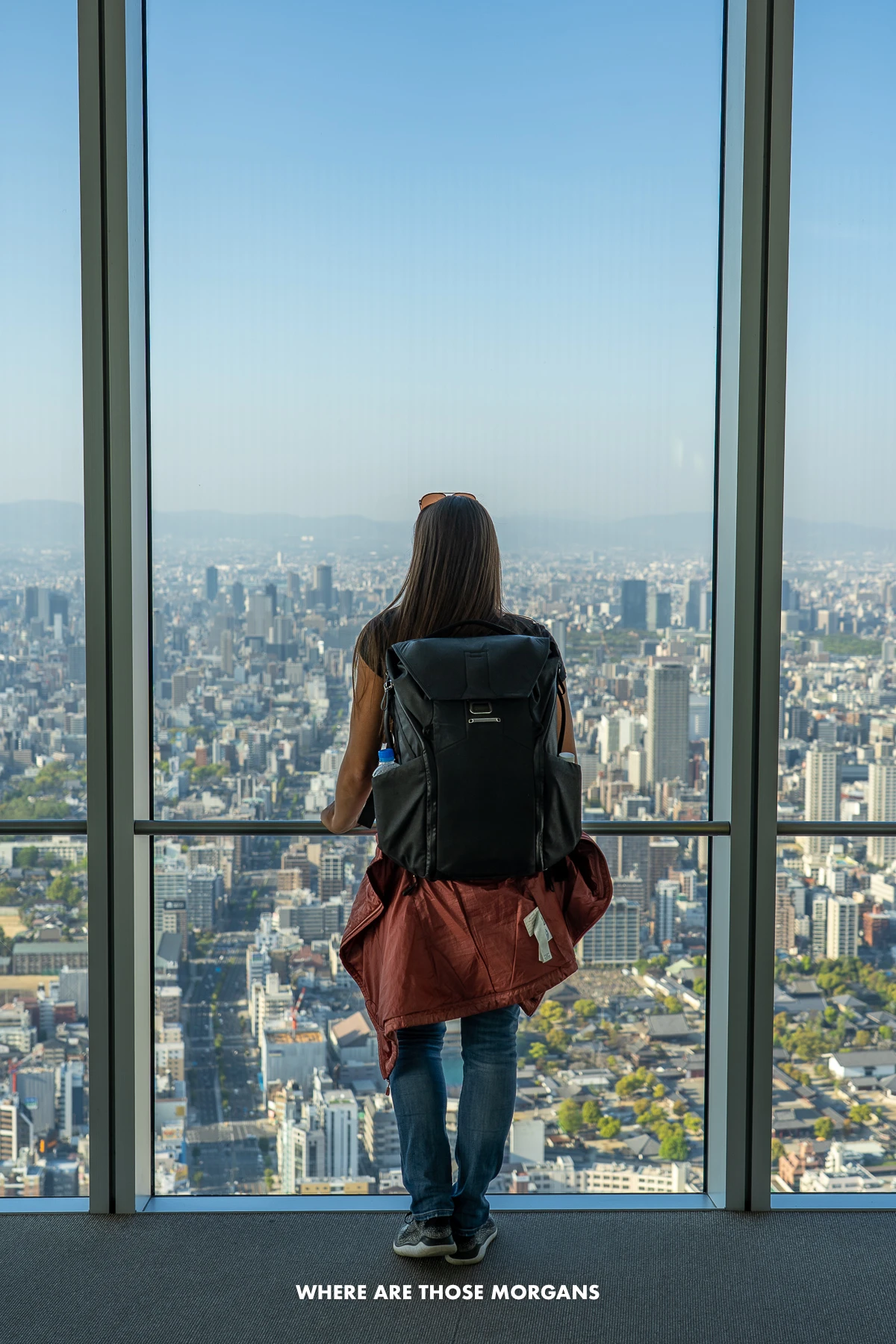
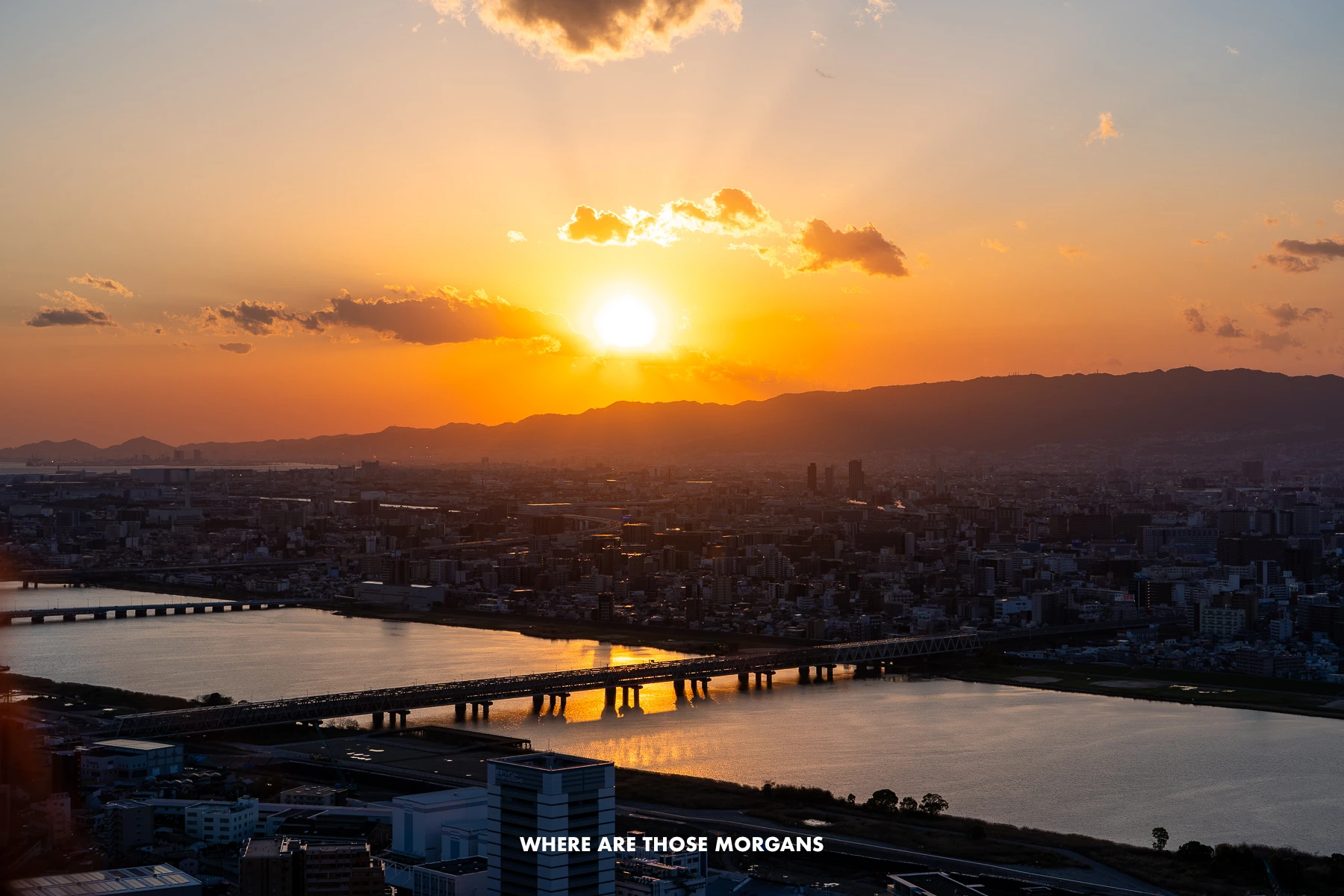
Our timing for the observation deck would be to arrive an hour before sunset to take in the views by day, during the sunset itself, and then if the timing was right we’d stay to see the city light up after dusk. We’d check sunset times for Osaka, and if sunset was 6:30 PM – 7:00 PM (like it is in summer), we’d leave straight after sunset. And if you’re not bothered about watching sunset, leave earlier for Shinsaibashi.
Mark’s observatory tip: We thought the 360-degree views from Abeno Harukas were immense, but we didn’t love being fully enclosed by windows because it makes photography harder with window glare. It’s still worth doing for those far-reaching views, but manage your expectations for Instagram photo shoots.
Stroll The Shinsaibashi Shopping Arcades (6:30 PM)
From Tennoji station, we’d hop on the Osaka Metro Midosuji Line (red) to Shinsaibashi station. Then we’d get straight into the famous Shinsaibashi covered shopping arcade and walk 700 meters south through hundreds of shops from local independent stores to mega-brands and everything in-between. The shops stay open until 8:00 PM (or later), so this would be the perfect time for a lively atmosphere.
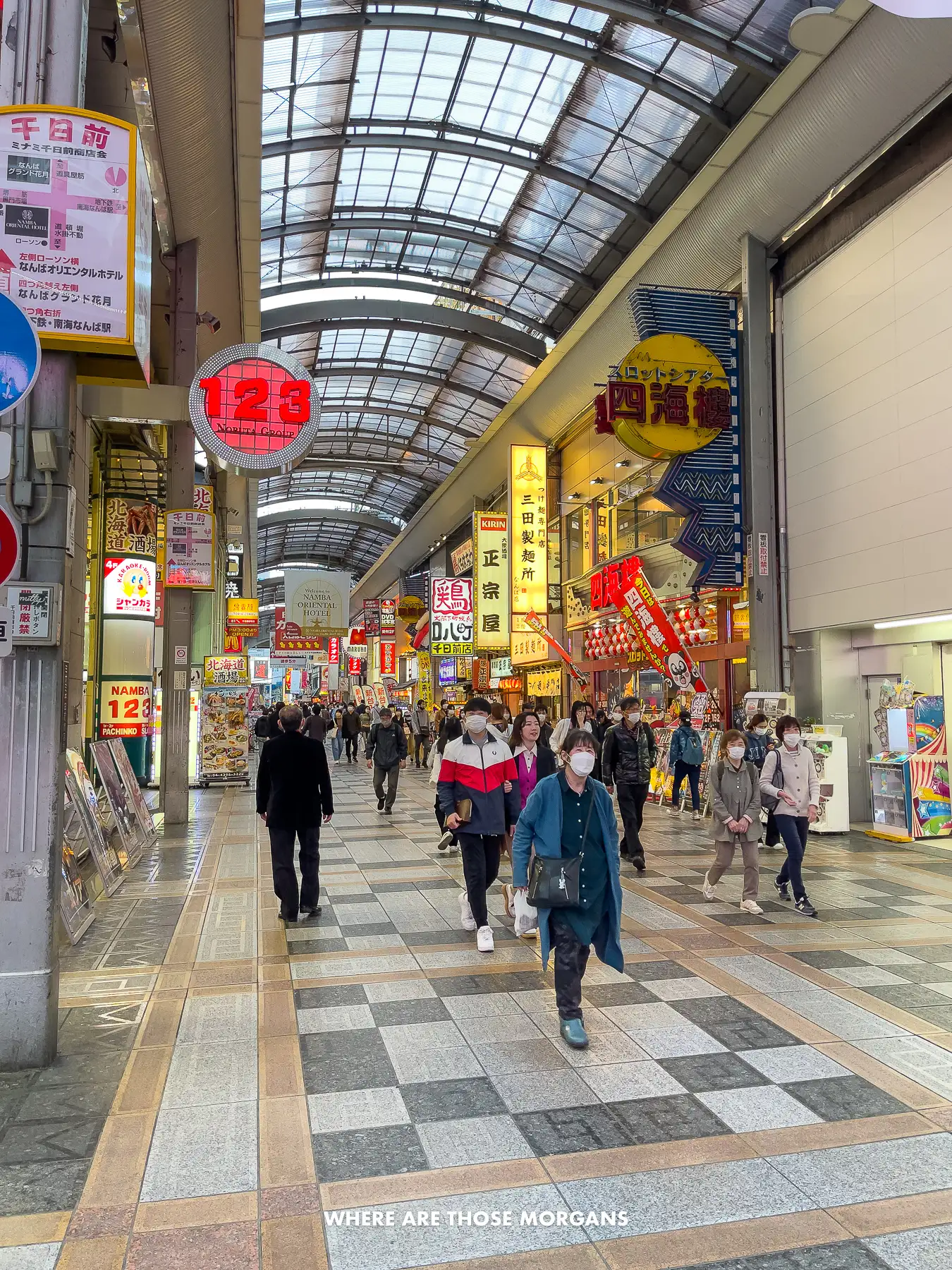
Even if we didn’t go in a single store, we’d still definitely add this to our Osaka itinerary because it’s one of the most unique areas of the city. We were happy to escape the rain during our trip, so we spent a bit longer than an hour browsing cosmetic, souvenir, fashion, and snack stores. For something a bit more fun before dinner, we’d love to try this sushi making class at 6:30 PM right near the south end of the shopping street.
Eat Dinner In Neon-Lit Dotonbori (7:30 PM)
After walking to the end of the covered shopping arcade, we’d reach Ebisu Bridge crossing the Dotonbori River in the heart of Osaka’s iconic neon-lit district with giant colorful signs and countless food options. We’d take a photo of the famous Glico Man, before walking along the canal and taking in the chaotic vibe, potentially hopping on the Tombori River Cruise, and eventually eating dinner. There are almost too many foodie options, and we know a lot of them would be tourist traps, so we’d do some serious research before arriving.
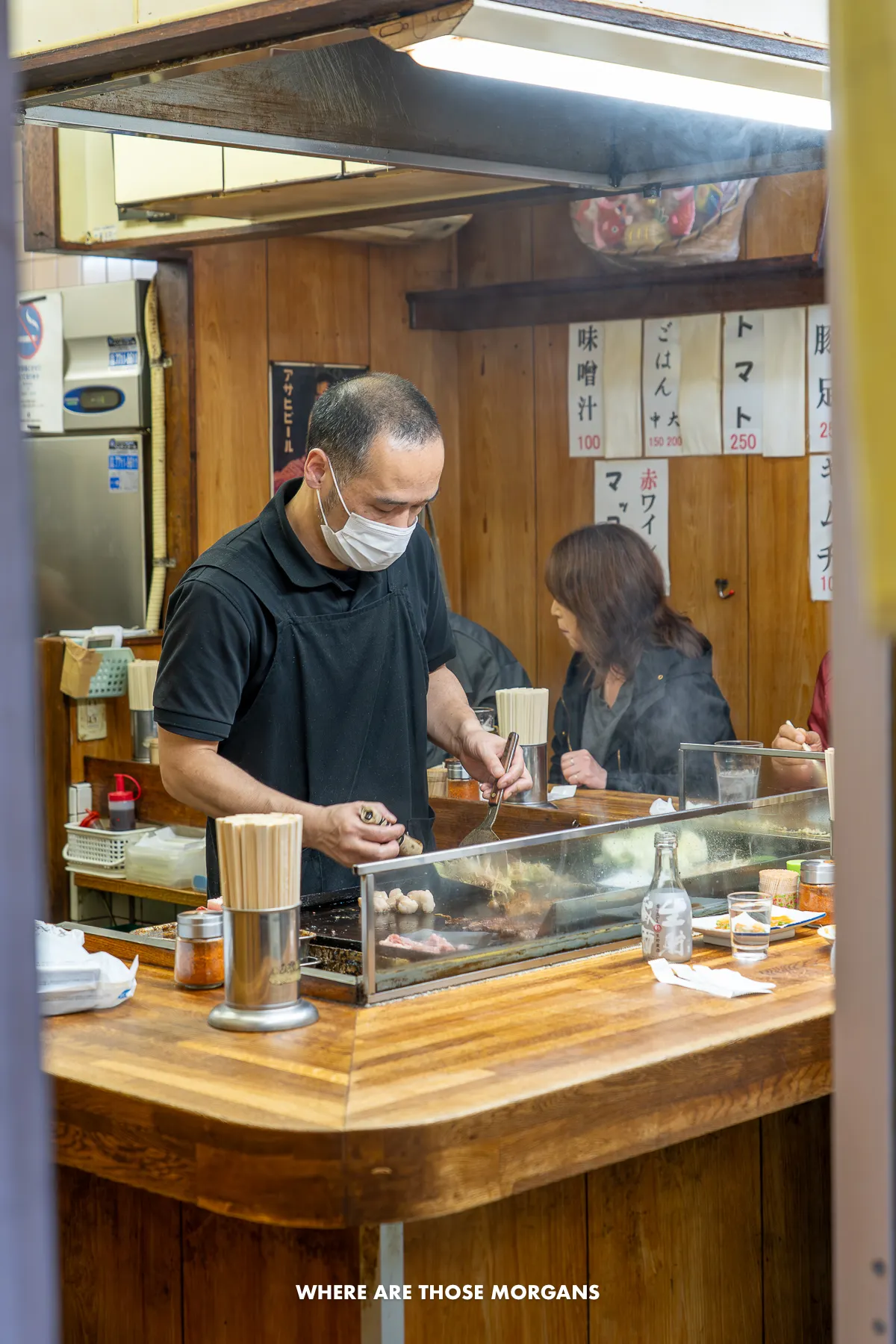
We walked through Dotonbori during the day to see the famous restaurant facades like the octopus, crab, sushi hand and cow – but it was raining heavily and there were very few people around which was a shame. By night when we wanted to see the neon lights in all their glory? It was hammering down with thunder storms, so we didn’t even get to see it. And that is our one big regret from Osaka.
Pit Stop At Hozen-ji Temple (9:30 PM)
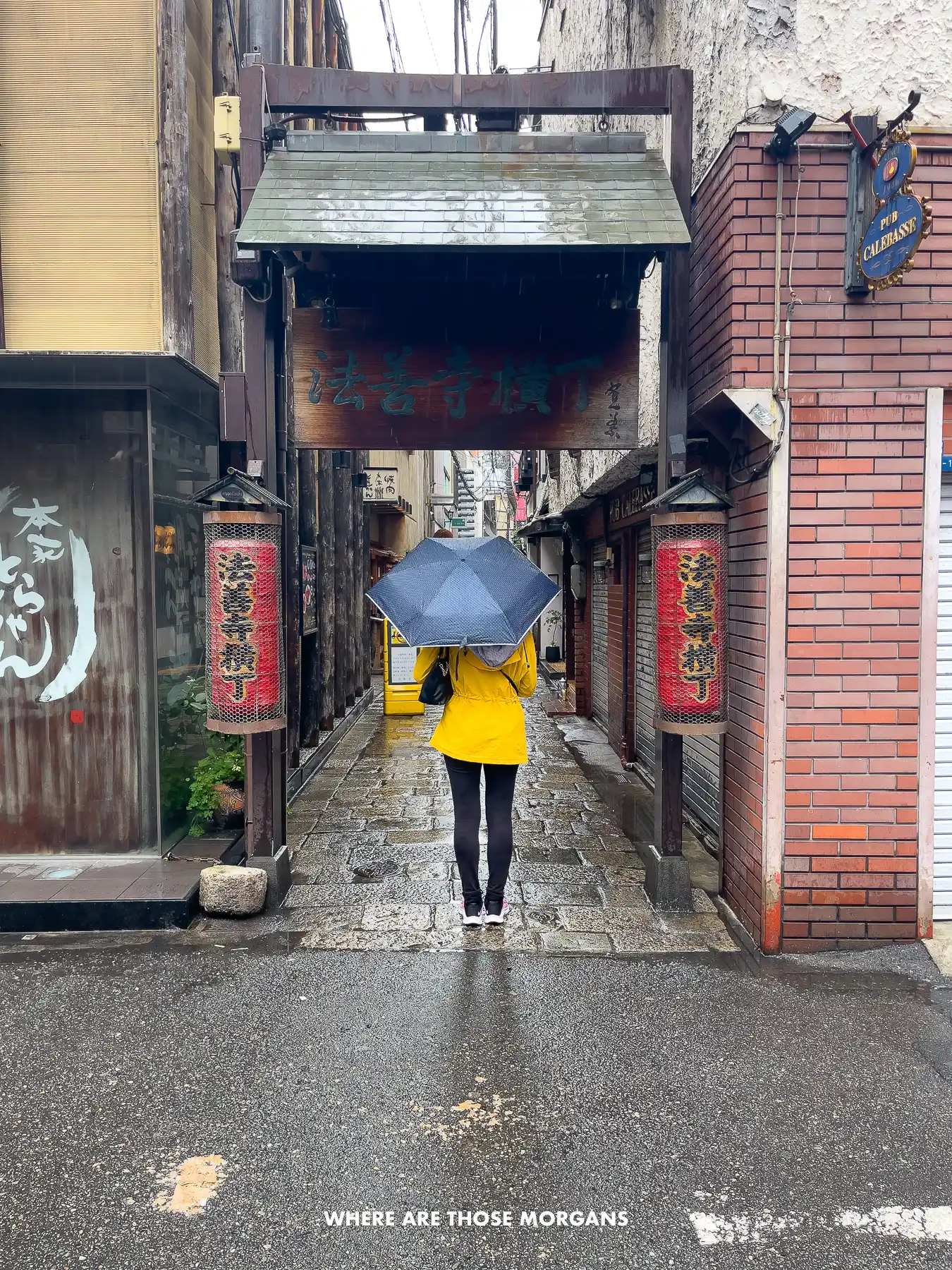
After we’d had our fill of neon lights, chaos, food and beers, we’d start making our way back to our hotel in Namba. But we’d make sure to stop in at the small but hugely atmospheric Hozen-ji Temple, which is tucked away at the end of the narrow Hozenji Yokocho and it would look so cool at night when the lanterns are lit. We only saw it in the rain during the day, but we’d do it at night for sure next time.
If we still had a bit of room left for one last small meal, we’d 100% stop for ramen at a hidden gem hole-in-the-wall spot we found in 2023 called Kyushu Ramen Kio Namba-NGKmae. The owner was awesome, the ramen was exceptional, and it’s open until 11:00 PM every night – perfect for an almost-midnight snack!
Day 2: Osaka Castle, Tenmangu & Umeda
The focus of our second day is Osaka’s landmarks, green spaces, and city views. This route connects the castle district, riverside walkways, and northern neighborhoods in a logical flow, with a mix of history and more relaxed scenery. It’s a slower-paced day that balances out the energy of day one, ending with one of the best skyline views in the city.
Climb Osaka Castle (9:00 AM)
After another leisurely morning with a hearty breakfast and plenty of coffee already devoured, we’d take the Midosuji Line (red) from Namba to Shinsaibashi, change onto the Nagahori Tsurumi-ryokuchi Line (green) and get off at Morinomiya station. Then we’d walk 15 minutes through gardens to Sakuramon Gate on the south side of Osaka Castle. We’d already have pre-bought tickets to enter the castle through Klook so we didn’t have to wait in a long line on the day (we made this mistake in 2018).
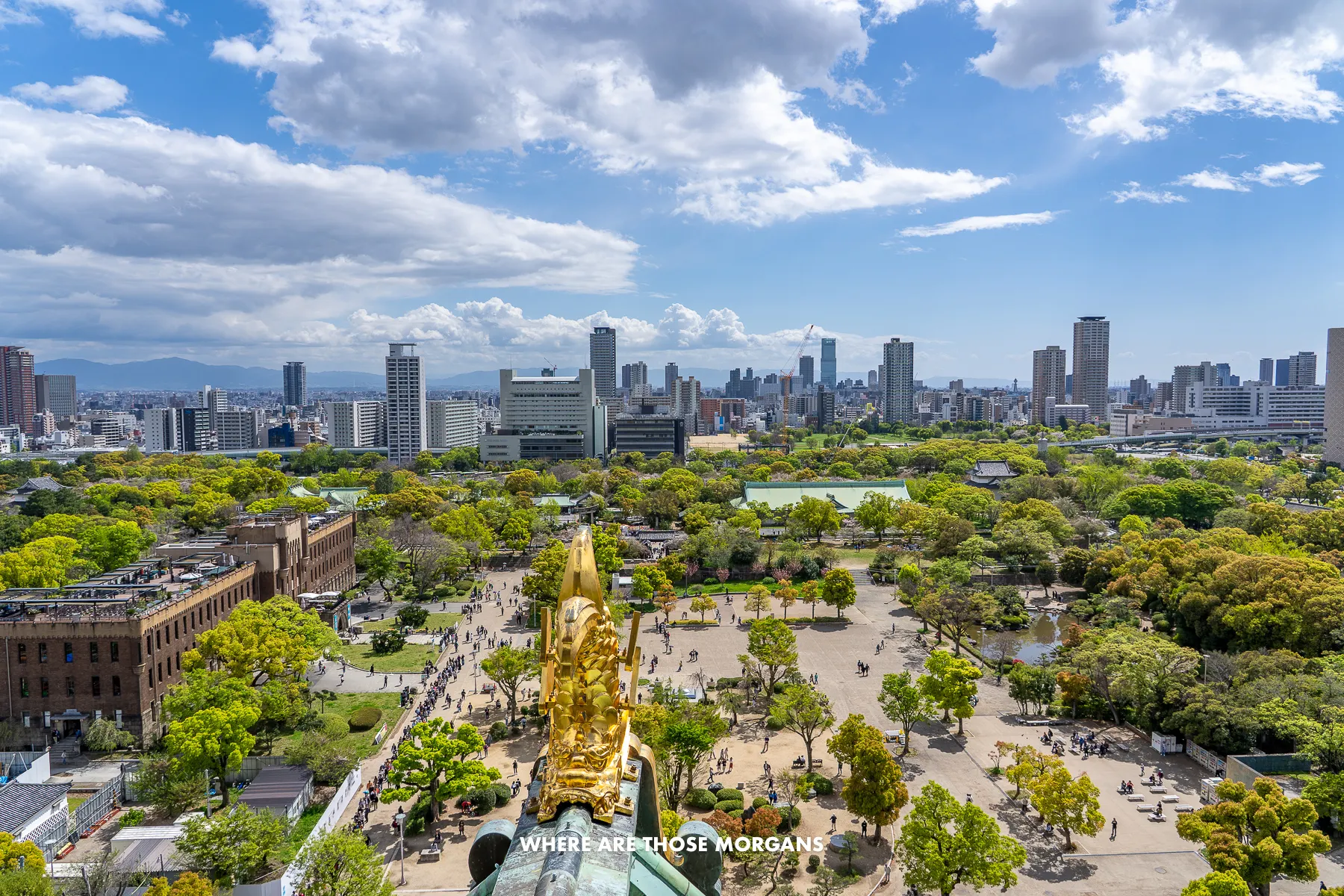
But before going in we’d enjoy walking through the park and taking photos of the castle as we approached. After entering, we’d take a lift straight to the top floor to enjoy sweeping 360-degree views over the city. Then we’d slowly make our way down the steps to each floor, learning about the extremely interesting history of power struggles between samurai warlords and imperial powers. It’s awesome, so we wouldn’t miss it. Next time, we’d book this guided tour to learn more from a pro (making sure to book the 9:00 AM start time), rather than relying on the information boards.
Kristen’s food tip: There’s a building with restaurants in Osaka Castle grounds, skip the sit-down meals this early and instead grab a “roast beef and mashed potato in a cone” snack – it sounds ridiculous but Mark loved it!
Learn At The Osaka Museum Of History (11:00 AM)
Honestly, with just 2 days we’d probably skip every museum in Osaka because there’s plenty more to see and do. But if we had enough interest and wanted to do one proper museum, it would be the Museum of History to learn about Osaka’s ancient past, the Edo period and modern history. It only costs 600 yen and it can easily be visited in an hour.
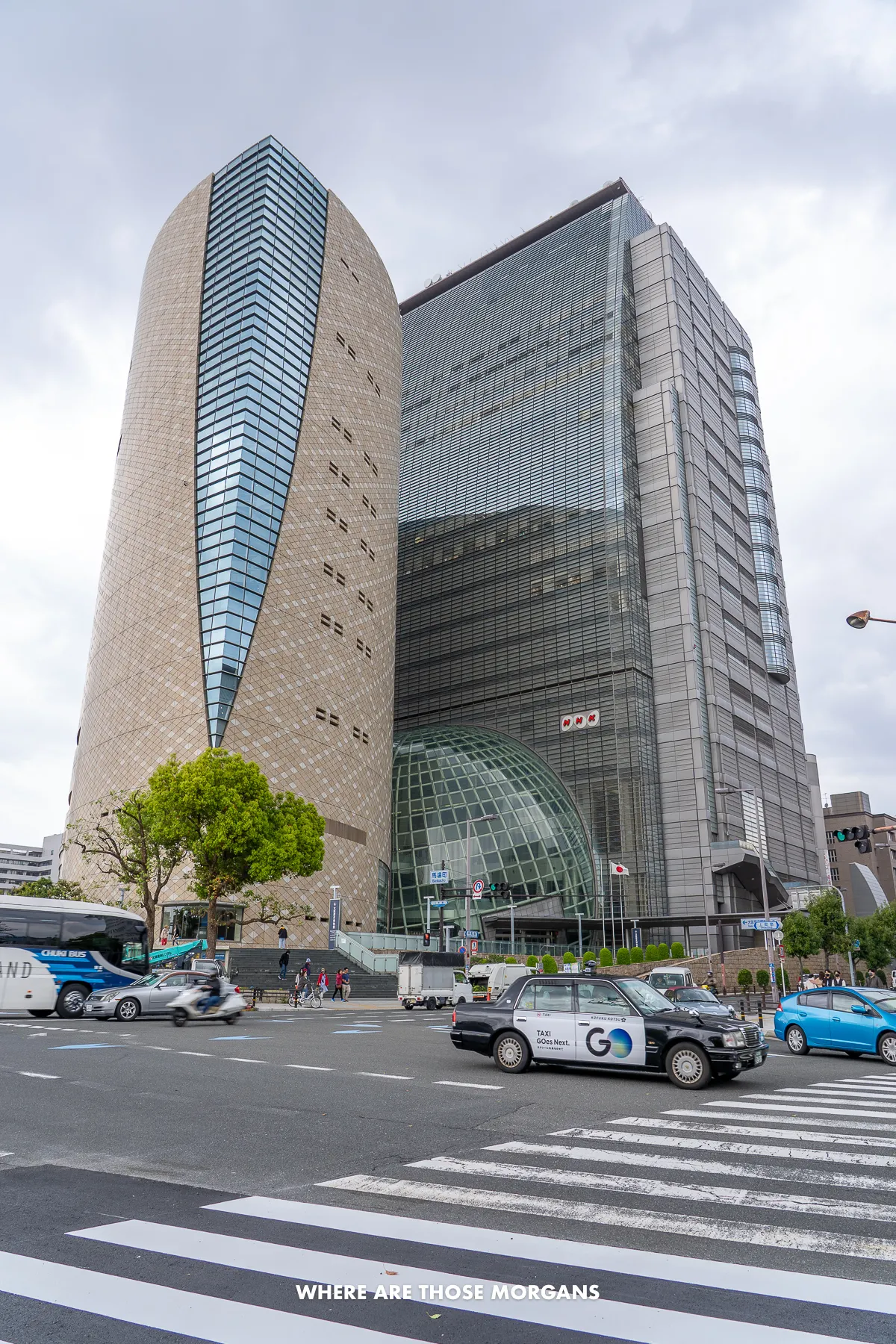
This part of our itinerary is optional. We didn’t visit the Osaka Museum of History ourselves, but it fits perfectly after the castle and before heading up to Tenmangu Shrine. So we’d say if you’re interested in adding context to your Osaka visit, go there straight after the castle. If you’re not fussed, skip it and take the Tanimachi Line (purple) from Tanimachi 4-chome station to Minami-Morimachi station.
Mark’s planning tip: We wanted to tour the Japan Mint in 2023, but because it was peak cherry blossom season and the museum entrance is on a popular cherry blossom riverside walk, they closed the museum. If you’re going to Osaka any other time of year, consider touring the mint after the castle and before going to Tenmangu Shrine.
Visit Osaka Tenmangu Shrine (1:00 PM)
Whether or not we visited the history museum, we’d take the train and get off at Minami-Morimachi station. From there we’d walk through the non-touristy area to Tenmangu Shrine, which is off the beaten path and totally different to most others we visited in Japan in the sense that it’s plopped right in the middle of a local residential area.
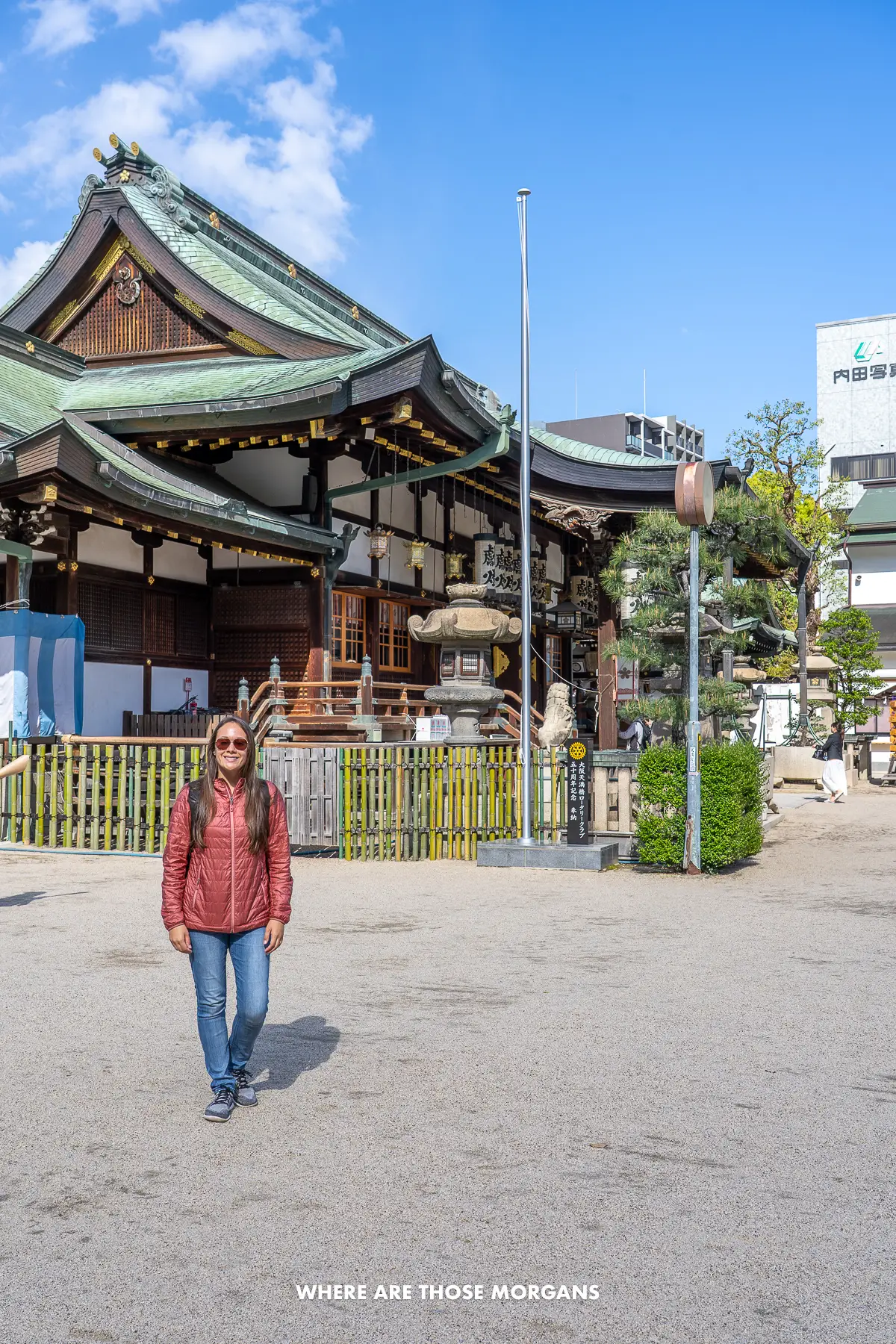
Tenmangu Shrine is dedicated to learning and scholarship, which made sense when we saw school-age kids praying for exam success. There wasn’t much to see, but we like that it was small, compact and authentic, so we wouldn’t skip it next time. In July, one of Japan’s big three festivals called Tenjin Matsuri is held at Tenmangu Shrine – now that would be cool to be a part of.
Grab Lunch In Tenjinbashi Shopping Arcade (1:30 PM)
Just steps from the shrine, we’d enter the southernmost section of Tenjinbashi-suji Shopping Street, one of Japan’s longest covered shopping arcades. This one is way less touristy than its smaller counterpart in Shinsaibashi from the evening before, but it’s still very busy with locals and it’s just as much of a sensory overload.
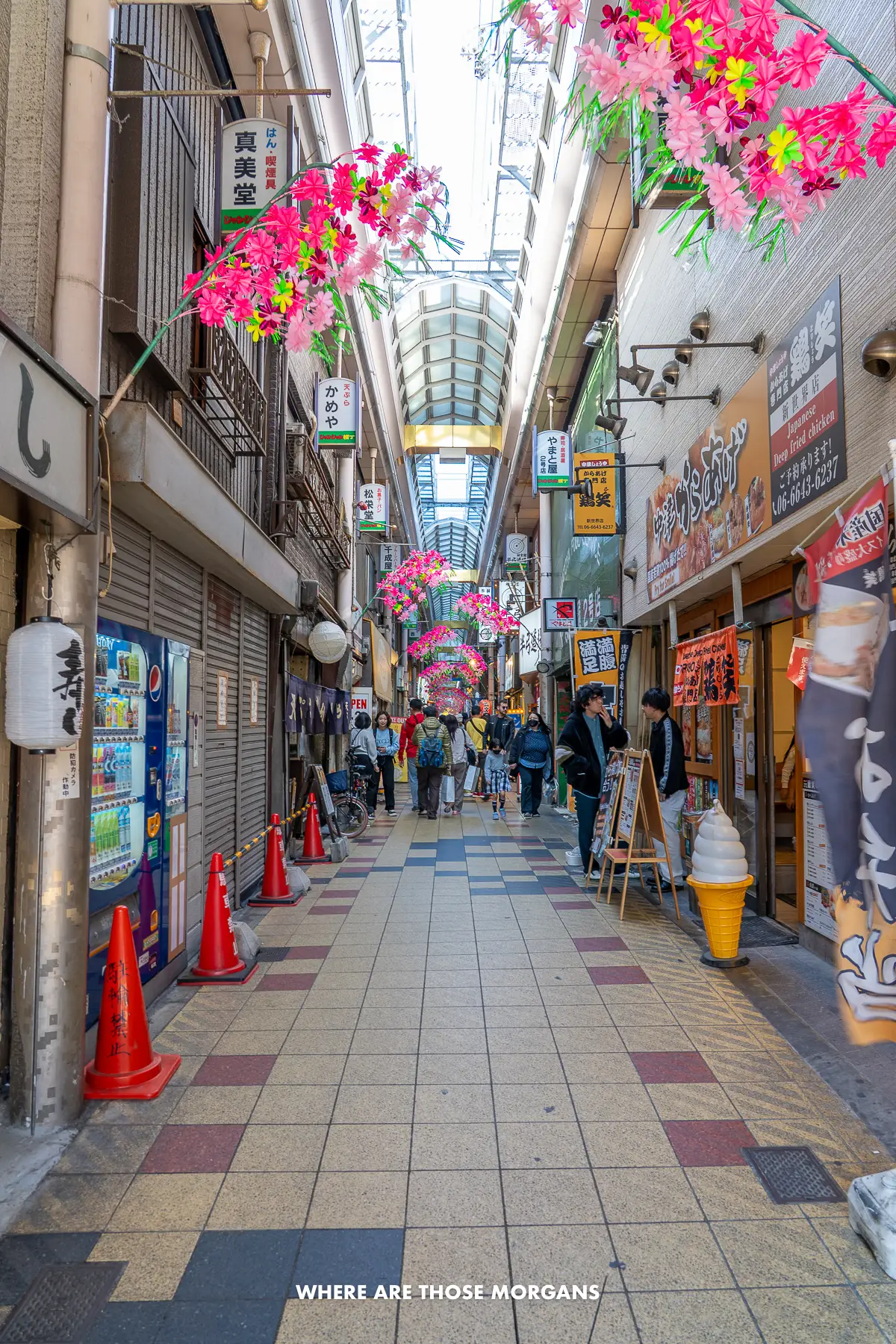
The full length of the shopping arcade is around 2.5km and there’s something like 600 shops. We wouldn’t even try to see a fifth of that, instead we’d just stick to the lower portion because our next stop is to the south and we wouldn’t want to add on any unnecessary walking. For lunch, we’d probably skip the sit down meal and simply sample street food snacks, which would be cheaper than the touristy areas.
Walk Through Nakanoshima Park (2:45 PM)
From the south end of Tenjinbashi-suji, we’d walk 10 minutes to Nakanoshima Park in the middle of the Tosahori River. We’d start with Nakanoshima Rose Garden, which is best seen from mid-May until late May or mid-October until late October, but we think it’s still worth a relaxing stroll any time of year, just to break up the chaos of the city.
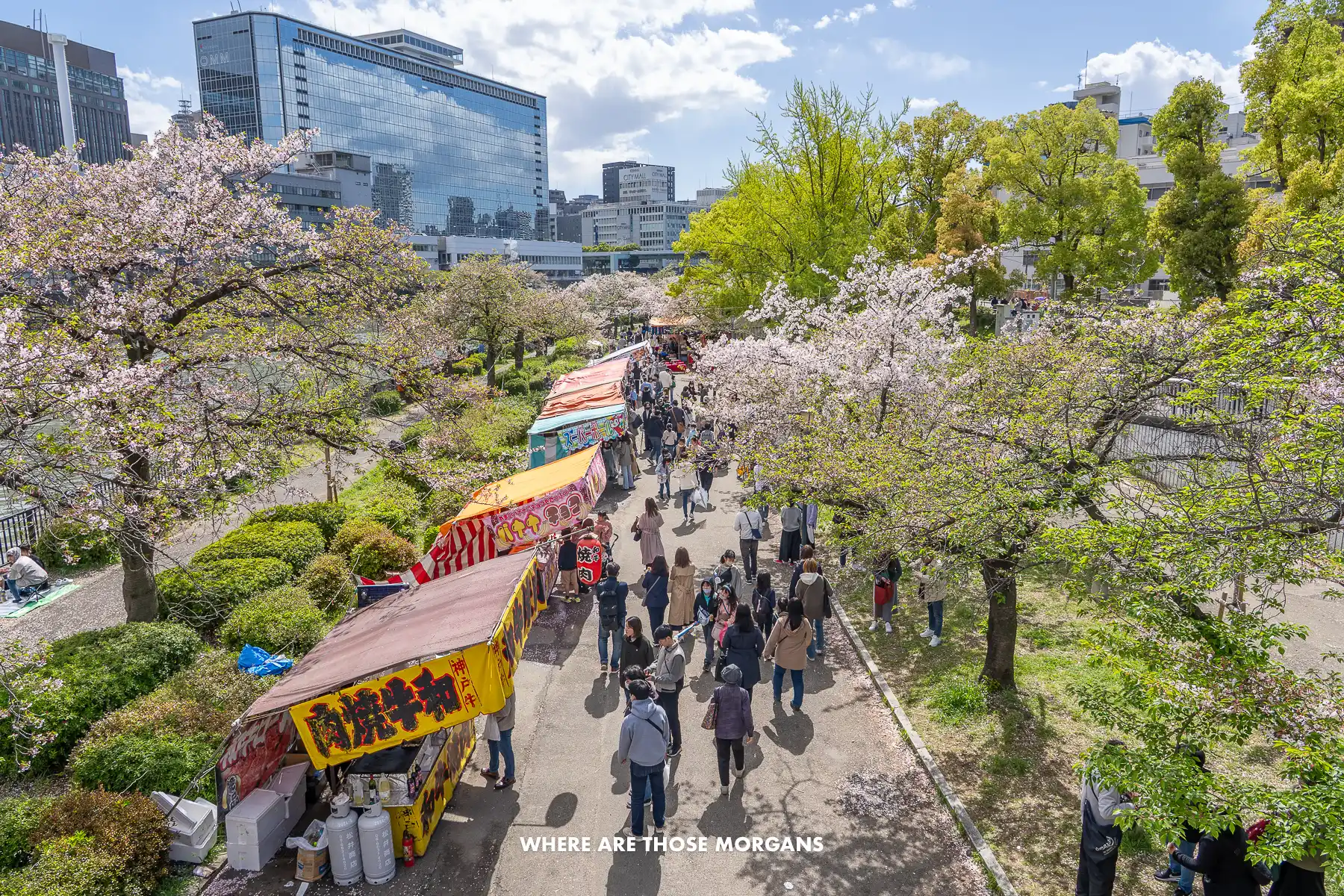
Next, we’d walk west to see the striking European-style, red-brick Osaka City Central Public Hall. We didn’t and wouldn’t go inside, but it’s worth a quick photo stop because it contrasts so strongly against the rest of Osaka’s architecture. This would be the perfect post-lunch and beer riverside-stroll.
Mark’s tour suggestion: If you’d rather skip the shrine, shopping arcade and park, consider booking this top rated samurai training experience kendo with a 2:00 PM start time. It’s 2 stops north on the Sakausuji Line (brown) from Minami-Morimachi.
Watch Sunset From Umeda Sky Building (4:30 PM)
From Nakanoshima, we’d set a walking route on our maps app for Umeda Sky Building, knowing that it would be a good 30-minute walk. The train connections don’t work amazingly between these two points, and to be honest we’d rather explore more of the city anyway. So we’d be more than happy to see most of the high-end, polished Umeda neighborhood on the way to the observatory.
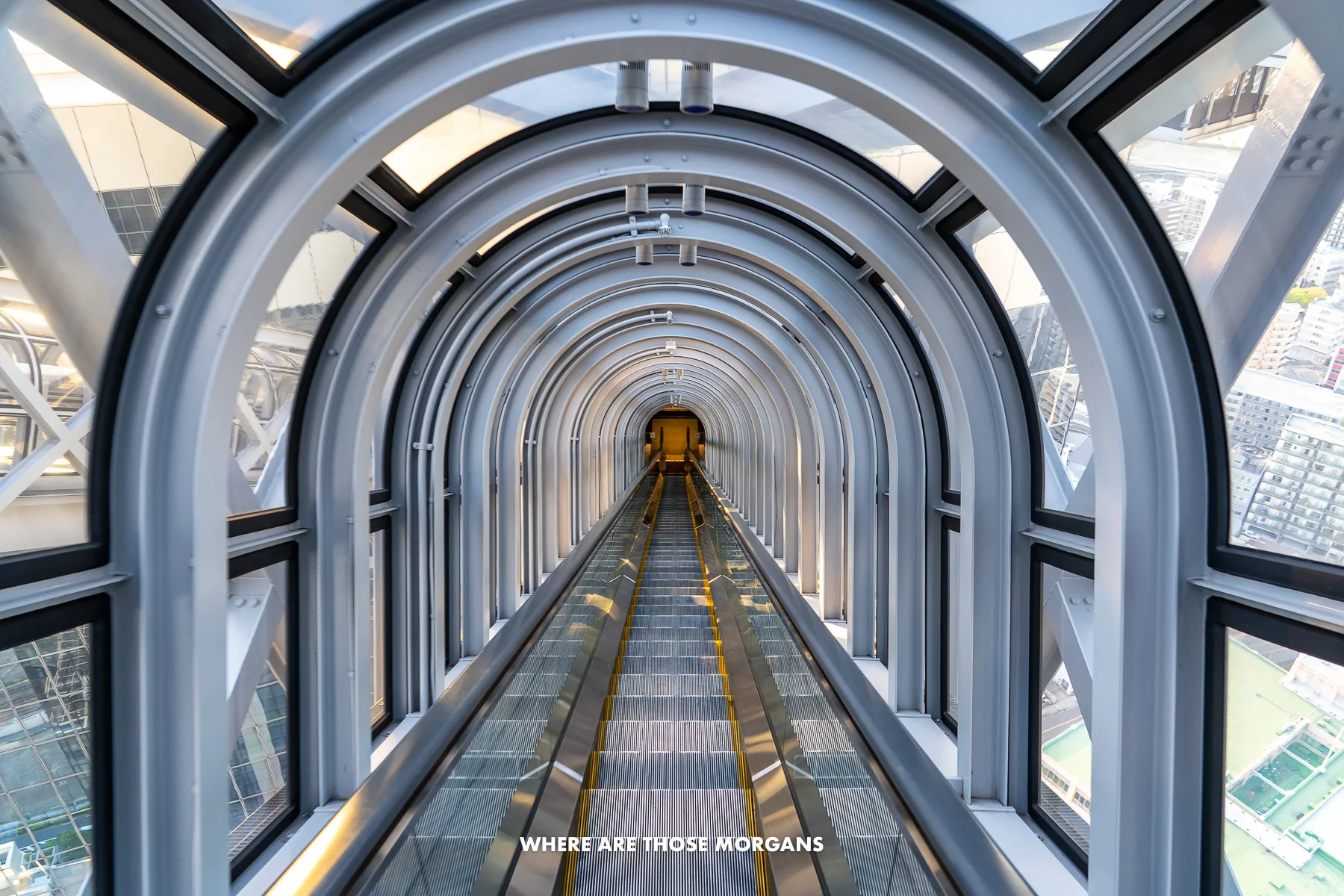
After passing through the shopping district and arriving at the Sky Building, we’d snap a photo from below looking up (it’s an awesome shot), before entering with our pre-bought tickets through Klook. We’d take the “floating” escalators that look like tunnels, arrive at the circular rooftop with 360-degree views, and enjoy a serene sunset from the open-air observation deck. No windows or glare up here!
Eat Dinner In Umeda (6:30 PM)
We’d seen Namba and especially Dotonbori feature a lot during our research, but we didn’t see as much about Umeda. And you know what? We actually really liked the upscale neighborhood. It didn’t feel as much like “old world Japan” as the other areas, but we didn’t mind spending a few hours in a more manicured, sleek, shopping mall-heavy area, especially lit up at night.
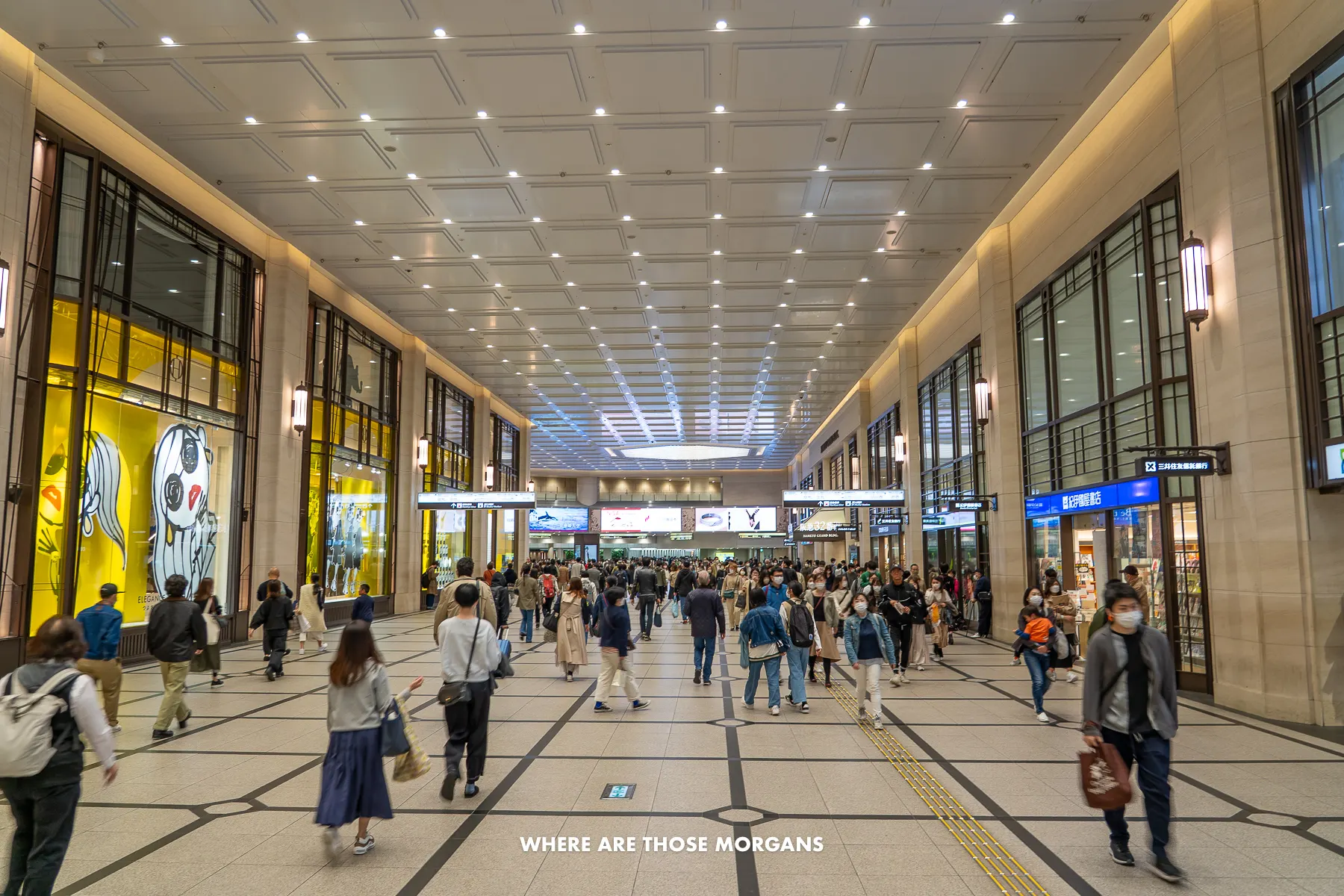
After the observatory sunset we’d have a slow wander around the streets, malls, and train station areas in Umeda. There’s a lot of highly rated restaurants so we’d have a place like Gyukatsu Kyoto Katsugyu Yodobashi Links Umeda or Gyukatsu Motomura Lucua pre-reserved just in case. Or alternatively, we’d just find a place that looked lively and see if we could get in.
End With Drinks In Dotonbori (9:00 PM)
After dinner and a few plum wines, we’d hop on the Midosuji Line (red) from Umeda station back to Namba station. And on the train back we’d figure out where we wanted to spend the last few hours of our time in Osaka. Namba would be more casual, but we’d probably end up heading back into the chaos along the Dotonbori River and a few streets just to the north for one final burst of neon lights, camera, action.
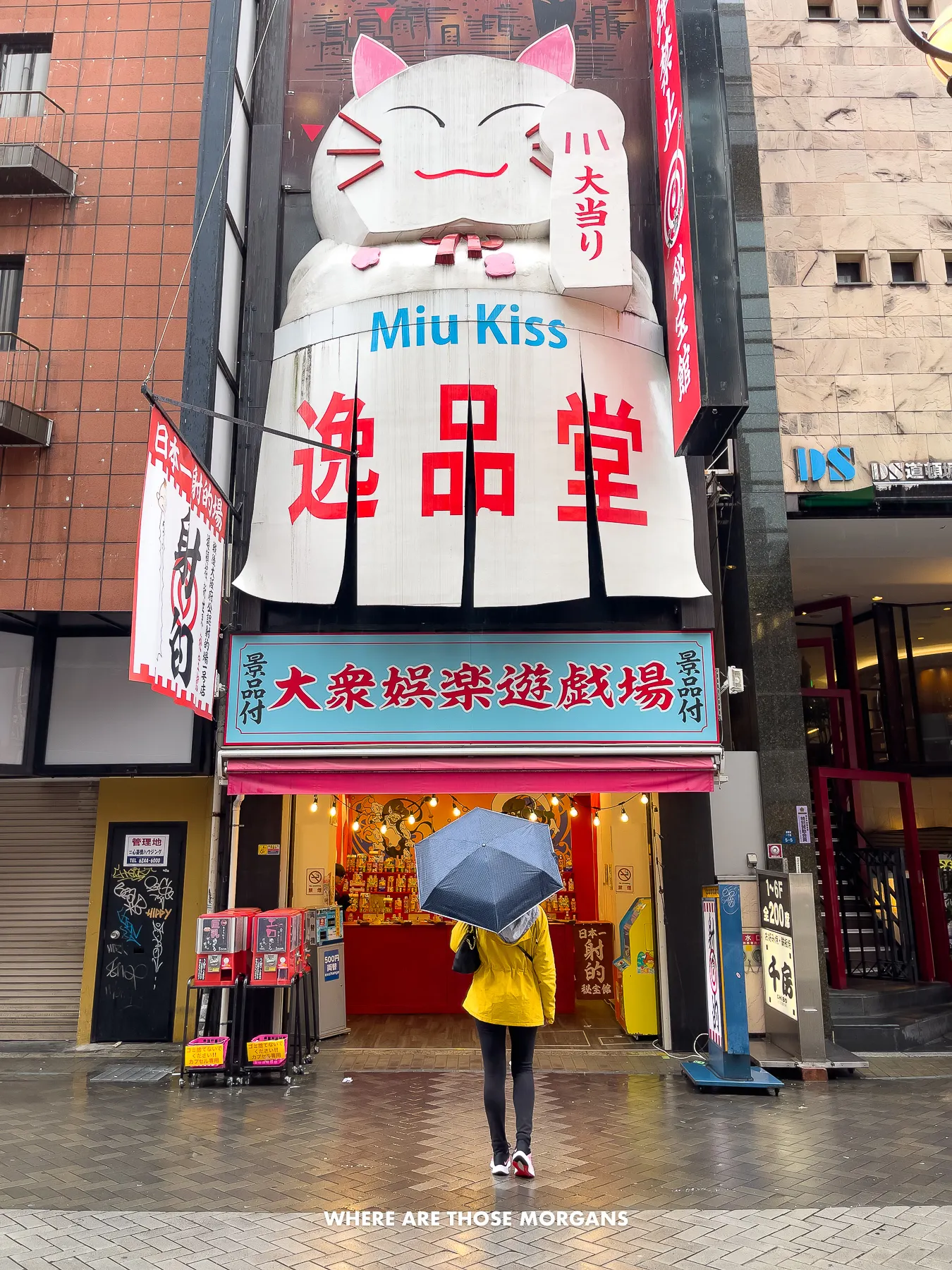
The issue is not knowing where to go for good food and drinks without being ripped off, so we’d seriously consider this Namba and Dotonbori backstreet nightlife and street food tour beginning at 6:00 PM next time. For something totally Japanese, we’d skip both areas and instead go watch this live sumo show with audience challenge and an 8:00 PM start time. Or for something unique, we’d book this go kart tour through Namba and Dotonbori, also starting at 8:00 PM.
Osaka Itinerary Map
Map key:
- Red – Day 1
- Blue – Day 2
How to use this map: Click the map above to activate, zoom in and out, and tap any icon to see more information. See a list of all attractions by clicking the arrow icon in the top left, or see a full version of the map by clicking the “view larger map” icon in the top right. When you’re in Osaka you can open the map, tap the next place you want to visit and get directions. Stops for each day on the map are listed in order, so you can easily follow the route.
How to save this map: Click the small star next to the map title – this will add the map to your Google account. Open your Google Maps app, tap “saved”, then tap “maps” and open this map.
Planning For 2 Days In Osaka
From our two trips to Osaka, we learned a few important things about budgeting and what to know before going:
2-Day Budget Breakdown
Osaka is one of the most affordable places we’ve visited across both our Japan trips. We easily managed to keep costs for hotels, food and attractions to a minimum, without making too many sacrifices. We paid a lot more for our hotels in Tokyo, Hakone and Kyoto than we did in Osaka.
We ate at convenience stores, cheap ramen places, and the odd sit-down restaurant to get the balance right with food costs. Getting around was easy and cheap thanks to the extensive train network, and we didn’t have to pay for a single taxi – unlike Kyoto where we got two. Finally, Osaka’s top attractions (basically the castle and two observatories) are way cheaper than we’re used to paying in Europe or the US.
Everyone travels differently, so it’s tricky to pinpoint exactly what your Osaka trip will cost – it really depends on your travel style, preferences and budget. That said, here’s a rough idea of what a couple might spend following our 2-day, 2-night itinerary:
- Hotel: 39,000 yen (US $250)
- Food & Dining: 31,000 yen (US $200)
- Attractions: 12,000 yen (US $80)
- Transport: 3,000 yen (US $20)
- Total: 85,000 yen (US $550)
Bear in mind this is for a mid-range hotel (you could go cheaper or more expensive), a decent amount of food because that’s what Osaka is all about, a few attractions, and using trains to get around. As typical mid-range travelers ourselves, this is a best-guess estimate of how much we’d spend if it was our first time in Osaka following this itinerary.
Kristen’s pass tip: If you want a stress-free experience without having to worry about buying subway or attraction tickets, consider buying the Osaka Amazing Pass. It includes unlimited use of metro and private rail lines, as well as attractions like Osaka Castle and Umeda Sky Building. Klook sells them for around $30 for 2 days, which we’ll do next time we visit.
What You Need To Know
Getting around: Unlike Kyoto, Osaka is very transit-friendly. We relied entirely on the subway and JR Loop Line with easy transfers, we never had to pay for a taxi, and we never walked for massively long distances because there were no transport options.
Clustering sights: Even if you don’t follow our itinerary exactly, we still recommend breaking up Osaka’s tourist sights into halves – northern (Umeda, Tenma and Osaka Castle) and southern (Namba, Shinsaibashi and Tennoji). This saves zig-zagging or going back on yourself.
Food culture: Osaka’s casual, snack-heavy dining scene is a massive part of the overall experience. Our itinerary is structured, but we recommend allowing “wiggle room” for street food stops, lunch queues, or spontaneous foodie finds.
Evening atmosphere: Kyoto is super quiet in the evenings, whereas Osaka really comes alive after dark. It’s a total contrast, especially in neon-lit places like Dotonbori. If you have energy, there’s nothing better than a late-night wander.
Private tour: With just 2 days in Osaka, it might be worth considering booking this top rated private guided tour that takes in lots of top attractions and hidden gems in one go (either 3, 4, 5, or 7 hours), with a guide who will get you around the city. Then you can spend the next day just eating and drinking.
Next Steps
We hope our 2-day itinerary helps you figure out how to spend your days in Osaka.
If you’d like more personalized help, we offer expert travel planning consultations where we answer any questions you have, help you avoid tourist traps and plan out your entire itinerary step by step. See our packages and reviews.
Still researching for your trip?
- Here’s what to do first time in Osaka.
- These are the top areas to stay in Osaka.
- Here are our favorite things to do in Kyoto.
- This is how to spend 3 days in Kyoto.
- Here’s where to book a hotel in Kyoto.
- Don’t miss these top Tokyo attractions.
- Follow our 5 days in Tokyo itinerary.
- These are the best areas to stay in Tokyo.
- Here are the top Nara experiences.
- Here’s where to visit in Japan.
- This is our unique 2 week Japan itinerary.
Finally, we recommend reading our Japan travel guide for first-timers to get helpful tips and advice, top attractions to see, itinerary ideas and more.
Happy travels,
Mark and Kristen
Was this post helpful? Pin it for your visit!
All Rights Reserved © Where Are Those Morgans, LLC. Republishing this article and/or any of its contents (text, photography, maps, graphics, etc.) in whole or in part is strictly prohibited.
Mark and Kristen spent 6 years traveling the world, visiting over 40 countries across 4 continents and more than 30 US states. They created Where Are Those Morgans in 2018 to help others plan the best possible vacations by writing authentic travel and hiking guides based on their real experiences.
Since the arrival of baby Maya in late 2024, Mark and Kristen’s extensive travels have slowed down but they still take plenty of trips. Where Are Those Morgans now helps millions of travelers each year to visit new places and hike new trails through information-packed blog posts and expert travel guidebooks. Read more about Mark and Kristen.