
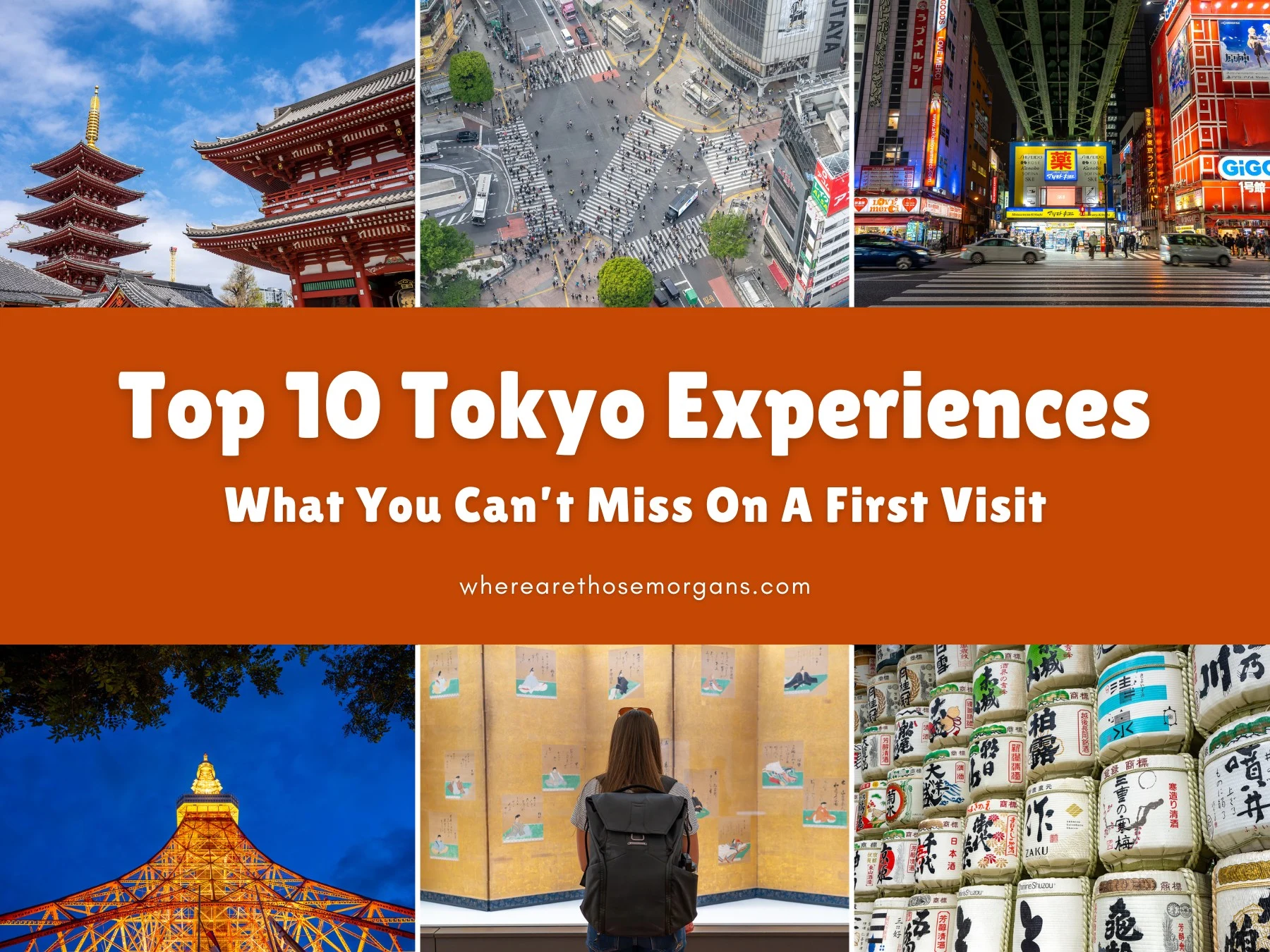
After visiting Osaka, Kyoto, Takayama, Kanazawa and the Japanese Alps, we couldn’t wait to finish our first trip to Japan with 5 days in Tokyo. This was back in September and October of 2018 when the fall colors were spectacular and covid hadn’t yet disrupted travel. As our bullet train rolled into the main JR station, we honestly couldn’t wait to get started on our Tokyo bucket list. Our budget was tight, so we stayed in a cheaper hotel between Kanda and Akihabara, stuck to free or cheap activities, and ate at a lot of 7-Eleven’s.
Fast forward to March 2023 and we were back in Tokyo for another 3 days to see the famous cherry blossoms. This time we had a much healthier budget so we stayed in the heart of Shinjuku, and our itinerary was filled with attractions and foodie spots. We learned two important things on this trip: First, we didn’t really need that bigger budget because most of our favorite things to do in Tokyo were actually free – and second, we thought the cherry blossom season was overrated (we’ll explain more about this later).
Hi, we’re Mark and Kristen Morgan. We left our scientific careers in 2018 to become travel writers and photographers, and since then our expert guides have helped millions of travel planners take better trips. Read more about us.
Why trust us with your Tokyo bucket list? After two trips to Tokyo with different budgets and itinerary goals, we know what’s worth doing and what to skip on a first visit. As always, every photo in this guide is ours.
Our favorite Tokyo experiences so far include visiting temples and shrines, soaking up views from observation decks, eating delicious food, and simply exploring the city’s varied neighborhoods by foot. For us, Tokyo isn’t like Paris or NYC where our itineraries are always jam-packed with paid attractions and museums – it’s more about walking around, eating, getting a sensory overload and being blown away by the “ancient world meets modern technology” vibe.
We’ve seen a lot of the world, and we have to say Japan’s capital city is a truly unique place to visit. Just thinking about the food, culture, neon lights and fun things to see makes us want to book a flight to Haneda airport right now. Based on our two totally different trips, we’re going to walk you through the experiences we consider unmissable on a first vacation to Tokyo. Let’s dive in!
Note: Our content is reader supported and contains affiliate links. If you make a purchase through one of these links, we may earn a small commission at no extra cost to you and it helps us keep this site running.
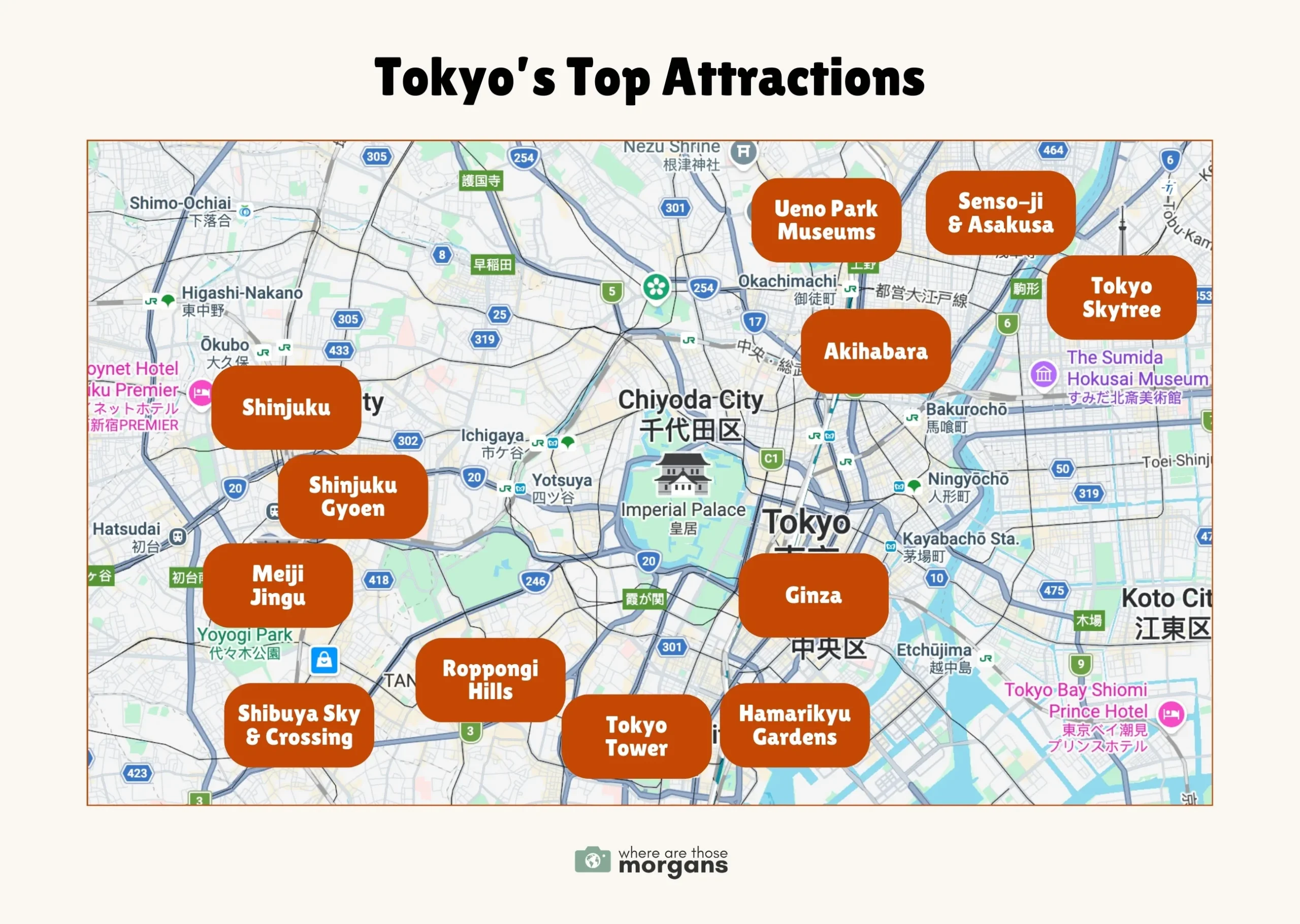
Exploring Tokyo’s Diverse Neighborhoods
Let’s kick things off with the one thing we think every single visitor should do on a first trip to Tokyo: spend as much time as possible just walking around the city’s vibrant and varied neighborhoods.
Whenever we help anyone (clients, friends or family) plan a trip to Tokyo, this is always the first thing we tell them. Why? Because we think it’s the best way to really “see” Tokyo, and it’s completely free.
Shinjuku
We were overwhelmed by Shinjuku at first. The “world’s busiest transport hub” sounded daunting, but it ended up being one of our favorite places to walk around – especially at night when the neon lights and bustling crowds gave the area such a unique atmosphere. We stayed at Hotel Sunroute Plaza next to Shinjuku JR station in 2023 and loved the location, despite it being super touristy.
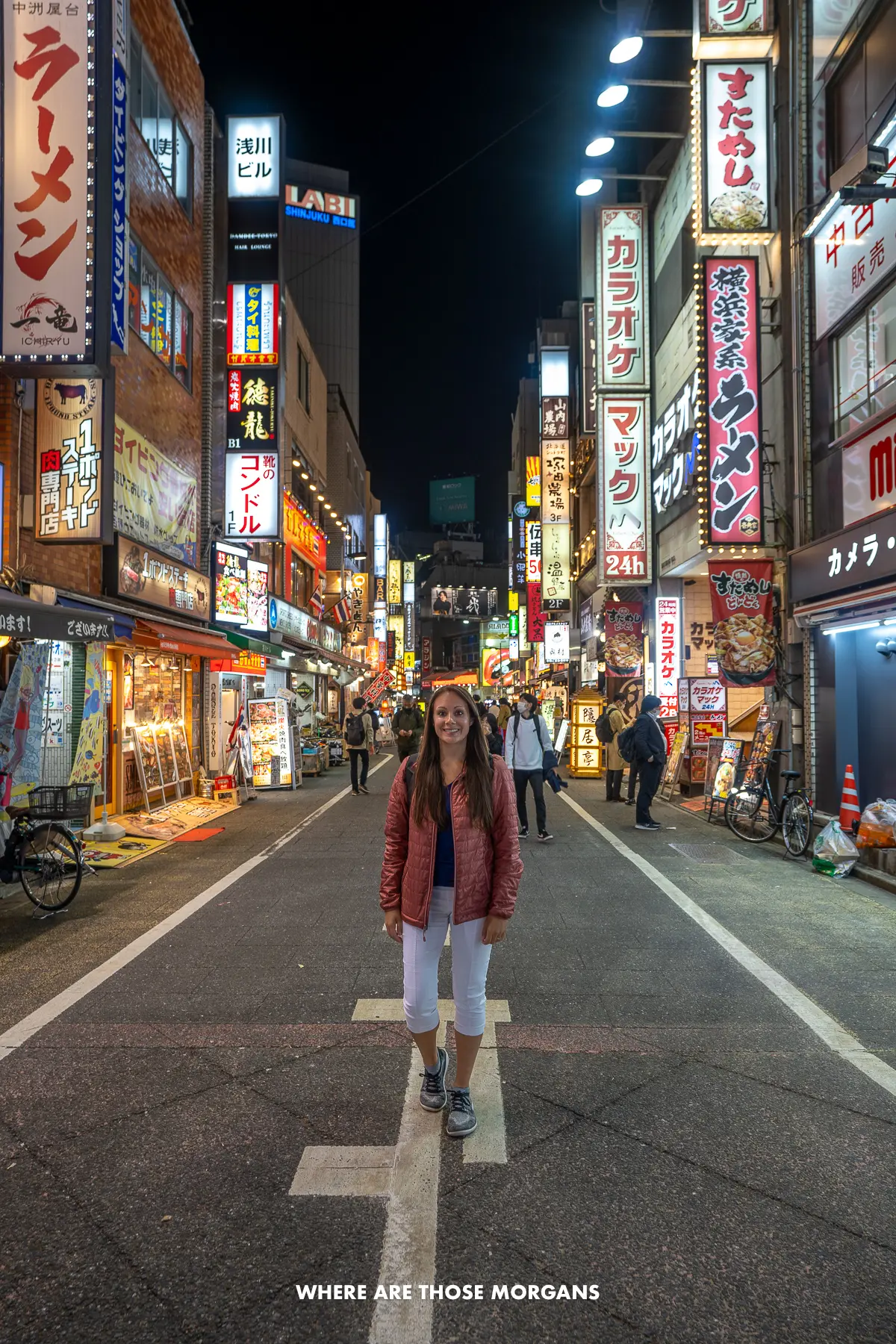
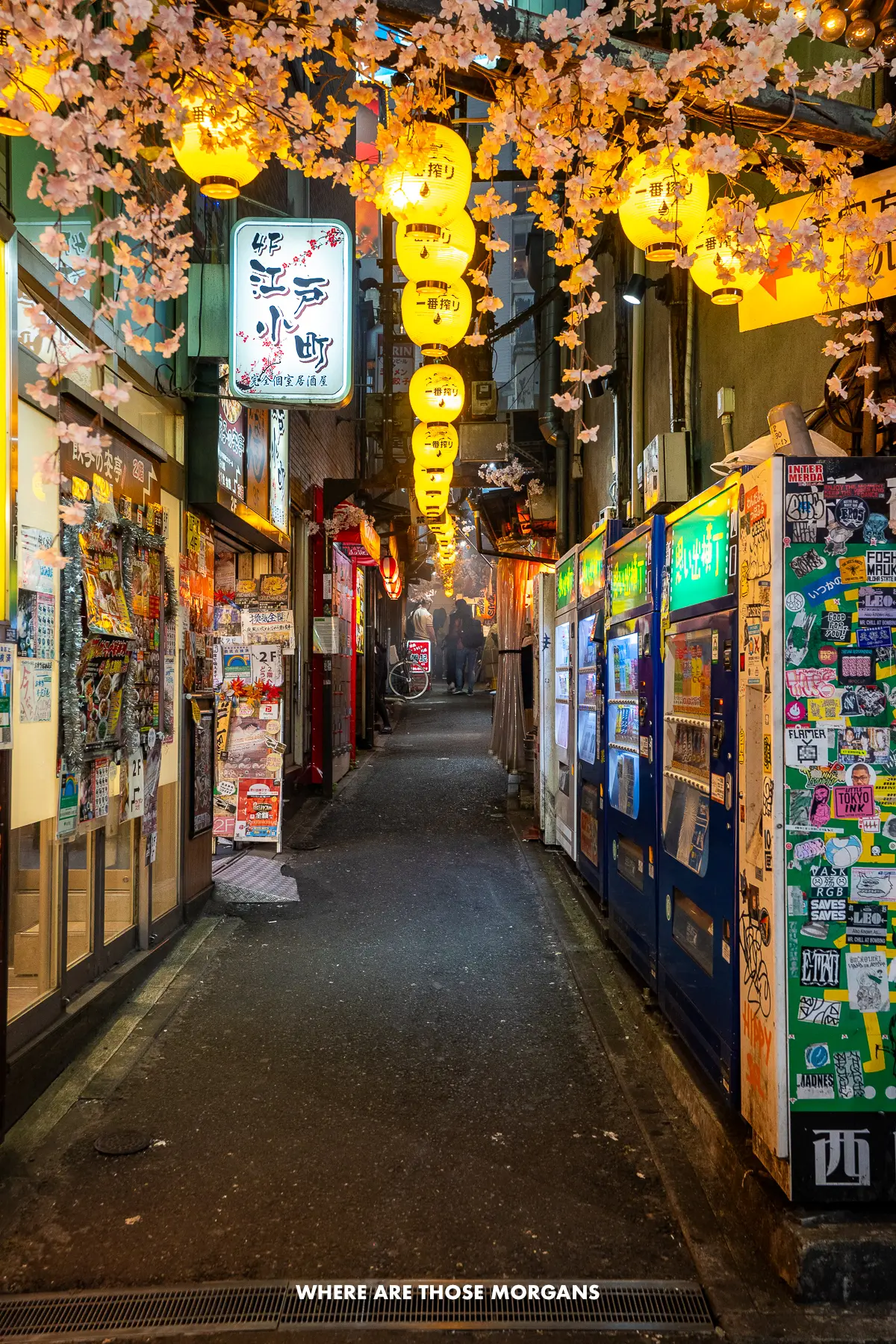
Our favorite places to visit in Shinjuku were the narrow and colorful Omoide Yokocho Memory Lane for smoky yakitori (chicken skewers), Golden Gai for a quick beer in a tiny bar (some had literally 4 or 5 seats only!), Isetan department store, Robot Restaurant which has since closed and been replaced by Samurai Restaurant Time, and the built up area around West Shinjuku with lots of excellent places to eat.
Shibuya
Other than a quick stop to see the “busiest pedestrian crossing in the world” at Shibuya Crossing, we barely spent any more time in this area on our first trip to Tokyo because it’s so far to the southwest of everything else worth seeing. But in 2023, we made a point of spending more time in Shibuya and we really liked the low-key, high-energy vibe. It was busy but it felt like controlled chaos.
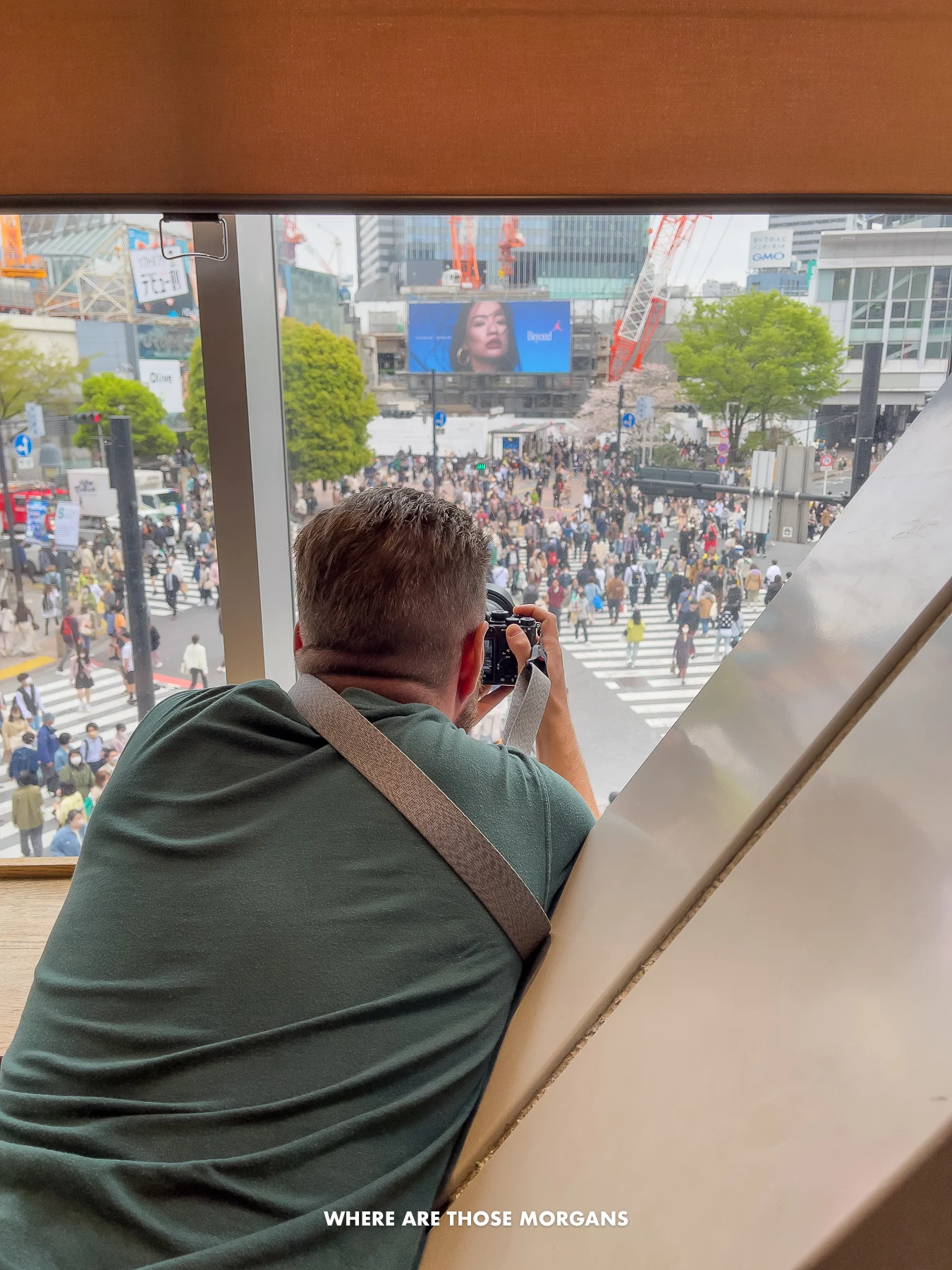
We went up to Shibuya Sky observation deck for awesome views over Shibuya Crossing and Tokyo, and we knew this area was the city’s premier fashion and trend center so we had a quick look around Mega Don Quijote, Center-Gai Street, and countless other shops. We ate a delightful ramen at Ichiran Shibuya, and next time we’d love to try Hankushu Teppanyaki for steak. Oh, and one other thing we’d love do next time is this street go-kart, it looks like so much fun!
Harajaku
We’ll admit we totally missed Harajuku the first time around. It’s located in-between Shinjuku and Shibuya so most people take a train and skip the middle, which is a mistake we made. So in 2023, we walked from Shinjuku to Shibuya, stopping at the incredibly serene and peaceful Meiji Jingu (we cover the famous shrine later) before crossing the road and stepping into a complete contrast on Takeshita Street.
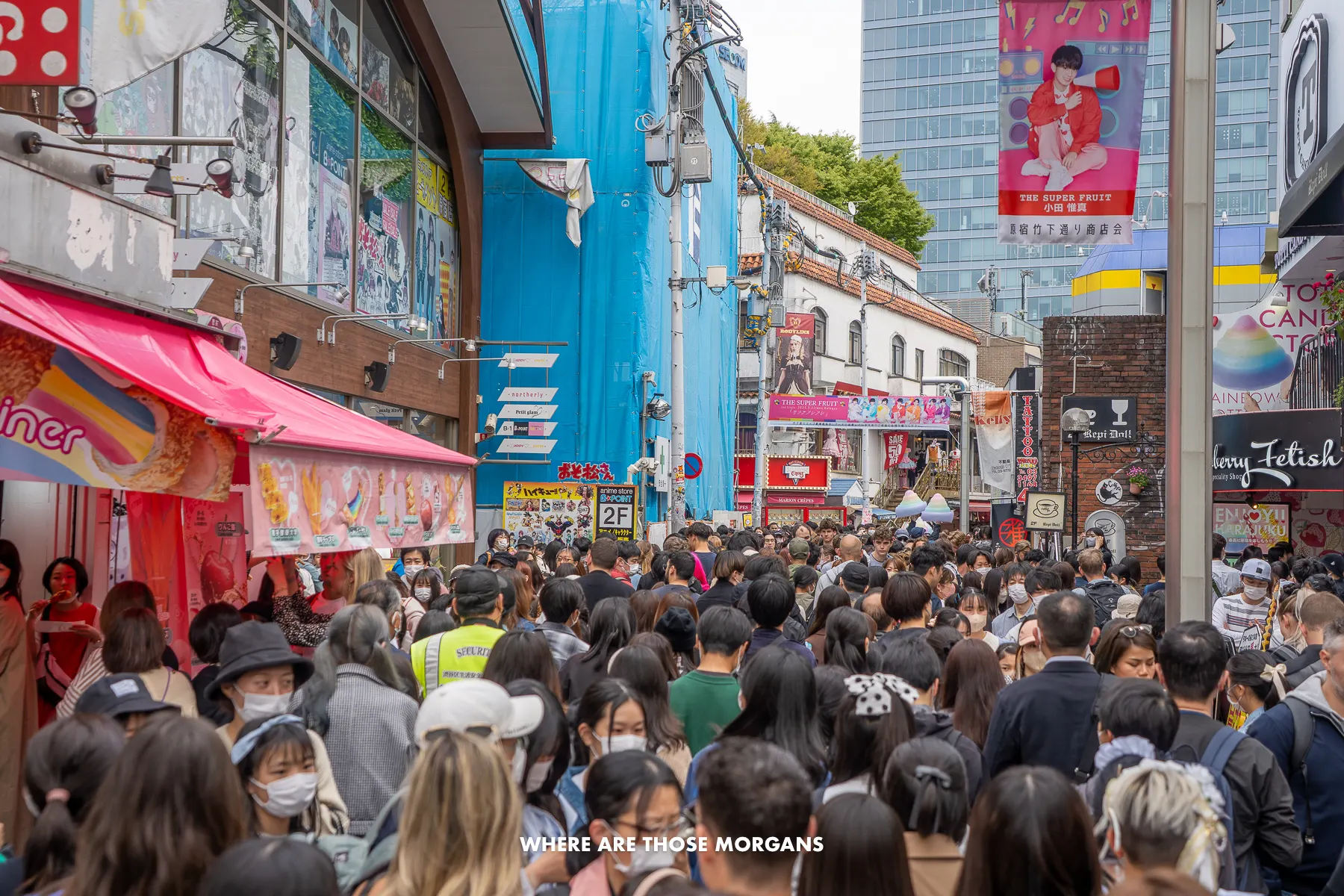
It was wild, there were thousands of people walking along the colorful street that’s home to boutiques, purikura photo booths (virtual makeover) and Japan’s kawaii (cute) culture. We ate massive crepes as we weaved our way through the intense crowds, and we tried to get in Roast Beef Ohno for lunch but they were full. It’s a cool spot that a lot of tourists don’t know about – but fair warning, it’s very busy.
Ginza
We always enjoy walking through Ginza for a bit of over-the-top, high-end luxury. It’s overflowing with flagship designer stores, swanky art galleries and massive department stores like the famous Mitsukoshi. We didn’t know this but the main thoroughfare closes to cars on weekends and becomes a pedestrian only area, which would be so cool to do.
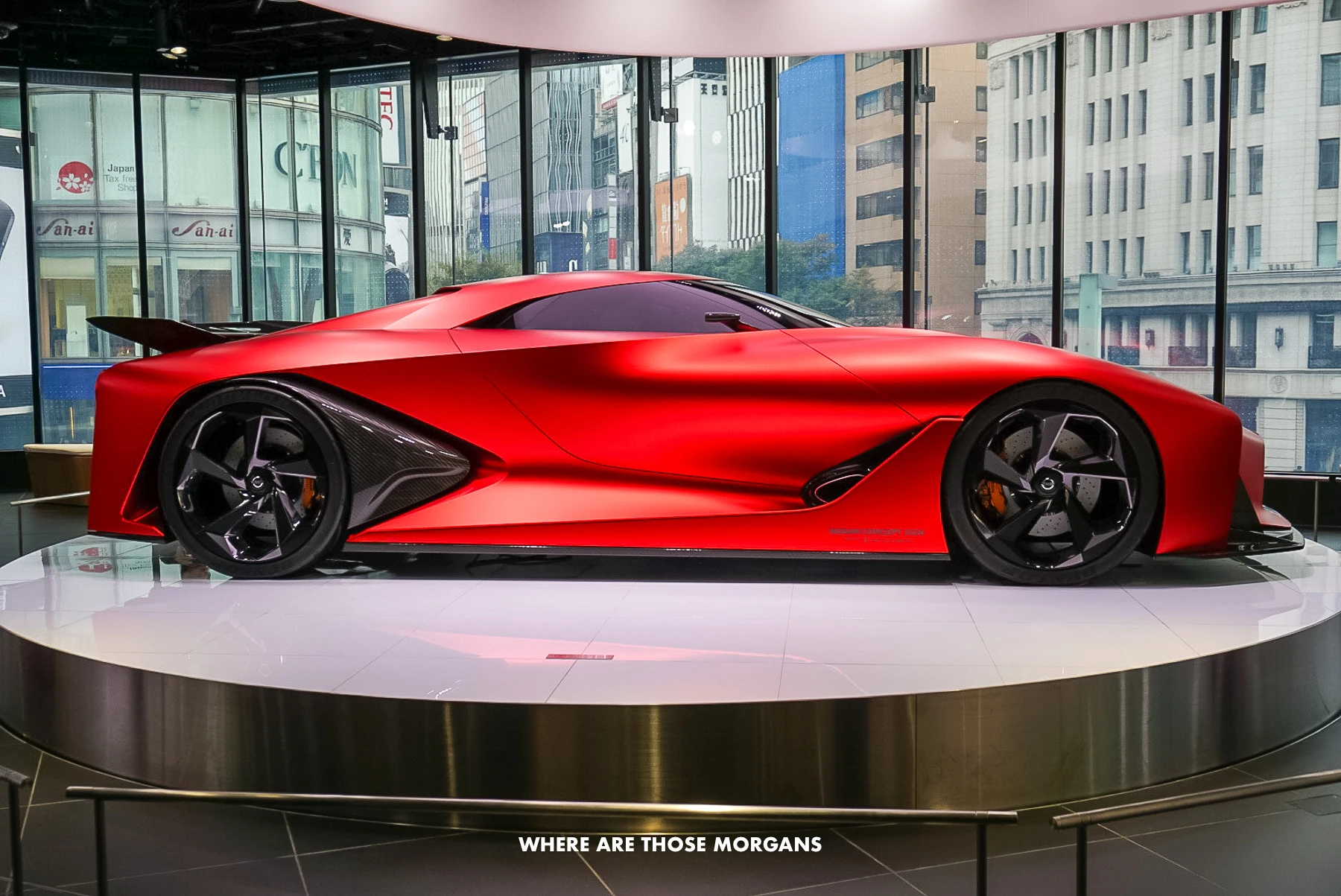
Mark bought a few t-shirts and Kristen got a pair of shorts at the Uniqlo Ginza flagship store last time we were in Tokyo. It’s a great brand, and where better to buy a few clothing items? But our favorite place in Ginza is Nissan Crossing, which showcases Nissan’s concept cars on spinning platforms and is one of our must-visit spots for car enthusiasts.
Akihabara
To us, the picture we had before our first trip to Tokyo was flashing neon lights, huge arcade gaming centers and techy-gadget shops. We found exactly that and more in Akihabara Electric Town. We lost a few hours in the arcades, watched food being made through windows, and even bought our very first camera (trusty old Sony A6000) in Akihabara’s LAOX store.
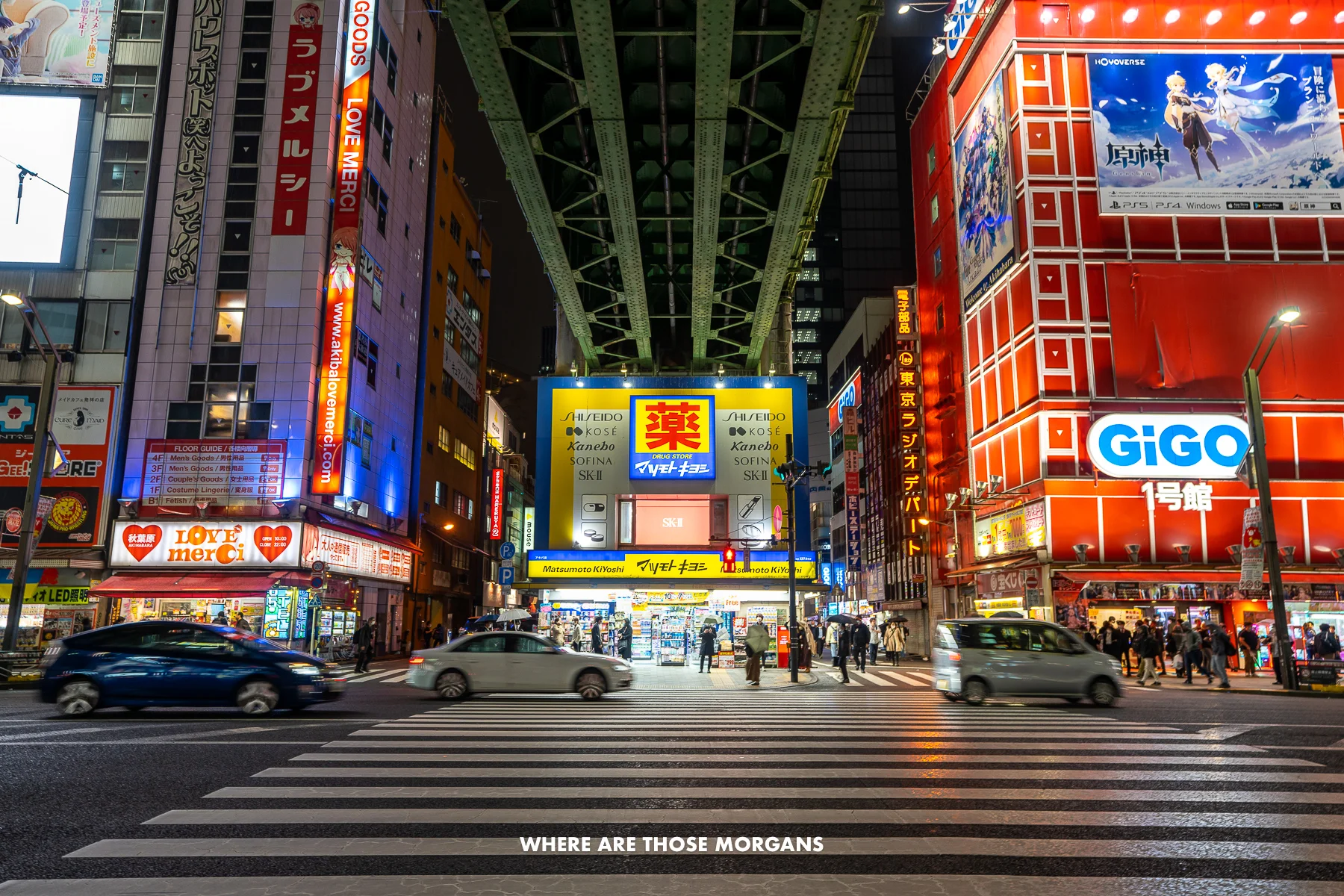
It’s honestly such a fun neighborhood to walk around, especially at night when non-stop colorful neon lights contrast against the pitch black sky. Seeing 6-story buildings dedicated entirely to arcades and gaming was when we said okay now we’re in Tokyo. Oh, and we ate a fantastic gyukatsu at Gyukatsu Ichinisan after waiting in a 30-minute line.
Asakusa
From bright lights and modern technology to old world culture and tradition, Asakusa is one place in Tokyo we think every first timer should see. It’s home to the city’s landmark Senso-ji Temple (which we’ll show you later) and Nakamise-dori shopping street with tons of food and souvenirs. But they’re the main touristy areas and there’s more to see here.
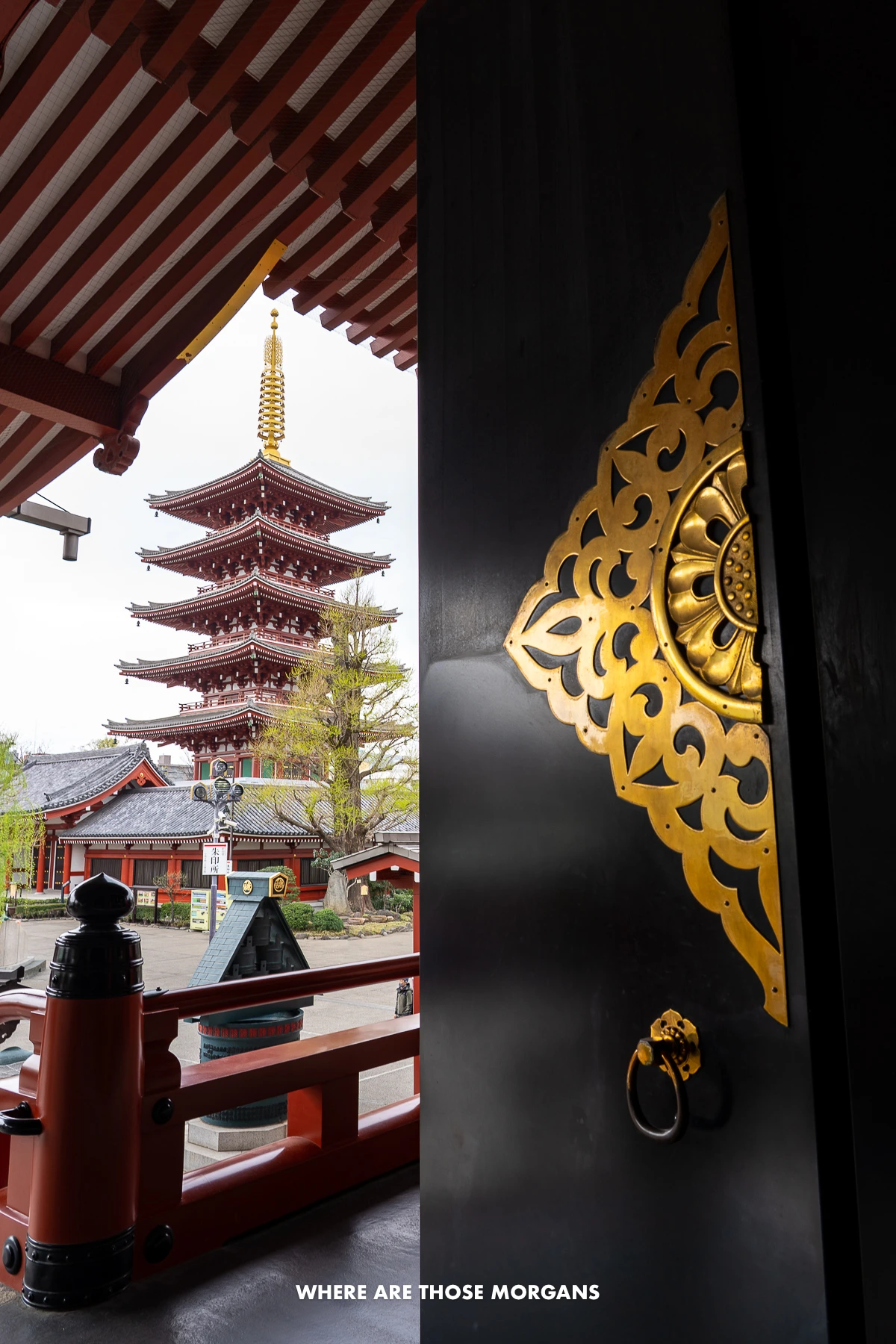
We enjoyed walking around Kappabashi (kitchen town) to see plastic food examples and Japanese knives, Hoppy Street just to the west of the temple grounds had excellent stew and a famous drink that’s like a non-alcoholic beer, and walking along the Sumida River gave us great views over the Tokyo Skytree. There were also loads of Edo period craft centers showing things like fan-making that were interesting to see too. If you’re interested, Asakusa is the place in Tokyo to rent kimonos.
Kristen’s private tour tip: If we wanted to see Tokyo’s neighborhoods without the stress of getting around and figuring out attractions, we’d book this private guided tour and customize it to include the areas, attractions and food we wanted to try. We’d also ask tons of questions to learn from a local, so it really could make for a perfect first day orientation.
Soaking Up City Views From Observation Decks
Whenever we visit any major city for the first time, we always try to go up observation decks because they offer unique photo ops over the world’s most iconic urban skylines. We’ve done all 4 of the paid observation decks in Tokyo, but there’s also one hidden gem free deck that was closed the morning we tried to go up it. We’ll be honest, we prefer New York City’s observation decks, but Tokyo’s are still very cool.
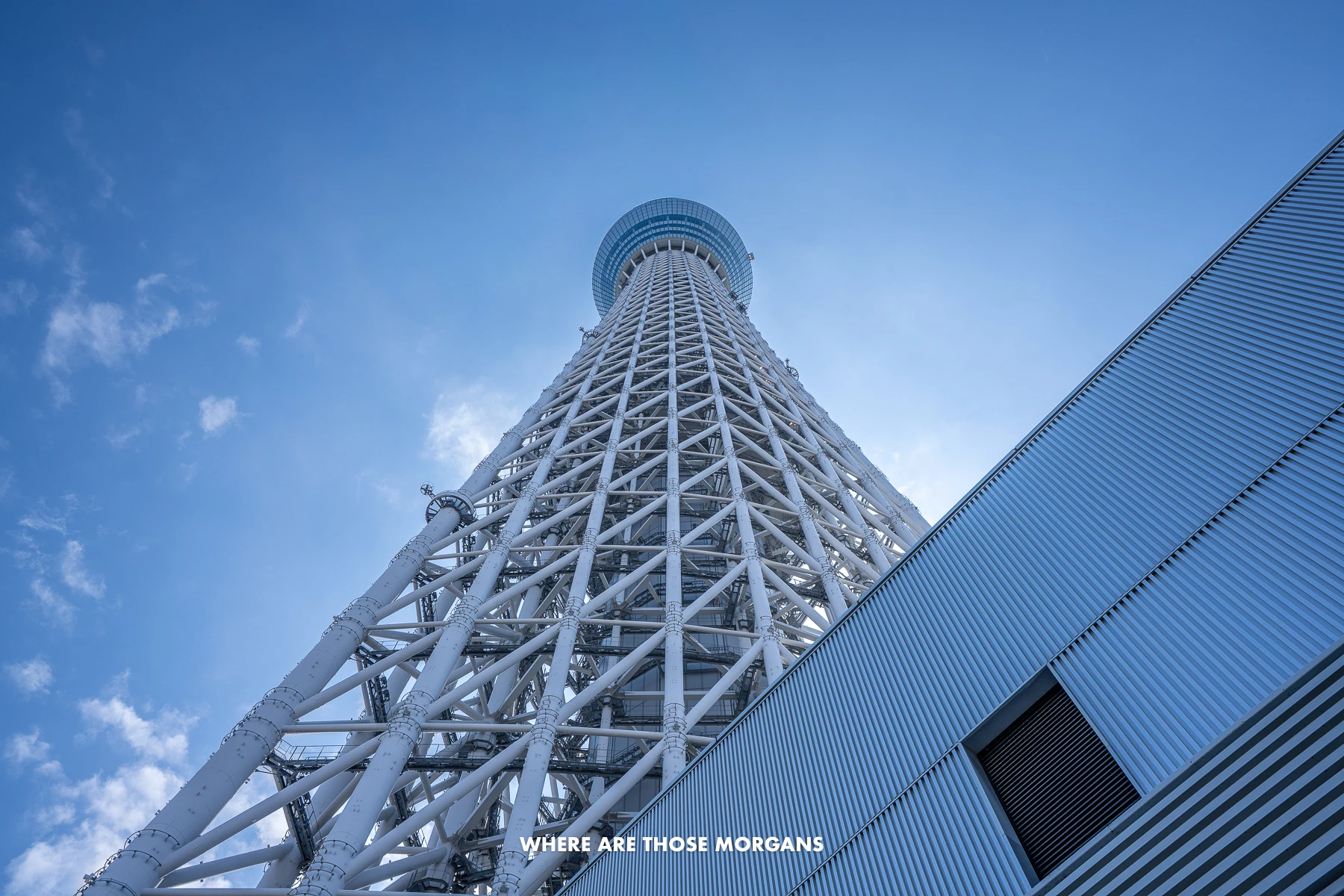
Tokyo Skytree: We loved the immense far reaching views over the Kanto plain from Tokyo’s tallest observation deck at 634m (2,080 feet). But we did this one during our spring visit for cherry blossoms and it ended up being a disaster. We didn’t book in advance (big mistake) and the ticket line was massive. Then we finally got up and we couldn’t move at all, it was shoulder-to-shoulder viewing, and lines for the lifts were outrageous. We would only do this one again if we booked in advance and went up at a quieter time of day, outside of cherry blossom season.
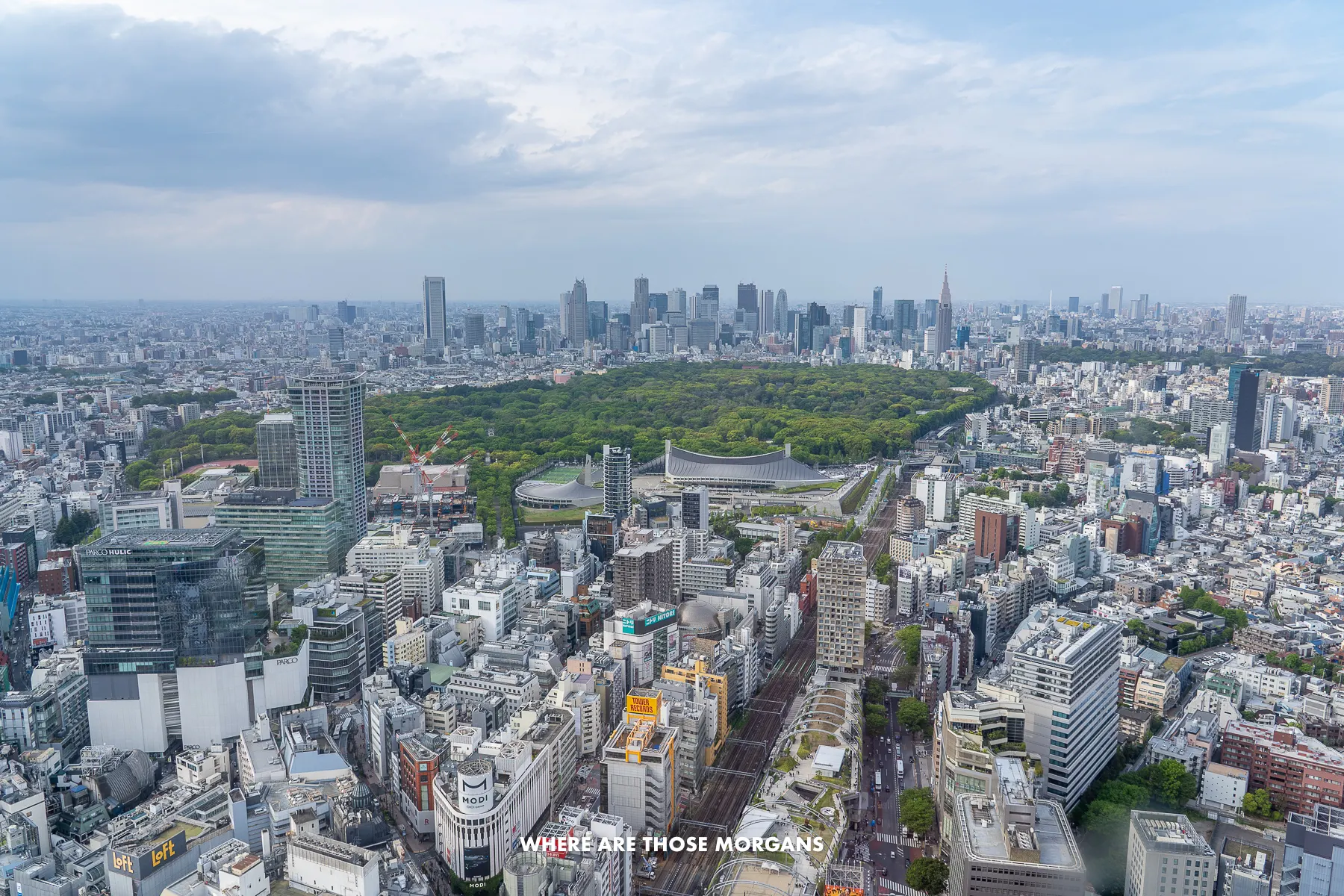
Shibuya Sky: We did Shibuya Sky in mid-April and we were super excited to see the open-air 360-degree views – but we got unlucky with windy, rainy and stormy weather and they closed the rooftop. We’d left it until our very last day in Japan so we had no choice but to do it, which was frustrating. The inside observation deck overlooking Shibuya Crossing was still cool and overall we did like this one, but it’s all about that “Instagram” rooftop that we couldn’t see, so our advice is to check the weather before booking.
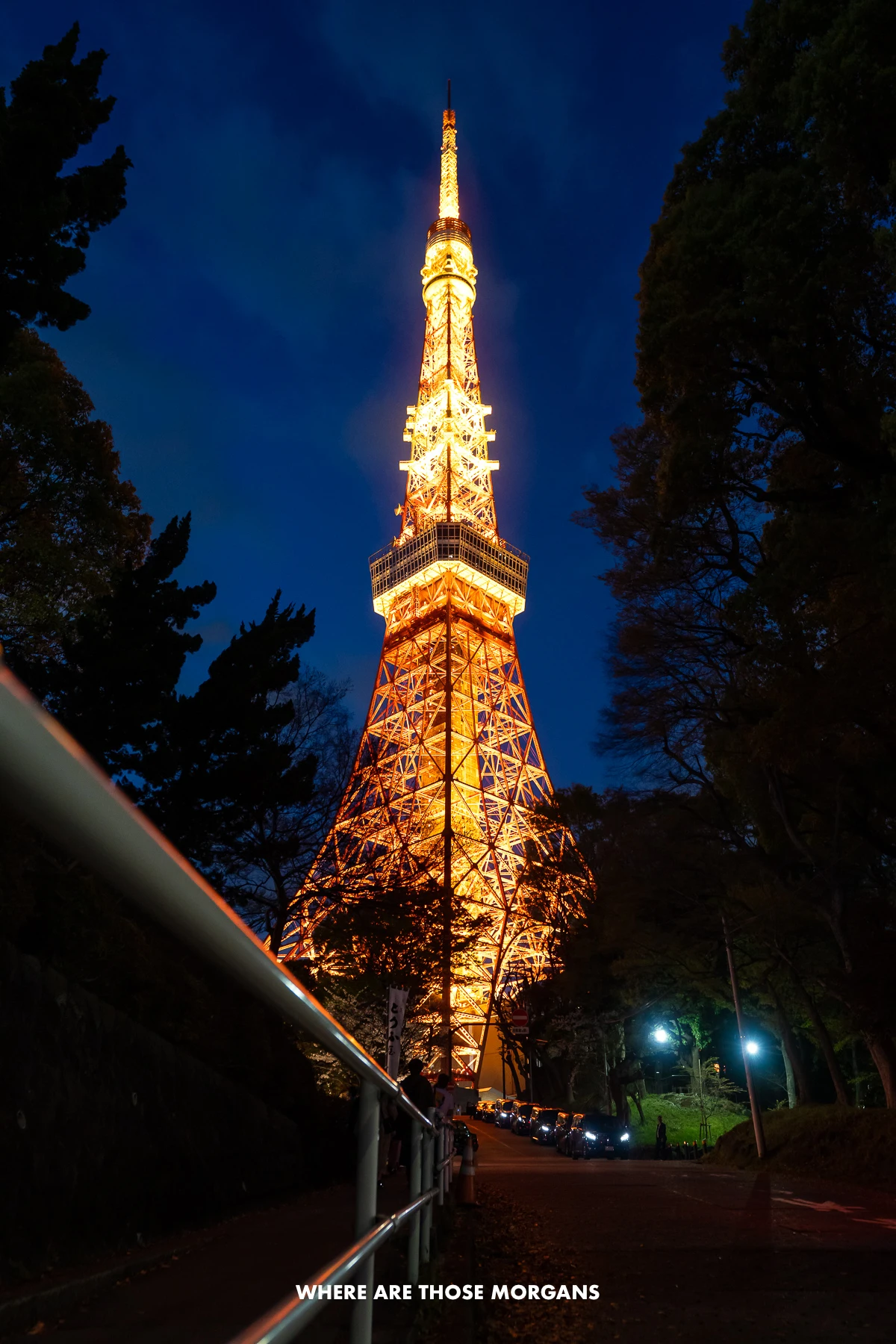
Tokyo Tower: We thought the old school “Eiffel Tower of Japan” had a nostalgic vibe that the more modern towers lacked. It was great going up for sunset and it kind of felt a bit like being inside a 90’s retro game, but this observation deck was a bit low down in the skyline so the views weren’t as impressive. Honestly, we preferred taking photos of the Tokyo Tower’s deep orange color contrasting against the dark sky from various places nearby than actually going up it.
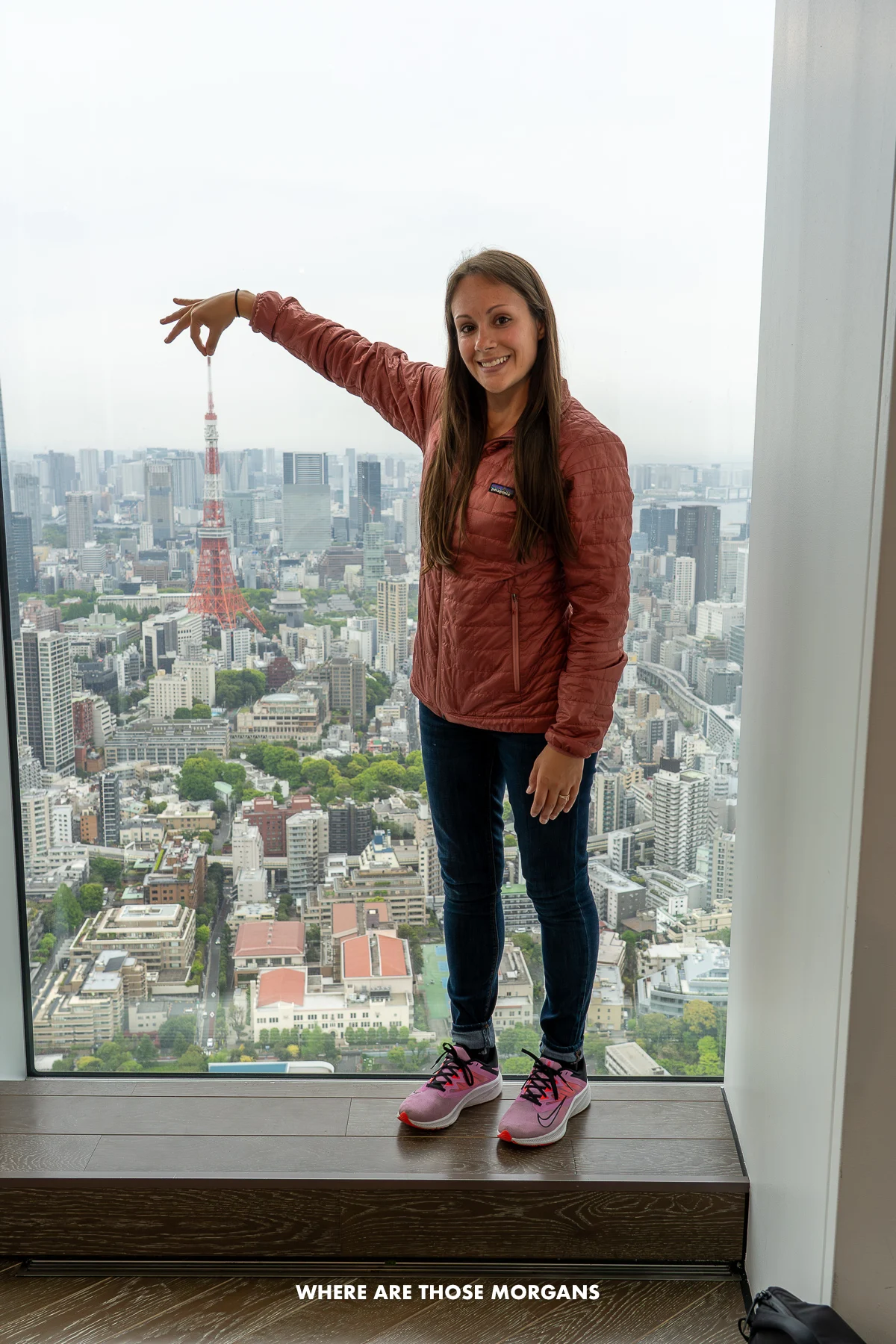
Roppongi Hills Tokyo City View: We went up this one for a close up elevated view of the Tokyo Tower at night, but it didn’t really work because it was so bright inside that the reflections on windows were awful for photography. That said, we did really enjoy the Mori Art Museum exhibitions which we didn’t know were included, and the view over Tokyo was one of the best because it’s more central. There used to be an outdoor deck here but it’s now closed indefinitely.
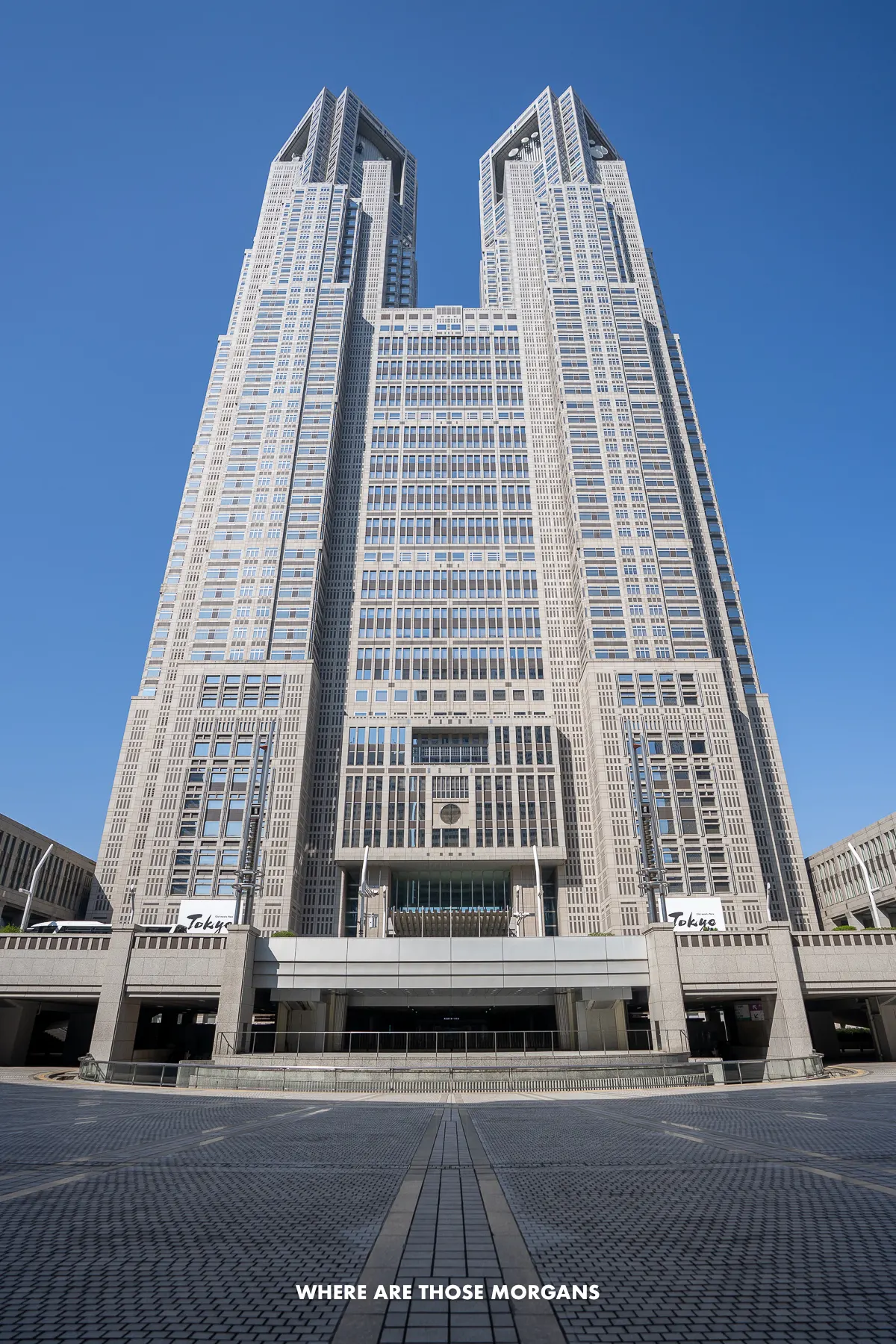
Tokyo Metropolitan Government Building: This one is totally free to visit and it’s located in Shinjuku which is where a lot of first timers book a hotel. Another huge bonus? Because it’s on the far west side of Tokyo, there’s a clear line of sight to Mount Fuji which can be seen on clear days. We tried to do it the morning we left but it was closed, so it’s top of our list for next time.
Mark’s observation deck tip: You absolutely don’t need to do them all, we suggest choosing just one deck and spending the rest of your time doing other things. The Government Building is free and has Fuji views, otherwise we’d say Shibuya Sky is the best one for a more complete experience with unobstructed views from the rooftop – as long as it’s open.
Visiting Senso-ji Temple
When we think of Buddhist temples in Japan, we mostly remember our experiences in Kyoto and Nara. But Tokyo also has a few of its own temples and chief among them is the oldest in the city called Senso-ji Temple, which is located to the northeast in Asakusa. You’ll find Senso-ji Temple on most lists of must-visit spots in Tokyo for a good reason – it’s a beautiful complex that’s been around since the 7th century.
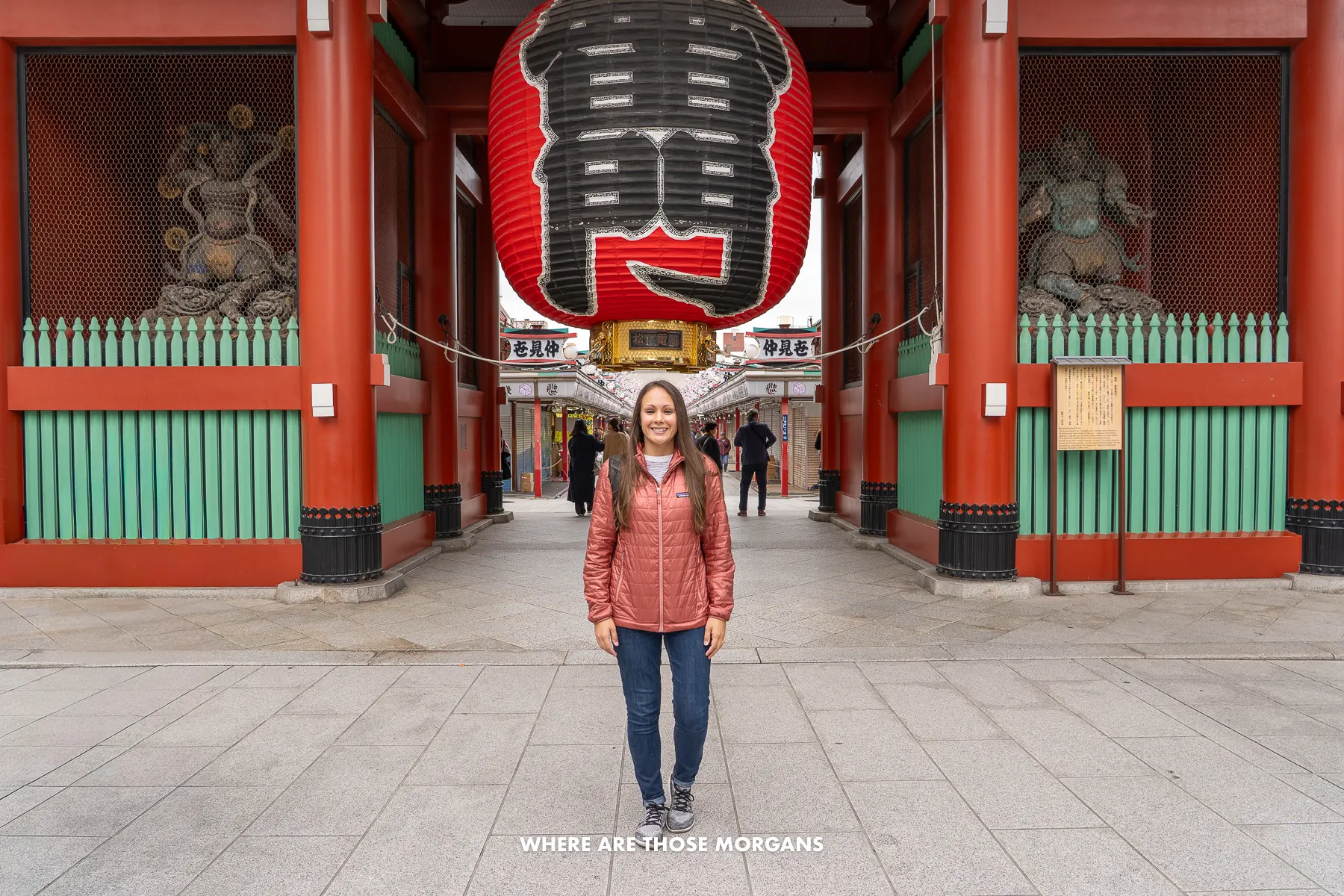
We’ve visited twice, both times taking a metro to Asakusa Station and entering from the south at Kaminarimon Gate (thunder gate) with its impressive 700 kg (1,543 lbs) red lantern. Beyond the gate, we walked through the middle of two rows of independent stores, eateries and souvenir shops on a narrow pedestrian only path called Nakamise-dori market, which led us all the way to the temple.
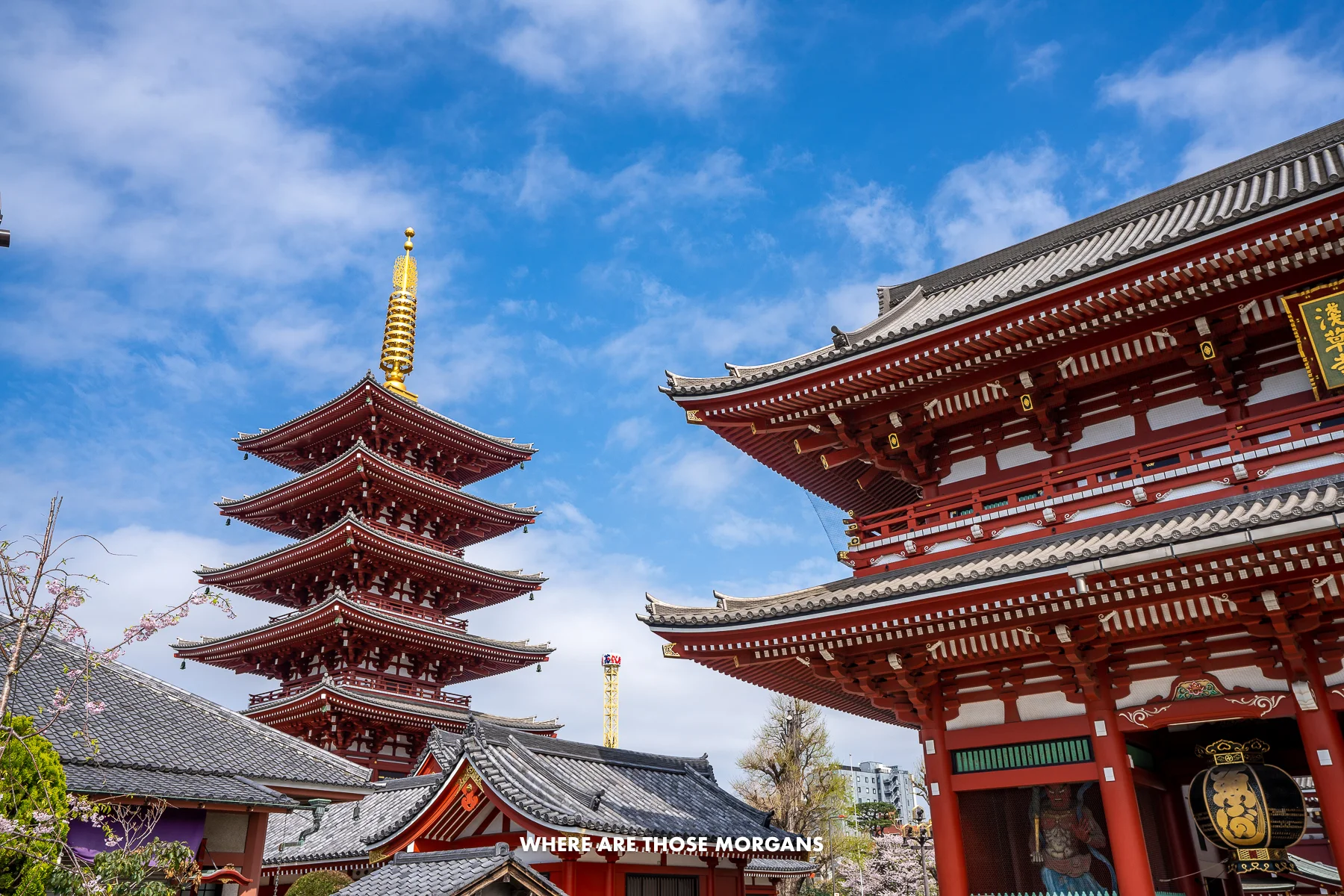
In 2018, after eating ningyo-yaki cakes and taking our time to see the unique items locals were selling, we arrived into the main complex, walked through Hozomon Gate, looked left to take photos of a stunning five-storied pagoda, and continued straight into Senso-ji Temple. But it was so busy, so in 2023 we arrived to Senso-ji at 8:00 AM to beat the crowds and it was much calmer.
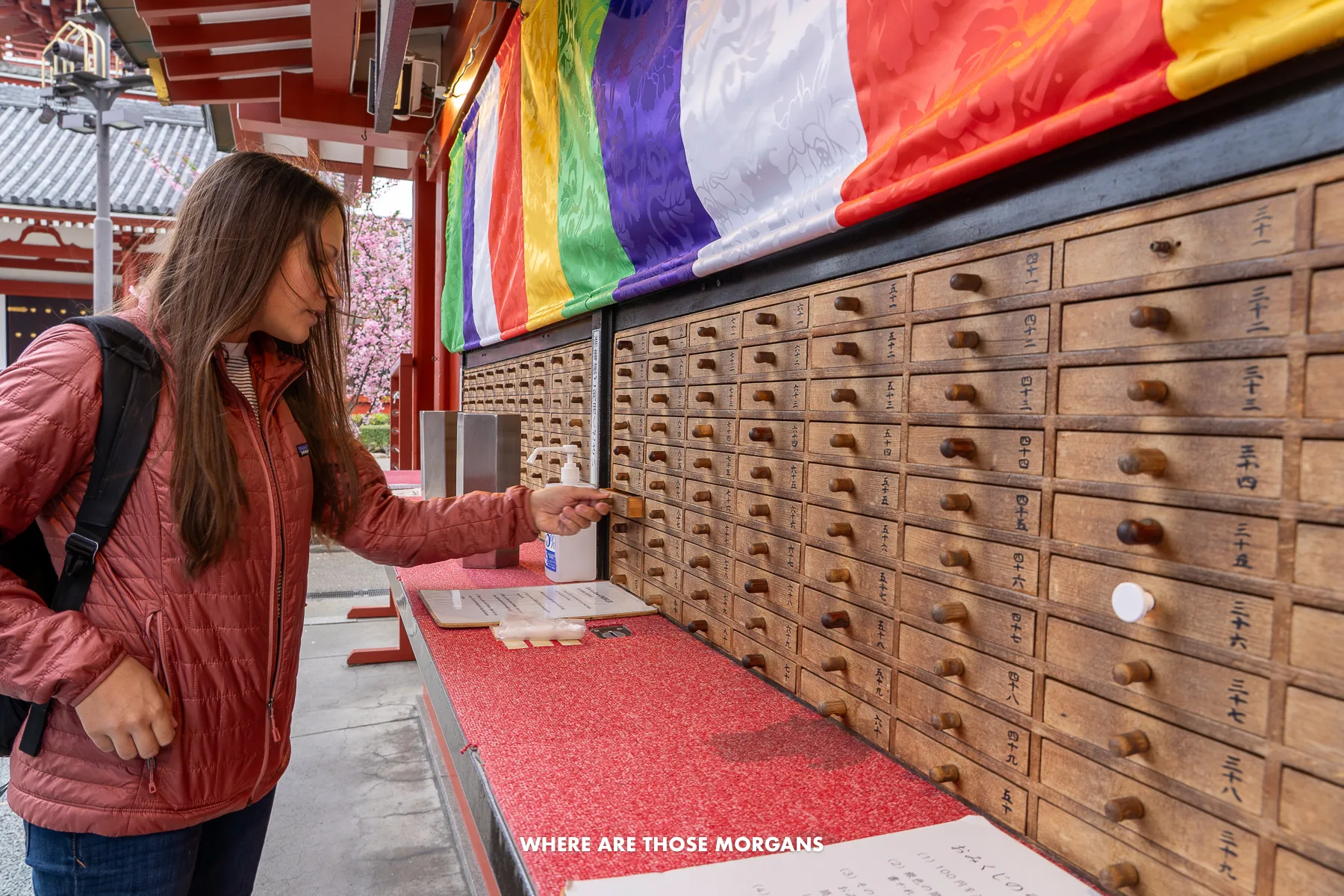
The first time we didn’t really know what to do but we figured out the rituals second time around – we wafted smoke over our bodies for healing and good health, shook a metal tin to get a numbered bamboo stick which corresponded to a drawer containing a fortune (both ours were good so we got to keep them – if it’s bad luck you tie it to a rack), and finally we threw coins into a wooden box before bowing twice and offering a silent prayer.
Now, we made two mistakes both times we visited Senso-ji. First, we didn’t go back after dark to see the gates and pagoda lit up at night from 6:00 PM – 11:00 PM once the crowds have thinned. And second, we didn’t know about a hidden gem mini-observation deck overlooking the whole complex on the top floor of Asakusa Culture Tourist Center, which is located opposite Kaminarimon Gate.
Other popular temples to see in Tokyo include Sengaku-ji (where the 47 Ronin are buried) and Gotoku-ji (thousands of white cat statues), but they’re a bit further out. So our only other must visit temple is Zojo-ji (the Samurai Temple) which was the family temple of the Tokugawa Shoguns who ruled Japan for 250 years. It’s located next to the Tokyo Tower, so it’s easy to combine them on a Tokyo itinerary.
Visiting Meiji Jingu
From a loud and busy Buddhist Temple to a serene and tranquil Shinto Shrine, Meiji Jingu is one of our favorite places to visit in Tokyo. It’s the complete contrast to Senso-ji – instead of non-stop stalls selling snacks it’s a peaceful 15 minute stroll through a massive forest to reach the inner shrine. The city is constant noise, lights and sensory overload, so it was nice to spend an hour surrounded by nature.
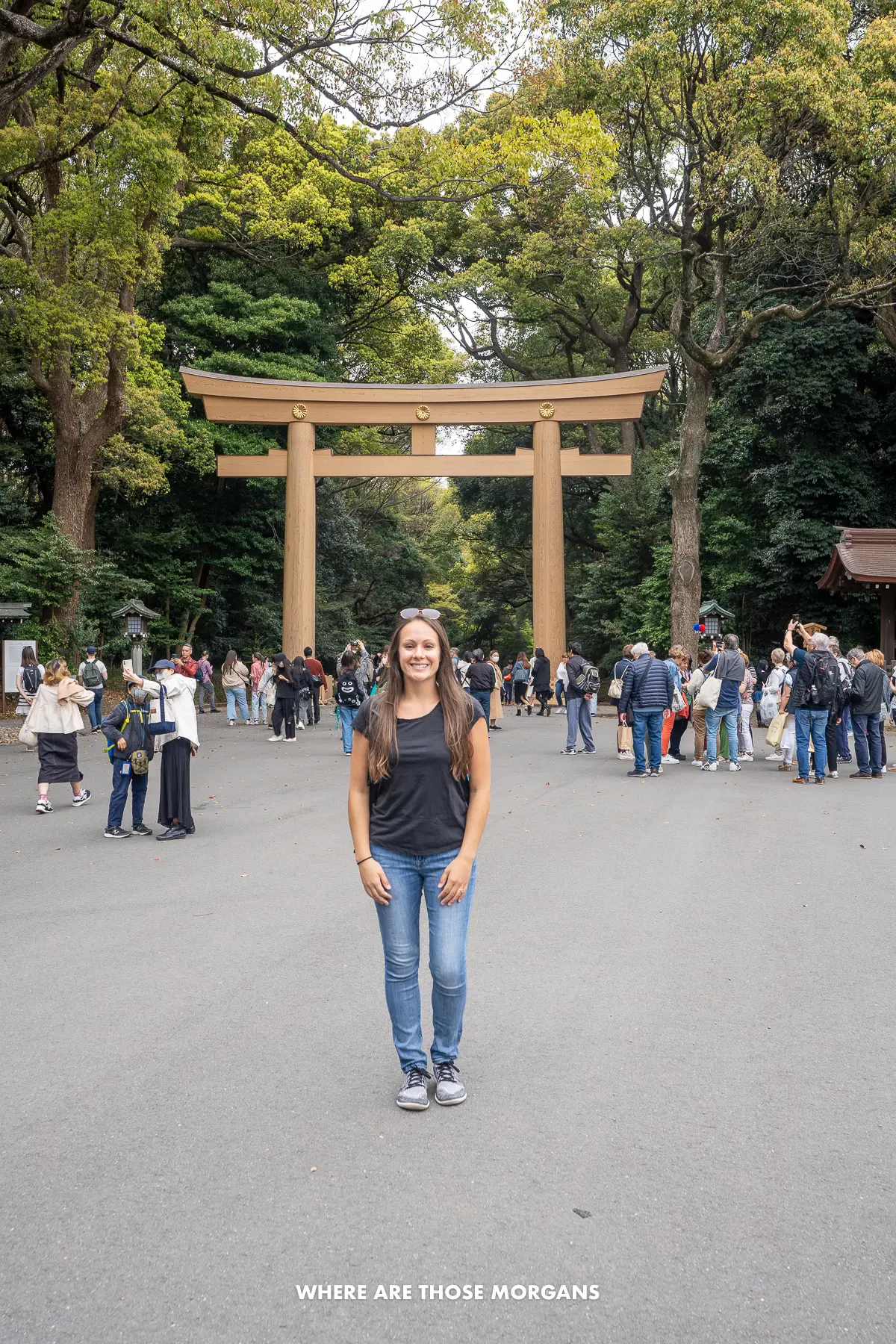
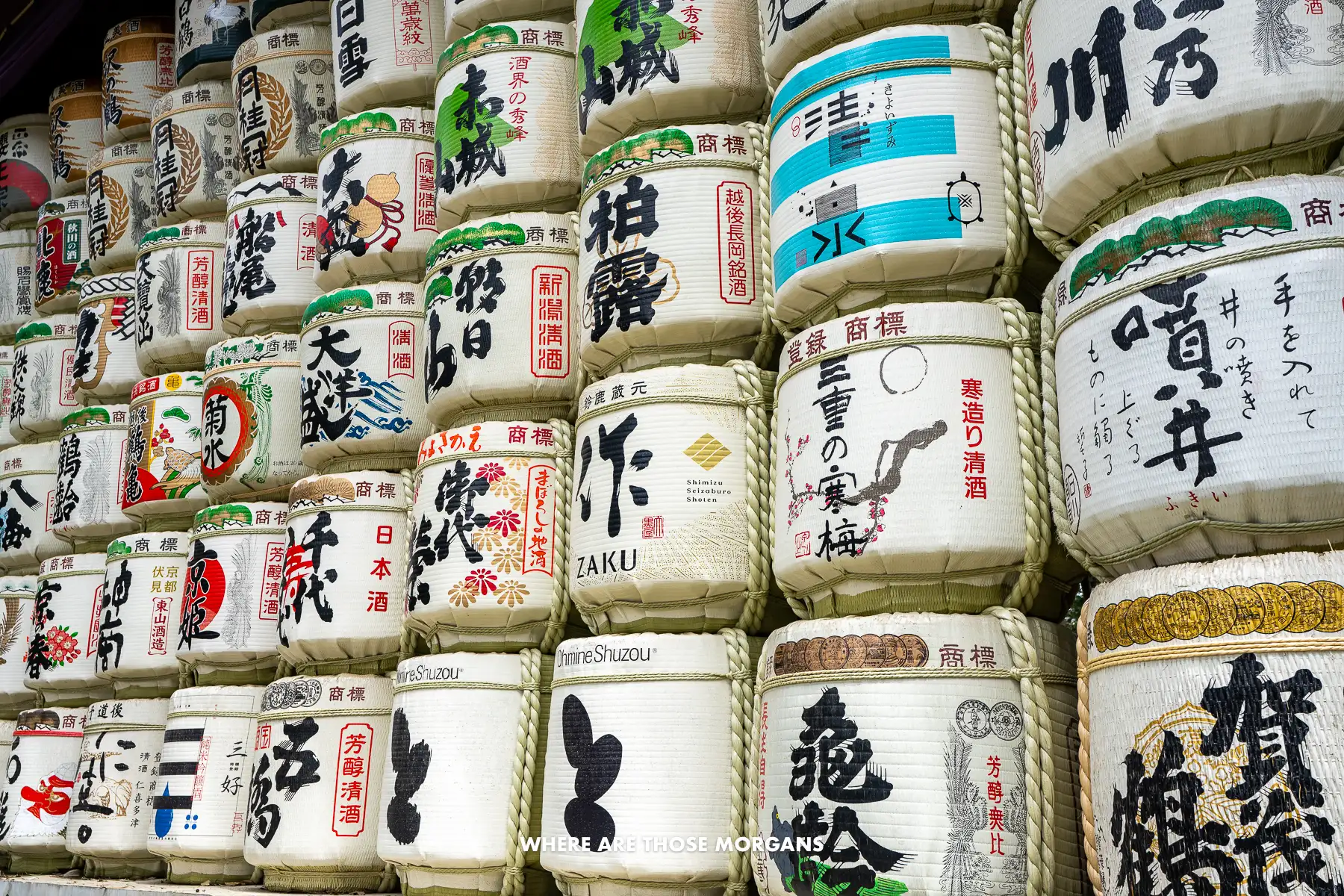
Along the walk we enjoyed taking photos of enormous cypress torii gates and decorative sake barrels that were donated by brewers from all across Japan. We did explore further to the west and south but other than being even quieter, there wasn’t much to see. So next time we’ll stick to the main pedestrian path leading through the forest, before returning the same way and crossing onto Takeshita Street.
If the world famous Fushimi Inari in Kyoto wasn’t already on our Japan itinerary, the other shrine we’d definitely visit in Tokyo is called Hie-jinja Shrine because it has a staircase lined with almost 100 bright red torii gates – it would be the perfect place to get those classic Instagram photos. Kanda Myojin has become a place where people pray for tech success because it’s near near “electric city” Akihabara, and we read that Nezu Shrine is a bit of a hidden gem, but both times it was too far out of the way for us to add into our itinerary.
Finally, we visited Yasukuni-jinja Shrine in 2023 without knowing about its controversy. The shrine was super photogenic, it had some of the most visually stunning cherry blossom trees, we found a scenic hidden spot called Shinchi Gardens, and the steel “First Torii” was gigantic. But the shrine is dedicated to those who died in service of Japan, and that includes over 10 WWII war criminals which is where the controversy comes from.
Eating Delicious Japanese Food
We love food as much as the next person – but as travelers, we’d usually classify ourselves as attraction-first or experience-first over foodie-first. That said, Japan is one of very few places in the world that weirdly makes us just become obsessed with eating. We plan our days around meals or restaurants, and we spend time in bed looking at menus or trying to find hidden gems for the next day.
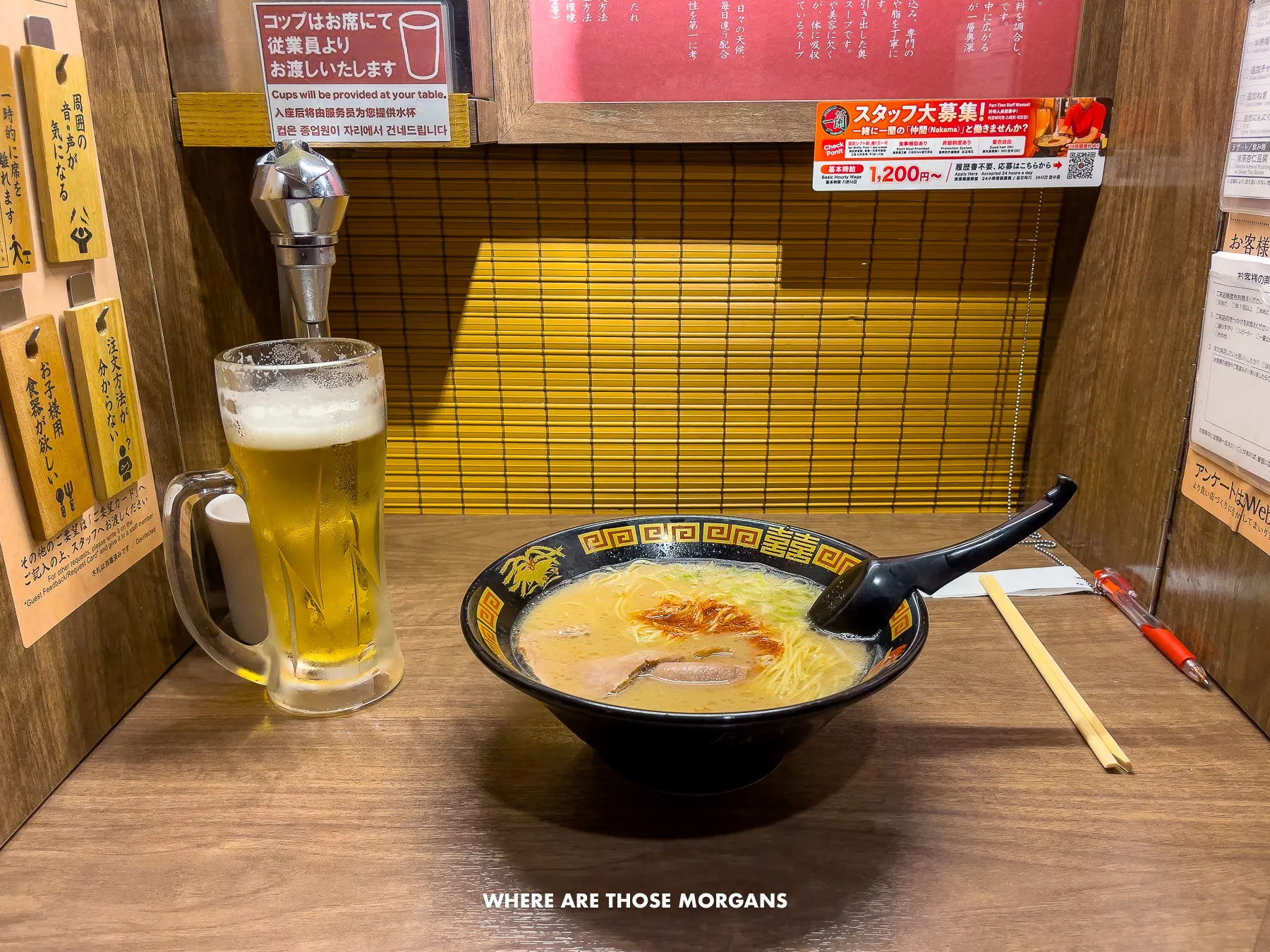
Ramen: This is the big one for us, we absolutely love ramen (we make it at home all the time). Ichiran is a ramen chain with locations all across Tokyo, we ate at the Shibuya one and it was great – it had the tiny individual stalls where they serve you through a window shutter – but it was super touristy. Next time we’d try Jikasei Mensho in Shibuya, Halal Wagyu Ramen in Shinjuku, and Hakata Tonkotsu near Ueno Park.
Sushi: Back in 2018 neither of us were into sushi, but by the time we went back to Tokyo in 2023 Kristen had acquired a deep love for it. So we tried a few spots, eating at Sushi Garyu near the Tokyo Tower and Nigrite in Shinjuku – and both were fantastic. With countless sushi spots around the city, it’s important to make sure you pick a good one – there’s something special about eating sushi right there in Japan.
Kobe beef: Some of the tastiest steaks we’ve ever eaten were in Bolivia and Argentina, but in terms of “meat quality”, Kobe beef in Japan is the best we’ve had. We splurged on a fancy kobe steak in a tiny teppanyaki restaurant in Hiroshima and it was honestly amazing, so we’d definitely try it again in Tokyo next time – maybe at Kobe Beef Wagyu Katana in Asakusa or Shinjuku. The key here is to book in advance at a teppanyaki Kobe beef place, not a sukiyaki place because that’s thin slices of beef in a broth.
Convenience stores: Now we’re really cooking! If you’re anything like us, the first thing you’ll tell your friends and family about when getting back from your trip to Japan is how awesome 7-Eleven, Lawson and Family Mart are for food. They were game-changers for our 2018 low-budget trip, we got coffee and egg salad sandwiches for breakfast and we raided the “hot snacks” box next to the register every day. Even on our 2023 trip when we had a decent budget we still crushed the snacks – Kristen loves the corndogs called American dogs and boneless fried chicken called nanachiki, and Mark adores the potato croquettes called korokke.

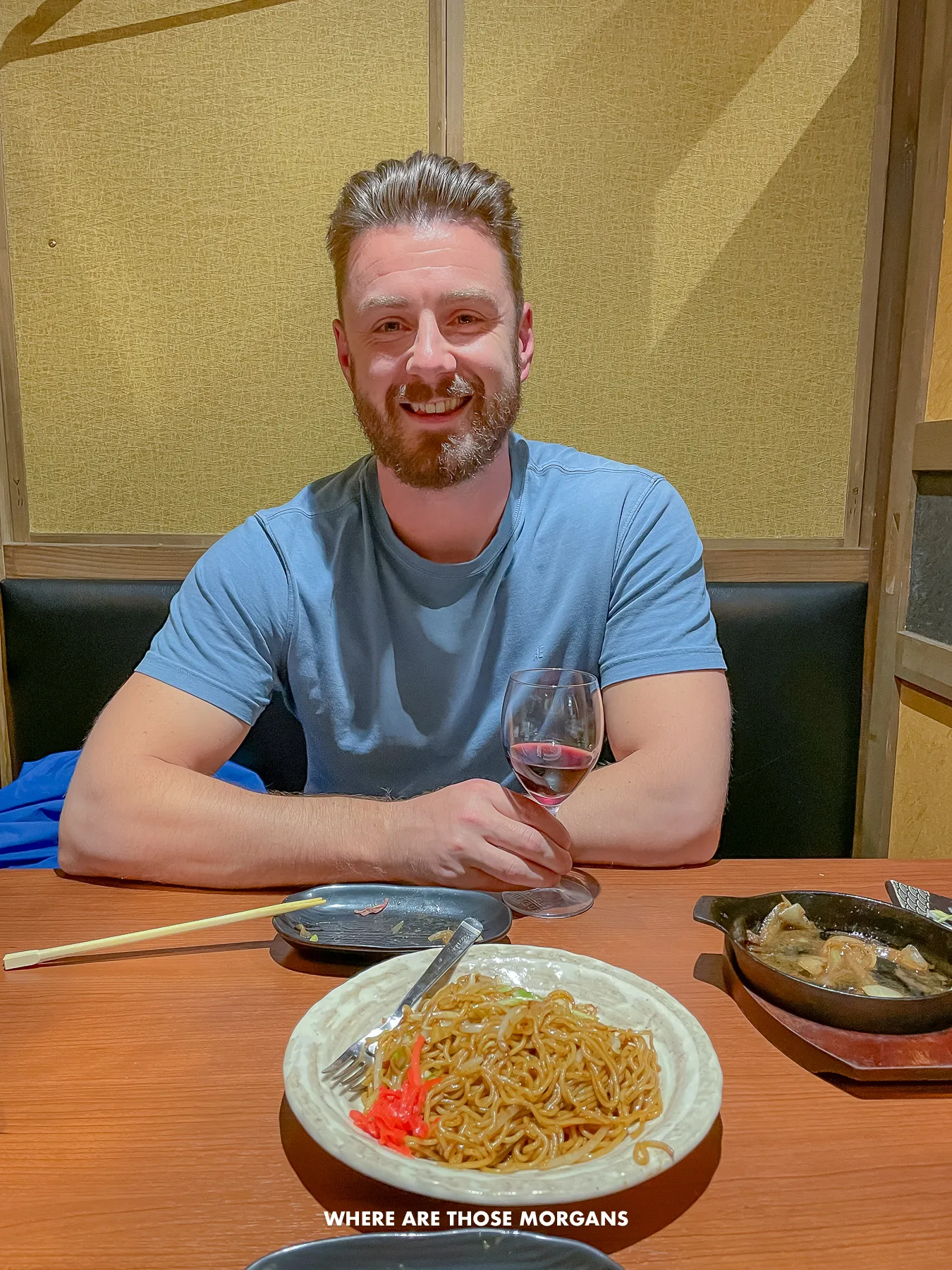
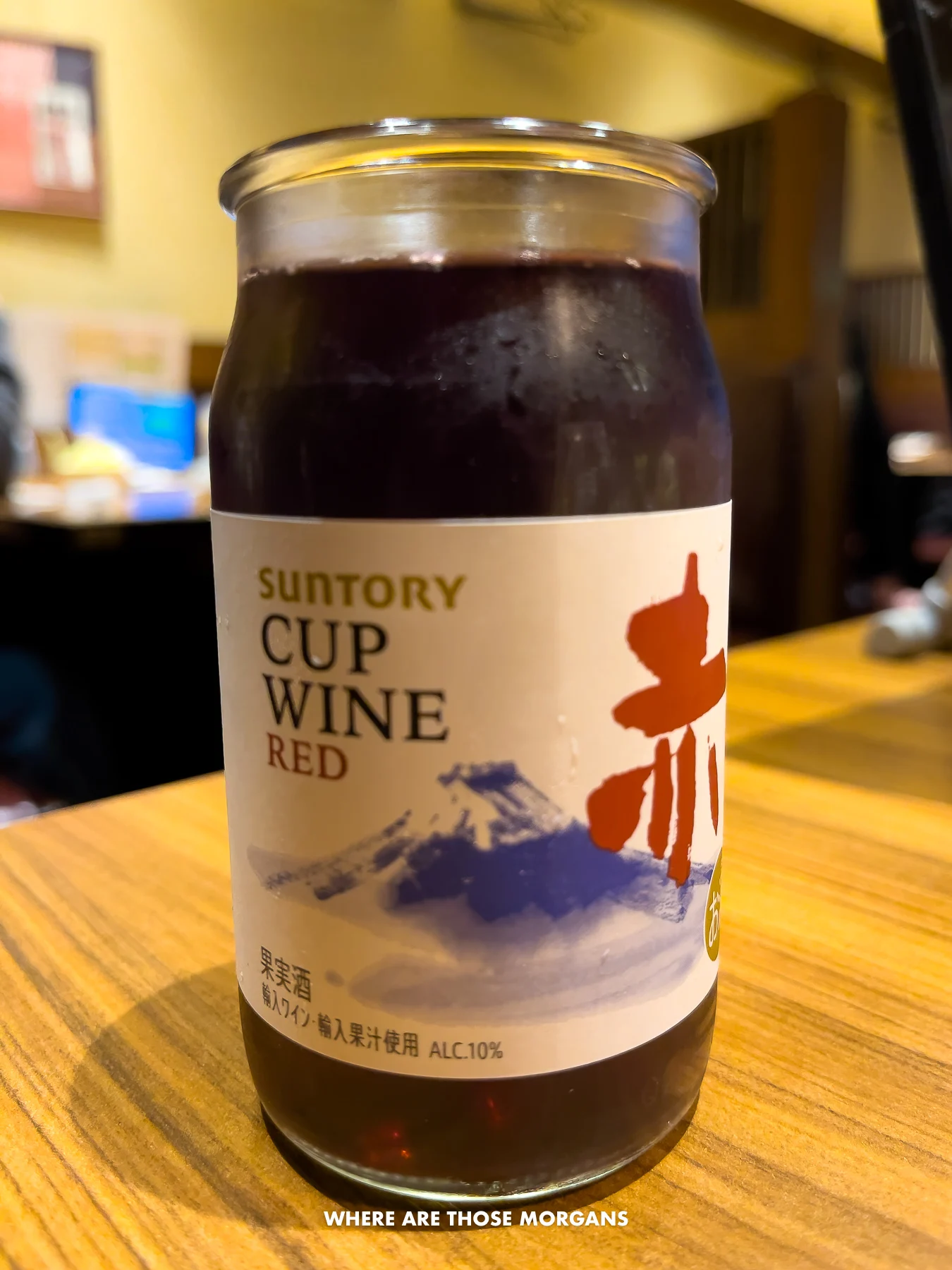
Drinks: We’re partial to a tipple every now and then on our travels, and we always try to drink local. In Tokyo, we love sweet plum wine which is called Umeshu, for beer it’s all about Asahi, cheap red wine comes in a small glass jar, and of course there’s always time to have a sake for the road after dinner.
Mark’s food category explanations: Whenever we looked on Google Maps to find restaurants with high ratings, we kept seeing food categories but couldn’t remember what they translated to in English. So Mark made a note on his phone and it’s pasted below for you to use:
- Teppanyaki: Food cooked on a steel grill (similar to hibachi in the US – but a bit more “showy”)
- Tonkatsu: Fried pork cutlet (add thick gravy to get katsu curry)
- Tempura: Lightly battered and deep fried seafood and vegetables
- Okonomiyaki: Cabbage-based pancakes
- Yakiniku: Grilled meat (like Japanese BBQ)
- Izakaya: Gastropub, a bit like an Irish pub mixed with a tapas bar (after work drinks)
One thing we didn’t do on our trips but definitely would next time is a foodie tour. We’ve done them all over the world and we always find them so much fun – tasting delicious local food, meeting like minded travelers, and learning about the best places to eat and drink. Basically winning at life!
Here are the foodie tours we’d happily book in Tokyo:
Ramen & Gyoza cooking class: This hands-on cooking class lasts 2 hours and 30 minutes and has amazing ratings. We love ramen and gyoza so it’s right up our street, and on this tour it’s all made from scratch in the chef’s kitchen. It’s a bit further north from the city, but transport is easy enough.
Tsukiji fish market food tour: If we were in the mood for seafood, this 3-hour guided foodie tour would be our must-do. Rubbing shoulders with Michelin-starred chefs shopping for ingredients, eating wagyu beef and sushi, and learning about seafood in Japan sounds great to us.
Shinjuku foodie tour: If we just wanted to walk around a bustling neighborhood and have a guide put the best food on a plate for us, we’d book this incredibly popular 3-hour with morning and evening start times.
Sushi making class: The other hands-on foodie class we’d love to try is this popular 1 hour 40 minutes sushi culinary experience near Senso-ji Temple in Asakusa. It’s got near perfect ratings and looks superb.
Learning At Museums
Tokyo has heaps of amazing science, art and history museums. We did a select few, missed one that we wish we did, but purposefully skipped the rest. Why? Well, honestly, because they’re not the Louvre, the Met, or the Vatican – and with just a few days to see and do as much as possible in Tokyo, we hated the idea of losing so much time traveling to museums spread across the city.
Ueno Park is home to the classics:
- Tokyo National Museum
- National Museum of Western Art
- Tokyo Metropolitan Art Museum
- National Museum of Nature and Science
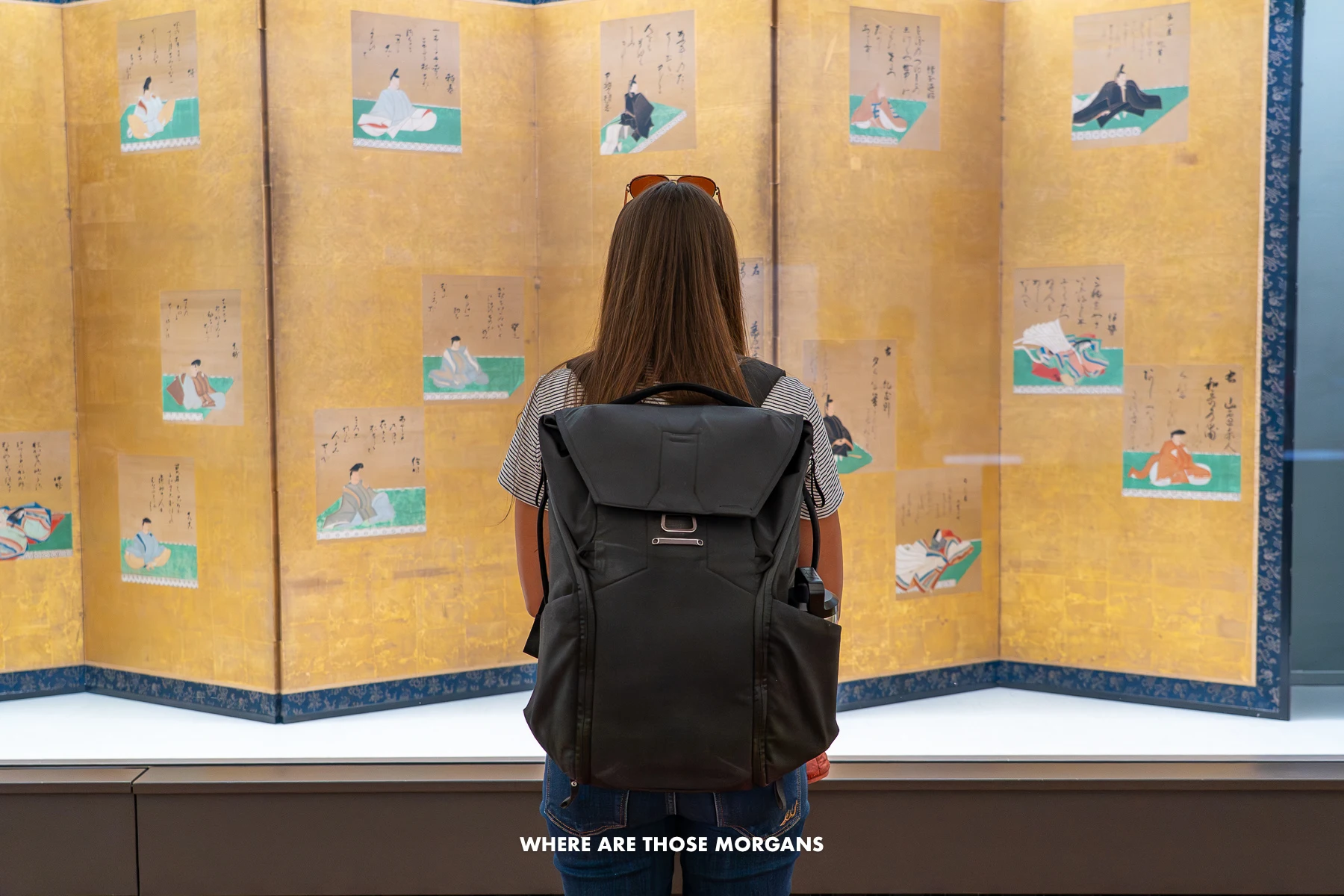
Out of those we prioritized the Tokyo National Museum and it was fantastic – we loved the samurai floor, Buddhist sculptures, kimonos and pottery. If you want to visit “traditional” museums, Ueno Park is the place to go, and our advice is to do the Tokyo National Museum unless you have a specialist interest in art.
We also visited the Yushukan Museum near Yasukuni Shrine, which is Japan’s oldest and most controversial military museum. It housed a Mitsubishi Zero fighter plane and a C56 steam locomotive, but on the whole the museum portrayed Japan as a liberator rather than an aggressor, which we learned is a narrative that still causes tension today.
The one we wish we didn’t miss is the Samurai Ninja Museum in Asakusa. In truth, it doesn’t look like a museum – it’s more like a fun and interactive hands-on samurai experience. You get to wear armor and helmets, try star throwing, and have a go at holding and drawing a katana. We’d already learned about samurai at the Tokyo National Museum, but this touristy spot let’s you actually pretend to be one. Alternatively, this samurai experience with sky-high ratings also looks super interactive and hands-on – it would be perfect for families or groups of friends.
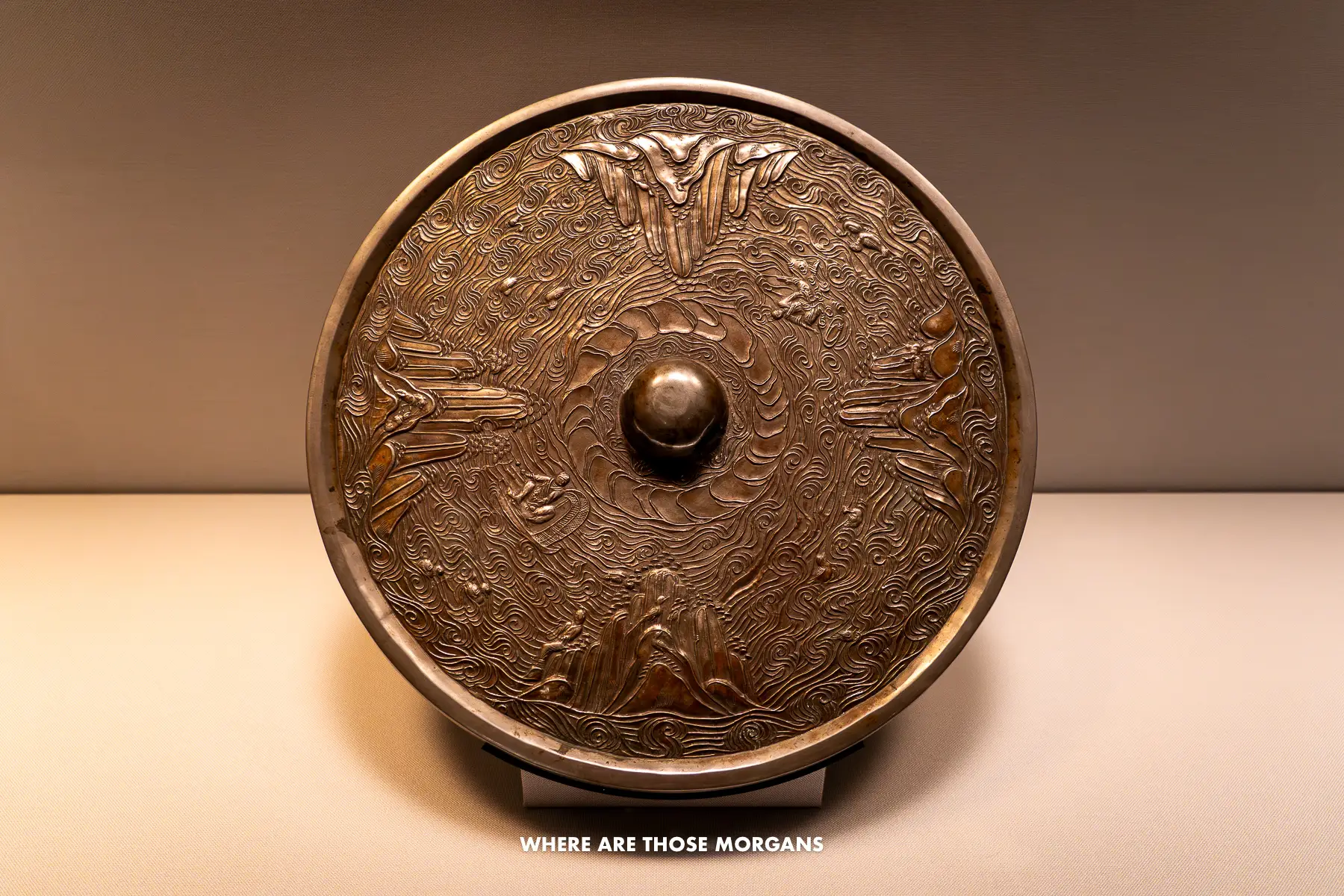
Another place we missed but would definitely do next time is teamLab Borderless in Azabudai Hills. It’s essentially a massive, non-linear digital playground where art flows between rooms and reacts to your touch and movement in real time. Gamers, tech-lovers and families with kids should prioritize this – and also teamLab Planets – over traditional museums in Tokyo.
There’s also a huge amount of intimate art museums like the Nezu Museum, Teien Museum, Yamatane Museum and Suntory Museum – but we only recommend them if you have a deep interest in art. Finally, we had the Ghibli Museum on our radar in 2023 but it was too far out of the way to fit into our itinerary. If we went back to Tokyo with our young daughter, this is one place we’d make extra time to visit.
Walking Around Shinjuku Gyeon National Garden
We timed our visits to Tokyo for fall foliage and cherry blossoms, so both times we spent as much time as we could exploring parks and green spaces. We’ll get into cherry blossoms in more detail later in the guide, but in terms of parks – our favorite by a distance was Shinjuku Gyeon National Garden.
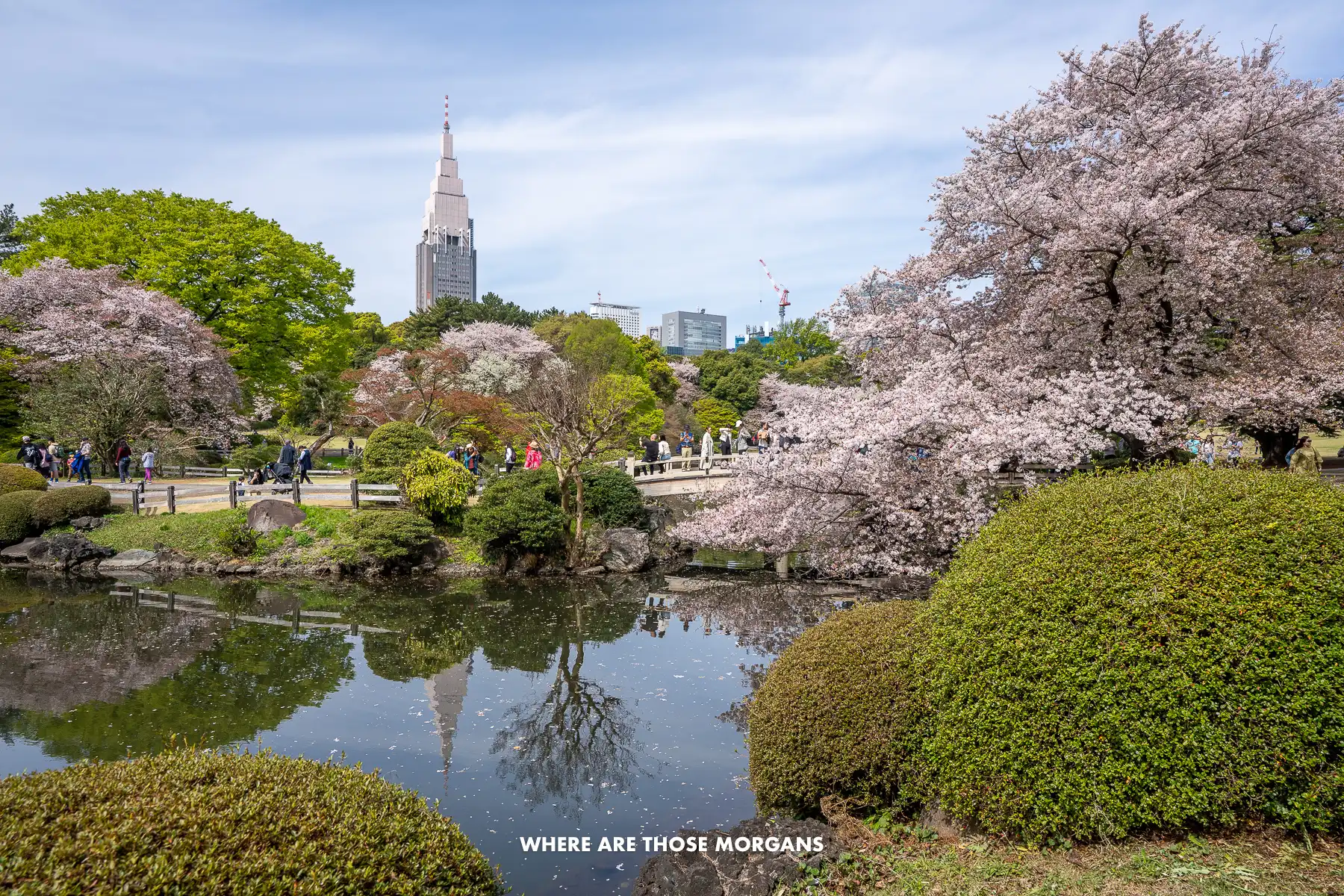
It only cost us 500 yen each to get in, and it was well worth paying the small entry fee. Inside we saw three gardens in one – Japanese traditional garden, English landscape garden and French formal garden. The vast park was so much quieter than the hustle and bustle of the city, even during peak cherry blossom season. It actually felt like an escape, despite the fact we were just steps from Shinjuku.
We’d stopped at a Lawson to stock up on snacks before entering the park, then we grabbed a coffee at Starbucks inside the park which had glass windows and a deck overlooking Naka-no-ike Pond – it was so peaceful. Finally, after exploring basically the whole park, we ended at a greenhouse on the northeast side to see tropical plants and orchids.
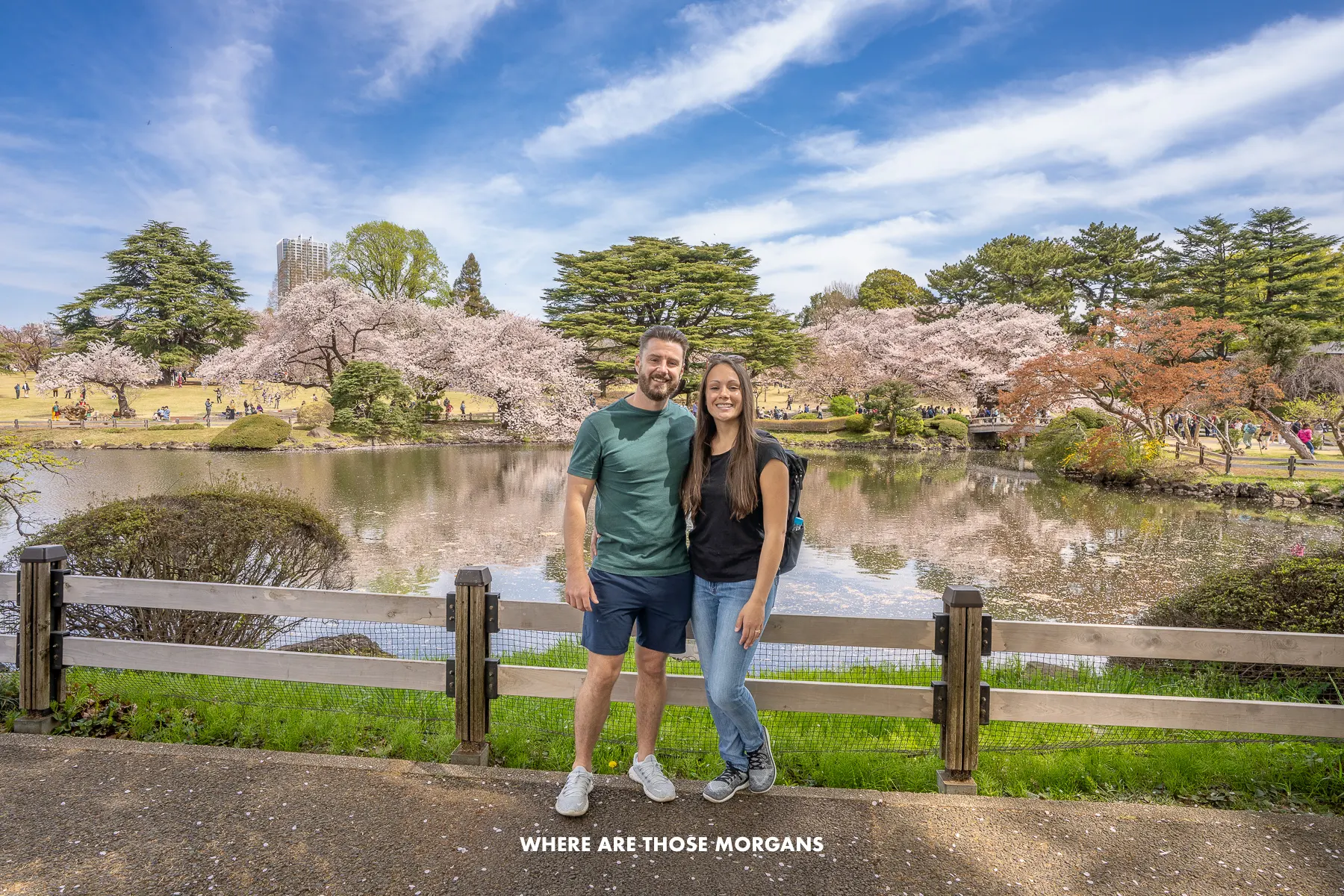
We also enjoyed the coastal Hamarikyu Gardens (we paid 300 yen each) because it was even quieter. Although we wouldn’t say it’s absolutely essential for a first visit, it’s a great hidden gem option if you want to escape the crowds. The two parks we missed but wish we had time to see were Koishikawa Korakuen and Rikugien Gardens (both cost 300 yen). They’re a bit further out but they look stunning so add these to your list if you’re specifically interested in experiencing more of Tokyo’s natural side.
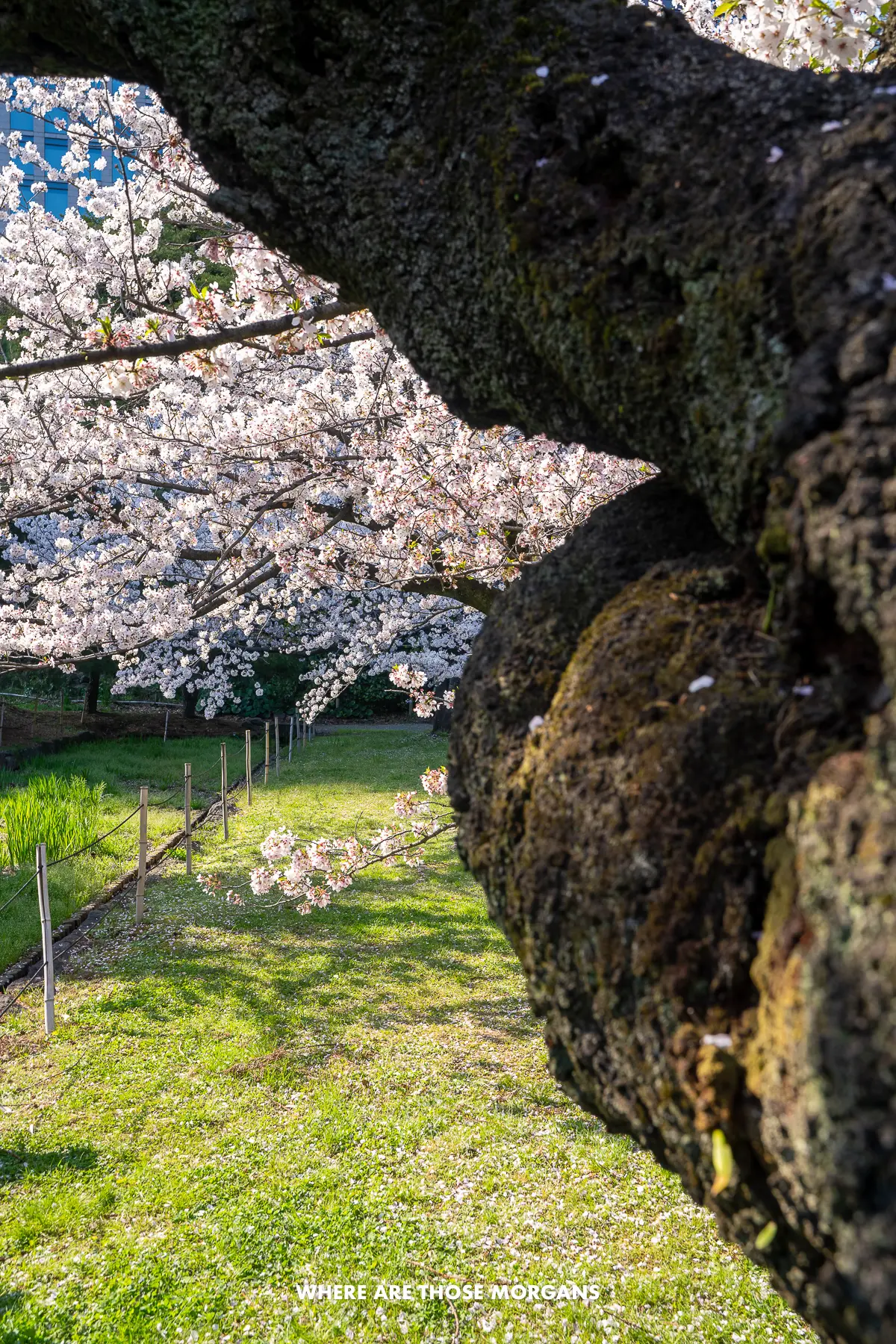
At Meiji Jungu we paid 500 yen each to gain access to the inner garden. The iris’s only bloom late May to mid June so we were too early for the star attraction, but the manicured gardens were still lovely. Just south of the shrine grounds, we decided to have a quick walk around Yoyogi Park (free) and we quickly realized it was less a Japanese garden and more of a gathering space, a bit like Central Park in New York or Hyde Park in London.
Seeing The Chaos At Shibuya Crossing
One of the main things we wanted to experience on our first trip to Tokyo was the famous Shibuya Crossing. We knew it was the busiest pedestrian crossing in the world, we’d seen the photos and videos, and we couldn’t wait to walk over the Ø-shaped crossing. Was it worth the hype? Honestly, yes! We crossed it a bunch of times on both trips and it never got old.
It sounds strange to say that one of the best things to do in a city is cross a road. But standing in the middle of the Ø as hundreds or even thousands of people are crossing all around you in 10 directions at once is a totally unique experience. We found it busiest around 5:00 PM on weekdays when it had the perfect blend of office workers leaving work and tourists arriving for dinner.
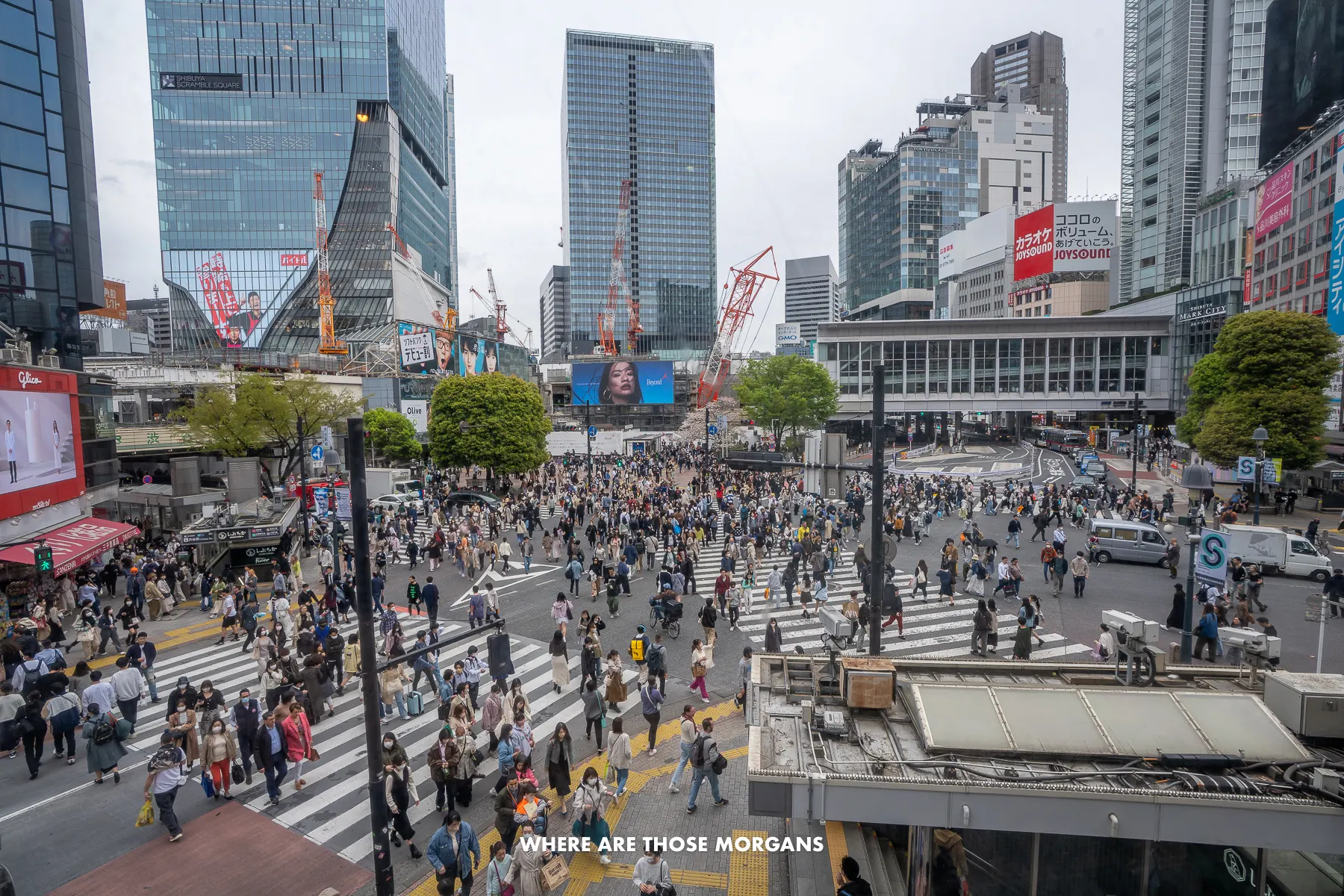
But what about where to see it from above? As travel photographers, this was our main concern before arriving. We did a lot of research and saw comments about the second floor of Starbucks being a free option with a decent low-down view. Free sounded great, so we gave it a go and it was completely rammed. Getting a seat was impossible and so many people were circling like sharks. Plus, the view wasn’t great. It worked, but it wasn’t enjoyable.
Next, we went up to see the crossing from Shibuya Sky and it was far better. The observation deck was much quieter so we could watch the people crossing as many times as we wanted in peace. We had our 24-105mm lens on so we were able to zoom in to different focal lengths which was awesome, but Shibuya Sky wouldn’t be the best option if you only have a phone because the 5x cameras on phones still don’t have great quality.
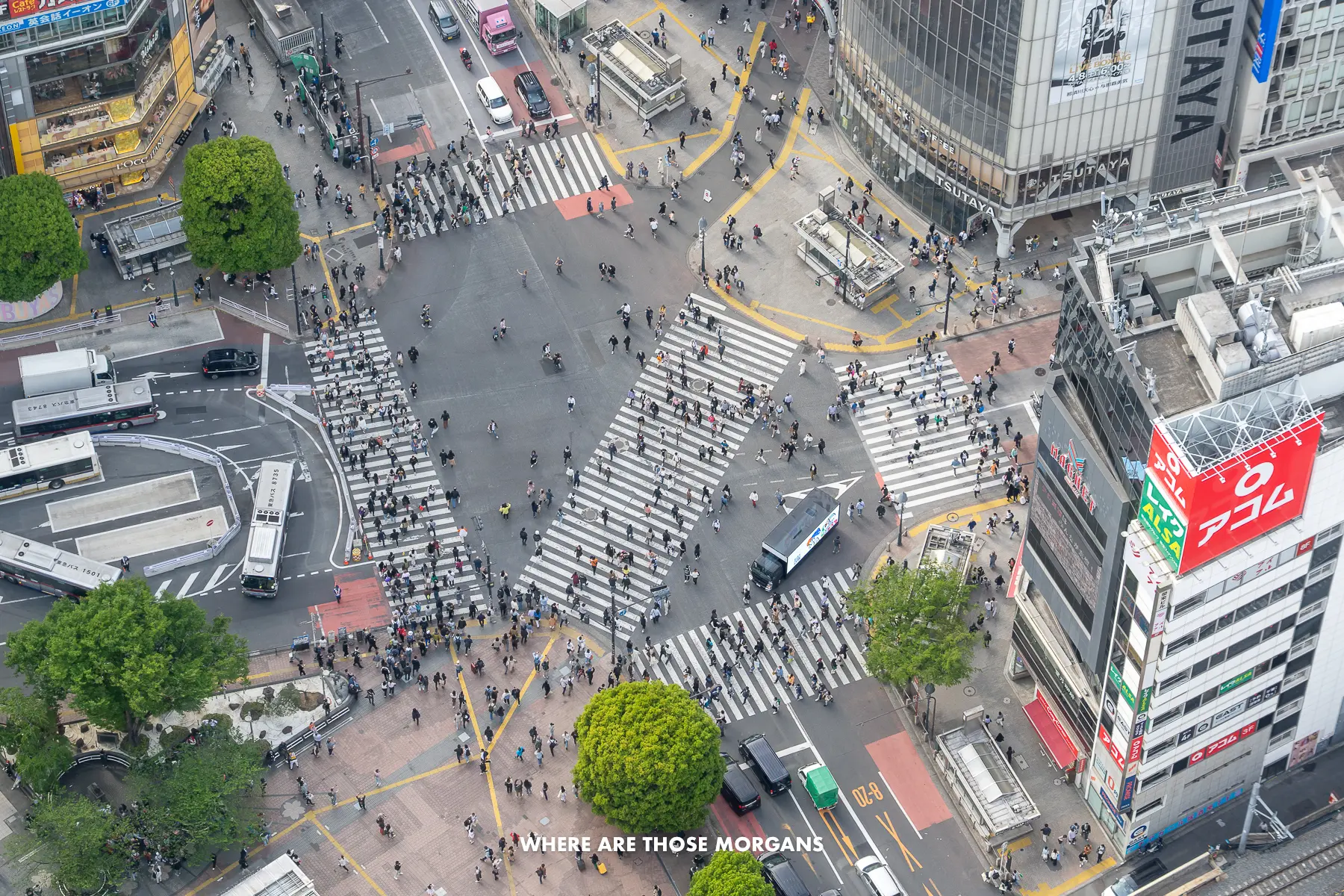
The other options we didn’t try include Mag’s Park and Share Lounge inside Shibuya Tsutaya shopping mall. Mag’s looks like there’s a 1,800 yen entry fee which comes with one drink, it’s around 8 floors up which is a good height to see the crossing, and it has a high-energy vibe after sunset. Share Lounge is basically the floor above the Starbucks and it looks way calmer, with a 2,500 yen / hour fee for all you can drink.
Day Hiking Mt. Takao For Fuji Views
Like most people, we really wanted to see Mt. Fuji during our first trip to Japan. We knew we’d see it for 20-30 seconds on the bullet train between Tokyo and Kyoto, but we wanted to see it properly so we decided to take a day trip from Tokyo to Mt. Takao. It was easy, cheap, great to do a bit of hiking and we got to see Fuji (just!) – so overall we thought it was well worth doing.
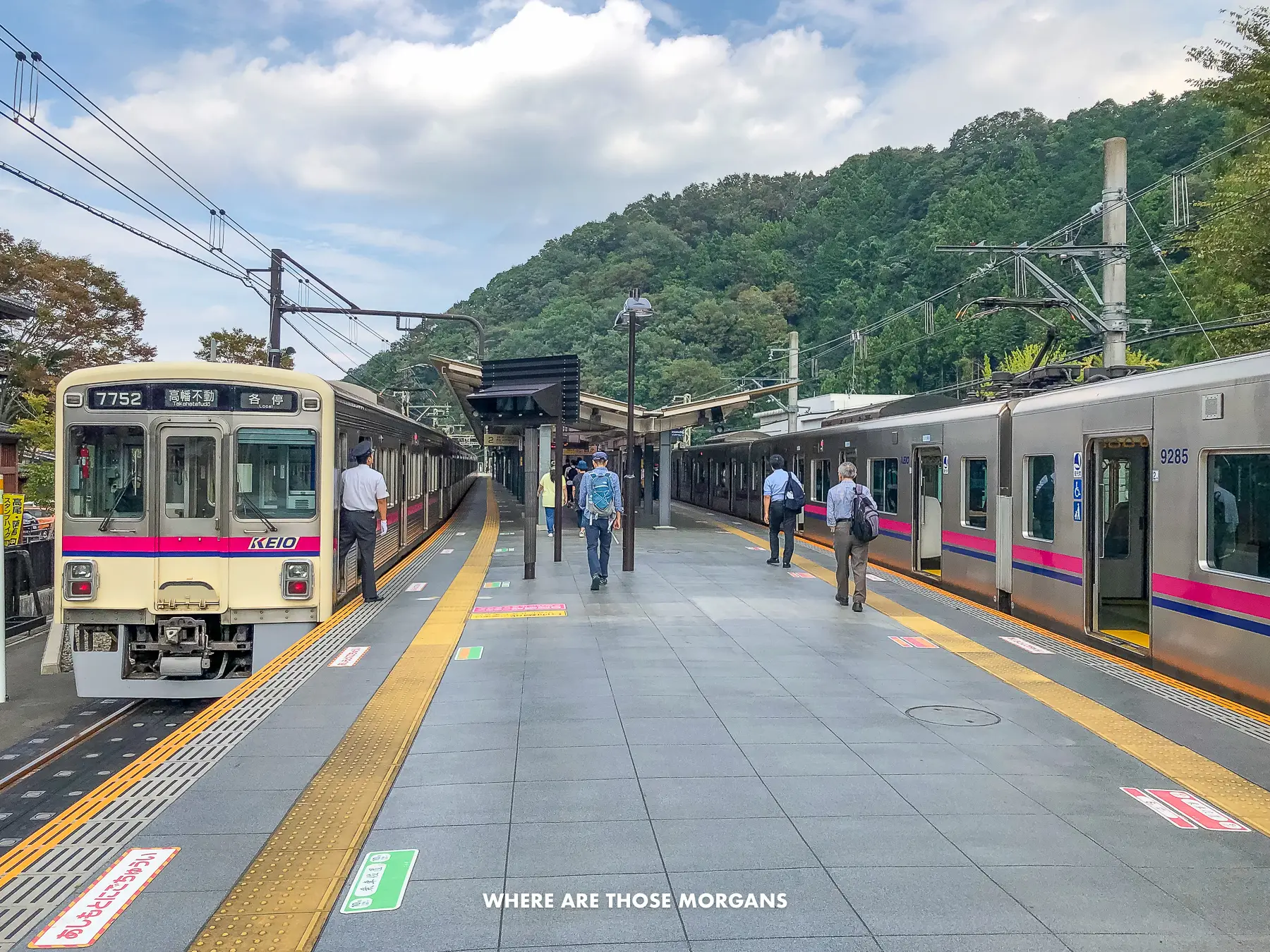
We started by riding the Keio Line from Shinjuku Station to Takaosanguchi Station, which costs 430 yen and takes about 50 minutes. Then once we arrived at the bottom of the mountain at 200m elevation, we had a choice to make: Hike the whole way up to 599m, or take a shortcut by paying for either the 12-minute chair lift or 6-minute cable car (Japan’s steepest) to cut out most of the elevation gain. Both cost 480 yen one-way or 980 yen round-trip.
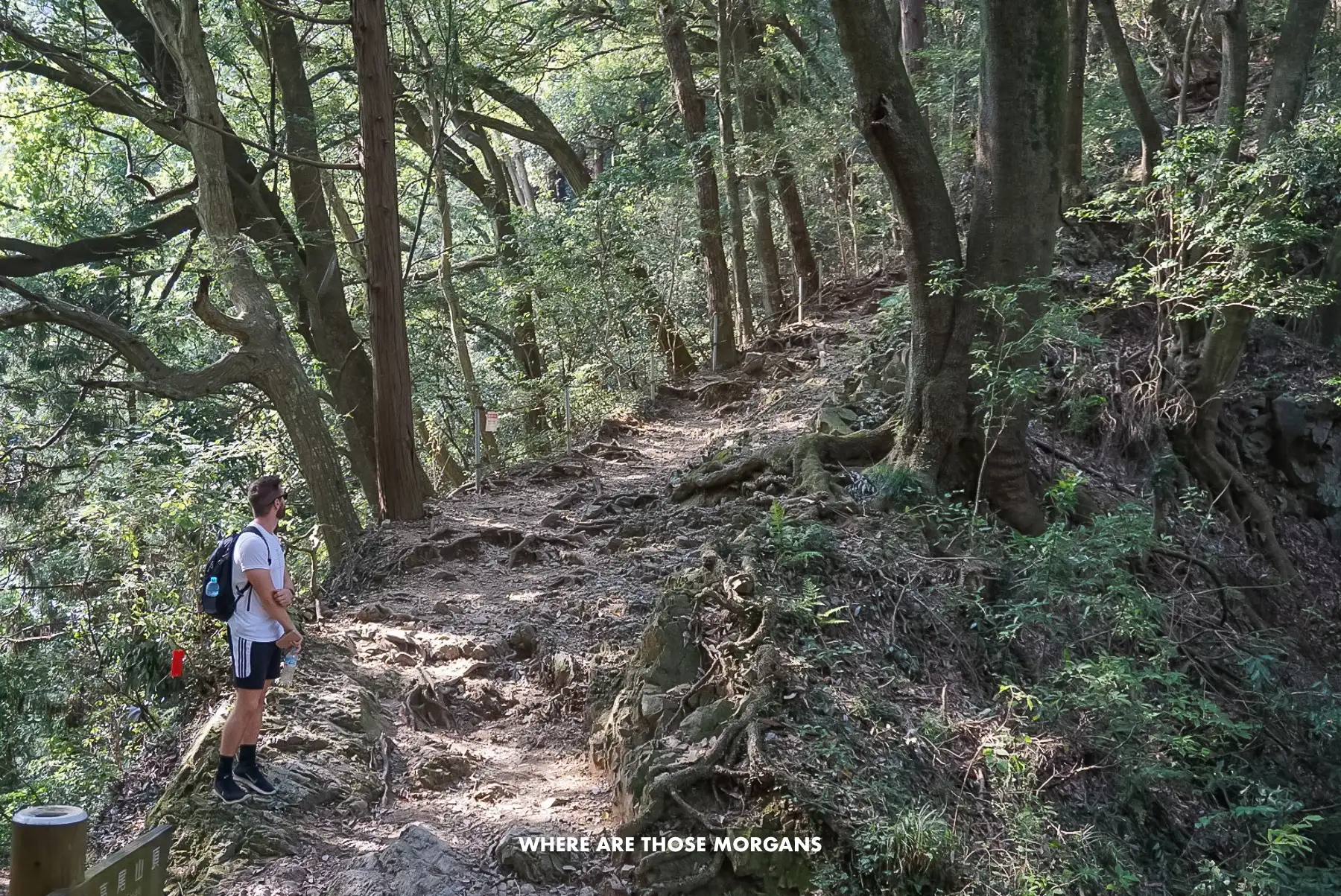
We had our hiking gear on and fancied working off all the delicious food we’d been eating, so we hiked up. Parts of it were steep (especially early on) but we never found it too challenging. We took the tourist path all the way up and down without realizing there were other route options leading to suspension bridges and waterfalls, so check those out if they sound interesting to you.
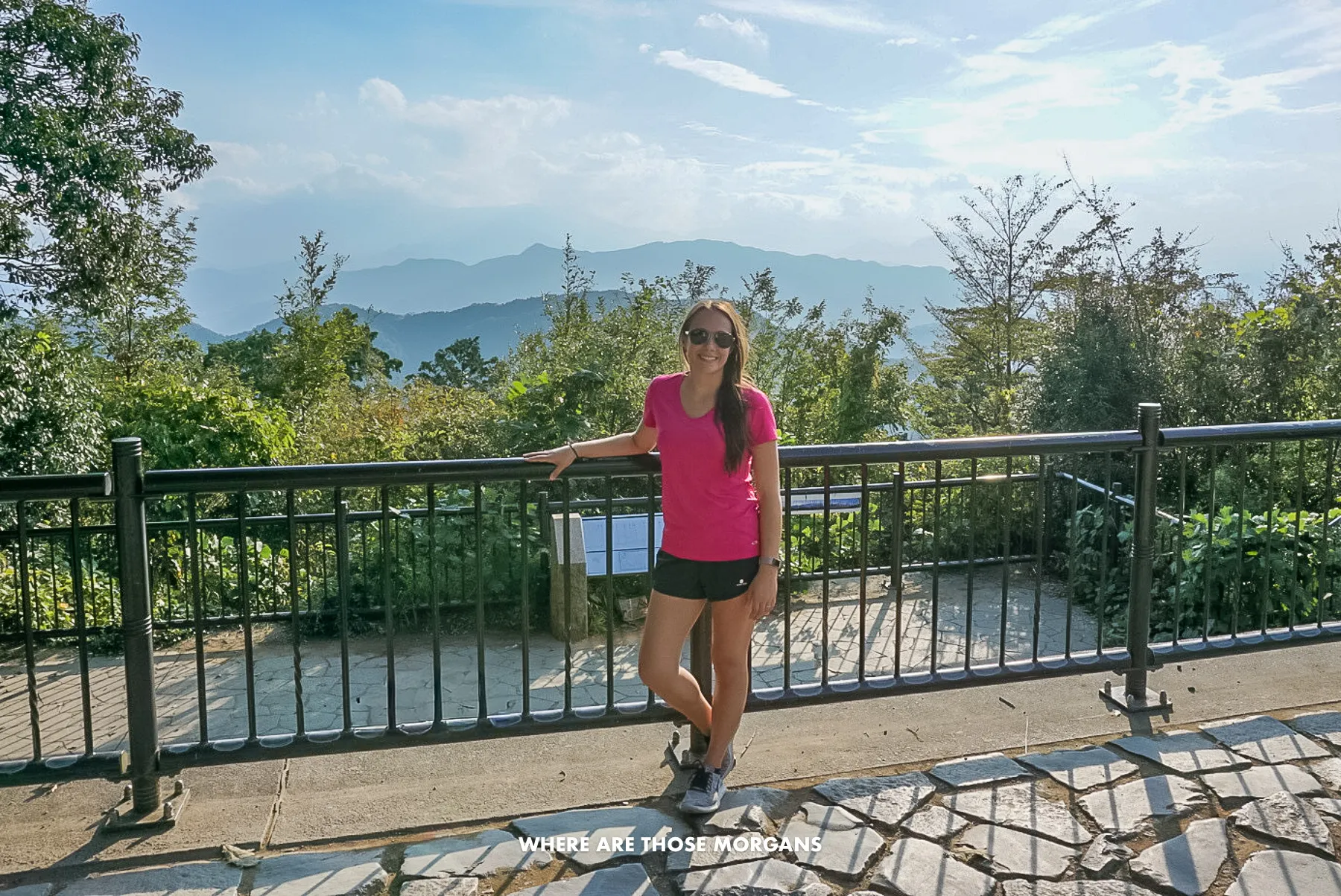
On the way we passed by a monkey park, lots of small temples and the main Takaosan Yakuoin Yukiji Temple, countless cedar trees and a couple of places to eat, before finally arriving at the summit. We’ll admit we were a bit disappointed by how small the viewpoint was at the top, and we could only just make out the distant Mount Fuji because it was hazy and a bit cloudy. But even so, we thought was a worthwhile day out.
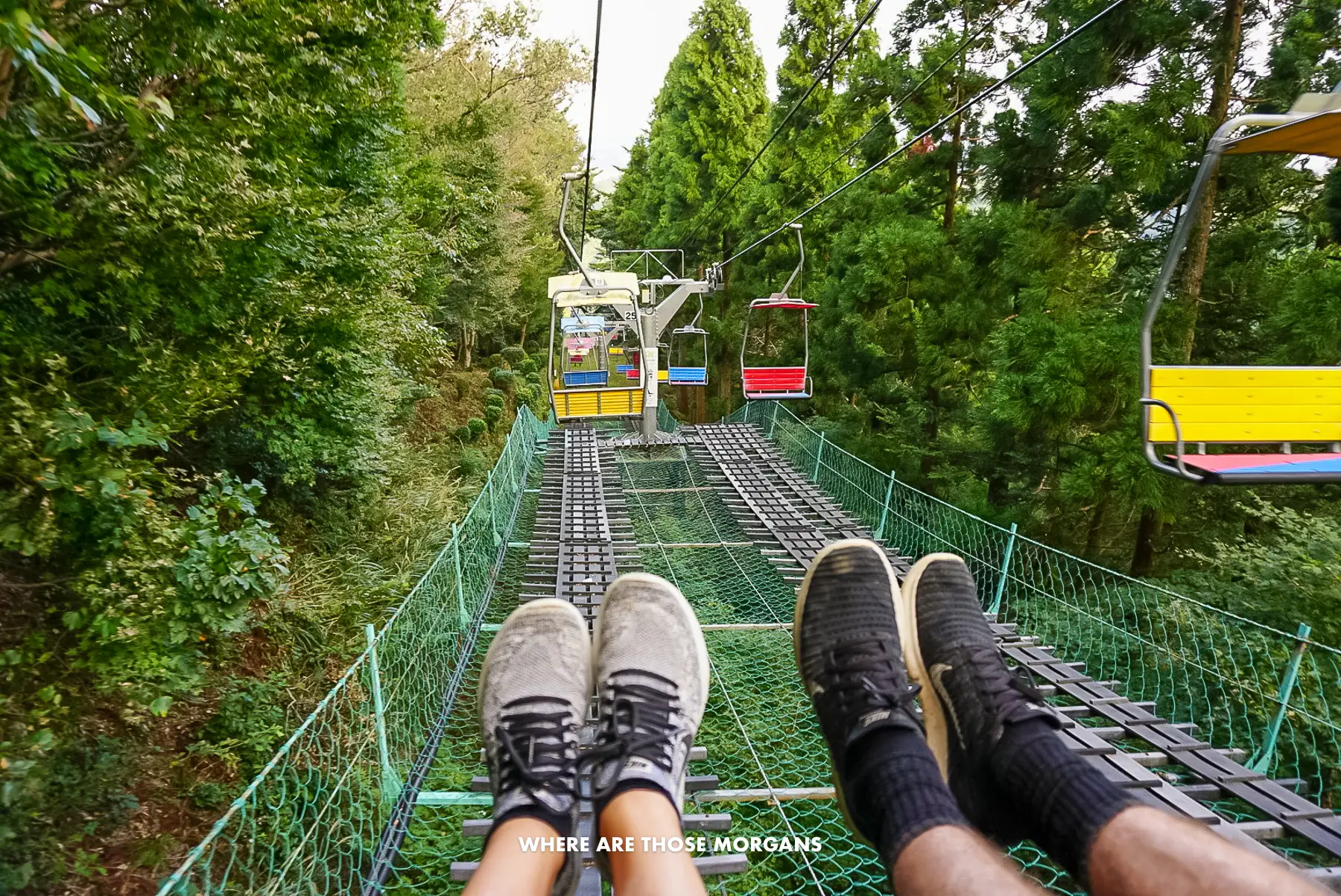
On the way back down we decided to take the chair lift one-way to the train station. It passed through trees the whole way and didn’t really give us much of a view, but we were grateful to be off our feet for a few minutes. If you want to do Mt. Takao the easiest way possible, pay for round-trip tickets on the cable car (not the chair lift) because the upper station is higher up the trail.
Kristen’s travel tip: The Mount Fuji views we had from Hakone and Lake Ashi in 2023 were so much better than Mt. Takao. If you want to get closer to the volcano on a day trip from Tokyo, take a look at this extremely popular Mt. Fuji and Hakone full day tour. Or if you plan to do it yourself, consider buying a JR Pass for the bullet trains and JR trains within major cities like Tokyo and Kyoto. We saved a small fortune with our JR passes in 2023.
Photographing Cherry Blossoms In Spring
Okay, let’s finish with one of the biggest reasons people visit Tokyo (and Japan in general) – seeing the famous cherry blossom trees in bloom. Our own 3-week trip through Japan in 2023 was specifically timed for the end of March and beginning of April to see the cherry blossoms. Overall, we’re glad we saw them, but we’d never visit during the spring again.
On the plus side, we thought the cherry blossom trees were beautiful and we took thousands of photos of the pink flowers. There was also an energetic, uplifting atmosphere in the city. But honestly, on the whole we felt like it was overhyped and we actually preferred our visit during the fall foliage season a few years earlier.
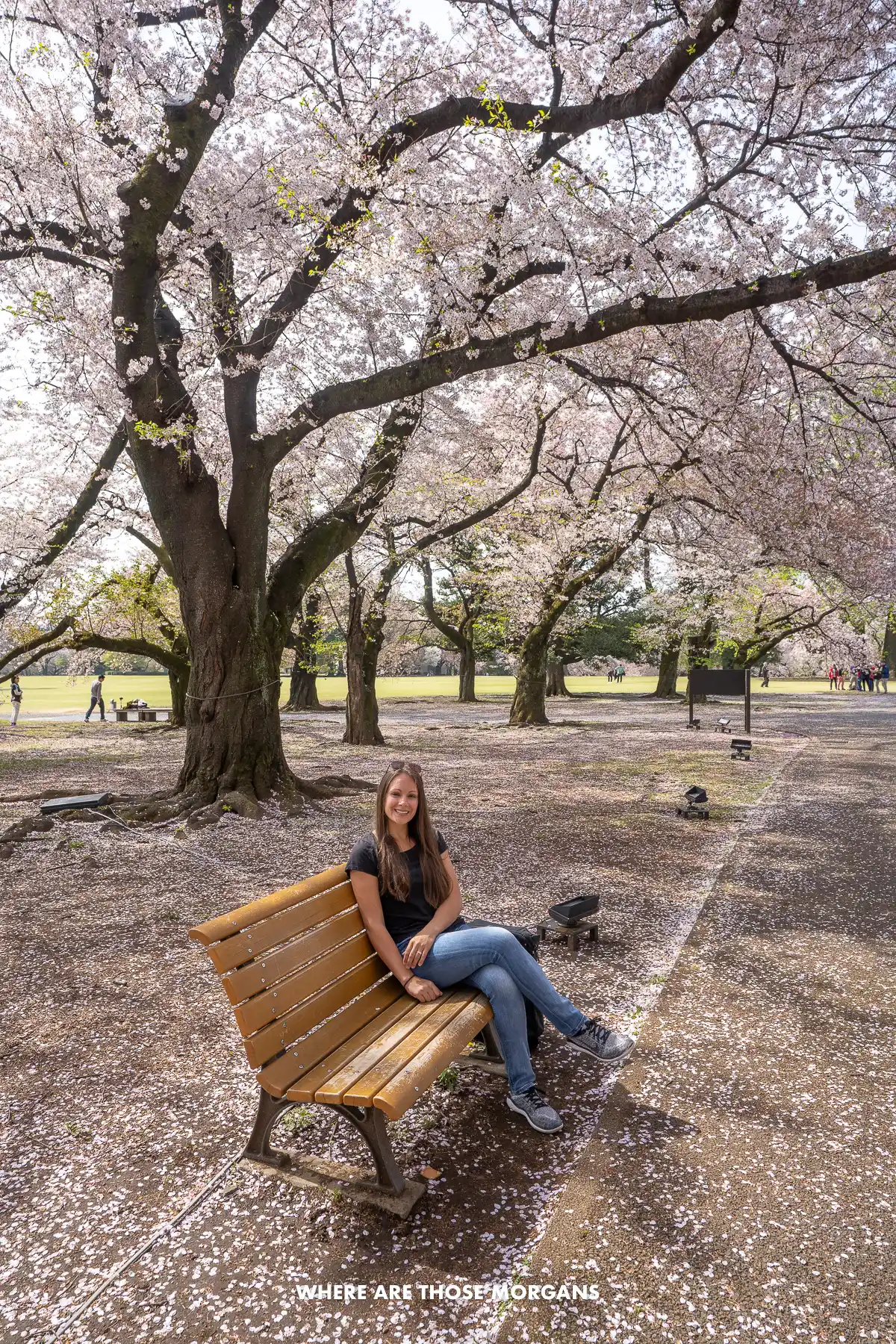
We still have to include cherry blossoms in our guide of top Tokyo experiences because we know how popular it is, we absolutely do not want to put you off, and we genuinely did enjoy seeing them. So what was our issue? Well, there were two main reasons we left feeling a bit underwhelmed (and why we think you have to manage your expectations):
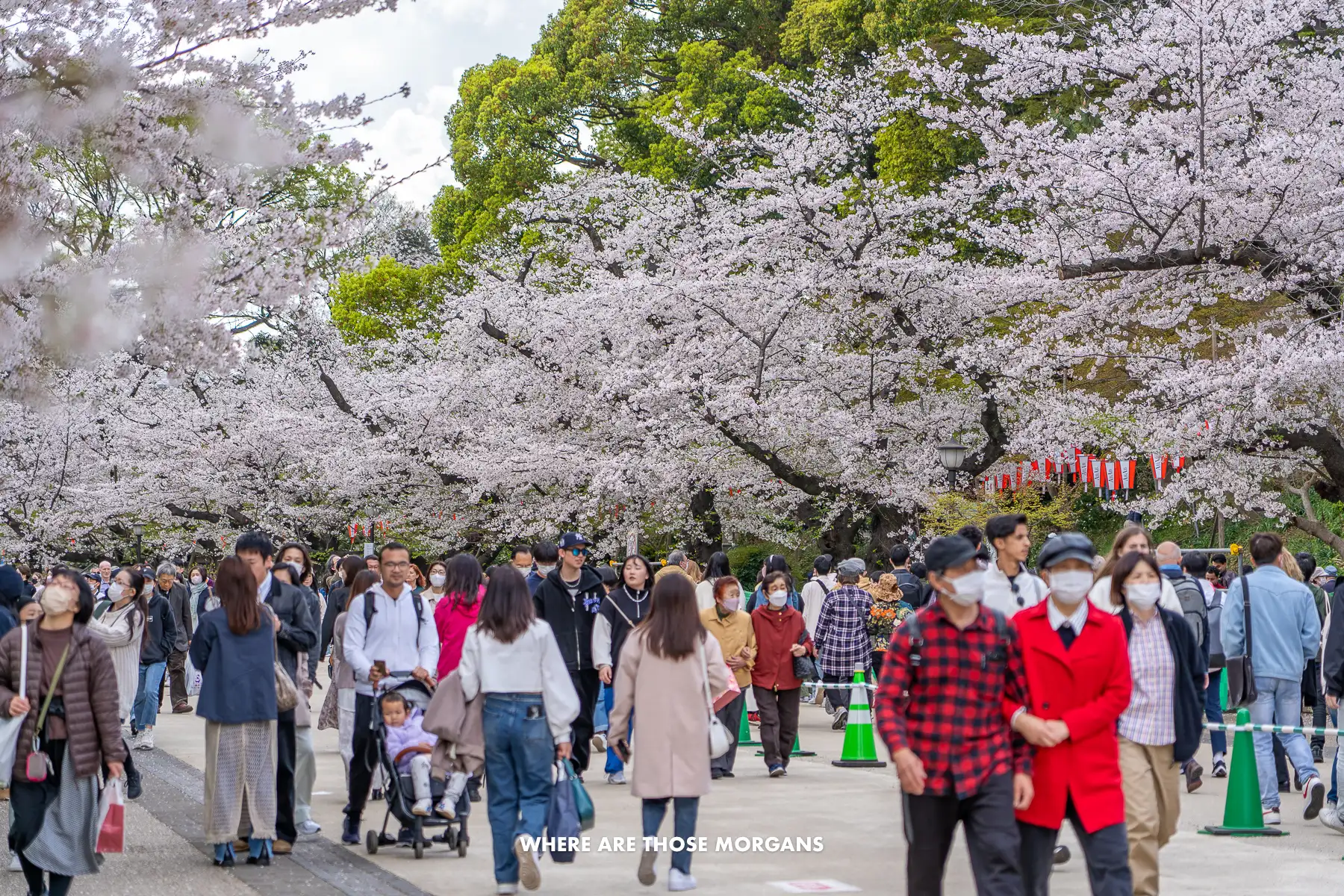
Crowds: Every cherry blossom hotspot we visited around Tokyo was jam-packed with tourists and Instagram shoots, which made it feel very inauthentic. Sounds obvious, of course it was busy. Right, but what we didn’t factor in was those cherry blossom tourists spilling over into every other Tokyo attraction like museums and observation decks, which also ended up being completely rammed. Plus, hotels were more expensive and restaurants were busier than usual. Overall, it made the trip cost more and we lost time waiting in lines.
Colors: Like we said, the cherry blossoms were beautiful and we’re not trying to argue otherwise. But every single tree had pink flowers, which got old after 3 weeks of seeing nothing but pink. We personally prefer fall foliage colors like burnt oranges, bright yellows and deep reds because there’s variety. We did the Japanese Alps in October 2018 and the colors were just as vibrant as New England in the US – spectacular. It wasn’t peak foliage in Tokyo when we were there in 2018, but offer us the choice of a spring or fall visit to Tokyo next time and we’d 100% pick fall.
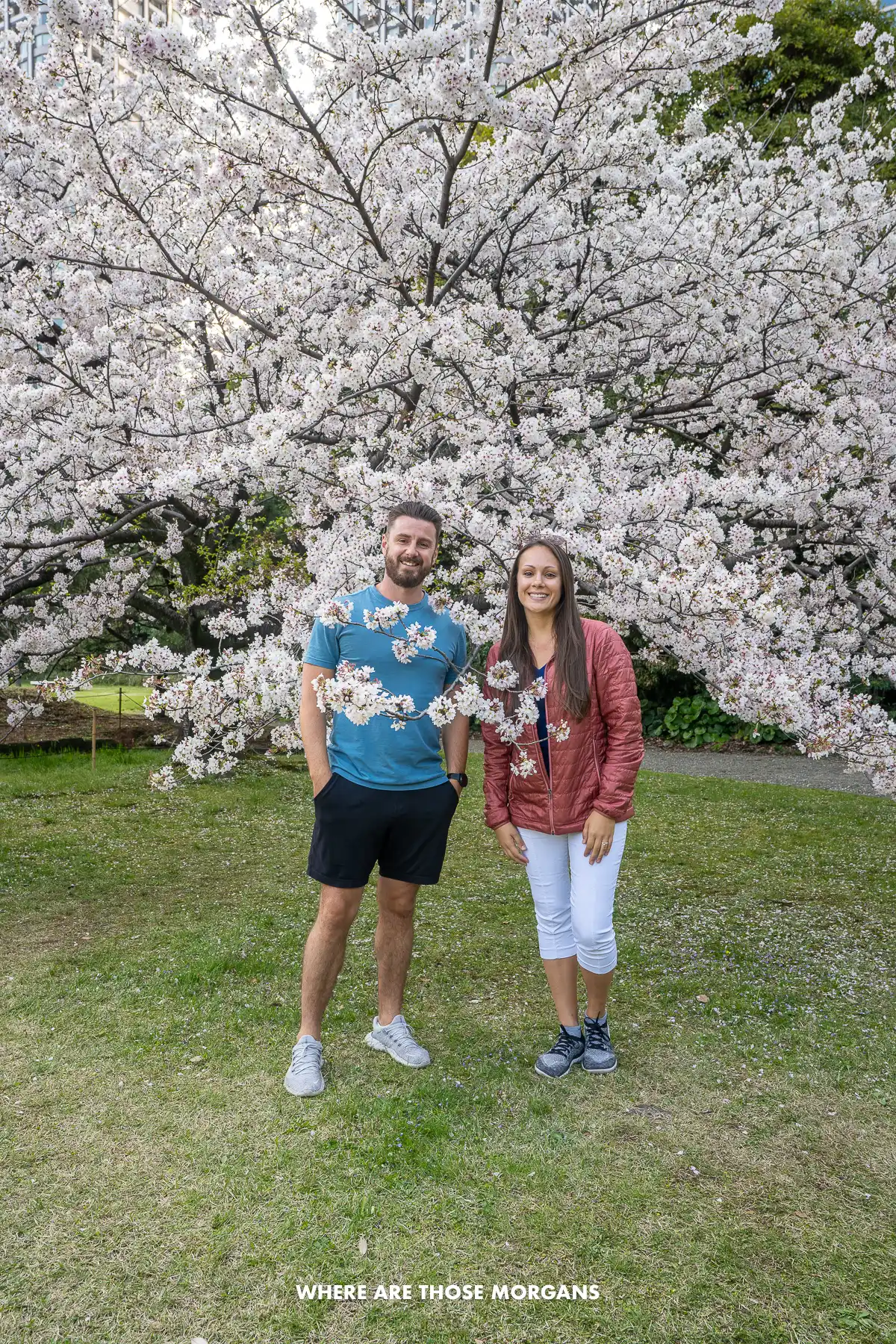
Our favorite places to see the cherry blossoms in Tokyo were Shinjuku Gyeon, Ueno Park, Sumida Park, Hamarikyu Gardens, Chidorigafuchi Green Way (along the outer perimeter of the Imperial Palace), Kita-no-maru Park (north of the palace grounds), Yasukuni-jinja Shrine, and Yoyogi Park. In truth, we found Kyoto to be far more attractive for cherry blossom photos, but Tokyo was cool because the trees were often backed by skyscrapers.
We didn’t make it to Koishikawa Korakuen with its massive weeping tree, the sprawling Inokashira Park near the Ghibli Museum, or the Meguro River in Nakameguro where the cherry blossoms form a tunnel along the banks of the river. These places would probably have been quieter because they’re out of the way – and that might have helped us enjoy the cherry blossom season a bit more!
What To Skip
Did we do anything in Tokyo that underwhelmed us, frustrated us, or left us feeling like we’d wasted time? Yes. A few things.
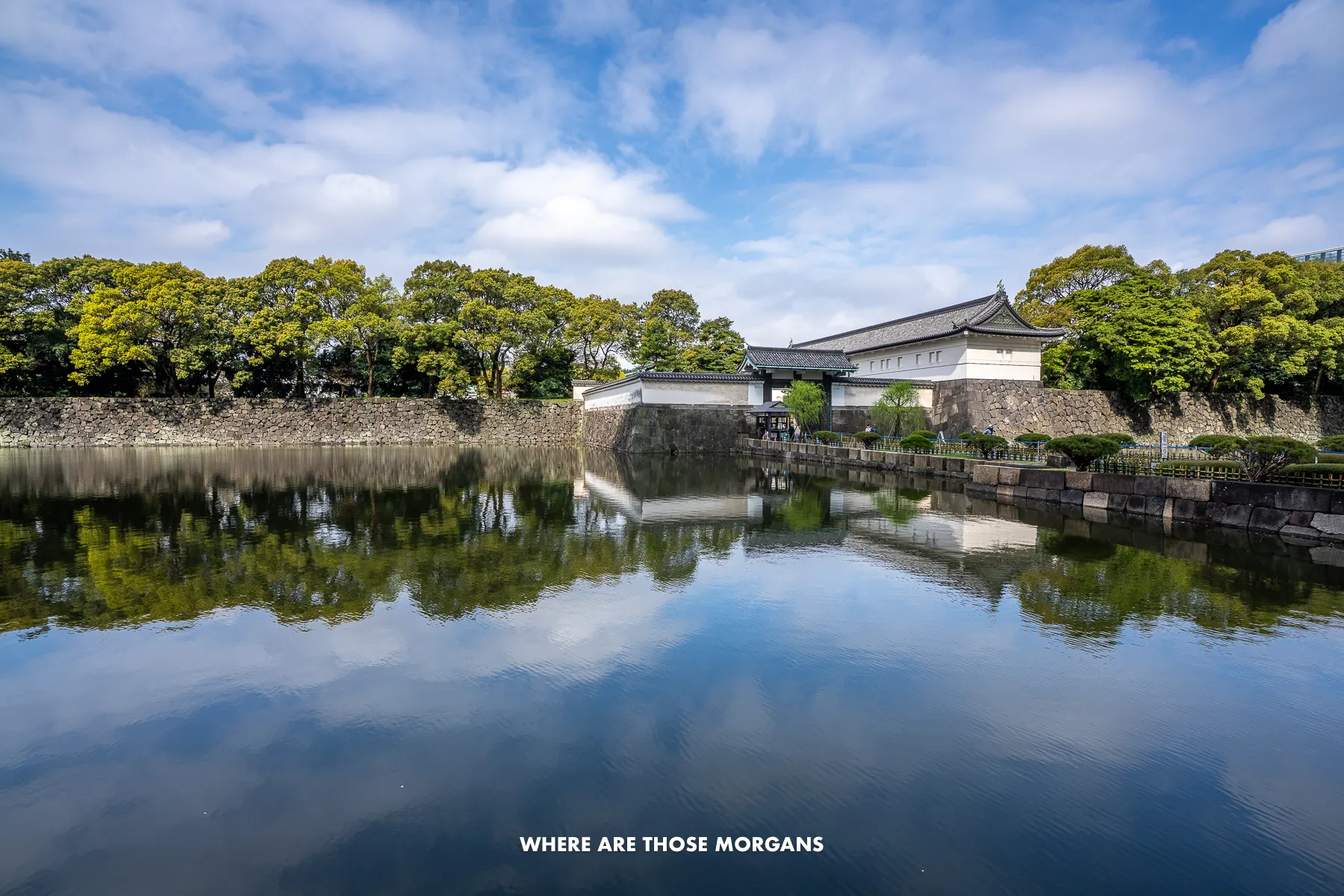
Imperial Palace: This was the big one for us. We had high expectations, we booked in advance, it was busy and the entrance was grand – and all we ended up doing was walking along a gravel path looking at high stone walls and guarded gates. It was a massive anti-climax. At the Sento Imperial Palace in Kyoto, our guided tour actually got us inside the grounds, whereas in Tokyo we were stuck on the outside. If you really want to do Tokyo’s Imperial Palace, take a look at this affordable guided tour so you can at least learn about the history.
Tokyo Skytree: Out of all the observation decks we did in Tokyo, we were the most disappointed with the Skytree. It was ridiculously overcrowded, the lines for lifts were out of control, the reflections on windows made photography hard and it was so high up that everything below just looked tiny. We wouldn’t go up it again.
Sumo Museum: We went to the Ryogoku Kokugikan Sumo Arena in 2018 when there wasn’t a tournament on. There was a small museum, and we saw some sumo wrestlers arriving to the building which was cool, but honestly we wouldn’t make the effort to go all that way again unless it was to see a tournament (see schedule) – and tickets aren’t cheap. The best alternative is to book this sumo show experience in Shinjuku, which is on every day and looks great.
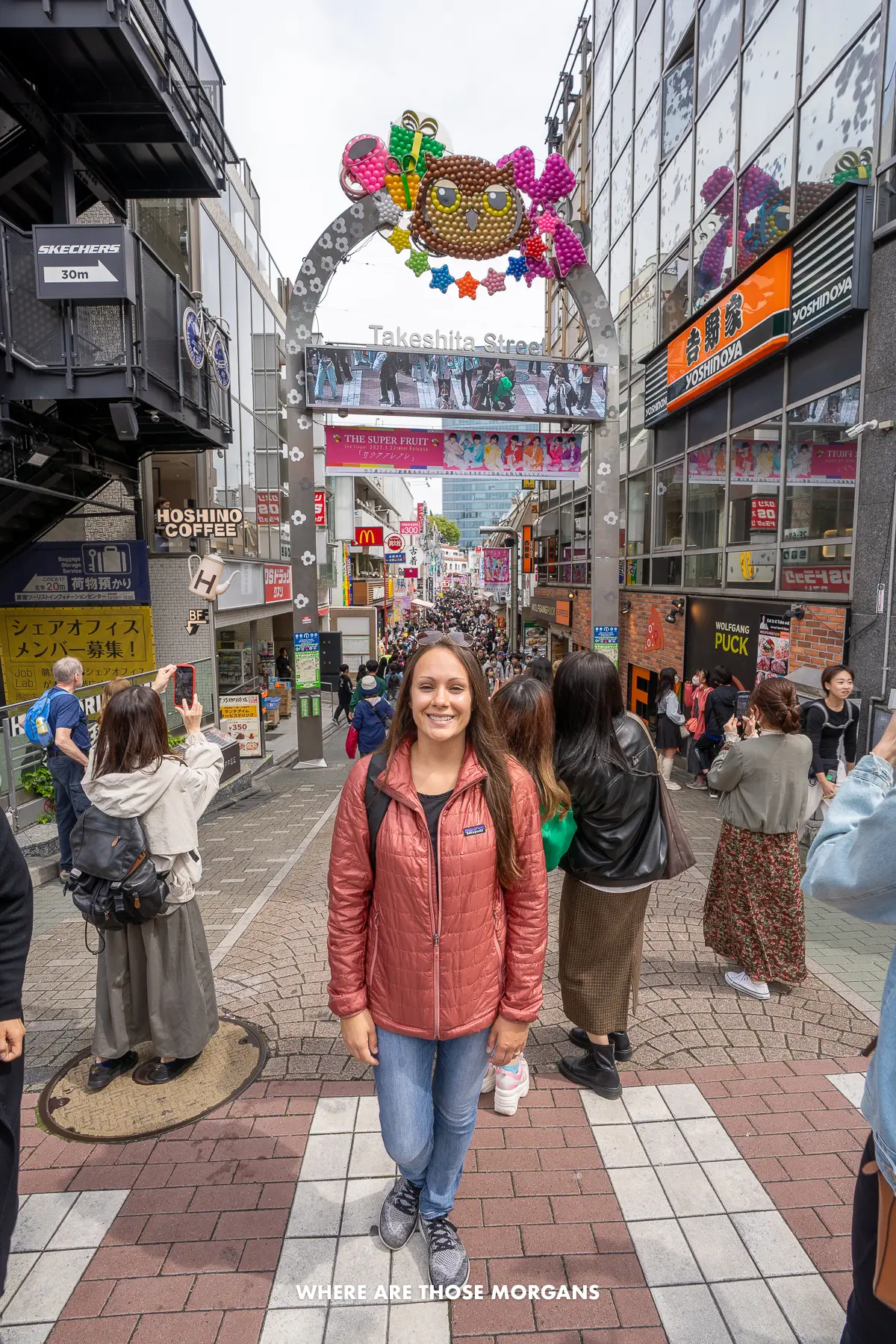
Takeshita Street: If you don’t like crowds or feeling like you’re in a mosh pit, you might want to skip Takeshita Street in Harajuku. We couldn’t believe how intense it was trying to wriggle through such a dense block of people. Families with younger kids or older relatives might want to give this one a miss.
There were also a lot of places we’d like to have visited across our two trips, but they were too far away or wouldn’t easily fit into the efficient itineraries we made. Here’s what we didn’t make it to:
Next Steps
We hope our guide on the top things to do in Tokyo helps with planning your trip.
If you’d like more personalized help, we offer expert travel planning consultations where we answer any questions you have, help you avoid tourist traps and optimize your itinerary. Book a 1-on-1 call.
Still researching for your trip?
- Here’s where to stay in Tokyo.
- This is our Tokyo itinerary for first timers.
- Don’t miss Kyoto’s top experiences.
- Use our 3 day itinerary for Kyoto.
- Here are the top areas to stay in Kyoto.
- Here are our favorite things to do in Nara.
Finally, we recommend reading our Japan travel guide for first-timers to get helpful tips and advice, top attractions to see, itinerary ideas and more.
Happy travels,
Mark and Kristen
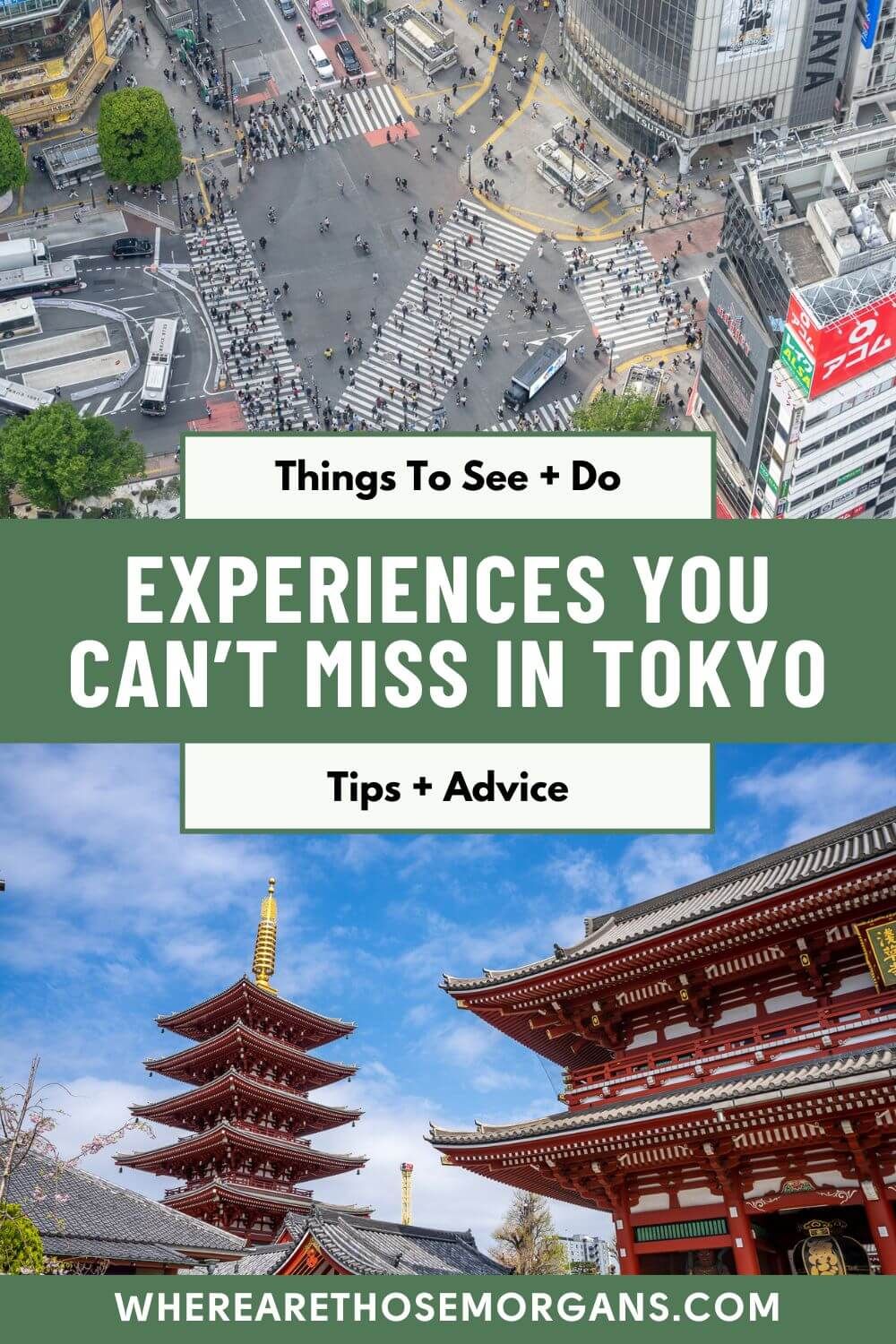
Find our guide helpful? Pin it for later!
All Rights Reserved © Where Are Those Morgans, LLC. Republishing this article and/or any of its contents (text, photography, maps, graphics, etc.) in whole or in part is strictly prohibited.

Mark and Kristen spent 6 years traveling the world, visiting over 40 countries across 4 continents and more than 30 US states. They created Where Are Those Morgans in 2018 to help others plan the best possible vacations by writing authentic travel and hiking guides based on their real experiences.
Since the arrival of baby Maya in late 2024, Mark and Kristen’s extensive travels have slowed down but they still take plenty of trips. Where Are Those Morgans now helps millions of travelers each year to visit new places and hike new trails through information-packed blog posts and expert travel guidebooks. Read more about Mark and Kristen.